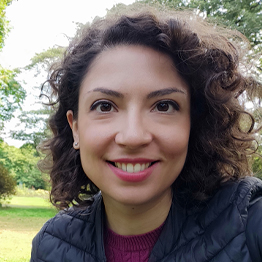
Dr. Valeria Giunta is a Lecturer in Numerical Analysis of Partial Differential Equations (PDEs) at Swansea University's Department of Mathematics within the School of Mathematics and Computer Science. Her research focuses on mathematical biology and nonlinear PDEs, particularly in modeling biological and ecological systems through reaction-diffusion-chemotaxis and nonlocal advection models. She investigates mechanisms behind aggregation phenomena, with applications to inflammatory diseases like multiple sclerosis and ecosystem species interactions. Dr. Giunta combines analytical and numerical methods to explore pattern formation, bifurcation analysis, and well-posedness of these systems. Research Expertise: Mathematical Modelling of Biological Systems Reaction-Diffusion-Chemotaxis Systems Nonlocal Advection-Diffusion Models Pattern Formation and Stability Analysis Bifurcation Analysis in Nonlinear Systems Research Contributions: Her recent work emphasizes chemotaxis models for multiple sclerosis, exploring mechanisms like cross-diffusion and nonlocal advection in ecological and medical contexts. She has analyzed transient space-use dynamics, nonlocal interaction effects in predator-prey systems, and global existence proofs for multispecies models. Her studies bridge theoretical analysis with numerical simulations to uncover ecological and medical insights. Affiliations & Activity: Available for postgraduate supervision in mathematical biology and PDE modeling. Active on ResearchGate, Google Scholar, and ORCID (0000-0003-1156-7136). Twitter: @Valeria_Giunta_
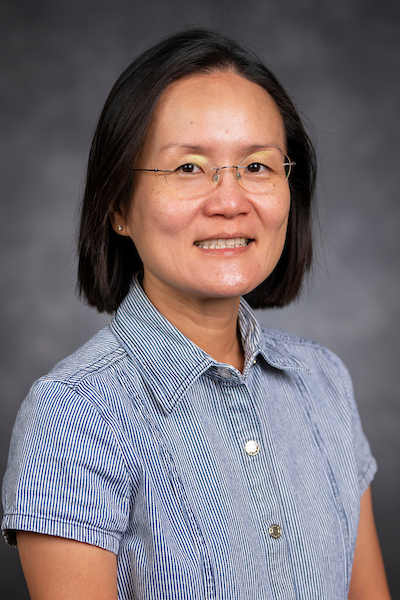
Cindy Feng, PhD, is an Associate Professor in the Department of Community Health and Epidemiology at Dalhousie University's Faculty of Medicine. Her research focuses on developing biostatistical models for analyzing correlated public health data, including spatial statistics, longitudinal studies, and environmental health applications. She holds a PhD from Simon Fraser University and has received funding from NSERC, Canadian Statistical Sciences Institute, and MITACS. Dr. Feng collaborates with interdisciplinary teams across medicine, psychology, and environmental sciences. Education: PhD (Simon Fraser University), MSc (Simon Fraser University), BSc (Beijing University of Technology). Her work emphasizes bridging statistical theory and practice in public health, with notable contributions to disease mapping, survival analysis, and infectious disease surveillance. Key grants include NSERC Discovery Grants ($80,000, 2019-2023) and a MITACS Accelerate Grant ($45,000, 2016-2019). Research interests include zero-inflated models, spatial epidemiology, and methodological advancements for correlated data. Recent work addresses pandemic-related mental health trends, occupational injury risk factors, and global health challenges in malaria-schistosomiasis co-endemic regions. She has published over 30 peer-reviewed articles, with a focus on statistical diagnostics, public health policy, and environmental health impacts.
Hsiao-Hsuan 'Rose' Wang is a Senior Research Scientist at Texas A&M University's Department of Ecology and Conservation Biology, affiliated with the Ecological Systems Laboratory. She holds a Ph.D. in Forestry from Texas A&M University and academic degrees from National Taiwan University. Her primary roles include leading research on ecological modeling, managing the lab's Undergraduate Research Program since 2015, and editorial leadership as Editor-in-Chief of Ecological Modelling and Associate Editor of Biological Invasions and Plant Ecology . Dr. Wang's research focuses on developing analytical techniques to understand ecological processes across spatial and temporal scales, particularly in endangered species management, invasive species control, and disease vector management. She collaborates internationally with institutions like NIMBioS (US), SESYNC (US), and the Lorentz Center (Netherlands). Her work integrates socio-ecological systems, emphasizing cross-scale feedbacks and model validation frameworks. Her publications (2021-2025) address topics including agent-based modeling for estuary management, climate-driven species range shifts, and tick-borne disease dynamics. Key methodologies involve pattern-oriented modeling and scenario planning. She advocates for interdisciplinary approaches to ecological challenges, emphasizing practical conservation outcomes.
Emma Uprichard is a Reader at the University of Warwick's Centre for Interdisciplinary Methodologies (CIM) and a Turing Institute Fellow (2018–2023). She specializes in complex social systems, methodological innovation, and policy evaluation. Her roles include membership on the UK Statistics Authority's National Statistician's Data Ethics Advisory Committee (NSDEC) and the Department for Education’s Serious Violence Research and Analysis Expert Advisory Group. Previously, she led the Warwick Q-Step Centre and co-directed the CECAN Centre for Evaluating Complexity Across the Nexus. Education & Career: Joined Warwick in 2012 after roles at Goldsmiths, University of London, University of York, and Durham University. Research Interests: Focuses on complexity, temporality, and the ethical use of data in policy. Her work critiques methodological approaches to social systems, emphasizing the need for interdisciplinary and context-aware methodologies. She advocates for transformative governance through research-driven policy. Teaching: Teaches modules such as IM903 (Complexity in Social Sciences), IM926 (Research Design), and IM952 (Big Data Research). Office hours are Tuesday and Friday, 3:30–4:30pm. Awards & Grants: Alan Turing Institute Fellowship; Co-Investigator on CECAN (ESRC-funded). Led the £1.3M Warwick Q-Step Centre, promoting quantitative social science training. Labs/Teams: Active in CIM and CECAN, collaborating across disciplines to address global crises like climate change, inequality, and urban challenges.
Dr. Jiayan Qiu is a Lecturer (Assistant Professor) at the University of Leicester's College of Computing and Mathematical Science. Previously, he was a postdoctoral research fellow collaborating with Prof. Zhou Wang at the University of Waterloo's Department of Electrical & Computer Engineering. He holds a Ph.D. from the University of Sydney (USYD), advised by Prof. Dacheng Tao, and completed his MPhil and Honorable B.S. at the Australian National University (ANU). His research focuses on computer vision, machine learning, and artificial intelligence, with notable contributions to visual relationship modeling, image outpainting, depth estimation, and generative models. His work has been published in top-tier venues like IEEE TPAMI, CVPR, ECCV, and ACM KDD. Professional service activities include serving as a reviewer for prestigious journals (e.g., IEEE T-PAMI, T-IP) and conferences (CVPR, ICCV, NeurIPS), as well as a member of program committees for leading AI conferences. He also contributes to academic leadership as a Guest Editor for Frontiers in Signal Processing and MDPI-Electronics .
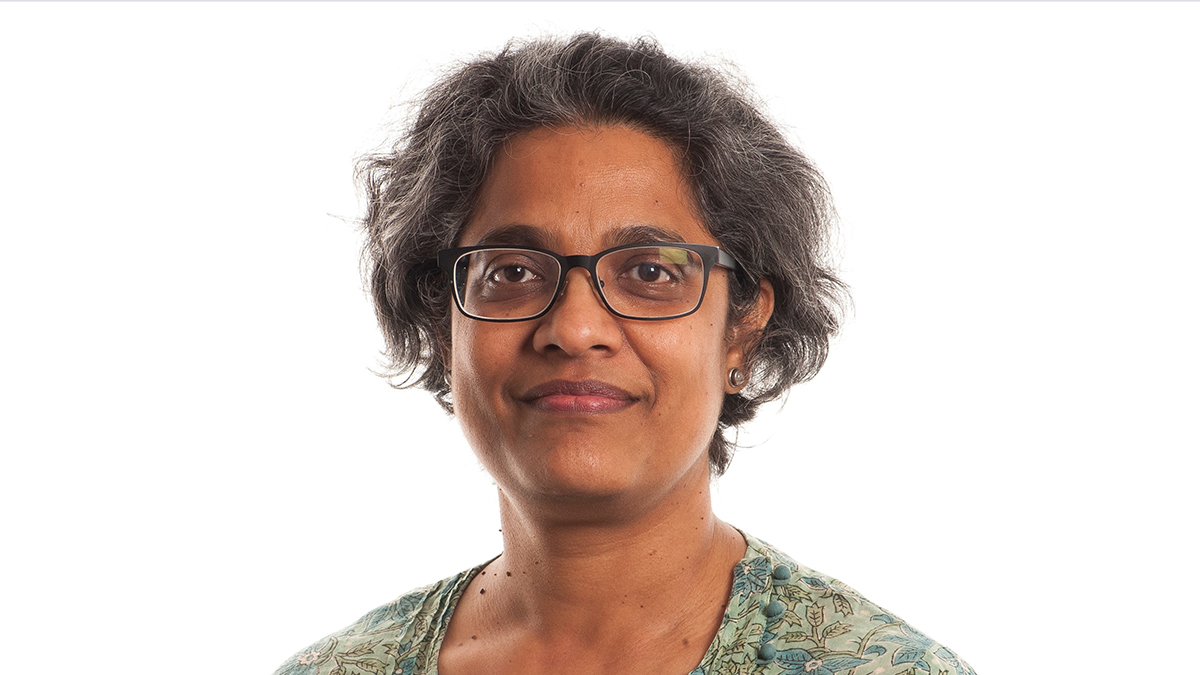
Professor Uma Kambhampati is the Head of the School of Politics Economics and International Relations and holds a Professorship in Economics at the University of Reading. She earned her BA, MPhil, and PhD in Economics from the University of Cambridge. Her research focuses on gender and development, inequalities, intra-household decisions, and the political economy of welfare in India. She has published extensively on women’s empowerment, child labour, firm productivity, and environmental issues linked to the informal sector. Education: PhD Economics, 1992, University of Cambridge MPhil Economics, 1988, University of Cambridge BA Economics Tripos, 1987, University of Cambridge Research Interests: Professor Kambhampati’s work spans gender studies, development economics, and policy analysis. She investigates topics such as women’s labor participation, child labor dynamics, and the socioeconomic impacts of infrastructure and trade policies. Her recent projects include studying the effects of patriarchal norms during the pandemic and the role of women leaders in combating health crises. Grants and Projects: Principal Investigator for the Office for Students/Research England-funded Generation Delta project (2022–present), addressing BAME postgraduate retention in academia. Research on Indian indentured labor history and contemporary gender inequalities in household labor. Affiliations: Member of the Development Studies Association, International Association for Feminist Economics, and Royal Statistical Society Council.
Prof Maria Dornelas is a Professor in the School of Biology at the University of St Andrews, UK. She leads research in biodiversity dynamics, focusing on community ecology, macroecology, and biogeography, particularly in tropical and marine systems such as coral reefs, freshwater fish, and mangrove ecosystems. Her work integrates ecological theory, data synthesis, and field studies to understand biodiversity changes over intermediate spatiotemporal scales. Her research emphasizes biodiversity time series analysis, with contributions to databases like BioTIME and BioDeepTime. She has supervised PhD student Cher Chow and collaborated globally on projects funded by organizations like the European Research Council and The Leverhulme Trust. Awards include membership in the Royal Society of Edinburgh Young Academy of Scotland (2016). Key research themes include temporal biodiversity change, habitat complexity impacts, and climate-driven ecological shifts. Her publications explore topics like coral reef resilience, species migration timing, and global biodiversity homogenization. Prof Dornelas actively contributes to biodiversity conservation policy, co-developing observing systems to guide ecological action. Her interdisciplinary approach bridges ecology, paleontology, and applied conservation.
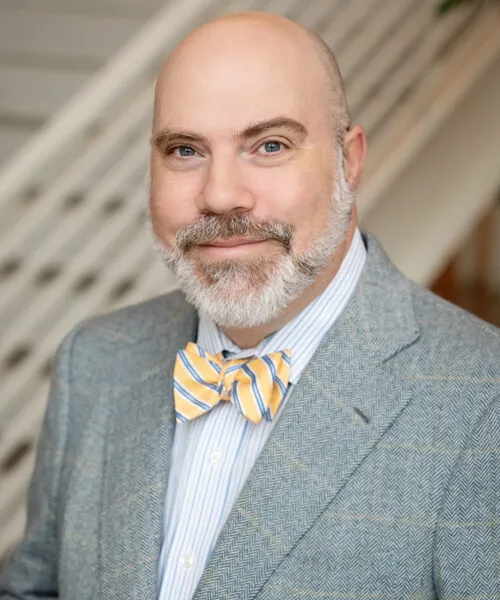
Benjamin A. Bross serves as Assistant Professor at the University of Illinois Urbana-Champaign's School of Architecture and is affiliated with the Center for Latin American & Caribbean Studies (CLACS). His interdisciplinary work bridges architectural practice, urban theory, and spatial philosophy, focusing on how physical environments embody sociocultural memory and economic dynamics through placemaking processes. Education: PhD in History, Universidad Iberoamericana, Mexico City (2016) Master of Urban Design, University of California, Berkeley (2006) Master of Architecture, Harvard University Graduate School of Design (2001) Bachelor of Arts in Architecture, University of California, Berkeley (1996) Bross's research centers on placemaking —examining spatial production processes that generate unique environments reflecting physical conditions, sociocultural practices, and economic activities. His methodology integrates architecture, urbanism, material culture, phenomenology, and essentialism philosophy. Key interests include urban morphology in Mexico City and U.S. contexts (California, New York, Illinois), sustainable practices across building-to-regional scales (LEED Accredited), land use entitlements, and real estate development with 30+ years of professional experience across 75+ international projects. His work critically analyzes how spatial identities form through historical layering and contemporary interventions. Recent publications reveal strong thematic trends: historical analysis of public spaces (Mexico City's Zócalo, Memorial Stadium), post-industrial adaptation (mining towns, labor museums), and theoretical frameworks for spatial understanding (urban-rural definitions, game theory in settlements). His scholarship consistently connects Latin American case studies with global urban theory, emphasizing phenomenological experiences of place and sustainability within sociopolitical contexts. Scientific Awards: Israel Institute’s Faculty Development Grant (2024) Levenick iSEE Teaching Sustainability Fellowship (2022-23) Scott Opler Emergent Scholar Award (2021) Common Ground Network Emergent Scholar Award (2021) Illinois Distinguished Postdoctoral Research Associate (2017-18) Bross teaches graduate courses including ARCH 517 (Contemporary Architecture History), ARCH 576 series (Placemaking in Globalization, Urban Environments of Global South), and ARCH 592 (Latin American Urbanism). His undergraduate instruction spans urbanism studios (ARCH 371), health-focused design (ARCH 372), and sustainability education (ARCH 237). His industry background in project management (ICSC: CRX, CDP, Master Developer) informs practical teaching approaches. Through CLACS, he engages in outreach initiatives including K-14 resources and the QINTI Archaeology Field School in Peru, focusing on Latin American spatial practices and sustainable development. Bross collaborates with interdisciplinary teams through the Center for Latin American & Caribbean Studies, contributing to initiatives like the Andean Gallery Reinstallation and New Immigrant Foodways project. His fieldwork in Mexico and Peru emphasizes community-based approaches to spatial production, while his professional architecture practice provides real-world grounding for academic research on sustainable development and cultural heritage preservation.
Professor Nancy Kopell is a distinguished academic and mathematician at Boston University, holding the William Fairfield Warren Distinguished Professorship in the Department of Mathematics. She is also Co-Director of the Center for BioDynamics and has affiliations with the Department of Biomedical Engineering. Her research focuses on applied mathematics and dynamical systems, particularly the dynamics of the nervous system, including neural rhythms, cognitive processing, and anesthesia effects. Dr. Kopell has made groundbreaking contributions to understanding how brain rhythms underpin behavior, cognition, and neurological disorders. Educational Background: She earned her A.B. from Cornell University (1963) and a Ph.D. in Mathematics from UC Berkeley (1967). She has held academic positions at MIT and Northeastern University before joining BU in 1986. Research Interests: Dr. Kopell's work spans theoretical neuroscience, mathematical biology, and nonlinear dynamics. Key areas include: Rhythms in neural networks (gamma, beta, theta) Cell assembly coordination and synchronization Neurophysiological mechanisms of attention, memory, and decision-making Mathematical modeling of anesthesia and consciousness Geometric theory of singularly perturbed systems Awards & Honors: National Academy of Sciences (1996) American Academy of Arts and Sciences (1996) SIAM Fellow (2009) MacArthur Fellowship (1990-1995) Weldon Memorial Prize (2006) Grants & Collaborations: She has led numerous interdisciplinary projects, including the Cognitive Rhythms Collaborative and studies on thalamocortical interactions. Current grants include NIH-funded research on brain rhythms in attention and sleep. Labs & Teams: Her Neuronal Dynamics Group at BU investigates neural oscillations and their roles in cognition. Collaborators include neuroscientists, engineers, and computational biologists.
Dr. Esra Suel is an Associate Professor in City Modelling at the University College London's Centre for Advanced Spatial Analysis (CASA) since 2024. She holds a part-time role as Senior Scientist at ETH Zurich's Future Cities Lab. Her expertise spans urban systems, environmental health, and geomatic engineering. She earned a PhD in Urban Systems and Transport Planning from Imperial College London (2016), and holds degrees from Sabanci University and the University of Michigan. Research Interests: Dr. Suel focuses on the intersection of urban environments and health, leveraging street-view imagery and machine learning to assess greenspace impacts on cardiovascular health, mental well-being, and urban inequality. Her work also explores transport equity, air quality modeling, and sustainable city indicators. Recent studies include large-scale slum mapping in Africa and global urban health benchmarking tools. Key Contributions: Her 2025 studies link greenspace exposure to depression risk reduction in US women and reveal cardiovascular health disparities through street-level analysis. Earlier work pioneered air quality estimation via satellite imagery in data-scarce regions. She co-developed KidSat, a poverty-mapping dataset using satellite imagery. Awards: MRC Rutherford Fellowship (2018) Labs: CASA's Urban Analytics Lab, Future Cities Lab (ETH Zurich) Grants: Wellcome Trust-funded Healthy Cities project, MRC funding Her interdisciplinary approach bridges geospatial technologies with public health, contributing to UN Sustainable Development Goals 3 and 11.
Carlos Tirado Cortes is a Lecturer in Interaction Design at the Discipline of Design Lab , Faculty of Architecture, Design and Planning, University of Sydney. As a virtual environments researcher, he focuses on Human-Computer Interaction and data visualization in immersive systems. Ph.D in Human-Computer Interaction (University of Technology Sydney, 2021) M.S. in Computer Game Engineering (Newcastle University, UK, 2015) B.S. in Engineering and Information Technology (Monterrey Institute of Technology, Mexico, 2012) His research explores immersive visualization for wildfire training (iFire project), VR sickness analysis, and brain-body dynamics during virtual navigation. Recent publications examine: AI-powered wildfire visualization systems Metaverse safety for children Postural instability in VR environments Fire-atmosphere interaction modeling Balance recovery techniques in immersive spaces
Haizhong Wang is a Professor in the Department of Civil and Construction Engineering at Oregon State University, affiliated with the College of Engineering. He holds a Ph.D. in Civil Engineering from the University of Massachusetts Amherst (2010), an M.S. in Applied Mathematics from the same institution (2010), and earlier degrees from Beijing University of Technology and Hebei University of Technology in China. His research focuses on transportation systems, disaster resilience, and intelligent infrastructure solutions. Education: Ph.D., Civil Engineering, UMass Amherst, 2010 M.S., Applied Mathematics, UMass Amherst, 2010 M.S., Civil Engineering, Beijing University of Technology, 2006 B.S., Civil Engineering, Hebei University of Technology, 2003 Dr. Wang's research integrates traffic flow modeling, agent-based systems, and interdisciplinary approaches to address challenges in emergency evacuation logistics, autonomous vehicle impacts, and climate-resilient infrastructure. He explores topics such as tsunami preparedness, wildfire evacuation behavior, and optimization of electric vehicle networks. His work emphasizes data-driven methodologies for enhancing transportation safety, efficiency, and disaster response capabilities. Recent studies highlight his contributions to understanding evacuation decision-making under time-critical scenarios, optimizing multi-modal transportation networks, and assessing infrastructure vulnerability to cascading disasters. Collaborative projects include developing frameworks for cooperative logistics systems and interdisciplinary models linking natural, built, and social systems for community resilience. His grants and collaborations focus on disaster preparedness, smart work zones, and connected vehicle technologies. He advises on transportation safety and serves on research initiatives addressing climate adaptation and emergency management. Current efforts include refining agent-based models for vertical evacuation strategies and evaluating the societal impacts of automated vehicles on urban mobility.
Joseph Gingerich is an Associate Professor in the Department of Sociology and Anthropology at Ohio University’s College of Arts and Sciences. He is also a Research Associate at the Smithsonian Institution’s National Museum of Natural History and a National Geographic Explorer-Grantee. His research spans North America and East Africa, focusing on early human adaptations during the Late Pleistocene and Early Holocene. His educational background includes a Ph.D. from the University of Wyoming and a B.A. from Temple University. His research expertise lies in hunter-gatherer societies, stone tool technology, spatial analysis, and human-environmental interactions, particularly in the context of the colonization of the Americas. Ph.D., University of Wyoming B.A., Temple University Gingerich’s research interests center on the behavioral and technological adaptations of early human populations. He employs GIS, 3D morphometrics, and lithic refitting to analyze artifact distributions and reconstruct past mobility and social patterns. His work investigates how climatic and environmental changes influenced human settlement and subsistence strategies during the Paleoindian period. The trends in his recent publications reflect a strong focus on the Eastern Fluted Point Tradition, Clovis archaeology, and the use of advanced analytical techniques such as 3D modeling and spatial statistics. His work spans zooarchaeology, geoarchaeology, and technological analysis, emphasizing interdisciplinary approaches to understanding early human behavior in North America and Africa. His research has been supported by major funding bodies including the National Science Foundation, National Geographic Society, and the Virginia Department of Historic Resources. He collaborates with prominent researchers such as Rick Potts from the Smithsonian’s Human Origins Program, particularly on the Olorgesailie project in Kenya. National Science Foundation National Geographic Society Smithsonian Institution Virginia Department of Historic Resources Gingerich teaches courses such as World Archaeology, North American Prehistory, GIS for Anthropologists, and the Ohio Archaeological Field School. He has mentored students through field and laboratory research, though specific advisees are not listed. His editorial work includes major volumes on the Eastern Fluted Point Tradition, highlighting his leadership in the field. He is actively involved in research teams at the Olorgesailie Basin in Kenya and conducts fieldwork in the Roanoke River Valley and Southeastern Ohio. These projects integrate geoarchaeological, lithic, and spatial analyses to explore early human innovation and adaptation.
Qiliang Wu is an Associate Professor in the Department of Mathematics at Ohio University, affiliated with the College of Arts and Sciences. He is based in Morton Hall 537 and can be reached at wuq@ohio.edu or by phone at +1-740-597-2711. Education: Ph.D., University of Minnesota, 2013 B.S., University of Science and Technology of China, 2007 His research lies at the intersection of nonlinear dynamics, pattern formation, and mathematical biology. He specializes in the analysis of dynamical systems and differential equations, particularly those modeling complex spatial and temporal patterns. His work contributes to both theoretical and applied mathematics, with implications in biological and physical systems. While no specific publications are listed in the provided materials, his research interests suggest a strong focus on nonlinear waves and pattern-forming systems, likely involving both analytical and computational methods. Scientific Awards: Dr. Wu has held academic positions at Ohio University since 2017, advancing from Assistant to Associate Professor. Prior to that, he was a Visiting Assistant Professor at Michigan State University. He is actively involved in the academic community through participation in seminar series such as the Dynamics Seminar at OU, the One World Dynamics Seminar, and the One World PDE Seminar. There is no mention of grant funding or student advisement in the provided content. He maintains professional presence via Google Scholar, MathSciNet, and a personal research website, indicating an ongoing commitment to scholarly engagement.
Professor Shenghua Gao is an Associate Professor at the School of Computing and Data Science of the University of Hong Kong (HKU), concurrently serving as Assistant Director for Shanghai Initiatives. He holds a PhD from Nanyang Technological University. His research focuses on integrating machine learning, spatio-temporal data analysis, and database systems to address challenges in mobility prediction, traffic management, and geospatial representation learning. He has contributed significantly to trajectory modeling, indexing frameworks for multi-dimensional data, and the application of large language models (LLMs) in spatio-temporal contexts. Key research interests include: Spatio-Temporal Data Science: Developing frameworks for efficient processing and analysis of point cloud, trajectory, and traffic data. Machine Learning for Databases: Innovating indexing algorithms (e.g., BMTree, MAST) and query optimization techniques leveraging ML. Trajectory and Mobility Prediction: Creating personalized models for next-location prediction and transfer learning across regions. Geographic AI (GeoAI): Enhancing road network representation and urban function inference using physics-guided and foundation models. Recent work highlights include the ST-LLM+ framework for traffic prediction, the MAST system for point cloud analytics, and the exploration of City Foundation Models for urban challenges. His publications span top venues in databases (SIGMOD, VLDB) and AI/data science (ICML, NeurIPS). While no awards are explicitly mentioned, his prolific output and leadership roles indicate significant academic contributions. He is actively involved in teaching and supervising research in the School’s undergraduate and postgraduate programs, including MSc(AI) and MPhil/PhD tracks.