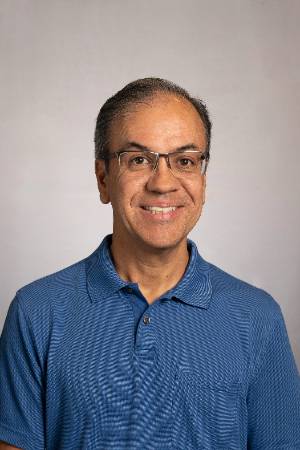
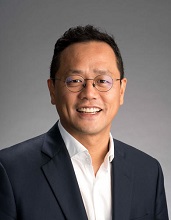
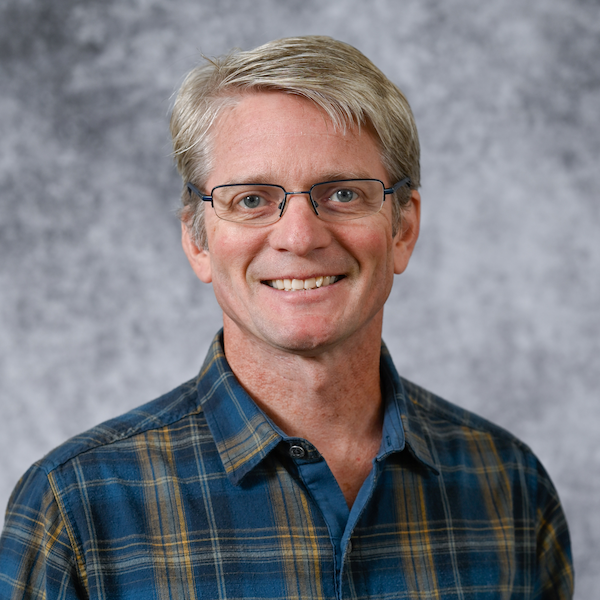
Artemio Ramirez is Professor at the University of South Florida's Zimmerman School, specializing in computer-mediated communication and relational dynamics. He holds a Ph.D. from the University of Arizona. His research examines how digital platforms facilitate relational reconnection, information seeking, and modality switching in contexts ranging from online dating to elderly social networking. Recent work explores older adults' social media use, influencer marketing psychology, and clinical trial recruitment via digital platforms. Publications consistently investigate how communication technologies reshape interpersonal processes, employing expectancy violations theory and social information processing frameworks.
Youjung Kim is an Assistant Professor at the School of Public Affairs, University of South Florida. Her research focuses on environmental planning, flood vulnerability, and urban design strategies for climate resilience. She specializes in integrating land change modeling with scenario planning to address future uncertainties. Her work explores topics such as urban tree impacts on neighborhood safety, green infrastructure effectiveness in flood-prone areas, and proactive land acquisition policies. She teaches courses like Urban Planning and Sustainability (URP 4052) and Environmental and Planning Issues in Coastal Communities (URP 6422). Kim's research emphasizes interdisciplinary approaches combining geospatial analysis, predictive modeling, and community engagement. Recent studies address flood risk mitigation in Houston, post-disaster urban dynamics in Fukushima, and comparative climate preparedness strategies between Amsterdam and Houston.
Naru Shiode is an Associate Professor at the Department of Geography, Geology and the Environment, Kingston University, within the Faculty of Engineering, Computing and the Environment. A quantitative geographer and GIScientist, his work focuses on spatial-temporal modeling of crime patterns, urban risks, and data-driven geo-surveillance. PhD in Spatial Analysis, University College London MEng and BEng in Urban Engineering, University of Tokyo His research spans four domains: Geographical Criminology: Spatial collocation of crimes, hotspot displacement, seasonal crime resonance Urban Analysis: Linking vulnerable populations to risks like epidemics and riots Spatial Analysis and Modeling: Network-based statistics, geo-surveillance systems Data Science and Geo-visualization: 3D GIS models for urban and social data Collaborations include the London Mayor’s Office, Metropolitan Police, and Home Office. Key methodologies involve network-based scan statistics, recursive Voronoi diagrams, and spatial interpolation. Publications since 1999 highlight interdisciplinary work bridging GIS, urban planning, and public health.
David L. Sheinberg is a Research Professor at Brown University specializing in cognitive neuroscience and visual perception. He graduated from Yale College with degrees in Computer Science and Psychology before completing graduate work in Cognitive Science at Brown. His postdoctoral research focused on neurophysiology under Nikos Logothetis at Baylor College of Medicine. Sheinberg's research examines the neural mechanisms underlying visual perception, object recognition, and attention processes. His recent work investigates how visual areas contribute to physics simulations and how shape information is processed independently across sensory modalities. He employs neurophysiological techniques and computational modeling to understand human-like visual processing. He serves in editorial capacities for multiple neuroscience journals, including as Associate Editor for Neuroscience and Psychology at Frontiers for Young Minds and Review Editor for Perception Science at Frontiers in Neuroscience.
Amy M. Marcarelli is a Professor of Biological Sciences and Director of the Ecosystem Science Center & Aquatic Analysis (AQUA) Shared Facility at Michigan Technological University. She holds a PhD from Utah State University and a BA from Colgate University. Her research focuses on biogeochemical cycles and ecosystem processes in freshwater habitats, including streams, rivers, wetlands, and Great Lakes littoral zones. She integrates basic and applied approaches to study nutrient dynamics, invasive species management, and restoration ecology. Her research spans four key areas: nitrogen fixation-denitrification interactions, stream-lake-watershed linkages, restoration impacts on aquatic systems, and cross-habitat resource subsidies. She has secured major grants, including an NSF CAREER Award, and leads the NSF-funded Aquatic Nitrogen Fixation Research Coordination Network (ANF-RCN). Her work emphasizes spatial and temporal variability in nutrient processes and the role of microbial communities. Teaching responsibilities include undergraduate and graduate courses in Ecology, Limnology, and professional development. She advises numerous graduate and undergraduate students, many of whom have pursued academic and applied careers in ecology and environmental science. Awards include the NSF CAREER Award and Michigan Sea Grant fellowships. Key labs and facilities under her direction include the Ecosystem Science Center, Aquatic Analysis Lab, and collaborations with the Large Lakes Observatory and USGS. Current projects include drone-based monitoring of invasive species, microbial fuel cell development, and long-term Great Lakes tributary studies.
Angela Parenti is an Associate Professor in the Department of Economics and Management at the University of Pisa. She holds a Master's degree in Economics from Bocconi University and a PhD in Economics from the University of Pisa. Her research focuses on economic growth sustainability, regional policy, spatial econometrics, non-parametric methods, and labour mobility. She contributes to the 'Societal Transition for a Sustainable Economy' team and is affiliated with REMARC (Research on Management and Sustainable Development), located at the University of Pisa's Department of Economics and Management. Her work bridges theoretical frameworks with empirical analysis, addressing topics such as spatial economic dynamics, policy evaluation, and cross-border mobility. Angela has published extensively in journals like the Journal of Economic Geography and Ecological Economics , reflecting her expertise in regional and environmental economics. She actively engages with policy-relevant research, including studies on EU cohesion policy impacts and the socioeconomic effects of migration. Angela's research highlights the interplay between economic systems and spatial structures, with a focus on sustainability and equitable development. She collaborates with interdisciplinary teams and remains committed to advancing methodologies in spatial econometrics.
Kyungmi Joanne Lee is a Senior Lecturer at James Cook University (JCU), Australia, specializing in Computer Science and Artificial Intelligence. She holds a PhD in Computer Science from Griffith University (2007) and previously served as a Lecturer at Charles Sturt University (2007–2008). Her research focuses on machine learning, algorithm optimization, neural networks, data mining, and applied AI. Key projects include developing real-world scheduling systems for mining operations, ultrasonic signal classification, and spatio-temporal trajectory analysis. Teaching responsibilities include modules like Database Modelling, where she coordinates and lectures. She currently supervises 5 PhD students, with 3 nearing completion. Her work spans diverse applications, such as emergency management through geospatial data analysis and curriculum development via text mining. With 58 publications across journals and conferences, her contributions highlight interdisciplinary approaches to data-driven solutions.
Roland Kays is Research Professor in the Department of Forestry and Environmental Resources at North Carolina State University and Director of the Biodiversity & Earth Observation Lab at the North Carolina Museum of Natural Sciences. His research investigates mammal ecology and conservation using advanced tracking technologies. Education includes: Ph.D., Zoology, University of Tennessee, 1999 B.S., Biology, Cornell University, 1993 Research combines camera trapping, GPS tracking, and community science to study animal movement, species distributions, and human-wildlife interactions. Current projects examine range expansion dynamics, impacts of human recreation on wildlife, and conservation of carnivores in human-dominated landscapes. Recent publications (2022-2025) reflect leadership in large-scale biodiversity monitoring (Snapshot USA), movement ecology databases (Movebank, MoveTraits), and conservation applications of wildlife tracking. Studies frequently integrate continental-scale data from collaborative networks. Directs global initiatives including the Movebank animal tracking database and eMammal camera trapping platform. Teaches mammalogy and mentors students in field ecology methods.
Colin Belby serves as Professor and Dean of the College of Science & Health at the University of Wisconsin-La Crosse . With expertise in Geomorphology, River Systems, Water Resources, Environmental Contamination, Geospatial Field Mapping, and GIS , he leads the Geography and Environmental Science department while maintaining active research programs. Education: B.A. in Geography & Mathematics (2002) - Augustana College M.S. in Geography - Fluvial Geomorphology (2005) - University of Wisconsin-Madison Ph.D. in Geography - Fluvial Geomorphology (2009) - University of Wisconsin-Madison His research emphasizes river systems and environmental contamination , particularly in the Driftless region of Wisconsin. Recent projects focus on sediment dynamics , channel migration , and fire history reconstruction using lake sediment cores. He frequently collaborates with students on UAV photogrammetry and geospatial analysis applications. Colin actively mentors students in field methods and geospatial technologies, with recent work spanning from the Mississippi River to the Himalayas . He has contributed to institutional development through the River Studies Center and maintains partnerships with organizations like the J.F. Brennan Company for hands-on hydrographic surveying experiences.
Dr. Martin v. Mohrenschildt is an Associate Professor in the Department of Computing and Software at McMaster University's Faculty of Engineering. He holds academic positions as Undergraduate Advisor for Mechatronics and Mechatronics Coordinator. His expertise spans control systems, signal processing, hybrid systems, and immersive simulation. He earned a Dr. sc. math. ETH and Dipl. math. ETH (Swiss Federal Institute of Technology), and is a Professional Engineer (P.Eng.). Research focuses include Model Predictive Control, vibration analysis for industrial machinery, and multisensory integration in motion simulation. His Motion Simulator Laboratory features a 6-DOF simulator with advanced visualization and physiological measurement capabilities. The Embedded Systems Laboratory explores mechatronics and robotics, including alternative fuel injection systems. Teaching includes courses like CAS-748 (Time Series Analysis) and SFWR ENG 2SO3. Recent work emphasizes sensor fusion (LiDAR/camera/thermal), biofeedback systems for muscle interventions, and cognitive effects of motion cues in virtual environments. Collaborations with Dr. Shedden investigate perceptual neuroscience in immersive simulators. His lab facilities support interdisciplinary projects combining engineering, computer science, and cognitive science. Publications span 30+ years, covering hybrid systems theory, control algorithms, and applied sensor technologies. Current research directions include autonomous vehicle perception systems and aging-related changes in multisensory integration.
Robert Ewers is a Professor of Ecology at Imperial College London’s Department of Life Sciences (Silwood Park), part of the Faculty of Natural Sciences. His research focuses on integrating data science with ecological systems to address biodiversity and environmental challenges. He leads the Virtual Ecosystem initiative and collaborates with the SAFE Project, BUGG, and the Grantham Institute. Affiliations include the Georgina Mace Centre for the Living Planet, Centre for Infrastructure Robotics Ecosystems, Earth Observation Network, and Earth Observation Network. His expertise spans biodiversity conservation, ecosystem modeling, and sustainable land use. He advises industries on carbon strategies and environmental assessments. Ewers emphasizes inclusive research group dynamics, mentoring students toward academic and professional success. His work bridges ecology with technology through innovations like the MAARU acoustic monitoring system. Research interests include tropical forest dynamics, ecoacoustic monitoring, climate impacts, and land-use policy. His recent articles analyze logging effects, deforestation governance, and biodiversity monitoring technologies. Ewers advocates for holistic conservation strategies and equitable data access in ecological research. Key projects include the SAFE Acoustics network in Borneo and studies on African Swine Fever spread. His work frequently intersects policy, technology, and field ecology, emphasizing real-world applications for sustainability.
Prof. David Borchers is a Professor in the Department of Statistics at the University of St Andrews, UK, affiliated with the School of Mathematics and Statistics. He specializes in developing statistical methods for ecological applications, particularly in estimating wildlife population abundance, distribution, and dynamics using advanced survey techniques. His research integrates spatial capture-recapture, distance sampling, and hidden Markov models to address challenges in conservation and wildlife management. Key research areas include spatial capture-recapture methods, acoustic and digital survey technologies, and ecological modeling of species such as snow leopards, gibbons, and marine mammals. He collaborates with global organizations like the Snow Leopard Trust and the Global Snow Leopard & Ecosystem Protection Program. His work emphasizes methodological innovation, such as improving detection probability estimates and addressing biases in survey data. Borchers has supervised numerous PhD students and led projects funded by EPSRC and other grants. His contributions span theoretical statistics and applied ecology, with a focus on bridging gaps between data collection and ecological inference. Current projects include automated animal density estimation using AI and acoustic data, and the PAWS initiative for global snow leopard assessment. He holds leadership roles in research units and has published extensively in journals like Biometrics , Methods in Ecology and Evolution , and Frontiers in Marine Science . His methodologies are widely adopted in conservation policy and wildlife management worldwide.
Elkan Akyürek is a Professor of Cognitive Neuroscience and Chair of the Department of Experimental Psychology at the University of Groningen. He leads a research group focused on understanding the neural mechanisms underlying working memory, temporal integration, and attention. His work employs EEG, behavioral experiments, and computational modeling to explore how sensory information is integrated, maintained, and processed in the brain. He has been instrumental in advancing methodologies like impulse perturbation and concealed information testing, with applications in cognitive neuroscience and forensic psychology. Research interests center on cognitive neuroscience, particularly in the domains of working memory maintenance, temporal processing, and the neural correlates of conscious awareness. He investigates how attention modulates perception and memory, with a focus on adaptive mechanisms in visual and auditory systems. His lab also explores the effects of nutritional interventions (e.g., cocoa flavanols) on cognitive performance. Recent research highlights include studies on concealed information detection using EEG and eye-tracking, adaptive forgetting dynamics in working memory, and the neural basis of temporal integration. His work has been published in high-impact journals like *Nature Neuroscience*, *Psychological Review*, and *NeuroImage*, and he has secured grants from the Dutch Science Foundation (NWO) and the Police and Science program. Dr. Akyürek has supervised numerous PhD students and postdocs, fostering collaborations with institutions globally. He is actively involved in science outreach, including educational initiatives to demystify cognitive neuroscience for secondary students. His lab’s interdisciplinary approach integrates psychology, neuroscience, and computational modeling to address fundamental questions about human cognition.
Dr. Patrick Witte is an Associate Professor in Spatial Planning at Utrecht University's Faculty of Geosciences, specializing in integrated spatial planning, transport infrastructure systems, and digital urban planning. He leads research on corridor development, smart cities, and sustainable infrastructure, with over 60 peer-reviewed publications and international collaborations. His work bridges academia and practice, addressing challenges like port-city dynamics, flood resilience, and participatory governance. He advises governmental bodies and international projects, such as the Bali Mandara Highway and FLOODLABEL. Witte teaches advanced courses in urban governance and spatial planning, contributing to Utrecht's AESOP-accredited Master’s program. He actively engages in educational leadership and smart urban governance initiatives, advocating for technology integration while emphasizing equitable and participatory approaches.
Dr. Martijn Smit is an Assistant Professor in the Department of Economic Geography at Utrecht University, within the Faculty of Geosciences. His research focuses on teleworking, regional development, labor markets, agglomeration economies, innovation diffusion, peripheral regions, and EU regional policy. He also explores urban development, big data, and railway infrastructure, alongside historical interests in classical music globalization and Roman studies. Education: M.Sc. in Human Geography (cum laude) and M.A. in Classics from the University of Groningen, with additional training at the Dutch Institute in Rome and Università degli Studi di Verona. Professional Experience: Since 2013, he has held an 80% position at Utrecht University. Prior roles include postdoc research at Vrije Universiteit Amsterdam (2010–2016) and freelance database design for the North Sea Interreg Program (2005–2012). Teaching: Teaches courses on philosophy of science, regional policy, and spatial econometrics, coordinating master's theses and internships in economic geography. His research interests emphasize the geography of remote work, agglomeration benefits, and EU policy impacts. Key areas include coworking spaces, eco-innovation in fashion, and the dynamics of urban-rural divides. He has contributed to high-profile projects like the EU's SPARD and IC-EU initiatives, analyzing transport infrastructure and agricultural subsidies. Awards: Won first prize in the Regional Studies Association Poster Competition (2013). His work has been featured in media outlets like De Stentor and Reporter Radio , discussing topics like post-pandemic office trends and Dutch regional policy. Service: Serves as book review editor for Papers in Regional Science , editorial board member of Tijdschrift voor Economische en Sociale Geografie , and treasurer of the Regional Science Association Nederland.