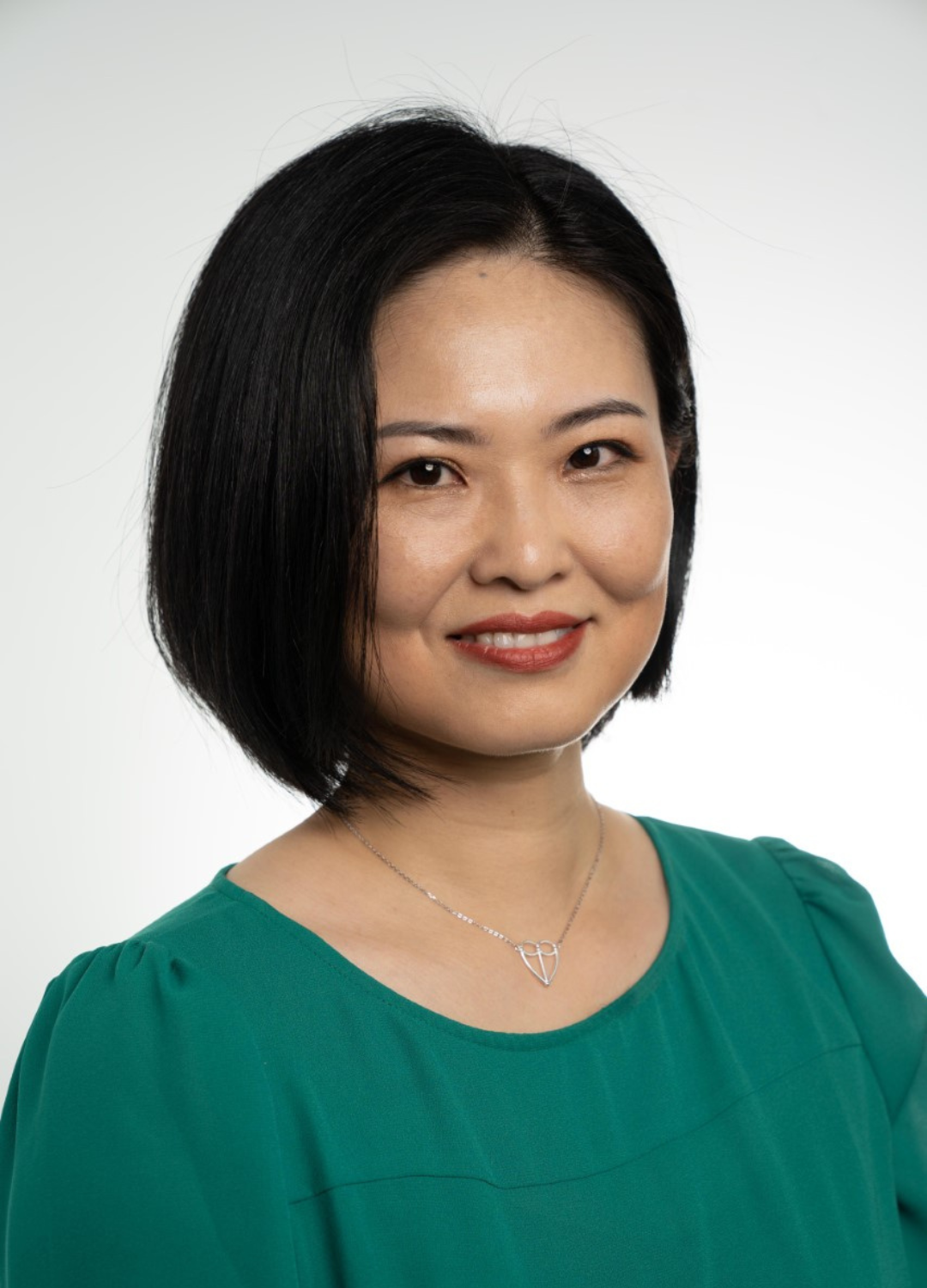
Cici Bauer is an Associate Professor of Biostatistics and Data Science at the University of Texas Health Science Center at Houston (UTHealth) and serves as the Founding Director of the Center for Spatial Temporal Modeling for Applications in Population Sciences (CSMAPS) . PhD in Statistics, University of Washington Seattle (2012) Her research focuses on advanced statistical methodologies for public health applications, including: Bayesian spatiotemporal modeling Small area estimation Hierarchical models for complex survey data Statistical analysis of data from wearable devices She contributes to interdisciplinary research areas such as Big Data, biostatistics, border health, cancer epidemiology, GIS/spatio-temporal data analysis, infectious disease, and social determinants of health.
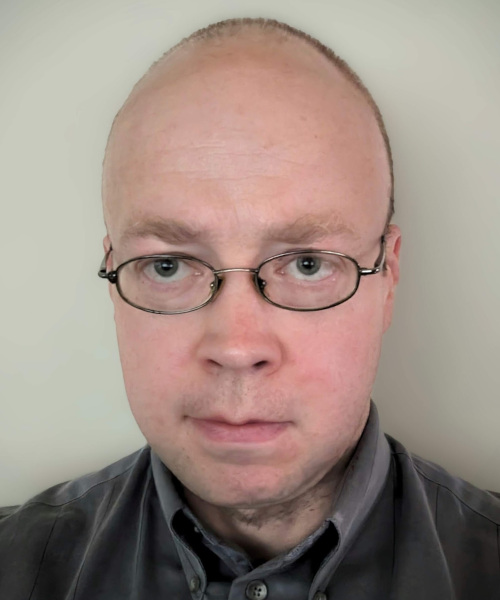
Nikolay Bliznyuk serves as an Associate Professor at the University of Florida with joint appointments across four departments: Agricultural and Biological Engineering Biostatistics Statistics Electrical and Computer Engineering His research centers on three methodological thrusts: (i) statistical machine learning for predictive modeling, (ii) Bayesian modeling strategies for integrative informatics and uncertainty quantification, and (iii) modeling for dependent data including spatial, temporal, and spatiotemporal structures. Applications span digital health technologies using sensor networks, smart agriculture for natural resource optimization (water/nutrients), and infectious disease modeling. He leads the Bliznyuk Lab for Applied Statistics in IFAS (UF/IFAS BLAST), developing cutting-edge statistical tools for environmental and life sciences data. Dr. Bliznyuk teaches graduate courses including STA6703 Statistical Machine Learning and STA6348 Bayesian Analysis, contributing to UF/IFAS AI initiatives and training interdisciplinary data scientists for real-world challenges.
Pramita Bagchi is an Assistant Professor at the Department of Biostatistics and Bioinformatics, Milken Institute School of Public Health, The George Washington University. She holds a Ph.D. in Statistics from University of Michigan and completed postdoctoral research at Ruhr Universitat Bochum, Germany. Doctor of Philosophy (Ph.D.) in Statistics - University of Michigan, Ann Arbor (2015) Postdoctoral Researcher - Department of Mathematics, Ruhr Universitat Bochum, Germany (2015-2018) Master of Statistics - Indian Statistical Institute, Kolkata, India (2010) Bachelor of Statistics - Indian Statistical Institute, Kolkata, India (2008) Her research focuses on developing computationally efficient statistical methodologies for analyzing high-dimensional dependent data , including longitudinal, spatial, and time series observations. Applications span climate science, protein sequencing, medical imaging , and financial data . Methodologically, she explores functional data analysis, shape-constrained inference, asymptotic theory , and non-parametric methods . Current projects include frequency band analysis for functional time series and clinical data analytics for heart failure biomarkers . Dr. Bagchi has received research grants from the National Science Foundation (2022-2025) and INOVA Hospital (2020-2023). Her work emphasizes modeling data with minimal structural assumptions , addressing computational challenges in high-dimensional contexts.
Romain Pascaud is a researcher affiliated with the Department of Electronics, Optronics and Signal Processing (DEOS) at ISAE-SUPAERO. His work focuses on microwave/plasma interactions, with applications in power limiting devices, electrically small antennas, and electromagnetic compatibility (EMC) for spacecraft systems. Collaborations span industrial partners like Anywaves, governmental agencies (CEA, CNES, DGA), and academic institutions (ENAC, LAPLACE). Research Themes Plasma-based microwave power limiters and antennas Space-time plasma steering sources EMC between plasma thrusters and communication systems Key Technologies 3D-printed anisotropic ceramics Time reversal plasma ignition RF blackout mitigation via external fields His 15 most recent publications (2018-2025) emphasize microwave plasma modeling, dielectric resonator antennas, and EMC simulations for CubeSats. Awards include Best Paper (2019) and Best Student Presentation (2020, 2021). Former students hold engineering roles at Syntony GNSS, ArianeGroup, SAFRAN, and academia. Current openings seek graduate students and postdocs for funded projects with CNES, AID, and Région Occitanie. Students' work spans antenna miniaturization, Huygens sources, and plasma thruster interactions.
Ahed ALBOODY is a Researcher (IR) working with the SPECIFI team, specializing in Machine Learning and Deep Learning applications for computer vision and remote sensing. With a research focus spanning from 2008 to the present, their work bridges the gap between theoretical computer vision techniques and practical applications in environmental monitoring, agriculture, and disaster response. Their primary research interests include: Machine Learning & Deep Learning for High Level Computer Vision Deep Learning & Big HyperSpectral and Multispectral Satellite Data Fusion Remote Sensing Image Analysis for Ocean Color Extraction Smart Agriculture Applications using Hyperspectral Imaging Qualitative Spatial Reasoning Systems for Change Detection in Satellite Images Recent work has focused on 3D hand gesture recognition using Graph Transformer Mixture-of-Experts, efficient parallel transformers, and applications of hyperspectral imaging for fire detection through smoke. Earlier research concentrated on spatial reasoning systems, particularly enriching the RCC8 model for topological relations in geospatial databases. Scientific contributions span multiple domains: Remote sensing and satellite image processing Computer vision and deep learning architectures Environmental monitoring applications Agricultural technology and precision farming Disaster response systems As a researcher, ALBOODY has collaborated extensively with colleagues across multiple institutions, with notable collaborations with Rim Slama on gesture recognition, Matthieu Puigt and Gilles Roussel on satellite image fusion, and Florence Sèdes and Jordi Inglada on spatial reasoning systems. Their work demonstrates a consistent trajectory from foundational research in spatial reasoning to applied work in remote sensing and computer vision.
Krzysztof Podgórski is a Professor and Head of Department at the Department of Statistics, Lund University. He maintains an active research profile with ongoing projects and recent publications extending into 2025. His research focuses on three main areas: theory and applications of multivariate non-Gaussian stochastic models, statistical analysis of spatial random fields evolving in time with non-trivial dynamics, and statistical distributions at random crossing events. He has made significant contributions to ergodic theory of stochastic processes, bootstrap methods for regression analysis, theory of heavy-tailed distributions, and extreme value theory. Analysis of his recent publications reveals a strong emphasis on spline theory applications to functional data analysis alongside continued development of non-Gaussian distributions for engineering applications. His work consistently bridges theoretical statistical developments with practical implementations across diverse fields. Professor Podgórski supervises multiple PhD students and research projects, including a Swedish Research Council-funded project running through 2025. His research has practical applications in mechanical engineering, ocean engineering, spatial econometrics, actuarial sciences, and mathematical finance. He maintains an active presence in the academic community through conference organization, invited talks, and journal peer review activities, with recent engagements documented through late 2024.
David Parkes is a Senior Research Associate at the Lancaster Environment Centre, Lancaster University, where he applies data science techniques to advance cryosphere understanding. His work focuses on ice sheet surface processes and large-scale earth observation datasets, leveraging his dual background in mathematics and commercial software development to address complex glaciological challenges. His research spans Glaciology, Cryosphere Science, and Data Science with emphasis on complex spatial data analysis and novel statistical methodologies. Key interests include extracting value from earth observation data for ice sheets, ice shelves, and mountain glaciers/ice caps, alongside developing spatio-temporal models for environmental change. His interdisciplinary approach bridges computational techniques with physical glaciology to improve climate impact assessments. His 2022 publication on sea-level changes exemplifies his research trajectory, combining process-based modeling with statistical analysis of historical climate data. This work demonstrates consistent focus on leveraging large datasets to quantify cryosphere contributions to sea-level rise, with methodological innovations in handling spatially complex environmental data across temporal scales. As a non-permanent staff member, Dr Parkes cannot serve as primary PhD supervisor but actively seeks co-supervision opportunities for projects involving process modeling of glacier/ice sheet dynamics or statistical modeling of spatio-temporal environmental data. His supervision interests extend beyond glaciology to broader environmental applications requiring advanced data science approaches.
Carina Bunse serves as an Associate Senior Lecturer in the Department of Marine Sciences within the Faculty of Science at the University of Gothenburg. Her research focuses on microbial ecology in marine environments, particularly examining pelagic bacteria dynamics and their role in global nutrient cycles. She maintains an active research profile with extensive collaboration across disciplines including chemistry, modeling, and ecology. Her primary research interests center on functional microbial dynamics in the changing ocean, with emphasis on bacterial responses to environmental drivers across spatio-temporal scales. She investigates metabolite interactions and substrate turnover in marine settings, particularly in the Baltic Sea and North Sea coastal regions. Her work integrates large 'omics datasets and time series analyses using both traditional and advanced methodologies to address global ocean challenges. Dr. Bunse leads research within the MMEco group, focusing on multi-disciplinary approaches to understand marine ecosystem functions. Her publication record demonstrates consistent output in high-impact journals covering microbial community dynamics, carbon cycling, and responses to climate change. She frequently collaborates with international research teams on projects spanning from phytoplankton blooms to deep biosphere connectivity. Her research methodology combines field observations with laboratory analyses, often utilizing cutting-edge techniques for metabolomic and genomic investigations. Current projects examine microbial responses to environmental stressors including temperature changes and pollution events, as evidenced by her 2024 publication on methane plumes following the Nord Stream pipeline explosion.
Professor William Kunin is a faculty member at the School of Biology , University of Leeds , serving as both Professor of Ecology and Deputy Head of School . His work bridges empirical research, theoretical modeling, and conservation policy. Education: AB in Biology (Princeton), MPP (Harvard Kennedy School), PhD in Zoology (University of Washington, 1991) Research focuses on: Spatial ecology of plant-pollinator interactions Conservation biology of rare species Multi-scale biodiversity dynamics Ecological modeling of extinction risk Development of national pollinator monitoring schemes Integration of weather radar for insect population tracking Recent publications highlight interdisciplinary approaches to biodiversity monitoring, including weather radar and acoustic technologies, with applications in agricultural and urban ecosystems. Funding sources include NERC , BBSRC , EU programs (ALARM, BESTMAP), and the Bill & Melinda Gates Foundation . Current advisee: Megan Tresise
Peter WG Tennant is an Associate Professor of Health Data Science at the University of Leeds and a Fellow of the Alan Turing Institute for Data Science and Artificial Intelligence . He leads the Causal Inference Interest Group and Introduction to Causal Inference Course for Health and Social Scientists at the Alan Turing Institute. His research focuses on adapting and translating contemporary causal inference methods into health and social sciences, with particular emphasis on epidemiology , biostatistics , maternal and child health , and nutritional research . He has developed significant methodological contributions in directed acyclic graphs (DAGs) , compositional data analysis , and observational data interpretation . His 15 most recent publications demonstrate expertise in causal inference methodology, nutritional epidemiology, and health data science. Key themes include analyses of compositional data, causal diagram interpretation, and methodological challenges in observational research. Scientific Awards and Recognition Highest Scoring Abstract (Shortlisted), Society for Social Medicine 66th Annual Scientific Meeting (2022) Best Poster Presentation (Winner), Society for Epidemiologic Research 2022 Meeting (2022) Rising Star Award (Nominated), Society for Perinatal and Pediatric Epidemiology (2020) THE Innovative Teaching Award (Nominated), Times Higher Education Awards (2019) Best Blogger (Shortlisted), Mind Media Awards (2014) As an academic leader, he has supervised numerous PhD and Master's students in health data science and epidemiology. His teaching includes module leadership positions for advanced epidemiology and causal inference courses at the University of Leeds. He maintains active engagement with media and public through podcasts, YouTube presentations, and social media , with over 16k Twitter followers and multiple public speaking engagements, including stand-up comedy performances about academic life.
Ben Moews is a Lecturer in Predictive Analytics at the University of Edinburgh Business School. He serves as Director of the Domain-Driven Machine Learning Lab, PhD Programme in Financial Technology, and Chair of the Centre for Data, Culture and Society's Advisory Board. PhD in Astrophysics (University of Edinburgh) MSc in Artificial Intelligence (University of Edinburgh) Professional Statistician (American Statistical Association) His research bridges artificial intelligence with financial technology and astrophysics , focusing on domain-specific machine learning and privacy-preserving synthetic data . Recent projects include generative modeling for market microstructure , AI-driven cosmological simulations , and geospatial analytics for societal challenges . Research outputs span Physics-informed neural networks (2024), random number generator analysis in financial markets (2024), and synthetic data evaluation frameworks (2024). His work combines high-performance computing with real-world applications in central banking and public health . Fellowship of the Higher Education Academy (2025) McWilliams Fellowship (2021) Principal’s Career Development Scholarship (2017) Professional Statistician accreditation (2023) Winton Thesis Prize (2022) As Director of the Domain-Driven Machine Learning Lab and FinTech PhD Programme, he leads initiatives integrating data science with domain-specific challenges across business, finance, and public policy. He collaborates with the Scottish Centre for Crime and Justice Research and Edinburgh Centre for Financial Innovations.
Giorgio Kaniadakis is a Full Professor at the Department of Applied Science and Technology (DISAT) of Politecnico di Torino. His research focuses on generalized statistics, theoretical physics, and complex systems, with a strong emphasis on κ-statistics and power-law distributions. Research interests include: κ-Statistics, Power-law Distributions, Quantum Computation, Nonlinear Kinetics, Statistical Physics of Complex Systems His recent publications (2024-2016) span urban scaling laws, epidemiological models, predator-prey dynamics, and quantum statistical mechanics, often applying κ-statistics to interdisciplinary problems in physics, biology, and economics. He has organized major conferences like SigmaPhi2014, SigmaPhi2011, and SigmaPhi2008 as Program Chair. He actively teaches courses in statistical mechanics and physics at both PhD and undergraduate levels. Key teams/groups: Institute of Fundamental Physics and Materials for Nanotechnology (DISAT), Generalized Statistical Mechanics of Complex Systems
Benjamin Bagozzi is a Professor of Political Science & International Relations at the University of Delaware, affiliated with the College of Arts & Sciences. He leads the Social Analytics Data Lab (SADL), focusing on computational methods applied to political and environmental issues. He holds a PhD from The Pennsylvania State University (2013) and joined UD in 2015. His research spans political methodology and international relations, particularly environmental politics, international political economy, and political violence. Methodologically, he specializes in computational social science, text analysis, event data, and rare event modeling. His work addresses topics like climate negotiations, misinformation detection, and the impact of environmental factors on conflict. Recent publications explore climate change negotiation networks, radical environmental activism, and geospatial analysis of political violence. His methodological contributions include frameworks for improved data analysis in political science. Bagozzi’s academic output reflects a commitment to interdisciplinary research, combining quantitative methods with substantive political questions. He actively contributes to computational initiatives, such as the DARWIN Computing Symposium and Delaware Data Science Symposium.
Masoud Ataei is an Assistant Professor, Teaching Stream in the Department of Applied Statistics at the University of Toronto's Mathematical and Computational Sciences school. His research spans statistical geometry, financial chaos indices, neural network optimization, and spatio-temporal systems analysis. He holds a position focused on teaching excellence within the applied statistics discipline. Research interests include developing mathematical frameworks for complex systems analysis, with applications in finance, materials science, and biomedical signal processing. His work emphasizes interpretable machine learning models and optimization algorithms for high-dimensional data. Key contributions involve the Financial Chaos Index for market volatility modeling and the GEOM-BP algorithm for bin packing problems. Publications demonstrate interdisciplinary impact across mathematics, computer science, and finance. No scientific awards are listed, but his active publication record reflects ongoing research productivity. Advising and grant activities are not detailed in available information.
Professor Simon Jeffery leads soil ecology research at Harper Adams University's Agriculture and Environment department, focusing on sustainable soil management through biochar applications, soil biodiversity conservation, and ecosystem functioning in agricultural systems. Research Focus His investigations span biochar impacts on soil hydrology, carbon sequestration, and microbial communities; soil fauna responses to land management; and development of AI-driven tools for optimizing soil health and fertilization strategies. Recent projects include combatting desertification through engineered soils and evaluating nematode communities as soil health indicators. Global Contributions Professor Jeffery collaborates internationally on meta-analyses of biochar effects, peatland carbon mapping, and climate-adaptive wheat cultivation. He advocates for evidence-based soil policy through the Centre for Evidence-Based Agriculture and contributes to global soil biodiversity initiatives.