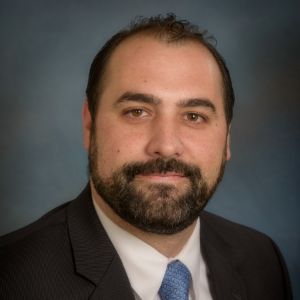
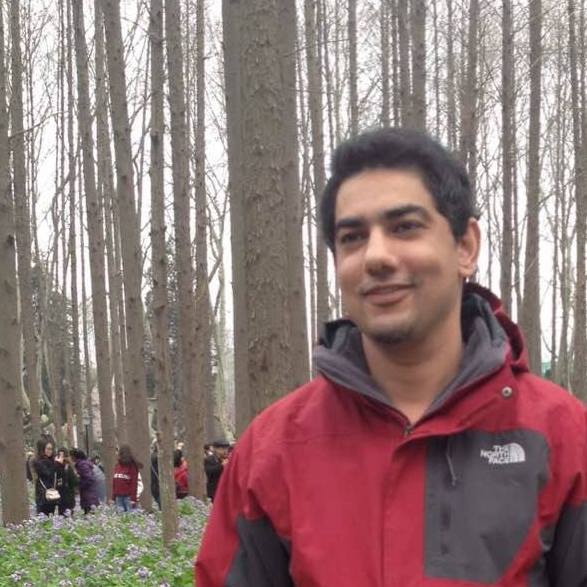
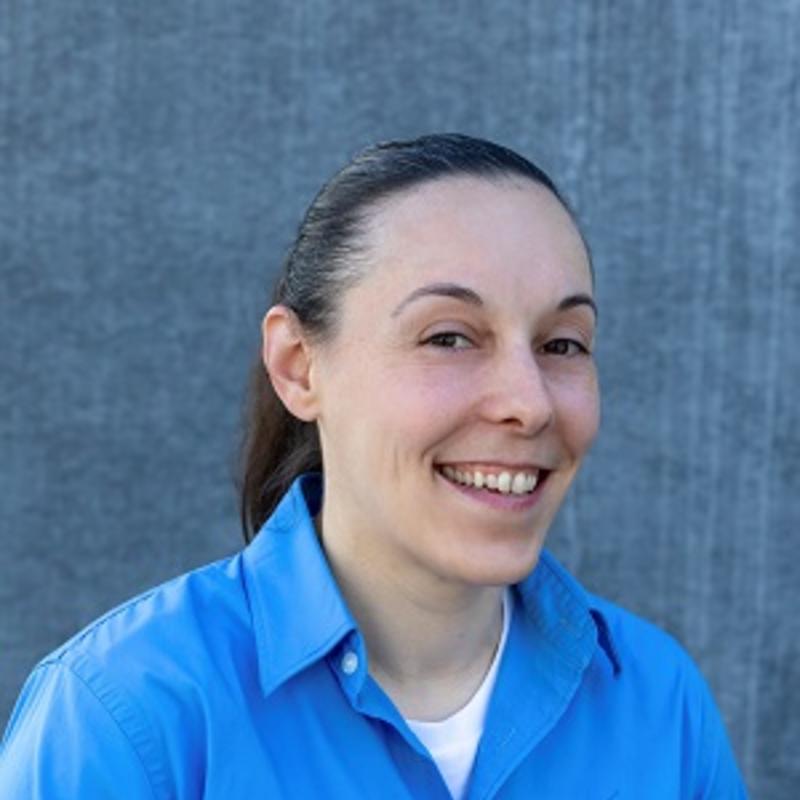
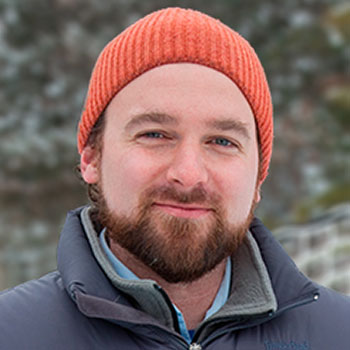
Giorgio Kaniadakis is a Full Professor at the Department of Applied Science and Technology (DISAT) of Politecnico di Torino. His research focuses on generalized statistics, theoretical physics, and complex systems, with a strong emphasis on κ-statistics and power-law distributions. Research interests include: κ-Statistics, Power-law Distributions, Quantum Computation, Nonlinear Kinetics, Statistical Physics of Complex Systems His recent publications (2024-2016) span urban scaling laws, epidemiological models, predator-prey dynamics, and quantum statistical mechanics, often applying κ-statistics to interdisciplinary problems in physics, biology, and economics. He has organized major conferences like SigmaPhi2014, SigmaPhi2011, and SigmaPhi2008 as Program Chair. He actively teaches courses in statistical mechanics and physics at both PhD and undergraduate levels. Key teams/groups: Institute of Fundamental Physics and Materials for Nanotechnology (DISAT), Generalized Statistical Mechanics of Complex Systems
Benjamin Bagozzi is a Professor of Political Science & International Relations at the University of Delaware, affiliated with the College of Arts & Sciences. He leads the Social Analytics Data Lab (SADL), focusing on computational methods applied to political and environmental issues. He holds a PhD from The Pennsylvania State University (2013) and joined UD in 2015. His research spans political methodology and international relations, particularly environmental politics, international political economy, and political violence. Methodologically, he specializes in computational social science, text analysis, event data, and rare event modeling. His work addresses topics like climate negotiations, misinformation detection, and the impact of environmental factors on conflict. Recent publications explore climate change negotiation networks, radical environmental activism, and geospatial analysis of political violence. His methodological contributions include frameworks for improved data analysis in political science. Bagozzi’s academic output reflects a commitment to interdisciplinary research, combining quantitative methods with substantive political questions. He actively contributes to computational initiatives, such as the DARWIN Computing Symposium and Delaware Data Science Symposium.
Masoud Ataei is an Assistant Professor, Teaching Stream in the Department of Applied Statistics at the University of Toronto's Mathematical and Computational Sciences school. His research spans statistical geometry, financial chaos indices, neural network optimization, and spatio-temporal systems analysis. He holds a position focused on teaching excellence within the applied statistics discipline. Research interests include developing mathematical frameworks for complex systems analysis, with applications in finance, materials science, and biomedical signal processing. His work emphasizes interpretable machine learning models and optimization algorithms for high-dimensional data. Key contributions involve the Financial Chaos Index for market volatility modeling and the GEOM-BP algorithm for bin packing problems. Publications demonstrate interdisciplinary impact across mathematics, computer science, and finance. No scientific awards are listed, but his active publication record reflects ongoing research productivity. Advising and grant activities are not detailed in available information.
Professor Simon Jeffery leads soil ecology research at Harper Adams University's Agriculture and Environment department, focusing on sustainable soil management through biochar applications, soil biodiversity conservation, and ecosystem functioning in agricultural systems. Research Focus His investigations span biochar impacts on soil hydrology, carbon sequestration, and microbial communities; soil fauna responses to land management; and development of AI-driven tools for optimizing soil health and fertilization strategies. Recent projects include combatting desertification through engineered soils and evaluating nematode communities as soil health indicators. Global Contributions Professor Jeffery collaborates internationally on meta-analyses of biochar effects, peatland carbon mapping, and climate-adaptive wheat cultivation. He advocates for evidence-based soil policy through the Centre for Evidence-Based Agriculture and contributes to global soil biodiversity initiatives.
Professor Peng Bi is a faculty member in the School of Public Health at the University of Adelaide, within the Faculty of Health and Medical Sciences. He holds the academic rank of Professor and focuses on environmental health, climate change impacts, infectious diseases, and emergency public health responses. His research emphasizes climate-sensitive diseases such as foodborne, mosquito-borne, and rodent-borne illnesses, with recent work targeting climate adaptation strategies for vulnerable populations like older adults, outdoor workers, and culturally and linguistically diverse communities. He is a Fellow of The Academy of the Social Sciences in Australia, reflecting his contributions to social science research. His work integrates ecological approaches to understand spatio-temporal disease patterns and One Health initiatives. Research interests include environmental epidemiology, ecosystem health, and occupational health. Key contributions involve quantifying the health burden of climate change, particularly through studies on temperature-related cardiovascular risks, heatwave impacts on mental health, and economic costs of occupational injuries. He has published extensively on heat-related health outcomes and adaptation strategies in Australia and globally. Awards include recognition for his interdisciplinary work in social sciences. Teaching and supervision focus on public health methodologies, with eligibility to mentor Masters and PhD students. His grants and funding support projects addressing climate change adaptation, health policy, and disease surveillance. Current initiatives include evaluating heat health warning systems and assessing the efficacy of public health interventions against extreme weather events. Key Awards: Fellow of The Academy of the Social Sciences in Australia Recent Projects: Climate change adaptation in occupational health, heat-related mortality modeling, One Health approaches to zoonotic diseases Labs/Teams: Collaborates with environmental epidemiology groups, public health policy units, and interdisciplinary climate research teams at the University of Adelaide.
Professor Philip Jonathan is Chair in Environmental Statistics and Data Science at the School of Mathematical Sciences, Lancaster University. He specializes in extreme value analysis for oceanographic and offshore engineering applications, Bayesian methods for monitoring large systems, and inverse modeling in remote sensing. His work emphasizes uncertainty quantification in environmental and data science contexts. Key research groups: STOR-i Centre for Doctoral Training , Extreme Value Theory , DSI - Environment , Data Science Institute . Current postgraduate students: Thomas Newman (Bayesian inverse modeling) and Matthew Speers (multivariate extremes for ocean-structure interactions). His recent publications focus on non-stationary extreme value models , directional wave dynamics , and climate change impacts on marine environments, with methodological contributions in penalised piecewise models and Metocean software tools . He collaborates on projects like ARC TIDE 1 (inspection regime optimization) and Modelling Wave Interactions Over Space and Time .
Dr. Mustafa Ali is a Research Associate at Lancaster University's Management School, affiliated with the Pentland Centre for Sustainability in Business. He has held academic positions at Shanghai Jiao Tong University, University of Chichester Business School, and currently Lancaster University since 2019. His interdisciplinary research spans environmental economics, sustainable agriculture, water management, public health, and societal-environmental interactions. His research interests focus on sustainability assessment, waste management systems, carbon footprint analysis, and circular economy approaches. He applies life cycle assessment, emergy analysis, and spatio-temporal modeling to examine environmental impacts across food systems, healthcare waste, urban infrastructure, and agricultural practices. His work often compares developed and developing country contexts, particularly focusing on Pakistan, China, India, and the UK. His publication record shows consistent output in high-impact environmental journals, with research evolving from healthcare waste management in Pakistan toward broader sustainability challenges including carbon footprinting of food systems and circular economy applications. His work demonstrates methodological diversity, employing GIS analysis, life cycle assessment, emergy accounting, and stakeholder coordination frameworks. Dr. Ali has received research funding from prestigious sources including the NSFC (China) and has worked on international projects across Europe and Asia. His research contributes to understanding sustainability challenges in both developing and developed contexts, with particular attention to policy-relevant findings for urban planning, waste management, and sustainable consumption. His academic journey began with an engineering background and MBA, followed by PhD studies at Southeast University in China. This multidisciplinary foundation supports his current work bridging technical, economic, and social dimensions of sustainability challenges.
Nicole Luisi is an Instructor in the Rollins School of Public Health, Department of Epidemiology at Emory University, and an Adjunct Instructor in the Executive MPH (EMPH) Program. She also serves as Director of Data Analytics and Informatics Projects, supporting research grants, developing web-based tools, and consulting for the CfAR Prevention Science Core. Her work focuses on epidemiologic methods, web-based surveys, and health data technologies. Education includes a BA from Moravian College, MPH and MS degrees from East Stroudsburg University of Pennsylvania and the University of Massachusetts Amherst, and a PhD from the University of Georgia. Research interests span HIV/AIDS prevention, infectious disease epidemiology, health disparities, and data science. Recent work examines crisis pregnancy centers, opioid misuse, and disparities in HIV outcomes among marginalized populations. She has taught courses such as SAS programming and statistical analysis. Key contributions include analyzing spatial distribution of healthcare facilities, evaluating pandemic mitigation behaviors, and advancing PrEP awareness among vulnerable groups. Her work emphasizes health equity and innovative data solutions for public health challenges.
Menno-Jan Kraak is a Full Professor at the University of Twente's Faculty of Geo-Information Science and Earth Observation, leading the Department of Geo-information Processing. He holds a PhD in Cartography from Delft University of Technology and a cum laude Master's from Utrecht University's Faculty of Geographical Sciences. His expertise spans cartography, GIS, geovisualization, and spatio-temporal analytics. Kraak served as President of the International Cartographic Association (2015-2019) and chairs the GIMA program, a collaborative MSc initiative across Dutch universities. His research focuses on innovative cartographic techniques, SDG-related geovisualization, and urban morphology analysis. Notable works include books such as Cartography, Visualization of Geospatial Data and Mapping Time , and editorial roles in journals like International Journal of Cartography . He leads the Spatio-Temporal Analytics, Maps, and Processing (STAMP) research program and contributes to global geospatial initiatives like UN-GGIM. Kraak has been awarded the Kartografieprijs 2020 and is actively involved in advancing cartographic education and ethics through international collaborations. Awards: Kartografieprijs 2020 Leadership Roles: ICA President (2015-2019), Chair of GIMA, Board Member of Netherlands Cartographic Society Key Projects: STAMP Program, Scientific Atlas of the Netherlands, ITC Atlas Development SDG Contributions: Mapping for Sustainable Development Goals, Urban Resilience Visualization
Alex Gregory is an Adjunct Professor in the Department of Anthropology at New York University (NYU), affiliated with the College of Arts and Science. His research focuses on spatio-temporal modeling, quantitative analysis, and data science applied to archaeological contexts. Education: BA in Archaeological Studies from SUNY Potsdam BA in Mathematics from SUNY Potsdam MS in Applied Anthropology from Oregon State University Current Research: Investigating the spatial distribution of artifacts at the Cooper's Ferry site in Idaho (16-13,000 years ago). This project employs advanced quantitative methods to understand human settlement patterns and material culture dynamics. No scientific awards or publications are listed in the provided materials. His CV is available for further details.
Colin Robertson is an Associate Professor in the Department of Geography and Environmental Studies at Wilfrid Laurier University, where he previously served as Director of the Cold Regions Research Centre. He also leads data science initiatives at Boeing Vancouver, focusing on aerospace analytics. His research spans spatial-temporal analysis for ecosystem and human health, citizen science, and environmental monitoring. Robertson holds a Ph.D. in Geography from the University of Victoria, with earlier degrees from Simon Fraser University and BCIT. Education: B.A. (Honours) in Geography, Simon Fraser University, 2002 Advanced Diploma (Honours) in GIS, BC Institute of Technology, 2004 M.Sc. in Geography, University of Victoria, 2007 Ph.D. in Geography, University of Victoria, 2011 Research Interests: Spatial analysis of environmental and health systems, disease surveillance, climate change impacts, and geospatial data science. His work bridges traditional spatial analysis with machine learning, emphasizing practical applications in conservation, public health, and aerospace. Key Contributions: Founded the Spatial Lab to advance geospatial research, developed frameworks for emerging disease surveillance (e.g., RinkWatch citizen science project), and contributed to maritime intelligence systems at GSTS. His research integrates interdisciplinary methods to address real-world challenges in environmental systems. Labs & Collaborations: Director of Cold Regions Research Centre, leading projects on Arctic ecosystems and climate change. Collaborates with governments, NGOs, and industry on spatial data solutions, including Boeing’s aerospace maintenance analytics. Awards & Recognition: No specific awards listed, but recognized for innovative applications in spatial data science across academia and industry.
Professor Yiannis Demiris holds the position of Professor of Human-Centered Robotics and Head of ISN at Imperial College London's Department of Electrical and Electronic Engineering. He is a Royal Academy of Engineering Chair in Emerging Technologies (Personal Assistive Robotics) and Fellow of both IET and BCS. His research integrates artificial intelligence, machine learning, and robotics to develop interactive systems that improve human physical, cognitive and social well-being. Major projects include multimodal modeling of human states for robotic assistance, trustworthy autonomous systems, edge-case handling in autonomous driving, and augmented reality interfaces for robot control. Professor Demiris has received the President's Award for Excellence in Research Supervision and teaches courses on human-centered robotics and mobile healthcare. His publications demonstrate increasing focus on trust modeling in human-robot systems, socially aware navigation, and assistive robotic applications.
Bo Zhou is a Lecturer in the Department of Geography at the University of California, Los Angeles (UCLA). His current work involves a NASA-funded project collaborating with the U.S. Geological Survey (USGS) and the Bureau of Land Management (BLM) to develop a web-based tool that integrates NASA satellite data with field assessments for spatial and temporal analysis of environmental variables. This research focuses on enhancing ecological monitoring and resource management through advanced data fusion techniques. Dr. Zhou holds a Ph.D. in Forestry (2013) and an M.A. in Geography (2007), both from the University of Missouri Columbia. His research interests span remote sensing, geographic information systems (GIS), environmental data science, and the application of AI-driven methods to environmental challenges. His recent projects emphasize the development of generative models, autonomous systems, and urban simulation tools to address complex spatial and temporal data problems. His publications from 2022–2025 highlight contributions in AI, robotics, and computer vision, particularly in generative models, autonomous navigation, and data-efficient learning. These works reflect a focus on advancing technologies for urban mobility, environmental monitoring, and simulator-based research. Despite prolific output, no scientific awards are explicitly mentioned in the provided texts. Zhou’s advising and grant activities are not detailed here, but his collaborations with NASA and federal agencies underscore a strong commitment to applied environmental research. His work bridges academic and practical domains, aiming to improve decision-making in ecological and urban systems through innovative data integration and simulation.
Alex Reinhart is an Associate Teaching Professor in the Department of Statistics & Data Science at Carnegie Mellon University, affiliated with the Dietrich College of Humanities and Social Sciences. He holds a Ph.D. from CMU and a BS in Physics from the University of Texas at Austin. His research focuses on statistical pedagogy, natural language processing, and applications of spatio-temporal data analysis to crime prediction and radiation detection. Reinhart’s work emphasizes improving statistical education through innovative methods like writing in the age of AI and psychology case studies. He also explores the intersection of large language models and human-like text generation. His contributions include the book Statistics Done Wrong , which critiques common statistical errors in scientific research. His recent publications address pandemic-related challenges, such as vaccine hesitancy and real-time data analysis through surveys like the US COVID-19 Trends and Impact Survey. His research spans statistical software development (e.g., the pseudobibeR package) and interdisciplinary applications in public health, biomechanics, and education.
Matthias Katzfuss is a Professor in the Department of Statistics at the University of Wisconsin–Madison, affiliated with the School of Computer, Data & Information Sciences. His research focuses on computational spatial and spatio-temporal statistics, Gaussian processes, uncertainty quantification, and data assimilation, with applications in environmental science and satellite remote sensing. He has received funding from NSF, NASA, NOAA, USDA, Sandia National Laboratory, and Jet Propulsion Laboratory. His scientific achievements include awards such as the NSF Career Award, a Fulbright Scholarship, and the Early Investigator Award from the American Statistical Association’s Section on Statistics and the Environment. His work bridges theoretical advancements and real-world applications, particularly in environmental monitoring and large-scale data fusion. Recent research trends include scalable methods for high-dimensional spatial data, nonstationary covariance modeling, and Bayesian transport maps. His publications address challenges in remote sensing, climate science, and machine learning, emphasizing computational efficiency and methodological innovation. Matthias collaborates extensively with institutions like JPL and NASA, contributing to global-scale environmental studies. His lab focuses on developing open-source software tools, such as the GPgp package, to enable reproducible research in spatial statistics.