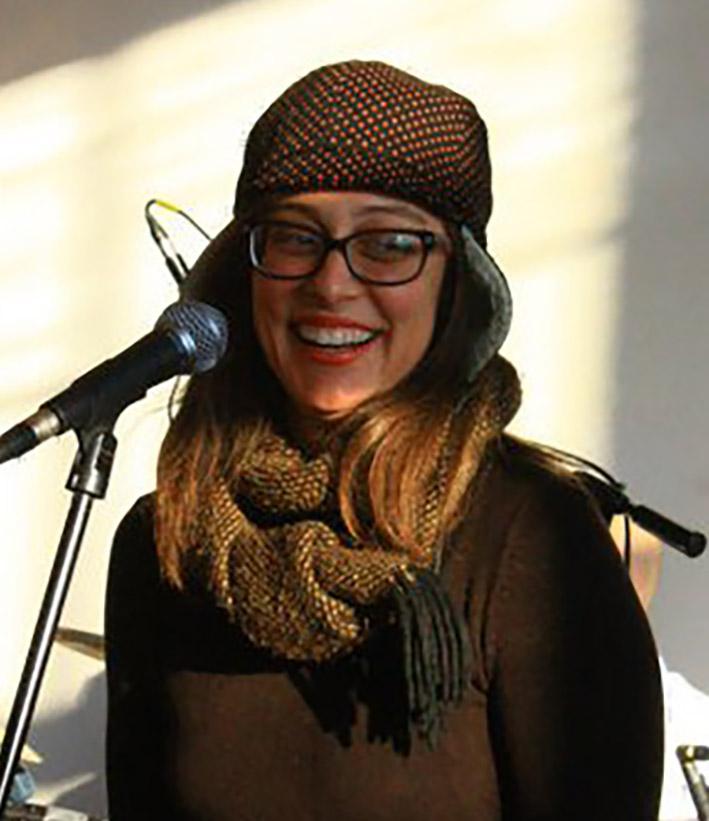
Prof. Dr. Elisabeth Timm holds the Chair of Cultural Anthropology at the Institute for Cultural Anthropology and European Ethnology , University of Münster. With a career spanning decades, her work bridges academic research with public engagement through projects like "Erzählen Deine Gene Dir Deine Geschichte?!" , which won the 2024 Citizen-Science-Preis der Universitätsstiftung Münster. She critiques political movements opposing gender and race theory while maintaining scientific rigor. Research Focus: Her scholarship examines genealogy as knowledge practice, single-family homes as social ontologies, and the intersections of culture, science, and politics. She leads interdisciplinary projects connecting archives, museums, and citizen science initiatives. Scientific Awards: Citizen-Science-Preis (2024) Dr. Fritz Landenberger-Preis (2009) Research Fellowship in Vienna (2009) Public Engagement: Regularly participates in exhibitions like "Familienmacher" (Österreichisches Museum für Volkskunde) and debates on topics such as genetic data ethics and urban development.
Professor Isabelle Doucet is a Professor of Architecture and PGR Lead at the School of Architecture and Landscape, University of Sheffield, having joined in February 2025. Previously, she held professor positions at Chalmers University of Technology in Sweden (2018-2024) and the Manchester Architecture Research Group at the University of Manchester (2009-2018). Her academic journey began with PhD studies at Delft University of Technology in The Netherlands. Her educational background includes PhD, Masters and Bachelor degrees in Architecture from Delft University of Technology. She has been a visiting scholar at Yale University (2022), University of Sydney (2018), University of Queensland (2017) and the Brussels Centre for Urban Studies (2015). Doucet's research sits at the intersection of architecture, environmental humanities, and feminist theory. Her work centers on expanded histories of architecture and activism after 1968, women as role models in architecture, and environmental (multispecies) storytelling. She approaches these topics through historical cases (particularly post-1968), theoretical revisiting, and innovative methods of inquiry. Her research combines oral histories of women in architecture with critical revisiting of emancipatory theories from an intersectional perspective. Her extensive publication record shows a consistent focus on critical architectural practice, urban activism, and environmental storytelling. Over the past fifteen years, her work has evolved from examining specific historical cases in Brussels to broader theoretical frameworks connecting feminist theory, environmental humanities, and architectural practice. Recent publications increasingly engage with multispecies encounters and ecological storytelling in architecture. Member of the Steering Group of the Architectural Humanities Research Association (AHRA) Advisory board member for Dimensions: Journal of Architectural Knowledge and CLARA Architecture/Recherche Former editor for Architectural Histories (until 2023) Doucet actively supervises doctoral students and has developed international PhD courses. Her grant portfolio reflects her research interests in women in architecture, environmental storytelling, and architectural activism. She has co-supervised multiple doctoral students to completion and served as an external examiner for students at prestigious institutions worldwide.
Magnus Rodell is a Lecturer in the history of ideas at Södertörn University, Department of History and Contemporary Studies. He has taught courses ranging from early Christian philosophy to contemporary cultural theory, including roles at the international Master's program EuroCulture (2002-2009) and the Teacher Training Program with intercultural focus. Education: PhD in History of Ideas from Uppsala University (2002) Research Focus: Monumental culture, collective memory, material culture, nation-building, and border studies through historical and contemporary lenses Notable Contributions: Analysis of spatial turn in cultural studies, media's role in commemorative practices, and border-making processes His work bridges historical analysis with modern cultural representations, particularly examining how physical monuments and media interact in shaping national identity and memory.
Wendy Z. Goldman serves as Paul Mellon Distinguished Professor of History in the Department of History at Carnegie Mellon University's Dietrich College of Humanities and Social Sciences, where she has been a core faculty member since 1988. Her scholarship establishes her as a leading authority on Russian and Soviet social history, with particular focus on gender dynamics, state repression, and wartime societal transformations. Her academic foundation includes a Ph.D. from the University of Pennsylvania (1987). Ph.D.: University of Pennsylvania, 1987 Goldman's research traverses critical junctures in Soviet history, examining how revolutionary policies reshaped family structures, industrial labor, and daily survival under Stalinism. Her groundbreaking work on women's emancipation during industrialization revealed the contradictions between state promises and lived realities, while her studies of denunciation practices exposed the grassroots mechanics of terror. Recent scholarship pioneers comprehensive analysis of the Soviet home front during World War II, documenting civilian mobilization, food crises, and industrial adaptation that sustained the war effort. Her comparative turn includes co-editing The Ghetto in Global History , examining spatial segregation across civilizations. Her publication trajectory demonstrates deepening engagement with socialist political economies and their human consequences, evolving from gender-focused analyses of early Soviet policy to systemic studies of wartime resilience and repression mechanisms. This work consistently bridges microhistorical detail with macrohistorical significance, emphasizing ordinary citizens' experiences within totalitarian systems. Goldman's contributions have earned significant recognition: Berkshire Conference Book Award for Women, the State and Revolution Reginald Zelnik Book Prize Honorable Mention for Inventing the Enemy Society for Military History Prize for Fortress Dark and Stern Her research program has been sustained by major grants from the Guggenheim Foundation, National Endowment for the Humanities, American Council of Learned Societies, Social Science Research Council, and National Council for Eurasian and East European Research. Beyond individual scholarship, she actively cultivates academic communities through directing CMU's faculty and graduate exchange with Russian State University for the Humanities, leading the Socialist Studies Seminar on socialist/post-socialist movements, and spearheading the CMU Prison Education Project which provides college instruction to incarcerated individuals. These initiatives reflect her commitment to transnational scholarly dialogue and expanding educational access, complementing her classroom instruction in specialized seminars on revolutionary movements, Stalinism, and comparative labor history.
Tetsunori Kobayashi is a Professor in the School of Fundamental Science and Engineering at Waseda University, Japan, where he has served since 1997. He is renowned for pioneering research in human–robot interaction, spoken language processing, and multimodal conversational systems, leading to over 230 refereed papers and an h-index of 35 (Google Scholar). Education: 1980 B.Eng. in Electrical Engineering, Waseda University 1982 M.Eng. and 1985 Dr.Eng. from Graduate School of Science and Engineering, Waseda University Research Interests: His work spans intelligent robotics , perceptual information processing , pattern recognition , image and audio processing , and conversational AI . He develops algorithms for real-time dialogue systems, multi-party conversation facilitation robots, and non-autoregressive speech recognition leveraging CTC and pre-trained language models. Recent Publication Trends: Since 2020 his group has advanced non-autoregressive end-to-end ASR (Mask-CTC, Intermpl, BECTRA), noise-robust attention , multi-look-ahead conversational ASR , and neural speaker diarization . They integrate BERT-style pre-training with CTC losses to accelerate inference while maintaining accuracy. Parallel work explores vision-and-language topics such as scene-graph generation, video semantic indexing, and personalized summarization for spoken news delivery. Scientific Awards: IEICE Fellow 2023 – for multi-modal multi-party conversation research IPSJ Fellow 2016 – for pioneering robot conversation studies JST Award for Academic Start-ups 2024 Best Paper Awards from IEICE, IEEE BTAS, ACM SIGGRAPH VRCAI, and several IPSJ workshop prizes Advising & Grants: He has mentored dozens of PhD and Master’s students who now lead in academia and industry. Major funded projects include JST CREST on conversational robotics, NEDO and JST-support for AI-based speech interfaces, and industry collaborations with NHK, OKI, and NEC. Labs & Teams: Kobayashi heads the Perceptual Computing Laboratory at Waseda, conducting interdisciplinary research with domestic and international partners such as MIT, ATR, and NHK Science & Technology Labs.
Maria-Dolores Garcia-Ramon is a Full Professor of Geography at the Universitat Autònoma de Barcelona (UAB), where she held academic leadership roles including Chair of the Department of Geography (1977–78, 1995–97) and Chair of the Doctoral Program in Human Geography (1986–94). She has been a visiting scholar at institutions such as the University of Arizona, Cornell University, and the London School of Economics. Her research focuses on rural geography, gender studies, and colonialism, with a particular emphasis on gendered spatial practices and women’s narratives in colonial contexts. Education: PhD in Geography and History (1975, University of Barcelona), MA in Geography (1970, UC Berkeley), BA in Philosophy and Letters (1966, University of Barcelona). Research Interests: Garcia-Ramon pioneered gender studies in Spanish geography, analyzing women’s roles in agriculture, urban public spaces, and colonial travel narratives. Her work critiques colonial discourses and explores how gender shapes spatial experiences. Key themes include the invisibility of women’s labor in rural economies, postcolonial geographies, and feminist methodologies in geographical research. Publications: Over 90 peer-reviewed articles and 12 authored/edited books, including Mujer y agricultura en España (1994) and Geografía Rural (1992). Recent articles address urban planning’s gendered impacts and colonial travel narratives. Awards: Recipient of the Jan Monk Award (2008), Premi Narcís Monturiol (2003), and membership in prestigious academies like Academia Europaea. She has led 31 funded research projects on gender, rural development, and colonial geographies. Advising & Grants: Supervised 19 PhD theses and secured grants from the European Commission, Spanish Ministry of Science, and Catalan Government. Her work on gendered labor and urban spaces has influenced policy debates on work-life balance and inclusive urban design. Labs/Teams: Active in the UAB’s Gender and Geography Research Group, contributing to international networks like the Association of American Geographers and editorial boards of journals such as Gender, Place & Culture .
Jonathan Regehr is Professor and Associate Head (Undergraduate) in Civil Engineering at University of Manitoba's Price Faculty of Engineering. He holds BSc and PhD degrees in Civil Engineering from University of Manitoba. His research examines transportation information systems, freight logistics, railway operations, and road safety. As Co-Director of Urban Mobility and Transportation Informatics Group, he collaborates with government and industry partners to develop data-driven solutions for transportation policy challenges. Recent publications focus on freight system resilience, rail corrugation management, and traffic monitoring innovations. His work frequently addresses cold-region transportation challenges and has been recognized with nominations for Transportation Research Board awards. Professor Regehr serves as Vice-President of Heavy Vehicle Transport and Technology Forum and actively contributes to transportation policy development through committee leadership.
PD Dr. Anna Pelka is a Senior Lecturer in European History (19th and 20th Centuries) at the University of Regensburg’s Institute of History , within the Faculty of Philosophy, Arts, History and Social Sciences. She specializes in the intersection of cultural, urban, and political history, with a focus on dictatorships in Spain, East Germany, and Poland. Her research examines topics such as urban development under Franco, youth fashion as political expression, and gender ideologies in authoritarian regimes. Educations: PhD (2006): Ruhr University Bochum, analyzing youth fashion in Poland and the DDR. Habilitation (2018): University of Regensburg, on urban change in Madrid and Barcelona during Franco’s dictatorship. Studies: Art History at University of Warsaw (1994–1999), German Language Studies (2000–2001), and extended research stays in Spain (2001–2003, 2008–2010). Research interests span urban sociology, fashion as political discourse, dictatorship-era policies, and transnational cultural exchanges. Her work often highlights how everyday practices (e.g., clothing, neighborhood mobilizations) reflect broader political and social dynamics. Recent projects include DFG-funded studies on Katowice’s multiethnic history and urban marginalization under Franco. Teaching focuses on modern European history, methodological approaches, and interdisciplinary seminars. She leads courses like “The Acoustic Turn in Historical Research” and “Comic Books as Tools for Teaching 20th-Century Dictatorships.” Key publications include monographs like Urbaner Wandel und Öffentlichkeit (2019) and edited volumes such as the Vademecum of Contemporary Spanish History (2012). Her articles explore topics like workers’ movements in 19th-century Katowice, neighborhood strategies in Madrid under Franco, and fashion as a tool of political control in communist regimes. Awards and grants include DFG funding for multiple projects, reflecting her established reputation in European historical studies. She actively contributes to academic networks and public history initiatives, such as curating exhibitions on GDR culture.
Simone Baglioni is a Full Professor in the Department of Economics and Management at the University of Parma and Vice Rector for Education since November 2023. He co-founded the GRIMLI research group focusing on migration, labor markets, and entrepreneurship. Previously, he held academic positions at Glasgow Caledonian University , and the Universities of Geneva, Neuchâtel, Florence, and Milan-Bocconi . Current Role: Professor, Vice Rector Education Departments: Economics and Management (University of Parma), Yunus Centre for Social Business and Health (Glasgow Caledonian University) Research Focus: Labor migration, asylum, gig economy, social innovation, civil society, and integration policies. Research Themes : His work examines labor market integration of migrants , transnational solidarity , and social innovation in policy . Recent projects include PRIN and FIL A1 on remittances and migrant entrepreneurship, and coordination of EU Horizon 2020 projects like SIRIUS and MATILDE . He also developed the WORKEEN mobile app to aid migrant employment. Teaching : Courses on Socioeconomic analysis of agrifood environments , sociology of globalization , and critical food consumption at the University of Parma , covering both undergraduate and graduate programs in Global Studies , International Business , and Food Law .
Susan Kelly is a Senior Lecturer in Fine Art Critical Studies at Goldsmiths, University of London, with a focus on the intersections of art, micropolitics, and political organization. Her research examines how subjectivity is produced within capitalist and imperial frameworks, drawing on autonomous Marxism, schizoanalysis, and radical pedagogy. She teaches across undergraduate and postgraduate programs, coordinates Year 1 of the BA Fine Art Programme, and supervises PhD students. Education: PhD in Visual Cultures (Goldsmiths, 2010); Whitney Independent Study Studio Programme (1999); MA in Cultural Studies (Leeds, 1998); BA in Fine Art and Art History (NCAD Dublin, 1997) Kelly’s research spans three key areas: (1) Practices of Rehabilitation and the Government of the Self , analyzing colonial and contemporary counter-insurgency strategies; (2) the Micropolitics Research Group , which engages with anti-psychiatry and institutional analysis; and (3) Public Programming , interrogating post-democratic institutional practices. Her work often involves collaborative projects and participatory workshops. Recent publications include ‘What is to be Done?’: Grammars of Organisation (2018) and The Educational Turn in Art (2016, co-authored). She organized the 2018 assembly Culture and Work at Point Zero and contributed to international seminars with scholars like Suely Rolnik and Colectivo Situaciones. Kelly actively opposes free labor in cultural institutions and universities, aligning with movements against exploitation. She has taught at institutions including the University of Ulster and the University of Innsbruck, and her artistic practice spans performance, video, installation, and public interventions.
Elvin Wyly is a Professor in the Department of Geography within the Faculty of Arts at the University of British Columbia. His research focuses on the relations between market processes and state policy in producing and reinforcing urban social inequalities, blending critical social theory, legal and policy analysis, and multivariate quantitative methods. Wyly earned his PhD (1995) and MA from the University of Minnesota, Minneapolis, and his BSc from The Pennsylvania State University. His academic journey reflects a deep engagement with geographical thought and methodology. His research interests span urban geography, housing policy and finance, gentrification and displacement, urban inequality, spatial analysis, critical social theory, digital geographies, GIS, and race, class, and gender studies. Wyly's approach combines critical theory with empirical analysis to examine how market forces and public policy interact to create spatial inequalities in urban environments. Analysis of Wyly's recent publications (2019-2024) reveals consistent engagement with themes of urban transformation, housing finance, and spatial inequality. His work increasingly addresses the digital turn in urban studies, examining smart cities, datafication of urban space, and the evolving nature of gentrification in the 21st century. There's a clear trajectory from studying traditional urban processes toward examining how digital technologies reshape urban inequalities and governance. Wyly's research demonstrates significant contributions to understanding the financialization of urban space, particularly through his work on subprime mortgage markets, housing discrimination, and the racial dimensions of urban development. His publications in leading geography and urban studies journals establish him as a significant voice in critical urban scholarship. His teaching appears to focus on urban geography, with courses covering topics related to cities, economies, transnational flows, digital geographies, and issues of gender, race, and class. His research website serves as a resource for students and colleagues interested in advanced urban geographical analysis.
Dr Janna Graham is a Senior Lecturer in Visual Cultures and Programme Leader of the BA in Curating at Goldsmiths, University of London. Her research critically examines colonial legacies in neoliberal spaces, focusing on urban dispossession, resistance, and institutional analysis. Graham's interdisciplinary work merges geography, spatial theory, and feminist studies, with a focus on curatorial practice and decolonial methodologies. Education: PhD in Visual Cultures (Goldsmiths, 2018) MA in Cultural Studies (University of Leeds, 1999) BA in Geography (Queen's University, Canada, 1997) Her research interests include postcolonial studies, urban theory, and institutional critique. Graham is a member of the political art collective Ultra-red and has collaborated with institutions like the Serpentine Gallery and Documenta. She leads projects such as The Monument is the Struggle , exploring colonial histories in Deptford's urban infrastructure. Graham’s publications span critical art journals and edited volumes, addressing topics like precarity, radical pedagogy, and curatorial ethics. Her work emphasizes communal practices and anti-colonial approaches to education and art.
Professor Guy Brown is Chair of Computer Science at the University of Sheffield's School of Computer Science. He holds a BSc in Applied Science (1984), PhD in Computer Science (1992), and MEd in Teaching and Learning (1997). His research focuses on Computational Auditory Scene Analysis (CASA), noise-robust speech recognition, auditory modeling, and binaural processing. Research interests include: Machine hearing systems for sound source separation Reverberation-robust speech processing Auditory scene analysis models for normal/impaired hearing Applications in robotics and healthcare technologies Publication trends show recent focus on deep learning approaches for biomedical applications including sleep apnea detection, respiratory sound analysis, and multimodal health monitoring systems using neural networks. Honors include: University Senate Award for Excellence in Teaching (2014) Microsoft Software Engineering Innovation Award (2013) He leads doctoral supervision for 15+ students and has secured research funding from EPSRC, Innovate UK, EU FP7, and AHRC. Manages the Speech and Hearing research group and has held visiting positions at international institutions including LIMSI-CNRS and ATR Japan.
Clarissa Rile Hayward is Professor of Political Science at Washington University in St. Louis, where she also serves as Associate Chair of the department and holds courtesy appointments in Philosophy and American Culture Studies. A contemporary political theorist, she is known for integrating empirical studies of institutions and urban life into normative debates about power, democracy, and identity. Education: PhD, Yale University. Research focus: Hayward interrogates how social power operates through institutional rules, spatial arrangements, and everyday practices that shape both freedom and identity. Refusing abstract “ideal theory,” she analyzes concrete cases—especially American urban politics and racial formation—to show how seemingly neutral structures enact “thick injustice.” Her books— De-Facing Power , How Americans Make Race , and Justice and the American Metropolis —have reshaped conversations on structural power, racial identity, and metropolitan inequality. Articles in American Political Science Review , Political Theory , and The Journal of Politics extend these themes, while recent work turns to digital democracy and the normative stakes of publicity and disruption. Awards: American Political Science Association Best Book in Urban Politics (2014) for How Americans Make Race Grants & Fellowships: National Academy of Education/Spencer Foundation National Endowment for the Humanities Institute for Advanced Study, Princeton Edmond J. Safra Center for Ethics, Harvard Ash Center for Democratic Governance & Innovation, Harvard Kennedy School Visiting Fellowship, All Souls College, Oxford (2024-2025) She teaches undergraduate surveys in American political thought and graduate field seminars in political theory, and mentors a large cohort of doctoral students working on power, democracy, and urban justice.
Alexander Mogilner is a Professor of Mathematics and Biology at New York University, with dual appointments in the Courant Institute of Mathematical Sciences and the Department of Biology within the Faculty of Arts & Science. His interdisciplinary research bridges mathematics and cell biology, focusing on computational approaches to understanding cellular mechanics. New York University, Faculty of Arts & Science Courant Institute of Mathematical Sciences Department of Biology Mogilner's educational background includes a Ph.D. in Applied Mathematics from the University of British Columbia (1995), a Ph.D. in Physics from the USSR Academy of Sciences (1990), and an M.Eng. in Engineering Physics from Ural Polytechnic Institute (1985). His research focuses on the mathematical modeling of cellular processes, particularly how cells use self-assembling molecular machines for movement and division. His work examines mechanochemical systems involving cytoskeletal polymers, molecular motors, and biochemical regulators. His publication record shows a strong focus on computational approaches to cell motility, mitosis, and cytoskeletal dynamics. Over the past decade, his work has increasingly incorporated advanced computational methods including partial differential equations, free boundary simulations, and stochastic processes to model complex cellular phenomena. His research spans both theoretical developments in mathematical biology and close collaborations with experimental cell biologists. Mogilner maintains an active laboratory focused on computational cell biology, with research projects spanning cell polarization, mitotic spindle assembly, actin-myosin contraction mechanisms, and cellular responses to electric fields. His work demonstrates how mathematical approaches can provide deep insights into complex biological systems.