
Dr. Ioannis Kaparias is an Associate Professor at the University of Southampton and Honorary Lecturer at Imperial College London. His expertise spans transport engineering, Intelligent Transport Systems (ITS), and sustainable mobility solutions. He holds a MEng from Imperial College London (2004) and a PhD in reliable dynamic in-vehicle navigation (2008). His research focuses on traffic management, active travel, public transport optimization, and the integration of new technologies like CAVs and MaaS. He leads the Transportation Research Group (TRG) at Southampton and has contributed to projects funded by the EU, UK authorities, and industry partners like BMW. Key areas include network reliability, cyclist safety, and land use-transport interaction. He is Deputy Editor-in-Chief of the IET Intelligent Transport Systems journal and serves on TRB committees. Teaching includes Highway & Traffic Engineering modules at Southampton and他曾指导过多个研究生项目。他精通希腊语、英语、德语、法语和意大利语。
جستوجوی استاد و پژوهشگر
استاد راهنما، استاد دانشگاه یا پژوهشگر مناسب برای مسیر پژوهشیتان را پیدا کنید و با او ارتباط بگیرید.
نمایش ۷۰۶-۷۲۰ از ۵٬۵۱۳ استاد راهنما
اطلاعات این پروفایلها از صفحات عمومی دانشگاهها جمعآوری شده و ممکن است بهروز نباشد.
Dr. Narcisa Pricope is Professor of Geography and Geospatial Science in the Department of Geosciences at Mississippi State University (MSU) and concurrently serves as Associate Vice President for Research in MSU’s Office of Research and Economic Development. Previously, she spent a decade at the University of North Carolina Wilmington (UNCW) where she founded and directed multiple high-profile programs, including the NSF-funded Coastal UAS Observatory and the USGIF-accredited Geospatial Intelligence certificate. Education PhD in Geography (minor Environmental Engineering), University of Florida, 2011 MSc in Geosciences, Western Kentucky University, 2006 BA in Geography and English, Babeș-Bolyai University, Cluj-Napoca, Romania, 2004 Research Interests Dr. Pricope is a land-systems scientist who integrates geospatial modelling, remote sensing, and unoccupied aerial systems (UAS) to investigate complex socio-ecological interactions at the food-water-energy nexus. Her work emphasizes understanding environmental variability and human vulnerability to land degradation, drought, and climate change, with a strong commitment to community-engaged research across dryland regions in eastern and southern Africa, Peru, Nepal, and coastal/inland North America. Key methodological thrusts include: Advanced machine-learning and geostatistical analytics Multi-scale remote sensing (satellite, airborne, UAS) Topobathymetric LiDAR for coastal and inland water management GeoAI and geospatial intelligence capacity building Research Trends from Recent Publications Across more than 50 peer-reviewed articles, Dr. Pricope’s recent work demonstrates a pronounced focus on global drying trends, precision mapping of coastal and inland ecosystems, and the deployment of machine-learning techniques to tackle environmental challenges such as salinity intrusion, vegetation classification, and heavy-metal contamination. A strong policy-oriented thread is evident, with several 2024–2025 publications calling for urgent adaptive solutions to aridification and integrating climate policy with disaster planning. Scientific Awards 2022 UNCW Graduate Faculty Mentor Award 2022 Discere Aude Mentorship Award 2021 UNCW College of Arts and Sciences Research Award Grants & Strategic Initiatives Dr. Pricope has secured funding from NSF, NASA, NOAA Sea Grant, USAID, World Bank, Global Environment Facility, NCDOT and NGA, among others. At MSU she leads strategic initiatives in climate resilience, GeoAI programming, and university-wide research support. Laboratories & Teams She previously directed the NSF-funded UNCW Coastal UAS Observatory and oversaw the FAA Collegiate Training Initiative in UAS, positioning UNCW as a national hub for geospatial intelligence education and research. At MSU, she continues to foster interdisciplinary collaboration across geosciences, engineering, and social sciences.
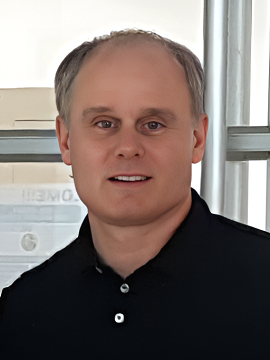
Iain D. Stewart is a researcher and lecturer in urban climatology and climate-sensitive urban design. He holds positions as a Sessional Lecturer at the University of British Columbia (Department of Geography) and a Visiting Scholar at Universidad Nacional de Colombia. He is also a Fellow of the Global Cities Institute at the University of Toronto. His academic roles include Associate Editor for the journal Urban Climate (Elsevier) and co-author of the seminal text The Urban Heat Island – A Guidebook . Education: PhD in Geography from the University of British Columbia (2011), MSc and BSc (Honors) from the University of Regina. Research focuses on urban climatology, urban heat islands, and sustainable urban design. Key interests include environmental planning, climate mitigation strategies, and the integration of historical data into urban climate studies. His work emphasizes global assessments of urban heat and adaptation strategies for vulnerable cities. Publications highlight interdisciplinary approaches to urban climate challenges, with recent work focusing on climatic mapping in Colombian cities and longitudinal analysis of urban heat island dynamics. Awards include the Timothy Oke Award (2021) and William P. Lowry Methodology Award (2009). Teaching includes urban climatology courses at UBC, Ruhr University Bochum, and the University of Toronto. He co-founded the Urban Climatology Course (UCC) in Colombia, offering tailored education in urban climate science and policy. Collaborations involve institutions like the Universidad Nacional de Colombia and global initiatives through the International Association for Urban Climate (IAUC).
J Krishnanمشاهده پروفایل
دانشیار
Dr. J Krishnan is a Reader in Biological & Chemical Information Processing Systems at the Department of Chemical Engineering, Imperial College London, within the Faculty of Engineering. He holds affiliations with multiple interdisciplinary centers including the Centre for Process Systems Engineering, Institute of Systems and Synthetic Biology, and the Industrial Biotechnology Hub. His career includes roles as Lecturer and Senior Lecturer at Imperial College (2006–present), and prior research at Johns Hopkins University (2001–2005). He earned his PhD from Princeton University (2000) and B.Tech from IIT Madras (1994). His research focuses on systems-level analysis of biological and chemical information processing, combining mathematical modeling, computational tools, and collaborations with experimentalists in cell biology, synthetic biology, and biomedical engineering. Key areas include cellular communication networks, gene regulatory systems, and the application of engineering principles to biological systems. He also explores non-biological analogues, such as traffic systems and control engineering. His work on traffic systems emphasizes machine learning applications for anomaly detection, congestion prediction, and autonomous vehicle integration. Recent articles highlight developments in real-time traffic control strategies, CAV impact analysis, and hybrid neural network models for early congestion detection. His contributions span transportation economics, sensor data fusion, and game-theoretic models for public-private collaboration in travel information markets. Collaborative efforts extend to tool development for systems biology and synthetic biology, leveraging interdisciplinary approaches to bridge natural sciences and engineering. His affiliations reflect a commitment to translational research in chemical biology, process systems engineering, and molecular science.
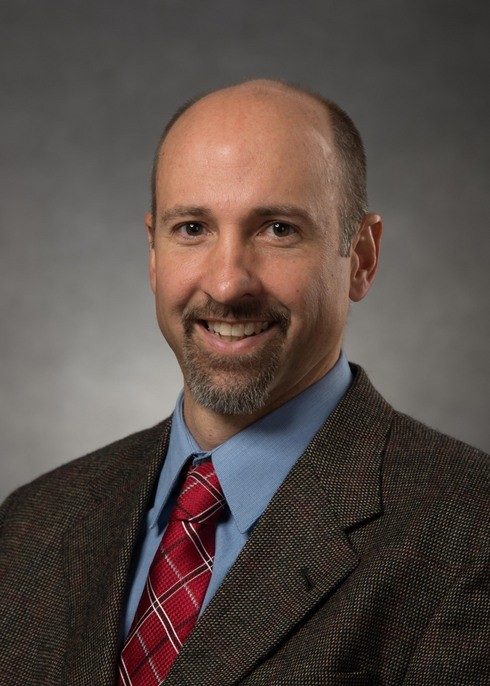
Dr. Christopher Roy is a Professor and Assistant Department Head for Graduate Studies in the Aerospace and Ocean Engineering Department at Virginia Tech (since 2013). He holds a Ph.D. from North Carolina State University (1998) and has held roles at Sandia National Laboratories and Auburn University. His research focuses on Computational Fluid Dynamics (CFD) , Verification and Validation , Turbulence Modeling , and Uncertainty Quantification , with notable contributions to CFD validation frameworks and error estimation techniques. He leads the CFD Research Group and co-teaches courses like Computational Fluid Dynamics and Verification and Validation in Scientific Computing . Education : Ph.D., 1998, Aerospace Engineering, North Carolina State University M.S., 1994, Aerospace Engineering, Texas A&M University B.S.E., 1992, Mechanical Engineering and Materials Science, Duke University Research Interests : Dr. Roy’s work emphasizes advancing CFD methodologies for complex flows, including turbulence modeling for hypersonic and high Reynolds number flows, and validation strategies for non-equilibrium boundary layers. He explores computational acceleration techniques (e.g., GPU-CPU hybrid systems) and error transport equations to improve simulation accuracy and efficiency. His team collaborates with NASA and industry on challenges like the VT-NASA CFD Validation Challenge and BlueRidge CFD solver development. Awards : Presidential Early Career Award for Scientists and Engineers (2006) Associate Fellow, AIAA (2006) Faculty Fellow Award, Virginia Tech (2009) Advising and Grants : Dr. Roy oversees graduate studies and has secured grants for research in CFD validation and turbulence modeling. His work bridges academic, industrial, and federal collaborations, including projects with Sandia National Labs and NASA. He actively contributes to AIAA technical committees and organizes CFD validation workshops. Labs and Teams : He leads the CFD Research Group at Virginia Tech, focusing on code development, validation experiments, and computational methodologies. His team develops tools like the SENSEI and BlueRidge solvers and participates in NATO-AVT349 projects for naval applications.
Hanan Samet is a Distinguished University Professor in the Computer Science Department at the University of Maryland, College Park. He holds affiliations with the Center for Automation Research and the Institute for Advanced Computer Studies (UMIACS). His academic journey includes a PhD from Stanford University (1975) in Computer Science, following degrees in Engineering (UCLA) and Operations Research/Computer Science (Stanford). Affiliations: University of Maryland, College Park (since 1975) Roles: Professor, Founding Editor-in-Chief of ACM Transactions on Spatial Algorithms and Systems, Founder of ACM SIGSPATIAL Samet's research focuses on spatial data structures, spatial databases, GIS, computer vision, and information retrieval. His seminal work includes the Foundations of Multidimensional and Metric Data Structures , an award-winning book addressing spatial indexing and query optimization. He pioneered frameworks like NewsStand for map-based news exploration and Coronaviz for pandemic visualization. Key contributions span spatial synonyms for approximate search, SAND spatial browser for digital government, and trajectory analysis systems for aviation safety and urban mobility. His work bridges theory and practice, influencing databases, graphics, and geographic systems. Education: B.S. Engineering, UCLA M.S. Operations Research, Stanford M.S./Ph.D. Computer Science, Stanford Samet has advised numerous students and led NSF-funded projects on spatio-textual data, similarity search, and spreadsheet analysis. His honors include the ACM Paris Kanellakis Award (2011), IEEE Wallace McDowell Award (2014), and UCGIS Research Award (2009). His labs and teams focus on spatial algorithms, visualization, and GIS applications. Notable projects include VASCO (spatial index demo), MARCO (image databases), and CHOLERA (disease tracking).

- Lyric Poetry
- Confessional Poetry
- Creative Writing
- +۲ مورد دیگر
Katie Condon Hermes is an Assistant Professor in the Department of English at Southern Methodist University, where she teaches creative writing and edits poetry for Project Poëtica/Bridwell Press. She holds a PhD in English from the University of Tennessee (2020) and an MFA in Poetry from the University of Houston (2015). Her debut poetry collection Praying Naked (2020) won the Charles B. Wheeler Prize, and her work appears in New Yorker , Poetry Magazine , and American Poetry Review . Research interests focus on lyric poetry's intersection with confessional traditions, apostrophic forms, and spiritual inquiry. Her poetry explores themes of embodiment, gender identity, and existential inquiry through visceral imagery and innovative syntax. Education : PhD English (UT Knoxville), MFA Poetry (UH) Awards : NEA Fellowship (2025), MacDowell Fellowship (2023) Publications include over 20 poems in top journals and critical work in Grist Journal . She previously served as Creative Writing Fellow at Emory University (2019-2021).
Prof. Allister Loder is a Professor of Mobility Policy at the Technical University of Munich (TUM), affiliated with the TUM School of Social Sciences and Technology . His research focuses on mobility policy analysis, evaluation of policy measures, and urban transportation innovations. He holds a doctorate in Transportation from ETH Zurich (2019) and has held roles at Swiss Federal Railways (SBB) and TUM's Chair of Transportation Engineering and Technology. Since 2023, he leads a DFG-funded Emmy Noether Research Group. Education: Mechatronics Engineering, Hamburg University of Technology Energy Science and Technology, ETH Zurich PhD in Transportation Engineering, ETH Zurich (2019) Research emphasizes macroscopic fundamental diagrams (MFD) for urban traffic modeling, analysis of Germany's 9-Euro-Ticket and Deutschlandticket policies, and tradable mobility credit schemes. Recent work explores cycling infrastructure in metropolises and accessibility-based road pricing mechanisms. Key Awards : Recipient of the DFG Emmy Noether Research Group Fellowship (2023). Grants and Projects: Founded the Emmy Noether Research Group focused on mobility policy innovation. Active in large-scale empirical studies like the Mobilität. Leben panel tracking mobility behavior across Germany. Labs/Teams: Leads the Emmy Noether Research Group at TUM, collaborating on mobility policy design and evaluation tools.

Robert Payne is Professor and Department Chair of Communication, Media and Culture at The American University of Paris, where he has worked since 2008. Previously taught at Australian universities, his research focuses on queer theory applications in media studies, digital networks, and affective dimensions of media infrastructure. PhD and BA from University of Sydney Specializes in queer digital culture Author of two monographs International research on media materialities His work examines digital media's affective dimensions, including viral circulation, social media intimacy, and material infrastructures shaping queer encounters. Co-edited special issues on 'Citizenship and queer critique' (2012) and 'Panic' (2008), with publications analyzing topics from Abu Ghraib photo circulation to blue-collar masculinity in digital spaces. Current research investigates everyday media materialities through infrastructure studies and affect theory.
- Museology
- New Museologies
- Intangible Heritage
- +۱۳ مورد دیگر
Jennifer Carter is a Professor in the Department of Art History at the Université du Québec à Montréal (UQAM), where she also serves as Director of the graduate museology program. Her academic work bridges museology, art and architectural history, and social justice, with a focus on human rights museology and museum representation. PhD in History and Theory of Architecture, McGill University MA in Art History, School of the Art Institute of Chicago BA (Honours) in Art History, McGill University Her research explores how museums mediate and are shaped by cultural, political, and ethical frameworks. Two primary research axes include: (1) the role of museums in advancing human rights and social justice, particularly in institutions across Asia, North and South America; and (2) the interplay between museum architecture, exhibition design, and representation. These areas are supported by funding from SSHRC and FRQSC. The most recent publications reflect a strong interdisciplinary focus, combining museology with philosophy, architecture, and human rights discourse. Themes include curatorial ethics, national identity in museums, digital curation, and the semiotics of exhibition spaces. Her upcoming book, Museums in a Culture of Human Rights: New Museums Around the Globe , further consolidates her leadership in this emerging field. Scientific Recognition and Editorial Role: Associate Editor, Museum Management and Curatorship (Taylor & Francis / Routledge, UK, since 2013) Published in leading international journals such as Curator , MediaTropes , Information Research , and National Museums: New Studies from Around the World Jennifer Carter has held professional roles at the Canadian Centre for Architecture, Art Gallery of Ontario, and McGill’s Canadian Architecture Collection. She has co-curated exhibitions including Drawing from Ideas, Building from Books , Women and Homelessness , and Safdie's Sixties: Looking Forward to Looking Back . Prior to joining UQAM, she was a Professor in Museum Studies at the University of Toronto (2008–2011). She is currently leading a SSHRC- and FRQSC-funded research project on human rights museology, examining how justice and rights are negotiated curatorially and pedagogically in cultural institutions. No formal advising or team affiliations are mentioned, though her editorial and curatorial roles indicate strong collaborative engagement.
Professor Michael Crang is a leading scholar in Cultural Geography at Durham University, holding a professorial chair in the Department of Geography . His work bridges social memory , identity , and globalization through interdisciplinary lenses of critical theory , heritage studies , and waste economies . Key research areas: Swedish heritage construction, ethical consumption, urban smart grids, and waste valorization Major projects: ESRC 'Waste of the World', AHRC/ESRC 'Counterfeit Trade Finance', and Leverhulme 'Visual Cultures' His methodological expertise in visual ethnography and qualitative research has produced influential publications including the edited collections Cultures of Mass Tourism (2009) and Doing Ethnographies (2007). Recent work explores digital geohumanities and transnational food networks . Scientific achievements include: CHOICE Outstanding Academic Title (2010) for International Encyclopedia of Human Geography Leadership roles: Chair of ESRC International Research Team, Director of Research (2003-6, 2008-10) Editorial board memberships: Geography Compass , Mondes du Tourisme , and Cultural Geographies He has supervised numerous PhD students in urban spatial governance , digital city studies , and cross-border material flows , while directing MA programs in 'Space, Place and Culture' and 'Geography and Cities'.
Dr. Yevhen Suprunenko is a Visiting Researcher in the Department of Plant Sciences at the University of Cambridge, actively contributing to the Epidemiology and Modelling research group. His work bridges theoretical physics and plant pathology to address critical challenges in agricultural sustainability and global food security through advanced spatial modeling of disease dynamics. He holds a PhD in Theoretical Physics (Condensed Matter) from Lancaster University, UK, which provides the mathematical foundation for his interdisciplinary research in plant disease epidemiology. This unique background enables innovative approaches to complex biological systems. Suprunenko's research centers on mathematical modeling of spatial epidemic spread in agricultural systems, focusing on intrinsic scales of epidemics, cropping patterns, and host landscape structure. He investigates how spatially explicit dynamics, stochasticity, and time-variability influence pest/pathogen distribution, epidemic severity, and optimal control strategies for threats like oak processionary moth and cassava brown streak disease. His work integrates computational methods with field data to develop practical solutions for crop protection. Analysis of his publication trajectory reveals a distinct evolution from chronotaxic systems in physics (2012-2017) to advanced spatial epidemiology in plant sciences (2019-2025). Recent work demonstrates increasing sophistication in modeling landscape-pathogen interactions, with strong emphasis on analytical approximations for invasion thresholds, individual-based model frameworks, and real-world applications in crop disease management. Key thematic areas include spatial scaling effects, infection rate optimization, and data refinement techniques for improved predictive accuracy. No scientific awards were explicitly documented in the provided materials. While specific student supervision details are absent from available records, Suprunenko's collaborative publications indicate active mentorship within the Epidemiology and Modelling group. Grant funding specifics are not disclosed, though his research aligns with major initiatives in agricultural security and environmental sustainability at Cambridge. As a core member of the Epidemiology and Modelling research group, Suprunenko collaborates on projects addressing plant-pathogen interactions within the Department of Plant Sciences. His work interfaces with Cambridge's broader environmental research ecosystem including the Centre for Global Wood Security and Global Food Security IRC, contributing to interdisciplinary efforts in ecosystem conservation and agricultural resilience.

Romain Raveauxمشاهده پروفایل
دانشیار
Romain Raveaux is an Associate Professor at the LIFAT Computer Science Laboratory, University of Tours, affiliated with Polytech Tours. His research focuses on Image Analysis, Machine Learning, Structural Pattern Recognition, Graph Matching, Graph Neural Networks, Discrete Optimization, Reinforcement Learning, and Transfer Learning . Email: romain.raveaux@gmail.com , romain.raveaux@laposte.net Address: 64 av. Jean Portalis, Tours, France, 37200 Phone: +33 (0)2 47 36 14 27 Research Interests Graph Matching and Neural Networks Discrete Optimization for Pattern Recognition Transfer Learning in Graph-Based Models Historical Document Analysis Scientific Trends His recent work bridges Graph Neural Networks with Mixed-Integer Programming , focusing on Image Semantic Segmentation and Graph Cycle Detection . Earlier studies emphasize Genetic Algorithms for graph classification and Graph Edit Distance optimization in pattern recognition.
- Political Sociology
- Social Movements
- Organizations
- +۵ مورد دیگر
David Strang is a Professor in the Department of Sociology at Cornell University's College of Arts and Sciences . His research focuses on innovation and diffusion in political, organizational, and scientific domains, with recent projects analyzing the evolution of research articles, social movements' influence on policy, and computational models of management practice adoption. Research Interests Political Sociology & Social Movements Organizations & Economic Sociology Models and Methods for Dynamic Processes Sociology of Science Email: ds20@cornell.edu His publications span sociological theory, computational modeling, and empirical studies of diffusion processes. Articles reflect trends in peer review analysis, management fashion cycles, and cross-cultural institutional adoption. Key collaborations include works with Kyle Siler and Robert J. David. David Strang's methodological expertise includes agent-based modeling and textual analysis. He has edited volumes like The Oxford Handbook of Management Ideas and authored books such as Learning by Example: Imitation and Innovation at a Global Bank . His work has appeared in Administrative Science Quarterly , American Journal of Sociology , and Sociological Theory .

Daniel Twardمشاهده پروفایل
استادیار
Dr. Daniel Tward is an Assistant Professor at the University of California, Los Angeles (UCLA), holding joint appointments in the Department of Neurology and the Department of Computational Medicine. He earned his Ph.D. in Biomedical Engineering from Johns Hopkins University and completed postdoctoral training at the Kavli Neuroscience Discovery Institute. His research integrates neuroimaging, machine learning, and differential geometry to analyze brain structure changes in neurodegenerative diseases like Alzheimer's, with a focus on bridging molecular pathology and clinical imaging. Research Interests: Dr. Tward's work addresses challenges in neuroimaging data complexity, developing computational tools to map brain anatomy across scales (from centimeters to microns). Key areas include neurodegeneration in the medial temporal lobe, multi-modal image registration, and spatial transcriptomics. His lab emphasizes high-dimensional statistics and geometry-driven analysis to improve diagnostic accuracy and clinical trial design. Grants & Projects: Secured NIH funding for: A 3D multimodal human brain atlas integrating MRI and histology. CloudReg—a distributed framework for massive neuroimage registration. Contributions to the BRAIN Initiative Cell Census Network (BICCN) for mouse/rat brain atlases. Students & Training: Mentors undergraduate researchers via the BIG Summer program, with projects on neural networks, spatial transcriptomics, and MRI analysis. No PhD/Master's advisees listed.