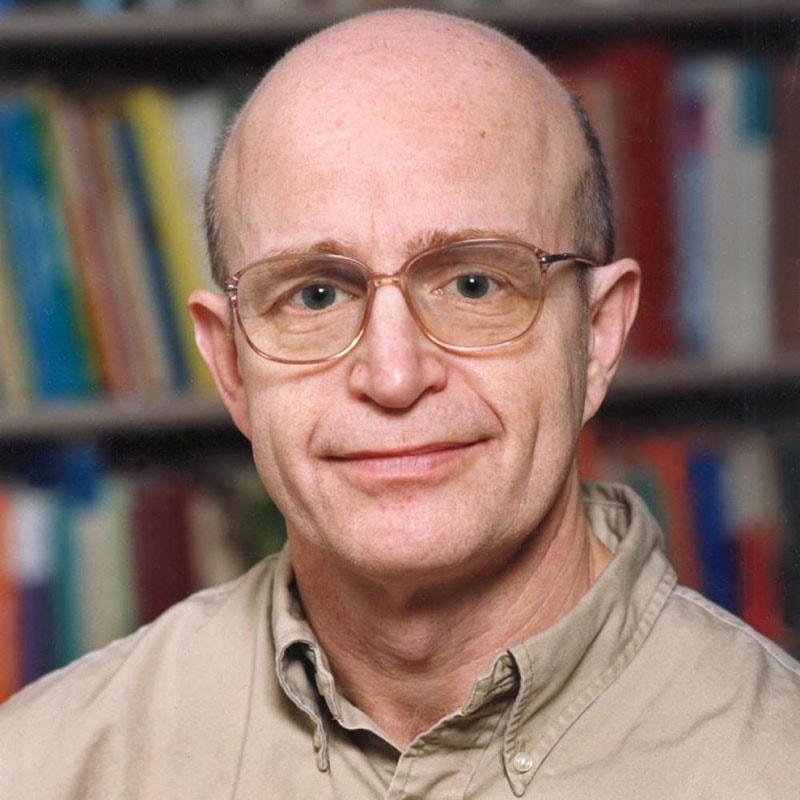
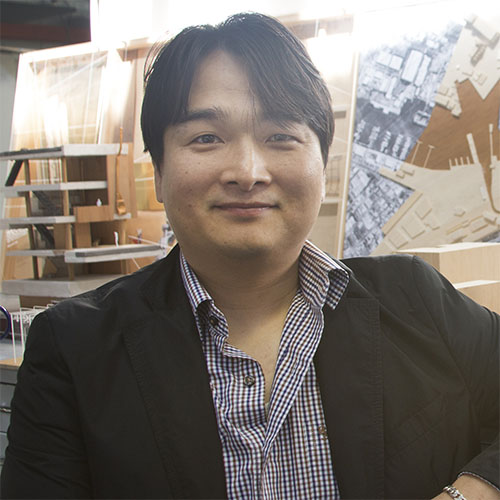
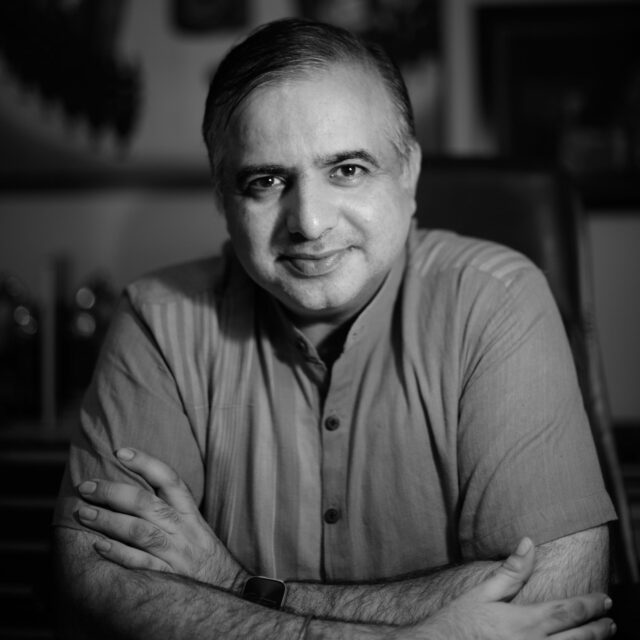
Marcin Wągiel is a semanticist affiliated with Masaryk University's Department of Czech Language and the Centre for Corpus and Experimental Research on Slavic Languages at the University of Wrocław. As an Alexander von Humboldt Fellow at Leibniz-Zentrum Allgemeine Sprachwissenschaft (ZAS), he researches mereotopology across linguistic domains. His work focuses on compositional semantics, quantification, and morphologically complex expressions. Research interests include: Parthood and mereotopological structures Subatomic quantification Cross-linguistic analysis of Slavic languages Semantic change and event semantics He received the E.W. Beth Dissertation Prize for his work on subatomic quantification. Current projects explore classifier constructions and additive numerals across languages.
John R Anderson is the Richard King Mellon University Professor of Psychology and Computer Science at Carnegie Mellon University (CMU), affiliated with the Department of Psychology within the Dietrich College of Humanities and Social Sciences. His research focuses on understanding higher-level cognition, particularly mathematical problem-solving, through the development of the ACT-R cognitive architecture—a computational framework simulating human cognitive processes. This architecture integrates behavioral, neural, and educational data to model learning and decision-making. Anderson’s work bridges cognitive science, neuroscience, and educational technology. He investigates how brain imaging (e.g., fMRI, EEG) can reveal the temporal dynamics of cognitive processes and improve instructional methods. His research emphasizes analyzing brain activity time courses to uncover underlying mechanisms of problem-solving and skill acquisition. Key Research Themes: Cognitive architectures, neural correlates of learning, computational models of memory, and intelligent tutoring systems. Notable Contributions: Development of the ACT-R architecture, integration of neuroimaging with cognitive modeling, and studies on skill transfer and learning strategies. Anderson’s publications include seminal books like Cognitive Psychology and Its Implications and How Can the Human Mind Occur in the Physical Universe? His work has advanced understanding of associative memory, strategic decision-making, and the application of cognitive models in educational technology. His lab, the ACT-R Research Group, collaborates across disciplines to model complex cognitive tasks and their neural foundations. Current projects analyze real-time brain activity to refine educational interventions and improve human-machine interaction.
Stephen Ferrigno is an Assistant Professor and Chair of the Biology of Brain and Behavior Area Group at the University of Wisconsin-Madison's Department of Psychology. His research investigates the origins of uniquely human cognition through developmental, comparative, and cross-cultural methodologies. He focuses on foundational cognitive abilities such as number sense, recursive grammar, logical reasoning, and metacognition, exploring their evolutionary and developmental bases. Ferrigno's work bridges disciplines including cognitive neuroscience, developmental psychology, and cultural anthropology, with practical applications in early childhood education and curriculum design. His research employs cross-cultural studies with indigenous populations (e.g., the Tsimane) to assess cultural variability in cognitive development. Key themes include spatial mappings of numerical concepts, recursive sequence processing in non-human primates, and the metacognitive capacities shared between humans and monkeys. The Cognitive Origins Lab, led by Ferrigno, seeks to uncover universal cognitive principles while identifying culturally mediated differences. No scientific awards or grants are explicitly listed in the provided materials. While no advisees are mentioned, his research program suggests involvement in mentoring graduate students through the Department of Psychology's PhD program. Current projects include investigating the developmental trajectories of logical reasoning, the neural correlates of recursive sequence processing, and the design of culturally adaptive educational interventions targeting early math and language skills in preschool settings.
JuHyun Lee is an Associate Professor of Architecture and Computational Design in the School of Built Environment at the Faculty of Arts, Design and Architecture (ADA), University of New South Wales (UNSW) Sydney, where they also hold the prestigious title of Scientia Academic. With a professional background in architecture and construction (1998-2002), they have held academic positions across Australia including a five-year post-doctoral fellowship at the University of Newcastle (2012-2017) and a senior research fellowship at the University of South Australia (2018), following earlier research and teaching roles in South Korea (2003-2011). Lee specializes in architectural design computing, design cognition, and urban complexity, integrating computational methods, cognitive science, and architectural theory to advance architectural intelligence and human-centered design. Their research spans architectural visualization, analysis and design methods, algorithm/protocol design, and data visualization with computational approaches. They have established a strong research program examining the intersection of language, culture, and design cognition, particularly focusing on cross-cultural design communication between Australia and Korea. Lee's recent publications demonstrate a clear trajectory toward increasingly sophisticated integration of computational methods with architectural design theory, particularly in the areas of shape grammar, space syntax, and machine learning applications. Their work shows consistent focus on practical applications of computational design methods to real-world architectural problems, with growing emphasis on cross-cultural collaboration and intelligent design systems. The research portfolio reveals a deepening engagement with AI and machine learning techniques applied to architectural design assessment and generation. Scientia Academic at UNSW Sydney Associate Fellow of the Higher Education Academy (AFHEA, 2020) As an educator, Lee develops cutting-edge courses in computational design and Building Information Modeling (BIM), integrating experiential learning and industry engagement. They have secured over $11 million in research funding, including multiple ARC Discovery Projects and an Australia-Korea Foundation grant. Lee co-directs the Advanced Architectural Analytics Laboratory (A 3 LAB), leading interdisciplinary research on design automation, spatial analysis, and machine learning applications in architecture, while also leading cross-cultural initiatives like the Australia-Korea Architects' Network (AKAN). Lee supervises multiple HDR students working on culturally sustainable urban design, socio-spatial patterns in public housing, and computational layout generation. Their research has significant implications for improving design communication across cultural boundaries and developing more coherent, clear, and accessible built environments through computational design approaches.
Freda Shi is an Assistant Professor at the David R. Cheriton School of Computer Science, University of Waterloo, and a Faculty Member at the Vector Institute. She holds a Canada CIFAR AI Chair. Her research focuses on computational linguistics, natural language processing (NLP), and grounded language learning, with emphasis on multilingualism and spatial reasoning in vision-language systems. She earned her Ph.D. in Computer Science from the Toyota Technological Institute at Chicago (2024), advised by Karen Livescu and Kevin Gimpel, supported by a Google Ph.D. Fellowship. Her undergraduate degree is from Peking University (2018), with a minor in Sociology. Her academic career includes affiliations with the CompLING Lab at Waterloo and contributions to major conferences like ACL and NAACL. She has organized tutorials on NLP grounding and is actively involved in research on model robustness and cognitive insights. Awards include the Google Ph.D. Fellowship and Best Paper Nominations at ACL 2024 and EMNLP 2021, alongside her Thesis of Distinction. She teaches courses such as CS 784 (Computational Linguistics) and CS 486/686 (Artificial Intelligence), emphasizing both theoretical and applied aspects of NLP. Research trends in her articles highlight advancements in vision-language spatial reasoning, multilingualism, and model interpretability. Her work bridges cognitive science and computational methods, exploring how human language mechanisms inform the design of more trustworthy AI systems. Scientific Awards: Google Ph.D. Fellowship Best Paper Nominee (ACL 2024) Best Paper Nominee (EMNLP 2021) Thesis of Distinction (2024) Advising and Grants: As an advisor, she encourages prospective students to review her guidelines. Her grants include support from the Canada CIFAR AI Chair program and the Vector Institute. She collaborates in labs such as CompLING at Waterloo and co-organizes events at NAACL and ICLR. Labs/Teams: She leads the CompLING Lab at the University of Waterloo, affiliated with the Vector Institute. Her work integrates interdisciplinary teams focusing on grounded learning and multilingual NLP challenges.
Dr. Ava Fatah gen. Schieck is a Professor of Media Architecture and Urban Digital Interaction at The Bartlett School of Architecture, University College London (UCL) , where she has been affiliated since 2001. She teaches in the MSc Architectural Computation program, focusing on embodied interactions and urban digital experiences. Education: ATQ03 - Recognised by the HEA as a Fellow (UCL, 2008) Certificate in Learning and Teaching (UCL, 2007) Master of Science (UCL, 2001) Her research explores the intersection of architecture, digital media, and urban spaces. Key themes include: Mediated spatial experiences in museums and public environments Embodied interactions through dance, movement, and performative design Urban screens and community-centered digital installations Smart city critiques focusing on marginalized communities Pervasive computing's impact on social dynamics Her publication corpus (149+ outputs) predominantly addresses media architecture, HCI, museum technology, and sensory interactions , with recent work emphasizing olfactory interfaces, pandemic urbanism, and heritage digitization. Awards & Honors: Fellow of the Royal Society of Arts (FRSA, 2023) Projects & Grants: As Principal Investigator for the EPSRC-funded 'Screens in the Wild' , she examines networked urban screens for community engagement. She previously led the 'SCREAM' project (UrbanBuzz program) and contributed to EPSRC's 'Urban Design and Pervasive Systems'. She reviews grants for EPSRC, UKRI, SNSF, and other international bodies. She directs research through UCL's Space Research Group and VR Centre for the Built Environment , collaborating globally. As program chair for the Media Architecture Biennale (2012-2020), she fosters interdisciplinary dialogue across architecture, HCI, and interaction design.
Eliese-Sophia Lincke is a Junior Professor at the Department of History and Cultural Studies, Freie Universität Berlin, since May 2022. Her work bridges computational methods with Egyptology, focusing on digital tools for studying ancient texts. Bachelor's and Master's in Egyptology, Humboldt-Universität zu Berlin (2007) PhD in "The Conception of Spaces in Language" (TOPOI Cluster, 2012) Research interests include: Digital Humanities : Developing machine learning models for Hieroglyphic, Demotic, and Coptic text processing Linguistic Typology : Analyzing classifier systems in Ancient Egyptian and Sign Languages Spatial Linguistics : Investigating prepositions and spatial adverbs in Egyptian-Coptic Recent publications focus on Neural Lemmatization , OCR for Coptic , and Classifier Semantics , demonstrating her commitment to computational Egyptology. Scientific awards include the Humboldt-Preis 2008 for best Master's thesis and the Prize for Good Teaching 2014 . She has co-organized workshops like "Wege zum Ägyptischen" and served as Co-Editor for Lingua Aegyptia . Her teaching contributes to the Digital Studies of Ancient Texts Master's program.
Prof. Gaurav Raheja is a Professor at the Department of Architecture & Planning, IIT Roorkee, and Co-coordinator of the Design Innovation Centre. He holds joint faculty positions at the Centre for Transportation Systems and is Professor-in-charge of Inclusion and Accessibility Services. His academic journey includes a PhD (2008) and M.Arch (2002) from IIT Roorkee, and a B.Arch from PTU Jalandhar (2000). His research focuses on universal design, inclusive mobility, urban sustainability, and accessibility for marginalized groups such as persons with disabilities, children, and the elderly. He leads the Laboratory of Inclusive Design (LID) and advises India’s government on accessibility policies. Notable awards include the Mphasis Universal Design Award (2010) and DAAD Research Ambassadorship (2018–2022). He has authored over 50 publications, including books on universal design and accessibility. His recent work explores children’s independent mobility in urban areas, inclusive urban futures, and accessibility in pilgrimage towns. He collaborates with global institutions like TU Berlin and TU Dresden through DAAD-funded programs. His teaching spans courses on universal design, architectural theory, and sustainable urban planning.
Carita Paradis is a Professor Emerita at Lund University's Centre for Languages and Literature, specializing in English Linguistics. She holds a PhD from Lund University (1997) and has held leadership roles including Chair of the Swedish Research Council's Linguistics panel (2010–2015). She coordinates the Language, Cognition and Discourse@Lund (LCD@L) research group, focusing on discourse meaning, language acquisition, and sociocultural variation. Her research spans cognitive linguistics, discourse analysis, semantics, and sensory language. She has authored/co-authored over 100 refereed publications, 5 books, and edited 10 journal volumes. Awards include membership in Academia Europaea (2016) and leadership roles in Scandinavian linguistic associations. She has supervised 14 PhD students and 8 postdocs, taught at all academic levels, and participated in numerous national/international research projects. Her editorial roles include serving on Cognitive Semantics, Languages, and Human Cognitive Processing series.
Sonit Bafna is an Associate Professor and Director of the Ph.D. Program in Architecture at the Georgia Institute of Technology's College of Design. He holds a Ph.D. from Georgia Tech (2002), an SMArchS from MIT (1993), and a professional degree in Architecture fromCEPT University (1990). His research bridges empirical studies on space-human interaction and critical architectural theory, focusing on morphology, behavior, perception, and aesthetics. Key research areas include home layout's impact on mental health (e.g., reduced depression risk in living-area-centered apartments), workplace design's role in employee wellbeing, and the relationship between spatial configuration and cognitive abilities. His work is funded by organizations like the General Services Administration and Kaiser Permanente. Bafna supervises doctoral research in morphology, design theory, and cognitive studies. Current projects include a book on imaginative reasoning in architecture and studies on hospital corridor design and film spatial analysis. His courses cover architectural theory, design analysis, and research methods. Notable contributions include interdisciplinary studies on space syntax, the therapeutic potential of domestic environments, and the visual functioning of buildings. His research emphasizes the socio-cultural dimensions of architecture and its imaginative potential beyond functionalism.
Prof. Gerhard Jäger holds the Chair of General Linguistics at the Faculty of Humanities, University of Tübingen . He serves as a Principal Investigator (PI) in the Clusters of Excellence Human Origins and Machine Learning for Science , and leads projects like Phylomilia (funded by Volkswagen Foundation) and CrossLingference (ERC Advanced Grant). His career spans multiple institutions, including Bielefeld University (2004-2009) and Stanford University (visiting scholar, 2004). Habilitation (2002) at Humboldt University Berlin with thesis on Anaphora and Type Logical Grammar PhD (1996) at Humboldt University Berlin on Dynamic Semantics His research bridges computational linguistics , phylogenetic analysis , and game theory , focusing on Bayesian models , language evolution , and cross-linguistic typology . Recent work explores phylogenetic inference from acoustic speech data and geographic influences on language trees . Key contributions include 15+ recent publications on topics spanning phylogenetic typology , cognate detection , and Bayesian language modeling . These works employ machine learning , statistical inference , and evolutionary game theory to analyze language change , typological variation , and linguistic stability . Honors include ERC Advanced Grant , Volkswagen Foundation funding , and DFG-Humanities Centre for Advanced Studies participation. He has taught courses in Computational Historical Linguistics , Phylogenetic Methods , and Bayesian Data Analysis across institutions like Tübingen, Bielefeld, and Stanford. He actively contributes to academic communities through workshop organization (e.g., Quantitative Theoretical Linguistics , Game Theory in Pragmatics ) and serves on the faculty council at Tübingen. His team collaborates with institutions like Max Planck Institute for Evolutionary Anthropology , University of Pennsylvania , and LMU Munich .
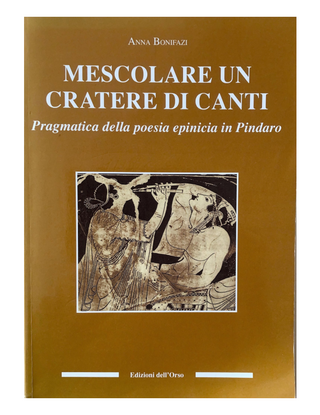
Prof. Anna Bonifazi holds a Professorship in Discourse Studies at the Department of Linguistics, University of Cologne. Her research spans Discourse Analysis, Pragmatics, Cognitive Linguistics, and Multimodal Communication with a focus on Ancient Greek Linguistics and Oral Epic traditions. She investigates phenomena like anaphoric cohesion in long texts, multimodal storytelling in film and oral traditions, and ancient Greek particles' discursive functions. Her work explores how multimodal elements (e.g., visual, musical, gestural) interact in communication, particularly analyzing films (e.g., mystery genres), ancient texts (e.g., Homeric epics), and South Slavic oral narratives. She examines cross-modal iconicity, viewpoint blending, and the cognitive underpinnings of discourse structures. Recent publications address topics like anaphoric strategies in crime stories and syntactic patterns in ancient Greek conversational frameworks. Prof. Bonifazi's research often bridges classical philology and modern cognitive theories, emphasizing embodied cognition and the interplay between language and other semiotic systems. She collaborates internationally on projects involving gesture analysis in storytelling and ancient papyrological studies. Her interdisciplinary work integrates linguistics with musicology, film studies, and cognitive science. Administratively, she oversees the Discourse Studies research group at Cologne and mentors assistants like Dr. Sandra Debreslioska and Madeleine Frings. Her lab focuses on multimodal discourse analysis using experimental and corpus-based methods.
Keunhyun (Keun) Park is an Assistant Professor of Urban Forestry at the University of British Columbia (UBC), affiliated with the Department of Forest Resources Management . He also holds an Adjunct Professor position at Utah State University in the Department of Landscape Architecture and Environmental Planning. Education: BSc and MSc in Landscape Architecture from Seoul National University; PhD in Urban Planning and Design from the University of Utah Research Lab: Faculty lead of the Urban Nature Design Research Lab ( under_lab ) His research focuses on designing healthy, just, and resilient cities through urban nature , with particular emphasis on: Environmental justice and equitable access to urban green spaces Human behavior in public spaces using drone/sensor/VR technology Smart growth urban design impacts on public health and ecological systems Recent publications demonstrate expertise in GIS applications , pedestrian behavior analysis , and urban planning across 20+ studies from 2013-2025. Collaborations include the Vancouver Park Board , Metro Vancouver , and Wasatch Front Regional Council .
Marcus Bingenheimer is an Associate Professor in the Department of Religion at Temple University, Philadelphia. His academic journey includes an MA in Sinology and a Dr.phil in History of Religions from Würzburg University, Germany, along with an MA in Communication Studies from Nagoya University, Japan. He has held teaching and research positions at institutions across Asia and Europe, including Dharma Drum in Taiwan (2005–2011) and visiting roles at universities in Korea, Japan, Thailand, France, and Singapore. His research focuses on Buddhist Studies and Digital Humanities, with specializations in the history of East Asian Buddhism, early Buddhist sutra literature (Āgama/Nikāya), and computational methods in religious studies. Key projects include the digitization of Buddhist temple gazetteers, historical social network analysis of Chinese Buddhism, and the digital edition of the Song Gaoseng Zhuan. He has also pioneered the application of GIS and stylometric analysis to religious texts. Dr. Bingenheimer has authored or edited over 20 books and numerous articles, including Island of Guanyin (2016) and Studies in Āgama Literature (2011). He directs major research initiatives like the Database of Medieval Chinese Syntax and co-leads the FROGBEAR research cluster on Religion and Technology. His work bridges traditional scholarship with cutting-edge digital tools, emphasizing open access and collaborative projects in Buddhist cultural heritage preservation. Grants and fellowships include a Temple University Presidential Grant for the Sutra2DNA project and an ACLS Translation Grant for his work on Wang Rixiu’s Pure Land essays. His lab activities involve projects like the Nanyang GIS data pool for Southeast Asian Chinese sites and the Digital Archive of Buddhist Temple Gazetteers.
Nicholas Dalton is a Senior Lecturer in the Department of Computing and Communications at Northumbria University, Newcastle. With a PhD in Engineering from University College London (2010), he has taught at prestigious institutions including UCL and The Open University across foundational to postgraduate levels, specializing in supporting neurodivergent students. His research bridges architecture and computing, focusing on large-scale user interfaces (e.g., public displays, VR, multitouch systems) and space syntax analysis. Current projects include combating obesogenic work environments through body movement tracking at standing desks and redesigning diabetes management interfaces. A founding member of NORSC (Northumbria Social Computing), he also explores neurodiversity advocacy and pedagogical innovations in computing education. His work appears in venues like the CHI Conference and Space Syntax Symposia. Education: PhD Engineering (UCL, 2010) Research Themes: HCI, Architecture-Computing Intersection, Neurodiversity Professional Affiliations: RSA Fellow, BCS/IET/ACM Member Publications span technical journals and platforms like The Conversation , translating complex topics for broader audiences.