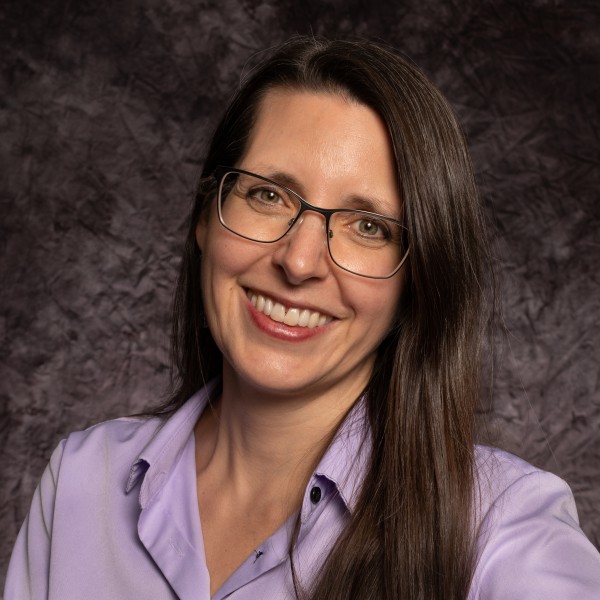
Prof. Dr. Hannah Schildberg-Hörisch is a Professor of Economics at the Faculty of Business and Economics, Heinrich Heine University Düsseldorf, specializing in Behavioral Economics and Empirical Economic Research. She serves as Senior Research Fellow at the Max Planck Institute for Research on Collective Goods and leads the Düsseldorf Institute for Competition Economics (DICE). Her research spans self-control, socio-emotional skills, economic preferences, affirmative action, and behavioral interventions, often using experimental methods and longitudinal data. Education: PhD in Economics (University of Munich, 2008), MSc in Economics (University of Mannheim, 2004), Studies in Economics, Political Sciences, and Environmental Science (University of Heidelberg, 2001). Positions: Professor (DICE, HHU Düsseldorf, 2016–present), Senior Research Fellow (Max Planck Institute, 2021–present), Postdoctoral Researcher (University of Bonn, 2009–2016), Federal Ministry of Economics and Technology (Berlin, 2008–2009), Research Assistant (University of Munich, 2004–2008). Her research combines behavioral economics, psychology, and public policy, focusing on self-control stability, socio-economic disparities in child development, and the effectiveness of affirmative action. Recent work examines spatial patterns in preference formation, parenting impacts on skills, and behavioral interventions during public health crises like the COVID-19 pandemic. Key contributions include: Identifying sensitive periods for socio-emotional skill development. Analyzing self-control’s predictive power for life outcomes. Evaluating the interplay between surveillance and behavioral compliance. Investigating fairness perceptions of affirmative action policies.
Dr. Mona Tokarek LaFosse serves as Assistant Professor of New Testament and Sacred Literature Studies (Teaching Stream) at the University of Toronto's Faculty of Divinity through a joint appointment at Emmanuel College and Victoria College. She teaches across undergraduate, basic-degree, and graduate programs at Victoria University, specializing in New Testament studies and early Christian history through interdisciplinary lenses. Her educational background includes a PhD from the University of Toronto's Department for the Study of Religion (2011), MA in Religion and Culture from Wilfrid Laurier University (2001), Honors BA in Anthropology from the University of Waterloo (1998), and Biblical Studies certificate from Columbia Bible College (1994). She previously taught at Martin Luther University College, Wilfrid Laurier University, Huron University College, and the University of Toronto. Dr. LaFosse approaches New Testament scholarship through cultural anthropology, storytelling theory, and age studies. Her research examines early Christian communities through the lens of age structure, intergenerational dynamics, and oral storytelling practices. She explores how life course stages shaped social relationships in the ancient Mediterranean, particularly focusing on 1 Timothy's treatment of age hierarchies. Her innovative teaching methodology emphasizes 'embodied story'—integrating performance and physical engagement with texts influenced by Indigenous storytelling traditions. Her recent publications reveal a strong focus on aging in early Christianity, with 2024 articles examining age demographics and comparative gerontology. She also maintains active scholarship in oral tradition studies, particularly regarding the Gospel of Mark and Shepherd of Hermas, while contributing to academic discourse through society leadership and book reviews. Dr. LaFosse holds significant leadership roles including current service on the Canadian Society for Patristic Studies Nominating Committee (2025–26) and co-chairing the Society of Biblical Literature's Social-Scientific Criticism of the New Testament section (2025–27). She actively participates in the Canadian Society of Biblical Studies, Society of Biblical Literature, and KW Biblical Colloquium. Her distinctive teaching portfolio includes innovative courses like 'Zombies, the Bible and the End of the World' and 'Gospel of Mark as Embodied Story,' reflecting her commitment to interdisciplinary engagement with biblical texts through contemporary cultural frameworks and physical performance.
Yesenia Barragan is an Associate Professor of History at Rutgers University, where she has been teaching since 2019. Specializing in Modern Latin American and African Diaspora History with a focus on race, slavery, and emancipation, she is a leading scholar in 19th-century Atlantic and Pacific world studies. Her academic journey includes a Ph.D. in Latin American History from Columbia University, where she was a Ford Foundation Fellow, and a B.A. in Philosophy and History from Brown University, where she was a Mellon Mays Undergraduate Fellow and Beinecke Scholar. Ph.D. in Latin American History, Columbia University B.A. in Philosophy and History, Brown University Professor Barragan's research centers on the intersections of race, slavery, and emancipation in the 19th-century Americas. Her groundbreaking work examines how gradual emancipation processes paradoxically strengthened slaveholders' interests in Colombia, while also exploring Latin America as a destination for African American freedom seekers during the antebellum period. Her scholarship bridges historical analysis with contemporary social justice concerns, particularly regarding race and structural inequality. Her publications reveal a consistent focus on the Colombian Black Pacific region, with particular attention to gender dynamics, legal frameworks of slavery, and the lived experiences of enslaved and free Black populations. The trajectory of her work moves from legal and economic aspects of slavery toward broader examinations of freedom movements, diasporic connections, and contemporary legacies of racial injustice. Her research demonstrates exceptional geographic scope, spanning the Atlantic and Pacific worlds while maintaining deep regional expertise in Colombia. 2022 Wesley-Logan Prize for best book on African diaspora history 2022 Best Book Award for the 19th Century Section of LASA 2023 Early Career Book Prize from Rutgers University Center for Cultural Analysis 2022 Antonine Tibesar Prize from the Conference on Latin American History National Endowment for the Humanities Fellowship (2022-2023) Professor Barragan is deeply committed to mentoring, particularly first-generation students and those from underrepresented backgrounds. She serves as Principal Investigator for 'The Free Womb Project,' a multilingual digital collection of gradual emancipation laws, and convenes the interdisciplinary 'Slavery + Freedom Studies Working Group' at Rutgers. Her grant portfolio includes significant funding from the National Endowment for the Humanities and various fellowships supporting her book projects on African American migration to Latin America during the antebellum period. As a first-generation daughter of Latin American immigrants and longtime social justice activist, Professor Barragan brings personal experience to her public scholarship work, which includes serving as a Country of Origin Information Expert for Colombian asylum cases and contributing to platforms like Black Perspectives and Telesur.
Yihan Sun is an Assistant Professor at the University of California, Riverside (UCR) since January 2020. He earned his Ph.D. in Computer Science from Carnegie Mellon University (CMU) , advised by Guy Blelloch , and holds a Bachelor's degree in Computer Science from Tsinghua University . Research Interests: Yihan Sun focuses on the theory and practice of parallel computing , including Parallel algorithms and data structures Write-efficient algorithms for Non-Volatile Memory (NVM) Computational geometry (range trees, Delaunay triangulations) Graph algorithms (SSSP, SCC, cluster-based BFS) Concurrent and persistent data structures Multi-version concurrency control (MVCC) with garbage collection Applications in databases, transactional systems, and computational biology Recent Research Trends: His work on join-based parallel balanced trees has been foundational, supporting four balancing schemes (AVL, red-black, weight-balanced, treaps) and enabling efficient implementations in graph analytics, spatial queries, and dynamic programming. Recent publications focus on output-sensitive algorithms , scalable graph libraries (PASGAL) , and pedagogical approaches to teaching parallel algorithms. Teaching: He teaches CS260 (Parallel Algorithms) at UCR and has served as a guest lecturer for MIT 6.886 (Algorithm Engineering) and CMU 15-859 (Algorithms in the real world) . He also contributed to algorithm education through a tutorial at the ACM Symposium on Principles and Practice of Parallel Programming (PPoPP 2019) . Labs & Collaborations: Yihan is a core contributor to the PAM (Parallel Augmented Maps) library, which has been integrated into systems like Aspen (graph-streaming) and C-trees . He collaborates with teams at CMU-Parlay , PBBS , and Ligra , with his code available on Github for community feedback.
Julian Shun is an Associate Professor at the Massachusetts Institute of Technology (MIT) in the Department of Electrical Engineering and Computer Science (EECS) and a principal investigator in the Computer Science and Artificial Intelligence Laboratory (CSAIL). Previously, he was a Miller Research Fellow at UC Berkeley and earned his Ph.D. from Carnegie Mellon University under Guy Blelloch. His research focuses on parallel and high-performance computing, with emphasis on graph analytics, spatial/graph clustering, and dynamic algorithms. He designs algorithms with theoretical guarantees and empirical efficiency, along with high-level programming frameworks to simplify parallel code development. His work spans cache-oblivious, external-memory, and streaming graph algorithms, addressing scalability and performance across diverse computational architectures. Julien's recent publications highlight advancements in parallel graph traversal, dynamic connectivity, and approximation algorithms for centrality metrics. His research also explores domain-specific languages like GraphIt for graph analytics and frameworks such as Julienne for work-efficient bucketing. Scientific Awards: Miller Research Fellow at UC Berkeley He has taught graduate-level courses at MIT, including 6.506 (Algorithm Engineering) and 6.886 (Graph Analytics), emphasizing theoretical foundations, experimental analysis, and open-ended research projects.
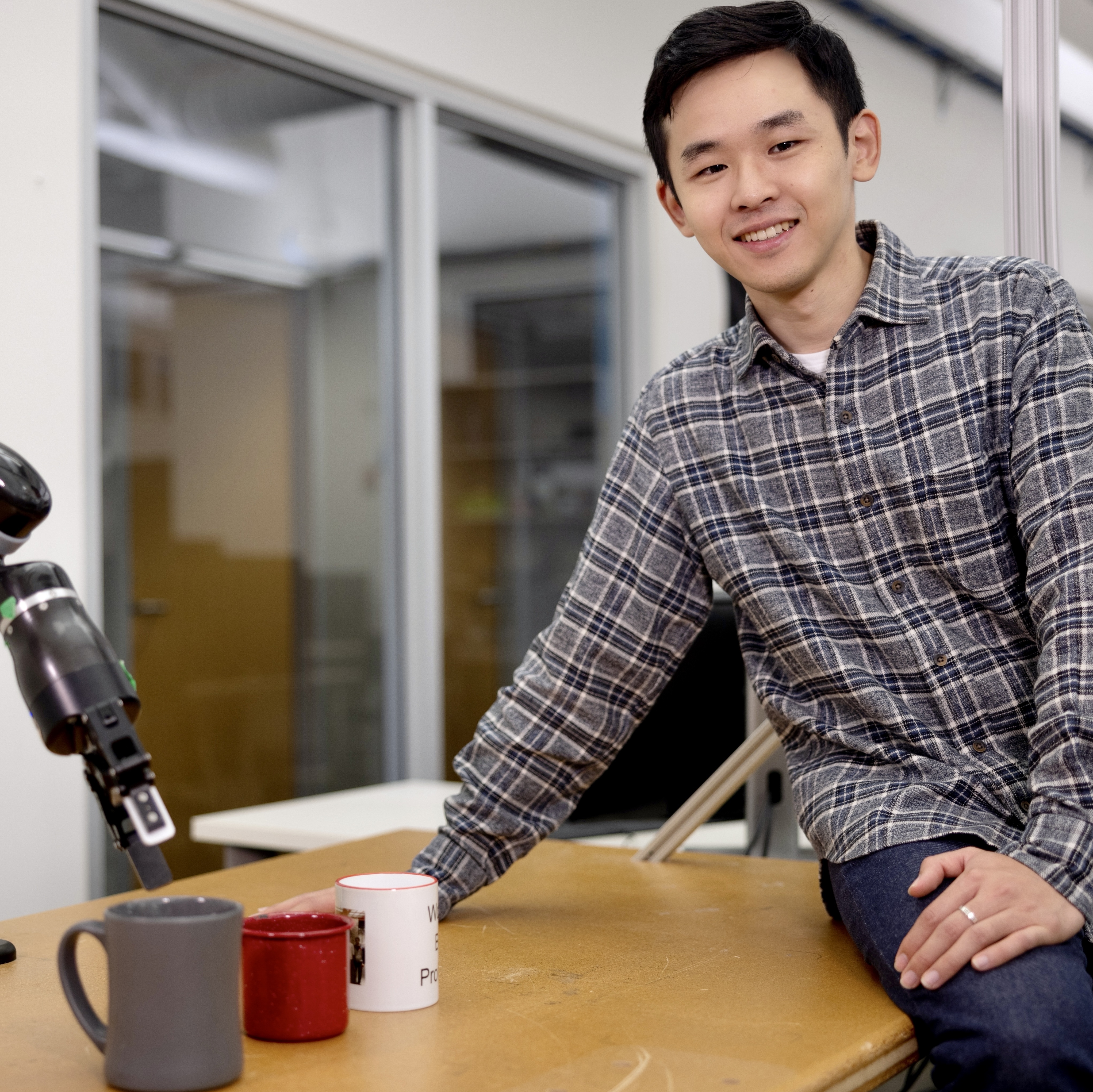
Weiyu Liu is an incoming Assistant Professor at the Kahlert School of Computing , University of Utah. Previously, he was a Postdoctoral Scholar at Stanford University in the CogAI group and Stanford Vision and Learning Lab (SVL), after completing his Ph.D. in Robotics at Georgia Institute of Technology under the supervision of Sonia Chernova. Ph.D. in Robotics (Georgia Tech) Bachelor's in Electrical Engineering (Georgia Tech) His research focuses on developing robots that can perceive, model, and interact with the real world through structured knowledge representations grounded in language and sensorimotor data. Key areas include language-guided manipulation , long-horizon task execution , and semantic reasoning frameworks for robotic systems. His recent work (2024) explores: Language-annotated demonstration integration (BLADE framework) 3D visual grounding with concept learners Embodied decision-making benchmarks Long-horizon inference challenges 4D instruction grounding from videos Scientific contributions include the RSS Pioneer (2023) recognition and First Place in Fetch It! Mobile Manipulation Challenge (2019) . He advocates for weekly individual mentoring , open research dissemination, and holistic student development in both academic and personal growth.
Anna L. Boozer is a Professor in the History Department at Baruch College's Weissman School of Arts and Sciences, City University of New York. Her research focuses on households, connectivity, and empires in Roman Egypt and Meroitic Sudan, with extensive fieldwork at Amheida (Dakhleh Oasis) and Meroe. She directs the CUNY excavations at Amheida and the Meroe Archival Project. Boozer earned her Ph.D., M.Phil, and M.A. in Archaeology/Anthropology from Columbia University and a B.A. in Philosophy and History of Math/Science from St. John's College. Her scholarly contributions span household archaeology, imperial borderlands, and material culture studies, examining how domestic spaces reflect broader social and political dynamics in antiquity. Her research interests center on social archaeology of Roman Egypt and Meroitic Sudan, with particular focus on household organization, material culture, and imperial connectivity. She examines how domestic spaces serve as sites of cultural negotiation, exploring themes of identity formation, social memory, and daily life practices at imperial frontiers. Her work challenges traditional Romanization narratives by highlighting local agency and cultural hybridity. Boozer's publications reveal consistent engagement with household archaeology, material culture analysis, and imperial borderlands studies. Her work demonstrates how domestic contexts provide critical insights into larger imperial processes, with recurring themes of connectivity, cultural negotiation, and the social significance of material remains. She frequently employs interdisciplinary approaches bridging archaeology, anthropology, and history. Teaching and Learning Award (University of Reading, 2013) Lump Sum Award (University of Reading, 2012) Boozer actively supervises doctoral dissertations and has secured multiple research grants including PSC-CUNY awards totaling over $20,000 for projects on Roman Egypt and Meroitic Sudan. She serves as Area Editor for the Encyclopedia of Ancient History and sits on editorial boards for Dotawo: A Journal of Nubian Studies and Brepols' Borders, Boundaries, and Landscapes series. She directs two major research initiatives: the CUNY excavations at Amheida (ancient Trimithis), a Romano-Egyptian city in the Dakhleh Oasis, and the Meroe Archival Project which analyzes legacy data from Sudan's ancient Meroitic capital. These projects involve international collaborations with institutions in Egypt, Sudan, and Europe, focusing on household archaeology and imperial connectivity.
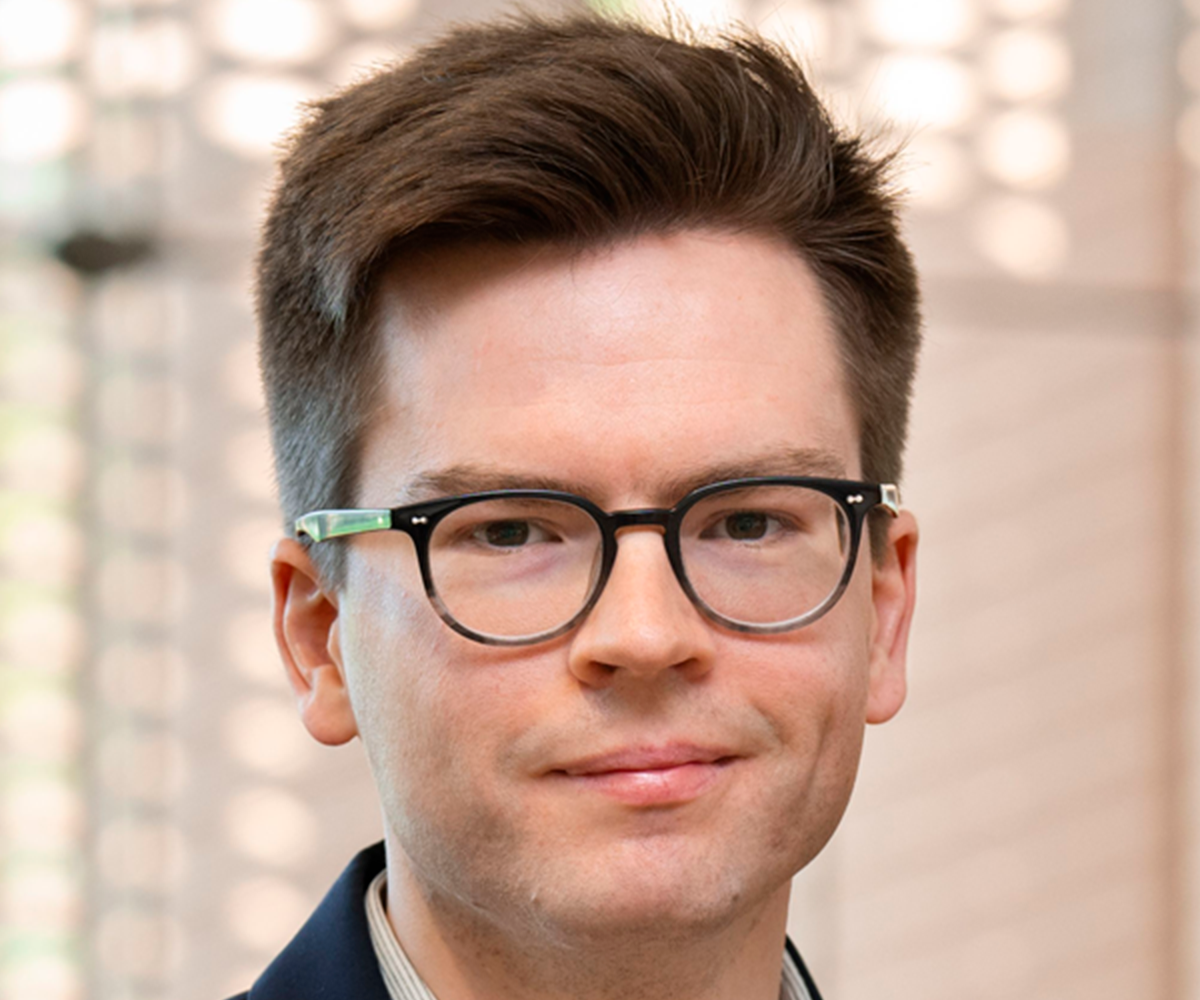
Michael Skinnider serves as Assistant Professor at Princeton University's Lewis-Sigler Institute for Integrative Genomics and Assistant Member of the Ludwig Princeton Branch. His research develops AI-driven computational methods to identify unknown small molecules in mass spectrometry data, with applications in cancer biology and forensic drug detection. His educational background includes: BArtsSc from McMaster University (2015) PhD from University of British Columbia (2021) MD from University of British Columbia (2023) Skinnider's work centers on illuminating the "metabolomic dark matter" —unidentified chemical entities in mass spectrometry data. His lab pioneers machine learning approaches for metabolite identification, focusing on connections between unknown metabolites, cancer risk, and the microbiome. Recent innovations include chemical language models that transform mass spectrometry outputs into chemical structures, with applications spanning cancer diagnostics to forensic analysis of designer drugs. His research bridges computational biology, chemistry, and clinical medicine through low-data learning techniques. Publication trends reveal three dominant themes: (1) AI-driven metabolite identification (25% of recent work), (2) single-cell/spatial data analysis (40%), and (3) molecular interaction networks (35%). His 2024 Nature Machine Intelligence paper demonstrated that invalid SMILES strings enhance chemical language models , overturning previous assumptions. Articles consistently apply computational methods to biological discovery, with growing emphasis on cancer metabolism and translational applications. Major recognitions include: Forbes 30 Under 30 (2022) International Birnstiel Award (2022) Dan David Prize Borealis AI Fellowship NIH Award C&EN's Talented Twelve (2023) Young Explorer Award Grand Prize Skinnider leads the Skinnider Research Lab at Princeton's Carl Icahn Laboratory, which collaborates with forensic laboratories and Ludwig cancer researchers. The lab specializes in transforming mass spectrometry data into biological insights through innovative algorithms. During his undergraduate studies, he co-founded Adapsyn Bioscience to translate natural product discovery research into commercial applications. Current projects include developing metabolome-wide identification tools and exploring diet-derived metabolites that modulate cancer progression.
Dr. Jack Copley is an Associate Professor in International Political Economy at the School of Government and International Affairs, Durham University. Previously, he held a Lecturer position at the University of Bath and earned his PhD from the University of Warwick. His research bridges historical and contemporary analyses of capitalist governance. Current affiliation: Durham University Prior affiliation: University of Bath Education: PhD, University of Warwick Copley's work focuses on the governance of global capitalism, emphasizing how states navigate economic development dilemmas. His research spans two key themes: (1) the financialization of the global economy through state policies, exemplified by his analysis of Britain's financial liberalization (1970s–1980s), and (2) the challenges of decarbonizing economies amid long-term growth stagnation. He integrates declassified archives, historical analysis, and critical political economy frameworks to explore intersections between financial policy, class struggle, and climate governance. Recent publications highlight his expertise in financialization dynamics, climate crisis management, and Marxist economic theory. His 2022 book Governing Financialization provides a foundational account of Britain's financial liberalization, while his 2024 work on steel decarbonization underscores industrial transition challenges in stagnant economies. Collaborative projects examine late capitalism's 'wicked trinity' of stagnation, surplus humanity, and environmental breakdown.
Professor Stefanie Kappler serves as Professor in Conflict Resolution and Peacebuilding at Durham University's School of Government and International Affairs since 2015, following her directorship of the Archbishop Desmond Tutu Centre for War and Peace Studies at Liverpool Hope University. Her research examines contested memories of violence and peacebuilding through extensive fieldwork across Bosnia-Herzegovina, South Africa, Northern Ireland, Cyprus, Brussels, Kosovo, and the Basque Country. Education: PhD from University of St Andrews Research Interests: Kappler investigates memory politics and legacies of violence in peacebuilding, with groundbreaking work on artists' roles in addressing justice demands amid ongoing inequality. Her scholarship explores decolonising peace education and spatial dimensions of peace formation , challenging liberal peacebuilding paradigms through critical analysis of cultural heritage and resistance practices in post-conflict societies. Publication Trends: Her 2021-2025 publications reveal increasing focus on arts-based peace formation , with soundscapes and curation emerging as key methodologies for decolonial memory work. Kappler consistently connects spatial reparations to structural violence while advancing intersectional frameworks that integrate feminist theory with critical peace studies, particularly in Western Balkans and Southern African contexts. Projects and Grants: Kappler leads externally-funded initiatives including: Peace and Memory : Analyzing memory politics-cultural heritage-peacebuilding intersections The Art of Peace : Investigating arts' role in peace formation processes Decolonising Peace Education : Transforming curricula through critical pedagogy Labs and Teams: She collaborates with international research collectives including University of Manchester's Art of Peace network and Aspen Institute Germany, evidenced by her 2024 Western Balkans reconciliation report, though no dedicated physical lab is specified in her profile.
Victoria Veguilla Del Moral is an Associate Professor in Public Law at Universidad Pablo de Olavide, specializing in Political and Administrative Science with a focus on Western Sahara politics. Her research examines the complex interplay between territorial administration, political mobilization, and identity in contested spaces, particularly in Dakhla, Western Sahara. She earned her PhD from the University of Granada in 2011 with a thesis titled Policies of the Octopus in Dakhla: Public Action, Halieutic Resources and Social Dynamics , supervised by Dr. Bernard Botiveau and Dr. Juan Montabes Pereira. Her academic journey reflects deep engagement with both theoretical political science frameworks and extensive fieldwork in North Africa. Veguilla Del Moral's research interests span International Politics of the Middle East, MENA region studies, political ethnography, and electoral processes in occupied territories. Her work particularly focuses on Sahrawi youth movements, Moroccan territorial policies in Western Sahara, and the dynamics of political mobilization in contested spaces. She approaches these topics through a lens that combines political science, anthropology, and postcolonial studies, revealing the complex ways local populations navigate occupation and political control. Her publication record shows consistent scholarly output with significant recent contributions including Regionalization under Occupation: Western Saharan Parliamentary Elites and the Moroccan Regionalization Strategy (2011-16) (2024) and Do Electoral Processes in Western Sahara Produce Representation Beyond the Context of Occupation? (2023). These works demonstrate her ongoing commitment to analyzing the political realities of Western Sahara through empirical research on governance structures, electoral participation, and resistance movements. While no specific scientific awards are mentioned in the available materials, her extensive publication record in reputable academic venues and her contributions to edited volumes like Arab Youths: From Morocco to Yemen: Leisure, Cultures and Politics indicate significant scholarly recognition. Her research methodology combines political ethnography with institutional analysis, often working across linguistic boundaries (publishing in English, French, and Spanish). She has established herself as a leading expert on Western Sahara politics, with particular expertise in the social dynamics of Dakhla and the political mobilization of Sahrawi youth. Her work contributes to broader discussions about governance in contested territories and the relationship between state administration and local populations in postcolonial contexts.
Elsa Arcaute is a Professor of Complexity Science at the Centre for Advanced Spatial Analysis (CASA) at University College London. She is a physicist with expertise spanning mathematical physics, urban systems, and complexity science. Her work bridges theoretical physics with practical applications in urban planning and policy. Her educational background includes a PhD in Theoretical Physics from the University of Cambridge (2006) and a Masters in Mathematics (part III of the Mathematical Tripos). She began her career in theoretical physics with research on Clifford algebras applied to Penrose's twistors before transitioning to complex systems during a visit to Prof. Henrik Jensen at Imperial College London. Arcaute's research focuses on modeling urban systems through the lens of complexity science, with particular emphasis on urban scaling laws, hierarchical structures in cities, and the definition of city boundaries. She applies network theory, percolation theory, and multifractal methodologies to analyze urban infrastructure, socio-economic patterns, and spatial inequality. Her work often involves interdisciplinary collaboration with economists, geographers, and data scientists. Analysis of her recent publications reveals a strong focus on urban complexity, with significant contributions to understanding city hierarchies, commuting networks, knowledge spillovers, and the impact of digital platforms on urban systems. Her research demonstrates how complex systems theory can provide novel insights into urban dynamics, scaling phenomena, and spatial organization. Arcaute has been involved in several major research projects, including an EPSRC grant on Digital Economies, an ERC-funded project MECHANICITY (led by Prof. Michael Batty) focusing on morphology, energy, and climate change in cities, and a MacArthur-funded project on smart cities and policy. She serves as a Review Editor for Frontiers in Energy Systems and Policy and has contributed to numerous publications that have garnered significant attention across academic and policy circles. Her work has been referenced in policy sources, news outlets, and social media, demonstrating the real-world impact of her research.
Troels Schultz Larsen is an Associate Professor in the Department of Social Sciences and Business at Roskilde University, specializing in Social Dynamics and Change. With a PhD and MSc in Public Administration, he has been with Roskilde University since 2005, progressing from PhD fellow to his current position as Associate Professor since 2014. His work focuses on urban sociology, territorial stigmatization, and the dynamics of marginalized urban areas within the Danish welfare state context. Dr. Schultz Larsen's academic journey includes: 2014-Present: Associate Professor, Department of Social Sciences and Business, Roskilde University 2009-2014: Assistant Professor/Post-Doc, Department of Society and Globalization, Roskilde University 2005-2009: PhD Fellow, Department of Society and Globalization, Roskilde University 1998-2005: MSc (Public Administration equivalent), Department of Social Science, Roskilde University Identifying his theoretical position as "Historically-Specific Praxis-Theory," Dr. Schultz Larsen draws inspiration from Bourdieu, Wacquant, Gramsci, and other critical theorists. His research spans urban sociology, territorial stigmatization, welfare state dynamics, and public innovation. He examines how marginalized urban areas are produced and maintained through intersecting social, economic, and political processes, with particular attention to the Danish context and its "ghetto list" policies. His work challenges simplistic interpretations of urban marginality, emphasizing the complex interplay between housing markets, labor markets, education systems, and family structures in reproducing spatial inequalities. Dr. Schultz Larsen's recent publications reveal a deepening focus on territorial stigmatization as both a theoretical concept and practical policy issue. His 2024-2025 work, including the book "Fragmenting Cities: The State, Territorial Stigmatization and Urban Marginality," develops a comprehensive framework for understanding how state policies actively produce spatial inequalities. He critically analyzes Denmark's controversial "ghetto list" policy, demonstrating how such classifications function as mechanisms of dehumanization and social exclusion. His research increasingly adopts comparative perspectives, connecting Danish urban marginality to broader European and global patterns of spatial inequality. Dr. Schultz Larsen's scholarly contributions include: Active participation in major research projects including EU-HORIZON24's RURALITIC Membership in the Royal Danish Academy (2025-2027) Extensive media engagement on urban policy issues With over 15 years of teaching experience at Roskilde University, Dr. Schultz Larsen has supervised numerous student projects across social sciences, politics, and public administration. His supervision spans diverse topics including urban policy, social integration, housing, labor market policies, and public innovation. He has been involved in several significant research grants, most notably as a participant in the CLIPS project (Collaborative Innovation in the Public Sector), a major multi-institutional collaboration examining innovation in public services. His current research includes the EU-HORIZON24 project RURALITIC and the BOSID project on housing stigmatization in Denmark. Dr. Schultz Larsen is actively involved in research networks focused on urban marginality and territorial stigmatization. He collaborates closely with Dr. Katrine Nørgaard Delica on multiple projects and publications, including their forthcoming book "Fragmenting Cities." His work with the North Seeland Police Department on the "TRYK Politi" initiative represents a significant practice-oriented research partnership examining citizen engagement in crime prevention. As a member of the Royal Danish Academy (2025-2027), he contributes to national scholarly discussions on urban policy and social governance.
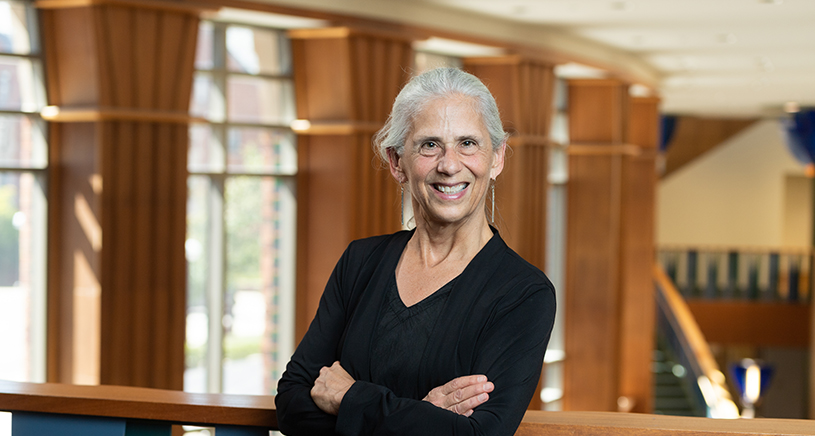
Amy J. Schulz is the University Diversity and Social Transformation Professor at the University of Michigan School of Public Health , specializing in the Department of Health Behavior and Health Equity . She is a sociologist and leading scholar in community-based participatory research (CBPR) , focusing on how social and physical environmental exposures contribute to racial and socioeconomic health inequities . Her current work with the Community Action to Promote Healthy Environments (CAPHE) partnership addresses air pollution disparities in the Detroit Metropolitan Area through policy intervention and community science initiatives. Education PhD, University of Michigan (1994) MSW, University of Michigan (1990) MPH, University of Michigan (1981) Her research examines environmental racism , health impact assessments , and CBPR methodologies . She has conducted policy evaluations for the Gordie Howe International Bridge and state energy plans, while also linking policing, clean water access, and COVID-19 disparities to systemic racism. Recent publications analyze cumulative environmental risks , neighborhood poverty effects , and policy advocacy tools for health equity. She teaches graduate courses such as Environmental Health Promotion and Community-Based Participatory Research , emphasizing interventions for vulnerable populations. Her collaborative work spans public health practice , community science , and urban health disparities , with funding for projects in air quality monitoring , student environmental advocacy , and policy translation . She maintains active partnerships with community organizations in Detroit and has published extensively on the intersection of social determinants and physical environmental risks .
Vincent Debiais is a CNRS Research Director affiliated with the École des Hautes Études en Sciences Sociales (EHESS) and Institut National d'Histoire de l'Art (INHA) in Paris. He leads the research team 'Anthropologie Historique du Long Moyen Âge' (AHLoMA) at the Centre de Recherches Historiques. Education: PhD in Medieval History, University of Poitiers (2004) Habilitation in History of Medieval Art, University of Poitiers (2015) Research Focus: Debiais investigates intersections of written and visual culture in medieval artifacts, specializing in epigraphy, visual theology, and material practices. His current projects examine representations of silence in sacred imagery and abstraction in medieval artistic traditions, combining anthropological approaches with historical analysis. Publications Analysis: His recent works demonstrate consistent focus on materiality of medieval inscriptions across diverse media (stone, textiles, ivories). Key thematic clusters include liturgical objects, funerary epigraphy, visual silence, and methodological innovations in analyzing medieval graphic practices. Awards: Herbert L. Kessler Prize for Medieval Art History (2022) Research Leadership: He directs the international team 'Arts et Intelligences du Silence' (EHESS, 2020-2024), coordinating interdisciplinary research on silence in humanities through seminars, publications, and resident scholar programs.