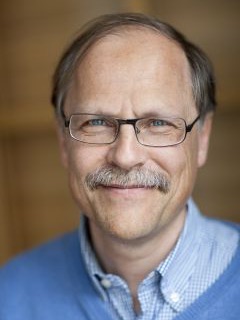
Kurt Johansson is a Full Professor of Mathematics at KTH Royal Institute of Technology, Sweden. His academic journey includes roles as Associate Professor at KTH (1993-2001) and Uppsala University (1988-1993), alongside research funded by the Swedish Natural Science Research Council (1998-2003). His primary affiliations are within the Department of Probability, Mathematical Physics & Statistics at KTH, where he also coordinates courses on Differential Equations and Fourier Analysis. Education: BSc in Physics (1982) and PhD in Mathematics (1988), both from Uppsala University. Research interests focus on Probability Theory , Mathematical Physics , and Random Matrix Theory , with contributions to stochastic models, determinantal processes, and universality in statistical mechanics. Key Awards: Wallenberg Prize (1995), Rollo Davidson Prize (2000), Göran Gustafsson Prize (2002), Fellow of the American Mathematical Society (2012), and multiple Wallenberg Scholar grants (2011-2023). Grants: Major funding from the Swedish Research Council (VR), K&A Wallenberg Foundation, and others. His research group explores Random Matrices, Stochastic Models, and Analysis , with notable work on the Arctic Circle Theorem and KPZ universality class. Recent publications analyze Brownian directed percolation and domino tilings of the Aztec diamond, reflecting his focus on interdisciplinary applications of probability and mathematical physics.
François Peeters is a Full Professor of Physics at the University of Antwerp, Belgium, holding the position since 2000 (with Dutch title 'gewoon hoogleraar' since 2003). He previously served as Research Director (FWO-VI) at the University of Antwerp (1996-1999), Research Leader (NFWO) (1992-1996), and Senior Research Assistant (NFWO) (1988-1992), establishing a distinguished academic career spanning over three decades. His educational background includes a Ph.D. in Physics from the University of Antwerp (1982), followed by a Habilitation (Hoger aggregaat) from the same institution (1987), and a postdoctoral fellowship at Bell Laboratories in Murray Hill, New Jersey (1982-1983). His academic journey also featured research periods at prestigious institutions including the High Magnetic Field Laboratory in Grenoble, University of California Berkeley, Oxford University, and several Brazilian and Australian universities. Peeters' research focuses on theoretical condensed matter physics , specializing in the electronic, optical, and magnetic properties of nanostructured systems. His work encompasses semiconductors , superconductors , graphene , and hybrid quantum systems , with particular emphasis on strong correlations in both classical (colloids, dusty plasma) and quantum (quantum dots) environments. His theoretical frameworks bridge fundamental quantum mechanics with practical nanotechnology applications, driving innovations in spintronics and quantum device design. Analysis of his publication record reveals a clear evolution from foundational work on polaron physics and quantum Hall systems in the 1980s-1990s toward contemporary research on graphene, topological materials, and programmable quantum nanodevices. His most cited works demonstrate consistent leadership in mesoscopic physics, with recent publications showing increased focus on spin-dependent transport phenomena and two-dimensional material systems. His scientific recognition includes: Fellowship in the American Physical Society (2005) APS Outstanding Referee award (2008) Doctor Honoris Causa from University of Szeged, Hungary (2009) Peeters has supervised 26 completed PhD theses and currently leads the Condensed Matter Theory research group comprising 3 ZAP researchers, 16 PhD students, and 8 postdocs. His grant portfolio includes coordination of an EU Marie Curie Training site on 'Electrons on helium', participation in multiple EU projects, COST actions, and ESF networks, demonstrating sustained success in securing competitive international funding. The Condensed Matter Theory group maintains extensive international collaborations, evidenced by Peeters' research visits to over 10 institutions worldwide and regular hosting of 3-4 international visitors at postdoc or professorial levels. The group's output of over 770 refereed publications with 12,000+ citations reflects its position at the forefront of theoretical condensed matter physics research.
Giles Foody is a Professor of Geographical Information Science at the School of Geography, University of Nottingham, and a member of the Rights Lab in the Faculty of Social Science. He is recognized as the UK’s most prolific and highly cited researcher in remote sensing, with a focus on interdisciplinary applications for real-world impact. Education: BSc (1st class honours) and PhD from the University of Sheffield. His research spans image classification for thematic mapping, particularly in land cover and human-induced changes. He pioneered soft image classifications, object-based methods, neural networks in remote sensing, and citizen sensors in mapping. Current projects include 'slavery from space' and Sargassum beaching analysis to meet UN SDGs. The trends in his publications highlight advancements in remote sensing, citizen science, and land cover mapping. His work integrates machine learning and geospatial analysis for social and environmental challenges. Scientific awards: IEEE Fellowship, David Landgrebe Award, Founder's Award (ISARA), multiple RSPSoc accolades, and SDG-related honors. Giles has supervised 51 research students and contributed to academic service via editorial roles, peer review leadership, and participation in national research assessment panels. His interdisciplinary work extends to European National Mapping Agencies and anti-slavery initiatives.
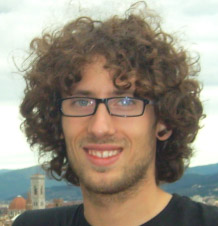
Dr. Quirin Thomas Simon Vogel is a Senior Lecturer at the Department of Statistics, University of Klagenfurt. He previously held postdoctoral positions at the Technical University of Munich, New York University Shanghai, and served as an Interim Professor at Ludwig-Maximilians University of Munich. His research bridges probability theory with statistical mechanics and algorithmic applications. Current role: Senior Lecturer (2025) Previous roles: Postdoc (TUM, NYU Shanghai), Interim Professor (LMU Munich) His research focuses on: Random walks and their geometric/stochastic properties Randomized algorithms with applications in statistical models Quantum-inspired probabilistic systems (e.g. interacting bosonic loop soups) Large deviation theory for complex systems Percolation and phase transitions in particle models The articles reflect trends in probability theory, mathematical physics, and algorithmic applications. Key topics include high-dimensional percolation, Bose gas models, neural network theory, and stochastic geometry. The work combines rigorous mathematical analysis with interdisciplinary applications in physics and computer science. Scientific awards and functions cannot be determined from the provided data, as they describe other researchers. The department's research activities include projects on statistical learning, quantum models, and algorithmic probability, though Vogel's direct involvement in these specific funded projects isn't explicitly stated.
Thomas Ertl is a Professor at the University of Natural Resources and Life Sciences, Vienna (BOKU), leading the Institute of Sanitary Engineering and Water Pollution Control. His research focuses on urban water systems, emphasizing sustainable drainage, climate change adaptation, and nature-based solutions. He has coordinated 55 projects, including international initiatives in Albania and Austria, addressing stormwater management, wastewater heat recovery, and sewer infrastructure resilience. Key Projects : Analysing re-activated watercourses for urban resilience (2024–2028) Resilient rainwater management in Austria (2024–2028) Assessing pollutant emissions in Albania (2024–2027) Research Themes : Building Information Modeling (BIM) in wastewater systems Uncertainty analysis under climate change Stormwater pollution and heat island mitigation Awards : 2018: Goldene Ehrennadel des ÖWAV 1993: Best student award at AGIT 93 His recent publications highlight multidisciplinary approaches to wastewater energy recovery, spatial compatibility of nature-based solutions, and prioritization of stormwater management sites. He has supervised numerous theses and contributed to media discussions on urban climate resilience, including articles in Austrian outlets like futurezone.at and Der Kurier.
Prof. Sara Merino Aceituno is a Professor at the Faculty of Mathematics, University of Vienna, leading research in kinetic theory and its applications to biology, medicine, and social sciences. She holds roles as Vice-Dean of the Faculty and Head of the Institute of Mathematics. Her work bridges mathematical models with experimental data, focusing on emergent phenomena in collective dynamics, opinion formation, and cell behavior. She teaches advanced courses on kinetic theory, biomathematics, and mathematical strategies for learning. Her contributions include modeling cell delamination, nematic alignment, and swarm dynamics through PDEs and probabilistic methods. Collaborations with experimentalists drive her interdisciplinary research. She actively engages in education, advising, and public outreach, including a video series explaining mathematical patterns in nature. Her research emphasizes understanding macroscopic patterns arising from microscopic interactions in complex systems. Education: Holds a PhD in Mathematics, with expertise in kinetic theory and applied partial differential equations. Teaching and leadership roles reflect her commitment to academic excellence and student support. Her work integrates experimental and computational models to study clonal dynamics in tissues and mechanical constraints in epithelial layers. She has authored over 20 papers on topics ranging from active matter to opinion formation networks, contributing to both theoretical advancements and practical applications in biology and social sciences. Research focuses on deriving hydrodynamic and continuum models from particle systems, analyzing stability and bifurcations in collective behavior. Grants and collaborations include the Vienna Biocenter PhD Program and experimental groups in cell biology. Her lab explores how environmental factors influence particle swarms and how mechanical forces shape cell cycles in pseudostratified epithelia.
Hugo Duminil-Copin is a renowned mathematician holding half-time appointments as Professor at the Institut des Hautes Études Scientifiques (IHÉS) and the Université de Genève . He has been recognized with prestigious awards, including the Fields Medal (2022) and the New Horizons Prize in Mathematics (2017) . His research focuses on probability theory and statistical mechanics, particularly phase transitions, percolation, and critical phenomena. Education: He earned his Ph.D. in Mathematics from the University of Geneva in 2012. Key academic milestones include a Full Professorship at IHÉS from 2015 and prior roles as Assistant and Associate Professor at Geneva. Research: Duminil-Copin explores foundational questions in statistical physics, such as the rigorous analysis of lattice models and phase transitions in dimensions three and four. His work bridges probability, combinatorics, and mathematical physics, with notable contributions to percolation theory and the Ising model. Awards: Beyond the Fields Medal, he has received the EMS Prize (2016), the Loeve Prize (2017), and an ERC Consolidator Grant (CRIBLAM, 2018–2023). Grants & Leadership: He led the ERC-funded CRIBLAM project, investigating random-cluster models and related topics. His collaborations span global institutions, emphasizing interdisciplinary approaches to complex systems.
Prof. Dr. Thomas Franosch is a Full Professor of Theoretical Physics at the Universität Innsbruck, Department of Theoretical Physics. His research focuses on transport phenomena in complex systems, including crowded and disordered media, active matter, non-equilibrium systems, and the glass transition. He leads the Bio and Nano Physics research group and has held academic positions at institutions such as Friedrich-Alexander-Universität Erlangen-Nürnberg and Ludwig-Maximilians Universität München. His career includes a PhD from TU München (1996) and postdoctoral research at Harvard University (1998-2000). He has contributed extensively to understanding dynamics in confined colloidal systems, mode-coupling theories for glass transitions, and active particle dynamics. His work bridges theoretical frameworks with applications in soft matter and biophysics. Research interests emphasize time-dependent nonlinear response, anomalous transport, and the interplay between geometry and dynamics in confined environments. Recent publications explore light-induced caging effects in colloids, Anderson localization in fluctuating media, and stochastic dynamics of active particles. Publications span over two decades, with a focus on theoretical models explaining complex fluid behavior. Notable contributions include studies on confined hard-sphere fluids, Lorentz gas models, and active matter systems. His work frequently employs advanced simulation techniques and mode-coupling theory to analyze non-equilibrium phenomena.
Bettina Grün is an Associate Professor and Deputy Head of the Institute for Statistics and Mathematics at Vienna University of Economics and Business (WU). Her research focuses on Bayesian mixture models, cluster analysis, and applying statistical methods to sustainability, tourism, and environmental studies. She has led multiple research projects, including studies on environmental behavior in tourism and advanced text modeling in economics. Grün holds a PhD in Technical Mathematics from TU Wien (2006) and a Habilitation in Statistics from Johannes Kepler University Linz (2012). She has authored over 150 publications in top journals like Journal of Environmental Management and Expert Systems with Applications . Her work emphasizes practical applications, such as reducing hotel waste through behavioral interventions and developing R packages like movMF and circlus for statistical clustering. Grün has received awards including the AIEST Best Contribution Award (2019) and the MRS Silver Medal (2016). Grün teaches courses on statistical modeling and leads projects like Analysis of Central Bank Communication (2022–2026) and Environmentally Friendly Behavior in Tourism (2019–2024).
Arne Ziegler is a full Professor at the Institute of German Studies within the Faculty of Humanities at the University of Graz, Austria. His academic career spans over two decades, with current leadership of the Austrian Science Fund (FWF)-supported Special Research Programme 'German in Austria' (DiÖ), running from 2016 to 2026. He maintains active roles in international academic governance and editorial boards. Professor Ziegler's research centers on grammatical variation in Standard German , with particular emphasis on Austrian German dialects, urban sociolinguistics, and youth language phenomena. His work bridges theoretical linguistics and practical applications, examining how regional, social, and historical factors shape language structures. Key contributions include the development of the 'Variant Grammar of Standard German' – a comprehensive digital reference work documenting areal grammatical differences across German-speaking regions. Analysis of his recent publications reveals consistent focus on urban language dynamics, grammatical variation patterns, and reference grammar development. His work demonstrates methodological innovation through quantitative analysis of spoken interaction, spatial distribution mapping of linguistic features, and interdisciplinary approaches combining sociolinguistics with historical text analysis. The 'German in Austria' project represents the cornerstone of his current research, investigating language variation, contact phenomena, and speaker perception across Austria. Professor Ziegler has secured significant competitive funding including three major FWF projects: 'German in Austria' (2016-2026), 'Youth language(s) in Austria' (2013-2016), and 'Variant Grammar of Standard German' (2015-2018). These initiatives involve extensive collaboration with researchers across German-speaking countries and support large-scale empirical investigations into contemporary language use. He holds prominent leadership positions including Chair of the International Association for German Studies (IVG) since 2000, Chair of the Society for German Language History since 2008, and editorial roles for 'Technical language' (International Advisory Board) and 'Contingentia' (Editorial Board). His academic service extends to co-editing six major book series including 'Writings on the German Language in Austria' (Peter Lang) and 'Lingua Historica Germanica' (de Gruyter), significantly shaping publication venues for German linguistic research.
Mioara Mandea is a distinguished geophysicist currently serving as Solid Earth Programmes Manager at the French Space Center (CNES) in Paris since 2011. She maintains strong academic affiliations with Sorbonne University through her long-standing association with the Institut de Physique du Globe de Paris (IPGP), where she held multiple research positions from 1991-2011 including Head of the National Magnetic Observatory (1994-2004). Her career also includes leadership roles at the European Center for the Arctic at Versailles University and the Helmholtz Center in Potsdam. Her educational background includes dual PhDs in Geophysics (1993 from Bucharest University and 1996 from IPGP) followed by an HDR (Habilitation à diriger les recherches) in Physics of the Earth from Université Paris VII in 2001. This highest French academic qualification authorizes her to supervise doctoral candidates and apply for professorial positions. Mandea's research spans Earth observation from space, geopotential fields analysis, and geomagnetic field studies using historical archives, modern observatories, and satellite data. She specializes in adapting advanced mathematical tools to analyze magnetic and gravity data, with particular focus on Earth's deep interior, planetary magnetism (Moon, Mars, Mercury), and Arctic region geophysical changes. Her work bridges theoretical geophysics with practical space-based observation techniques. Analysis of her recent publications reveals a consistent focus on integrating satellite-derived gravity and magnetic data to understand Earth's interior dynamics. Her research shows increasing sophistication in mathematical modeling techniques, particularly wavelet analysis and multi-sensor data integration. The publications demonstrate strong international collaboration patterns, with frequent co-authorship across European institutions and the United States. Membre associé de l'Académie Royale de Belgique (2018) Medal 'Petrus Peregrinus' of European Geosciences Union (2018) Chevalier - Ordre National du Mérite (2016) Member of Academia Europaea (2015) Member of the Bureau des Longitudes (2014) International Award of American Geophysical Union (2014) Mandea has held significant leadership roles in the international geoscience community, including Secretary General of the International Association of Geomagnetism and Aeronomy since 2009, Chair of the Science Committee at the International Space Science Institute since 2016, and former Secretary General of the European Geosciences Union (2012-2016). She serves on multiple advisory boards for major research projects including EPOS and MED-SUV, and has chaired numerous award committees for the AGU and EGU. Her editorial work includes associate editor roles for Surveys in Geophysics and special issues for Physics of the Earth and Planetary Interior. Her research has been supported through leadership roles in major international space-based Earth observation initiatives, particularly through her position at CNES where she manages solid Earth science programs. She has contributed to numerous collaborative projects involving satellite missions for geomagnetic and gravity field measurements.
Zoran Obradovic holds the prestigious L.H. Carnell Professorship of Data Analytics at Temple University where he serves as Professor in the Computer and Information Sciences Department and the Statistics Department. He also directs the Center for Data Analytics and Biomedical Informatics and maintains secondary appointments at Temple's Fox School of Business. Internationally, he serves as Research Professor at The Mathematical Institute of the Serbian Academy of Sciences and Arts, and as Visiting Professor at both the School of Medicine and School of Management at the University of Belgrade. His research spans multiple cutting-edge domains of data science: Bioinformatics and protein disorder prediction Healthcare informatics and clinical decision support systems Machine learning for complex networks and big data Spatial and temporal data analytics Applications in healthcare management, social networks, and earth science Dr. Obradovic pioneered research on intrinsically disordered proteins, earning multiple CASP awards. His work addresses challenges related to heterogeneous, spatial, and temporal data analytics with applications across healthcare, power systems, earth science, and social sciences. His research has been funded by prestigious organizations including NIH, NSF, DARPA, DOE, and industry partners. With approximately 450 publications and an H-index of 68 (over 33,000 citations), his scholarly impact is substantial. He serves as editor-in-chief of the Big Data journal and chairs the SIAM Data Mining conference steering committee, reflecting his leadership in the field. Scientific Recognition Elected Member of Academia Europaea (2015) Foreign Member of Serbian Academy of Sciences and Arts (2015) Asia-Pacific Artificial Intelligence Association Fellow (2021) Multiple best paper awards at international conferences Temple University's President's Outstanding Faculty Research Award (2009) Three consecutive CASP awards for protein structure prediction (2002-2006) Dr. Obradovic has mentored approximately 50 postdoctoral fellows and Ph.D. students, many of whom now hold positions at leading academic institutions and tech companies including Amazon, Facebook, IBM, Microsoft, and Uber. He has served on editorial boards for 13 journals and organized numerous international conferences in data mining and bioinformatics. His Center for Data Analytics and Biomedical Informatics develops advanced data science methods addressing real-world challenges in healthcare, science, engineering, and business applications, with active recruitment for Ph.D. students and postdoctoral researchers.
Dr. Christian Büsel is a researcher at the Department of General Psychology I, Institute of Psychology, University of Innsbruck . His work focuses on visual attention mechanisms, including top-down and bottom-up processing, and their relationships with working memory. Email: Christian.Buesel@uibk.ac.at Research Interests: Visual attention, visual search, and the interplay between working memory and intentional visual attention. He employs behavioral experiments, meta-analyses, and mobile eye tracking to study suppression of irrelevant stimuli and contingent capture effects. Methodological Contributions: A key developer of the open-source Experimenters' Tools project, which provides resources for psychological research, including visual angle calculations, color conversions, power analyses, and diffusion modeling. His textbook on empirical-experimental methods is available via Springer. Articles Trends: Recent publications emphasize attentional control, feature-based suppression, and cross-modal cognitive processes (e.g., music reading and auditory discrimination). Technical contributions highlight mobile experimentation frameworks and OpenSesame-based methodologies.
Professor Yvonne Buckley serves as Chair of Zoology in the School of Natural Sciences at Trinity College Dublin, Ireland, a position she has held since 2014. She additionally holds an Honorary Professorship at the School of Biological Sciences, The University of Queensland, Australia. With over two decades of academic experience, Professor Buckley has established herself as a leading figure in ecological research and academic leadership. Her academic foundation includes a 1st class B.A. in Biology from Oxford University (1997) and a PhD in Biological Sciences from Imperial College London (2002). Prior to her current role, she advanced through academic ranks at The University of Queensland from Lecturer to Associate Professor (2004-2014) following postdoctoral research at Imperial College London (2002-2004). Professor Buckley's research spans multiple ecological domains with particular expertise in: Macroecology and global biodiversity patterns Population biology and demography Conservation biology and biodiversity management Population genetics and evolutionary ecology Applied ecology and invasion biology Quantitative approaches to ecological questions Her publication record demonstrates exceptional scholarly impact with over 120 peer-reviewed papers since 2001, appearing in premier journals including Nature, Science, and PNAS. With more than 7,600 Web of Science citations and an h-index of 47, her work focuses on plant and animal life history strategies, species distributions, and environmental change impacts on biodiversity. Professor Buckley's scientific excellence is recognized through prestigious awards: 2021 Irish Research Council Researcher of the Year 2021 British Ecological Society President's Medal 2019 Member of the Royal Irish Academy 2018 ISI Highly Cited Researcher 2017 Sir John Burnett Memorial Medal 2016 Trinity College Dublin Professorial Fellowship She demonstrates significant academic leadership as Co-Director of Nature+: Trinity Centre for Biodiversity & Sustainable Nature-based Solutions (2017-2021), former Head of Zoology at Trinity College Dublin (2014-2020), and Founding President of the Irish Ecological Association (2015-2019). Currently, she coordinates the international research network 'Plantpopnet' with 41 collaborators worldwide. Professor Buckley is deeply committed to academic mentorship, having supervised 11 completed PhDs, 1 Research Master student, and 18 postdocs as primary supervisor, with 2 current PhD students. Her teaching portfolio includes Theoretical and Field Ecology, Statistics for Biologists, Biodiversity, Plant-Animal Interactions, and cross-disciplinary sustainability education.
Peter Mandl is an Associate Professor affiliated with the Institute for Computer Science Education at the University of Klagenfurt. His research focuses on Geoinformatics, Artificial Intelligence, Environmental Research, Remote Sensing, and Computer Simulation. He explores topics such as socio-ecological systems, spatial agent-based modeling, land use change, and urban and regional analysis. His work integrates interdisciplinary approaches, combining GIS technology with environmental policy, social sciences, and engineering. Key research interests include the application of geospatial tools for sustainable land use planning, renewable energy assessment, and modeling complex geographic systems. He has contributed to studies on forest fuel markets, satellite image interpretation, and fog phenomena in climate research. His publications emphasize spatial decision support systems, agent-based simulation frameworks, and the development of open geoinformatics platforms like RadWeb Mittelkärnten. His articles demonstrate a consistent focus on bridging theoretical modeling with practical applications, often using agent-based methods to analyze environmental, economic, and social systems. While no scientific awards are explicitly mentioned, his contributions to geoinformatics education and research are evident through his extensive publication record and teaching roles. Collaborative projects and grants are not detailed here, but his work suggests involvement in interdisciplinary teams addressing environmental and urban challenges. Labs and teams associated with his research are not explicitly listed, though his affiliations imply participation in geoinformatics and environmental science groups at the University of Klagenfurt.