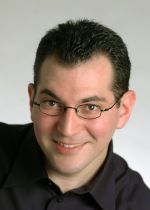
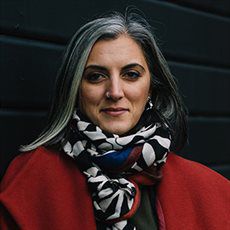
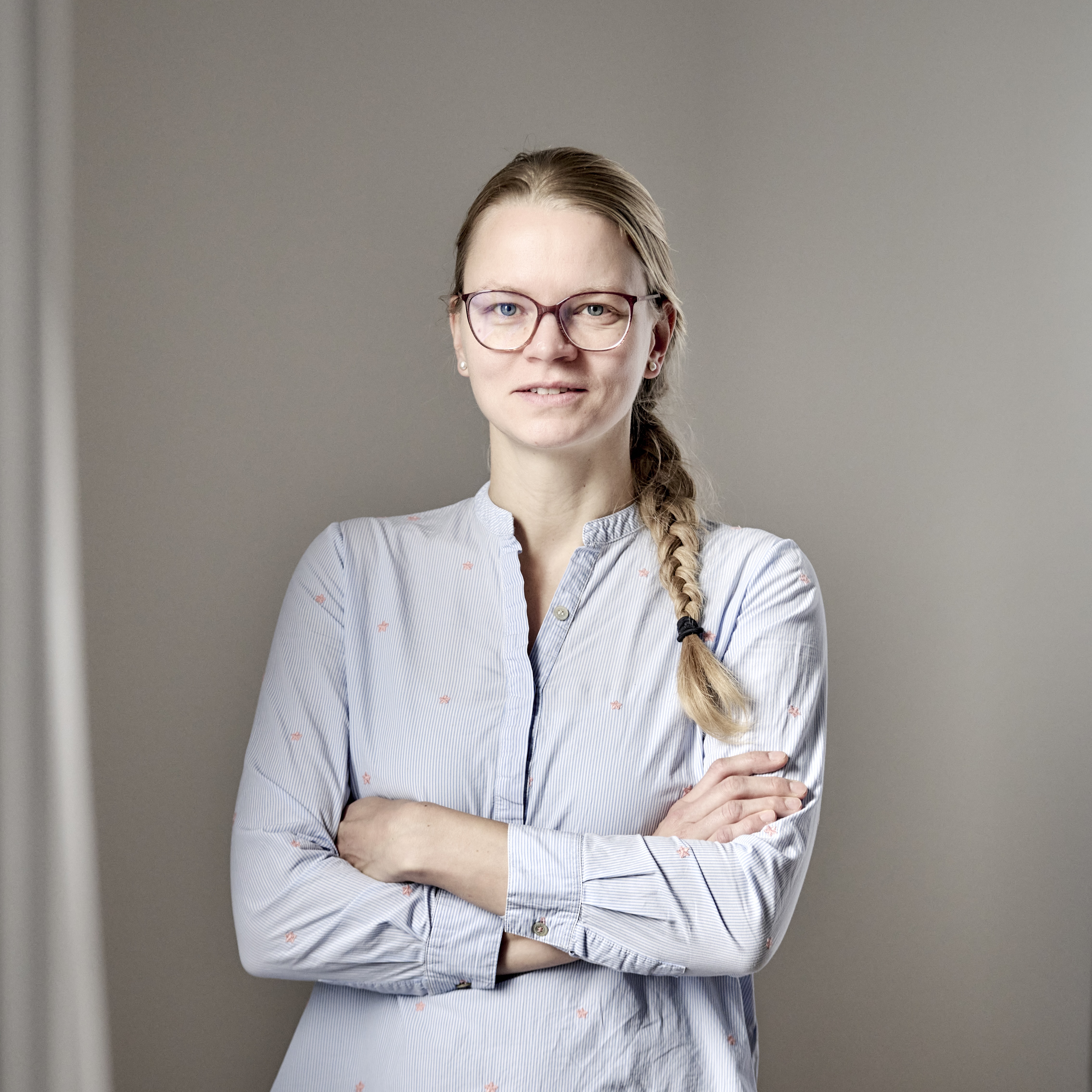
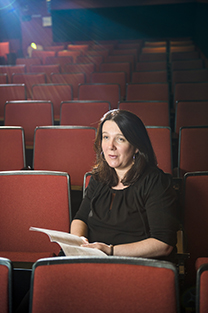
Daniel Klein is a Professor in the Computer Science Division at the University of California at Berkeley , affiliated with the Berkeley Artificial Intelligence Research Lab (BAIR) and the Berkeley Natural Language Processing Group . His research focuses on statistical natural language processing, including unsupervised learning, syntactic parsing, information extraction, and machine translation, with applications in historical linguistics and AI.
Prof. Bernhard U. Seeber is an Extraordinary Professor at the Technical University of Munich (TUM), leading the Chair of Audio Signal Processing within the TUM School of Computation, Information and Technology. His work bridges auditory neuroscience and engineering, focusing on improving hearing aids, cochlear implants, and virtual acoustic systems. He holds affiliations with the Bernstein Center for Computational Neuroscience, Munich Institute of Biomedical Engineering, and others. Education: Studied and earned his PhD (2003) in Electrical Engineering and Information Technology at TUM. Postdoctoral research included time at UC Berkeley and the MRC Institute of Hearing Research (UK), where he pioneered studies on binaural hearing and cochlear implant optimization. Research Interests: Combines experimental and theoretical approaches to explore auditory scene analysis, binaural unmasking, and spatial hearing. Key areas include signal coding for cochlear implants, virtual acoustics, and non-destructive acoustic monitoring. His work emphasizes interdisciplinary collaboration with industry and academia. Awards: Lothar Cremer Award (2010), Emmy Noether Fellowship (2007), and recognition from the German Acoustical Society. Teaching: Offers courses on audio communication, computational neuroscience, and technical acoustics. Projects: Leads initiatives like HAPPAA and Auralization, advancing sound field synthesis and hearing aid algorithms. Current Roles: Head of Chair of Audio Signal Processing, Board Member of DEGA, and spokesperson for the ITG Technical Committee on Hearing Acoustics.
Professor Annie Mahtani is a Professor of Electroacoustic Composition and Practice at the University of Birmingham's Department of Music. She holds a BMus (Hons), MA, MPhil, and PhD from the University of Birmingham and Birmingham City University. Her work focuses on electroacoustic music, acousmatic composition, multichannel audio, spatialisation, and field recordings, with significant contributions to site-specific installations and cross-disciplinary collaborations. She co-directs the SOUNDkitchen collective and serves on key boards such as the British ElectroAcoustic Network (BEAN) and the British Section of ISCM. Her research explores the sonic identity of environmental sounds, large-scale multichannel composition, and ambisonic audio techniques. As a performer with BEAST (Birmingham Electroacoustic Sound Theatre), she develops live acousmatic performances and soundwalks. Recent projects include Becoming Tree (an immersive audio retelling of a literary work) and Minimum Monument , performed at Birmingham Hippodrome. She actively collaborates with dance and theatre companies like Rosie Kay Dance Company. Professor Mahtani teaches undergraduate and postgraduate modules in electroacoustic composition and is involved in admissions and curriculum leadership. Her works have been performed globally in festivals like Klang! Électroacoustique and Sound + Environment, showcasing her innovative contributions to contemporary music and sound art.
Johanna Ziegel is a Professor of Statistics at ETH Zurich, Switzerland, since 2024, and a Visiting Scientist at the Heidelberg Institute for Theoretical Studies (HITS). Previously, she held positions at the University of Bern, where she was promoted to Full Professor in 2023. Her research focuses on decision-theoretically sound methods for forecast evaluation, probabilistic forecasting, risk measures in finance, and applications in meteorology, medicine, and climate science. She is actively involved in editorial roles for journals like Bernoulli , JASA: Theory & Methods , and SIAM Journal on Financial Mathematics . Education: PhD in Stereological Analysis of Spatial Structures from ETH Zurich (2010), supervised by Paul Embrechts and Eva B. Vedel Jensen. Postdoctoral research at the University of Melbourne and Heidelberg University. Research Interests: Forecast evaluation, elicitable functionals, risk measures, isotonic regression, statistical calibration, and applications in finance, climate science, and biostatistics. Her work bridges theoretical statistics with practical challenges in uncertainty quantification and decision-making under uncertainty. Advising & Collaborations: Supervised 7 PhD students and mentored several postdocs. Collaborates with the Computational Statistics group at HITS and the Oeschger Centre for Climate Change Research. Her group explores distributional regression under order constraints and novel methods for forecast comparison. Recognition: Credit Suisse Award for Best Teaching (2022), H.I.T. Program for Academic Leadership (2021–2022). Active in professional service, including the Bernoulli Society Council and editorial boards.
Professor Karen E Lury is a distinguished academic at the University of Glasgow , serving as Head of School for the School of Culture & Creative Arts and as a Professor of Film & Television Studies within the Theatre, Film & Television Studies department. She is also the Editor of Screen journal and served as Dean of Research for the College of Arts from 2014 to 2017. Her research interests center on Children's film and media , Screen Performance , and Amateur film and media . These areas are reflected in her editorial projects and publications, which explore the intersection of childhood, authenticity, and media representation. The 10 most recent articles in her bibliography highlight trends in television and film studies, focusing on themes like the role of care in media consumption , postcolonial narratives in British television , amateur film practices , and children's subjectivity in reality TV . Her work bridges theoretical analysis with empirical studies , often incorporating interdisciplinary methodologies. Professor Lury has secured significant grants including a Leverhulme Trust grant (2015, £1.05M) and AHRC research funding (2010, £584k). She has supervised over 10 PhD students to completion, including Anderson, Jack (Bodies of Water and Geographies of Childhood in British Cinema) and Lu, Junwei (Taiwan Childhood Cinema). Her academic service includes membership on the AHRC advisory board since 2015 and editorial roles for journals and book series. She offers office hours by appointment and maintains an ORCID profile for her research outputs.
Paul D. Miller, known professionally as DJ Spooky, That Subliminal Kid, is a Professor of Music and Mediated Art at The European Graduate School (EGS). Based in New York City, he is an experimental electronic and hip-hop musician, conceptual artist, and writer whose work spans music production, film, multimedia installations, and critical theory. He has released over a dozen albums pioneering 'illbient' and trip hop genres, authored influential books including Rhythm Science and Sound Unbound , and exhibited internationally at venues like the Venice Biennale and Andy Warhol Museum. Education: Bowdoin College: Studied philosophy and French literature; thesis on Richard Wagner's Gesamtkunstwerk as precursor to new media. Research Interests: Miller's work centers on remix culture as a postmodern methodology, exploring intersections of sound, image, and technology. His theoretical framework positions the DJ as a 'post-subjective auteur' who creates meaning through layered connections across time, culture, and media. Key projects include Rebirth of a Nation (reworking D.W. Griffith's film to address racial history) and Terra Nova (Antarctica sound recordings addressing climate change), demonstrating his focus on historical reinterpretation and environmental crisis through digital media. Publications: His 14 scholarly articles (2001-2009) analyze remix as cultural practice across domains from album art history ( The Inner Sleeve ) to Baudrillard's philosophy ( Baudrillard: A Remembrance ). The corpus reveals consistent investigation into how sampling, digital layering, and media archaeology reshape narrative, memory, and cultural identity in the information age. Awards: No scientific awards or fellowships were documented in the source text. Advising and Grants: The source text provides no information regarding students supervised, academic advising, or research grants administered by Miller. Labs and Teams: Miller operates through project-based collaborations rather than fixed labs, forming temporary collectives with institutions like the American Museum of Natural History (for Terra Nova ) and artists including Yoko Ono, Ryuichi Sakamoto, and choreographer Francesca Harper. His 'Unfinished Stories' project with Pulitzer-winning critic Margo Jefferson exemplifies his interdisciplinary approach bridging dance, music, and social commentary.
Pierre-Luc Landry is an Associate Professor of French and Francophone Studies at the University of Victoria (UVic), where he has been based since 2019 on the traditional territory of the Lək̓ʷəŋən and W̱SÁNEĆ peoples. He is affiliated with UVic’s Media Studies and Cultural, Social and Political Thought programs. His academic career spans teaching at Cégep de l'Outaouais, Université Laval, University of Ottawa, and the Royal Military College of Canada. Landry holds a PhD and MA in research-creation from Université Laval, following a B.A. in literature studies and a historical foundation from Cégep du Vieux-Montréal. Education: PhD in Research-Creation (Université Laval), MA in Research-Creation (Université Laval), BA in Literature Studies (Université Laval), Cégep du Vieux-Montréal (history) Research Affiliations: Director of Colonialisme, culture & critique / Colonialism, Culture & Critique; Director of Groupe de travail et d’expérimentation sur l’indiscipline; Regular Member of Esthétique et politique de l’image cinématographique (EPIC); Associate Member of Équipe de recherches en études queer au Québec (ÉRÉQQ) Landry’s research integrates queer activism, cultural critique, and creative experimentation. His work spans queer theories, settler colonial studies, Indigenous literature, and media studies, often blending scholarly analysis with artistic practice. His publications include critical essays, experimental texts, and novels that interrogate human behavior, temporalities, and marginalized identities through magical realism and existential themes. Notable awards include the Ottawa Book Prize (2016) for *Les corps extraterrestres* and the APFUCC Best Book Award (2021) for *QuébeQueer*. He received a SSHRC Postdoctoral Fellowship and was a finalist for the Gabrielle-Roy Prize and Radio-Canada Readers’ Prize. Landry co-hosts the podcast J’habite où je lutte with Vanessa Jérome, exploring political resistance and queer lived experiences. Key Themes: Queer resistance, anti-assimilationism, research-creation, political essays, and LGBTQ+ cultural production Media & Artistic Work: Podcast co-host, webzine creator, and multidisciplinary artist
Dina El-Zanfaly serves as an Assistant Professor in the School of Design at Carnegie Mellon University (CMU), where she directs the hyperSENSE: Embodied Computations Lab. Her work bridges computational design and human-centered interaction, focusing on how physicality shapes sensory experiences and cognitive processes through intelligent systems. Education: PhD in Design and Computation, Massachusetts Institute of Technology (MIT) Master of Science in Design and Computation, MIT (Fulbright scholar) Her research critically examines computational methods for augmenting sensory perception, with emphasis on embodied sense-making in hybrid environments. She investigates co-creative interactions between humans and intelligent systems, exploring how computational tools empower designers and non-designers to shape products, social spaces, and interconnected technologies. Key questions address mutual learning between humans and machines through improvisation and creative production. Analysis of her 2022-2025 publications reveals dominant themes in mixed reality interfaces, AI-augmented skill acquisition (particularly in crafts and welding), and tangible co-creation with generative AI. Her work consistently integrates physical computing with mindfulness applications and privacy-aware smart environments, demonstrating interdisciplinary reach across education, manufacturing, and therapeutic contexts. Scientific Awards: Fulbright Scholarship As lab director, El-Zanfaly mentors students in computational making and embodied interaction projects. Her research is supported through initiatives like Fab Lab Egypt and collaborations with MIT, where she co-founded the Computational Making Group. She chairs major conferences including Fab15 in Egypt and serves on the DESFORUM program committee, indicating significant leadership in maker education and design research communities. She founded and leads the hyperSENSE Lab at CMU, which investigates computational embodiment through projects like Origami Sensei and Sand-in-the-loop. Previously, she co-established the Computational Making Group at MIT and co-founded Fab Lab Egypt (the first community maker space in North Africa/Arab world), demonstrating sustained commitment to global maker ecosystems and interdisciplinary team building.
Berit Greinke is an Assistant Professor of Wearable Computing at the Berlin University of the Arts (UdK) and the Einstein Center Digital Future (ECDF) since 2018, previously serving as a researcher at UdK's Design Research Lab and DFKI (2016-2018). Her academic foundation includes a PhD from Queen Mary University of London (2017), an MA from Central St Martins (2009), and a Diploma from Weissensee Academy of Art Berlin (2007). Her educational trajectory: PhD in Media and Arts Technology, Queen Mary University of London (2017) MA in Design for Textile Futures, Central St Martins College of Art and Design (2009) Diploma in Textile and Surface Design, Berlin Weissensee School of Art (2007) Greinke's research pioneers the convergence of craft, textile design, and digital technology, with core expertise in electronic textiles and smart materials. She investigates metamaterial-based 'metatextiles' for electromagnetic applications and explores transdisciplinary collaboration between designers and scientists, particularly regarding 'negative data' in creative and scientific workflows. Her current UdK work focuses on four interconnected domains: performing materials for expressive textile/fashion design; multi-modal sensing converting visual processes into haptic/audible experiences; micro-to-macro material design spanning nanostructures to final products; and transdisciplinary processes for technology-art-science collaboration. Analysis of her 2020-2025 publications reveals dominant trends in sustainable textile electronics, with emphasis on knitted/folded sensor structures, origami-inspired capacitive shape estimation, and social sustainability in e-textile communities. Her work uniquely bridges fundamental material science (e.g., textile metamaterials) with artistic applications (e.g., interactive orchestra garments) and industrial production challenges. Berit Greinke supervises PhD students including Giorgia Petri. Her junior professorship is co-financed by SAP under a public-private partnership model, supporting projects like WEAR (Wearable technologists engage with artists for responsible innovation) and STELEC (Sustainable Textile Electronics), which emphasize ethical co-design and industry-academia collaboration. She leads research within UdK's Institute for Product and Process Design and collaborates with the Design Research Lab (formerly part of Connected Textiles group), focusing on sustainable industrial production of electronic clothing and transdisciplinary innovation frameworks.
Eduardo Mercado III is a Professor in the Department of Psychology at the University at Buffalo, College of Arts and Sciences. His research focuses on bioacoustics, cognitive psychology, and marine ecology, particularly the vocal behavior of humpback whales and its implications for understanding human impact on marine ecosystems. He is also known for his work in perceptual learning, autism spectrum disorder, and comparative cognition. Scientific Awards Guggenheim Fellowship Harvard Radcliffe Institute Fellowship Research Trends His recent publications emphasize bioacoustic analysis of humpback whale songs, including their spectral entropy, cyclical variations, and adaptive adjustments to anthropogenic noise. Additional work explores perceptual learning mechanisms in autism, neural network modeling for acoustic classification, and cognitive processes in canines and rodents. Projects Mercado’s “Singers as Sentinels” project combines acoustic analysis of humpback whale songs with public awareness initiatives about ocean noise pollution. The project will produce a book, Why Whales Sing and Dolphins Don’t , and a web-based interface for public engagement.
Dr. Sam Ferguson is a Senior Lecturer at the School of Computer Science, University of Technology Sydney (UTS), with a multidisciplinary background in music performance, cognitive science, and psycho-acoustics. His research explores the intersection of sound, music, and human experience through creative coding, machine learning, and interactive systems. Key Research Areas: Sound and Music Computing, Human-Computer Interaction, Creative Coding, Cognitive Science, Installation Art, and Acoustics. Current Projects: ARC Linkage project on creative coding and multiplicitous media; industry collaborations on IoT-based audiovisual systems. Recent Publications: Focus on spatial audio complexity, gestural interaction with networked sound, music emotion recognition frameworks, and robotic performance through genre-based cultural platforms. Leadership Roles: Director of Teaching & Learning Engagement; former Deputy Head of School (Teaching and Learning); active in ACM Creativity and Cognition Steering Committee. Teaching: Courses like Digital Media Studio , Prototyping Physical Interaction , and Data Processing using R within UTS's interdisciplinary Software Development Studio.
Lauren Hall-Lew is a Professor and Personal Chair of Sociolinguistics at the University of Edinburgh's School of Philosophy, Psychology and Language Sciences. She holds a BA from the University of Arizona (2002) and MA/PhD from Stanford University (2009). Her research focuses on phonetics, social meaning, language change, and sociopolitical identity. She has pioneered projects like the Lothian Diary Project, studying linguistic impact of the pandemic, and analyzed Scottish political speech, tourist language attitudes, and ethnicity-linked variation in San Francisco. Teaching contributions include courses on sociophonetics and language variation/change, earning her EUSA Teaching Award (2013). She has supervised over a dozen PhD students and is involved in EDI initiatives, including founding the Staff BAME Network Mentoring Programme (2019-2021), recognized via CAHSS Award and Principal's Medal nominations. Active in grant work, she leads projects on homelessness and linguistic variation (British Academy-funded), Scottish tour guide discourse, and political identity in phonetics. Awards include teaching accolades and EDI recognition. Her publications span sociolinguistic theory, phonetic analysis, and applied linguistic methods.
Thomas Barrie is a Professor of Architecture at North Carolina State University's College of Design, serving as Director of the Affordable Housing and Sustainable Communities Initiative and Coordinator of the Master of Advanced Architectural Studies program. An internationally recognized scholar in religious architecture and spirituality in the built environment, he is a Fellow of the American Institute of Architects (AIA) and has received numerous accolades including the 2024 NCSU Alexander Quarles Holladay Medal for Excellence. His educational background includes: Master of Philosophy in Architectural History and Theory, University of Manchester Master of Architecture, Virginia Polytechnic Institute and State University B.A. in English, University of North Carolina at Greensboro Professor Barrie's research explores the symbolism, cultural significance, and ritual functions of architecture across religious traditions, while examining housing through the ontological roles of home. His work bridges architectural theory and practice, emphasizing architecture's social mission and spiritual dimensions. Key publications include four books addressing sacred space, world religions, and domestic environments, establishing foundational frameworks for understanding architecture's role in human experience. His scholarly output reveals consistent exploration of architecture as a mediator between sacred and secular realms, with recent works focusing on comparative religious architecture and cultural contexts of home. This trajectory demonstrates deep commitment to understanding how built environments shape communal identity and individual well-being across diverse cultural settings. His distinguished career has been recognized with numerous honors: NCSU Alexander Quarles Holladay Medal for Excellence (2024) ACSA Distinguished Professor Award (2019) AIA Fellowship (2020) Three NC State Outstanding Extension Service Awards (2019, 2015, 2014) Induction into the Academy of Faculty Engaged in Extension (2015) Two AIA Honor Awards for design excellence As director of the Affordable Housing and Sustainable Communities Initiative, Professor Barrie has mentored hundreds of students through community-based design studios addressing housing challenges in the Triangle region. His leadership has fostered interdisciplinary collaboration across architecture, planning, and social sciences, resulting in award-winning student projects and tangible community impact through the Architecture, Culture and Spirituality Forum which he co-founded. Professor Barrie leads the Affordable Housing and Sustainable Communities Initiative and co-founded the international Architecture, Culture and Spirituality Forum, creating platforms for scholarly dialogue and practical application that bridge academic research with community engagement in housing and spiritual dimensions of the built environment.
Brian Larkin is Professor of Anthropology at Barnard College, Columbia University, and Codirector of Columbia's Center for Comparative Media. He holds a PhD from NYU (1998) and studies media technologies through anthropological frameworks. Research examines media infrastructures in Nigeria: Religious media in Islamic and Christian contexts Nigerian film (Nollywood) circulation Urban soundscapes and loudspeaker culture Infrastructure politics and colonial legacies Authored Signal and Noise: Media, Infrastructure, and Urban Culture in Nigeria (Duke, 2008) and co-edited Media Worlds: Anthropology on New Terrain (California, 2002). Current work explores the relationship between media forms, religious transformations, and urban experience in postcolonial contexts.
Mark D. Gross is a Professor of Computer Science and Director of the ATLAS Institute at the University of Colorado Boulder, where he leads an interdisciplinary hub for creativity and invention. His academic journey began at MIT with BS and PhD degrees, followed by faculty roles at Carnegie Mellon University (2004-2013), University of Washington Seattle (1999-2004), and CU-Boulder (1990-1999, 2014-present). As co-founder of Modular Robotics Incorporated and Blank Slate Systems LLC, he bridges academia and entrepreneurship. Education: BS and PhD in Computer Science from MIT Gross’ research spans design methods, modular robotics, computational design tools, and tangible interaction. He pioneered sketch recognition software like 'The Electronic Cocktail Napkin' and explores physical computing through projects such as shape-changing interfaces, interactive construction kits, and augmented reality systems. His work integrates IoT, digital fabrication, and educational technology. Recent publications highlight innovations in AR/VR collaboration, shape-changing robotics, and interactive fabrication. Key themes include climate communication through data physicalization, AI-driven creative systems, and soft robotics for dynamic interfaces. Despite no explicit awards listed, his career demonstrates sustained impact through ACM conference leadership (Creativity and Cognition 2009, TEI 2011) and industry partnerships. Gross’ prior industry experience includes positions at Atari Cambridge Research and Logo Computer Systems. His lab at ATLAS fosters radical creativity through projects like PaperMech, DynaBlock, and WearAir, emphasizing hands-on learning and cross-disciplinary experimentation.