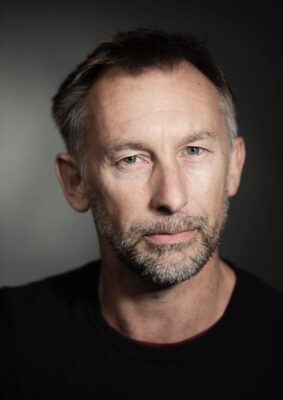
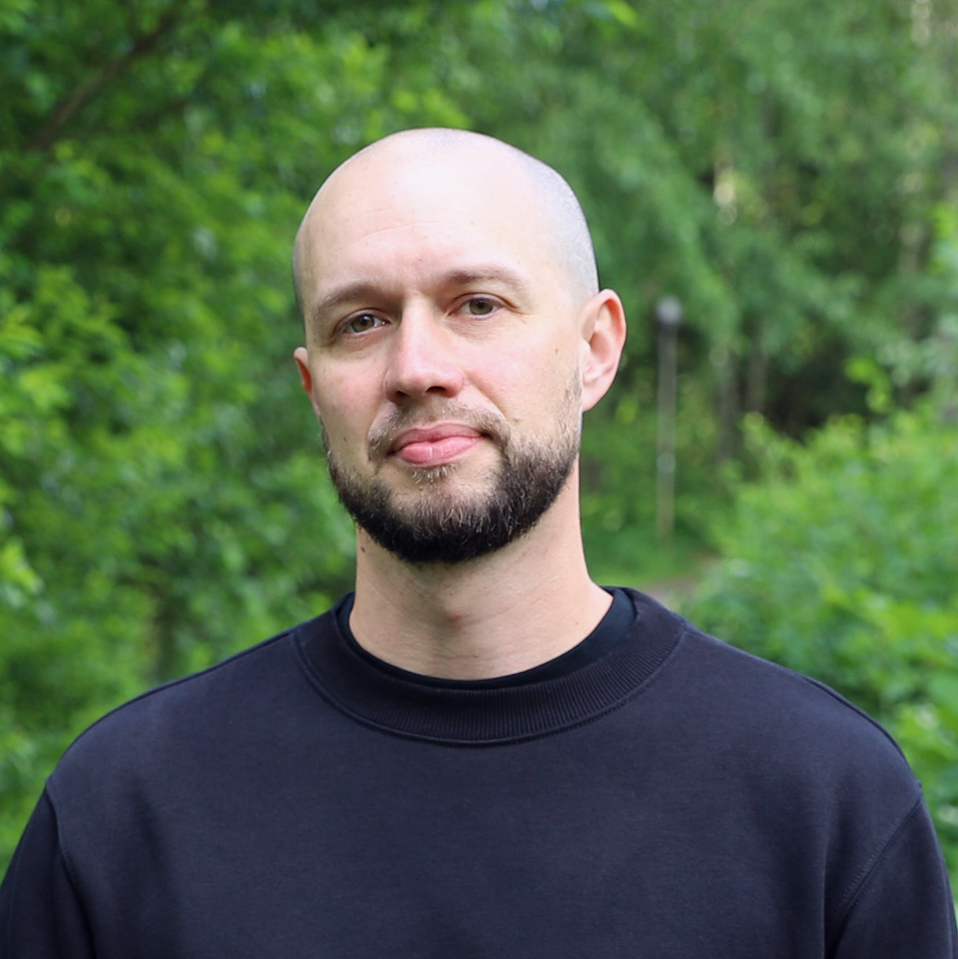
Fabrizio Riente is a Fixed-term Researcher at the Department of Electronics and Telecommunications (DET) , Politecnico di Torino. He holds academic responsibilities in multiple programs and contributes to editorial and conference committees. Member of College of Electronic, Telecommunications and Physics Engineering Invited Member of College of Computer, Film, and Mechatronics Engineering His research spans Nanocomputing , Quantum Technologies , and Machine Learning for environmental and healthcare applications, with a focus on: Qubit Control & Readout Systems IoT for Bee Health Monitoring 3D Audio-Visual Reproduction for Hearing Research Hybrid Simulation and Emerging Nanotechnologies Low-Power Electronic Systems His recent publications demonstrate interdisciplinary work bridging Quantum Electronics and Acoustic Ecology , particularly in developing VLSI architectures for novel applications. Notable scientific awards include Associate Editorship at Frontiers in Electronics and program committee roles at international conferences. He supervises PhD students in Quantum Engineering and Electronic Engineering , directing research projects funded by commercial contracts on quantum architectures and automotive technologies. His teaching portfolio includes courses on Microelectronic Systems and Low-Power Electronics .
Leszek Lorent is Professor of Musical Arts (dr hab.) and head of the New Music Studies and the Anthropology of Musical Culture Workshop at the Fryderyk Chopin University of Music in Warsaw. A celebrated percussionist, scholar, and author, he has premiered dozens of contemporary works, recorded more than a dozen critically acclaimed albums, and published extensively on the philosophy, anthropology, and theology of percussion music. Education & Training: Graduated with distinction (2008) – Fryderyk Chopin University of Music, Warsaw Post-graduate studies – Conservatoire National Supérieur de Musique et Danse de Lyon, class of Prof. Jean Geoffroy 2006–2009 – annual courses in new-music interpretation, Tallinn, Estonia Research & Artistic Interests: Lorent’s work explores the intersection of percussion performance, contemporary music creation, philosophical inquiry, and anthropological research . He specializes in multi-percussion repertoire and instrumental theatre, investigating how percussion functions in sacred rituals, shamanic traditions, and modern avant-garde aesthetics. His scholarly output spans ethnomusicology, theology, phenomenology of sound, and cultural studies , often focusing on Polish and global contemporary composers such as Marcin Błażewicz, Dariusz Przybylski, and Ignacy Zalewski. Album & Article Trends: Across 20+ albums and 25+ scholarly articles , Lorent consistently bridges the sacred and the experimental . Recordings range from solo percussion recitals to large choral-percussion works, frequently nominated for the Polish Fryderyk Award and the Global Music Awards . His writings analyze percussion as a ritual technology, philosophical metaphor, and cultural signifier , appearing in journals such as Aspirations , Zagadnienia Naukoznawstwa , and conference proceedings of the Polish Academy of Sciences. Scientific Awards & Honors: Rector’s Award, Fryderyk Chopin University of Music (2015, 2017, 2024) Global Music Award – Gold Medal Triple Winner (2019) Global Music Award – Silver Medal Triple Winner (2018) Multiple Fryderyk Award nominations (2016–2023) International Classical Music Awards nomination (2015) Scholarships: Prime Minister, Minister of Culture, Société Générale Bank, ZAiKS, Młoda Polska, Ministry of Science & Higher Education Advising & Service: As head of the Anthropology of Musical Culture Workshop , Lorent mentors graduate researchers in performance studies, music philosophy, and cultural anthropology. In 2018 he was appointed to the Advisory Team of the Minister of Higher Education and Science , evaluating scholarship applications for outstanding students and young scholars. Laboratories & Performance Teams: Lorent directs collaborative projects with the Chopin University Modern Ensemble , siXen Percussion Group , and Hashtag Ensemble , fostering interdisciplinary creation that integrates percussion, electronics, vocal performance, and multimedia staging.
Lukas Haselböck is an Austrian composer and musicologist born in Vienna in 1972. He has been an assistant professor at the Institute for Musicology and Interpretation Research at the Vienna University of Music and Performing Arts since 2000. His academic career includes teaching, research, and significant contributions to musicological scholarship. He served as a visiting professor of music theory at the University of Music and Performing Arts Graz from 2007 to 2008. His institutional activities include board membership in the ÖGMW (2006-2009) and ongoing service on the works council of the University of Music and Performing Arts Vienna. He earned his Dr.phil. in musicology in 1997 with a dissertation on 'Analytical Investigations into Motivic Logic in Max Reger' and his Mag.art. in composition in 1999, studying under Iván Eröd and Erich Urbanner in Vienna. His scholarly work focuses on music analysis, aesthetics, and philosophy, with particular emphasis on 20th-century music, especially French music. His 2009 book on Gérard Grisey was the first German-language monograph on this composer, representing a significant contribution to spectral music scholarship. Since organizing the 'Sound Perspectives' symposium in 2009, Haselböck has increasingly focused on dimensions of sound and timbre in music analysis, addressing an area long neglected in traditional approaches. His methodological diversity bridges analytical, historical, and philosophical perspectives. His scholarly output spans from analyses of Max Reger's motivic logic to contemporary explorations of spectral music and timbre. His publications reveal a consistent exploration of spectral music, timbre analysis, and the intersection of philosophy and music, with a particular interest in how sound, atmosphere, and textual levels interact in musical composition. The most recent works demonstrate continued engagement with timbre studies, ecological perspectives in music, and interdisciplinary approaches to contemporary composition. 1998 Promotion Prize from Theodor Körner Foundation 1999 Ministry Appreciation Prize and scholarship from the Federal Chancellery 2000 Working Scholarship from the City of Vienna and Promotion Prize from the Czibulka Foundation 2001 Vienna Symphony Orchestra Composition Scholarship and grants from the Alban Berg Foundation 2019 Recognition Prize from the State of Lower Austria Haselböck has organized significant academic events including the Friedrich Cerha Symposium (2004) and 'Sound Perspectives' (2009). Since 2010, he has organized the Viennese New Music concert series 'cercle.' He serves on boards of musicological organizations including the ÖKB, ÖGZM, and IGNM, and acts as a musicological advisor to the Wiener Collage ensemble. His dual career as composer and musicologist provides him with a unique perspective that informs both aspects of his professional life.
Raphaël Magrou is a Lecturer in the Théories et pratiques de la conception architecturale et urbaine (TPCAU) field at the École nationale supérieure d’architecture Paris-Malaquais, a constituent school of PSL University. A DPLG-qualified architect specialising in performance venues and scenography, he created and leads the Master Studio on theatre architecture in partnership with the Comédie-Française. Education: DPLG architect diploma DEA (post-master) in History of modern and contemporary architecture Research interests: Magrou’s work interrogates the prospective evolution of performance spaces, morphological mutations of theatres, stage technology, stage writing, and the spectator’s constructed gaze. His on-going doctoral project, supervised by Sandrine Dubouilh at Université Bordeaux-Montaigne, analyses spatiality in the productions of author-director Joël Pommerat, focusing on the auditorium-stage relationship and the notion of the theatrical fourth wall. He is an active member of the ACS research laboratory at ENSAPM, the ARTES research group at Bordeaux Montaigne, and the International Federation for Theatre Research (Working Group Theatre & Architecture). He regularly contributes essays on new stage spaces to the magazines Théâtre(s) and La Scène . Recent publications (2021-22): Across four refereed chapters and journal issues, Magrou has explored how scenographic, acoustic and geometric innovations reshape live-performance venues. Recurring themes include the agency of scenographic models, the influence of sound on spatial perception, and the historical persistence of circular or centred stage forms. Advising & grants: No specific doctoral or master’s students are listed in the supplied text, and no grant information is provided. Labs & teams: Magrou carries out his research within the ACS laboratory of ENSAPM and the ARTES team of Université Bordeaux-Montaigne, collaborating with scholars in architecture, theatre studies and performance design.
Andrew Norman is a Grammy-nominated composer and Professor at the USC Thornton School of Music, renowned for his genre-defying orchestral works that blend cinematic storytelling with architectural metaphors. His compositions have been performed by leading ensembles including the LA Philharmonic and Royal Concertgebouw Orchestra. Academic Affiliation: Faculty member at USC since 2013 Major Works: Play (Grawemeyer Award winner), The Companion Guide to Rome (Pulitzer finalist), Switch, Split, Suspend Norman's research explores: Non-linear narrative techniques in music Extended instrumental techniques and physical gesture Temporal manipulation and hierarchical control systems Architectural and video game-inspired formal structures Interactive audience perception dynamics Human agency in orchestral performance His works feature in prominent festivals like Ojai and Tanglewood, with recent premieres at Carnegie Hall, Disney Hall, and international venues. Key collaborators include Gustavo Dudamel, Jeffrey Kahane, and Colin Currie. Major recognitions include: Musical America Composer of the Year (2017) Grawemeyer Award for Play (2017) Guggenheim Fellowship (2016) Rome Prize (2006) and Berlin Prize (2009) Three-time ASCAP award winner Pulitzer Prize finalist for The Companion Guide to Rome (2012) Norman actively champions music education through: LA Phil’s Composer Fellowship Program Educational residencies nationwide Compositions for youth ensembles Collaboration with music education initiatives
Becky Beamer is an Assistant Professor in the Department of Journalism and Media Studies at the Faculty of Social Sciences, Oslo Metropolitan University. Her office is located at Pilestredet 48, 0167 Oslo (Office S443), with contact details +47 672 35 384 and becky.beamer@oslomet.no. Her research centers on Media Practice , Artistic Research , and Documentary Film , with deep engagement in creative practice, book arts, and indigenous craft studies. Key themes include the transformation of space/place through media interventions, tourism's impact on Namibian craft processes, and interdisciplinary explorations of financial crime education using film. Beamer's recent publications (2022-2024) reveal a cohesive trajectory merging artistic production with critical social inquiry. Her work spans academic articles, book works, and film screenings, consistently examining how media and art intersect with environmental, economic, and cultural systems—particularly in documentary pedagogy and postcolonial craft economies. Scientific Awards: No major awards are documented in available sources. Advising and Grants: No information is provided regarding student supervision or research funding. Labs and Teams: She actively participates in four research groups: Art – Practice – Research Creative practice – (trans)forming space, place and the environment Media Practice Transform
Derek M. Johnston serves as Professor of Accounting in the Department of Accounting within the College of Business at Colorado State University, teaching financial accounting courses continuously since 2002. His educational credentials include: Ph.D. in Accounting from the University of Colorado at Boulder M.S. in Accounting from American University B.A. in Economics from McDaniel College Dr. Johnston's research demonstrates dual trajectories : his foundational work centers on tax policy intersections with financial reporting , evidenced by publications in Contemporary Accounting Research and Journal of the American Taxation Association . Simultaneously, his recent output reveals a pronounced shift toward Gothic television studies , particularly analyzing Nigel Kneale's adaptations, folk horror, and historical trauma representation in British drama. This interdisciplinary pivot, while unacknowledged in his official bio, dominates his 2022-2025 publication record. Analysis of his 15 most recent publications shows overwhelming focus (93%) on Gothic/horror television theory, with recurring examinations of temporal representation , cultural memory , and British identity construction through genre frameworks. Only one 2022 accounting article appears in this cohort, suggesting either a radical disciplinary transition or data anomaly. His scholarly recognition includes: KPMG Faculty Fellowship While his faculty profile indicates PhD/Master's student advising in accounting, no specific advisees are listed in available sources. Grant history remains undocumented in provided materials. No research laboratories or specialized teams are associated with his current profile, though his Gothic studies work implies collaboration with media studies scholars.
Anna Mlasowsky is a Professor in Glass and Ceramics at Konstfack University of Arts, Crafts and Design, where she serves as Area Coordinator and supervisor for Master's level students (Master 1 & 2) in the Department of Crafts. Based in Stockholm, Sweden, she maintains an active dual practice as both an academic and exhibiting artist. Her artistic research focuses on glass art, ceramics, and contemporary artistic expression, with numerous projects exploring perception, materiality, and spatial relationships. Notable works include Things that Talk , Book of Breath (Noon) , 4 Feet Apart , and Heimat , which demonstrate her interest in how objects communicate and how space shapes experience. Mlasowsky has initiated two significant art projects: Das Schaufenster , an experimental window space in Seattle's Ballard neighborhood created during the pandemic to provide exhibition opportunities for artists, and Das Fernglas , a digital subscription-based project featuring monthly glass art delivered via email. These initiatives reflect her commitment to creating platforms for artistic expression beyond traditional gallery settings. Her work has been presented internationally, with projects spanning topics from private geographies to wind resonance and metamorphosis, often exploring the intersection of material practice and conceptual inquiry. Mlasowsky actively supports emerging artists through her projects, particularly focusing on immigrant artists, activist artists, and recent MFA graduates who lost exhibition opportunities during the pandemic. She has received grants including a SmArt Venture Grant from the Office of Arts and Culture and a Mini Grant from the Awesome Foundation to support these initiatives.
Professor Christian Ritz serves as Director of SMART and Professor in the School of Electrical, Computer and Telecommunications Engineering within the Faculty of Engineering and Information Sciences at the University of Wollongong. He has held his professorship since 2017 and served as Associate Dean (Research) in 2022 and Associate Dean (International) from 2016-2021. Professor Ritz's research focuses on signal processing for speech, audio, acoustics and visual information. His current projects include microphone array signal processing for enhancing sound recorded in classrooms, sound scene classification for dementia care environments, spatial audio for Virtual and Augmented Reality, and undersea surveillance. His work spans multiple technical domains including signal processing, audio engineering, computer vision, and communications engineering. His recent publication trends show a strong focus on neural network applications for audio processing, particularly for classroom monitoring and spatial audio reproduction. His work integrates deep learning with traditional signal processing techniques to address challenges in spatial audio synthesis, room impulse response generation, and directional audio reproduction. He has also contributed to applications in mining automation, public safety surveillance, and positioning systems. Professor Ritz is a member of the Centre for Signal and Information Processing (CSIP), part of the Signals, Information and Communications Research Institute (SICOM) at the University of Wollongong. His research is funded by the ARC, overseas research institutes, and defense organizations. His grant portfolio is extensive, including projects such as AI/IoT-powered Airborne System for Monitoring Water Level and Tidal Floods, Multi-Modal Satellite-based Vessel Surveillance, Net Zero Industry and Innovation Program, Smart Eye: Airborne and AI-Driven Assessment Solution of Sugarcane, and numerous projects related to spatial audio and underwater surveillance. He has secured funding from diverse sources including the Australian Research Council, defense organizations, and international collaborations. Professor Ritz maintains an active research laboratory environment focused on signal and information processing. His work spans multiple application domains from classroom monitoring to underwater mine detection, with strong connections to both academic and industry partners. His research group appears to focus on practical applications of signal processing techniques to solve real-world problems across various domains.
Pascale Jacquet-Rimassa is a Lecturer in Ancient Art History at the University of Toulouse Jean Jaurès (UT2J), affiliated with the Patrimoine, Littérature, Histoire (PLH) research unit. Her work focuses on Archaic and Classical Greek art, particularly Attic and Italiote ceramics from 440-300 BC, with a strong emphasis on Dionysian imagery, symposium culture, and anthropological approaches to visual representation. Education: 1996: Doctorate in Ancient Sciences (University of Toulouse Jean Jaurès) 1992: DEA in Ancient Sciences (University of Toulouse Jean Jaurès) 1991: Master's in History of Art and Archaeology (University of Toulouse Jean Jaurès) Jacquet-Rimassa's research explores three interconnected domains: Dionysian iconography in Greek ceramics, particularly Campanian and Paestan production; anthropological approaches to visual representation, focusing on rituals and social dynamics; and gender/childhood studies through ceramic imagery. Her recent publications analyze spatial representation in Archaic art, Athenian visual culture, and the evolution of Dionysian symbolism. Scientific activity trends show a sustained focus on: Attic and Italiote ceramics (1995–2022) Dionysian and symposium themes Visual semiotics and anthropological interpretation Continuity in journal Pallas. Revue d'études antiques (1995–2022) Interdisciplinary methodology combining art history, archaeology, and sociology Jacquet-Rimassa has contributed to edited volumes and academic conferences, including co-organizing the 2008 Travels in Antiquity miscellany dedicated to Hélène Guiraud. She maintains active participation in the PLH scientific project and has been involved in digital humanities initiatives like HAL and SpirHAL.
Morten Breinbjerg serves as Associate Professor at the Department of Digital Design and Information Studies within Aarhus University's School of Communication and Culture. His academic work bridges sound studies, digital design, and urban informatics with a focus on public space dynamics and sonic citizenship. His research centers on the ecological and political dimensions of sound in urban environments. He investigates how sonic practices shape citizenship through messy and fragile negotiations in public spaces, examining media architecture aesthetics, participatory sound art, and dynamic sound atmospheres. His methodological approach emphasizes ecological frameworks for understanding sound's role in civic engagement, combining fieldwork with theoretical analysis of sound's political potential. Analysis of his publication trends reveals consistent interdisciplinary work spanning sound studies, urban sociology, and digital design. Recent outputs focus on pandemic-era soundscapes and sonic citizenship frameworks, while earlier work established foundations in media architecture participation and ecological sound methods. His research demonstrates longitudinal commitment to understanding sound as a civic medium across evolving technological and social contexts. Breinbjerg has secured significant research funding through major projects including Sonic Citizenship (2021-present), Objects humans and the Rift (2014-2016), PIT: Participatory IT Center (2012-2017), Ekkomaten (2012-2014), Atmosphere (2009), DUL: Digital Urban Living (2008-2012), and Interface Aesthetics projects (2004-2007). These initiatives involved cross-institutional collaborations examining digital-physical urban interactions. He contributes to research collectives focused on sonic citizenship methodologies and media architecture evaluation, developing ecological approaches for sound art in public spaces and advancing theoretical frameworks for understanding sound's role in contemporary civic life.
Kevin Toksöz Fairbairn is a Researcher at the Academy of Creative and Performing Arts at Leiden University. His work bridges sound studies , spatial theory , and artistic practice , focusing on how sound can challenge spatial enclosure and compartmentalization, particularly during the 2020-2021 lockdowns. Research Focus: Examines relationships between sound , space , and homelessness through artistic experimentation with self-built sorna instruments (deconstructed trumpet bells). Engages with theoretical frameworks from Henri Lefebvre (corporeal space), Rosi Braidotti (nomadic thought), and Tim Ingold (weaving as knowledge production). Proposes sonic recorporealization as a counter to visuality-driven spatial control in urban environments. Key Contributions: 2021 article Space, Sound, and the Home(less) in Journal of Sonic Studies documents domestic sound experiments during lockdown. Develops acoustic spatiality through instrument-building and performance practices.
Jeppe Just Christensen is an Associate Professor at Royal Danish Academy of Music (DKDM) since 2011, serving as a Study Lecturer since 2019. He teaches composition and leads artistic initiatives like the Pulsar Festival. His practice integrates DIY instrument design with contemporary composition, often involving personal performance with ensembles like Jeppe Just Instituttet. Royal Danish Academy of Music (DKDM): Study Lecturer (2019-present) Royal Music Conservatory (RMC): Part-time teacher His research focuses on amateurism , folk music reinterpretation , and street music , using self-built or repurposed instruments. Works like Geteilten Saiten (2022) demonstrate advanced motorized string instrument integration, while Neko (2009) explores translational semiotics through flexatone inversion techniques. Notable awards include the Wilhelm Hansen Award and grants from the Danish Arts Foundation . His pedagogical work spans formal institutions (DKDM, RMC) and community workshops with children aged 3-6, emphasizing instrument-building and sound exploration. Collaborations with SCENATET and Klang Festival highlight his interdisciplinary approach.
Johannes M. Arend serves as an Assistant Professor in the Department of Information and Communications Engineering at Aalto University, Finland. His research centers on virtual acoustics, spatial audio processing, and psychoacoustics, with significant contributions to audio engineering and hearing science applications. His primary research domains include Virtual Acoustics, Spatial Audio, Psychoacoustics, Hearing Science, Acoustics, and Audio Engineering. Leading the Technical Psychoacoustics research group, he investigates sound perception in virtual environments and develops advanced spatial audio techniques. Key methodologies involve spherical microphone array processing, head-related transfer function (HRTF) interpolation, and voice directivity analysis, with applications spanning virtual reality, hearing diagnostics, and audio reproduction systems. Analysis of his 15 most recent publications (2021-2025) reveals consistent focus on spatial audio processing and perceptual validation. Dominant themes include spatial upsampling techniques for microphone arrays (33% of articles), voice directivity modeling with phoneme-level analysis (27%), and HRTF processing for binaural rendering (20%). His work demonstrates strong interdisciplinary integration between audio signal processing, speech science, and virtual reality applications, particularly in developing perceptually validated tools for hearing assessment and spatial audio reproduction. Dr. Arend actively leads the Technical Psychoacoustics research group, directing projects on virtual acoustic environments, spatial hearing assessment, and audio reproduction technologies. His team develops innovative methods for binaural rendering and conducts perceptual studies to validate technical solutions, with recent work focusing on VR-based hearing diagnostics and spatial audio evaluation frameworks.
Jeff Malpas is an Honorary Professor at the School of Languages and Cultures, University of Queensland. His academic work bridges philosophy, hermeneutics, and interdisciplinary studies involving sound and architecture. University: University of Queensland School: School of Languages and Cultures Academic Rank: Professor Malpas's research focuses on phenomenology and hermeneutics, particularly the influence of Hans-Georg Gadamer in the English-speaking world. Additionally, his work explores the interplay between place, sound, and architectural design, reflecting a multidisciplinary approach to spatial and auditory experiences. Recent publications highlight his engagement with Gadamerian thought and the theoretical connections between sound studies and architectural practice. His 2025 article in the Journal of the British Society for Phenomenology and 2024 book chapter in The Routledge Companion to the Sound of Space exemplify these themes. Contact: j.malpas@uq.edu.au