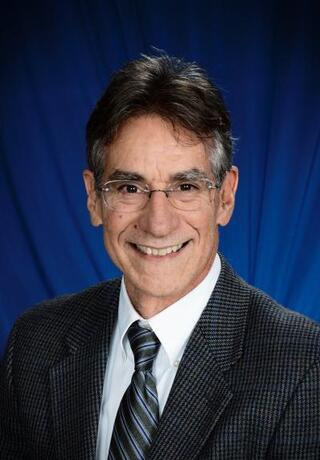
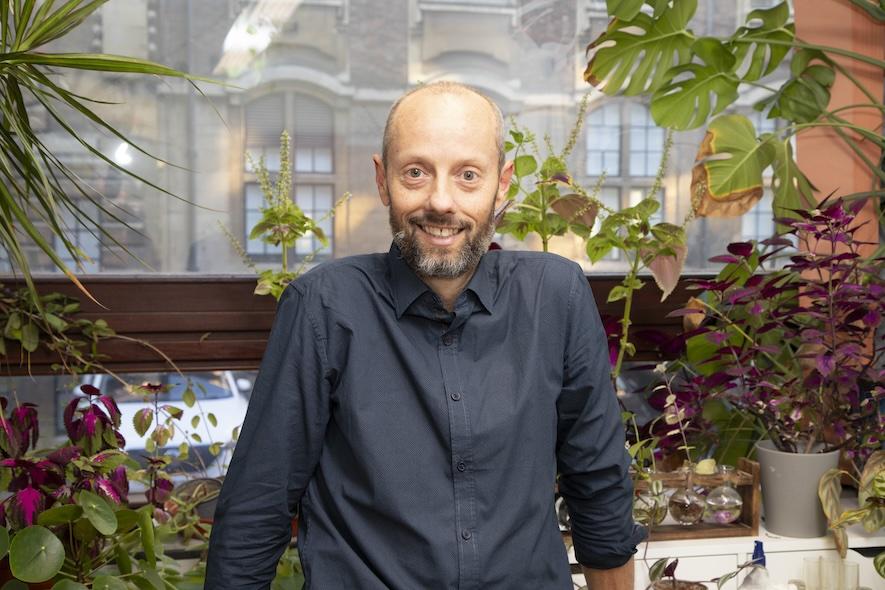
Marc Hanheide is a Professor of Intelligent Robotics and Interactive Systems at the University of Lincoln 's School of Computer Science. With a career spanning EU projects like VAMPIRE, COGNIRON, CogX, and STRANDS, his work focuses on long-term robotic behavior, human-robot spatial interaction, and cognitive system architectures. He has secured over 12 major grants from organizations including EPSRC, BBSRC, and the European Commission. Key Research Areas : Autonomous robotics, HRI, AI, cognitive systems, agricultural robotics Current Projects : STRANDS (long-term behavior), AgriFoRwArdS (robotics training), NCNR (nuclear robotics) Major Contributions : Human-aware navigation modules, topology optimization for robot fleets, causal analysis frameworks Scientific Awards: While no specific awards are listed, his numerous EPSRC grants and leadership in multi-institutional projects highlight his impact. He has over 172 publications and collaborates with institutions like CoR-Lab and CITEC.
Sotirios Thanos is a Senior Lecturer (Associate Professor) in Real Estate and Urban Economics at the University of Manchester within the School of Environment, Education and Development's Department of Planning, Property and Environmental Management. He actively teaches Urban and Environmental Economics and Real Estate Modelling courses while accepting PhD students for supervision. His academic credentials include: PhD in Economics, University of Leeds (awarded 2008) MA in Transport Economics, University of Leeds (awarded 2001) Thanos specializes in real estate, urban, transport, and environmental economics with methodological expertise in spatial econometrics, panel data analysis, choice experiments, and non-market valuation. His current research focuses on spatio-temporal house price modeling and transportation noise impacts, contributing directly to UN Sustainable Development Goal 11 (Sustainable Cities and Communities). Analysis of his recent publications reveals consistent application of advanced spatial econometric techniques to housing market dynamics, environmental externalities, and transportation economics. His work demonstrates increasing policy relevance through studies on housing supply constraints, flood risk valuation, and pandemic-induced housing market shifts, often bridging theoretical econometric innovation with practical urban planning applications. Thanos actively supervises postgraduate researchers and leads significant research initiatives including: Manchester Real Estate and Urban Economics (MREUE) group (ongoing) Community Infrastructure Levy housing market impacts study (2021) Societal cost of flooding research (2017-2018) Food and drink retail location patterns feasibility study (2021) He directs the MREUE research group, which investigates real estate markets across the UK and India through interdisciplinary collaboration between faculty and postgraduate students, focusing on housing policy, spatial economics, and environmental valuation.
Prof. Dr. Wouter van der Brug is a full-time Professor at the University of Amsterdam 's Faculty of Social and Behavioural Sciences , specializing in democratic representation and electoral behavior. His research focuses on populist parties, voter dynamics, and European integration. Current affiliation: University of Amsterdam Academic rank: Professor Email: W.vanderBrug@uva.nl Research interests include: Generational political alignment and dealignment Populist party support and parliamentary behavior Regional disparities in voting patterns European integration and institutional trust Urban-rural political divides Authoritarian attitudes and far-right voting Recent publications analyze 2024 European Parliament elections, fiscal austerity effects on EU trust, and youth political cognition. His work combines comparative politics, political psychology, and electoral geography across 15 recent articles. Contact: W.vanderBrug@uva.nl | +31 (0)20 000 00000
Joseph G. Altonji is the Thomas DeWitt Cuyler Professor of Economics at Yale University and a Research Associate at the National Bureau of Economic Research (NBER). He previously held faculty positions at Columbia University and Northwestern University, and served as a visiting professor at Princeton and Harvard. His academic affiliations include memberships in the Econometric Society, the American Academy of Arts and Sciences, and the Society of Labor Economists (past president). He received the IZA Prize in Labor Economics (2018) and has advised numerous federal and academic bodies, including the Federal Reserve Bank of Chicago and the President’s Council of Advisors on Science and Technology. Altonji’s research focuses on labor economics, applied econometrics, and inequality dynamics. Key areas include labor market fluctuations, education economics, family income dynamics, and wage determination. Current projects address school choice impacts on inequality, graduate degree returns, and the interplay between marriage, earnings, and family income. His methodological contributions include techniques to address selection bias in observational studies, particularly in evaluating school and neighborhood effects. Publications highlight trends in advanced degree returns, decomposition of earnings into wage and hours effects, and analyses of pandemic-era labor market shifts. His work often bridges econometric rigor with policy relevance, emphasizing empirical strategies to isolate causal effects. Altonji’s advisory roles reflect his engagement with real-world economic challenges, from STEM education to unemployment insurance policy design.
Marianna Nicolosi Asmundo is an Associate Professor of Mathematical Logic (MAT/01) at the Department of Mathematics and Computer Science (DMI) of the University of Catania. She earned her PhD from the same university in 2003 and serves as a proposing member of CINUM - Interdepartmental Center for Humanistic Computing. Teaches undergraduate and graduate programs in Mathematics Master's Degree Programs in Computer Science Textual Sciences for Digital Professions (Department of Humanities) Her research spans automatic deduction, tableaux-based deductive systems, decision procedures in elementary set theory and non-classical logic, interactive theorem proving, knowledge bases, ontologies, and reasoning services for the semantic web. Recent publications emphasize ontology interoperability, blockchain-based knowledge representation, and set-theoretic reasoning frameworks. She contributes to ontologies for cultural heritage (Saint Gall monastery modeling, archaeological Sicilian landscapes) and blockchain applications. Collaborates extensively with researchers like D. Cantone and D.F. Santamaria on description logic systems. Active member of CINUM - Interdepartmental Center for Humanistic Computing Supervises thesis projects on semantic web and blockchain ontologies
Prof. Dr. Susann Müller is Senior Scientist and Group Leader of the Flow Cytometry Working Group at the Department of Applied Microbial Ecology, Helmholtz Center for Environmental Research (UFZ) in Leipzig, Germany. Since 2011, she has held an Associate Professor position for Microbiology at Leipzig University’s Faculty of Life Sciences, bridging fundamental microbial ecology with environmental biotechnology applications through single-cell analytics. Education: 1985: Diploma in Biochemistry, Martin Luther University Halle-Wittenberg 1992: PhD, University of Halle-Wittenberg (Population dynamics of S. cerevisiae) 2003: Habilitation, Technical University Dresden (Multiparametric Cytometry) Her research pioneers microbial community flow cytometry to extract single-cell high-dimensional data, applying macroecological concepts to quantify stability metrics (resistance, resilience, displacement speed, elasticity) in engineered systems. Current focus includes bio-based circular economy initiatives: developing the carboxylate platform for sustainable chemical production and biological phosphate recovery from wastewater streams for resource valorization. Recent publications (2021-2025) reveal consistent innovation in flow cytometry applications, with emphasis on stability assessment in bioreactors, predator-prey dynamics in complex communities, and real-time monitoring of wastewater systems. She integrates ecological theory with multi-omics and data science to decode microbial assembly principles across environmental, agricultural, and industrial contexts. Professional roles: President, German Society of Cytometry (DGfZ, 2008-2010) Associate Editor, Microbiology for Cytometry Part A ISAC Educational Committee (2011-2012) and Scholars Program Committee (2013-2015) Current grants: PHOM project (SMWK InfraProNet 2024-2027): €449,160 for wastewater phosphorus recovery Z-PROJECT (DFG 2022-2025): €556,550 for bacterial biofilm analysis PROMICON (EU H2020 2021-2025): €200,000 for industrial microbiome consortia Moore Foundation (2020-2024): $23,000 for archaeal evolutionary tools Chinese Scholarship Council (2022-2026): Artificial community construction The Flow Cytometry Working Group under her leadership at UFZ develops standardized mock communities (Nature Protocols 2020), automated analysis tools (flowEMMi), and cytometric barcoding methods. It collaborates with Leipzig University, Technical University Dresden, and international partners including UC Santa Barbara, driving innovations in real-time environmental monitoring and wastewater treatment optimization.
Jacob T. Bradt is an Assistant Professor of Business, Government and Society at The University of Texas at Austin's McCombs School of Business, with a courtesy appointment in the Department of Economics. His research applies insights and methods from industrial organization and public economics to environmental, energy, and climate policy questions. Dr. Bradt maintains an active research agenda focusing on policy evaluation, market dynamics, and economic impacts of environmental interventions. Dr. Bradt's research interests center on environmental and energy economics with particular focus on climate policy mechanisms, flood risk assessment, and technology adoption. His work often employs structural economic modeling and empirical analysis to evaluate policy effectiveness. He investigates how market structures, consumer behavior, and government interventions interact in environmental contexts, with recent work examining solar industry dynamics, flood protection infrastructure, and behavioral interventions in insurance markets. His research bridges theoretical economic frameworks with practical policy applications. Analysis of Dr. Bradt's publications reveals consistent focus on environmental economics with increasing emphasis on climate adaptation and energy policy. His recent work (2024-2025) demonstrates sophisticated methodological approaches to policy evaluation, particularly in technology subsidies and climate resilience infrastructure. The research shows progression from theoretical frameworks to increasingly policy-relevant applications, with strong emphasis on empirical validation of economic models. His work consistently addresses real-world policy questions with rigorous economic analysis. Dr. Bradt has maintained productive research collaborations, particularly evident in his co-authored work with scholars like Joseph E. Aldy and Frank Pinter. His GitHub activity shows regular updates to research code and replication materials, indicating commitment to research transparency and reproducibility. His work spans multiple domains within environmental economics while maintaining methodological rigor and policy relevance.
Dr Jennifer Badham is an Assistant Professor in the Department of Sociology at Durham University, with the following key roles: Director of the MA Social Research Methods Programme Lead for MDS (Health Data Science) in the Faculty of Social Sciences and Health Fellow of the Wolfson Research Institute for Health and Wellbeing Her research interests span computational methods for complex systems, network diffusion, public engagement, and social network structure. She specializes in agent-based modelling and network analysis to investigate how social structure shapes the transmission of ideas, disease, and behaviour. Additionally, she examines the role of models in policy processes and public engagement with data. Analysis of her recent publications reveals a strong focus on agent-based modelling and network analysis applied to health and social systems. Key trends include the development of synthetic network generation methods, simulation of network interventions for behaviour change, and the integration of participatory approaches in model building. Her work addresses pressing issues such as epidemic planning and health behaviour. Dr Badham is Principal Investigator on the MRC-funded project "Generating Socially Realistic Synthetic Networks" (2023-2026, £528,850). She supervises postgraduate students, including Tengpeng Zhang, and draws on her prior experience as a senior health policy advisor in Australia to inform her research and teaching. As a Fellow of the Wolfson Research Institute for Health and Wellbeing, she contributes to interdisciplinary health research. She also leads the Health Data Science strand within the Durham Research Methods Centre.
Robert Fickler is an Associate Professor at Tampere University's Faculty of Engineering and Natural Sciences , leading the Experimental Quantum Optics Group in the Photonics department. His work focuses on quantum photonics, high-dimensional quantum information, and structured light interactions with matter. He holds a PhD from the University of Vienna (2014) and has held postdoctoral positions at institutions like the University of Ottawa and IQOQI Vienna. Fickler is an ERC Starting Grant recipient (2021) and leads the BIQOS project on integrated operations for structured photons. Education: PhD in Physics, University of Vienna (2014) Master’s in Physics, Ulm University (2009) Bachelor’s in Philosophy, Ulm University (2008) Research interests include quantum plasmonics , nonlinear optics , and atom physics . His lab explores structured photons for quantum communication and high-dimensional systems, with breakthroughs like the quantum Gouy phase observation and twisted photon entanglement. Over 55 publications appear in top journals like Science , Nature Photonics , and Physical Review Letters . Awards include the Young Scientist Award from IUPAP (2015) and Springer Thesis Award (2015). His grants include the Academy Research Fellowship (2019) and Banting Postdoctoral Fellowship (2016). Advising focuses on experimental quantum optics, with a lab emphasizing spatiospectral vector beams and multi-plane light conversion . Collaborations span international teams in quantum communication and nonlinear optics.
Prof. Dr. Peter Sanders is a full professor in Theoretical Computer Science at the Karlsruhe Institute of Technology (KIT), leading the Algorithm Engineering group. His academic career includes a doctoral degree from Karlsruhe University and research stints at institutions like the Max Planck Institute for Informatics. He specializes in algorithm theory and engineering, focusing on parallel computing, large-scale data processing, and graph partitioning. His research bridges theoretical foundations with practical implementations, emphasizing real-world applications in optimization, route planning, and distributed systems. Education: Ph.D. in Computer Science, Karlsruhe University (1996) Bachelor/Master studies at Karlsruhe University (1988-1996) Research Interests: Algorithm design and analysis Parallel and distributed algorithms Graph algorithms and partitioning Algorithm engineering for big data High-performance computing Publications: Over 250 papers, emphasizing parallel algorithms, distributed systems, and graph theory. Recent work includes scalable SAT solving, hypergraph partitioning, and distributed string sorting. His contributions have advanced practical applications in route planning, load balancing, and large dataset processing. Awards: Recipient of the prestigious Leibniz Prize (DFG) and Baden-Württemberg State Research Prize. He coordinated the DFG Priority Program on Algorithm Engineering and is an active reviewer for major funding bodies. Consulting: Engages with companies like SAP and Google, focusing on optimization, route planning, and database algorithms. Leads projects on algorithm scalability and real-world problem-solving. Labs/Teams: Heads the Algorithm Engineering group at KIT, fostering collaborations in distributed computing and algorithmic research.
Professor David McGloin is a Personal Chair and Head of School at the School of Natural and Computing Sciences, University of Aberdeen, a position he has held since September 2022. He is actively involved in research, teaching, and leadership, supervising PhD students and developing new courses in optics. His academic journey includes faculty roles at the University of Dundee and the University of Technology Sydney, where he served as Director of Research Programs in the Faculty of Engineering and IT. MSci (Hons) in Laser Physics and Optoelectronics, University of St. Andrews (1997) PhD in Physics, University of St. Andrews (2001) David McGloin's research centers on optics, particularly optical trapping, beam shaping, and their applications in biomedical and environmental sciences, including aerosol analysis and biophotonics. He also explores THz beam shaping and microfluidics. His work bridges physics, engineering, and life sciences, with a strong emphasis on experimental and computational photonics. His recent publications reveal a consistent focus on optical manipulation techniques, especially using Bessel beams and holographic methods, with applications in aerosol dynamics, single-pixel imaging, and biomedical force measurements. The trend shows increasing interdisciplinary collaboration, integrating optics with immunology, environmental science, and advanced manufacturing. Royal Society University Research Fellowship (2003) McGloin has supervised numerous PhD and postgraduate students and has led major research initiatives across institutions. His leadership roles include Head of Physics and Associate Dean for Research at Dundee, and Director of Research Programs at UTS. He has secured significant research funding, though specific grants are not detailed in the text. He is currently accepting PhD students in physics, particularly in experimental or computational optics and photonics. He is a member of professional bodies including the Institute of Physics (MInstP), Senior Member of Optica, and Chartered Physicist (CPhys). His research group focuses on developing novel optical tools for scientific and industrial applications, with strong ties to interdisciplinary teams in biophysics and environmental monitoring.
Ross Waller is a researcher at the Department of Biochemistry , University of Cambridge, focusing on the molecular evolution and cell biology of protists, particularly within the Alveolata infrakingdom. His work spans apicomplexan parasites (Plasmodium, Toxoplasma), dinoflagellate symbionts, and ciliates, investigating their subcellular organization, endosymbiotic partnerships, and genomic adaptations. His research provides critical insights into eukaryotic evolution and parasitism. Key research areas include: Adaptations in apicomplexan parasites for host exploitation Molecular processes of endosymbiont establishment Chromatin management in dinoflagellates without histones Cell biological innovations in coral-associated dinoflagellates Recent publications highlight advancements in understanding plastid evolution, secretory organelle dynamics, and metabolic adaptations across parasitic and symbiotic protists. The Waller Group is actively recruiting interns and researchers interested in experimental cell biology of marine protists.
Salvador Roura Ferret is a faculty member at the Universitat Politècnica de Catalunya (UPC), affiliated with the Faculty of Informatics of Barcelona (FIB) and the Department of Computer Sciences. He is an active researcher in the ALBCOM group, focusing on algorithmics, bioinformatics, complexity, and formal methods. His research interests span algorithms , randomized data structures , divide-and-conquer methods , and computational complexity . His work often bridges theoretical computer science with practical applications in voting systems, game theory, and educational technologies. The recent publications (2013–2025) reflect a strong trend in theoretical computer science, particularly in algorithm design, data structures (e.g., K-d trees, binary search trees), and game-theoretic models. There is a notable emphasis on mathematical rigor, complexity analysis, and formal modeling of computational problems. Best student paper award Distinció Jaume Vicenç Vives a la qualitat docent universitària (modalitat individual) 18è Premi UPC a la Qualitat en la Docència Universitària Roura has contributed to teaching innovation through projects like Eines per a la Transformació de la Docència en Programació and the development of Jutge.org , an online programming judge platform. He has participated in numerous competitive R+D+i projects, often in collaboration with researchers such as Conrado Martinez, Xavier Molinero, and Maria Serna. His work has been supported by national and regional funding programs. While no direct mention of grants or student advising is made, his extensive publication and project history suggest significant research leadership.
Lauren O'Connell is an Associate Professor in the Department of Biology at Stanford University, where she investigates how genetic and environmental factors contribute to biological diversity and adaptation. Her research focuses on the neural basis of parent-offspring communication, spatial cognition evolution, and toxin sequestration mechanisms in amphibians. She earned her Ph.D. in Cellular and Molecular Biology from the University of Texas at Austin (2011) B.S. in Biological Sciences from Cornell University (2006) A.A. in Natural Sciences from Tarrant County Community College (2004) Research interests span evolutionary neuroscience and physiology, particularly exploring: Neural mechanisms of parent-offspring communication in poison frogs Spatial cognition evolution in amphibians Physiological adaptations for chemical defense acquisition Vertebrate pair bonding mechanisms Her work integrates field studies in Ecuador, Madagascar, and Australia with laboratory experiments on brain function and toxin metabolism. Recent publications highlight innovations in Amphibian electrophysiology methods Microbiome interactions with alkaloids Neural correlates of social behavior Chemical defense ecology Scientific honors include 2023 Camille Dreyfus Teacher-Scholar Award 2018 Frank A. Beach Award 2015 For Women in Science Fellowship 2013 Capranica Prize 2012 Young Investigator Award 2011 Early Career Award She mentors a diverse team across multiple projects, emphasizing inclusivity and equity in science training programs. Her lab supports community college students through NSF-funded initiatives and engages in international collaborations with institutions like Flinders University and Centro Jambatu.
Dr. Almas Shintemirov is a Research Fellow at Aalto University's Department of Electrical Engineering and Automation, specializing in robotics, control systems, and human-robot interaction. His research focuses on intelligent robotics, with emphasis on Real-time motion prediction for collaborative robots Nonlinear control algorithms for safe human-robot interaction Open-source robotic hardware design Deep learning applications in autonomous systems