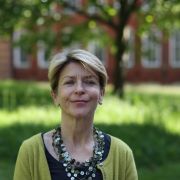
Susan Forde is a Career Development Fellow in the Department of Sociology at Durham University. Her interdisciplinary research bridges sociology, human geography, and peace and conflict studies, focusing on spatial justice, structural violence, and peacebuilding in divided and post-conflict cities like Mostar (Bosnia-Herzegovina) and Cape Town (South Africa). Key affiliations: Durham University, University of York (former) Education: Doctorate from The Archbishop Desmond Tutu Centre for War and Peace Studies at Liverpool Hope University Her work examines socio-spatial agency, transformative justice, and equitable urban planning. She has published extensively on topics such as spatial reparations, memory landscapes, and community spaces in conflict contexts. Recent articles analyze intersectionality in post-conflict cities and the paradox of peace as violence in unequal spaces. Forde received the Athena Swan award for her contributions to Equality, Diversity, and Inclusion at the University of York and held a Leverhulme Trust Early Career Research Fellowship. Her research integrates mapping methodologies and theoretical frameworks to challenge structural inequities in urban environments.
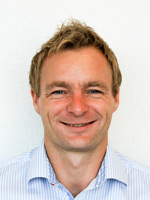
Anders Martin Fjell is a Professor and Center Manager for the Center for Lifespan Changes in Brain and Cognition (LCBC) at the Department of Psychology, University of Oslo. His research focuses on how the brain and cognitive abilities develop in childhood and change throughout the adult lifespan. Dr. Fjell's research spans multiple areas of cognitive neuroscience and neuropsychology, with particular emphasis on: Brain development and aging across the lifespan Relationships between brain structure and cognitive function Memory processes and their neural correlates Neurodegenerative processes, particularly related to Alzheimer's Disease Effects of sleep on brain health and cognitive function His publication record demonstrates strong focus on lifespan neuroscience, with recent work examining brain aging trajectories, memory systems, Alzheimer's disease biomarkers, and the relationship between sleep patterns and brain health. His research frequently employs advanced neuroimaging techniques and large-scale longitudinal datasets to investigate cognitive and neural changes across the lifespan. Among his notable achievements: Elected to the Norwegian Academy of Sciences and Letters (2016) Recipient of the University of Oslo Research Prize (2015) LCBC awarded status as one of 5 world-leading research groups at UiO (2015) Morgenbladet's top 10 list of young Norwegian researchers (2012) Recipient of Fridtjof Nansen Award for Young Scientists and His Majesty the King's Gold Medal for best doctoral thesis (2006) Dr. Fjell has secured significant research funding including an ERC Starting Grant (€1.5 million), multiple grants from the Norwegian Research Council, and funding from the National Association for Public Health. His current projects focus on biomarkers for early Alzheimer's detection, brain inflammation and atrophy in aging, and memory development and decline across the lifespan. As Center Manager for LCBC, Dr. Fjell leads one of the world's leading research groups studying lifespan changes in brain and cognition, contributing significantly to our understanding of how the brain changes from childhood through old age.
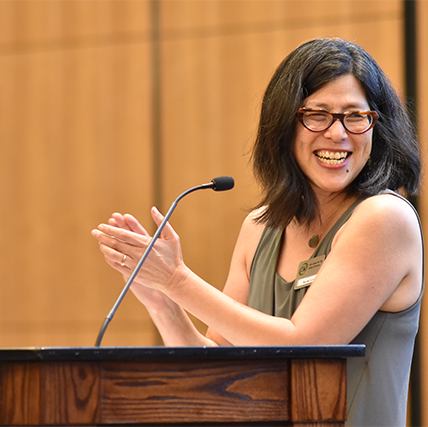
Rachel C. Lee is a Professor of Gender Studies, English, and the Institute of Society and Genetics at the University of California, Los Angeles (UCLA). She served as Immediate Past Director of the Center for the Study of Women and has been a leading voice in Asian American studies, environmental humanities, and biopolitical theory. Her research explores frameworks connecting environmental illness (chronic Lyme, MCS) with anti-racist and anti-colonial scholarship. Notably, she co-leads the UC Humanities Research Institute-sponsored collective 'How We Make It: Imagining Medical Justice After Covid’s Long Haul' and serves as Co-PI for the University of California's multicampus program 'Abolition Medicine and Disability Justice.' Lee's recent publications analyze intersections of molecular intimacy, care labor, and atmospheric toxicity in literature and art. Her 2022 paper on Ocean Vuong's On Earth We Are Briefly Gorgeous theorizes 'affective chemistries of care' and 'slow activism' through queer and crip epistemologies. She has also contributed extensively to feminist discourse on chemical exposure and metabolic aesthetics. Scientific awards include the Culture Studies Book Prize from the Journal of Asian American Studies (2004). Her teaching portfolio includes graduate seminars on 'Femiqueer Corporealities' and undergraduate courses like 'Los Angeles: Layers and Landscapes.'
Elena Dimitrova is a Part-time Lecturer at the Department of Urban Planning within the Faculty of Architecture at the University of Architecture, Civil Engineering and Geodesy (UACEG) in Sofia, Bulgaria. She has been affiliated with the institution since 1983 and holds a Doctor of Architecture degree awarded in 1990 from the same university (then known as VIAS). Her research interests focus on spatial and socio-cultural aspects of sustainable development, interdisciplinary research on urban sustainability, socio-spatial and cultural identity of European cities, and contemporary challenges for cities in Southeastern Europe. Her work spans spatial policies for sustainable development, methods for assessing urban sustainability, energy transformation at regional and local levels, public participation in urban planning, urban and regional mobility, and cultural heritage management. Dimitrova has been involved in numerous research projects since 1997, including several Horizon 2020 projects such as URBINAT (2018-2024) and ECHOES (2016-2019), where she served as principal investigator for the UACEG team. Her scholarly output demonstrates consistent contributions to the field of urban planning, with recent publications examining gender-inclusive urban regeneration, post-war heritage, and sustainable mobility. Member of the Bulgarian National Committee of ICOMOS (2011-2022, as Vice President) Vice President of CIVVIH (International Scientific Committee of ICOMOS for historic cities and villages) since 2021 Member of the Committee for Selection of Europa Nostra Awards in Education category (2022) Chair of working groups related to sustainable development goals implementation Her international engagement includes extensive teaching collaborations across European universities through ERASMUS+, TEMPUS, and CEEPUS programs, reflecting her commitment to transnational academic exchange in urban planning education.
Nicolas Salvador Gregorio Angelcos Gutiérrez is an Assistant Professor at the Department of Sociology, Faculty of Social Sciences, University of Chile, with a full-time 44-hour working schedule. Holding a Ph.D. in Social Sciences from École Des Hautes Études en Sciences Sociales (2016) and a Sociology degree from University of Chile (2008), he teaches undergraduate courses on urban sociology, classical/contemporary sociological theories, professional practice, and thesis seminars, while supervising postgraduate thesis workshops. Education : Ph.D. in Social Sciences (2016), Sociologist (2008) Teaching : Urban sociology, sociological theory, thesis supervision His research focuses on urban marginalization, social movements, and educational inequality in Chilean contexts, with recent publications examining neoliberal city dynamics, housing struggles, and youth activism. Current projects include: "Space and political participation among youth from popular neighborhoods in Chile" (2025-2029, Fondecyt_Anid) "Meritocracy in school: Moral foundations of educational market" (2021-2025, Fondecyt_Anid) He supervises numerous undergraduate and postgraduate theses addressing topics like urban space use, gender violence, intergenerational migration, and social movement analysis. Publications appear in Antipode , Educational Review , and Social Movement Studies , with a recent book chapter on Chilean urban sociology concepts.
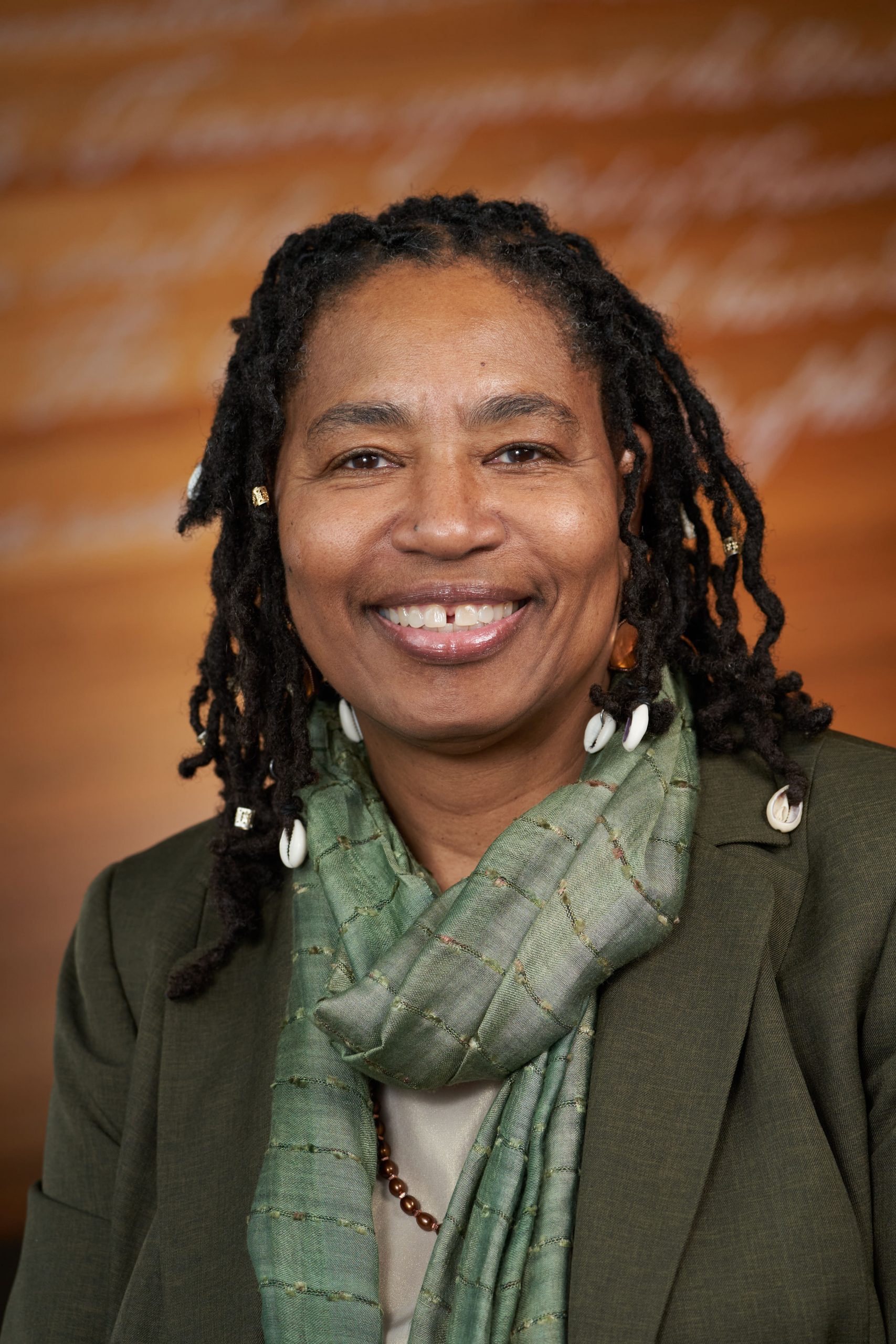
Paula C. Johnson serves as Professor of Law at Syracuse University College of Law and Director of the Cold Case Justice Initiative (CCJI), which she co-founded to investigate racially-motivated murders from the civil rights era and contemporary times. She also holds an appointment on New York's Franklin H. Williams Judicial Commission, advising on equity issues within the court system. Education: B.A., University of Maryland, College Park (1981) J.D., Temple University School of Law (1985) LL.M., Georgetown University Law Center (1990) Her research critically examines intersections of race, gender, and criminal law through frameworks of international human rights and voting rights. Work focuses on systemic inequities affecting incarcerated women, gentrification as racial violence, and barriers to educational access, emphasizing community-centered legal advocacy and historical justice. Publications reveal consistent thematic threads: documenting marginalized voices (particularly African American women in prison), analyzing spatial violence in urban environments, and connecting civil rights-era atrocities to contemporary racial justice movements through rigorous interdisciplinary scholarship. Scientific Awards: Syracuse University College of Law CCJI Award (2018) Black Law Students Association Outstanding Advisor Award (2018) Trailblazer Award from Syracuse University (2016) Central New York ACLU Ralph E. Kharas Distinguished Service Award (2015) Emmett Till Legacy Foundation Woman of Courage Award (2015) National Civil Rights Social Justice Award (2014) Syracuse University Chancellor’s Citation for Excellence Unsung Heroine Award from Syracuse University MLK Committee Professor Johnson actively advises law students' research and serves on committees for joint-degree candidates across Syracuse University. She chairs the College of Law Curriculum Committee, participates in Promotion and Tenure reviews, and advises the Black Law Students Association and OUTLAW (LGBTQ organization), demonstrating deep institutional engagement. She co-directs the Cold Case Justice Initiative, a collaborative research team working with civil rights organizations and affected communities to reinvestigate unresolved civil rights-era murders, combining archival research, community testimony, and legal advocacy.
Dr. Nilay Kilinc is a Grant-funded researcher at the University of Helsinki's Faculty of Social Sciences, affiliated with both the Helsinki Institute of Urban and Regional Studies (Urbaria) and the Helsinki Inequality Initiative (INEQ). She holds a PhD in Migration and Mobility Studies from the University of Surrey (UK), an MA in European Studies from Lund University (Sweden), and a BA in International Relations from Istanbul Bilgi University (Turkey). Her research expertise spans highly skilled migration, Turkish migration in Europe, Nordic capitals and migrants, return migration, second-generation experiences, home and identity, transnationalism, and translocality. Dr. Kilinc uniquely combines academic scholarship with ethnographic filmmaking, having directed the documentary Arkasloch - Nobody's Problem (2022) which explores second-generation Turkish-German migrants' return migration to Turkey. Her recent scholarly output reveals strong thematic continuity in migration studies with particular focus on Turkish diaspora communities across Europe. The publications demonstrate methodological diversity spanning ethnographic research, sensory methods, visual storytelling, and spatial analysis of migration patterns. Her work increasingly examines power dynamics in mobility trajectories, creative migrants' citizenship practices, and the complex interplay between deportation, citizenship, and belonging. Gerda Henkel Fellow (Postdoc) Pontica Magna Returning Fellow (Postdoc) Postdoctoral Research Fellow at Center for Advanced Studies - South East Europe Pontica Magna Fellow (Postdoc) Guest Postdoc Research Fellow at University of Leipzig As an educator, Dr. Kilinc has developed and taught two Master's level courses at the University of Helsinki: 'Migration and Cities' (2023) and 'Lifestyle Migration, Mobilities and Identities' (2024, co-organized with Florencia Quesada). She currently serves on the PhD thesis committees for Euridice Hernandez Gomez and Thu Nguyen. Her active research portfolio includes the externally funded project 'Creative Migrants' Acts of Citizenship and Democratic Participation in Finland' (2023-2026) where she serves as Principal Investigator. Dr. Kilinc's scholarly activities extend beyond traditional academic boundaries through her engagement with media and public scholarship, including interviews, book launches, and discussions that bridge academic research with broader societal conversations about migration, integration, and belonging.
Scot A. French serves as Associate Professor of History at the University of Central Florida (UCF), where he concurrently directs Public History initiatives and co-leads the Center for Humanities and Digital Research. A core faculty member in UCF's Texts and Technology Ph.D. program and founding chair of the Florida Digital Humanities Consortium, his work centers on digital public history methodologies applied to African American and Southern historical landscapes, with particular emphasis on cultural memory and community preservation. Dr. French earned his Ph.D. in History from the University of Virginia in 2000 following foundational work at UVA's Carter G. Woodson Institute (1997-2006) where he co-directed the Ford Foundation-funded Center for the Study of Local Knowledge. His subsequent directorship of the Virginia Center for Digital History (2006-2010) established his expertise in digital archival methodologies before transitioning to his current UCF appointments. His research program integrates Digital and Public History with deep investigations into Community Studies/Local Knowledge, Sites of Memory, Southern History, African American History, and Atlantic World/African Diaspora frameworks. French pioneers spatial analysis techniques to document racial displacement and cultural erasure, employing 3D visualization tools to reconstruct historical narratives of marginalized communities. His signature approach merges academic rigor with public engagement through community workshops, digital exhibitions, and documentary film production that transforms archival materials into accessible public resources. Recent scholarship reveals consistent thematic focus on visualizing historical memory through digital tools, with particular attention to Nat Turner's legacy, Eatonville's Black township preservation, and Jeffersonian correspondence networks. French's work demonstrates evolving methodological sophistication in applying GIS mapping, network analysis, and immersive visualization to interrogate race, power, and historical representation across temporal boundaries. Dr. French's scholarly contributions have earned significant recognition including: Winter Park Magazine 'Most Influential People' Award for Public History work (2017) Burke Brown Steppe Chapter Award for Community Service (2014) University of Virginia Black Community Advocate Award (2010) Virginia Film Festival Audience Favorite Award for documentary 'That World is Gone' (2010) Gustavus Myers Outstanding Book Award Honorable Mention for 'The Rebellious Slave' (2005) As Director of Public History at UCF, French oversees community partnerships including the Zora Neale Hurston Festival of Arts & Culture where he chairs the Academics Committee. His grant portfolio features Ford Foundation support for the Center for Study of Local Knowledge and National Park Service collaborations on segregated education documentation. Through the Texts and Technology Ph.D. program, he mentors emerging scholars in digital humanities methodologies while serving on national advisory boards including the American Archive of Public Broadcasting and The Papers of William Short project. French leads the Center for Humanities and Digital Research's community-focused initiatives including the Florida Digital Humanities Consortium network across 40+ institutions. His documentary 'That World is Gone' exemplifies his collaborative model bringing together academic researchers, community elders, and filmmakers to preserve endangered histories of racial displacement. Current projects involve visualizing Jefferson-Short correspondence networks and developing digital preservation frameworks for Eatonville's historic Black township.
Thomas Wimark serves as Associate Professor in the Department of Human Geography at Uppsala University, Sweden. His research investigates migration, residential segregation, and the lived experiences of marginalized populations, with particular emphasis on LGBTQ+ communities and refugees. He contributes to the editorial board of Gender, Place and Culture and teaches quantitative methods and urban planning. Wimark's scholarly work centers on the spatial dimensions of sexuality and migration. He analyzes how residential segregation shapes life trajectories and examines the challenges faced by queer asylum seekers within heteronormative frameworks. Utilizing Swedish register data alongside qualitative methodologies, his studies illuminate the intersection of identity, space, and policy. Analysis of his recent publications indicates a sustained focus on LGBTQ+ asylum processes, the spatial distribution of sexual minorities, and housing segregation dynamics. His work bridges theoretical insights with empirical evidence to address critical gaps in migration and urban geography. Current research funding includes a Forte grant as Principal Investigator for "Is there consistency in evaluation of Sexual Orientation and Gender Identity asylum seeker cases?" (2021-2024) and an EU Marie Sklodowska-Curie project "Solidarity in diversity" as Co-Investigator (2021-2025). Previous grants from Riksbankens Jubileumsfond and Stockholms läns landsting supported studies on geographic polarization and diversity in Swedish cities. Wimark actively supervises bachelor, master’s, and PhD students, guiding research on migration, segregation, and sexuality. He also contributes to academic service through editorial responsibilities and collaborative research initiatives.
Olle Folke is a Professor in the Department of Political Science at Uppsala University, Sweden, where he conducts research and teaches on political representation, gender dynamics, and electoral systems. His work bridges political science, economics, and sociology, with publications in premier journals including the American Political Science Review , Journal of Politics , and Quarterly Journal of Economics . His research focuses on: The intersection of social class and political careers, notably the "class ceiling" phenomenon Gender disparities in political recruitment, workplace harassment, and meaningful work Mechanisms of electoral systems, party nomination strategies, and political dynasties Populist radical right movements and neighborhood effects on political behavior Methodologically, he employs quasi-experimental designs and large-scale administrative data, primarily from Sweden but with comparative implications. Recent publications (2022-2025) reveal intensified focus on structural inequalities: the class ceiling in politics, gendered neighborhood segregation among politicians, and economic/social dynamics of Sweden's populist radical right. His collaborative work—frequently with Johanna Rickne—demonstrates consistent methodological rigor and policy relevance, evidenced by widespread media coverage and policy citations across 25+ news outlets and 6 policy documents. Professor Folke maintains active academic engagement through his research group and international collaborations, with contact via olle.folke@statsvet.uu.se at Uppsala University's Östra Ågatan campus.
Dr. Madlen Pilz is a Researcher at the Leibniz Institute for Research on Society and Space (IRS), specializing in Politics and Planning. She holds a PhD from Humboldt University of Berlin, where she analyzed post-socialist urban transformation in Tbilisi. Her research focuses on urban redevelopment, migration integration, and housing estates in East Germany, with active projects including 'StadtumMig' and 'Estates after Transition'. Her scholarly interests span urban exclusion, migration governance, and the socio-spatial impacts of post-socialist transitions. Recent publications explore themes like social infrastructures in arrival neighborhoods, municipal integration policies, and European disintegration narratives. She collaborates on interdisciplinary projects funded by entities like DFG and BMBF, examining diversity in post-migrant cities and climate-integration policy intersections. Her fieldwork employs discourse analysis and ethnographic methods across Germany, Georgia, and Eastern Europe.
Patty Heyda is an Associate Professor in the Department of Architecture at the Sam Fox School of Design & Visual Arts, Washington University in St. Louis. Her work critically examines American urban landscapes through the lens of spatial justice, race, and design politics in weak market cities and transitioning suburbs. Her educational background includes: Master of Architecture with distinction, Harvard University Heyda's research centers on "erasure urbanism"—the systematic dismantling of democratic urban spaces through racialized redevelopment and privatization. She investigates how market-based planning perpetuates spatial inequality in first-ring suburbs, with Ferguson, Missouri serving as a key case study. Her work integrates architectural design, critical cartography, and social theory to expose structural contradictions in contemporary urbanism. Analysis of her publications from 2016-2024 reveals consistent engagement with racial justice, suburban transformation, and the political economy of design. Key trajectories include critiques of food deserts as manifestations of regional economic imaginaries, examinations of architectural façades in masking segregation, and pandemic-era studies of work-space reconfiguration. Her scholarship bridges architectural practice with critical race theory, challenging disciplinary norms through projects like #ArchSoWhite. Heyda's contributions have been recognized through: William H. Danforth St. Louis Confluence Award Finalist (2024) Dwight F. Davis Award for Outstanding Planning Advocacy (2022) St. Louis AIA Award Nashville Civic Design Center Award ThinkSpace Platform Award She directs significant research initiatives funded by the Mellon Foundation's Divided City initiative, including the Laboratory for Suburbia and Mobilizing the Middle: A Radical Atlas of Ferguson. These projects examine racial equity in suburban transformation through interdisciplinary collaboration, supported by grants from the Center for Race, Ethnicity and Equity. Her public scholarship engages mainstream media through outlets like The Conversation and NPR. Heyda founded and directs the Laboratory for Suburbia, which investigates design strategies for weak market cities through mapping, exhibitions, and community engagement. Current projects include Small Town Urbanisms: Plans, Politics, People and House as Crisis, addressing eco-social challenges in post-industrial American landscapes through spatial interventions and policy advocacy.
Dr Sylvia Ang is a Lecturer in Sociology at Monash University, specializing in migration studies with a focus on Asian diasporas, class, gender, and decolonization. Her research examines inequalities experienced by migrants from Asia, particularly exploring ethnic relations, mobility patterns, and postcolonial dynamics. She holds a PhD from the University of Melbourne and previously held postdoctoral positions at Deakin University and the National University of Singapore. Her work contributes to UN Sustainable Development Goals related to reducing inequalities (SDG 10) and promoting peaceful societies (SDG 16). Key areas of expertise include migrant employability, diaspora communities, and critiques of Western-centric migration theories. She has led projects funded by Australian government agencies, including an evaluation of vocational training programs for international students. Education: PhD in Social and Political Sciences (University of Melbourne) Prior Positions: Alfred Deakin Postdoctoral Research Fellow (2016-2018), Asia Research Institute Postdoctoral Fellow (2018-2020) Ang’s monograph Contesting Chineseness (2022) won the Raewyn Connell Prize for best first book. She actively reviews for journals like Ethnic and Racial Studies and contributes to public discourse on migration-related issues in Australia and Singapore through media engagements. Current research projects investigate class dynamics in migrant lives, decentering Western migration paradigms, and attitudes toward 'the West' among Chinese graduates of Western universities.
Sepehr Zhand is a Research Fellow at The Bartlett School of Architecture, University College London, specializing in evidence-based design and spatial analysis. His research develops computational approaches to urban morphology and space syntax applications. Research focuses on: Evidence-based design frameworks Urban morphology of Middle Eastern cities Spatial configuration analysis Socio-economic detection models Infrastructure impact assessment Recent publications examine noise pollution in public spaces, urban connectivity in Abu Dhabi, and computational models for Tehran's socio-economic patterns. Professional experience includes architectural design and urban planning in London and Tehran.
Professor Jennifer Roberts is a Professor of Economics at the University of Sheffield's School of Economics. She holds a PhD in Economics from the University of Leeds (1993) and has held academic roles since 1990. Her research focuses on applied microeconometrics, health-labour market interactions, health valuation (notably the SF-6D index), and well-being economics. She collaborates widely on projects like the Health Foundation's health-and-work initiative and Nuffield Foundation's disability employment gap analysis. Education: BSc Social Sciences (Economics) – Bristol Polytechnic, 1987 MSc Economics – University of Leeds, 1988 PhD Economics – University of Leeds, 1993 Research Interests: Health economics and valuation metrics (e.g., SF-6D) Labour market outcomes tied to health conditions Disability employment disparities Commuting behaviour and health impacts Behavioural economics and decision-making Notable Awards: 2002 International Society for Quality of Life Prize for SF-6D article Collaborations and Grants: Health Foundation project on health and work Nuffield Foundation disability employment gap study ESRC-funded research on microeconometric health data analysis Labs/Teams: Active in ScHARR (School for Health and Related Research) collaborations and the Sheffield Economic Research Group.