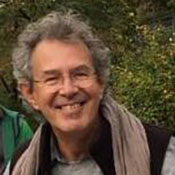
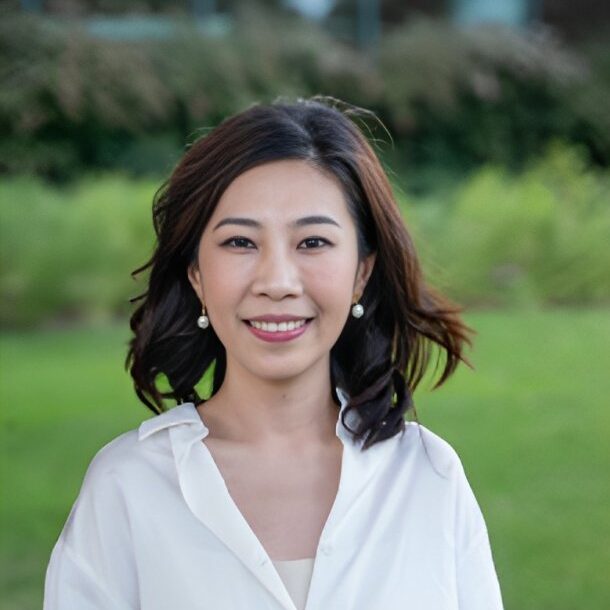
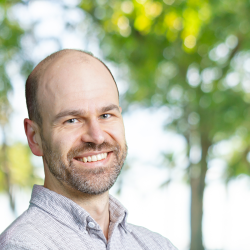
Nicholas Evans is Distinguished Professor of Linguistics and Director of the ARC Centre of Excellence for the Dynamics of Language (CoEDL) at the Australian National University’s School of Culture, History & Language. His work bridges fieldwork-based language documentation with theoretical questions in typology, cultural evolution, and social cognition. Focus on endangered Australian and Papuan languages Director of ARC Laureate Project on 'The Wellsprings of Linguistic Diversity' Co-leader of SCOPIC (Social Cognition Parallax Corpus) study Collaborator in global linguistic diversity initiatives His research explores how micro-level community multilingualism shapes macro-level linguistic diversity, with fieldwork spanning seven years in remote Indigenous communities. Recent projects include PARABANK (paradigm syncretism analysis) and Southern New Guinea language studies, particularly Nen and Yam family languages. Scientific recognition includes the Ken Hale Award (Linguistic Society of America), Anneliese Maier Forschungspreis, and fellowships in the Australian Academy of Humanities, Australian Social Sciences Academy, and the British Academy.
Dr. Corey T. Callaghan is an Assistant Professor in the Department of Wildlife Ecology and Conservation at the University of Florida . Based at the Fort Lauderdale Research and Education Center , his research focuses on global change ecology using big data from citizen science platforms like eBird and iNaturalist, combined with geospatial analyses and macroecological theory . Ph.D. (2019) from UNSW Sydney M.S. (2015) from Florida Atlantic University B.S. + B.S. (2013) from Canisius College His work examines urban ecology , including how species traits influence urban tolerance across birds, amphibians, and butterflies. He develops adaptive sampling frameworks to optimize citizen science data collection while addressing biases. Current projects analyze human-nature interactions through citizen science participation, secondary data in photographs, and machine learning for biodiversity monitoring. He actively contributes to conservation strategies for urban biodiversity and data-driven restoration efforts . Recent publications highlight his expertise in cross-taxa comparisons , continental-scale analyses , and ecosystem service quantification . He leads the Global Ecology Research Group at the University of Florida, emphasizing collaborative science and open-source methodologies .
Furong Huang is an Associate Professor at the University of Maryland's Department of Computer Science, with affiliations at the Institute for Advanced Computer Studies, Center for Machine Learning, Maryland Robotics Center, and Applied Mathematics, Statistics, and Scientific Computation Program. Her research bridges trustworthy machine learning, sequential decision-making, and foundation models for robotics, emphasizing reliability, interpretability, and ethical standards. Research Interests: Trustworthy AI Generative AI Reinforcement Learning AI Security Algorithmic Fairness Foundation Models for Robotics Recent Publications span leading conferences (NeurIPS, ICML, ICLR, CVPR) and journals, focusing on: Robustness in Vision-Language Systems Trustworthy Generative AI Foundation Models for Sequential Decision-Making AI Security and Watermarking Scientific Awards MIT TR35 Innovator Under 35 (Asia Pacific 2022) Best Paper Award, AdvML Frontier Workshop, NeurIPS 2024 NSF NAIRR Pilot Awardee Microsoft Accelerate Foundation Models Research Award (2023) JP Morgan Faculty Research Awards (2019–2022) Advising and Grants : Her lab has graduated students to roles at OpenAI, Google, Meta, and Netflix. Research funded by DARPA, NSF, ONR, AFOSR, and industry partners like Microsoft, Adobe, and Capital One. Labs & Teams : Leads research groups focused on Trustworthy AI and Robotics at the University of Maryland, collaborating with the Maryland Robotics Center and Applied Mathematics Program.
Lerrel Pinto is an Assistant Professor of Computer Science at the Courant Institute of Mathematical Sciences at New York University (NYU), where he leads the General-purpose Robotics and AI Lab (GRAIL) as part of the CILVR research group. His work bridges the gap between theoretical machine learning and practical robotics applications, with a focus on enabling robots to generalize and adapt in real-world environments. Dr. Pinto received his undergraduate degree from IIT Guwahati, followed by a PhD from the Robotics Institute at Carnegie Mellon University (CMU). He then completed a postdoctoral fellowship at the University of California, Berkeley before joining NYU as faculty. His research program centers on robot learning and decision making, with several key thrusts that demonstrate his innovative approach to robotics. Pinto's work emphasizes large-scale learning techniques that leverage both extensive data and sophisticated model architectures. A significant portion of his research focuses on representation learning for sensory data, particularly developing methods that enable robots to make sense of visual, tactile, and auditory inputs. His lab has made notable contributions to reinforcement learning algorithms that allow robots to adapt to new scenarios with minimal retraining. Pinto also champions open-source robotics , developing affordable robot platforms that democratize access to robotics research. Analysis of Pinto's recent publications reveals a strong trend toward multimodal perception in robotics, integrating visual, tactile, and auditory information to create more robust robot systems. His work increasingly focuses on zero-shot and few-shot learning capabilities, enabling robots to handle novel situations without extensive retraining. There's also a clear progression toward general-purpose robotics , moving away from task-specific solutions toward more flexible systems that can handle diverse real-world challenges. Dr. Pinto's scientific contributions have been recognized with several prestigious awards: Sloan Research Fellowship (2025) NSF CAREER Award (2024) RAL Early Career Award (2024) Best Student Paper Award at ICRA (2016) Outstanding Paper Award at MFM-EAI workshop at ICML (2024) Best Paper Award at NGSM workshop at ICML (2024) Best Student Paper Award at RSS (2023) As an advisor, Pinto has mentored numerous students who have gone on to impactful careers in both academia and industry. His former PhD student Denis Yarats co-founded Perplexity.AI, while Mahi Shafiullah became a postdoc at UC Berkeley and Meta AI. Many of his Masters students have pursued PhDs at top institutions like CMU, MIT, and Stanford, or joined leading robotics companies including 1X, Fauna Robotics, and NVIDIA. Pinto's lab has secured significant research funding, including the NSF CAREER award and likely other grants supporting his robotics research program. The General-purpose Robotics and AI Lab (GRAIL) that Pinto leads brings together a diverse team of researchers working on cutting-edge robotics challenges. The lab maintains strong collaborations with industry partners and other academic institutions, facilitating technology transfer and real-world impact. GRAIL's research spans multiple robotics platforms and focuses on developing algorithms that enable robots to learn from diverse experiences and generalize across environments.
Anca Dragan is an Associate Professor in the Department of Electrical Engineering and Computer Sciences at the University of California, Berkeley, where she runs the InterACT Lab focused on algorithms for human-AI and human-robot interaction. Currently on leave from Berkeley, she leads AI Safety and Alignment at Google DeepMind, overseeing safety for Gemini models and preparing for future advancements. Dragan has been a co-PI of the Center for Human-Compatible AI and served on the steering committee for the Berkeley AI Research (BAIR) Lab. B.Sc. in Computer Science from Jacobs University Bremen, Germany Ph.D. from Carnegie Mellon University Dr. Dragan's research focuses on enabling AI agents to work effectively with, around, and in support of people. Her work bridges robotics, machine learning, and game theory to create systems that better understand human preferences and coordinate with users. Key areas include AI alignment (ensuring AI does what people actually want), learning reward functions from diverse human feedback forms, and developing algorithms for human-AI collaboration across domains like autonomous vehicles, brain-machine interfaces, and recommender systems. Her research emphasizes maintaining uncertainty about human preferences and accounting for the plurality of human values. Dr. Dragan's recent publications reveal a strong focus on addressing fundamental challenges in AI safety and alignment. Her work spans theoretical foundations of reward learning, practical implementations for human-AI coordination, and critical examinations of limitations in current approaches. There's a clear trajectory toward more robust, safe, and value-aligned AI systems that can handle complex human preferences while avoiding both present-day harms and potential catastrophic risks. IEEE RAS Early Academic Career Award in Robotics and Automation (2021) McEntyre Award for Excellence in Teaching (2020) PECASE (Presidential Early Career Award for Science and Engineering) (2019) Sloan Fellowship (2018) NSF CAREER Award (2017) Okawa Foundation Award (2017) MIT Tech Review 35 Innovators Under 35 (2017) Multiple best paper awards at top robotics and AI conferences Dr. Dragan has mentored numerous successful students who have gone on to faculty positions at MIT, Stanford, CMU, and Princeton, as well as industry roles at DeepMind, Waymo, and Meta. Her advising philosophy emphasizes both technical rigor and consideration of broader societal impacts. She has secured significant research funding including NSF CAREER, ONR Young Investigator, and Okawa Foundation awards, supporting work on human-AI interaction and alignment. Dragan has also consulted for Waymo for six years, helping develop roadmaps for deploying increasingly learning-based safety-critical systems. Dr. Dragan leads the InterACT Lab at UC Berkeley, which has produced influential work on Cooperative Inverse Reinforcement Learning, Inverse Reward Design, and other foundational concepts in human-AI interaction. The lab's research has significantly shaped the field of AI alignment, with applications spanning autonomous vehicles that coordinate with human drivers, brain-machine interfaces that adapt to user needs, and language models that better understand human preferences. Current work focuses on scaling safety approaches as AI capabilities advance, ensuring alignment keeps pace with technological progress.
Prof. Alois Christian Knoll is a full professor at the Technical University of Munich (TUM) in the School of Computation, Information and Technology. His academic career includes roles at Bielefeld University and leadership in major EU initiatives like the Human Brain Project and ECHORD++. He specializes in robotics, AI, and autonomous systems, with a focus on medical robotics, sensor-based systems, and neuromorphic engineering. Knoll has supervised over 100 doctoral theses and authored/co-authored over 1,000 publications. Education: Diploma in Electrical Engineering (University of Stuttgart, 1985); PhD in Computer Science (Technical University of Berlin, 1988); Habilitation (TU Berlin, 1993). He has been at TUM since 2001, leading the Robotics, AI, and Real-Time Systems department. Research interests span autonomous systems, neuro-IT integration, and traffic simulation. Key projects include fortiss (Bavarian State Institute for Computer Science) and TUM-CREATE (Singapore collaboration). Awards include IEEE Fellow, University of Tokyo Fellow, and the Carl-Ramsauer-Prize (1990). Current roles include editorships in robotics journals, leadership in EU flagship projects, and teaching across multiple programs. His work bridges computer science, neuroscience, and engineering, with applications in healthcare, automotive systems, and urban mobility.
Tzu-Mao Li is an Assistant Professor in the Department of Computer Science and Engineering (CSE) at the University of California, San Diego (UCSD), affiliated with the Center for Visual Computing. His research focuses on differentiable graphics algorithms, combining classical visual computing with modern machine learning techniques. He holds a Ph.D. from MIT CSAIL under Frédo Durand and a postdoc at MIT and UC Berkeley with Jonathan Ragan-Kelley. His work spans rendering, programming languages for graphics, Monte Carlo methods, and inverse problems. Education: B.S. and M.S. from National Taiwan University (2011-2013), advised by Yung-Yu Chuang. Ph.D. from MIT CSAIL (Computer Graphics Group), advised by Frédo Durand. Postdoctoral research at MIT and UC Berkeley with Jonathan Ragan-Kelley. Research Interests: Differentiable rendering, Monte Carlo integration, programming language design for visual computing, physical simulation, adversarial machine learning, and applications in computer vision and robotics. Key areas include rendering algorithms (path tracing, bidirectional methods), optimization techniques (MCMC, gradient-based), and neural representations (SDFs, neural fields). Publications focus on advancing rendering algorithms, differentiable systems, and applications in inverse problems. Notable contributions include edge sampling for differentiable rendering, warped-area sampling, and diffusion models for BSDF sampling. Awards: ACM SIGGRAPH 2020 Outstanding Doctoral Dissertation Award, multiple Best Paper Awards at SIGGRAPH, and oral presentations at ICCV. Teaching: Courses include CSE 167 (Computer Graphics), CSE 168 (Rendering), and CSE 272 (Advanced Image Synthesis), emphasizing physically-based methods and programming.
Alexandre Bouchard-Côté is a Professor of Statistics at the University of British Columbia (UBC), affiliated with the Department of Statistics within the Faculty of Science. His research focuses on computational statistics, Bayesian methods, and Monte Carlo techniques, with applications in evolutionary biology, cancer genomics, and computational linguistics. Education : PhD in Computer Science (with Designated Emphasis in Statistics) from UC Berkeley (2010), BSc in Mathematics and Computer Science from McGill University (2005). Affiliations : Director of the Blang probabilistic programming project and leader of the Bouncy Particle Sampler research group. Research Interests : Bouchard-Côté develops scalable Bayesian computational methods, including non-reversible Monte Carlo algorithms like the Bouncy Particle Sampler, and applies these to problems in cancer phylogenetics, evolutionary dynamics, and historical linguistics. His work emphasizes bridging theoretical foundations with practical tools for data science. Publications Trends : Recent work spans distributed sampling frameworks (e.g., Pigeons.jl), variational phylogenetic inference, and cancer clonal evolution modeling. His articles often address algorithmic scalability and interdisciplinary applications in biology and astronomy. Awards : CRM-SSC Prize in Statistics (2024) PIMS-UBC Mathematical Sciences Young Faculty Award (2018) Tweedie New Researcher Award (2016) Advising & Grants : Supervises graduate students (e.g., Son Luu, Nikola Surjanovic) and leads funded projects on distributed MCMC and cancer genomics. Collaborates with institutions like the Simons Foundation and the Canadian Statistical Sciences Institute (CANSSI). Labs/Teams : Core member of the UBC Statistical Machine Learning group, contributing to open-source tools like Blang and the Bouncy Particle Sampler implementation.
Mark Crowley is an Associate Professor in the Department of Electrical and Computer Engineering at the University of Waterloo, with a cross-appointment in the Cheriton School of Computer Science. He is a member of the Waterloo Artificial Intelligence Institute (WAII) and the Waterloo Institute for Complexity and Innovation (WICI), and serves as National Secretary of the Canadian Artificial Intelligence Association (CAIAC). His educational background includes a Ph.D. and M.Sc. in Computer Science from the University of British Columbia, where he worked in the Laboratory for Computational Intelligence, and a B.A. in Computer Science from York University. He completed a postdoctoral fellowship at Oregon State University working with Tom Dietterich's machine learning group. Crowley's research focuses on developing dependable and transparent algorithms to augment human decision-making in complex domains with multiple agents, spatial structure, or uncertainty. His work spans Reinforcement Learning , Deep Learning , Ensemble Methods , and Manifold Learning . He frequently collaborates with researchers in applied fields including Computational Sustainability, Sustainable Forest Management, Autonomous Driving, Medical Imaging, and Material Design. His research is motivated by both theoretical opportunities and real-world challenges such as forest fire management, automotive applications, and medical imaging. His recent publications demonstrate a strong focus on addressing challenges in reinforcement learning, particularly around observation costs, multi-agent systems, and causal representation learning. His work on ChemGymRL provides a significant contribution to digital chemistry and material design through reinforcement learning frameworks. The textbook Elements of Dimensionality Reduction and Manifold Learning represents a major contribution to the theoretical foundations of machine learning. Crowley actively supervises graduate students, with recent thesis completions including Shayan Shirahmadi Gale Bagi (PhD, Feb 2025) and Oleksandra Nahorna (MASc, Dec 2024). His lab, UWECEML (Waterloo ECE Machine Learning Lab), focuses on developing new algorithms at the intersection of Machine Learning, Optimization, and Probabilistic Modeling. He teaches courses including ECE 457C (Reinforcement Learning), ECE 657A (Data & Knowledge Modelling & Analysis), and ECE 457B (Fundamentals of Computational Intelligence). His blog Computationally Thinking explores AI, machine learning, and the societal impact of these technologies.
Andrew Childs is a Professor at the University of Maryland, affiliated with the Department of Computer Science and the Institute for Advanced Computer Studies (UMIACS). He serves as Director of the NSF Quantum Leap Challenge Institute for Robust Quantum Simulation (RQS) and is a Fellow at the Joint Center for Quantum Information and Computer Science (QuICS). His research focuses on quantum algorithms for simulating physical systems, algebraic problems, and quantum walk protocols, with applications in quantum computing and computational complexity. University of Maryland Institute for Advanced Computer Studies (UMIACS) Joint Center for Quantum Information and Computer Science (QuICS) NSF Quantum Leap Challenge Institute for Robust Quantum Simulation Childs' research spans quantum simulation, quantum Fourier transform, phase estimation, and Hamiltonian dynamics. He has developed techniques to reduce quantum computational resources for simulating quantum systems and explored limitations of quantum computers through hidden subgroup problems and non-unitary dynamics. His publications cover diverse areas including quantum walk optimization, Hamiltonian simulation methods, and applications to cryptography and condensed matter physics. Recent works address spatial search algorithms, product formulas for commutators, and quantum routing protocols. As an educator, Childs has taught courses on quantum algorithms and information processing at both the University of Maryland and University of Waterloo, with lecture notes and materials spanning multiple years. Contact: amchilds@umd.edu | Office: ATL 3359 | Affiliated with University of Maryland's quantum research institutes.
Alanson Sample is an Associate Professor in the Department of Electrical Engineering and Computer Science at the University of Michigan (since 2018), leading the Interactive Sensing and Computing Lab. His research focuses on Human-Computer Interaction, Cyber-Physical Systems, and wireless technology innovations. He holds a PhD in Electrical Engineering from the University of Washington (2011), with prior postdoctoral work there developing implantable medical devices. Before academia, Sample held senior roles at Disney Research (2013-2018) as Executive Lab Director and Principal Research Scientist, leading teams in Robotics, AI, Computer Vision, and HCI. Earlier, he worked at Intel Labs (2008-2013) on energy harvesting for wearables and IoT. Key research themes include wireless power systems, embedded sensing, and privacy-aware technologies. Over 150+ publications span topics like magnetic sensing (MagDesk), acoustic gesture recognition (HandSAW), and privacy-preserving activity tracking (PrivacyMic). His work bridges academic and industry innovation, particularly in scalable interactive systems and medical technology. Notable projects include the Quasistatic Cavity Resonance wireless charging system, RFID-based sensing platforms (WISP), and wearable health monitoring devices. His lab develops hardware-software co-design frameworks for energy-efficient embedded systems. Current research emphasizes medical applications, smart infrastructure, and ubiquitous computing interfaces.
Zhuoyue Zhao is an Assistant Professor in the Department of Computer Science and Engineering at the University at Buffalo, School of Engineering and Applied Sciences. His office is located at 338I Davis Hall, Buffalo, NY 14260, and he can be reached at zzhao35@buffalo.edu or by phone at (716) 645-4735. Dr. Zhao received his PhD in Computer Science from the University of Utah in 2021, where he was advised by Prof. Feifei Li and Prof. Jeff Phillips. Prior to that, he earned his BS in Computer Science from Shanghai Jiao Tong University in 2016, where he was part of the prestigious ACM Class. During his undergraduate studies, he conducted research under Prof. Kenny Zhu and spent Fall 2015 as a research assistant at Hong Kong Polytechnic University supervised by Prof. Eric Lo. Dr. Zhao's research focuses on database management systems, with specific emphasis on traditional and approximate query processing, query optimization, database systems on modern hardware, transaction processing, indexing, and storage. His work bridges theoretical foundations with practical implementations, often resulting in systems that address real-world database challenges. He has made significant contributions to probabilistic query processing, transaction scheduling, and learned indexing techniques. His recent publications demonstrate a clear trajectory toward optimizing database performance in hybrid transactional/analytical processing environments. His research increasingly integrates systems techniques with machine learning approaches, particularly in the area of learned indexes. There's also a strong focus on making database operations more efficient through innovative scheduling mechanisms and query processing techniques that can handle concurrent updates. Google PhD Fellowship (2019-2021) Best Paper Award at SIGMOD 2016 for "Wander Join: Online Aggregation via Random Walks" Best Paper Award at SIGMOD 2025 for "Low-Latency Transaction Scheduling via Userspace Interrupts" Dr. Zhao currently advises several PhD students including Yunnan Yu, Congying Wang, Gaoxiang Liu (co-advised with Prof. Ziming Zhao), and Zhuoran Li. He has successfully guided MS student Nithin Sastry Tellapuri to graduation (Fall 2023), who is now employed at AirPay. His research is supported by significant funding including an NSF CAREER award (#2339596) totaling $599,977 for research on "Speedy and Reliable Approximate Queries in Hybrid Transactional/Analytical Systems" (2024-2029) and an unrestricted Google gift of $30,000 (2021). Dr. Zhao leads the ADBLab research group at UB, where students work on cutting-edge database systems research. His lab focuses on building practical database systems that address real-world challenges in query processing, transaction management, and indexing. The lab maintains strong connections with industry partners and regularly contributes to open-source database projects.
Rina Dechter is a Professor of Computer Science at the University of California, Irvine (UCI), affiliated with the Donald Bren School of Information and Computer Sciences (ICS). She specializes in automated reasoning, probabilistic and constraint-based graphical models, and causal inference. Dechter has held leadership roles, including Co-Editor-in-Chief of Artificial Intelligence since 2011 and editorial board memberships in journals such as the Constraint Journal and Journal of Machine Learning Research . Education : Ph.D., Computer Science, University of California, Los Angeles (UCLA) M.S., Applied Mathematics, Weizmann Institute B.S., Mathematics and Statistics, Hebrew University of Jerusalem Research Interests : Dechter’s work focuses on computational aspects of automated reasoning, constraint processing, probabilistic reasoning, and causal inference. She develops efficient algorithms for graphical models, emphasizing tractable reasoning tasks and anytime search strategies. Her recent projects include causal decision-making frameworks funded by a $5M NSF grant. Awards : Presidential Young Investigator Award (1991) AAAI Fellow (1994) ACP Research Excellence Award (2007) ACM Fellow (2013) Elected to the American Academy of Arts & Sciences (2025) Grants & Collaborations : She leads a multi-institutional NSF-funded project on causal foundations of AI decision-making. Her work emphasizes trustworthiness in AI through causal models, with applications in robotics and public health.
Katja Hose is a Full Professor of Data Management at TU Wien's DBAI research unit, heading the Data Management and Knowledge-Driven AI Lab. She previously held a Poul Due Jensen Foundation Professorship at Aalborg University. Her research focuses on data and knowledge engineering, including graph databases, knowledge graphs, querying, analytics, and machine learning, with interdisciplinary applications in bioscience, healthcare, and environmental assessment. Education: PhD in Computer Science (Ilmenau University of Technology, 2009), Postdoc at Max Planck Institute for Informatics (2009–2012). Academic roles include Program Co-Chair for ISWC 2024 and EDBT 2023, and editorial board membership at VLDBJ and TGDK. She leads projects like TARGET (health virtual twins) and ARMADA (data management). Research Interests: Knowledge Graphs, Semantic Web, Big Data, Machine Learning, Data Integration, and Provenance Systems. Key contributions include SHACL shape extraction, conversational data analytics, and environmental knowledge graphs. Awards include the 2025 Distinguished Meta-Reviewer Award and 2024 Manfred Paul Award. Advising and Grants: Supervised students including E. Pürmayr (Diploma Thesis 2025). Active in EU projects (TARGET, ARMADA) and grant coordination. Labs/Teams: DMKI Lab at TU Wien, collaborating with interdisciplinary teams in healthcare and environmental science.
Peter K. Kitanidis is a Professor in the Department of Civil and Environmental Engineering and the Institute for Computational and Mathematical Engineering at Stanford University . His research focuses on groundwater flow , hydrologic forecasting , and stochastic inverse modeling , with applications to pollutant remediation and CO₂ storage monitoring . Education : Diploma, National Technical University of Athens (1974) M.S., MIT (1976) Ph.D., MIT (1978) Research Interests : Groundwater modeling and contaminant transport Hydraulic tomography and aquifer characterization Stochastic methods for uncertainty quantification Bioremediation and enhanced in-situ pollutant decay Dilution and mixing processes in heterogeneous media Real-time river flow forecasting Scientific Awards : L.G. Straub Award (1979) W.L. Huber Research Prize (1994) ISI Highly Cited Researcher (2001) AGU Hydrologic Sciences Award (2011) ASCE Pioneers in Groundwater Lecturer (2011) Advising and Grants : Advised 20+ PhD and MS students (1978–2018) Principal investigator on NSF, EPA, and DOE-funded projects Developed software for groundwater data analysis and CO₂ monitoring Contributed to bioremediation protocols and hydraulic tomography algorithms Labs and Teams : Kitanidis Laboratory for groundwater crisis solutions Collaborated with Oak Ridge National Laboratory and Stanford Hydrogeology Group Mentored postdocs (2000–2017) in reactive transport and inverse modeling