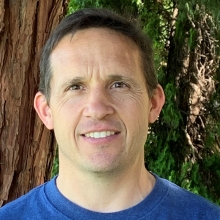
Andrew Gersick is a Lecturer in the Department of Ecology and Evolutionary Biology at Princeton University. His research focuses on animal behavior, particularly in large social species such as spotted hyenas, zebras, and cowbirds. He explores topics including collective behavior, social dynamics, communication systems, and ecological adaptations. His work integrates field studies with technological tools like accelerometers to analyze activity patterns and signaling mechanisms. Notably, he investigates how zebra stripes repel biting flies and how hyenas use vocalizations for individual recognition. Gersick also contributes to conservation efforts, such as the Great Grevy’s Rally in Kenya, and studies social learning in avian species like cowbirds. His recent articles highlight interdisciplinary approaches, combining ecology, physiology, and technology to understand animal behavior in natural and social contexts. While no awards are explicitly listed, his contributions to understanding collective behavior and conservation biology are significant. Advising and grants: No formal advisees or grant details are provided in the text. His work appears to focus on collaborative research and field-based methodologies. Labs/Teams: No specific laboratory or team affiliations are mentioned beyond his departmental role at Princeton.
Professor Tariq Butt of Swansea University's Faculty of Science and Engineering leads the Biocontrol and Natural Products (BANP) group , focusing on entomopathogenic fungi and natural product-based biopesticides for managing pests impacting food security , human health , and agriculture . He co-directs the Natural Products BioHub and Health Technology Solutions Research Institute . His cross-disciplinary research includes collaborations with Dr Joel Loveridge (Chemistry) for chemical ecology, Professor Chedly Tizoui (Engineering) for plant-based molluscicides, and Professor Dan Eastwood (Biosciences) for fungal biocontrol. Externally, he works with experts in Greece, Brazil, Turkey, Saudi Arabia , and companies like Certis Belchim and Lallemand . Recent publications highlight his work on fungal volatile organic compounds for pest control, mosquito repellents , and microbial consortia to reduce chemical dependencies. He has supervised over 35 PhD/MSc students and contributed to 174+ peer-reviewed articles and 14 book chapters .
Neil F. Lobo is a Research Professor in the Department of Biological Sciences at the University of Notre Dame, where he has held progressive academic positions since 2004. His work lies at the intersection of medical entomology, infectious disease epidemiology, and public health policy, with a focus on mosquito-borne diseases such as malaria and dengue. He conducts field and laboratory research across multiple continents, collaborating with global health programs to inform vector control strategies. Ph.D. in Molecular Biology, University of Notre Dame (1995–2000) B.Sc., St. Joseph’s Arts and Science College, Bangalore, India (1990–1994) Dr. Lobo's research centers on understanding the biological and behavioral traits of Anopheles mosquitoes that influence malaria transmission. His lab investigates vector bionomics, species composition, insecticide resistance, and the impact of human behavior on disease spread. A major focus is residual transmission—malaria cases that occur despite existing interventions like bed nets and indoor spraying. His work emphasizes evidence-based decision-making for national malaria control programs. His recent publications span topics including spatial repellents, human exposure patterns, and malaria eradication strategies. Collectively, these studies reflect a strong commitment to operational research that bridges scientific discovery with real-world implementation. His work is published in high-impact journals such as The Lancet , Malaria Journal , and American Journal of Tropical Medicine and Hygiene , and often involves multi-institutional, international collaborations. Scientific awards and honors: No specific awards mentioned in the provided text. Dr. Lobo has advised numerous research projects and contributed to major global health initiatives, including collaborations with ministries of health in Africa and Southeast Asia. His lab supports operational research to evaluate intervention efficacy, vector surveillance, and transmission drivers. He has secured funding for long-term field studies in countries such as Indonesia, Kenya, Tanzania, Zambia, and Ethiopia, enabling data-driven policy recommendations for vector control. The Lobo Lab operates with a strong commitment to equity, inclusion, and anti-racism in science. It fosters an open, intersectional environment that values diverse perspectives to enhance scientific rigor and global applicability. The lab collaborates with academic institutions, NGOs, and public health agencies worldwide to advance health standards, particularly for populations disproportionately affected by preventable diseases.
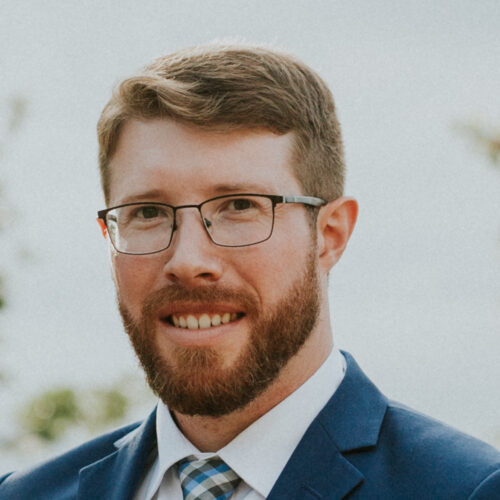
Dr. Christopher Adams is an Assistant Professor of Tree Fruit Entomology at Oregon State University's Mid-Columbia Agricultural Research and Extension Center (MCAREC) in Hood River. His research focuses on managing pests of pear and cherry crops, including invasive species like spotted wing drosophila and brown marmorated stink bug. He holds a Ph.D. in Entomology from Michigan State University (MSU) and completed a postdoctoral fellowship there, where he developed IPM strategies for codling moth control through sterile insect release. His work emphasizes applied entomology, biocontrol, and grower collaboration. Education: Ph.D. in Entomology (Michigan State University, 2016) Post-doctoral Research Assistant (MSU Tree Fruit Entomology Lab, 2016–2019) Research Interests: Dr. Adams studies pest ecology, trapping techniques, and sustainable IPM solutions. His lab investigates the landscape ecology of pear psylla, X-disease vectors in cherries, and biocontrol methods for invasive species. He collaborates with growers and extension specialists to translate research into actionable field practices. Awards: Robert Driesbach Award (2016) Dr. Eugenia McDaniel Teaching Award (2013) ESA YouTube Award (2012) Teaching & Outreach: He mentors students in field research and extension activities, emphasizing hands-on learning. His teaching excellence has inspired students to pursue entomology careers. He contributes to OSU Extension guides on pest management and regularly presents at grower workshops. Labs & Teams: Leads the MCAREC Entomology Program, collaborating with regional stakeholders to address tree fruit pest challenges. Active in the Pacific Northwest codling moth task force and international IPM initiatives.
John Grieco is a Research Professor in the Department of Biological Sciences and a joint faculty member at the Eck Institute for Global Health at the University of Notre Dame. He serves as Associate Director of the Eck Institute and co-director of the Belize Vector and Ecology Center (BVEC), where he leads a multidisciplinary research program focused on the ecology, behavior, and control of vectors of diseases such as malaria, dengue, Chagas, and Japanese encephalitis. University: University of Notre Dame School: College of Science Department: Department of Biological Sciences Position: Research Professor Joint Appointment: Eck Institute for Global Health Leadership Role: Associate Director, Eck Institute for Global Health; Co-Director, BVEC Dr. Grieco completed his Ph.D. at the Uniformed Services University, an M.S. at Texas A&M University, and earned his B.S. from the University of Notre Dame. His research spans vector behavior, spatial repellency, insecticide resistance, and disease risk modeling using GIS and remote sensing. He has led and collaborated on field studies in Belize, Thailand, Nepal, Peru, Mexico, and South Korea, and maintains partnerships with industry leaders such as BASF, SC Johnson, and Olfactor Laboratories. His recent publications highlight innovations in spatial repellent deployment, mosquito trap efficacy, and novel vector control strategies. The research consistently emphasizes translational outcomes for public health, particularly in low-resource settings. His work is supported by major initiatives including the Spatial Repellents Program, IMPACTS, AEGIS, and BRICC, often in collaboration with WHO, PAHO, and the Mayo Clinic. Dr. Grieco actively mentors undergraduate and Master of Science in Global Health students, supervising numerous capstone projects on vector-borne disease interventions. His lab, the Achee/Grieco Lab, is known for its field-based, interdisciplinary approach and commitment to training the next generation of global health scientists. Medical Entomology Vector Ecology and Behavior Vector Control Strategies Spatial Repellents and Irritants Infectious Disease Dynamics Disease Risk Mapping (GIS/Remote Sensing) Arbovirus and Malaria Transmission Scientific awards and honors are not explicitly mentioned in the provided texts. Dr. Grieco advises numerous students at both undergraduate and graduate levels, particularly through the Master of Science in Global Health program. His lab supports student research on topics including insecticide resistance, community perceptions of vector control, disease surveillance, and behavioral effects of repellents. He also leads the High-Throughput Screening System (HITSS) for evaluating vector behavioral responses. The Achee/Grieco Lab operates the Belize Vector and Ecology Center (BVEC), which conducts extensive field research, community outreach, and surveillance in Belize. BVEC collaborates with the Ministry of Health, University of Belize, and international partners. The lab also participates in global networks such as the Worldwide Insecticide Resistance Network (WIN) and the Remote Emerging Disease Intelligence NETwork (REDI-NET).
Professor Fredros Okumu is a leading researcher in vector biology and infectious disease ecology at the University of Glasgow's School of Biodiversity, One Health & Veterinary Medicine. He holds a PhD in Infectious Diseases from the London School of Hygiene and Tropical Medicine and an MBA in International Health Management from the University of Basel. His work focuses on malaria vector control, insecticide resistance, and ecological management of vector-borne diseases. Okumu leads research programs at the Ifakara Health Institute in Tanzania, collaborating internationally to advance surveillance and intervention strategies. Education: Public Health (Moi University), Applied Parasitology (University of Nairobi), Geo-Information Sciences (Lund University), PhD (London School of Hygiene & Tropical Medicine), MBA (University of Basel) Research: Mosquito biology, malaria transmission dynamics, genomics of Anopheles species, insecticide resistance mechanisms, and innovative control tools like mid-infrared spectroscopy and spatial repellents Awards: Howard Hughes Medical Institute–Gates Award, Wellcome Trust Fellowship, and WHO advisory roles His recent work includes genomic studies of Anopheles funestus resistance patterns, AI-driven mosquito age grading, and spatial modeling of vector habitats. Okumu's research bridges basic science with public health applications, emphasizing African-led R&D ecosystems.
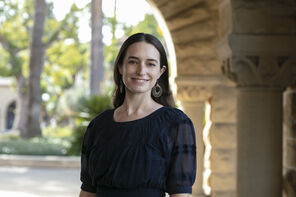
Lauren O'Connell is an Associate Professor in the Department of Biology at Stanford University, where she investigates how genetic and environmental factors contribute to biological diversity and adaptation. Her research focuses on the neural basis of parent-offspring communication, spatial cognition evolution, and toxin sequestration mechanisms in amphibians. She earned her Ph.D. in Cellular and Molecular Biology from the University of Texas at Austin (2011) B.S. in Biological Sciences from Cornell University (2006) A.A. in Natural Sciences from Tarrant County Community College (2004) Research interests span evolutionary neuroscience and physiology, particularly exploring: Neural mechanisms of parent-offspring communication in poison frogs Spatial cognition evolution in amphibians Physiological adaptations for chemical defense acquisition Vertebrate pair bonding mechanisms Her work integrates field studies in Ecuador, Madagascar, and Australia with laboratory experiments on brain function and toxin metabolism. Recent publications highlight innovations in Amphibian electrophysiology methods Microbiome interactions with alkaloids Neural correlates of social behavior Chemical defense ecology Scientific honors include 2023 Camille Dreyfus Teacher-Scholar Award 2018 Frank A. Beach Award 2015 For Women in Science Fellowship 2013 Capranica Prize 2012 Young Investigator Award 2011 Early Career Award She mentors a diverse team across multiple projects, emphasizing inclusivity and equity in science training programs. Her lab supports community college students through NSF-funded initiatives and engages in international collaborations with institutions like Flinders University and Centro Jambatu.
Nik Cunniffe is a Professor in the Department of Plant Sciences at the University of Cambridge, specializing in epidemiological modeling of plant pests and pathogens. His research focuses on developing theoretical and applied models to inform policy decisions regarding disease detection, control, and evolutionary dynamics. Key Research Areas: Theoretical epidemiology (deterministic, stochastic, and spatial models) Applied plant disease management (Phytophthora ramorum, ash dieback) Computational simulation techniques at large spatial scales Projects: Approximate models for complex disease management Stakeholder behavior impact on control efficacy Optimal fungicide resistance strategies Trap/repellent companion plants for virus control Collaborations: Cambridge NERC Doctoral Training Partnership (C-CLEAR DTP) NERC-funded CREATES program Email: njc1001@cam.ac.uk
Dr. Daniel Peach is an Assistant Professor in Vector Ecology and Infectious Diseases at the University of Georgia, affiliated with the Savannah River Ecology Laboratory and the Department of Infectious Diseases in the College of Veterinary Medicine. His research focuses on mosquito ecology, vector-borne disease dynamics, and the application of ecological insights to vector control. He investigates topics such as mosquito-plant interactions, host location behavior, and the biogeography of vector species. His work combines field studies, molecular techniques, and computational models to understand vector ecology and transmission pathways. Recent studies include investigations into invasive mosquito species in Canada, the role of nectar microbes in mosquito pollination, and the sensory mechanisms driving mosquito behavior. Dr. Peach leads the Peach Lab at the Savannah River Ecology Laboratory, which emphasizes interdisciplinary approaches to vector ecology. His research has been published in journals such as Current Opinion in Insect Science, PLOS ONE, and BMC Ecology and Evolution. While no formal awards are listed, his contributions to understanding vector ecology and disease dynamics are widely recognized in entomological and public health circles. Future work includes expanding studies on invasive species impacts, climate-driven range shifts in mosquitoes, and developing novel control strategies based on sensory ecology principles.
Dr. Linda M. Hooper-Bùi is a Professor in the Department of Environmental Sciences at Louisiana State University, researching community ecology, disturbance impacts, and multi-stressor effects in coastal ecosystems. Education: PhD in Entomology, University of California, Riverside, 1998 MS in Entomology, University of California, Riverside, 1995 BA in Biology, California State University Long Beach, 1991 Her research examines: Coastal ecosystem responses to oil spills and hurricanes Insect community dynamics in wetlands Climate change and sea-level rise impacts Red imported fire ant ecology and management Teaching includes Environmental Science, Conservation Biology, Applied Ecology, and scientific writing. Recognized with the Southeastern Branch ESA Distinguished Teaching Award (2012), she creates experiential learning opportunities including coastal restoration projects. Publications demonstrate focus on: Deepwater Horizon oil spill impacts on coastal arthropods Fire ant behavior and control methods Coastal wetland biodiversity patterns Pesticide fate in marsh ecosystems Major awards: Southeastern Branch ESA Distinguished Achievement in Teaching (2012) State Farm Good Neighbor Service-Learning Award (2004) Orkin Award for Excellence in Research (2001) Dr. Hooper-Bùi leads field studies across Gulf Coast habitats and contributes to national conversations on environmental ethics and science communication.
Martin N Andersson is a Senior Lecturer at Lund University, affiliated with the Pheromone Group and Sensory Biology. His research focuses on insect chemical ecology and olfaction, particularly in bark beetles and their ecological interactions. He holds a Master’s (2006) and PhD (2011) from Lund University and the Swedish University of Agricultural Sciences. Since 2017, he has been an Associate Professor while continuing as Senior Lecturer. His work addresses odorant receptor evolution, insect-microbe symbiosis, and ecological specialization. He has secured grants from the Swedish Research Council and FORMAS, leading projects on beetle olfaction and forest pest genomics. Awards include the 2018 Early Career Award in Chemical Ecology. He advises PhD students such as Magnusson A., Burchards J.G., and Montes Ortiz Z., and contributes to UN SDGs related to biodiversity conservation and sustainable ecosystems. Education: PhD in Biology, Lund University (2011) Master’s in Biology, Lund University (2006) Research Interests: His work spans genetic/molecular studies of odorant receptors to behavioral ecology, aiming to understand how insects perceive and interact with their environment. Current projects investigate olfactory receptor evolution in bark beetles and the sensory basis of symbiotic relationships between beetles and fungi. He employs genomic, electrophysiological, and field-based approaches. Publications: His 63+ articles highlight contributions to insect genomics, chemical ecology, and environmental impacts on avian biology. Recent work includes studies on bark beetle symbiosis and urban pollutant effects on birds. Awards: Early Career Award in Chemical Ecology (2018) Prominent PhD Thesis (2011) Supervision & Grants: Leads projects funded by VR and FORMAS, including studies on bark beetle host specificity and olfactory receptor conservation. Supervises doctoral research on beetle olfaction and fungal interactions. Active in media outreach, discussing forest pest management strategies. Labs/Teams: Part of the Pheromone Group at Lund University, collaborating internationally on chemical ecology and biodiversity research.
Merle Maria Plassmann is a Senior Staff Scientist in the Department of Environmental Science at Stockholm University, where she conducts research on environmental contaminants, particularly per- and polyfluoroalkyl substances (PFAS). Her work spans analytical method development, environmental fate studies, and human exposure assessment. Dr. Plassmann's research focuses on environmental chemistry with emphasis on PFAS analysis and fate. She has developed and refined methods for total fluorine determination, extractable organofluorine analysis, and non-target screening approaches. Her work has documented PFAS contamination in diverse matrices including textiles, cosmetics, artificial turf, ski waxes, and marine environments. She has made significant contributions to understanding the environmental fate of these persistent compounds and their pathways to human exposure. Analysis of her recent publications reveals a strong focus on methodological development for PFAS analysis, human exposure assessment through biomonitoring studies, and investigation of PFAS in consumer products. Her work frequently employs advanced analytical techniques including combustion ion chromatography, high-resolution mass spectrometry, and non-target screening approaches. The research demonstrates consistent investigation of both known and emerging fluorinated compounds across environmental and biological matrices. Dr. Plassmann has been involved in significant research projects including 'The organohalogen iceberg,' which aims to identify known and unknown halogenated compounds in water and sludge from sewage treatment plants. Her collaborative work spans multiple European institutions and addresses critical questions regarding environmental contamination and human exposure to persistent organic pollutants. Her research has important implications for environmental regulation and public health, particularly regarding consumer product safety, drinking water quality, and understanding exposure pathways for persistent environmental contaminants. The methodological advances she has contributed to are helping standardize approaches for detecting and quantifying fluorinated compounds in complex environmental matrices.
Katherine Andrinopoulos is an Associate Professor in the Department of Global Health Systems and Development at Tulane University's Stone Center for Latin American Studies. She specializes in gender, stigma, HIV/AIDS, and family planning within global health contexts, particularly in Central America and the Caribbean. Her work emphasizes marginalized populations including sex workers, gender minorities, and incarcerated individuals. Dr. Andrinopoulos holds a Ph.D. in International Health from Johns Hopkins University (2008), an M.H.S. from Johns Hopkins (2003), and a B.S. in Public Health from UNC Chapel Hill (1999). She has conducted fieldwork in over 10 countries, including extended research in Haiti, Jamaica, and the Dominican Republic. Her academic leadership includes directing Tulane's International Health and Development doctoral program since 2008. Her research focuses on intersectional health disparities, with notable projects on HIV stigma in correctional facilities, social norms around gender-based violence in Honduras, and participatory mapping methods to study environmental risk exposures among female sex workers. She has secured NIH and Fogarty grants and is a Newcomb Fellow at Tulane. Dr. Andrinopoulos has supervised 6 theses/dissertations in the last five years and contributed to over 50 peer-reviewed articles. Her work frequently addresses structural barriers to healthcare access, including discrimination against LGBTQ+ communities and gender minorities. She also explores innovative interventions like transfluthrin mosquito repellent systems in malaria-endemic regions. Awards include the James P. Dixon Award (UNC 1999) and Fulbright Scholarships (Dominican Republic 1999-2001, Jamaica 2005). She speaks Spanish and Greek, reflecting her commitment to multilingual fieldwork in Latin America and the Caribbean.
Professor James Bull is a faculty member in the School of Biosciences, Geography and Physics at Swansea University, within the Faculty of Science and Engineering. His academic rank is Professor, specializing in population dynamics, disease ecology, and spatial connectivity in ecological systems. He conducts research using mathematical modeling, field observations, and experimental approaches to address challenges in marine conservation, agri-environmental sustainability, and biodiversity loss. Research Interests: Spatial connectivity and movement patterns in populations Marine mammal ecology and seagrass dynamics Pest control strategies and pollinator biology Climate change impacts on species resilience Recent Articles: His work spans studies on seagrass restoration, mosquito repellent development, and grey seal phenology. Key areas include habitat suitability modeling, biological control agents, and the impacts of environmental changes on species distribution. Grants & Projects: He has led projects funded by EU ERDF (SEACAMS2), INTERREG (BLUEFISH), and DEFRA, focusing on coastal management and pest control. Labs/Teams: Coordinates the Biosciences Maths and Statistics Support (BioMaSS) and supervises postgraduate research in ecology and conservation biology.
Bill S. Hansson is the Managing Director of the Max Planck Institute for Chemical Ecology (MPICE) in Jena, Germany, and Director of the Department of Evolutionary Neuroethology. Previously, he served as Professor and Head of Chemical Ecology Division at the Swedish University of Agricultural Sciences (SLU), Associate Dean at the Faculty for Landscape Planning, Horticulture and Agricultural Sciences, and held academic positions at Lund University spanning from Assistant to Associate Professor. His research focuses on the neuroethology of insect olfaction, examining its function, anatomy, and evolutionary basis. Key interests include olfactory coding, neural processing of chemical signals, and odor-dependent behaviors in model organisms like Drosophila and moths. His pioneering work includes developing calcium imaging in moth brains and demonstrating functional organization in insect olfactory systems. Hansson's extensive publication record (200+ papers) reveals consistent focus on insect sensory biology, with recent work exploring neural correlates of odor valence, deceptive pollination systems, and molecular mechanisms of odorant reception. His research integrates neurophysiology, molecular biology, and behavioral ecology approaches. Major Honors and Awards: ISCE Silverstein-Simeone Lecture Award (2014) AChemS Givaudan Lecture Award (2013) Letterstedt Prize (2009) Swedish Linnaeus Grant: €1M/year for 10 years (2006) Elected Fellow/Member of 5 national academies including Royal Swedish Academy of Sciences He leads a research department of approximately 60 members at MPICE, where he established evolutionary neuroethology as a core discipline. His team investigates olfactory modulation across evolutionary timescales using Drosophila and hawk moth models, supported by major funding including the Linnaeus Grant.