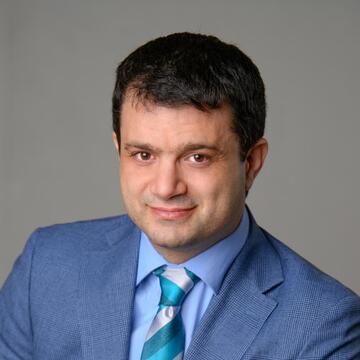
Mustafa Hajij is an Assistant Professor in the Data Science program at the University of San Francisco. He holds a PhD in Mathematics from Louisiana State University, an MS in Computer Science, and completed postdoctoral training at University of South Florida and Ohio State University. Previously, he served as Assistant Professor at Santa Clara University and as an AI Research Scientist at KLA Corporation. His research develops foundational frameworks for topological deep learning, including cell complex neural networks and geometric learning architectures that operate beyond graph domains. He leads the NSF-funded project 'A Unifying Deep Learning Framework Using Cell Complex Neural Networks' (DMS-2134231, $547,626). Recent publications establish new paradigms for topological representation learning, including combinatorial complexes and simplicial networks, with applications in computational biology, 3D vision, and drug discovery. He organized the ICML Topological Deep Learning Challenges and develops open-source tools like TopoX for topological learning.
Hattie Chung is an Assistant Professor of Medicine and Molecular, Cellular and Developmental Biology at Yale University, affiliated with the Cardiovascular Research Center. She holds appointments in multiple departments including Internal Medicine, Molecular Cell Biology, and the Yale Center for Research on Aging. Her research focuses on cellular heterogeneity and tissue organization using cutting-edge single-cell and spatial genomics technologies, addressing ovarian aging, cardiovascular disease, and drug perturbation modeling. Education: PhD in Systems Biology (Harvard University, 2016); BS in Biological Engineering (MIT, 2011). Postdoctoral training at the Broad Institute of MIT/Harvard. She leads an interdisciplinary team developing novel computational and experimental methods for genomic analysis. Research Interests: Systems biology approaches to cellular organization, single-cell genomics, spatial transcriptomics, translational medicine for cardiovascular diseases, and aging mechanisms. Her lab integrates computational models with experimental data to predict therapeutic responses and study disease mechanisms. Lab affiliations include the Yale Cardiovascular Research Center (YCVRC), Yale Center for Research on Aging (Y-Age), and the Program in Physical and Engineering Biology. Teaching includes MCDB 370: Biotechnology.
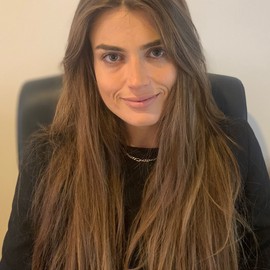
Andrea Meilán-Vila is an Assistant Professor in the Department of Statistics at Universidad Carlos III de Madrid since 2021, holding a Juan de la Cierva Fellowship since 2023. She earned her PhD in Statistics from Universidade da Coruña (2021) and previously served as a Postdoctoral Fellow at Universidade de Santiago de Compostela's Department of Statistics, Mathematical Analysis and Optimisation. Her research focuses on nonparametric methods for analyzing complex data types, including directional, spatial, and functional data. Key areas include kernel smoothing techniques, goodness-of-fit testing for regression models, and spatial trend estimation. She serves as an Associate Editor for the Journal of Nonparametric Statistics . Recent work emphasizes applications in climate science (temperature curve modeling), fluid dynamics (wake flow control), and biomedical imaging (hippocampus shape analysis). Her methodologies address challenges like sparse data estimation and spatial correlation in regression frameworks. Key Projects: STENED (Stein-based goodness-of-fit tests for non-Euclidean data) Awards: Juan de la Cierva Fellowship (2023) Publications span journals like Journal of Fluid Mechanics , Statistical Papers , and TEST , with a focus on methodological advancements in statistical modeling and computational validation.
Jee Eun (Jamie) Kang is an Associate Professor in the Department of Industrial and Systems Engineering at the University at Buffalo's School of Engineering and Applied Sciences. Research focuses on transportation modeling and applied operations research, with applications in urban mobility, shared autonomous vehicles, and sustainable transportation systems. Education includes a PhD from UC Irvine. Research emphasizes data-driven approaches to travel behavior, electric vehicle adoption, and humanitarian logistics. Publications consistently address mobility innovation, including pricing strategies for emerging services, predictive analytics for transit, and optimization of shared transportation systems.
Gita Reese Sukthankar is a Professor in the Department of Computer Science at the University of Central Florida (UCF) , where she directs the Intelligent Agents Lab . Her research focuses on activity and plan recognition , with applications in multi-agent systems, robotics, and human-robot interaction. She earned her Ph.D. from the Robotics Institute at Carnegie Mellon University and joined UCF in fall 2007. Research Interests: Her work spans activity recognition , intent inference , multi-agent coordination , and human-robot teams . She has applied these techniques to domains such as adversarial games (e.g., military simulations, Unreal Tournament), assistive technologies, and cooperative robotics. Her research integrates AI, machine learning, and probabilistic models to understand and predict complex team behaviors. Publication Trends: Her publications emphasize spatio-temporal modeling , probabilistic graphical models (e.g., HMMs, CRFs) , and multi-agent plan recognition . She frequently publishes in top venues like AAMAS, AAAI, and ICRA, with a focus on robust recognition of team behaviors, transfer learning, and real-world AI applications. Scientific Awards: NSF CAREER Award (2009) AFOSR Young Investigator (2009) ONR Summer Faculty Fellow (2008) UCF Faculty Excellence for Doctoral Mentoring (2012) CECS Dean's Research Professorship (2013) AAAI Senior Member (2021) ACM and IEEE Senior Member Advising and Grants: She mentors graduate students in AI and robotics and has led research funded by DARPA, AFOSR, and ONR. Her lab develops systems for intelligent agents that can understand and collaborate with humans. She has served on numerous program committees and editorial boards, including ACM Transactions on Autonomous and Adaptive Systems . She teaches courses such as Intelligent Systems , Robotics , and Machine Learning , and has been recognized for both research and teaching excellence. Labs and Teams: She leads the Intelligent Agents Lab at UCF, which focuses on data-driven social informatics and AI for human-agent teams. Her group collaborates with researchers in robotics, computer vision, and cognitive science to build adaptive, intelligent systems.
Professor Dino Sejdinovic is a faculty member in the School of Computer and Mathematical Sciences at the University of Adelaide, part of the Faculty of Sciences, Engineering and Technology. Previously, he held positions as Lecturer and Associate Professor at the University of Oxford's Department of Statistics (2014–2022). His academic qualifications include a PhD in Electrical and Electronic Engineering from the University of Bristol (2009) and a Diplom in Mathematics and Theoretical Computer Science from the University of Sarajevo (2006). His research focuses on the intersection of statistical methodology and machine learning, encompassing large-scale nonparametric methods, robust machine learning, multiresolution data fusion, and measures of dependence. He has contributed to kernel methods, Bayesian inference, causal discovery, and applications in climate science, quantum computing, and social science data analysis. Education: PhD in Electrical and Electronic Engineering, University of Bristol (2009) Diplom in Mathematics and Theoretical Computer Science, University of Sarajevo (2006) Sejdinovic's work emphasizes bridging theoretical foundations with practical applications, such as cloud type classification using vision transformers and machine learning-driven quantum device optimization. His recent publications explore topics like kernel-based causal inference, Bayesian neural networks, and uncertainty quantification in statistical models. Advising and grants: Eligible to supervise Masters and PhD students in machine learning and statistics, though specific grants or student advisees are not explicitly listed in the provided texts.
Noel Cressie is a Distinguished Professor of Statistics at the University of Wollongong (UOW), Australia, affiliated with the School of Mathematics and Applied Statistics and the National Institute for Applied Statistics Research Australia (NIASRA). He is also the Director of the Centre for Environmental Informatics (CEI). His academic journey includes a PhD from Princeton University (1975) and a B.Sc. with First Class Honours from the University of Western Australia (1972). His research focuses on spatial and spatio-temporal statistics, Bayesian methods, environmental informatics, and applications in climate science. Notable projects include work on atmospheric CO2 flux inversion (WOMBAT framework), Antarctic environmental research (SAEF initiative), and statistical remote sensing for NASA. He has secured over $20 million in research funding and authored four influential books, including Statistics for Spatial Data . Cressie has received prestigious awards such as the COPSS R.A. Fisher Award (2009), Pitman Medal (2014), and Fellowship of the Australian Academy of Science (2018). He leads interdisciplinary teams addressing global challenges like carbon cycle dynamics and biodiversity modeling. His contributions to statistical methodology and environmental science have been recognized through international collaborations and advisory roles.
Professor Alexandros Taflanidis holds a concurrent faculty position as Professor in the Department of Civil and Environmental Engineering and Earth Sciences and the Department of Aerospace and Mechanical Engineering at the University of Notre Dame's College of Engineering. He serves as the Director of Graduate Studies for CEEES. His research focuses on uncertainty quantification, disaster risk reduction, Bayesian model updating, and enhancing the sustainability and resilience of civil infrastructure systems, particularly in natural hazard contexts like hurricanes and earthquakes. His work integrates computational statistics and surrogate modeling to improve real-time emergency response and long-term risk mitigation strategies. Prof. Taflanidis earned a Ph.D. from the California Institute of Technology (2007), and M.S. and B.S. degrees in Civil and Environmental Engineering from Aristotle University of Thessaloniki (2003 and 2002). He leads projects such as the Coastal Hazards System (CHS) for Louisiana and Puerto Rico, advancing probabilistic coastal hazard analysis frameworks. His research also explores storm surge emulation, seismic response estimation, and innovative protective device designs for structures. He won the ASCE Huber Prize for his contributions to community resilience through scientific computing. His collaborative efforts include advancing machine learning for data imputation in coastal hazards and developing lifecycle assessment workflows for resilient buildings. Current research trends in his publications emphasize computational efficiency, multi-fidelity modeling, and adaptive strategies for real-time predictions. Prof. Taflanidis's work bridges academic and practical domains, addressing challenges such as climate change impacts on coastal regions and earthquake early warning systems. His lab focuses on integrating interdisciplinary approaches to create actionable solutions for infrastructure resilience.
Fariba Karimi is a Professor of Social Data Science at Graz University of Technology and leads the Algorithmic Fairness research group at the Complexity Science Hub (CSH) in Vienna. Her work sits at the intersection of computational social science, network science, and AI ethics, with a strong focus on fairness, inequality, and bias in algorithmic systems. She holds a PhD in Physics and Computational Science from Umeå University, Sweden (2015), and was a Postdoctoral Researcher at GESIS – Leibniz Institute for Social Sciences, Germany. Her research combines large-scale data analysis, agent-based modeling, and network science to study how social structures and algorithms interact to shape disparities, particularly for underrepresented groups. Computational Social Science Algorithmic Fairness and Bias Network Science and Homophily Digital Humanism Urban Inequality and Implicit Bias Gender and Age Equity in Academia Her recent publications reveal a consistent focus on understanding and mitigating algorithmic and structural inequities. Themes include the visibility of minorities in networks, the impact of segregation on health and cognition, gender citation gaps in physics, and the development of fair ranking and recommendation systems. She employs interdisciplinary methods to analyze both digital and real-world social systems. Fariba Karimi has received several prestigious recognitions, including: Young Scientist Award from the German Physical Society (2023) ERC Starting Grant (2024) Nomination for the Hedy Lamarr Award (2021) She leads the 'Humanized Algorithms' project at CSH, funded by the ERC, and co-leads an EU Horizon project (MAMMOth) on multi-criteria fairness in AI. She advises PhD researchers such as Lisette Espín-Noboa and collaborates with institutions like the University of Mannheim and the Centre for Social Sciences. Her work contributes to both academic knowledge and practical solutions for fairer AI systems and more equitable societies.
Mohamed Sarwat is an Associate Professor at Arizona State University specializing in databases , spatial data management , and recommender systems . His research focuses on GeoSpark —a cluster computing framework for spatial data—and its extensions like GeoSparkViz for visualization and GeoSparkSim for traffic simulation. Key Contributions: LARS* (Location-Aware Recommender System), Horton* (Graph Reachability), Sindbad (GeoSocial Platform), and Riso-Tree (Graph Database Indexing) Research Themes: Integration of spatial/temporal data with machine learning, efficient indexing for big geospatial datasets, and scalable frameworks for mobility data science His work spans collaborations with 23+ co-authors across institutions like University of Minnesota, University of Melbourne, and University of Salzburg. Current projects emphasize GeoTorchAI —a spatiotemporal deep learning system—and mobility data science infrastructure.
Anders Rønn-Nielsen is an Associate Professor at the Department of Finance and Center Coordinator at the Center for Statistics at Copenhagen Business School (CBS). He holds a M.Sc. in Statistics from University of Copenhagen and a PhD in Statistics and Probability Theory from Aarhus University. His research focuses on applied probability theory, particularly Lévy-based spatial models, and statistical efficiency analysis. His academic credentials include: M.Sc. in Statistics, University of Copenhagen PhD in Statistics and Probability Theory, Aarhus University Research interests span: Lévy processes and spatial stochastic modeling Extreme value theory applications in finance and natural sciences Nonparametric production frontier analysis Efficiency measurement methodologies His publications (18+ articles) emphasize theoretical probability and statistical applications in efficiency analysis. He has served as external examiner at Aarhus University and Copenhagen University for master’s and PhD examinations (2017–2019). His teaching responsibilities include advanced probability theory courses and statistical methods training for economics students.
Jure Leskovec is a Professor of Computer Science at Stanford University, affiliated with the Stanford AI Lab, Machine Learning Group, and the Center for Research on Foundation Models. He holds academic appointments in the Department of Computer Science and is a member of Bio-X, the Institute for Human-Centered Artificial Intelligence (HAI), and the Wu Tsai Neurosciences Institute. Leskovec earned his BSc from the University of Ljubljana (2004), PhD from Carnegie Mellon University (2008), and postdoctoral training at Cornell University. His research focuses on social networks, data mining, machine learning, and computational biomedicine, with contributions to graph neural networks, drug discovery, and AI applications in healthcare. His work has been applied to combat the COVID-19 pandemic and integrated into products at major tech companies. Leskovec’s publications reflect his expertise in network analysis, medical AI, and biological systems. His recent work includes foundational contributions to graph neural networks (e.g., PyG) and medical AI frameworks. His research has garnered numerous awards, including the Microsoft Research Faculty Fellowship and ICDM Research Contributions Award. Leskovec advises numerous doctoral and postdoctoral researchers, contributing to over 200 publications. His interdisciplinary collaborations span computational biology, healthcare analytics, and social systems, with a focus on leveraging AI to address real-world challenges.
Dr. Tao Hong is the Duke Energy Distinguished Professor and NCEMC Faculty Fellow at the Department of Systems Engineering and Engineering Management, University of North Carolina at Charlotte. He directs the Big Data Energy Analytics Laboratory (BigDEAL) and has been a Founding Chair of the IEEE Working Group on Energy Forecasting (2011-2019). Ph.D., Electrical Engineering & Operations Research (2010), NC State University M.S., Operations Research & Industrial Engineering (2008), NC State University B.Eng., Automation (2005), Tsinghua University His research focuses on Energy Forecasting with applications in power systems operations, renewable integration, risk management, and cross-sector forecasting for healthcare, transportation, and sports. He has led major Delivery point level load analysis (2017-present) Short-term probabilistic forecasting (2016) Demand response modeling using smart meter data (2014-2015) Dr. Hong's scientific contributions include 9+ journal articles on energy forecasting methodologies and 3 major forecasting competitions (GEFCom2012-2017, BigDEAL Challenge 2022). His work has been cited in leading journals like International Journal of Forecasting and IEEE Transactions on Smart Grid . Charlotte Business Journal Energy Education Leader of the Year (2017) IEEE PES PSPI Technical Committee Prize Paper Award (2016) As a dedicated educator , Dr. Hong has advised multiple PhD and Master's students including Shreyashi Shukla (2023), Yike Li (2022), and Jordan McCorey (2021). He teaches specialized courses in energy systems planning and computational intelligence.
Marios Georgakis is a clinician-scientist and Junior Group Leader at the Institute for Stroke and Dementia Research (ISD) at LMU Munich. He also holds a Visiting Scientist position at the Broad Institute of MIT and Harvard. His research focuses on leveraging multi-omics data and causal inference methods (e.g., Mendelian randomization) to discover drug targets for atherosclerosis, develop personalized risk stratification tools for cerebrovascular disease, and identify in vivo biomarkers of disease activity. His work bridges human genetics, molecular biology, and clinical translation. Education : MD and PhD (Epidemiology) from the National and Kapodistrian University of Athens; doctoral studies in Systemic Neurosciences at LMU Munich. Honors : Emmy Noether Award (DFG), CHARGE Consortium Early Career Achievement Award, Hertie Network Fellowship, and multiple scholarships/fellowships. Research Themes : Drug target discovery for cardiovascular disease via multiomics integration Molecular phenotyping of atherosclerosis using single-cell RNA-seq and spatial transcriptomics Development of AI-driven tools for vascular imaging and aging Genetic studies of inflammation, cytokines, and stroke subtypes Causal inference in vascular risk prediction and post-stroke outcomes Recent Article Trends : His team's publications (2024-2020) emphasize: Proteogenomic and genetic studies of atherosclerosis Cytokine signaling pathways (e.g., IL-6, CCL2/CCR2) Polygenic and genomic risk scores for stroke Multi-omics biomarkers in cerebrovascular disease Clinical translation of Mendelian randomization findings Meta-analyses of population-based data Scientific Awards : Emmy Noether Group Leader Award (DFG, 2023) CHARGE Consortium Early Career Achievement (2023) Hertie Network Fellowship (2023) Walter-Benjamin Postdoctoral Fellowship (2021-2022) Team Leadership : Georgakis mentors multiple PhD students and postdocs in his lab. His group collaborates with vascular surgeons, neurologists, and computational biologists. Current projects include the AtherOMICS biobank and AI-driven vascular phenotyping tools.
Tobias Ofner-Graff is a researcher at the Institute of Forest Growth within the Department of Ecosystem Management, Climate and Biodiversity at the University of Natural Resources and Life Sciences, Vienna (BOKU). Based at Peter-Jordan-Straße 82, 1190 Wien, his work focuses on advanced forest monitoring technologies. His research interests include: LiDAR and remote sensing applications in forestry Automated forest inventory systems Forest regeneration quantification Airborne Laser Scanning (ALS) data analysis Sustainable forest harvesting planning Recent project contributions include: Leading lidar-based forest monitoring systems development Developing spatial forest growth models Implementing digital inventory workflows His publications demonstrate expertise in: Quantifying forest resources through 3D point clouds Advanced timber stack measurement techniques ALS data integration for forest modeling Mobile laser scanning applications Forest climate adaptation strategies