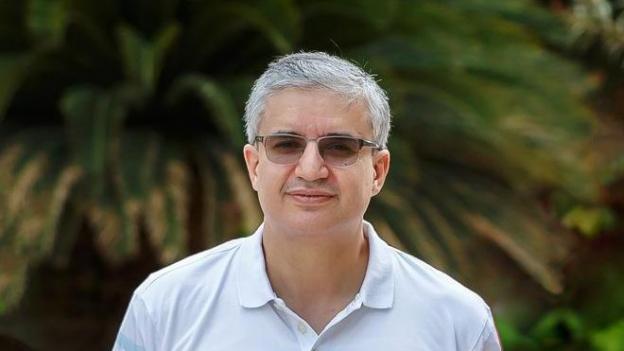
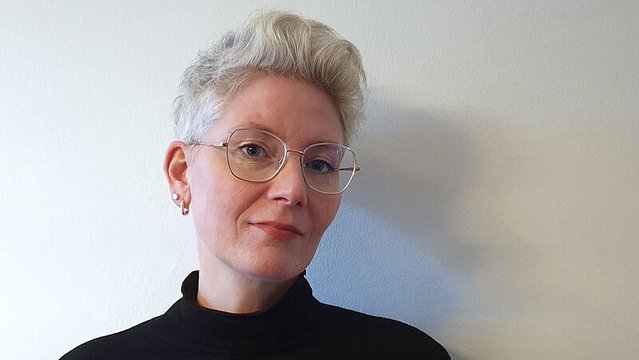
Allen J. Scott is a Distinguished Research Professor at the University of California, Los Angeles, with a joint appointment in the Department of Public Policy (School of Public Affairs) and Department of Geography. He has held prestigious positions at UCLA since 1994 and previously at the University of Toronto (1969–1994). His career spans over five decades, focusing on urban geography, regional development, and cultural economy. Education : BA (1961) from Oxford University; MA and PhD (1962, 1965) from Northwestern University. Research Interests include: Creative cities and cognitive-cultural capitalism Political economy of urbanization and globalization Industrial clusters and labor-intensive economies Human capital distribution in metropolitan areas Cultural landscapes and peripheral development Publication Trends (2005–2014) emphasize: Globalization's impact on low-technology industries Cognitive-cultural capitalism in urban contexts Human capital dynamics in metropolitan hierarchies Celebrity culture and urban glamour Creative field theories and urban policy implications Scientific Awards : 1986 Guggenheim Fellow 2003 Vautrin Lud Prize 2005 Meridian Book Prize 1999–2013: Chaires d’Excellence, Fellowships, and Doctor Honoris Causa 2008 Carol and Bruce Mallen Lifetime Achievement Award 2003 ISI Highly Cited Author
Jennifer Robinson is Professor of Human Geography at University College London (UCL), with a distinguished career spanning institutions like the London School of Economics, The Open University, and University of Natal. Her work bridges global urban studies, postcolonial geography, and comparative urbanism, reshaping urban theory through critiques of modernity and neoliberalism. She co-directs the UCL Urban Laboratory and has led international conferences like At the Frontiers of the Urban (2019). Her research focuses on reorienting urban studies through postcolonial and global South perspectives, advocating for comparative methods to transcend Eurocentric frameworks. Key themes include urban governance, political geography, and large-scale development, particularly in African cities. Recent publications highlight trends in global urban theory, comparative urbanism, and the interplay of finance and urban development. She has received prestigious awards such as the RGS-IBG Murchison Award (2009) and an ERC Advanced Grant (2019), and has been widely cited in Geography and Urban Studies. RGS-IBG Murchison Award (2009) Fellow of the Society of South African Geographers (2016) ERC Advanced Grant (2019) Robinson has examined over 30 PhD theses internationally and held editorial leadership roles, including Editor-in-Chief of the Studies in Urban and Social Change book series. She directs comparative research programs funded by ESRC and contributes to scientific assessments like the UK Research Excellence Framework.
Prof. Tobias Plieninger holds dual appointments as Professor of Social-Ecological Interactions at the Universities of Kassel and Göttingen, Germany, and currently serves as Dean of Research at Kassel’s Faculty of Organic Agricultural Sciences. He specializes in sustainability science focusing on rural landscape dynamics, ecosystem services, and transformative change processes. His work examines intersections between agriculture, forestry, nature conservation, and natural resource management. Education: PhD in Forest and Environmental Sciences (2004, University of Freiburg), Habilitation in Landscape Ecology (Humboldt-Universität zu Berlin). Prior roles include Associate Professorships at the University of Copenhagen and leadership at the Berlin-Brandenburg Academy of Sciences. Research focuses on biocultural landscapes, agroforestry systems, and participatory methods. Notable projects include coordination of the EU’s HERCULES initiative and leadership in IPBES’ Transformative Change Assessment. Recognitions include Clarivate’s Highly Cited Researcher (2019–2022) and the Henriette Herz Fellowship (2022). Editorial roles: Lead Author for IPBES, Associate Editor at Landscape and Urban Planning and People and Nature . Over 200 publications span topics like ecosystem service synergies, high nature value farming, and rewilding strategies. Active in policy engagement through Germany’s Leopoldina Academy and the Joint Programming Initiative on Cultural Heritage. Research Themes: Landscape sustainability, participatory governance, biodiversity in agricultural systems Key Projects: SINCERE (forest ecosystem services), AGFORWARD (agroforestry innovation) Awards: Clarivate’s Highly Cited Researcher, Alexander von Humboldt Foundation fellowship Current initiatives emphasize transdisciplinary approaches, integrating local knowledge with scientific frameworks to address global sustainability challenges.
Miklós Koren is a Professor of Economics at Central European University and Senior Research Fellow at the HUN-REN Centre for Economic and Regional Studies. His work bridges international trade , economic development , and managerial economics , focusing on trade policy, productivity spillovers, and the role of managers in development. Ph.D., Harvard University (2005) M.A., Central European University (2000) M.Sc., Budapest University of Economics (1999) His research explores trade facilitation , managerial impact on firm performance , and technological diversification . Recent work includes studies on expatriate managers, pandemic-related business disruptions, and the legacy of communist-era management practices. Key trends in his publications (2020–2024) emphasize managerial mobility and firm productivity (2024) machine learning vs. gravity models (2024) trade volatility and development (2023) data transparency standards (2022) Scientific awards include ERC Starting Grant (2012) Nicholas Káldor Prize (2014) Young Economist Award (2002, 2004) As Data Editor for Review of Economic Studies and Associate Editor for Journal of International Economics , he shapes methodological rigor in empirical research. His 2013 paper on technological diversification remains foundational for understanding volatility in developing economies.
Prof. Dr. Martina Löw is a Professor of Sociology at Technische Universität Berlin, holding the Chair of Sociology of Planning and Architecture. She serves as head of the DFG-funded Collaborative Research Centre SFB 1265 "Re-Figuration of Spaces" and previously held leadership roles including President of the German Sociological Association (2011-2013) and professorship at Technical University Darmstadt. Löw's research centers on the dynamic interplay between social structures and spatial configurations, with expertise in sociological theory, urban sociology, space theory, and cultural sociology. Her theoretical framework of "re-figuration of spaces" examines contemporary spatial transformations driven by globalization, digitalization, and migration, emphasizing how urban environments shape and are shaped by social practices. Her publication trajectory from 2001-2020 reveals consistent focus on spatial sociology, evolving from foundational work on space construction to current analyses of urban inequality, experiential city dynamics, and commons management within re-figurative contexts. Key thematic threads include spatial uncertainty, shared meaning production, and governance of interconnected urban systems. Scientific Awards: Christian-Wolff prize from Martin-Luther-University Halle-Wittenberg for habilitation thesis "Raumsoziologie/Sociology of Space" Research Leadership: Löw directs the major DFG Collaborative Research Centre SFB 1265 and previously coordinated the LOEWE focus "Intrinsic Logic of Cities," securing substantial funding from German research foundations. Her work supports interdisciplinary investigations into spatial dynamics across urban, digital, and global scales. Research Environment: As SFB 1265 head, Löw leads a large multi-institutional consortium examining contemporary spatial re-figuration. The center integrates urban studies, sociology, and planning perspectives to address challenges including social inequality and sustainable spatial development in rapidly changing environments.
ao. Univ.-Prof. Dr. Martin Heintel is an Associate Professor at the Department of Geography and Regional Research, University of Vienna. With over 30 years of experience, he focuses on regional development, cross-border cooperation, and sustainable urban-rural linkages. His work spans Europe, Southeast Asia, and North America, emphasizing participatory governance and evidence-based policy. International guest professorships: University of New Orleans, Hebrew University, German University of Technology in Oman Recipient of Marshall Plan Chair and bm:bwk research grants Keynote speaker at conferences in Austria, Germany, Croatia, and Japan Research interests include collaborative governance, regional disparities, and transformative planning in megacities. His recent publications explore EU cohesion policy, cross-sectoral cooperation, and urban resilience frameworks. He has advised regional governments on demographic shifts and sustainable development. Notable trends in his 293+ publications: 100% focus on regional development, 75% sustainable practices, 60% cross-border governance, and 45% urbanization in the Global South. His work bridges academic theory with practical policy interventions. Scientific engagement: Editorial Advisory Board, Europa Regional (2008-2023) Speaker at 243+ international events Media coverage in Der Standard , Österreichische Medien , and public debates Leadership roles include co-founding the Austrian Association for Applied Geography (ÖVAG) and coordinating the IGEN EU project (2011-2013). He mentors young researchers through conference sessions and regional workshops.
University of Natural Resources and Life Sciences ViennaAustria
Bano Mehdi-Schulz is an Assistant Professor at the University of Natural Resources and Life Sciences, Vienna (BOKU), leading the 'Eco-hydrological and Land Use Modelling' group at the Institute of Hydrology and Water Management. She is a Substitute Member of the Ethics Committee. Her research focuses on ecohydrology, integrating hydrological and agricultural sciences to address water quality impacts from anthropogenic changes and future climate scenarios. Education: B.Sc. in Soil Science, M.Sc. in Agricultural Engineering, and Ph.D. from McGill University's Department of Geography. Awards include the Alexander Graham Bell Canada Graduate Scholarship (2009) and FWF Elise Richter Fellowship (2019). Her work bridges natural and social sciences, employing models to assess land use change and water resource management. Research Interests: Quantifying impacts of land use and climate change on water quality, ecohydrological modeling uncertainty, sustainable intensification strategies, and nitrate transport dynamics. Her team explores how farming practices and climate interact to influence water systems, with projects like ALUCSI (FWF-funded) and NitroClimAT (ACRP). Grants & Projects: Recent projects include ALUCSI (2019-2023), NitroClimAT (2018-2022), and UnLoadC3 (2014-2017). Current student advisees include researchers studying SWAT model uncertainty, sustainable intensification pathways, and water quality in East African basins. Labs/Teams: Leads the Eco-hydrological and Land Use Modelling group, collaborating with institutions like IIASA and SEC. Research emphasizes model coupling (e.g., SECLAND-SWAT) and satellite data integration for data-scarce regions.
Bruce Brown is Pro-Vice-Chancellor for Research at the University of Brighton , overseeing research across life, physical, social sciences, and arts and humanities. He previously served as Dean of the Faculty of Arts and Architecture (1989–2006) and Head of the Department of Design (1984–1989). Administrative Leadership : REF2014/RAE2008 Chair, International Governor at Shenkar College, and advisor to academic bodies in Hong Kong, Portugal, and Italy. Research Interests : Visual memory, arts education, and research leadership, with publications spanning design history, spatial design, and cultural policy. Scientific Awards : 2007 WHO’s WHO (A&C Black) 2005 Honorary Fellow (University for the Creative Arts) 2004 Honorary Fellow (Royal College of Art) 1985 Elected Member (Designers and Art Directors Association) 1978 Sanderson and Herbert Read Awards (Royal College of Art) 1970 Elected Fellow (Royal Society of Arts) Articles focus on visual communication, design policy, and cultural memory, reflecting his expertise in design research and higher education leadership . He is currently an Editor of Design Issues: Research Journal (MIT Press).
Harriet Bulkeley is a Professor of Geography and Deputy Executive Dean for Research in the Faculty of Social Sciences and Health at Durham University, alongside a part-time Professorial role at Utrecht University's Copernicus Institute of Sustainable Development. Her expertise spans climate governance, urban sustainability, and environmental justice, with a focus on cities' roles in addressing global challenges. She leads projects like the Horizon Europe NATURESCAPES initiative, exploring nature-based solutions for biodiversity and climate resilience. Key Roles: Full Professor at Durham University, Deputy Executive Dean, and part-time role at Utrecht University. Research: Prioritizes climate policy, urban low-carbon transitions, and the governance of sustainability experiments. Her research has secured over £19M in funding and includes influential works like An Urban Politics of Climate Change . Bulkeley serves on high-profile advisory bodies, including the ERC Scientific Council and the American Academy of Arts & Sciences. She is a recipient of the Back Award (2017) and multiple fellowships.
Mohamed-Slim Alouini is a Professor of Electrical Engineering and Associate Dean of the Computer, Electrical and Mathematical Science and Engineering (CEMSE) Division at King Abdullah University of Science and Technology (KAUST) in Saudi Arabia. He also serves as the Associate Vice President for Research and holds the UNESCO Chair in Education to Connect the Unconnected. With over 500 journal publications and more than 46,000 citations, he is a world-renowned expert in wireless communications who was elected IEEE Fellow in 2009 at the age of 39. Education: PhD in Electrical Engineering, California Institute of Technology (Caltech), 1998 MS in Electrical Engineering, Georgia Institute of Technology (Georgia Tech), 1995 Diplôme d'Etudes Approfondies (DEA) in Electronics, Université Pierre & Marie Curie (Sorbonne University), 1993 Diplôme d'Ingénieur, École Nationale Supérieure des Télécommunications (Télécom Paris Tech), 1993 Habilitation, Université Pierre & Marie Curie (Sorbonne University), 2003 Dr. Alouini is a world-renowned expert in wireless communication and networking with research interests spanning diversity combining techniques, MIMO systems, multi-hop/cooperative communications, optical wireless systems, cognitive radio, UAV communications, and advanced modulation schemes. His current focus addresses the technical challenges of uneven information and communication technology distribution, particularly targeting rural, low-income, disaster-prone, and hard-to-reach areas through integrated ground-airborne-space networks. His work bridges theoretical foundations with practical implementations to solve real-world connectivity problems. His recent publications (2020-2024) demonstrate a clear research trajectory toward integrated communication networks combining terrestrial, aerial, and space components. There's growing emphasis on UAV communications, satellite systems, optical wireless technologies, and rural connectivity solutions, with increasing integration of machine learning techniques for network optimization. His work shows consistent focus on addressing the digital divide, with several publications specifically targeting 6G challenges for connecting underserved populations and recycling existing infrastructure for enhanced rural connectivity. Scientific Awards: Member of the European Academy of Sciences and Arts (2019) Fellow of the African Academy of Sciences (2018) IEEE Fellow (2009) Abdul Hameed Shoman Award for Arab Researchers (2016) OIC Science & Technology Achievement Award (2017) Multiple recognitions as Highly Cited Researcher NSF CAREER Award (1999) Dr. Alouini has mentored numerous successful students and post-doctoral fellows who have secured positions at top institutions worldwide including Harvard, Caltech, Imperial College, and faculty positions at Korea University, Hanyang University, and universities across the Middle East. His December 2018 PhD graduate Qurrat-Ul-Ain Nadeem received the prestigious Marconi Society Paul Baran Young Scholars award, while post-doctoral fellows have won IEEE ComSoc Young Professionals Best Innovation Award and attended the Lindau Nobel Meeting. His Communication Theory Lab at KAUST drives significant research in wireless communications with funding supporting extensive publication output and innovative projects. Dr. Alouini leads the Communication Theory Lab at KAUST and holds the UNESCO Chair in Education to Connect the Unconnected, focusing specifically on technical solutions for connecting underserved communities. His lab works on integrated ground-airborne-space networks to bridge the digital divide, with particular emphasis on rural, low-income, and hard-to-reach areas. The team develops practical solutions using UAVs, satellite communications, and recycled infrastructure to provide cost-effective connectivity where traditional approaches fail.
Erik Teodoor Verhoef is a Full Professor of Spatial Economics at the Department of Spatial Economics, Faculty of Economics and Business Administration, Vrije Universiteit Amsterdam. He also serves as a Visiting Professor at the Institute for Transport Studies, University of Leeds since 2009. Previously, he was a Member of the Faculty Board (serving as Research Director and Vice dean) at the Faculty of Economics and Business Administration, VU University Amsterdam from 2008 to 2011. His educational background includes a Cum Laude graduation in Economics from State University Groningen in 1991, followed by a PhD from VU University Amsterdam under the supervision of Professors Peter Nijkamp and Piet Rietveld. Since 1996, he has been an Elected Research Fellow at the Tinbergen Institute, Amsterdam-Rotterdam. Verhoef's research focuses on traffic congestion, static and dynamic network analysis, urban externalities, second-best regulation, efficiency and equity aspects of spatial externalities and regulation, spatial equilibrium modelling, valuation, transport economics, and urban economics. His work has significantly contributed to understanding congestion pricing mechanisms, transport policy design, and the economic analysis of transportation networks. His research often combines sophisticated theoretical modeling with empirical analysis to provide practical insights into optimal transport policies. His publication record shows a consistent contribution to transportation economics, with particular emphasis on congestion pricing, road pricing schemes, and the economic analysis of transportation networks. Analysis of his recent publications reveals a strong focus on equity implications of pricing mechanisms, behavioral responses to transport policies, and the integration of reliability considerations into transport economics. The Epainos Prize 1996, European Regional Science Association Honorable Mention for the 1996 Dissertation Prize of the Transportation Science Section of INFORMS RSUE Award for Innovative Research by Recent Doctoral Candidates 2000 Reimut Jochimsen Prize 2006 Honorable Mention for the WCTRS Prize 2007 Highly Cited Author Award 2004–2008, Journal of Urban Economics Elected Fellow of the Regional Science Association International (2010) Verhoef serves in significant editorial capacities, including as one of two Editors-in-Chief for Economics of Transportation and Associate Editor for Transportation Research B. He also serves on the editorial boards of several prestigious journals including the Journal of Urban Economics, Journal of Transport Economics and Policy, and Journal of Regional Science. His academic leadership extends to international organizations where he serves on the Founding Board of the International Transportation Economics Association and as Vice-chair of NECTAR, while having organized numerous academic events including the Nectar-Kuhmo Summer Schools and the European Regional Science Association Conference.
University of Natural Resources and Life Sciences ViennaAustria
Sabine Plenk is Assistant Professor at the Institute of Landscape Architecture , part of the Department of Landscape, Spatial and Infrastructure Sciences at the University of Natural Resources and Life Sciences, Vienna (BOKU) . Her work focuses on plant use in open spaces , emphasizing perennial planting design , ecological vegetation , and urban green space aesthetics . University: BOKU Vienna Institute: Landscape Architecture Academic Rank: Assistant Professor Her research explores: Naturalistic planting design for climate-resilient urban environments Ecological perennial plantings in municipal contexts Biodiversity-enhancing plant mixtures for public spaces Low-maintenance vegetation systems in Lower Austria Recent publications highlight perennial mixtures and ecological planting concepts applied in urban settings like Vienna's Adele-Jellinek-Park and Graz's Reininghauspark . Notable projects include sustainable stormwater planter vegetation and healing gardens for healthcare facilities. Scientific contributions: Nominated for Energy Globe Oberösterreich (2020) Awarded Floreales d'Angers (1996) Keynote speaker at international conferences She has supervised numerous Master's theses on topics ranging from climate-adaptive tree understory plantings to edible perennial landscapes , and serves on advisory boards for ecological garden design.
Anamarija Batista is an Assistant Professor in Art Education at the Department of Fine Arts & Design, Mozarteum University. Her work bridges art, architecture, and economics through interdisciplinary research and curation. She holds degrees in economics and art history from the University of Vienna, with additional studies in German as a foreign language. Affiliations: Mozarteum University (School of Music & Art Education) Roles: Academic researcher, curator, and educator Her research explores modern/contemporary art practices, architectural theory, and socio-economic frameworks. Notable projects include the long-term initiative Artist as spatial planner (since 2012) and exhibitions such as The Distance View (2023) and Productive Work - what is it supposed to be? (2018). She has co-edited influential volumes like Rethinking Density (2017) and authored works on urban typologies and temporalities in artistic practice. Her publications blend artistic critique with socio-economic analysis, addressing topics like urban transformation, labor relations, and cultural policy. Recent works include a 2024 monograph on obsolete architectural typologies and a collaborative study on wage labor history.
Meike Levin-Keitel is a Professor of Spatial Research and Spatial Planning at the University of Vienna , leading the research group on Spatial Research and Spatial Planning within the Institute of Geography and Regional Research. Her work bridges planning theory and practical approaches to sustainability transformations in urban and regional contexts. She completed her studies in Landscape and Open Space Planning at Leibniz University Hannover (2000–2007) and earned her PhD in 2010–2019 at the same institution. From 2019 to 2023, she served as a Junior Professor and headed the research group on Spatial Transformation in the Digital Age at TU Dortmund. Her research focuses on spatial development linked to sustainability transformations, particularly at the intersection of theoretical planning approaches and action-oriented instruments. She emphasizes transdisciplinary research, co-creation, and socio-spatial dynamics to address urban and regional challenges. Her recent publications explore topics such as co-creation practices , multi-level governance , and integrating land-use and transport planning , reflecting her commitment to bridging theory and practice. She leads thematic groups in international networks like AESOP and ARL, contributing to global dialogues on planning theories and their substantial foundations. Her work also examines the impacts of digitalization on mobility, remote work, and urban resilience, positioning her at the forefront of contemporary spatial planning discourse.
University of Natural Resources and Life Sciences ViennaAustria
Thomas Ertl is a Professor at the University of Natural Resources and Life Sciences, Vienna (BOKU), leading the Institute of Sanitary Engineering and Water Pollution Control. His research focuses on urban water systems, emphasizing sustainable drainage, climate change adaptation, and nature-based solutions. He has coordinated 55 projects, including international initiatives in Albania and Austria, addressing stormwater management, wastewater heat recovery, and sewer infrastructure resilience. Key Projects : Analysing re-activated watercourses for urban resilience (2024–2028) Resilient rainwater management in Austria (2024–2028) Assessing pollutant emissions in Albania (2024–2027) Research Themes : Building Information Modeling (BIM) in wastewater systems Uncertainty analysis under climate change Stormwater pollution and heat island mitigation Awards : 2018: Goldene Ehrennadel des ÖWAV 1993: Best student award at AGIT 93 His recent publications highlight multidisciplinary approaches to wastewater energy recovery, spatial compatibility of nature-based solutions, and prioritization of stormwater management sites. He has supervised numerous theses and contributed to media discussions on urban climate resilience, including articles in Austrian outlets like futurezone.at and Der Kurier.