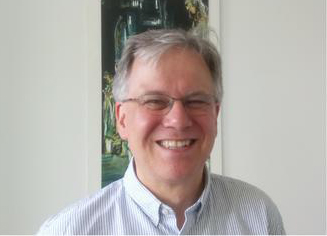
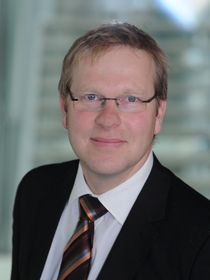
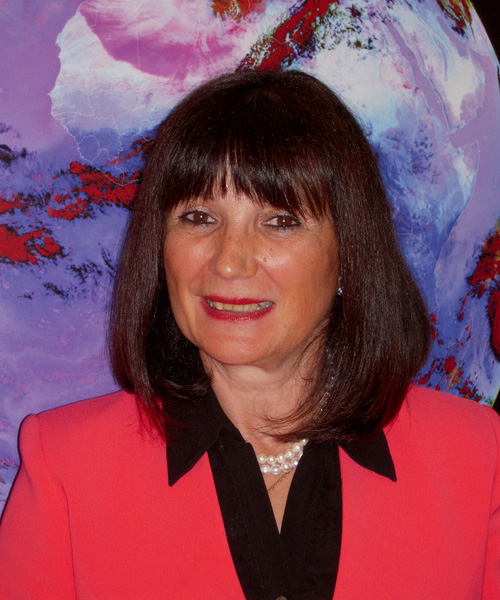
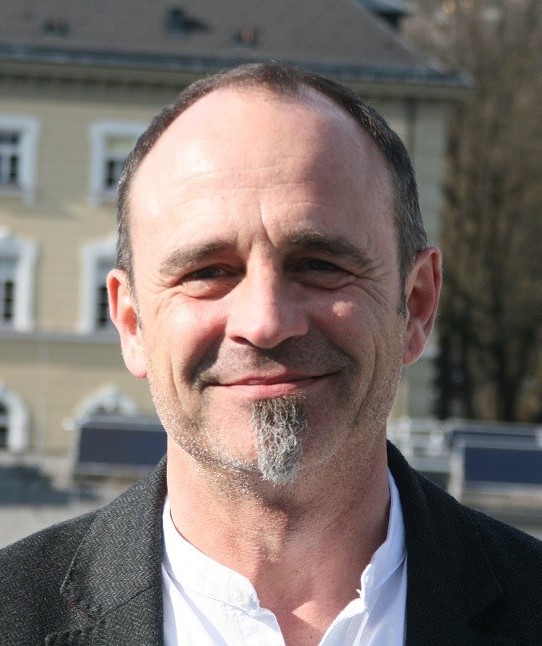
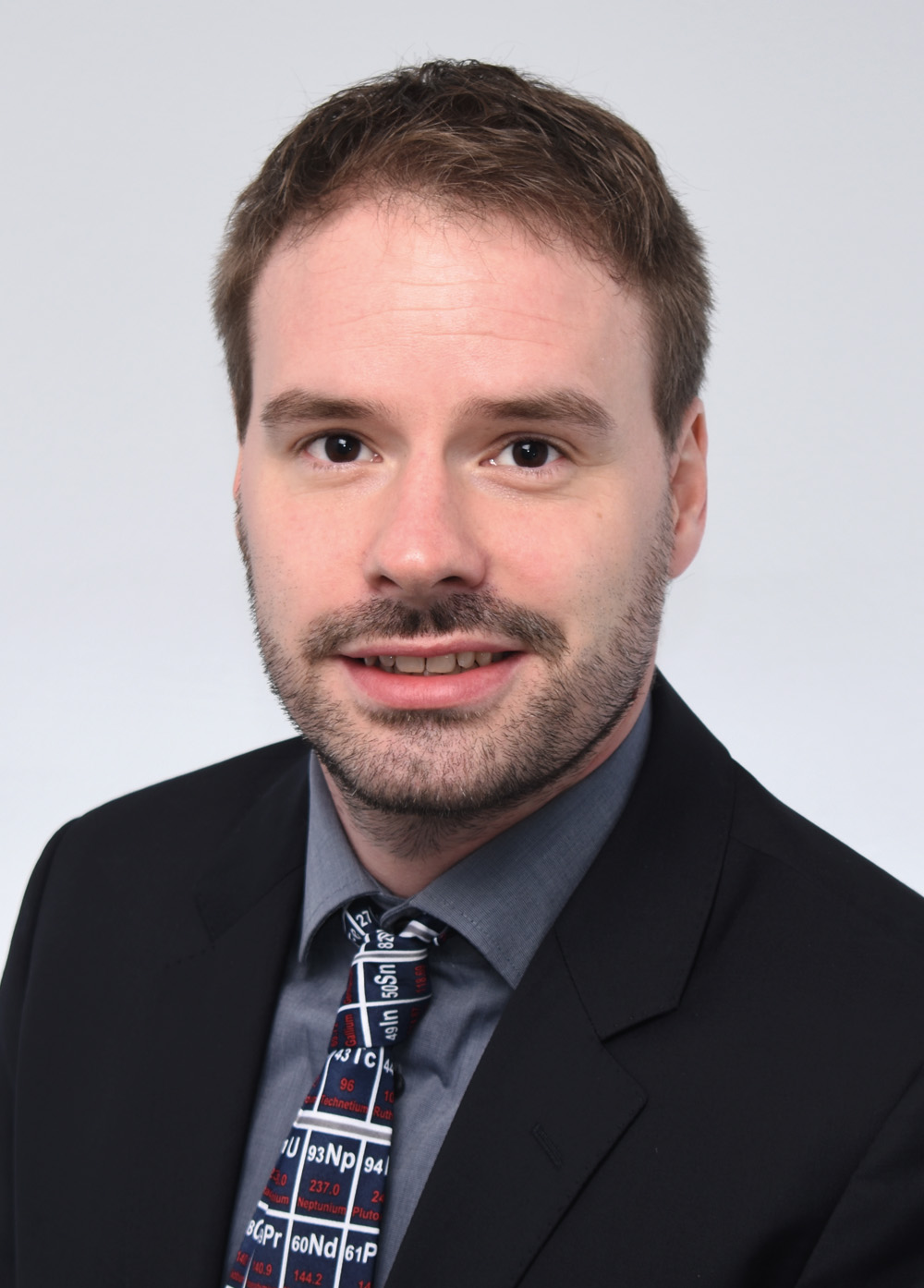
Stefano Quaglia is an Assistant Professor at the Institute of Romance Studies , University of Graz. His research focuses on syntax and its interfaces with morphology and semantics , using Italian as a comparative framework within and beyond Romance languages. Email: stefano.quaglia@uni-graz.at Office: Room 003303056, Merangasse 70/III, Graz, Austria Consultation Hours: Wednesday, 3:30-4:30 p.m. Research interests include: Spatial expressions and functional sentence structure Long-distance dependencies Language contact phenomena Particle verbs and clausal organization Wh-movement and information structure Cross-linguistic syntactic analysis Recent publications highlight empirical and theoretical work on verbal theme vowels , Slavic prefix ordering , and L3 transfer dynamics . His studies integrate synchronic analysis with diachronic and contact linguistics frameworks. Articles demonstrate trends in: Syntax-morphology interfaces : Allomorphy, prefix stacking, particle systems Comparative Romance-Slavic analysis : Extraction patterns, convergence phenomena Language acquisition : CLI effects in bilingual/multilingual contexts Prosodic constraints : Stress and phrasing in particle verbs Information structure : Wh-questions in Romance
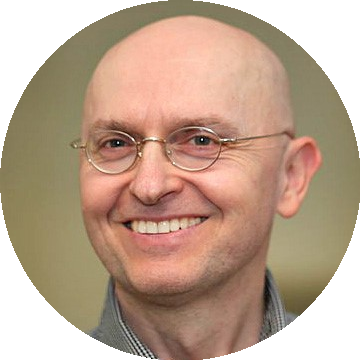
Kerstin von Lingen is a Professor at the Department of Contemporary History, University of Vienna, specializing in military history, war crimes trials, and post-war justice. Her research spans WWII, Cold War politics, decolonization, and environmental history intersections. Key research areas: Military justice systems, forced migration, and transcultural legal developments Active teaching roles: Contemporary History lectures and seminars on liberation from Mauthausen, post-war justice, and migration studies Email: kerstin.von.lingen@univie.ac.at Her recent publications focus on: Refugee politics in imperial collapse (2025) Citizenship and property restitution for Holocaust victims (2025) Deserter networks in Nazi Germany (2024) Eastern Front environmental impacts (2024) UN War Crimes Commission's legal legacy (2022)
Fabio Biscarini is a Full Professor of Chemistry at the Università degli Studi di Modena e Reggio Emilia (UNIMORE) and Principal Investigator at the Istituto Italiano di Tecnologia (IIT) since 2019, where he leads the Organic Neuroelectronics research line. PhD in Chemistry (University of Oregon, 1991-1993; University of New Mexico, 1989-1991) Laurea in Industrial Chemistry (Università di Bologna, 1981-1986) His research spans organic bioelectronics , focusing on label-free biosensors and implantable neuroelectronics . Earlier work covered self-organized nanostructures , unconventional nanofabrication , and charge injection mechanisms . He pioneered applications of dewetting transitions and self-assembly in nanotechnology. His publications address neuromorphic devices , organic transistors , and bioelectronic interfaces . Awards include the EU Descartes Award (2007) and Premio Sapio Industria (2012). He co-invented 20 patents and founded three startups: Scriba Nanotecnologie srl (2005-2020), Nano4bio Srl (2008-2015), and Organic Bioelectronics Srl (2019-present). Scientific Honors : Member, Academia Europaea (2021) Fellow, Royal Society of Chemistry (2004) Member, Accademia Nazionale delle Scienze di Modena (2017)
Leonhard Summerer is an Associate Professor at the Faculty of Mathematics, Department of Mathematics . His research primarily focuses on Diophantine Approximation , Geometry of Numbers , and Parametric Approximation . His work explores the Approximation Property in parametric settings, Lattice Theory , and Linear Dependence in number theory. Recent publications include studies on Jarník’s identity, simultaneous approximation to multiple reals, and geometric interpretations of number-theoretic problems. He has authored numerous peer-reviewed articles and contributed chapters to educational books such as 77-mal Mathematik für Zwischendurch , emphasizing mathematical outreach and pedagogical innovation . Active in academic discourse, he has delivered talks on topics like Packings and Tilings in Z and Simultane Approximation m reeller Zahlen since 2006.
Leonard Kwhang-Gil Lemke is a researcher at the University of Vienna's Faculty of Earth Sciences, Geography and Astronomy within the Department of Geography and Regional Research. Holding a PhD fellowship at the Vienna International School for Earth and Space Sciences, his work bridges geography, economics, and environmental science with a focus on real-world crisis response. His research interests center on rural resilience during the Covid-19 pandemic , examining social and economic innovation across Austria and Thailand through interdisciplinary frameworks. Key thematic areas include economic resilience (100% fingerprint match), environmental impact assessment (100%), socio-ecological systems (50%), and institutional environments (50%). His work directly contributes to UN Sustainable Development Goals related to poverty reduction and planetary protection. Publication analysis reveals a strong trend toward interdisciplinary crisis response research , particularly examining how rural communities leverage agritourism and institutional innovation during pandemics. His work consistently integrates qualitative systems mapping with environmental policy analysis, emphasizing procedural justice in stakeholder engagement and cognitive mapping of complex socio-ecological challenges. Lemke actively participates in academic knowledge exchange through conference presentations including the German Geography Congress (DKG) and Environmental and Climate Mobilities Network (ECMN) events. His research methodology combines case study approaches with systematic mapping techniques to address regional development challenges in times of global crises.
Stefan Esders is Professor of Late Antique and Early Medieval History at Freie Universität Berlin's Friedrich Meinecke Institute, where he has held a full professorship since 2006. Previously, he served as University Lecturer in Ancient and Medieval History at the University of Bochum (2000-2006) and Assistant Professor of Medieval History there (1995-2000). His academic journey began with studies in History and Classics at Heidelberg, Freiburg, and Oxford, culminating in a state exam in 1990 and a doctoral dissertation in 1993 with summa cum laude. His educational background includes: 1982-1990: History and Classics (Latin) at Heidelberg, Freiburg, and Oxford 1990: State exam 1991-1993: Doctoral Fellow in Ancient History, University of Freiburg 1993: Dissertation 'Römische Rechtstradition und merowingisches Königtum' (summa cum laude) 1993-1994: Postdoctoral Fellow, Max-Planck-Institute for History, Göttingen 1994-1995: Postdoctoral Fellow, University of Münster 2004: Habilitation in Medieval History and Auxiliary Sciences, University of Bochum Esders' research focuses on the transformations of late Roman culture across Visigothic Spain, Lombard Italy, and Merovingian Gaul, with particular emphasis on legal history, Mediterranean communication (400-900 CE), and the history of oaths in antiquity and the Middle Ages. His work bridges institutional, social, and cultural history, examining how legal texts and practices shaped political legitimacy and social structures during the transition from antiquity to the early Middle Ages. He has made significant contributions to understanding the reception of Roman law in post-Roman kingdoms and the development of early medieval legal pluralism. His recent publications reveal a consistent focus on legal texts, oath practices, and political legitimacy across the early medieval Mediterranean world. Esders demonstrates how legal traditions were adapted and transformed as Roman imperial structures gave way to regional kingdoms, with particular attention to the interplay between ethnic identity, religious affiliation, and legal practice. His work increasingly employs comparative approaches, examining parallel developments across different regions of the former Roman Empire to reveal broader patterns of continuity and change. His scholarly recognition includes: Corresponding Member, Monumenta Germaniae Historica (2019-present) Fellow, Humanities Council and Program in Medieval Studies, Princeton University (2019) Member, Institute for Advanced Study, Princeton (2013) Ordentliches Mitglied der Academia Europaea (since 2021) Distinguished Fellow of the Hebrew University of Jerusalem (2025/26) Corresponding Fellow of the Medieval Academy of America (since 2025) As an active scholar, Esders serves on editorial boards including Speculum. A Journal of Medieval Studies and has edited numerous volumes on early medieval legal history. He has been instrumental in collaborative research projects examining Mediterranean connectivity in the early Middle Ages and has supervised numerous doctoral students. Currently, he serves as speaker of the doctoral program 'Ancient Histories, Languages and Texts' within the Berlin Graduate School of Ancient Studies. His work is characterized by meticulous textual analysis combined with broader theoretical frameworks examining political legitimacy, legal pluralism, and the transformation of social structures during the crucial period between the 5th and 10th centuries CE. Esders maintains active international collaborations, particularly with scholars in Mediterranean countries, reflecting his focus on cross-regional connections during the early medieval period.
Mathias Czaika is a University Professor in Migration and Integration and Head of the Department for Migration and Globalisation at the University for Continuing Education Krems, Austria. He coordinates the PhD Programme in Migration Studies and has previously directed the International Migration Institute at Oxford University. His research focuses on international migration drivers, policy impacts, globalization, and development implications. Education: Master’s in Economics from the University of Konstanz, PhD in Political Economy from the University of Freiburg. He has advised national and international bodies like the EU, DfID, and the Swedish Migration Agency. Research interests include migration policy formulation, asylum systems, skilled migration, and involuntary immobility’s development impacts. Key projects include 'Valuing Open Source Intelligence' (ÖAW-funded) and 'Development implications of involuntary immobility in Africa' (FWF-funded). He leads initiatives on migration scenarios, diaspora engagement, and integration policies. Grants and funding include EU Horizon 2020, FWF, and national grants. Notable publications address migration governance, diaspora organizations, and climate change effects on mobility. His work bridges academic research with policy through dialogues between science, politics, and practice.
Mioara Mandea is a distinguished geophysicist currently serving as Solid Earth Programmes Manager at the French Space Center (CNES) in Paris since 2011. She maintains strong academic affiliations with Sorbonne University through her long-standing association with the Institut de Physique du Globe de Paris (IPGP), where she held multiple research positions from 1991-2011 including Head of the National Magnetic Observatory (1994-2004). Her career also includes leadership roles at the European Center for the Arctic at Versailles University and the Helmholtz Center in Potsdam. Her educational background includes dual PhDs in Geophysics (1993 from Bucharest University and 1996 from IPGP) followed by an HDR (Habilitation à diriger les recherches) in Physics of the Earth from Université Paris VII in 2001. This highest French academic qualification authorizes her to supervise doctoral candidates and apply for professorial positions. Mandea's research spans Earth observation from space, geopotential fields analysis, and geomagnetic field studies using historical archives, modern observatories, and satellite data. She specializes in adapting advanced mathematical tools to analyze magnetic and gravity data, with particular focus on Earth's deep interior, planetary magnetism (Moon, Mars, Mercury), and Arctic region geophysical changes. Her work bridges theoretical geophysics with practical space-based observation techniques. Analysis of her recent publications reveals a consistent focus on integrating satellite-derived gravity and magnetic data to understand Earth's interior dynamics. Her research shows increasing sophistication in mathematical modeling techniques, particularly wavelet analysis and multi-sensor data integration. The publications demonstrate strong international collaboration patterns, with frequent co-authorship across European institutions and the United States. Membre associé de l'Académie Royale de Belgique (2018) Medal 'Petrus Peregrinus' of European Geosciences Union (2018) Chevalier - Ordre National du Mérite (2016) Member of Academia Europaea (2015) Member of the Bureau des Longitudes (2014) International Award of American Geophysical Union (2014) Mandea has held significant leadership roles in the international geoscience community, including Secretary General of the International Association of Geomagnetism and Aeronomy since 2009, Chair of the Science Committee at the International Space Science Institute since 2016, and former Secretary General of the European Geosciences Union (2012-2016). She serves on multiple advisory boards for major research projects including EPOS and MED-SUV, and has chaired numerous award committees for the AGU and EGU. Her editorial work includes associate editor roles for Surveys in Geophysics and special issues for Physics of the Earth and Planetary Interior. Her research has been supported through leadership roles in major international space-based Earth observation initiatives, particularly through her position at CNES where she manages solid Earth science programs. She has contributed to numerous collaborative projects involving satellite missions for geomagnetic and gravity field measurements.
Andreas Koch is a Full Professor at the University of Salzburg , affiliated with the Faculty of Social Sciences and the Department of Sociology and Human Geography . As Deputy Department Chair and Co-Chair of the Center for Ethics and Poverty Research , he bridges academic leadership with critical geographic analysis. Education: Diploma in Geography, Political Science, and Spatial Planning (LMU Munich, 1993), PhD (RWTH Aachen, 1996), Habilitation (RWTH Aachen, 2004) International Affiliations: Collaborations with Umeå University (Sweden) and Carleton University (Canada) His research focuses on geographies of poverty and inequality , rural peripheries , and spatial modeling , with particular emphasis on housing as social infrastructure and urban-rural interdependencies. Recent work explores cross-border suburban sustainability and digital solutions for rural healthcare . Scientific output trends reveal a sustained engagement with housing equity , urban systems , and UN Sustainable Development Goals . Publications span theoretical frameworks (system theory) to applied case studies in Austria and Northern Sweden.
Timo Fleischer is an Associate Professor in the Chemistry Didactics Working Group at the University of Salzburg, affiliated with both the Faculty of Natural and Life Sciences and the School of Education. He leads key educational innovation projects including EXBOX-Digital, ChemGerLab-VR, and RECC Salzburg, and plays a significant role in digital science education development. Education: Bachelor of Science in Geography and Chemistry, University of Kiel (2011) Master of Education in Geography and Chemistry, University of Kiel (2013) PhD in Science Education, TUM School of Education (2017) Habilitation in Chemistry Didactics, University of Salzburg (2024) His research focuses on the effectiveness of digital media in teacher education and chemistry classrooms, the development of digital teaching and learning materials, and the integration of experimentation and modeling in science education. He is particularly interested in how digital tools support the learning of chemical language and representations. His work bridges educational theory and practical classroom innovation. His recent publications demonstrate a strong emphasis on digital scaffolding, augmented and virtual reality in chemistry labs, eye-tracking during experiments, and the use of fiction as an anchor in science teaching. These works reflect a trend toward immersive, technology-enhanced, and student-centered learning environments in science education. Scientific Awards: Ehrenurkunde Polytechnik-Preis 2022 – Projekt EXBOX-Digital Kulturfondspreis 2020 für das Projekt MINT:labs Science City Itzling Comenius-EduMedia-Siegel für EXBOX-Digital (2020) Qualitätslabel „Regional Educational Competence Centre“ (RECC) (2018–2021) Junior-Fellowship, Kolleg Didaktik:digital (2016–2017) Timo Fleischer has supervised various research projects and collaborated with numerous colleagues and students, though specific advisees are not listed. He has secured recognition and funding for initiatives such as EXBOX-Digital and MINT:labs, indicating successful grant acquisition. He is actively involved in teacher training, curriculum development, and science communication. He leads several innovative labs and teams, including ChemGerLab-VR (a virtual reality chemistry lab), EdTechAll, and the development of MINT:labs Science City Itzling. These initiatives focus on creating digital, hands-on, and inclusive science learning environments for both students and teachers.
Sophie Kratschmer is a researcher at the Institute of Zoology of the University of Natural Resources and Life Sciences Vienna (BOKU). Her work focuses on wild bee biodiversity, agroecology, landscape ecology, and pollination dynamics in both urban and agricultural contexts. Research Interests : Kratschmer investigates anthropogenic impacts on wild bee communities, including management intensities in agroecosystems, habitat quality, and nesting resource availability. Her studies integrate spatial ecology, telemetry for tracking bee behavior, and biodiversity monitoring of meadow orchards. She explores interactions between honeybees and wild bees, emphasizing sustainable urban and agricultural planning. Scientific Awards : BOKU Teaching Award 2023 BOKU Talent Awards 2021 BOKU Best Paper Awards 2018 Prize of the Austrian Entomological Society (ÖEG) 2018 Best Poster Award at the 12th Hymenoptera Conference 2016 MA22 Scientific Support Award 2015 Advising : She has supervised master theses on topics such as wild bee-hotspot identification, telemetry studies on rare bee species, soil parameters for bee nesting, and analysis of plant-pollinator interactions.
Dr. Oliver Roider is a researcher at the Institute of Transport Studies , part of the University of Natural Resources and Life Sciences, Vienna (BOKU) . With a career spanning over two decades, he specializes in transport modeling, mobility behavior analysis, and sustainable transport policy development. Education : PhD from BOKU (2012), Civil Engineering degree from BOKU (1987-1994) Key Affiliations : Institute of Transport Studies (BOKU), University of Applied Sciences Technikum Wien (2005-2021) His research focuses on transport models , mobility behavior , and public transport optimization , with particular emphasis on transport economics and rural mobility solutions . He has led numerous projects analyzing the impact of mobility hubs , sustainable transport policies , and autonomous vehicle integration in rural areas. Recent publications examine shared micromobility adoption , mobility hub deployment , and stakeholder governance in transport initiatives . His work has been supported by diverse funders including the European Commission , FFG , and City of Vienna . Scientific Awards : 2012 Anerkennungspreis für Dissertationen from Austrian Road & Rail Research Society As an active member of academic committees, he has served in Austrian Society for Transport Science and contributed to QUALIVERMO quality guidelines . He has organized international conferences like IATBR 2024 and presented at key events in Edinburgh, Brussels, and Washington DC.
Andreas Riedl is an Assistant Professor at the Department of Geography and Regional Research, University of Vienna, where he serves as Head of the Hyperglobe Research Group and Vice-Director of Studies for Geography. His work bridges cartographic heritage with cutting-edge geospatial technology, focusing on spherical display systems for global data visualization. His educational background includes a Doctorate in Geography/Cartography from the University of Vienna (1987-1992) and an Industrial Engineering degree from HTL-Hollabrunn (1979-1985). Career milestones include research at Simon Fraser University (1995-1996) and software development at ITC Enschede (1996). Riedl's research centers on Hyperglobes —interactive 1.2-meter spherical displays that visualize weather patterns, continental drift, and climate change through dual 4K projection. His group operates these systems for public education, serving schools and museums with free demonstrations of geophysical phenomena, flora/fauna distributions, and extraterrestrial topics. Complementing this, he advances GIS applications in urban planning, 3D visualization, and multimedia geocommunication. Analysis of his 15 most recent publications reveals dual research trajectories: (1) Environmental hydrology studies quantifying dew/fog water inputs in grasslands using isotope tracing and micro-lysimeters, and (2) Media studies examining migration coverage, journalistic roles, and gender representation in news. Both strands emphasize data visualization's role in public understanding of complex systems. As an educator, Riedl supervises Master's theses on GIS implementation, 3D city modeling, and geovisualization. His students explore topics including e-charging infrastructure planning, infographic-style maps, and AR navigation systems, reflecting his commitment to applied spatial analysis. The Hyperglobe Research Group provides critical infrastructure for these projects through its spherical display technology and public engagement initiatives.
Roxani Gkavra M.Sc. is a researcher at the Institute of Transport Studies within the University of Natural Resources and Life Sciences, Vienna (BOKU). Her work focuses on transport economics , traffic engineering , and geoinformatics applications in mobility research. She actively contributes to projects addressing equitable and accessible transportation systems. Location: Peter-Jordan-Straße 82, 1190 Vienna Contact: roxani.gkavra@boku.ac.at Research Interests: Roxani Gkavra specializes in analyzing shared micromobility adoption , mobility hub effectiveness , and rural demand-responsive transport systems . Her work evaluates how technological and policy interventions impact urban mobility patterns and transport equity . Key Projects: She contributes to initiatives like Wiener Linien's Hüpfer pilot and the SmartHubs series, examining mobility hub impacts across Europe. Funders include the Austrian Research Promotion Agency (FFG) and National Companies . Project durations span 2021-2026. Scientific Engagement: Gkavra serves as reviewer for journals including Sustainable Futures and European Transport Research Review . She is a member of the Central European Excellence in Transportation Research Association (CEETRA) and frequently presents at international conferences like the International Association of Travel Behavior Research . Advisory Role: While not explicitly mentoring students, she collaborates extensively on transport behavior research with senior academics like Yusak Susilo and Oliver Roider. Her work informs policy recommendations for equitable mobility solutions.
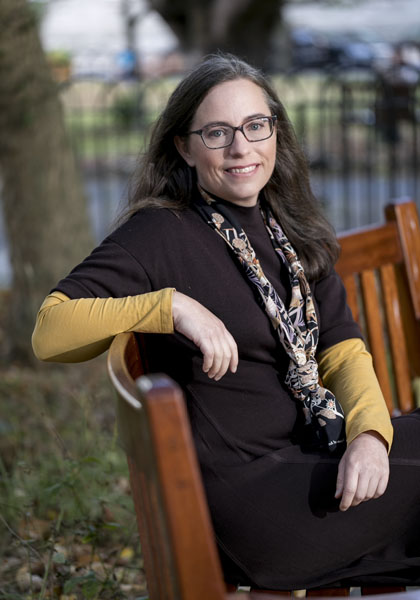
Professor Yvonne Buckley serves as Chair of Zoology in the School of Natural Sciences at Trinity College Dublin, Ireland, a position she has held since 2014. She additionally holds an Honorary Professorship at the School of Biological Sciences, The University of Queensland, Australia. With over two decades of academic experience, Professor Buckley has established herself as a leading figure in ecological research and academic leadership. Her academic foundation includes a 1st class B.A. in Biology from Oxford University (1997) and a PhD in Biological Sciences from Imperial College London (2002). Prior to her current role, she advanced through academic ranks at The University of Queensland from Lecturer to Associate Professor (2004-2014) following postdoctoral research at Imperial College London (2002-2004). Professor Buckley's research spans multiple ecological domains with particular expertise in: Macroecology and global biodiversity patterns Population biology and demography Conservation biology and biodiversity management Population genetics and evolutionary ecology Applied ecology and invasion biology Quantitative approaches to ecological questions Her publication record demonstrates exceptional scholarly impact with over 120 peer-reviewed papers since 2001, appearing in premier journals including Nature, Science, and PNAS. With more than 7,600 Web of Science citations and an h-index of 47, her work focuses on plant and animal life history strategies, species distributions, and environmental change impacts on biodiversity. Professor Buckley's scientific excellence is recognized through prestigious awards: 2021 Irish Research Council Researcher of the Year 2021 British Ecological Society President's Medal 2019 Member of the Royal Irish Academy 2018 ISI Highly Cited Researcher 2017 Sir John Burnett Memorial Medal 2016 Trinity College Dublin Professorial Fellowship She demonstrates significant academic leadership as Co-Director of Nature+: Trinity Centre for Biodiversity & Sustainable Nature-based Solutions (2017-2021), former Head of Zoology at Trinity College Dublin (2014-2020), and Founding President of the Irish Ecological Association (2015-2019). Currently, she coordinates the international research network 'Plantpopnet' with 41 collaborators worldwide. Professor Buckley is deeply committed to academic mentorship, having supervised 11 completed PhDs, 1 Research Master student, and 18 postdocs as primary supervisor, with 2 current PhD students. Her teaching portfolio includes Theoretical and Field Ecology, Statistics for Biologists, Biodiversity, Plant-Animal Interactions, and cross-disciplinary sustainability education.