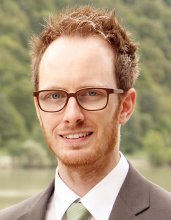
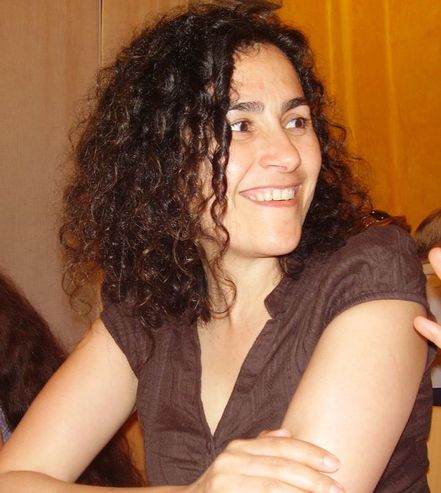
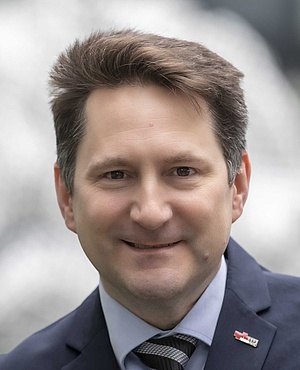
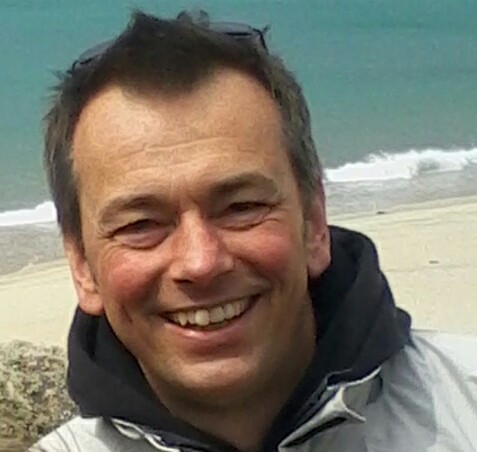
Florian Huemer is a Senior Lecturer in the Department of Internal Medicine III at the University of Salzburg, specializing in Hematology, Medical Oncology, and Oncologic Research. His work focuses on advanced cancer therapies, including targeted therapies, immunotherapy, and molecular subtyping in colorectal, pancreatic, and lung cancers. He has led or co-led multiple research projects investigating tumor dynamics, treatment responses, and clinical outcomes. Key initiatives include studies on consensus molecular subtyping in rectal cancer, clonal heterogeneity assessment via liquid biopsies, and the impact of antibiotic use on immunotherapy efficacy. Research interests span oncology, immuno-oncology, and translational medicine, with a focus on improving personalized treatment strategies. Notable contributions include analyses of chemotherapy sequencing in pancreatic cancer and the long-term survival outcomes of small cell lung cancer patients treated with atezolizumab. Collaborations with institutions like the AGMT (Arbeitsgemeinschaft Medikamentöse Tumortherapie) and international trials (e.g., IMpower133) underscore his commitment to advancing clinical oncology. His projects emphasize translational research, bridging genomic analysis, imaging, and clinical practice. He has published extensively on topics such as tumor microenvironment modulation, immune contexture changes, and biomarker-driven therapy selection. Recent work highlights the integration of single-cell technologies and spatial biology to understand tumor heterogeneity. Florian Huemer has advised on multiple clinical studies and contributed to retrospective analyses of treatment patterns in Austria, including the PRATER study on non-small cell lung cancer care pathways. His research has been referenced in peer-reviewed journals and platforms like Mendeley, reflecting its impact on the scientific community.
Radu Grosu is a Full Professor and Head of the Cyber-Physical Systems Research Unit at TU Wien. His research focuses on modeling, analysis, and control of cyber-physical and biological systems, with applications in robotics, autonomous systems, medical imaging, and formal verification. He leads the Scuderia Segfault team for autonomous F1TENTH racing and has extensive collaborations with industry partners like TTTech Auto AG and FFG. His work integrates machine learning, control theory, and formal methods to address challenges in safety-critical systems and autonomous decision-making. Roles: Full Professor, Head of Research Unit, Faculty Council Substitute Member Affiliations: TU Wien, Scuderia Segfault, Austrian Science Fund (FWF) projects Research interests span cyber-physical systems (CPS), cardiac-cell networks, genetic regulatory networks, and AI-driven solutions for healthcare and manufacturing. He has pioneered methods in neural circuit policies, flocking control, and real-time reinforcement learning. His projects include EdgeAI for embedded systems, radiation treatment optimization in glioblastoma, and autonomous vehicle testing frameworks. Key contributions include: Developing Lagrangian reachability analysis for safety verification Advancing neuromorphic IoT architectures and sensor networks Creating tools like DeepSTL for translating requirements into specifications Grants include FFG-funded projects on autonomous driving examiners and energy-efficient neuromorphic systems. His work bridges theoretical foundations with practical implementations in CPS resilience, medical diagnostics, and industrial automation.
Markus Bögl is a researcher at TU Wien's Institute of Visual Computing and Human-Centered Technology, part of the Faculty of Informatics. His work focuses on visual analytics, time series analysis, and data visualization. He leads projects like the Austrian Science Fund (FWF)-supported 'Visual Interactive Space-Time Segmentation' (2025–2028) and has contributed to the 'VISSECT' and 'ArtVis' initiatives. Bögl teaches courses in information visualization, visual computing, and medical informatics. Education: PhD in Visual Analytics of Time Series (TU Wien, 2020), BSc in Informatics Research: Specializes in time series segmentation, uncertainty visualization, and interactive parameter selection for blind source separation. His work bridges statistical methods with visual analytics for multivariate and temporal data. Key projects include developing TBSSvis for temporal blind source separation and advancing visual analytics for model selection and outlier detection in time series. His publications span IEEE journals and conferences like VIS and EuroVis, emphasizing practical tools for data exploration and decision support.
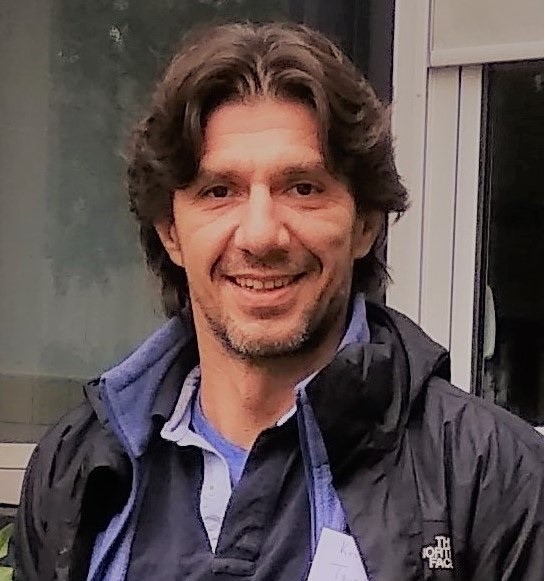
Fabio Biscarini is a Full Professor of Chemistry at the University of Modena and Reggio Emilia and Principal Investigator leading the 'Organic Neuroelectronics' research line at the Istituto Italiano di Tecnologia (IIT) since 2019. He holds visiting professorships at multiple institutions, including IIT, Linköping University, and the Universidade do Algarve. His research focuses on organic bioelectronics, biosensors, and neuromorphic devices, with applications in healthcare and neurophysiology. He has coordinated over 40 EU and national projects, authored 260+ publications, and holds an h-index of 62. Education includes a Laurea in Industrial Chemistry (Università di Bologna) and Ph.D. in Chemistry from the University of Oregon (USA). He previously served as Research Director at CNR-ISMN and held leadership roles in nanotechnology research lines. His honors include the EU Descartes Award (2007), Premio Sapio Industria (2012), and Fellow of the Royal Society of Chemistry. His scientific contributions span organic electronics, nanotechnology, and neuroelectronic interfaces. Notable achievements include developing label-free biosensors, organic electrochemical transistors for biomedical applications, and founding three startups (Scriba Nanotecnologie, Nano4bio, Organic Bioelectronics Srl) to commercialize his research. He has also contributed to editorial roles, including the Chemical Society Reviews.
Hervé Bourhy is a distinguished Professor at Institut Pasteur in Paris, where he serves as Head of the Global Health Department since 2019. He also leads the Research Unit "Lyssavirus Epidemiology and Neuropathology" and serves as Head of the National Reference Centre for Rabies, which is also designated as a WHO Collaborating Centre for Reference and Research on Rabies. With a career spanning over three decades at Institut Pasteur since 1987, Dr. Bourhy has established himself as a leading expert in rabies and other neurotropic viral diseases. Dr. Bourhy's educational background includes: Doctor of Veterinary Medicine (1986) from the Faculty of Medicine, Nantes PhD in Microbiology (1992) from the University of Paris VI, Paris, France Certification to supervise PhD students (HDR) (2000) from the University of Paris VI Dr. Bourhy's research focuses on the complex interactions between neurotropic viruses and their hosts, with particular emphasis on rabies virus and SARS-CoV-2 . His work spans multiple dimensions of viral pathogenesis, including the mechanisms of nervous system invasion , viral evolution and adaptation , and the innate immune response to viral infections . A significant portion of his research operates under the One Health framework, recognizing the interconnectedness of human, animal, and environmental health in addressing zoonotic diseases. His laboratory has made groundbreaking contributions to the development of prophylactic and therapeutic approaches against rabies, including innovative post-exposure prophylaxis regimens and human monoclonal antibody therapies. Analysis of Dr. Bourhy's extensive publication record (200+ PubMed entries) reveals a consistent focus on rabies virus epidemiology, evolution, and pathogenesis, with a recent expansion into SARS-CoV-2 neurotropism. His work demonstrates a progression from fundamental virology to translational research with direct public health applications, particularly in resource-limited settings. The keywords that frequently appear across his publications include rabies, lyssavirus, zoonoses, viral evolution, neuropathology, and One Health. His research has increasingly incorporated advanced genomic and phylogenetic methods to understand viral transmission dynamics at micro and macro scales. Dr. Bourhy's significant contributions to the field have been recognized through numerous honors: Corresponding member of the Danish Academy of Clinical Microbiology (DSKM) since 2013 Corresponding member of the French Veterinary Academy (AVF) since 2006 Deschiens Prize from the Academy of Medicine, Paris (2003) Award from the University of Medicine, Nantes (1986) With an impressive h-index of 46 and over 6,620 citations (Web of Science), Dr. Bourhy's research has had substantial impact in the field of virology and public health. His work has led to 4 patents and has been influential in shaping WHO recommendations for rabies post-exposure prophylaxis. Dr. Bourhy has also been invited to present his research at more than 75 international symposiums and conferences, demonstrating the global recognition of his expertise. While specific details about his students are not provided in the available documentation, his leadership position as Head of the National Reference Centre for Rabies and WHO Collaborating Centre suggests substantial mentorship responsibilities. Dr. Bourhy leads the Lyssavirus Epidemiology and Neuropathology research unit at Institut Pasteur, which functions as both the National Reference Centre for Rabies in France and a WHO Collaborating Centre for Reference and Research on Rabies. His team conducts research across multiple dimensions of rabies and other neurotropic viral diseases, from basic molecular virology to field epidemiology in endemic regions. The unit maintains strong international collaborations, particularly in Africa where they have conducted extensive studies on rabies transmission dynamics in urban settings like Bangui, Central African Republic. Their work integrates laboratory research with field studies to develop practical solutions for rabies control and prevention in resource-limited settings.
Andrew David Cliff is a Professor at the Department of Geography, University of Cambridge, with a career spanning over five decades. He has held significant administrative roles including Head of Department (1999-2001), Chair of the School of Physical Science (2001-03), and Pro-vice-counsellor since 2004. Education: PhD and DSc from the University of Bristol Research Focus: Geography of epidemics, spatial processes, historical disease mapping, and conflict-related health crises Cliff's research explores the intersection of geography and public health, emphasizing the spatial dynamics of infectious diseases across historical contexts. His work includes groundbreaking studies on avian influenza, poliomyelitis, cholera, and smallpox, often analyzing their diffusion in war zones and isolated regions. His publications from 2000-2008 highlight interdisciplinary approaches combining geography, epidemiology, and historical analysis, with a focus on computational frameworks, island epidemiology, and the role of conflict in disease spread. Key journals include Annals of the Association of American Geographers and Medical History. Member, Academia Europaea (2002) Member, Historical and Cultural Geography research cluster Editorial Board, Statistical Methods in Medical Research Fellow of the Society of Study (FSS 1968) Fellow of the British Academy (FBA 1996) Chartered Geographer (CGeog 2002) Cliff has been affiliated with Christ's College, Cambridge, as Director of Studies (1973-) and Fellow (1974-). He has also collaborated with global institutions like the WHO and CDC through visiting scholar roles.
Mena Lafkioui is a Full Professor (Directeur d'études) in Berber linguistics at the Ecole des hautes études en sciences sociales (EHESS) in Paris, holding a concurrent position as Research Director at the Centre National de la Recherche Scientifique (CNRS). She has been affiliated with these institutions since 2018 and 2014 respectively, following previous academic positions at Università degli Studi di Milano-Bicocca, Università della Calabria, and Ghent University. Her educational background includes a Habilitation in 'Sciences du langage' from EHESS (2010), a Ph.D. in Linguistics from INALCO, Paris (1999), a Postgraduate degree in Linguistics from INALCO (1995), and a Master's in Oriental Languages and Cultures from Ghent University (1994). Lafkioui's research spans Berber linguistics, geolinguistics, sociolinguistics, Afroasiatic linguistics, Arabic dialectology, and negation typology. Her work integrates structural linguistic analysis with sociocultural contexts, particularly focusing on the Rif Berber language continuum, language contact phenomena, and the impact of digital communication on Amazigh identity construction. Analysis of her recent publications reveals a consistent focus on Berber language structures, particularly examining negation patterns, topicalization mechanisms, geolinguistic variation, and the impact of language contact with Arabic. Her methodological approaches blend traditional linguistic analysis with computational and algorithmic perspectives, reflecting an innovative approach to language documentation and analysis. Elected as Academician, Accademia Ambrosiana, Milan (2014) Elected as founding member of the 'Classe Africa' of the Accademia Ambrosiana, Milan (2014) Elected as founding member of the 'Section Berbero' of the Accademia Ambrosiana, Milan (2014) Lafkioui has supervised 10 PhD students and 55 Master's dissertations while securing competitive research grants across Europe. She serves on multiple editorial boards including the International Journal Dialectologia et Geolinguistica and Afrika Focus. Her institutional roles include membership on the Scientific Council of the Laboratoire d'excellence Empirical Foundations of Linguistics in Paris and participation in numerous academic committees overseeing PhD programs in African languages and cultures. She has organized 17 international scientific meetings and is an active member of 10 scientific societies, including the Société de Linguistique de Paris, demonstrating her significant contribution to the academic community in linguistics and African studies.
Tobias Schreck is a Professor at the Institute of Visual Computing (formerly Computer Graphics and Knowledge Visualization) at Graz University of Technology, affiliated with the Faculty for Computer Science and Biomedical Engineering. His research focuses on Visual Data Analysis, 3D Object Retrieval, and Immersive Analytics, with applications in engineering and industrial contexts. He holds a Dr.rer.nat. from the University of Konstanz and has held academic positions including Assistant Professor at the University of Konstanz and Head of the Visual Search and Analysis Group at TU Darmstadt. Education: Dr.rer.nat., University of Konstanz (2006) M.Sc. in Information Engineering, University of Konstanz (2002) Dipl.-Volkswirt (M.Sc. Economics), University of Konstanz (1999) His research interests include visual analytics for high-dimensional and spatial-temporal data, digital libraries, and collaborative analysis tools. He leads funded projects like HEREDITARY (EU Horizon Europe) and VR4CPPS (FFG), and has served as a program chair for IEEE VAST and EuroVis. His work emphasizes user interaction, eye-tracking integration, and immersive visualization techniques. He supervises a research team including postdocs, PhD students, and student assistants, and collaborates on projects like CrossSAVE-CH and the Joint PhD Programme with Nanyang Technological University. His contributions span publications in IEEE Transactions, EuroVis, and ACM conferences, addressing challenges in data exploration, anomaly detection, and visualization design.
David Parkin is a Research Professor at the Max Planck Institute for Religious and Ethnic Diversity (Goettingen, Germany) and Professor Emeritus of Social Anthropology at the University of Oxford. He holds an honorary position as Honorary Professor at the School of Oriental and African Studies (London, UK). His primary research focuses on medical anthropology, Eastern African studies, cross-cultural semantics, and socio-cultural evolution. Parkin has held significant roles including Chairmanship of the International African Institute and the Association of Social Anthropologists, and is a Fellow of the British Academy. His scholarly work spans over five decades, with notable contributions in African studies, Swahili communities, and religious anthropology. Key themes include cultural semantics, ritual practices, and socio-political systems. Parkin's publications include influential books like *The Sacred Void* (1991) and *Holistic Anthropology* (2007), alongside edited volumes exploring maritime technology and Islamic prayer practices in the Indian Ocean region. His awards and recognitions reflect his academic leadership and contributions to anthropology. While no specific advising or grant information is documented here, his research has consistently engaged with interdisciplinary methodologies and fieldwork-based insights. Parkin’s work bridges historical and contemporary issues in anthropology, emphasizing the interplay between cultural systems and global dynamics.
Professor David Sims is a leading marine ecologist affiliated with the University of Southampton’s School of Ocean and Earth Science and the Marine Biological Association (MBA) in Plymouth. His roles include Professor of Marine Ecology and Senior MBA Research Fellow. He has held positions such as Deputy Director for Research at MBA and Reader at the University of Plymouth. Current Affiliations: University of Southampton, MBA (Plymouth) Research Focus: Marine predator ecology, biotelemetry, climate change impacts, and conservation biology His research explores animal movement ecology, particularly shark behavior, and applies bio-logging technologies to understand predator-environment interactions. Key projects include the Global Shark Movement Project, tracking over 150 scientists across 26 countries to assess threats like fishing and shipping collisions. He leads the Ocean Predator Movement Ecology and Conservation group, mentoring PhD students like Amy Jeffries and Matt Waller. Publications highlight topics like climate-driven deoxygenation effects on sharks and whale shark collision risks with shipping. His work bridges science and conservation, influencing policies like CITES and CMS listings for basking sharks. Awards include the ERC Advanced Grant (2020), ZSL Marsh Award (2019), and election to Academia Europaea (2016). His labs and teams focus on mitigating anthropogenic threats through interdisciplinary approaches.
Kristian Vlahoviček is a tenured Professor and Bioinformatics Group Leader at the Faculty of Science , University of Zagreb, Croatia, with a 18-year track record of leading an internationally competitive research group. He has held international appointments at the ICGEB Trieste (Italy) and the University of Oslo (Norway), and co-founded Exaltum Ltd. in 2013. Education: PhD in Computational Biology and Bioinformatics Research Focus: His group combines machine learning with bioinformatics to address key questions in developmental genomics and metagenomics , including protein interaction prediction, histone modification analysis, and retrotransposon dynamics in embryogenesis. Publications: His work appears in top-tier journals like Nature , Cell , and PNAS , with citations exceeding 4,000 (Google Scholar), reflecting significant impact in computational biology, genetics, and epigenetics. Scientific Awards: 2011 Annual National Science Award (Croatia) 2009 Croatian Academy of Sciences and Arts Award EMBO Young Investigator Installation Grant (2006-2011) ICGEB Fellowship (1996-2000) University of Zagreb Rector’s Award (1995) Service: He has served as a reviewer for major international funding programs including the European Science Foundation, EC FP7/H2020, ZonMw Vidi Programme, and Croatian structural funds. His research group develops computational tools and machine learning frameworks for genomic and metagenomic analysis.
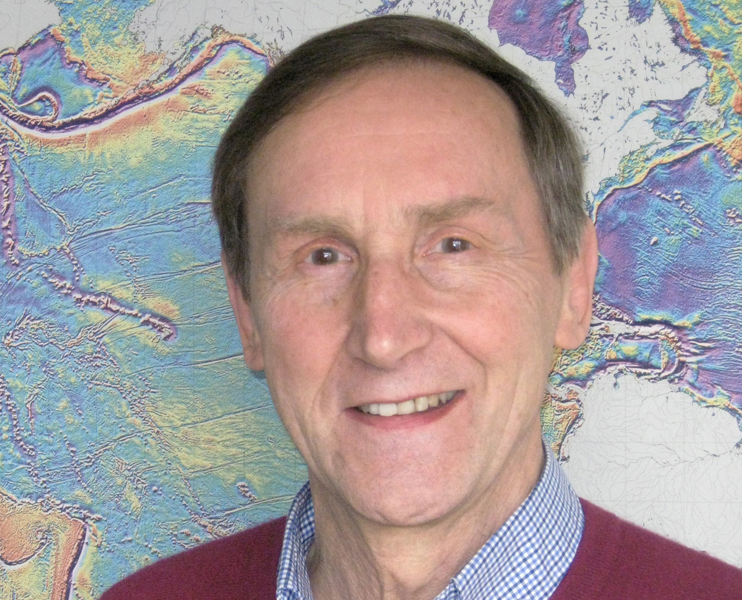
Anthony Watts is a Professor of Marine Geology and Geophysics at the University of Oxford since 1990. Previously, he held positions at Columbia University, including the Arthur D. Storke Memorial Professorship (1989–1990) and Professor of Geological Sciences (1981–1988). His research focuses on marine geology, geophysics, isostasy, and lithospheric processes, with notable contributions to understanding continental margins and submarine volcanism. Watts has been honored with prestigious awards such as Fellowship in the Royal Society (2014) and the Arthur Holmes Medal (2008). His work integrates gravity field analysis, tectonic modeling, and seafloor mapping to explore Earth’s dynamic systems. Key research interests include the rheology of oceanic lithosphere, flexural deformation mechanisms, and the interplay between gravity anomalies and tectonic processes. He has published extensively on continental margins, sedimentary basins, and the evolution of landscapes. Notable contributions include studies on the Kermadec Arc volcanoes and the Amazon continental margin. Honours and Awards: 2015 Harold Jeffreys Lecturer, Royal Astronomical Society 2006 George P. Woollard Award, Geological Society of America 1993 Murchison Medal, Geological Society of London Advising and Grants: No explicit student advising records found, though his research involves collaborative projects with international teams. Watts has contributed to foundational texts such as *Isostasy and Flexure of the Lithosphere* (Cambridge University Press, 2001) and edited volumes like the *Treatise on Geophysics* (2007). His work bridges field observations, numerical modeling, and theoretical frameworks to address large-scale Earth system questions.
Francesco Lacquaniti is a Full Professor of Physiology at the University of Rome Tor Vergata and Director of the Center for Space Bio-Medicine there. He also leads the Department of Neuromotor Physiology at the Scientific Institute Santa Lucia Foundation in Rome. His academic journey includes positions at Cagliari University, University of Minnesota, and roles with the Italian National Research Council. Lacquaniti holds an M.D. and Neurology specialization from Turin University, followed by post-doctoral research in Minnesota. His research focuses on Neuroscience, Gait/Posture, and Space Physiology, particularly motor control systems, neural programming of movement, and gravitational effects on human physiology. Notable contributions include studies on locomotor primitives in infants and the neural basis of interception timing. Lacquaniti has authored over 130 peer-reviewed articles and serves on editorial boards of major journals like Experimental Brain Research and Frontiers in Exercise Physiology . Key honors include membership in Academia Europaea (2012), lifetime achievement awards in Space Biomedicine, and multiple keynote lectureships. He advises European and North American research agencies and has held leadership roles in neurosciences societies.
Kostas Triantis is an Associate Professor at the Department of Ecology and Taxonomy, Faculty of Biology, National and Kapodistrian University of Athens (2019-present). Previously, he served as Assistant Professor (2014-2019) and held academic positions including Special Secretary for Water at Greece's Ministry of Environment (2012-2015), Visiting Professor at University of Bayreuth (2011), and post-doctoral fellowships in Portugal and the UK. He is affiliated with multiple international organizations including IUCN and the International Biogeography Society. University: National and Kapodistrian University of Athens School: Faculty of Biology Department: Ecology and Taxonomy His research focuses on island biogeography, macroecology, community ecology, and conservation biology. Key themes include species-area relationships, ecological modeling, environmental heterogeneity, and the systematics of Aegean land snails. He leads international collaborations on biodiversity dynamics in the Anthropocene and has developed computational tools like sars and KBAscope for biogeographical analysis. Recent research includes: 2020-2023: Understanding the Anthropocene (Aegean Islands) - Hellenic Foundation for Research and Innovation 2018-2021: Inspire4Nature - Marie Curie European Training Networks 2010-2018: Threatened Land Snails of Europe - EU & IUCN collaboration 2012-2015: Community assembly on remote islands - CESAB, France 2012-2015: Biodiversity on oceanic islands - FCT, Portugal Scientific contributions include: Member of Journal of Biogeography editorial board Over 70 peer-reviewed publications Co-editor of two biodiversity books Assessor for over 200 Greek land snail species (IUCN Red List) Reviewer for 56 journals including Nature and Science
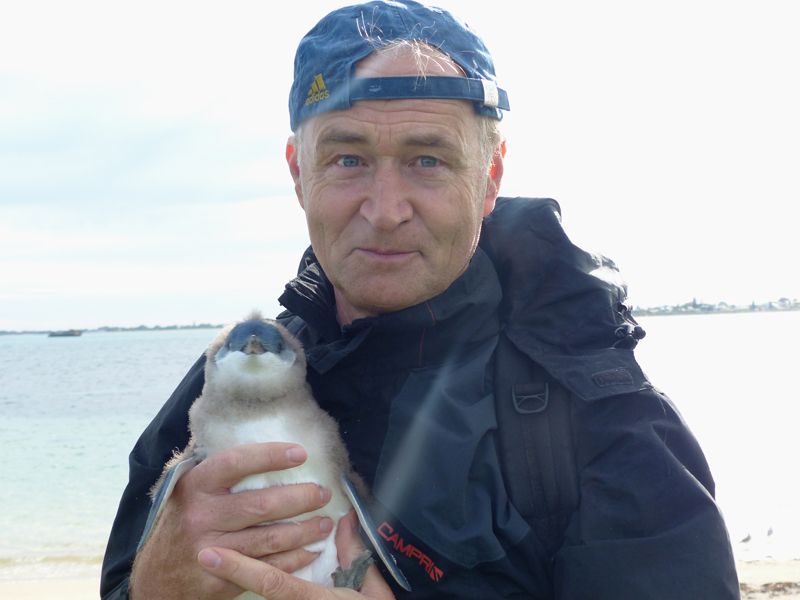
Professor Rory Wilson holds the Chair in Aquatic Biology at the Department of Biosciences, College of Science, Swansea University (UK) since 2004. His extensive career includes research positions at Institut für Meereskunde (Germany), National Institute for Polar Research (Japan), CNRS (France), University of Göteborg (Sweden), and FitzPatrick Institute of African Ornithology (South Africa). Research Focus: Professor Wilson specializes in animal movement ecology, energetics, and conservation technology development. His work integrates biologging, accelerometry, and nanosensors to study foraging strategies, navigation patterns, and energy expenditure across diverse taxa including penguins, seabirds, marine animals, and terrestrial mammals. Key research themes include: Development of non-invasive animal tracking methodologies Energetic consequences of animal movement in changing environments Technological innovations for wildlife conservation Interspecies behavioral comparisons in terrestrial and aquatic ecosystems Publication Trends: Recent works demonstrate strong emphasis on sensor technology advancement (nanosensors, multisensor collars), movement analysis frameworks (dead-reckoning, accelerometry), and climate impact studies on species energetics. Research frequently addresses conservation applications for endangered species. Awards & Honors: ROLEX Award for Research Enterprise (2006) BBC Power List of Top 50 Most Influential Conservationists (2015) Fellow of the Royal Society of Biology (F.R.S.B., 2015) Fellow of the Learned Society of Wales (2015) Professor Wilson leads interdisciplinary collaborations globally, focusing on understanding animal responses to environmental challenges through technological innovation.