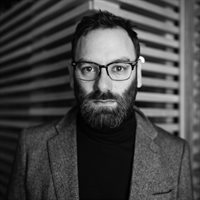
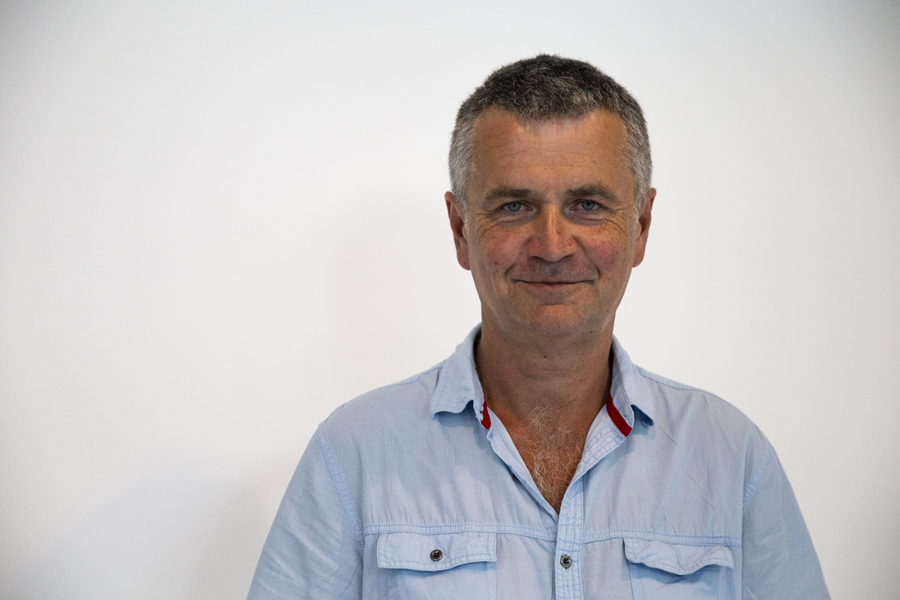
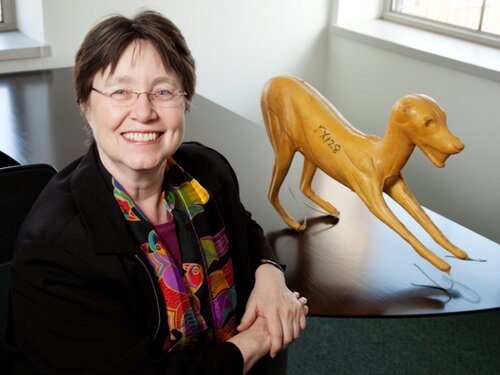
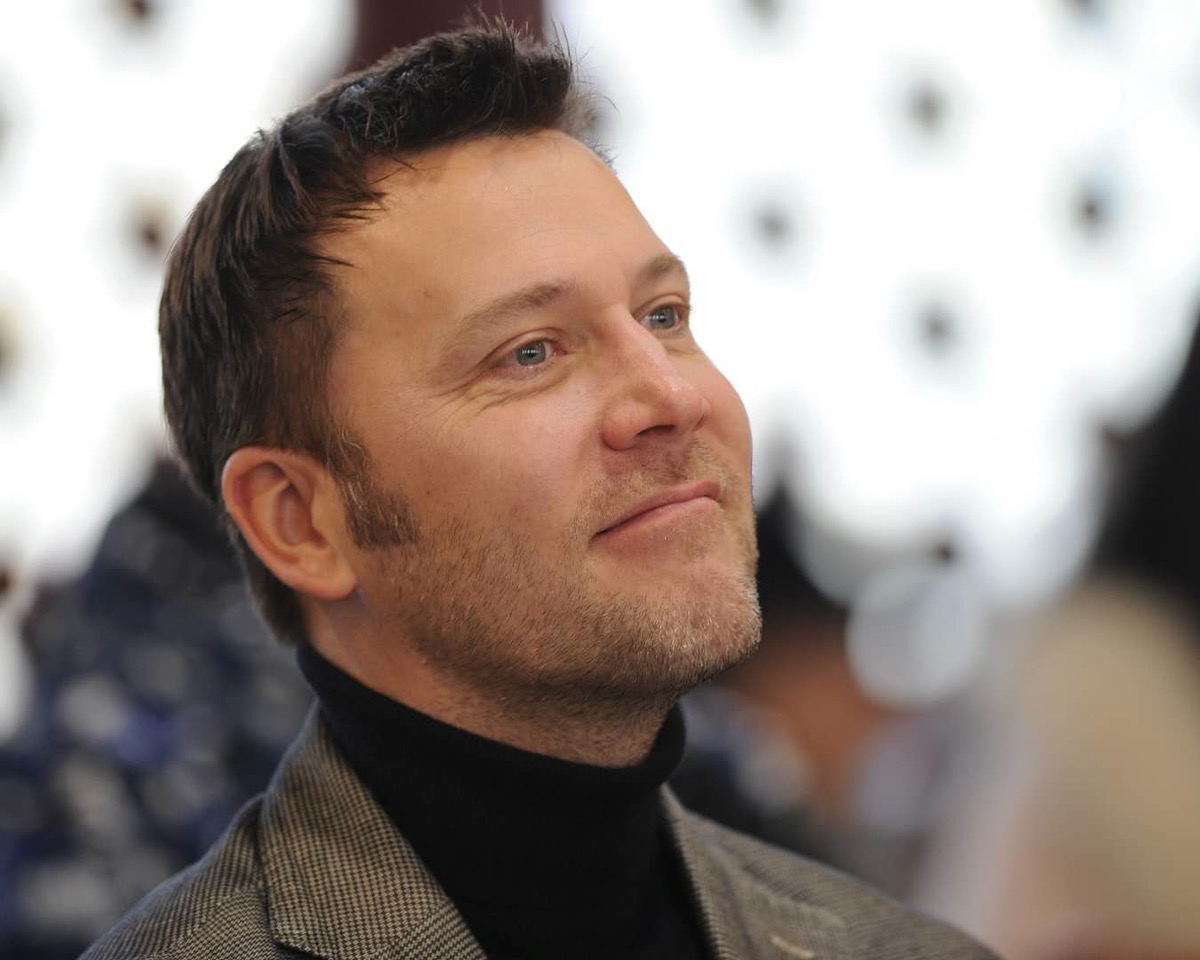
David Grant is a Professor of English at the University of Northern Iowa, affiliated with the College of Humanities, Arts, and Sciences and the Department of Languages & Literatures. His work focuses on decolonial rhetorics, environmental sustainability, and technical communication ecologies, particularly in underserved communities. He has been recognized with the 2024 CCCC Outstanding Teacher Award and serves as a UNI Service Learning Leader and Student Success Advocate. Education: Ph.D., University of Wisconsin-Madison M.A., Northern Arizona University B.A., Winona State University Research Interests: Decolonial and posthuman rhetorics Rhetorical energy and hospitality Indigenous language revitalization (Meskwaki, Dakota) Place-based writing and environmental sustainability His current projects include leading revisions of CCCC and AWAC policy statements and serving on RSA’s Publications Committee. Awards: 2024 CCCC Outstanding Teacher Award UNI Service Learning Leader Student Success Advocate Advising & Leadership: Leads initiatives to decolonize writing curricula and has co-edited Decolonial Conversations in Posthuman and New Material Rhetorics . His work bridges academic and community writing practices through service-learning and rhetorical energy frameworks. Labs/Teams: Directs the revision of AWAC’s statement on AI writing tools and collaborates with the CCCC American Indian Caucus on Indigenous rhetoric initiatives.
Simone Sibilio is an Associate Professor in the Department of Asian and North African Studies at Ca' Foscari University of Venice, where he teaches Arabic Language and Literature. He also holds teaching responsibilities at IULM University in Milan-Rome, delivering courses in Arabic language and translation. His academic engagement spans editorial leadership, research coordination, and international collaboration, particularly in the fields of modern and contemporary Arabic literature, Palestinian poetry, and translation studies. Education: PhD in Comparative Literature, University of Naples "L'Orientale", 2011 Advanced Training Course in Literary Translation from Arabic, SETL, 2005–2006 Advanced Training Course in History and Civilization of Islam, Istituto Italiano per gli Studi Filosofici, 2005–2006 Research Interests: Simone Sibilio's scholarship centers on contemporary Arabic literature, with a strong emphasis on Palestinian poetry, geopoetics, and the literary representation of memory and trauma. He explores themes such as exile, identity, resistance, and intercultural dialogue, particularly through the lens of postcolonial and translation studies. His work often bridges literary analysis with political and historical contexts, especially concerning the Nakba, the Arab Spring, and refugee narratives. He also investigates the role of media and digital platforms in shaping Arab cultural discourse. Publication Trends: His recent publications reveal a deepening engagement with Palestinian poetic voices, especially in times of crisis. He frequently publishes critical introductions, translations, and essays on poets like Mahmoud Darwish, Ghassan Zaqtan, and Najwan Darwish. His scholarly output combines monographic work, editorial projects, and interdisciplinary conference contributions, often focusing on memory, landscape, and poetic resistance in the Arab world. Scientific Engagement: Member of the Editorial Board, Quaderni di Studi Arabi Member of the Editorial Board, series The Great Books of Arabic Literature , Ca' Foscari Editions Member of the Editorial Board, series Translating Wor(l)ds , Ca' Foscari Editions Member of the Scientific Committee, Maydan journal Member of the Scientific Board, EURAMAL (European Association for Modern Arabic Literature) Peer reviewer for journals including Middle Eastern Literature Reviews , Oriente Moderno , and Neohelicon Advising and Grants: While no formal PhD or Master’s students are listed, Sibilio has supervised research projects and participated in evaluation committees for academic positions and research grants. He has been awarded Erasmus ICM grants for academic collaboration in Palestine, reflecting his international engagement and commitment to scholarly exchange in the region. Labs and Research Groups: He is an active member of the Centro Studi sul Medio Oriente Contemporaneo (CEM) at Ca' Foscari and part of the Laboratorio Didattica dell'Arabo in Ricerca (DAR), contributing to national and international research networks focused on Arabic studies and pedagogy.
Dr Ulrich Von Hecker is a Senior Lecturer (Reader) in the School of Psychology at Cardiff University, where he has taught since 2000. He leads research on how spatial processes underpin abstract reasoning and social cognition, focusing on mental models, social hierarchies, and cognitive deficits in depression. Education Diploma in Psychology, University of Hamburg (1986) Ph.D. in Psychology, Free University of Berlin (1992) Habilitation, Free University of Berlin (1999) Research Interests Dr Von Hecker’s work integrates spatial cognition , social cognition , and cognitive psychopathology . He investigates how spatial metaphors (e.g., up-down, left-right) structure our understanding of social hierarchies and abstract categories, and how these mappings vary with cultural factors like reading direction. A second major strand examines constructive mental processes —how people build coherent mental models of novel social groups or networks—revealing the role of logical inference, stereotypes, and reciprocity. Finally, he explores cognitive symptoms of depression , demonstrating that sub-clinical depression selectively impairs the formation of global mental models while sparing detail-level processing. Publication Trends Across more than 60 peer-reviewed articles, three clear streams emerge: (1) experimental studies on spatial representation of order, equivalence, and social status; (2) integrative papers on mental model construction in social contexts; and (3) investigations of cognitive control, fluency, and attention in both healthy and depressed populations. Recent work increasingly employs neuroimaging (fMRI), eye-tracking, and cross-cultural designs. Scientific Awards & Recognition Nominated to ESRC Peer Review College (2010–2012) Empanelled as Research Guide, Christ University, Bangalore (2009–2011) Supervision & Grants Dr Von Hecker currently supervises PhD students including Lukas Wolf (embodiment of social values) and Jin Zixi, and incoming MSc student Maohua Nie. His research has been funded by the German Research Foundation (DFG) , Economic and Social Research Council (ESRC) , Polish Committee for Scientific Research (KBN) , and the Russell Sage Foundation . Teams & Collaborations He heads an active research group and collaborates internationally with scholars such as Geoffrey Haddock (Cardiff), Simon Dymond (Swansea), Ana Guinote (UCL), Elanor Hinton (Bristol), and Karl Christoph Klauer (Freiburg), among many others spanning Europe, North America, and Asia.
David Serfass is a Lecturer at the National Institute of Oriental Languages and Civilizations (INALCO) specializing in Chinese studies. He serves as Co-manager of international mobility, Tutoring Manager, and Referent to the Cross-functional Commission at the institution. His teaching portfolio includes courses on the History of East Asia (19th-20th centuries), Communication and Media in East Asia, Introduction to Ancient Chinese History, Sinological Culture and Practice, Republican China through Texts and Media, and History of Taiwan. Dr. Serfass's research focuses on the History of the Japanese Occupation of China (1931-1945), the History of the Modern Chinese State, Sino-Japanese Relations, and the History of the Sino-Japanese War. His work examines state-building processes during wartime, particularly through the lens of the Wang Jingwei regime and collaboration governments in occupied China. He approaches these topics through spatial history, bureaucratic documentation, and memory studies, revealing how territorial control, administrative practices, and historical narratives shaped wartime China. His scholarly contributions demonstrate a consistent focus on the complexities of political authority during periods of fragmentation and occupation. Rather than viewing the Wang Jingwei regime as merely a Japanese puppet government, Serfass's research reveals the regime's internal dynamics, state-building efforts, and complex negotiations of sovereignty. His work challenges teleological narratives of central state formation in Republican China, highlighting instead the fragmented and contested nature of political authority during this period. Member of editorial board, Études chinoises (2014-2024) Member of editorial board, Terrains de Taiwan Member, ERC project Elites, Networks and Power in Modern China Member, French Taiwan Studies Project Member, Occupation Studies Research Network Dr. Serfass is an active contributor to academic discourse through conference presentations, editorial work, and collaborative research projects. His approach combines traditional historical research with spatial analysis and attention to bureaucratic practices, drawing on Chinese, Japanese, and Western archival sources to provide multi-perspective understanding of wartime China. His work has established him as a significant voice in the field of modern Chinese history, particularly regarding the complex dynamics of occupation, collaboration, and state formation during the Sino-Japanese War period.
Fiona Zisch serves as Associate Professor at The Bartlett School of Architecture, University College London (UCL), holding key roles including Programme Director for the MArch Design for Performance and Interaction and Co-Chair of the UK chapter of the Academy of Neuroscience for Architecture (ANFA). She directs the International Centre for NeuroArchitecture and NeuroDesign and leads research at UCL's BodyLab. Her academic trajectory spans positions at the University of Innsbruck, University of Greenwich, University of Westminster, and University of Plymouth. Her educational foundation includes a Dipl. Ing. in Architecture (BSc/MSc equivalent) from the University of Innsbruck and Lunds Tekniska Hogskola, followed by a PhD from UCL's Bartlett School of Architecture and Institute of Behavioural Neuroscience. Zisch's transdisciplinary research explores cognitive ecologies through the integration of architecture, cognitive neuroscience, experimental psychology, philosophy of mind, critical theory, and cyberfeminism. Central to her work is the concept of wickedness and wicked thresholds —dynamic spaces of transformation where discovery emerges through reciprocity between neural spatial construction, architectural design concepts, and experiential qualities. Her investigations into embodied cognition examine how movement and bodily presence shape architectural experience, informed by her background in dance and collaborations with choreographers across spatial and temporal scales. Analysis of her 15 most recent publications reveals a dominant interdisciplinary trajectory merging architectural design with neuroscience. Key trends include neural mechanisms of spatial aesthetics, comparative studies of real/virtual environments, and the application of neuroarchitecture to equitable design. Her work consistently addresses spatial memory distortions , embodied navigation , and affective responses to built environments, while expanding into exhibition-based explorations of care ethics, disruption, and societal transformation through art-technology collaborations. Zisch supervises PhD candidates in UCL's Architectural Design MPhil/PhD programme and cross-departmental students in Neurology and Behavioural Neuroscience. Her teaching emphasizes 5EA cognition (extending 4EA models to incorporate Entanglement) and atmospheric design within performance-oriented architectural education. She actively contributes to international academic discourse through lectures, workshops, and external examination roles. She leads the BodyLab at UCL Here East, a transdisciplinary research space investigating the intersection of architectural design, neuroscience, and movement studies. The lab fosters collaborations with neuroscientists, choreographers, and technologists to develop experimental frameworks for understanding embodied spatial cognition through both physical and virtual environments.
Dr. Ramakrishna Chakravarthi is a Senior Lecturer at the School of Psychology, University of Aberdeen, where he leads the Consciousness, Attention, and Perception (CAP) Lab. His research focuses on the neural processes underlying visual perception, particularly object recognition, attention, short-term memory, and visual crowding. He employs psychophysics, EEG, and computational techniques to investigate fundamental questions about how we perceive and process visual information. Chakravarthi's research interests center on visual crowding as a window into object recognition mechanisms. His work examines how visual features are detected and integrated to form coherent object representations, with particular attention to spatial attention, numerosity processing, and time perception. His lab investigates neural oscillations in attention and awareness, the neural basis of crowding, subitization processes, and time perception using advanced methodologies including Steady State Visual Evoked Potentials, Multivariate Classifiers, and Representational Similarity Analysis. Analysis of his recent publications reveals a consistent focus on visual crowding as a fundamental phenomenon for understanding object recognition. His work spans multiple levels of analysis from behavioral psychophysics to neural mechanisms, with increasing integration of computational approaches. Recent research has expanded into social aspects of perception, particularly social agency and temporal binding in social interactions, while maintaining his core focus on visual processing mechanisms. Dr. Chakravarthi has successfully secured significant research funding, including a £344,000 BBSRC grant as co-PI on 'Neural mechanisms of long-range spatial vision' and multiple smaller grants totaling over £20,000. He has supervised numerous PhD students to completion and currently mentors several doctoral candidates across diverse projects related to visual perception, attention, and consciousness. The CAP Lab, which he directs, is part of the Perception and Attention theme at the University of Aberdeen's School of Psychology. The lab maintains active research programs in visual crowding, attentional mechanisms, object recognition, and time perception, utilizing state-of-the-art psychophysics and EEG facilities. Chakravarthi also coordinates the Perception and Attention group meetings, fostering collaboration among researchers with related interests.
Paulo Raposo is an Assistant Professor in the Department of Anthropology at ISCTE-University Institute of Lisbon, where he also serves as an Integrated Researcher at CRIA-Iscte (Networked Center for Research in Anthropology). He is the Director of the Audiovisual Laboratory at CRIA-ISCTE and has held leadership roles including Vice-President of CRIA and Director of the CRIA-IUL Center (2018-2021). His academic career includes visiting professorships at Federal University of Santa Catarina (UFSC) in Brazil (2009-10 and 2017-18) and Fluminense Federal University (2014). His educational background includes: PhD in Anthropology (2003) from ISCTE-University Institute of Lisbon Master's degree in Anthropology (1994) from ISCTE-IUL Research Internships at Ecole des Hautes Etudes en Sciences Sociales, Paris (1991, 1994) Bachelor's degree in Anthropology (1983-1987) from ISCTE-University Institute of Lisbon Dr. Raposo's research focuses on the intersection of anthropology, performance, and political activism. His work spans several key areas including Anthropology of Performance, Visual Anthropology, Anthropology of the Body, Social Movements, Digital ethnography, Tourism and Heritage, and Ritual Studies. He has conducted extensive fieldwork in Portugal, Spain, and Brazil, examining cultural performances, artistic practices, and political activism within contemporary urban contexts. His recent work increasingly engages with decolonial perspectives, examining difficult memories and disputed pasts, particularly in postcolonial contexts and urban resistance movements. His publications reveal a clear trajectory toward examining how cultural practices intersect with political resistance, particularly through artivism (artistic activism), urban interventions, and heritage politics. His 2023-2024 publications demonstrate particular focus on decolonial approaches to heritage, queer political practices, and the role of performance in social movements. Among his notable scientific contributions: Research on the 'Museum of the Liberation Struggle in Luanda' examining heritage spectacularization Projects on Social Inclusion Theater working with adults with mental illness Work on Justice, equality and the rights of migrant women through artistic practices Studies on urban interventions and public anthropology Dr. Raposo actively collaborates with theater organizations and cultural events, bridging academic research with practical cultural interventions. His work demonstrates a commitment to public anthropology that engages directly with social challenges through collaborative and participatory methodologies, including visual and digital approaches to ethnographic research.
Dr. Marie Kawthar Daouda serves as a Stipendiary Lecturer in French at Oriel College, University of Oxford, where she teaches both literature and language courses across the undergraduate curriculum. Her academic work is situated within the French Department of Oxford's Faculty of Medieval and Modern Languages, one of the leading language departments in the UK. Dr. Daouda completed her academic training in French and English literature at La Sorbonne and the Université de Bretagne Occidentale. She earned her PhD with a thesis titled "L'Anti-Salomé, représentations de la féminité bienveillante au temps de la Décadence (1850-1920)", which was published as a monograph by Oxford, Peter Lang in 2020. Her second book project, "La Prière désespérée, de Baudelaire à Bernanos", is forthcoming from Garnier, continuing her exploration of spiritual dimensions in French literary tradition. Dr. Daouda's research focuses on challenging conventional understandings of femininity in literary history, particularly examining benevolent feminine figures in fin-de-siècle novels who counter the dominant "femme fatale" stereotype. Her work spans multiple interdisciplinary domains including the evolution of exoticism and orientalism from the Napoleonic era to the Third Republic, intersections between visual arts and literature, children's literature of the Second Empire, and the religious dimensions of literary works from the late 18th century through the 1930s. She demonstrates particular expertise in the literary movements of Naturalism, Decadence, and Symbolism and their complex interrelationships. Her scholarly publications reveal a consistent engagement with French literary traditions from the 19th and early 20th centuries, with special attention to Baudelaire's enduring influence, the reinterpretation of classical myths and fairy tales, and the complex relationship between religious thought and literary production. Dr. Daouda's research methodology demonstrates remarkable interdisciplinary breadth, connecting literary analysis with historical, theological, psychological, and gender studies perspectives to examine how literary figures negotiate authority, legitimacy, and creative expression within specific historical contexts. Monograph: "L'Anti-Salomé, Représentations de la féminité bienveillante au temps de la Décadence (1850-1920)", Oxford, Peter Lang, 2020 Monograph (forthcoming): "La Prière désespérée, de Baudelaire à Bernanos", Paris, Garnier As an educator, Dr. Daouda teaches across the full undergraduate curriculum at Oxford, covering Prelims Papers I-IV and Finals Papers I, II, VIII, and X. Her teaching spans major periods of French literature, from 17th-century works by Pascal and Racine to 20th-century texts by Proust and Camus. She has developed particular expertise in fin-de-siècle literature, teaching both canonical figures like Baudelaire and Mallarmé alongside less-studied authors such as Rachilde, Vivien, and Lorrain. Additionally, she serves as the Visiting Students Coordinator at Oriel College, supporting international students in their academic journey at Oxford.
David Madden is an Associate Professor in Sociology and Director of the Cities Programme at the London School of Economics (LSE). He holds a PhD from Columbia University and specializes in Urban Studies, Political Sociology, and Social Theory. His research focuses on housing crises, urban restructuring, and critical urban theory, with ethnographic and archival work in New York City and London. Key publications include the influential book *In Defense of Housing: The Politics of Crisis* (2016, Verso) and articles in *Environment & Planning*, *City: Analysis of Urban Change*, and *Sociologica*. His work critiques neoliberal urbanism, financialized housing markets, and urban exhaustion under late capitalism. Research Interests: Housing policy, public space politics, urban social movements, global urbanization, and critical theory. Teaching: Co-directs the MSc City Design and Social Science Programme and teaches modules on Urban Society, Urban Social Theory, and City Design Research. Contributions: Active in public discourse through *The Guardian*, *Jacobin*, and policy-oriented writing. He leads the Urban Sociology research cluster at LSE and collaborates internationally on projects addressing housing inequity and urban futures.
Dr. Rosanne Rademaker is a Research Professor and Group Leader at the Rademaker Lab, part of the Ernst Strüngmann Institute (ESI) in Frankfurt, Germany, affiliated with Goethe University’s Department of Psychology. Her research focuses on understanding how sensation and cognition interact to shape human perception, particularly in visual working memory, attention, and physiological arousal states. Her lab employs behavioral, computational, and neuroimaging techniques (fMRI, M/EEG) to explore how the brain balances perceptual input with stored memories. In addition to foundational work on memory and attention, the lab investigates context effects on perception, motor-output impacts on visual processing, and computational neural principles. Rosanne emphasizes collaborative, fun science, fostering an inclusive environment through outreach and international collaborations. Key recent work includes studies on categorical representations in the visual hierarchy and neural dynamics during memory recall. Lab Members: Giuliana Giorjiani (PhD), Noa Noelle Krause (MSc), Amit Rawal (PhD), Maria Servetnik (PhD), Nursima Ünver Aydingül (PhD). Grants & Collaborations: Mishal Qubad’s “Junior Clinician Scientist” grant on schizophrenia visual maps, international collaborations with Toronto and the Max Planck School of Cognition. Teaching: Lectures on “Introduction to Cognitive Psychology” at Goethe University. Publications highlight her work in Nature Neuroscience , eLife , and Journal of Cognitive Neuroscience , with over 30 peer-reviewed articles. The lab actively engages in conferences (VSS, ECVP) and hosts annual retreats to promote scientific exchange.
Elisa Ciaramelli is a Full Professor in the Department of Psychology 'Renzo Canestrari' at the University of Bologna. Her research focuses on neuropsychology, cognitive neuroscience, and memory disorders, particularly investigating the roles of the ventromedial prefrontal cortex (vmPFC) and hippocampus in episodic memory and mental time travel. She holds editorial roles in journals like Frontiers in Psychology and Experimental Brain Research , and has received prestigious awards including the Laird Cermak Award. Education: 2006: PhD in Psychology, University of Bologna 2005: Visiting PhD student, University of Toronto 2002: Degree in Experimental Psychology (Summa Cum Laude), University of Florence Research Interests: Elisa’s work explores how brain regions like the vmPFC and hippocampus underpin memory formation, retrieval, and future thinking. She investigates disruptions in these processes due to brain lesions, aging, and neurological disorders. Her lab (MEMORY Lab) focuses on translational research linking cognitive neuroscience to clinical applications. Grants & Awards: PRIN Grant (2022–2025) on neural mechanisms of future-oriented decision-making Marie Curie Fellowships (2007–2010) Elected Member of the Memory Disorders Research Society (2014) Academic Service: She coordinates the Master’s program in Neuroscience and Neuropsychological Rehabilitation, leads the Science of the Mind summer program (Bologna-UC Davis), and serves on departmental committees. Lab & Collaborations: The MEMORY Lab collaborates internationally, including with York University (Toronto) and UC Davis (USA). Ongoing projects include studies on temporal processing, decision-making under risk, and the neural basis of self-schema.
Jozsef Csicsvari is a Professor at the Institute of Science and Technology Austria (ISTA), where he leads a research group focused on Systems Neuroscience since 2011. Prior to this, he held positions as MRC Senior Scientist at the University of Oxford (2003-2011) and Postdoctoral Fellow at Rutgers University (1999-2002). His academic journey began with a PhD in Behavioral and Neural Sciences from Rutgers University in 1999 and a Diploma in Informatics from the Technical University of Budapest. His research interests center on memory formation and neuronal circuit mechanisms , particularly how hippocampal networks implement spatial learning and memory stabilization . His group investigates the mnenomic role of neuronal populations in brain regions involved in spatial memory, using optogenetics and multi-neuronal recordings during spatial tasks and sleep. Key themes include hippocampal oscillations , cell assembly interactions , and neuronal plasticity . Scientific trends in his recent publications reveal a deep exploration of theta oscillations , hippocampal-prefrontal interactions , and spatial memory coding . His work employs optogenetic techniques to dissect neuronal circuit dynamics and memory reactivation mechanisms. Honors and Awards include the ERC Starting Grant (Consolidator level) and the Title of Professor in Neuroscience at the University of Oxford. His advisory role extends to 6 PhD students and postdoctoral researchers at ISTA. He also contributes to scientific governance as Head of IST Animal Welfare Council and Editorial Board member of PLOS Biology.
Jane Desmond is a Professor in Anthropology and Gender and Women's Studies at the University of Illinois Urbana-Champaign, where she also holds appointments in the Unit for Criticism and Interpretive Theory, the Center for Global Studies, and the College of Veterinary Medicine. She serves as Co-founder and current Director of the International Forum for U.S. Studies, a center dedicated to the Transnational Study of the United States. Her interdisciplinary work bridges anthropology, performance studies, and human-animal relations, with a particular focus on embodiment, display, and social identity from transnational perspectives. Education: Ph.D. in American Studies, Yale University (1993) M.Phil. in American Studies, Yale University (1991) M.F.A., Sarah Lawrence College B.A. in Music and Dance, Brown University (1973) Desmond's research spans multiple interconnected fields with a consistent focus on embodiment and representation. Her early work examined tourism and performance in sites like Waikiki and Sea World, analyzing how bodies are displayed and interpreted in cultural contexts. This evolved into broader investigations of visual culture, museum studies, and the transnational dimensions of U.S. Studies. More recently, her work has centered on human-animal relations, exploring the political economy of these relationships through lenses of performance, display, and embodiment. She has pioneered interdisciplinary approaches that bring together anthropology, critical theory, and creative practice, informed by her background as a professional modern dancer and choreographer. Her scholarship consistently engages with questions of how embodied practices come to have social meaning and how these meanings circulate in public discourse. Desmond's publications reveal a trajectory from performance studies and tourism analysis toward increasingly interdisciplinary explorations of human-animal relations. Her work demonstrates consistent engagement with questions of embodiment, display, and representation across different cultural contexts. There's a clear movement from analyzing human performance to examining human-animal boundaries, with particular attention to how death, display, and value are negotiated in cultural contexts. Her scholarship bridges academic and public spheres, with contributions to mainstream media outlets like CNN.com, The Washington Post, and Huffington Post alongside traditional academic publications. Scientific Awards: University of Edinburgh Center for Advanced Study Fellowship Appointment (spring 2019) UIUC Arnold O. Beckman Award for Research (2018) UIUC Center for Advanced Study tenured faculty Fellowship and Associate Appointment (2016) Faculty Associate-in-Residence at UIUC Center for Advanced Studies (2010-2011), leading "Knowing Animals: Histories, Strategies and Futures in Human-Animal Relations" Humanities Research Institute Faculty Scholar at UIUC (2009-2010) "Eminent World Scholar" appointment at Beijing Foreign Studies University (2009) President of International American Studies Association (2007-2011) Professor Desmond has secured significant research funding from major foundations including the Hewlett Foundation, Ford Foundation, and Rockefeller Foundation. She has mentored numerous graduate students through her teaching of courses like "Performance Studies," "The Craft of Research," and "Knowing Animals: Histories, Strategies and Frontiers in Human/Animal Relations." Her interdisciplinary approach has fostered collaborations across departments and colleges. She is the Founding Resident Director of the international Summer Institute in Animal Studies at UIUC and the founder of the Animal Lives Book Series at the University of Chicago Press, establishing important infrastructure for advancing scholarship in human-animal studies.
Professor Markus Messling holds the Chair of Romance and General Literature and Cultural Studies at Saarland University's Faculty of Philosophy. He is a founding member and collegium member of CEUS since 2021 and currently serves as Director of the Käte Hamburger Kolleg for Cultural Practices of Reparation (CURE) since April 2024. His academic career spans prestigious institutions including Humboldt-Universität zu Berlin and Freie Universität Berlin. PhD in Romance Philology, Freie Universität Berlin (2007) Habilitation, Universität Potsdam (2015) ERC Consolidator Grant recipient (2019-2024) Member of Academia Europaea Professor Messling's research centers on the cultural-historical and cultural-theoretical foundations of European self-reflection and its global relationships. His work critically examines universality thinking after European universalism, Mediterranean studies as public space, and the intersections of philology with colonial knowledge production. His scholarship demonstrates a consistent engagement with postcolonial theory, decolonial approaches to literature, and critical examinations of racism in European intellectual history. His recent publications reveal a strong trajectory in universalism studies, with particular focus on Francophone literatures as sites of alternative universalisms. The 'Rhinozeros' journal series he co-edits explores European transition through various thematic lenses including reparation, property, dreaming, and housing. His monograph 'Champollion's Hieroglyphs' represents a significant contribution to understanding the relationship between philology and colonial world appropriation. ERC Consolidator Grant 'Minor Universality. Narrative World Productions After Western Universalism' (2019-2024) DFG Emmy Noether-Nachwuchsgruppe 'Philologie und Rassismus im 19. Jh.' (2009-2014) Member of Academia Europaea Professor Messling has directed major collaborative research initiatives including the Franco-German Youth Office-funded 'Penser la Méditerranée ensemble – trans-Mediterranean youth policy' (since 2022) and the Käte Hamburger Kolleg CURE (since 2024). His editorial work on the 'Rhinozeros' yearbook series has created an important platform for interdisciplinary European studies. His international collaborations span institutions including EHESS Paris, University of Cambridge, School of Advanced Study/University of London, and Universität Kobe in Japan, reflecting his transnational scholarly approach. As Director of the Käte Hamburger Kolleg CURE, Professor Messling leads a major research team focused on cultural practices of reparation. This interdisciplinary center brings together scholars from multiple European and global institutions to examine reparation not merely as legal or financial concept but as cultural practice across historical and contemporary contexts.
Johan Redström is a Professor of Design at the Umeå Institute of Design (UID), part of Umeå University. He has led UID's PhD program and research strategy since 2012 and served as its Rector from 2015 to 2018. His academic journey spans philosophy, electronic music, and design, with a PhD in philosophy and a focus on design research since 2001. Current roles include adjunct professorships at the University of Borås and the Royal Academy of Fine Arts. Research interests center on experimental design practices, sustainable development, and critical theory. He explores how design can address post-industrial challenges through prototyping new practices, questioning foundational concepts like 'form' in dynamic processes. Major projects include the UmArts Art & AI initiative (2023-2028) and 'Designing Democratic Digital Futures,' focusing on algorithmic accountability and contestation. Teaching emphasizes PhD-level design research, including courses on research methodologies, philosophy of design, and design history. He currently supervises 8 PhD students. Notable research outputs include 2024 publications on more-than-human design, AI ethics, and decolonial design frameworks. His work bridges theory and practice, advocating for socially engaged and ethically mindful design. Key contributions include rethinking 'Terms of Service' through design interventions and exploring hauntology in AI systems. UID's interdisciplinary environment supports his mission to advance design as a critical and transformative discipline.