Asli Niyazioglu is an Associate Professor in Ottoman History at the University of Oxford's Faculty of Oriental Studies and a Fellow by Special Election. Originally from Istanbul, she taught there for nearly a decade before joining Oxford. She completed her studies at Harvard University and held a research fellowship in Berlin. Her research focuses on cultural history of the early modern Ottoman Empire, with special emphasis on three interconnected domains: Dream narratives and their role in historical biography Urban imaginaries and community formation in Istanbul Life writing practices among Ottoman scholars and poets She is currently developing a monograph exploring how imagination shaped urban communities in early modern Istanbul, examining how poets, scholars and Sufis created shared cultural spaces through dream interpretation and biographical traditions. Her publications demonstrate consistent focus on Ottoman cultural history with recent work examining: Cosmographical interpretations of Istanbul's ancient monuments (2023) Sufi spatial practices and urban experience (2021) Biographical traditions as community-building tools (2017)
Joshua Trachtenberg is a Professor in the Department of Neurobiology at the School of Medicine, University of California Los Angeles (UCLA) . His research focuses on understanding how early sensory experiences shape synaptic and network connectivity in cortical circuits, particularly in the visual system. Key Research Areas: Mechanisms of experience-dependent cortical plasticity Role of vision in neural circuit development Molecular pathways in autism-related models Inhibitory interneuron dynamics Long-term in vivo imaging of dendritic spines Recent Publications highlight studies on dendritic spine clustering, critical period plasticity, and retinal cell type evolution, with methodologies spanning multi-photon imaging and single-cell transcriptomics. Funding Highlights: NIH R01EY027407 (Disinhibition & Visual Plasticity) NIH R01EY023871 (Inhibitory Circuit Regulation) NIH R01MH082935 (PTEN-Associated Autism Models) Labs & Collaborations include work with the Silva, Golshani, and Geschwind groups, focusing on synaptic stability, cortical dysfunction, and autism-related protein studies.
Dr. Lora Sariaslan is an Assistant Professor of Modern and Contemporary Art at Utrecht University's Department of History and Art History, affiliated with the Humanities Research Institute. She holds a PhD from the University of Amsterdam and has extensive curatorial experience globally, including roles at the Dallas Museum of Art and Istanbul Modern. Her academic work focuses on transnational art practices, migration, urban mapping, and postcolonial studies. Sariaslan teaches courses such as Curating the Art Exhibition: Past, Present and Future and contributes to programs like the Art History of the Low Countries (RMA). Education: B.A. Art History, Knox College, Illinois M.A. Art History, University of Texas at Austin Ph.D., University of Amsterdam ( Pins on the Map: Urban Mappings in European-Turkish Contemporary Art ) Research Interests: Modern/contemporary art's intersection with migration, cultural identity, and urban space. She explores how artists negotiate belonging through transnational practices, particularly in post-Yugoslav Europe and Turkey. Her work bridges curatorial praxis and academic research, emphasizing critical museum studies and heritage politics. Recent Themes in Publications: Focus on humor in Turkish contemporary art, geopolitical affect through 'oriental rugs,' and artistic responses to displacement. Her articles analyze artists like Mounira Al Solh, Nilbar Güreş, and Servet Koçyiğit, highlighting themes of memory, spatial politics, and cultural hybridity. Affiliations: Member of International Association of Art Critics (AICA), National Correspondent for European Museum Forum (EMF-Turkey). Curatorial projects include Uncharted (Bergen, 2023) and the Mardin Biennial (2012). Teaching & Training: Oversees courses on global art history, museum studies, and transcultural encounters. Previously taught at University of Texas at Austin and University of Amsterdam.
Professor Dawn Lyon is a Professor of Sociology at the University of Kent's School of Social Policy, Sociology and Social Research. She joined the university in 2006, previously working at the University of Essex, European University Institute, Paris V, and Vrije Universiteit Brussel. Her PhD in Sociology was completed at the European University Institute in 2003. She has held visiting roles at institutions including the Australian National University and Goldsmiths, University of London. Her research focuses on the sociology of work, time, and everyday life, with a particular emphasis on rhythmanalysis. She has pioneered audio-visual ethnography in studies like Billingsgate Fish Market and led projects on pandemic time during the COVID-19 crisis. Her work explores how work rhythms intersect with temporal and spatial organization, using innovative methods such as 'feel tanks' and creative participatory approaches. Lyon is a Leverhulme Research Fellow and has taught modules on qualitative research, visual sociology, and the sociology of time. She supervises doctoral students in areas ranging from labor markets to digital technologies and voluntary action. Her research has been supported by grants from the British Academy and others. Publications span over 50 entries in journals like Sociological Review and Time & Society , books including What is Rhythmanalysis? (2019), and edited collections. She serves on the editorial boards of Qualitative Research and Time & Society . Lyon’s work bridges theory and practice, emphasizing interdisciplinary approaches to understanding time, space, and social change. Collaborative projects like Imagine Sheppey and A Day at a Time highlight her commitment to community engagement and methodological innovation.
Frederick Steiner serves as Dean and Paley Professor at the University of Pennsylvania Stuart Weitzman School of Design. A globally recognized leader in ecological design and urban planning, he previously led the University of Texas at Austin School of Architecture for 15 years. His academic roles span teaching at Penn, Arizona State University, and Tsinghua University. A Fellow of the American Society of Landscape Architects and the Council of Educators in Landscape Architecture, he has held prestigious fellowships including a Rome Prize at the American Academy in Rome. Steiner earned his PhD and MA in City & Regional Planning from the University of Pennsylvania, alongside a BS in Design and MRP from the University of Cincinnati. He co-founded the Ian L. McHarg Center for Urbanism & Ecology, advancing sustainable design principles. His research focuses on ecological urbanism, megaregion planning, and sustainable land management, with notable contributions to the Sustainable SITES Initiative. His work integrates ecological science with urban development, emphasizing resilience and equity. Key areas include climate adaptation, historic preservation, and community-driven planning. He has advised on major initiatives like Austin’s Comprehensive Plan and the University of Texas campus strategy. Steiner’s accolades include an honorary MPhil from the College of the Atlantic and the UC College of Design’s Outstanding Alumni Award. His publications explore topics from McHarg’s legacy to megaregional governance, reflecting a commitment to bridging ecological and urban systems.
Prof. Dr. Reyhan Çelik is a full professor at Akdeniz University, Faculty of Letters, Russian Language and Literature Department since 2023, with prior associate professor (2015–present) and assistant professor (2007–2015) positions at Erciyes University. She holds a doctorate in Russian Language and Literature from Ankara University (2007) and has authored/co-authored over 64 publications. Education: PhD (2007), Ankara University MA (2001), Ankara University BA (1995), Ankara University Research Focus: 20th-century Russian literature War narratives Siberian and village themes Gender studies Migration and cultural identity Comparative Turkish-Russian literary analysis Academic Leadership: Head of Russian Language and Literature Department (Akdeniz University, since 2018) Scientific Projects Committee Member (Akdeniz University, since 2019) Key Publications (2014–2021): World War II memory in Soviet works Gender representation in Ulitskaya and Yevtushenko Ecological themes in Astafyev and Aitmatov Analysis of Gumilyov’s orientalist perspectives Conference Participation: Chair/speaker at 20+ international conferences Peer reviewer for journals: RumeliDE, Karadeniz, Sosyal Bilimler Enstitü Dergisi
Stephen Shapiro is Professor of English Literature at the University of Warwick, specializing in American literature, cultural studies, and Marxist theory. His academic journey began with a chemistry degree in New York State before shifting to English literature, with studies at Birmingham University's Department of Cultural Studies and research at the Gramsci Institute in Rome. Prior to Warwick, he taught at Harvard University, the New School, and John Jay College for Criminal Justice (CUNY), and has held prestigious fellowships including a Fulbright at Saarland University (1997-98), a Royal Shakespeare Company/Capital Fellowship (2008-09), and fellowships at UC Irvine, Heidelberg University, and Babeș-Bolyai University. First degree in Chemistry (New York State) Graduate studies in English Department of Cultural Studies (Birmingham University, England) Research at Gramsci Institute in Rome Shapiro's research spans American literature, cultural studies, Marxism, world-systems analysis, urban studies, spatial theory, and television studies. His current book projects include The Cultural Fix: Marx and the Organic Composition of Capital , which bridges French and English editions of Marx's Capital , and The Twist: Capital, Data, and Cultures of the Intersectional Left , analyzing contemporary capitalist temporalities. He is also working on a critical edition of Charles Brockden Brown's Memories of Stephen Calvert , examining early American literature's treatment of male-male sexuality. His scholarship consistently connects literary analysis with political economy, exploring how cultural forms engage with capitalist structures. Shapiro's recent publications reveal a trajectory from traditional literary studies toward increasingly interdisciplinary work that integrates world-systems theory, digital capitalism, and intersectional politics. His scholarship demonstrates a consistent engagement with Marxist theory while expanding into analyses of algorithmic governance, zombie studies, and the cultural politics of horror. The 2020-2025 publications show particular focus on how literary and cultural forms interact with contemporary crises of capitalism, including data-driven neoliberalism, resurgent fascism, and intersectional left movements. Best Collection Award 2019, British Association for Contemporary Literary Studies (BACLS) Honorable Mention, BAAS prize for best book in American Studies published during 2008 Shapiro has been actively involved in collaborative scholarly projects, particularly through his work with Philip Barnard on Charles Brockden Brown editions and with the Warwick Research Collective (WReC). He co-founded the Warwick Centre for Global Jewish Studies and has contributed to institutional initiatives including the successful application for Warwick's Race Equality Charter Mark (Bronze). His editorial work spans numerous collections that bridge literary studies with political economy, cultural theory, and world-systems analysis. Shapiro is a founding member of the Warwick Research Collective (WReC), which has produced influential work on combined and uneven development in world literature. He serves on the university's Race Equality Taskforce and was instrumental in securing Warwick's Race Equality Charter Mark. His involvement with the WReC demonstrates his commitment to moving beyond traditional literary and cultural studies frameworks toward more globally oriented, politically engaged scholarship that connects literary analysis with economic and ecological concerns.
Daragh Byrne is an Associate Teaching Professor at the Carnegie Mellon University School of Architecture , with courtesy appointments in the School of Design and Human-Computer Interaction Institute (HCII) . Previously an Assistant Research Professor at Arizona State University’s School of Arts, Media and Engineering, he manages the NSF-funded XSEAD project and leads MakeSchools , a catalog of making practices in higher education. PhD in Digital Media from Dublin City University (2011) M.Res. in Design and Evaluation of Advanced Interactive Systems from Lancaster University B.Sc. in Computer Applications from Dublin City University His research explores experiential media systems through Internet of Things and tangible interaction design , focusing on how computational tools can capture human experience and enable multidisciplinary collaboration. Key projects include Sentient Concrete (thermochromic architectural surfaces) and Spooky Technology (speculative design around invisible technologies). He has developed CMU’s Designing for the Internet of Things course since 2016, creating hands-on curricula for connected product design. Recent publications examine creative physical computing education , AI-driven documentation systems , and XR-enabled skill training . Awards include multiple CMU research grants and the CHI 2018 Best Paper Award . He actively advises PhD and Masters students in Computational Design, emphasizing human-centered design and speculative technology research .
Karin Peters is a Full Professor of Romance Literature and Cultural Studies with a Focus on Ibero-Romania at the University of Bonn since 2023. Her academic journey includes a habilitation at Johannes Gutenberg University Mainz (2021-2022), a doctorate from LMU Munich (2010), and a Magister Artium from the same institution (2006). Her research spans transnational literary history, affect theory, pastoral poetry, and intersections of gender and politics in Spanish and Argentinian literatures. Key projects include co-editing The Face as Scene. Virtuality and Embodiment of Affect and leading the network 'Comic Literacies. Cultural Techniques of the Comic' at KWI Essen. She has supervised doctoral work on Iberoamerican Baroque theater and published extensively on Roland Barthes, Georges Bataille, and contemporary Latin American narratives. Her recent publications analyze the European myth of the emotional subject, pastoral masks in Cervantes, and affective economies in 18th-century literature. She has received scholarships from DAAD, Studienstiftung des deutschen Volkes, and e-fellows.net, and actively contributes to academic organizations including the Romanistenverband and the Bonn Center for Dependency Studies.
Maria Rizzarelli is a Full Professor of Literary Criticism and Comparative Literature at the Department of Humanities, University of Catania. She teaches Literary Theory, Literature and Visual Culture, and Cultural Journalism. Her research focuses on intermediality, particularly the intersections of literature with photography, cinema, and journalism, as well as gender studies and digital humanities. Education: PhD in Italian Studies (Lexicography and Semantics of Literary Italian), University of Catania, 2001 Laurea in Modern Literature, University of Catania, 1998 (110/110 cum laude) Laurea in Philosophy, University of Catania, 1994 (110/110 cum laude) Her research interests center on 20th-century Italian literature, with emphasis on hybrid genres and the interplay between text and image. She explores how literary works engage with visual media, particularly in the works of authors like Pasolini, Calvino, Sciascia, and Goliarda Sapienza. Her work often addresses gender, performance, and the construction of identity across media. The most recent articles reflect a strong trend in intermedial studies, visual culture, and feminist literary criticism. Themes such as phototexts, simulacra of women, cinematic adaptation, and the 'double talent' of actress-writers recur across her publications. Her scholarship bridges literary analysis with visual theory, media studies, and cultural history. Scientific Awards: Kinomata Prize 2021 for Love and War: Intermedial Paths between Literature and Cinema FFABR 2017 (MIUR funding for scientific productivity) Bando per il Progetto giovani ricercatori 2001 (University of Catania) Maria Rizzarelli supervises PhD students, including Viviana Triscari and Ida Scebba. She has received research grants from the University of Catania and MIUR, leading projects such as Phototexts: Rhetoric, Poetics and Cognition and DIRIS: Disobedienti, ribelli, sovversive nelle letterature tra Oriente e Occidente . She is also the scientific coordinator of the PRIN 2020 project on phototexts and the Catania unit of the PRIN 2017 D.A.M.A. project on actress-writers. She co-founded and co-directs the journal Arabeschi. International Journal of Studies on Literature and Visuality and its book series I quaderni di Arabeschi . She also leads the research group on literature and visuality and coordinates seminars for the Med Photo Fest. Her editorial roles include membership in the scientific committees of Studi Novecenteschi , Studi Pasoliniani , and Over the Rainbow .
Dr. Nicholas Lynch is a Professor of Geography at Memorial University of Newfoundland. As an urban cultural geographer, he investigates social and cultural dynamics of built environments, focusing on historic building reuse, circular economy applications, and sustainable community development. Research examines adaptive reuse of institutional buildings (churches, lighthouses), circular economy implementation in construction, and sharing economy models like libraries of things. His work combines spatial analysis with sustainability transitions in urban contexts. Current projects analyze material flows in urban reuse centers and community-oriented circularity in building sectors. Fieldwork includes studies across Canada examining heritage preservation, demolition practices, and sustainable resource management in cities.
David Grant is a Professor of English at the University of Northern Iowa, affiliated with the College of Humanities, Arts, and Sciences and the Department of Languages & Literatures. His work focuses on decolonial rhetorics, environmental sustainability, and technical communication ecologies, particularly in underserved communities. He has been recognized with the 2024 CCCC Outstanding Teacher Award and serves as a UNI Service Learning Leader and Student Success Advocate. Education: Ph.D., University of Wisconsin-Madison M.A., Northern Arizona University B.A., Winona State University Research Interests: Decolonial and posthuman rhetorics Rhetorical energy and hospitality Indigenous language revitalization (Meskwaki, Dakota) Place-based writing and environmental sustainability His current projects include leading revisions of CCCC and AWAC policy statements and serving on RSA’s Publications Committee. Awards: 2024 CCCC Outstanding Teacher Award UNI Service Learning Leader Student Success Advocate Advising & Leadership: Leads initiatives to decolonize writing curricula and has co-edited Decolonial Conversations in Posthuman and New Material Rhetorics . His work bridges academic and community writing practices through service-learning and rhetorical energy frameworks. Labs/Teams: Directs the revision of AWAC’s statement on AI writing tools and collaborates with the CCCC American Indian Caucus on Indigenous rhetoric initiatives.
Simone Sibilio is an Associate Professor in the Department of Asian and North African Studies at Ca' Foscari University of Venice, where he teaches Arabic Language and Literature. He also holds teaching responsibilities at IULM University in Milan-Rome, delivering courses in Arabic language and translation. His academic engagement spans editorial leadership, research coordination, and international collaboration, particularly in the fields of modern and contemporary Arabic literature, Palestinian poetry, and translation studies. Education: PhD in Comparative Literature, University of Naples "L'Orientale", 2011 Advanced Training Course in Literary Translation from Arabic, SETL, 2005–2006 Advanced Training Course in History and Civilization of Islam, Istituto Italiano per gli Studi Filosofici, 2005–2006 Research Interests: Simone Sibilio's scholarship centers on contemporary Arabic literature, with a strong emphasis on Palestinian poetry, geopoetics, and the literary representation of memory and trauma. He explores themes such as exile, identity, resistance, and intercultural dialogue, particularly through the lens of postcolonial and translation studies. His work often bridges literary analysis with political and historical contexts, especially concerning the Nakba, the Arab Spring, and refugee narratives. He also investigates the role of media and digital platforms in shaping Arab cultural discourse. Publication Trends: His recent publications reveal a deepening engagement with Palestinian poetic voices, especially in times of crisis. He frequently publishes critical introductions, translations, and essays on poets like Mahmoud Darwish, Ghassan Zaqtan, and Najwan Darwish. His scholarly output combines monographic work, editorial projects, and interdisciplinary conference contributions, often focusing on memory, landscape, and poetic resistance in the Arab world. Scientific Engagement: Member of the Editorial Board, Quaderni di Studi Arabi Member of the Editorial Board, series The Great Books of Arabic Literature , Ca' Foscari Editions Member of the Editorial Board, series Translating Wor(l)ds , Ca' Foscari Editions Member of the Scientific Committee, Maydan journal Member of the Scientific Board, EURAMAL (European Association for Modern Arabic Literature) Peer reviewer for journals including Middle Eastern Literature Reviews , Oriente Moderno , and Neohelicon Advising and Grants: While no formal PhD or Master’s students are listed, Sibilio has supervised research projects and participated in evaluation committees for academic positions and research grants. He has been awarded Erasmus ICM grants for academic collaboration in Palestine, reflecting his international engagement and commitment to scholarly exchange in the region. Labs and Research Groups: He is an active member of the Centro Studi sul Medio Oriente Contemporaneo (CEM) at Ca' Foscari and part of the Laboratorio Didattica dell'Arabo in Ricerca (DAR), contributing to national and international research networks focused on Arabic studies and pedagogy.
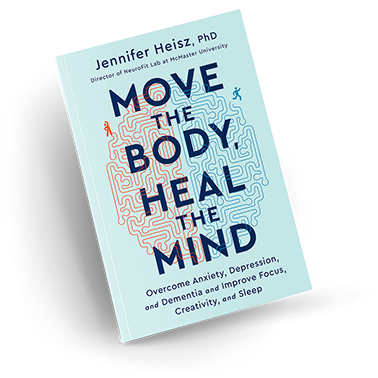
Dr. Jennifer J. Heisz is an Associate Professor and Canada Research Chair in Brain Health and Aging in the Department of Kinesiology at McMaster University. She directs the NeuroFit Lab which examines the effects of physical activity on brain function to promote mental health and cognition across the lifespan, including young adults, older adults, and individuals with Alzheimer's disease. Her research has attracted over $1 million in funding and has significant implications for mental health interventions. Dr. Heisz received her B.Sc. in Honours Biology & Psychology summa cum laude from McMaster University (2000-2004), followed by a Ph.D. in Psychology, Neuroscience & Behaviour from McMaster University (2005-2010). She completed a postdoctoral fellowship in Brain Health and Aging at the Rotman Research Institute, Baycrest Centre (2010-2013). Dr. Heisz's research focuses on the intersection of physical activity, brain function, and mental health. Her work investigates how different types and intensities of exercise impact cognitive processes, emotional regulation, and neurological health. She has made significant contributions to understanding how exercise can prevent and treat conditions such as anxiety, depression, dementia, and cognitive decline associated with aging. Her research often employs innovative methodologies including orienteering (which combines physical exercise with navigation challenges) to examine the interactions between physical activity and cognitive training. Dr. Heisz's recent publications reveal a strong focus on translating exercise science into practical applications for mental health across diverse populations. Her work spans university students, older adults, individuals with ADHD, and those at risk for dementia. A recurring theme is identifying optimal exercise protocols for specific cognitive and mental health outcomes, with particular attention to factors like intensity, timing, and type of physical activity. Canada Research Chair in Brain Health and Aging Early Researcher Award from the Government of Ontario Petro-Canada Young Innovator Award Dr. Heisz has supervised numerous graduate students through her role as instructor for courses including Cognitive Neuroscience of Exercise, Neurophysiology, and Health Psychology. Her research program has secured significant funding, including an Insight Development Grant to evaluate the effectiveness of exercise breaks in classrooms. The NeuroFit Lab has developed evidence-based exercise toolkits for mental health, particularly relevant during the pandemic. As director of the NeuroFit Lab, Dr. Heisz leads a community-driven research program that focuses on understanding how cellular changes impact psychological function. Her team's innovative approach combines neuroscience, kinesiology, and psychology to develop practical interventions that promote mental and physical health across the lifespan, including the development of the book 'Move the Body, Heal the Mind' which synthesizes research on exercise for brain health.
Dr. George Dragoi is an Associate Professor of Psychiatry and Neuroscience at Yale School of Medicine, with affiliations to the Wu-Tsai Institute and the Dragoi Lab. He investigates the interplay between externally driven and internally generated neural representations to understand memory formation and spatial navigation. MD: Grigore Popa University of Medicine, Romania (1994) PhD: Behavioral and Neural Science, Rutgers University (2002) Postdoctoral Studies: Picower Institute, MIT His research focuses on hippocampal-neocortical networks, preconfigured neuronal assemblies, and generative grammars in the brain. He employs large-scale electrophysiology, optogenetics, and computational analysis to study memory mechanisms across development and adulthood, with implications for schizophrenia, autism, and Alzheimer’s disease. Recent publications highlight his work on Euclidean geometry’s role in hippocampal development (2024), memory reactivation during sleep (2024), and predictive coding in hippocampal circuits (2021). Collaborators include Usman Farooq, John Krystal, and Susumu Tonegawa.