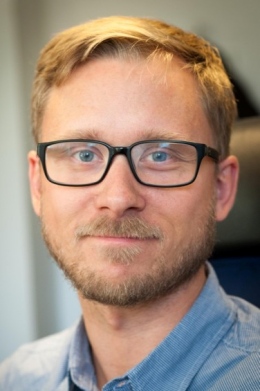
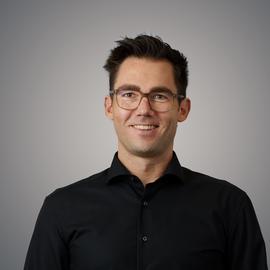
Johan Eklöf is a Professor at Stockholm University within the Department of Ecology, Environment and Plant Sciences . His research emphasizes marine ecology , focusing on interactions between marine biodiversity, environmental conditions (including climate), and societal impacts . He teaches courses such as Management of Aquatic Resources in the Tropics , Marine Ecology for the Biogeo Program , and Ecology II . Research Focus: Causal relationships between biodiversity and ecosystem resilience Foundation species as drivers of ecosystem services Optimizing resource management under climate change Projects: Principal Investigator for FORCE (2023-present), a transdisciplinary Baltic Sea recovery project Contributor to NordSalt (climate impacts on Nordic salt marshes) and PlantFish (Baltic Sea vegetation-fish interactions) Scientific Leadership : Supervises 2 current PhD students and co-supervises 6 additional PhD/postdocs Formerly mentored 4 PhD graduates and >40 MSc students Environmental Context: His work spans Baltic Sea and Western Indian Ocean ecosystems, using seagrass beds , mussel beds , and coastal benthic systems as primary models. Recent publications highlight climate change impacts on trophic cascades , habitat connectivity , and policy frameworks for marine conservation .
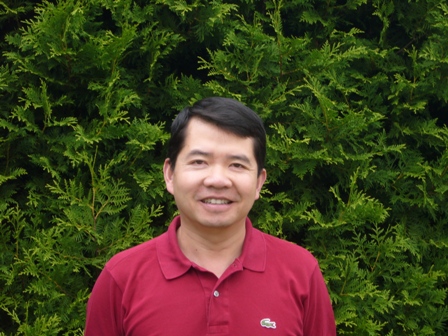
Xiaoming Hu is a Professor at the Division of Numerical Analysis, Optimization and Systems Theory within the Department of Mathematics at KTH Royal Institute of Technology (Kungliga Tekniska Högskolan) in Stockholm, Sweden. Born in Chengdu, China, he received his B.S. degree from University of Science and Technology of China in 1983, followed by M.S. and Ph.D. degrees from Arizona State University in 1986 and 1989 respectively. After serving as a research assistant at the Institute of Automation, Chinese Academy of Sciences (1983-1984), he was a Gustafsson Postdoctoral Fellow at KTH (1989-1990) before becoming a faculty member. His educational background includes: B.S. in Engineering, University of Science and Technology of China, 1983 M.S. in Engineering, Arizona State University, 1986 Ph.D. in Engineering, Arizona State University, 1989 Xiaoming Hu's research primarily focuses on multi-agent systems, nonlinear feedback stabilization, nonlinear observer design, and sensing and active perception. His work bridges theoretical control theory with practical applications in robotics and autonomous systems. He has made significant contributions to geometric control theory, mathematical systems theory, and nonlinear systems analysis and control. His research often involves developing theoretical frameworks for distributed control, formation control, and cooperative behavior in multi-robot systems. Professor Hu's publication record shows a consistent research trajectory with numerous high-impact publications in top-tier journals like Automatica, IEEE Transactions on Automatic Control, and Systems & Control Letters. His research has evolved from fundamental control theory to more applied problems in robotics and multi-agent systems, while maintaining strong mathematical foundations. Recent work shows increasing focus on safety-critical control, inverse problems in estimation, and networked systems. His scientific contributions include: Development of theoretical frameworks for multi-agent coordination and formation control Advances in nonlinear observer design for robotic systems Contributions to geometric control theory and systems theory Research on distributed estimation and control algorithms Applications of control theory to robotics and autonomous systems Professor Hu teaches several advanced courses including Mathematical Systems Theory, Geometric Control Theory, and Nonlinear Systems: Analysis and Control. He has supervised numerous degree projects at both undergraduate and graduate levels in mathematics, optimization, systems theory, and scientific computing. His teaching reflects his research expertise, providing students with both theoretical foundations and practical applications of control theory.
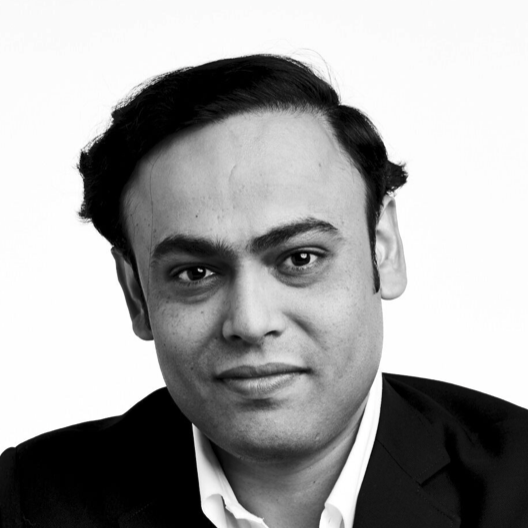
Saurabh Amin is a Professor in the Department of Civil and Environmental Engineering at the Massachusetts Institute of Technology (MIT), where he also serves as the Edmund K. Turner Professor and Undergraduate Officer. He is a Principal Investigator at the Laboratory of Information and Decision Systems and holds affiliations with the Operations Research Center and the Center for Computational Science and Engineering. His educational background includes: B.Tech. 2002, Indian Institute of Technology (IIT) Roorkee M.S. 2004, University of Texas (UT) Austin Ph.D. 2011, University of California (UC) Berkeley Saurabh Amin's research focuses on the design and control of infrastructure systems using game theory and optimization in networks. His work spans three main areas: resilient network control, information systems and incentive design, and optimal resource allocation in large-scale infrastructure systems. By concentrating on critical infrastructure domains including highway transportation, electric power distribution, and urban water networks, his research develops innovative theory and tools to enhance system performance against both stochastic and adversarial disruptions. His approach involves modeling cyber-physical interactions in infrastructures to assess vulnerabilities, developing detection and response tools for failures at various scales, and designing economic incentive schemes that improve aggregate public good while accounting for dependencies and private information among strategic entities. Amin's work bridges mathematical systems theory with practical civil engineering applications, creating a rigorous theoretical foundation for infrastructure resilience that addresses diverse failure mechanisms from natural disasters to deliberate malicious actions. His recent publications demonstrate a strong focus on decarbonization of energy systems, resilient infrastructure planning under climate uncertainty, optimization methods for complex networked systems, and game-theoretic approaches to sustainable infrastructure management. His work increasingly integrates artificial intelligence and machine learning techniques with traditional control theory to address contemporary challenges in infrastructure resilience and sustainability. The research shows a clear trajectory toward addressing climate change impacts on infrastructure systems while maintaining economic efficiency and operational reliability. Professor Amin has received numerous prestigious awards and honors: Common Ground Excellence in Teaching Award, 2025 HSCC Test-of-Time Award, 2024 MIT CEE, Distinguished Service and Leadership Award, 2023 Samuel M. Seegal Prize (SoE) – inspiring students in pursuing and achieving excellence, 2022 Earll M. Murman for Excellence in Undergraduate Advising, 2022 C3.ai Digital Transformation Institute Research Award, 2020 MIT, Ole Madsen Mentoring Award, 2020 MIT, Energy Initiative Research Award, 2020 National Academy of Engineering, China-America Frontiers of Engineering Symposium speaker, 2019 MIT, Robert N. Noyce Career Development Professor, 2015-2018 Google Faculty Research Award, 2015 National Science Foundation CAREER Award, 2015 Siebel Energy Institute Research Award, 2015 MIT, Solomon Buchsbaum AT&T Research Fund Award, 2012 Professor Amin has been actively involved in significant research projects including the C3.ai DTI project on Causal Reasoning for Real-Time Attack Identification in Cyber-Physical Systems and another on Learning in Routing Games for Sustainable Electromobility. He serves as the chief scientist on multi-institutional NSF grants, including the $9 million Foundations of Resilient Cyber-Physical Systems (CPS) project. His teaching portfolio includes courses such as 1.008 Engineering for a Sustainable World, 1.104 Sensing and Intelligent Systems, 1.020 Engineering Sustainability: Analysis and Design, and 1.208 Resilient Networks. As Undergraduate Officer, he plays a key role in shaping the educational experience for civil and environmental engineering students at MIT. Professor Amin leads the Resilient Infrastructure Networks Lab at MIT, where his team develops theoretical foundations and practical tools for infrastructure resilience. The lab focuses on the intersection of control theory, game theory, and optimization applied to cyber-physical infrastructure systems. Current research directions include pandemic-resilient urban mobility and hurricane-resilient smart grid operations, reflecting the lab's commitment to addressing pressing societal challenges through rigorous systems engineering approaches.
Professor Ingrid Undeland leads the Marine research group at the Division of Food and Nutrition Science, Department of Life Sciences at Chalmers University of Technology. She is a distinguished researcher with expertise spanning marine food science, lipid chemistry, and blue biorefining, having established herself as a leading figure in sustainable seafood research and marine biotechnology. Her educational background includes food science studies from Linnaeus University and a PhD in bioscience from Chalmers University of Technology and SIK (now RISE). Between 1999-2002, she was a post-doctoral fellow at University of Massachusetts Marine Station, which significantly shaped her research trajectory in marine food science. Professor Undeland's research focuses on pioneering next-generation seafood through innovative value chains from seaweed, small pelagic fish, fish side streams, mussels, and microalgae. Her specialized expertise lies in marine lipids and proteins, particularly their stabilization, isolation from complex sources, and nutritional properties including digestibility. She has extensive experience with antioxidant strategies using plant-derived side streams or extracts and fundamental studies of fish hemoglobins as pro-oxidants. Her work also encompasses innovative technologies for biomass fractionation and nutrient recycling to build blue biorefineries, along with in vitro digestion models and general seafood analytics. Beyond marine research, she explores filamentous fungi as sustainable alternative food protein sources. The trends in her recent publications reveal a strong emphasis on valorizing marine resources through advanced processing techniques. Her work increasingly focuses on sustainable extraction methods for seaweed proteins, particularly Ulva fenestrata, and developing antioxidant strategies using berry side streams to stabilize fish proteins. There's a growing interest in understanding the nutritional properties and digestibility of alternative marine proteins, along with environmental assessments of processing technologies. Her research consistently bridges fundamental science with practical applications for creating sustainable seafood value chains. Swedish representative in Nordic Lipidforum, WEFTA, and EuCheMS Editorial board member of Journal of the Aquatic Food Product Technology Member of the National Committee for Nutrition and Food Science at the Royal Swedish Academy of Sciences Co-founder of the startup company AquaFood H-index of 47 according to Google Scholar Professor Undeland has an extensive record of academic mentorship, having supervised or currently supervising 23 PhD students, 14 postdoctoral researchers, and examining over 25 MSc students. Her research is supported by numerous grants, including the WaSeaBi Project which focuses on valorizing seafood side-streams through holistic value chain design. She collaborates with various industry partners and academic institutions across Europe. Her laboratory includes technicians Dr. Karin Larsson and Dr. Rikard Fristedt, and she leads a dynamic research team working on multiple projects related to marine biorefining and sustainable seafood development. Her research group operates within well-equipped facilities at Chalmers University, with specialized laboratories for marine food analysis, protein extraction, lipid oxidation studies, and in vitro digestion modeling. The team also maintains cultivation systems for seaweed and filamentous fungi, enabling integrated research from raw material production to final product development.
Anders Karlström is a Professor at KTH Royal Institute of Technology, specializing in Transport Modelling and Economics. His research focuses on sustainable transportation systems, emissions reduction, and energy efficiency. Key interests include activity-based modelling, dynamic discrete choice frameworks, and policy analysis for urban mobility. He has contributed to studies on travel behavior, infrastructure planning, and environmental impacts of transport systems across multiple international cities. His work integrates advanced methodologies such as recursive logit models, spatial regression, and machine learning for predictive analytics. Notable research areas involve evaluating weather variability effects on travel patterns, optimizing traffic state estimation with sensor data, and developing scenario-based models for future employment growth. Karlström collaborates with industries to enhance the competitiveness of sustainable transport solutions globally.
Martin Nilsson Jacobi serves as President and CEO of Chalmers University of Technology, holding the position of the institution's fourteenth President since September 2023. He simultaneously maintains his academic standing as Professor of Complex Systems at the university, demonstrating his dual commitment to academic leadership and scholarly work. Professor Nilsson Jacobi's research portfolio spans theoretical physics, complex systems theory, and ecological applications. His work bridges multiple disciplines, creating innovative approaches to understanding natural systems through mathematical and computational frameworks. His research trajectory shows an evolution from theoretical physics to complex ecological systems, with particular emphasis on spatial patterns, ecosystem stability, and marine conservation strategies. His scholarly output demonstrates consistent productivity across multiple domains. The most recent publications (2020-2022) focus on complex ecological communities, spatial coherence in heterogeneous landscapes, and species-area relationships, while earlier work (2010-2015) explored self-assembly systems, hierarchical dynamics, and theoretical approaches to complex systems. This progression reflects his ability to apply fundamental theoretical concepts to increasingly complex real-world ecological challenges. Lifetime member of the Swedish Royal Academy of Engineering Sciences (IVA) Professor Nilsson Jacobi has held significant leadership roles beyond his current presidency, including serving as chairman of the Faculty Senate and Head of Department at Chalmers. His international research experience includes collaborations with Los Alamos National Laboratory and the Nordic Institute for Theoretical Physics (NORDITA), highlighting his global scientific engagement. He has successfully secured research funding through multiple projects supported by the Swedish Research Council and the European Commission, demonstrating his ability to lead substantial research initiatives.
Philipp Schlatter is a Professor in the Department of Mechanics at KTH Royal Institute of Technology. His research focuses on fluid mechanics, turbulence, and computational fluid dynamics (CFD), with expertise in high-performance computing and direct numerical simulations (DNS). He leads projects involving scalable CFD frameworks like Neko and Nek5000, and investigates turbulent boundary layers, flow control, and coherent flow structures. His work includes experimental and numerical studies of wing profiles, rotating systems, and transition dynamics. Schlatter teaches courses on computational fluid dynamics and turbulence, emphasizing both theoretical and practical aspects of fluid mechanics. Key research interests include developing numerical methods for high-fidelity simulations, understanding turbulence mechanisms, and optimizing flow control strategies. His contributions span aerodynamics, heat transfer, and the application of machine learning to fluid dynamics problems. Schlatter collaborates extensively on interdisciplinary projects, leveraging advanced computing resources to address complex fluid flow phenomena. Publications highlight advancements in DNS frameworks, Bayesian optimization for flow control, and analysis of turbulent structures in pipe and boundary layer flows. His research also addresses challenges in measurement techniques and uncertainty quantification in CFD simulations.
Jennifer Ryan is a Professor of Numerical Analysis and Division Head of Numerical Analysis, Optimization, and Systems Theory at the Department of Mathematics, KTH Royal Institute of Technology. Her research focuses on designing and developing numerical schemes to extract accuracy from simulations, particularly through superconvergence properties and computational efficiency improvements. She applies these techniques to applications such as imaging, fluid visualization, and plasma dynamics. Education: PhD in Applied Mathematics, Brown University; MS in Mathematics, Courant Institute; BA in Applied Mathematics, Rutgers University. Professional Activities: Member of editorial boards for BIT Numerical Mathematics, ESAIM:M2AN, and Communications on Applied Mathematics and Computation; Steering committee member of AWM's Women in Numerical Analysis and Scientific Computing (WINASc). Her publications emphasize discontinuous Galerkin methods, SIAC filtering, and applications in fluid dynamics. She has served on multiple grant review panels and received awards for diversity and inclusion initiatives. Grants: Principal Investigator for projects funded by the Swedish Research Council, NSF, and US Air Force Office of Scientific Research. Awards: Fellow of UK Higher Education Academy, DAAD Fellowship, and Householder Fellowship.
Jonas Eliasson is a Visiting Professor at Linköping University's Department of Science and Technology (ITN), focusing on Communications and Transport Systems. He concurrently serves as Director of Transport Access at the Swedish National Transport Administration and chairs the Planning & Construction committee of the Royal Academy of Engineering Sciences. Previously, he was Director of the Stockholm City Transportation Administration (2016–2019) and a professor at the Royal Institute of Technology (KTH) from 2007 to 2016. His research emphasizes transport policy design and evaluation, including cost-benefit analysis, transport pricing, railway capacity allocation, and public acceptability of policies. He advises governments on sustainable transport planning, congestion pricing, and socio-economic appraisals. His work bridges theoretical frameworks and practical implementation, with a focus on accessibility, equity, and climate targets. Key research themes include infrastructure cost overruns, traffic demand reduction strategies, and the integration of passenger and freight transport systems. Recent publications analyze policy impacts, forecasting methods, and carbon-neutral transportation systems. His interdisciplinary approach addresses both technical and socio-political dimensions of transport challenges. Eliasson collaborates with research groups like Railway and Public Transport and contributes to initiatives like the 'Next Generation Smart Transportation Systems' project. Despite extensive professional roles, no formal student advisees are listed. His work is disseminated through journals like Transportation Research Part A and policy reports for national and regional governments.
Lars Hanson is a Professor of Product Design Engineering at the University of Skövde's School of Engineering Science. His research focuses on ergonomics, digital human modeling, and optimizing manufacturing systems with a strong emphasis on human well-being and sustainable production. He leads projects like LITMUS (Industry 4.0 to 5.0 transition) and has contributed to developing tools such as IPS IMMA for ergonomic simulations. Active in virtual verification of human-robot collaboration and smart textile systems for workplace safety Published extensively in journals like International Journal of Human Factors Modelling and Simulation and IEEE Access Editor of conference proceedings and contributor to industry standards in automotive and healthcare sectors Research interests include multi-objective optimization of factory layouts, musculoskeletal risk assessment, and integrating ergonomic evaluations into product design processes. Current projects address Industry 5.0 sustainability challenges through digital twin technologies and smart manufacturing solutions.
Ulla Mörtberg is a Professor and Docent at KTH Royal Institute of Technology's Digital Futures Faculty, specializing in Sustainable Development, Environmental Science and Engineering. She holds academic roles in the Department of Sustainable Development, Environmental Science and Engineering and is actively involved in interdisciplinary projects such as the EO-AI4GlobalChange initiative and the Embedding AI in geospatial policy tools for clean cooking adoption. Her work bridges geospatial technologies, environmental policy, and sustainable urban planning. Key research focuses include renewable energy planning (wind farms, bioenergy), urban ecosystem services, biodiversity conservation, and geodesign applications. She leads projects addressing climate solutions in Stockholm, such as integrating nature-based solutions into urban compaction strategies and evaluating green infrastructure impacts on urban heat. Her methods emphasize GIS-based decision support systems and multi-criteria analysis for balancing environmental, social, and economic objectives. Recent publications highlight advancements in ecosystem services assessment frameworks, wind energy sustainability, and urban biodiversity dynamics. Notable contributions include spatial optimization models for forest management and policy assessments of Brazil's Forest Code. Her work often involves global case studies but emphasizes regional applications in Sweden and the Stockholm region. Mörtberg collaborates extensively with municipal planners and policymakers, contributing to sustainable development goals through actionable research. Her projects often involve international partnerships and address global challenges such as deforestation in the Amazon and energy transition pathways in Europe.
Alexander Hollberg is an Associate Professor in the Division of Building Technology at Chalmers University of Technology, within the School of Architecture and Civil Engineering. His academic role focuses on Computational Sustainable Design, emphasizing the development of digital tools for sustainable building and urban design. He holds a PhD in Parametric Life Cycle Assessment (2016) from Bauhaus University Weimar, an MSc in Architectural Engineering (2011), and a BSc in Civil Engineering (2008) from Technical University of Munich (TUM). His research interests include Sustainable Design Optimization, Stakeholder Interaction, Artificial Intelligence, and Life Cycle Assessment (LCA). He co-founded CAALA, a software and consulting startup in Munich, Germany, advancing tools for real-time environmental performance evaluation in early design stages. Recent work includes studies on digital twins for urban planning, robust renovation strategies, and AI-driven facade optimization. Hollberg was promoted to Docent (Associate Professor) in Computational Sustainable Design in 2022, focusing on bridging computational methods with sustainable environmental transitions. His collaborative projects address tool development for stakeholder engagement, BIM integration, and circular economy frameworks in construction. Key Projects: Development of Bombyx and Twinable tools for real-time LCA and urban simulation Leading the Nordic Build-LCA PhD forum and BIM-based LCSA applications Contributions to IEA EBC Annex 72 guidelines on life cycle environmental impacts Education Background: PhD in Parametric Life Cycle Assessment, Bauhaus University Weimar, 2016 MSc in Architectural Engineering, Bauhaus University Weimar, 2011 BSc in Civil Engineering, Technical University of Munich, 2008 His research outputs prioritize early design-stage decision support through parametric modeling and AI, with a focus on carbon neutrality and material circularity in construction.
Jorge Gil is an Associate Professor in Urban Analytics and Informatics at Chalmers University of Technology's Department of Architecture and Civil Engineering. His research focuses on integrated urban models, Smart Cities, City Information Modelling (CIM), and Urban Digital Twins, with applications in sustainable mobility, social inclusion, energy transition, and circular economy. He develops GIS solutions and open science methodologies. Teaching includes GIS, sustainable mobility, and spatial data science courses. He supervises Bachelor, Master's, and PhD students. Current projects include LogiNets (logistics network flows analysis), ComCy (cycling safety), and FlowSense (traffic flow data). Key research outputs span agent-based modeling of waste sorting behavior, mobility equity analysis, and multimodal urban network frameworks. He co-authored over 50 publications and actively contributes to interdisciplinary urban planning initiatives.
Maricela De la Torre Castro is a Professor of Natural Resource Management at Stockholm University , affiliated with the Department of Physical Geography . Her research focuses on coastal and ocean governance through a social-ecological systems lens, emphasizing gender dynamics , seagrass conservation , and climate change adaptation in tropical coastal communities. BSc in Oceanology (Universidad Autonoma de Baja California) MSc, PhD, and Docent in Natural Resource Management (Stockholm University) Her work examines seagrass ecosystem services , small-scale fisheries governance , and gendered impacts of marine protected areas . Recent studies analyze: 2025: Habitat loss risks from seaweed cultivation 2024: Gender-poverty dynamics in Zanzibar MPAs 2022: Adaptive capacity differences between genders 2021: Blue Justice frameworks for fisheries governance Active projects include SEAgender (Swedish Research Council) analyzing gendered effects of MPAs . She supervises PhD candidates in tropical marine systems and has extensive experience with EU Erasmus programs and UNDP collaborations . Research emphasizes hybrid methods , cultural value mapping , and interdisciplinary monitoring of coastal initiatives.
Nikolaos Kolomvakis is a researcher in the Division of Communication Systems at KTH Royal Institute of Technology in Sweden. He is also a visiting researcher at Ericsson AB in Stockholm. Previously, from 2017 to 2023, he held positions as Systems Engineer and Senior Researcher at Ericsson. His research focuses on wireless communications and signal processing, particularly on developing baseband physical-layer algorithms for distributed/cell-free massive MIMO, holographic MIMO, and large intelligent surfaces. Education: Ph.D. in wireless communications from Chalmers University of Technology , supervised by Prof. Mats Viberg with co-supervision from Prof. Thomas Eriksson and Prof. Michail Matthaiou M.Sc. in information technology & electrical engineering from ETH Zurich (2012) Research Interests: Wireless communications Signal processing Distributed/cell-free massive MIMO Holographic MIMO Large intelligent surfaces Publications: Recent work includes analyzing nonlinear distortion in large arrays and active reconfigurable intelligent surfaces (2025) Exploring spatial frequencies in near-field communications (2025) Investigating 6G performance through gigantic MIMO (2025)