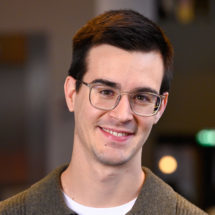
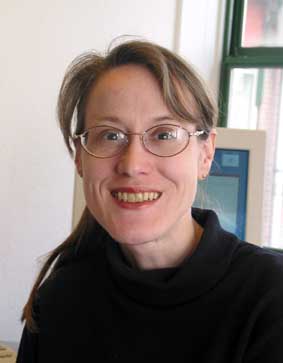
Dr. Asier Moneva is a Postdoctoral Researcher at the Netherlands Institute for the Study of Crime and Law Enforcement (NSCR) and The Hague University of Applied Sciences , specializing in cybercrime , environmental criminology , and situational crime prevention . His work focuses on offender decision-making in cyberspace, cybercrime victimization patterns, and the application of data science to crime analysis. Education : PhD in Criminology (2020), Master in Crime Analysis and Prevention (cum laude, 2017) from Miguel Hernández University. Current Role : Analyzing cybercrime patterns through environmental criminology frameworks and data science methodologies. Moneva's research examines longitudinal offending patterns in cybercrime, particularly through analyses of web defacement archives ( Zone-H data) and hacker behavior. His studies reveal extreme concentration of cybercrime among chronic offenders, with 2.9% of hackers responsible for 68.5% of defacements. He also investigates repeat victimization dynamics in digital environments and the effectiveness of warning banners as deterrents. Recent publications focus on ransomware payment decisions by SMEs, stolen data markets on Telegram, and the intersection of familial relationships with cybercrime involvement. His work combines quasi-experimental designs , crime scripting , and conjunctive analysis to develop prevention strategies.
A. Asadi is an Assistant Professor at the Faculty of Electrical Engineering, Mathematics and Computer Science at TU Delft. He leads the Wireless Communication and Sensing (WISE) Lab within the Embedded Systems Group, focusing on the integration of wireless communication and sensing systems for Beyond-5G and 6G networks. His research leverages machine learning to develop practical solutions for next-generation wireless networks, with strong industrial collaborations from companies such as Nokia, NEC, and National Instruments. Research Themes : Wireless Sensing, 6G Networks, Physical Layer Security, Reconfigurable Intelligent Surfaces (RIS), mmWave Communication Key Collaborations : Industry partnerships with Nokia, National Instruments, and NEC Recent research outputs highlight his work on Reconfigurable Intelligent Surfaces (RIS) for 6G systems, including liquid crystal-based designs for fast beam switching and temperature compensation. His publications emphasize practical implementations in mmWave communication, security protocols, and experimental validation. Scientific Awards : Athene Young Investigator Prize (2017) Educational Fellowship (2025) Asadi contributes to the academic community through committee roles at major conferences like IEEE INFOCOM , IEEE ICNP , and ACM CoNEXT , and his work on D2D communication has been cited as an ESI highly cited paper.
Michel Mandjes is a Professor at the University of Amsterdam's Faculty of Science and holds a Visiting Professor position at the Faculty of Economics and Business (FEB). His research focuses on stochastic processes, queueing theory, and probability theory, with applications in risk modeling, network analysis, and operations research. Recent publications highlight his contributions to multivariate Hawkes processes , Lévy-driven systems , and dynamic random graphs , emphasizing large deviations, rare event simulation, and statistical inference. His work bridges theoretical probability with practical challenges in traffic flow, financial risk, and social network modeling. The trends in his research include the development of stochastic models for network stability, appointment scheduling optimization, and inference techniques for non-stationary processes. His methodological innovations often leverage advanced probability theory and queueing frameworks to address real-world problems in transportation, healthcare, and finance.
Dr. Tanja Stratmann is a Postdoctoral Researcher at Utrecht University 's Department of Earth Sciences within the Faculty of Geosciences since July 2025, with prior affiliations at NIOZ Royal Netherlands Institute for Sea Research (2022-2025), Max Planck Institute for Marine Microbiology (2019-2022), and Ghent University (2018-2019). PhD in Marine Sciences (2018) from NIOZ/Ghent University MSc in Statistical Data Analysis (2019) from Ghent University MSc in Biology (2014) from Aarhus University Her research focuses on extreme marine environments , particularly deep-sea ecosystems and polar regions . Key areas include: Environmental impacts of deep-sea mining Benthic food web dynamics using isotopic tracers Megafaunal roles in carbon/nitrogen cycling Dissolved organic matter cycling in Arctic systems Recent work analyzes 13C, 15N, 2H tracers in sponge feeding studies (2025) and Clarion-Clipperton zone food web integrity (2023). Her databases ( BenBioDen , ProkaBioDen ) support global marine research. Scientific Recognition: Veni Laureate (2022) Open Science XS Grant (2022) Rubicon Research Fellowship (2019-2022)
Professor David Abbink is a Full Professor of Haptic Human-Robot Interaction at Delft University of Technology, holding a joint appointment between the Department of Cognitive Robotics in the Faculty of Mechanical Engineering and Industrial Design Engineering since November 2023. He founded the Delft Haptics Lab and co-founded the Cognitive Robotics Department in 2017. Abbink leads the transdisciplinary research and innovation centre FRAIM, which was awarded the prestigious NWO Stevin Premie (Dutch Nobel Prize equivalent) in June 2024. Trained as a mechanical engineer specializing in biomechanics, Abbink's research focuses on human behavior adaptations when interacting with autonomous systems. He has published over a hundred scientific articles on human-robot interaction, haptics, shared control, tele-operation, driver assistance systems, and sensorimotor control. His research has been funded by industry partners (Nissan, Boeing, Renault), RVO (Brightsky project 2022-2026), and the Dutch Science Foundation NWO through personal grants (VENI 2010-2014, VIDI 2015-2019). Abbink's recent work centers on worker-robot relations as an academic focus, collaborating with organizations like Erasmus Medical Centre for nursing work, Schiphol and KLM for baggage handling, and KLM Engine Repair Services for maintenance work. He also serves as scientific director for the Centre for Meaningful Human Control, launched in October 2024. His work bridges engineering, social sciences, and practical applications to responsibly shape the future of work with emerging robotic capabilities. NWO Stevin Premie (2024) Best IEEE SMC journal paper on Cybernetics (2019) Top 25 scientific talents according to New Scientist (2015) Best teacher of Faculty 3mE (2013, 2014) Best teacher of Department of BioMechanical Engineering (seven consecutive years) Abbink has supervised over 110 MSc students and 11 PhD students. His educational contributions include developing the Master Programme in Robotics at TU Delft and receiving international recognition for his course 'The Human Controller.' He is also a prominent science communicator, featured on national television, radio, and major Dutch newspapers, and has delivered lectures at venues like The Royal Institution and Lowlands Festival. Despite his academic commitments, Abbink maintains a drummer persona, having recorded four albums and performed over 400 shows across three continents between 1999-2014.
Prof. Coen Teulings is a Professor of Economics at Utrecht University's Department of Economics, part of the Law, Economics, Governance and Organisation faculty. He holds concurrent roles as a Fellow at CEPR, IZA, and CES-Ifo. Previously, he served as Professor of Economics at the University of Cambridge (2013–2017) and part-time Professor at the University of Amsterdam (2004–2017). His professional history includes seven years as President of the Netherlands Bureau for Economic Policy Analysis (CPB), CEO of SEO Economic Research (2004–2006), and Director of the Tinbergen Institute (1998–2004). Teulings earned a Master's degree in Economics (cum laude, 1985) and a PhD (1990) from the University of Amsterdam. He has advised governmental and international bodies, including the Dutch House of Commons Economic Advisors and the UK's Office for Budget Responsibility. His research focuses on labor economics, macroeconomics, urban economics, and policy analysis, with notable work on minimum wages, income inequality, and secular stagnation. He co-edited the 2014 E-book on Secular Stagnation with Richard Baldwin. Teulings' recent publications address topics like agglomeration effects, urban retail dynamics, and wealth distribution. He contributes to policy debates through roles on the AFM Capital Markets Committee and supervisory boards of institutions like the Boekmanstichting. His ancillary activities include a biweekly column in the Financial Daily (FD) and academic governance roles in the Netherlands and Europe.
Prof. Miranda Meuwissen is a Professor of Risk Management and Resilience in Agri-Food Systems at Wageningen University, Netherlands. She specializes in financial management, agricultural insurance, and resilience frameworks for farming systems. Her work focuses on sustainable transitions, climate resilience, and policy design for agricultural systems across Europe and beyond. Education: PhD in 'Insurance as a risk management tool for European Agriculture' (1995-2000). Previous roles include Associate/Assistant Professor positions at Wageningen (2005-2017), and senior researcher roles in agricultural risk management. She coordinates major initiatives such as the EU-funded SURE-Farm project (2017-2021), exploring sustainable and resilient farming systems, and the 4TU-Redesign initiative designing future food systems. Research Interests: Development of resilience assessment frameworks, risk management strategies in agriculture, financing sustainable transitions, and exploring synergies between production efficiency, environmental sustainability, and socio-economic resilience. Notable contributions include frameworks for resilience measurement in farming systems and analysis of pandemic impacts on agricultural resilience. Grants & Leadership: Coordinator of H2020 SURE-Farm (€6.5M+), 4TU-Redesign (2023-2028), and WUR-SSG system transition team (2022-2024). Organizes international seminars on sustainable transitions and annually coordinates the PhD Summer School on Risk Management in Agriculture. Key Projects: Participatory impact assessments of farming systems resilience, analysis of soil quality economic value, and innovative financing models for aquaculture. Her work bridges academic research with policy through collaborations with institutions like IAMO and 4TU Alliance.
Marko Lovric is an Assistant Professor at Wageningen University & Research's Department of Forest and Nature Conservation Policy. He holds a PhD in forest policy from the University of Freiburg, Germany. His expertise spans forest policy, environmental governance, data analysis, and AI applications in forestry. He has 17 years of research experience, focusing on European ecosystem services, bioeconomy transitions, forest certification, and international forest policy formulation. Education: PhD in Forest Policy (University of Freiburg), prior roles include senior researcher at the European Forest Institute and assistant at the University of Zagreb's Faculty of Forestry. Research Interests: Marko’s work addresses forest policy implementation, ecosystem service valuation, bioeconomy modeling, and international trade dynamics. He employs quantitative methods, big data, and network analysis to explore governance innovations and sustainable forest management strategies. Projects: He coordinated the H2020 SINCERE project on forest ecosystem services and the Horizon Europe project on forest research ecosystems. Current projects include INTERCEDE, focusing on future forest incomes and ecosystem services. Teaching: Involves MSc courses in forest policy, including internships and thesis supervision in forest conservation policy. Labs/Teams: Active in Wageningen’s Forest and Nature Conservation Policy group, contributing to interdisciplinary projects on governance and bioeconomy transitions.
Marie-Colette van Lieshout is a Professor of Spatial Stochastics at the Faculty of Electrical Engineering, Mathematics and Computer Science, University of Twente, and a Scientific Staff Member in the Stochastics group at Centrum Wiskunde & Informatica (CWI), Amsterdam. She has been active in research since 1997 and is a leading expert in stochastic geometry, spatial statistics, and image analysis. Her educational and professional background includes positions at the University of Warwick and the Free University Amsterdam. She is currently engaged in advanced research on point processes, random fields, and tessellation models, with applications in seismic hazard, fire risk, and machine learning. Her research interests include: Stochastic Geometry Spatial Statistics Image Analysis Point Process Modeling Seismic Risk Assessment Machine Learning for Spatial Data Her recent publications (2023–2025) focus on spatial intensity estimation, marked point processes, and data-driven risk modeling, showing a strong integration of classical spatial statistics with modern computational and machine learning techniques. Key themes include adaptive kernel smoothing, infill asymptotics, and applications in environmental and public safety domains. She has received significant recognition, including: Elected Fellow, International Statistical Institute (ISI) She has been awarded multiple research grants from NWO and other agencies, including the KLEIN grant for fire risk management and the DeepNL grant for seismicity prediction in Groningen. She has supervised or collaborated with researchers such as C. Lu, Z. Baki, and R. Markwitz. She is also active in academic service, serving on editorial boards (e.g., Methodology and Computing in Applied Probability), advisory boards (InHolland University), and councils of learned societies (Bernoulli Society, KWG). She leads and participates in research clusters such as STAR and contributes to outreach and education through courses and public lectures on earthquake modeling and spatial statistics.
Professor Sander Nieuwenhuis (Leiden University) specializes in Cognitive Neuroscience of Decision Making through behavioral, EEG, and pharmacological approaches. His work bridges prefrontal cortex function and noradrenergic system mechanisms in human cognition. Studied cognitive psychology (Groningen) and earned PhD (Amsterdam, 2001) International experience: Cambridge University (visiting research), Princeton University (postdoc) Research focuses on noradrenaline's role in attention, decision-making, and cognitive control via: Locus coeruleus-norepinephrine system dynamics Phasic vs. tonic alertness effects Cognitive task performance under neuromodulator deficiency Neuroprotective pathways in Alzheimer's models Recent publications analyze DBH deficiency (Jepma et al., 2011) and attentional blink mechanisms (Nieuwenhuis et al., 2005). His Temporal Attention Lab integrates fMRI, genetics, and computational modeling . Teaching leadership includes: Chair of Research Master Program Committee Coordinator of Scientific Writing courses
Dr. Ben Harvey is an Associate Professor (with Ius Promovendi) in the Perception Group of the Department of Experimental Psychology at Utrecht University, Netherlands, within the Faculty of Social and Behavioural Sciences. He is based at the Helmholtz Institute and can be contacted at b.m.harvey@uu.nl. Harvey completed his DPhil at Oxford University with Professor Oliver Braddick in 2009, followed by postdoctoral work with Professor Serge Dumoulin at Utrecht. In 2015, he moved to Coimbra on a starter grant from the Portuguese Foundation for Science and Technology before returning to Utrecht in 2016 as an Assistant Professor. He was promoted to Associate Professor in 2019 and has led his own research group since 2015. Harvey's research focuses on characterizing sensory and cognitive systems in the human brain, particularly neural responses and computations within these systems. His work combines cutting-edge neuroimaging approaches with computational modeling and behavioral experiments. Initially studying the early visual system as a model of neural processing, he extended invasive animal neurophysiological approaches to non-invasive human neuroimaging. His recent work investigates neural responses underlying cognition in the human association cortex, examining how visual space and number processing differs between cultures and in clinical disorders. His fingerprint reveals expertise in Functional Magnetic Resonance Imaging, Numerosity, Receptive Field, Visual Cortex, Population Receptive Field, Nerve Potential, Early Visual Cortex, and Topographic Maps. His publication record demonstrates significant impact, with works like 'Topographic representation of numerosity in the human parietal cortex' (2013) receiving over 360 citations. His research spans visual neuroscience, with emphasis on how the brain processes visual information, attention mechanisms, and numerical cognition, revealing generalized quantity processing systems in the human brain. Award for highest-rated abstract (2013) Brain Centre Rudolph Magnus Research Award (Best Paper of the Year) (2014) Causal link between cortical organization and conscious perception: human fMRI and electrophysiology (2009, 2010) Harvey has been actively engaged in knowledge dissemination, with multiple invited talks at institutions including INSERM in Paris (2016) and the University of Parma (2015). His research has received significant media attention, with interviews on National Public Radio (NPR) USA, Livescience.com, and Science Magazine in 2013. Beyond academic publications, he writes popular science articles exploring the relationship between visual neuroscience and visual arts. As part of the Helmholtz Institute Experimental Psychology research program, Harvey collaborates widely to investigate visual space and number processing across different populations, contributing to our understanding of how these cognitive functions vary between cultures and in clinical disorders.
Alexander Skopalik is an Assistant Professor in the Mathematics of Operations Research department, specializing in Game Theory, Congestion Games, and Algorithmic Game Theory. His work explores Strategic Resource Allocation, Equilibrium Analysis, and Network Games, with significant contributions to multi-agent systems and facility location optimization. Key research areas: Congestion Games Facility Location Nash Equilibrium Strategic Resource Allocation Algorithmic Game Theory His recent publications focus on equilibrium dynamics in facility location, battery charging games, and strategic resource allocation, emphasizing the interplay between theoretical guarantees and practical applications in AI and mobility systems. He actively participates as a committee member in leading conferences such as IJCAI and AAMAS.
Dr. Assela Pathirana is a Professor at the IHE Delft Institute for Water Education, specializing in water infrastructure asset management (WIAM), climate resilience of Small Island Developing States (SIDS), and sustainable urban water systems. His work bridges academia, policy, and practice, focusing on digitalization, data-driven decision-making, and nature-based solutions. Key roles include Chief Technical Advisor for the Maldives’ water systems and leadership of a MOOC on SIDS climate adaptation. He holds a BSc (First Class Honours) from the University of Peradeniya and advanced degrees from the University of Tokyo, specializing in hydrology and water resources engineering. Education: Bachelor of Science in Civil Engineering (First Class Honours), University of Peradeniya, Sri Lanka Master’s and Doctoral Degrees in Civil Engineering (Hydrology and Water Resources), University of Tokyo, Japan Research Interests: Dr. Pathirana’s work emphasizes climate resilience, SIDS adaptation, urban flood risk management, and sustainable infrastructure. He develops decision-support tools for flood forecasting, evaluates land-use changes in Jakarta, and promotes equity in water rationing systems. His interdisciplinary approach integrates hydrological modeling, open-source software development, and policy analysis. Advising & Capacity Building: He leads training-of-trainers programs and capacity-building initiatives, enhancing postgraduate education in technical disciplines. His efforts focus on didactics and pedagogy, ensuring graduates gain both theoretical knowledge and practical expertise. Key Projects: Developed the WIAM curriculum at IHE Delft MOOC on SIDS climate adaptation and water security Consultancy for the Maldives’ Ministry of Environment and UNDP Labs & Collaborations: Engages in cross-disciplinary teams addressing urban water challenges, including sponge cities in China and flexible adaptation planning in Melbourne and Pune. His work with UNESCO-ICHARM and UNU underscores global water security and disaster risk reduction.
Nina Schwarz is Assistant Professor of human-environment interactions in cities at the Department of Urban and Regional Planning and Geo-Information Management, ITC—University of Twente. Holding a Diploma in Environmental Sciences (University of Lüneburg, 2003) and a PhD in Social and Economic Sciences (University of Kassel, 2007), she spent a decade as senior scientist at the Helmholtz Centre for Environmental Research – UFZ before joining ITC. Her interdisciplinary research integrates urban land-use science, ecosystem-service evaluation and advanced modelling techniques—especially agent-based models—to explore sustainable urban development under global change. Research interests revolve around three interconnected themes: (i) urban land-use change —understanding how residential, commercial and green-space dynamics co-evolve; (ii) urban ecosystem services —quantifying both supply and demand of services such as local climate regulation, recreation and biodiversity; and (iii) behavioural modelling —formalising human decision-making to simulate policy scenarios ranging from slum-upgrading to vineyard management. She actively links these themes to UN Sustainable Development Goals, notably SDG 11 (Sustainable Cities) and SDG 15 (Life on Land). Recent publications (2022-2025) reveal a methodological breadth spanning citizen-science impact assessment in Suriname, cooling effects of urban water bodies in Chinese mega-cities, European wine-growers’ adaptive behaviour, and methodological advances in upscaling and validating agent-based land-use models. Across these studies, Schwarz consistently combines empirical field data, geospatial analytics and participatory approaches to produce policy-relevant insights for cities in both the Global North and South. She has (co-)authored >80 peer-reviewed works, accumulating c. 5 900 citations and an h-index of 28 (Scopus). While specific honours are not itemised in the supplied text, her sustained citation impact and invited contributions to major conferences (e.g., iEMSs 2020, IAHR 2025) underscore scientific recognition. Schwarz frequently engages with societal stakeholders: her projects have generated open datasets on urban green-space monitoring in Paramaribo, e-learning modules for Latin-American universities, and interactive dashboards for sustainable water management. Within ITC she contributes to capacity-building programmes for emerging economies, supervises graduate researchers and maintains active collaborations across Europe, Latin America, Africa and Asia. No explicit lists of PhD students or personal grants are provided in the current corpus, but her leadership of externally funded projects (e.g., citizen-science evaluation, vineyard decision-making database) indicates ongoing acquisition of research funding.
Prof. Dr. ir. Hans Heesterbeek is a full Professor of Theoretical Epidemiology at Utrecht University's Faculty of Veterinary Medicine. He holds a dual appointment in the Department of Farm Animal Health within the Population Health Sciences sector. His research focuses on the dynamics of infectious diseases at the intersection of biology, medicine, and mathematics, with emphasis on wildlife epidemiology and complex systems. He chairs Utrecht University's Committee for Research Integrity and has held leadership roles in departments like Animals in Science and Society. Education: MSc Phytopathology (Wageningen University, 1986), MSc Mathematics (University of Amsterdam, 1988), PhD in Mathematical Biology from Leiden University (1992) Affiliations: Editor-in-Chief of Epidemics journal, Senior Editor at Proceedings of the Royal Society B , Chair of ZonMw's Open Competition grant program Research interests include: Mathematical modeling of disease spread Ecological epidemiology of zoonotic pathogens Role of wildlife in disease transmission Historical analysis of epidemic understanding Key contributions: Co-developer of the R₀ reproduction number framework, foundational to global epidemiological modeling. Active in interdisciplinary work linking theoretical ecology to societal systems. Currently writing a book on the history of epidemic science. Grants: Vici laureate (€1.3M, 2005-2010). Organizes biannual Epidemics conferences. Advises on public health policy during outbreaks like the 2020 COVID-19 pandemic.