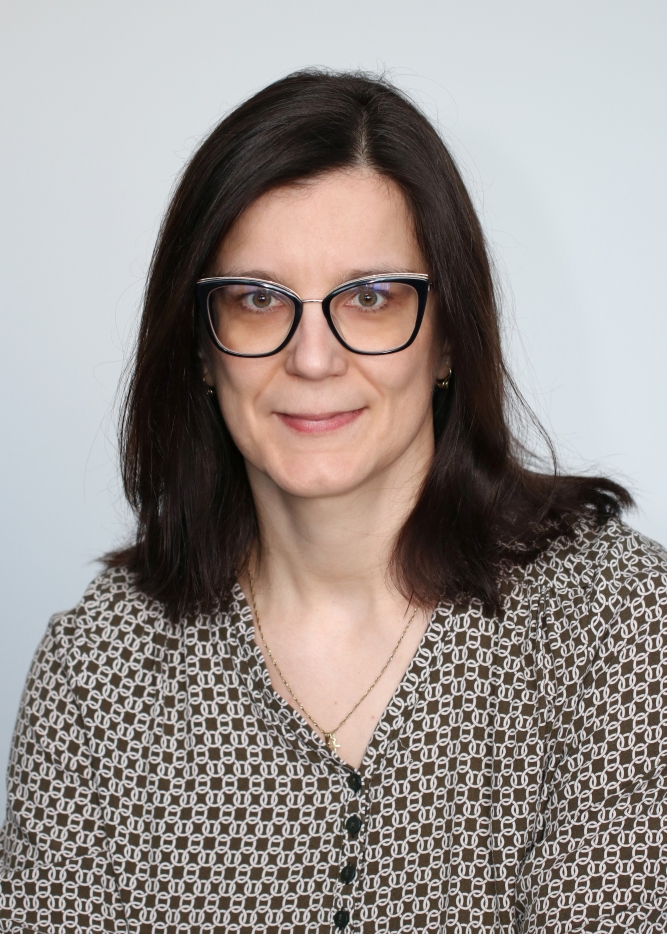
Doc. PhDr. Andrea Klimková, PhD is an Associate Professor at the Department of Philosophy , Matej Bel University (Banská Bystrica, Slovakia), with additional affiliation at Univerzita Pavla Jozefa Šafárika . Her work bridges ecological ethics , applied ethics , and sustainable development , emphasizing ethical leadership, pandemic decision-making, and eco-ethical educational frameworks. Specializes in environmental education and ethics of care Key publications address shame in ecological ethics , axiological dimensions of tourism , and transdisciplinary sustainable development Active in medical ethics (physician-patient dynamics, nursing ethics) Her recent 2022 paper analyzes ethics implementation in scientific research , arguing for institutional integrity over proclamatory adoption. This follows her 2021 pandemic ethics study and 2018 contributions to sustainability discourse . Despite extensive publication, scientific awards aren't explicitly mentioned. She maintains active ethical counseling roles and regional development initiatives.
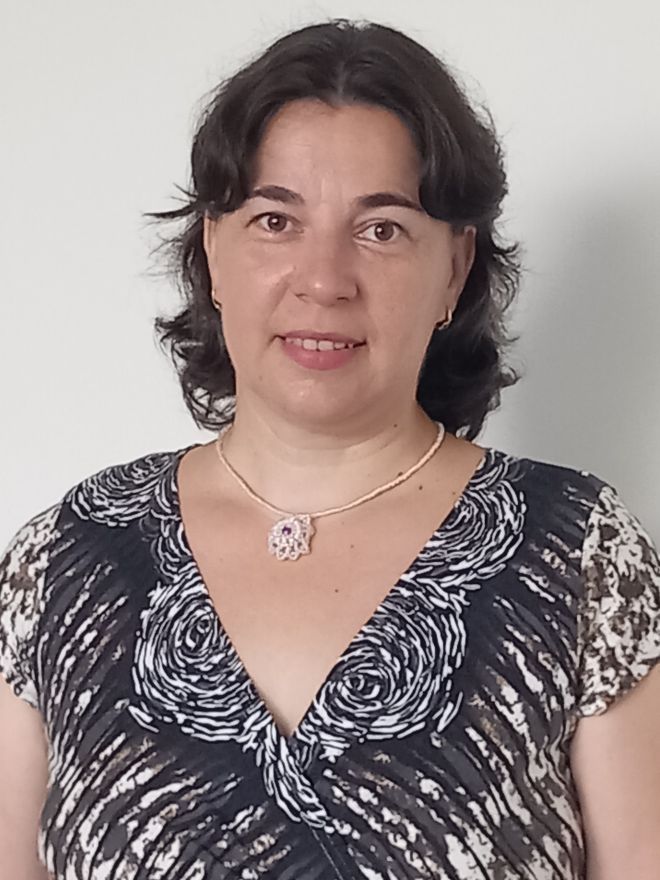
Prof. Viera Paganová is a Full Professor and Head of the Department of Planting Design and Maintenance at the Institute of Landscape Architecture, Faculty of Horticulture and Landscape Engineering, Slovak University of Agriculture in Nitra. With over 25 years of academic experience, she has established herself as a leading expert in urban forestry, landscape ecology, and plant physiology, focusing particularly on tree species adaptation to urban stressors. Her educational background includes: Phytology studies at Technical University of Zvolen (1991-1995) Forestry studies at Technical University of Zvolen (1986-1991) Prof. Paganová's research centers on plant adaptation to urban environments, with special emphasis on drought and salinity tolerance in tree species. Her work bridges theoretical ecology with practical landscape architecture applications, developing methodologies for selecting and managing tree species in challenging urban conditions. She has pioneered research on unconventional tree species for urban planting, particularly focusing on Pyrus pyraster and Sorbus domestica. Her extensive publication record shows a clear trend toward addressing climate change impacts on urban green infrastructure. Recent works emphasize digital technologies in landscape restoration, physiological responses to environmental stressors, and integrating ecological principles into recreational and educational spaces. Her research demonstrates how physiological understanding can inform practical urban forestry solutions. Prof. Paganová has contributed significantly to professional standards in arboriculture: Arboricultural standard series (1-7) covering tree planting, pruning, and urban tree management Manual for the management of invasive tree species in protected areas Methodologies for introducing climate-resilient tree species As Head of Department, she oversees educational programs in landscape architecture while leading the Urban Environment and Landscape Modeling Laboratory. Her work integrates teaching, research, and practical application, with current projects focusing on proactive urban tree management education and the FIELDLAB initiative promoting biodiversity in urban settlements. Her laboratory team conducts cutting-edge research on tree physiology under stress conditions, developing practical guidelines for urban forestry professionals across Slovakia and contributing to European initiatives on climate-resilient urban green infrastructure.
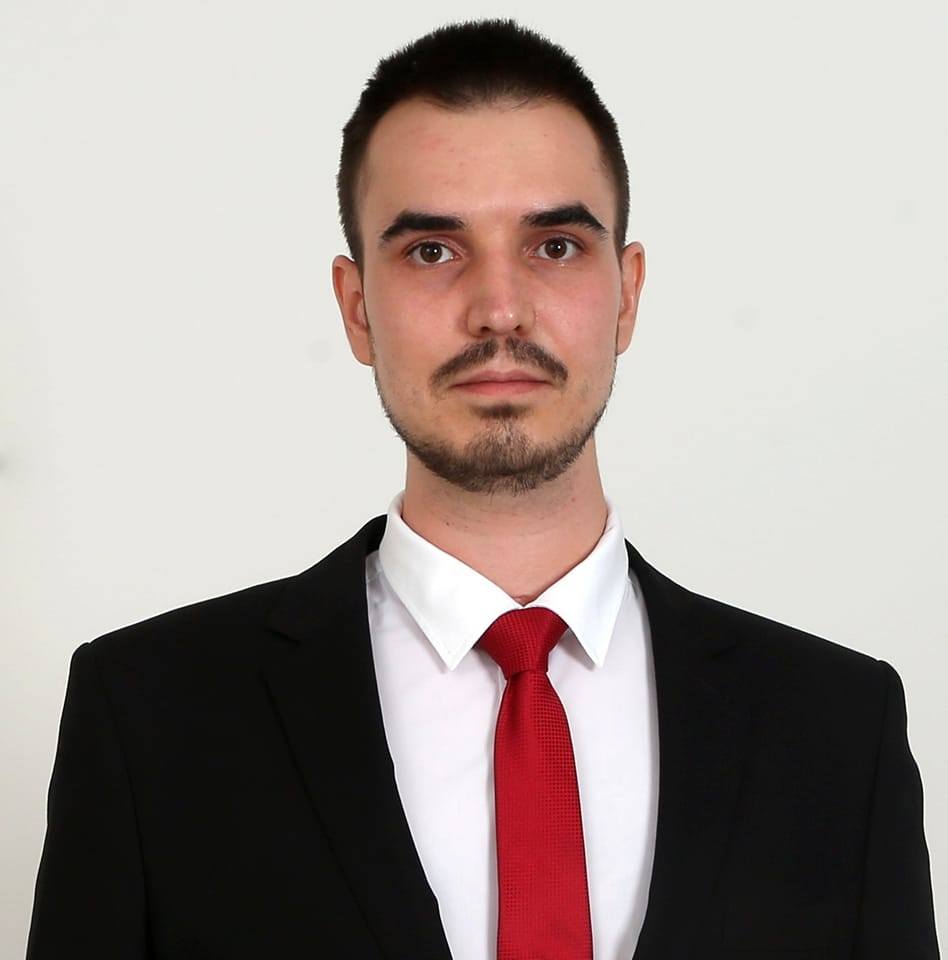
Lukáš Lafférs is an Associate Professor at the Department of Mathematics, Faculty of Economics, Matej Bel University. He holds a PhD in Economics from NHH Bergen (2014) and a Doc (2024) from Masaryk University Brno, alongside an Mgr. from FMFI UK Bratislava (2009). Education: Doc (2024), PhD (2014), Mgr. (2009) Academic Rank: Associate Professor Affiliation: Department of Mathematics, Faculty of Economics, Matej Bel University Contact: Lukas.Laffers@umb.sk His research spans Econometrics , Mathematical Economics , and interdisciplinary Medical Research . Key areas include causal inference, partial identification, machine learning applications in econometrics, and clinical studies on liver diseases. Recent work focuses on double machine learning methods, treatment effect estimation, and healthcare outcomes analysis. Scientific contributions include an Editor’s choice article in the Econometrics Journal (2022) and collaborations on clinical research in hepatology. His publications reflect a blend of econometric theory and applied health economics, particularly in alcohol-associated hepatitis studies.
Helena Tužinská is an Associate Professor at the Faculty of Arts, Comenius University in Bratislava , specifically in the Department of Archaeology and Cultural Anthropology. Her career spans over two decades with significant contributions to legal and migration anthropology, focusing on communication dynamics in asylum courts, symbolic anthropology, and intercultural mediation. Education: Specialized in ethnology and cultural anthropology, with a focus on intercultural communication and migration. Research interests include: Ethnography of communication in legal and administrative settings Symbolic anthropology and cultural analysis Migration studies and asylum procedures Intercultural communication and language registers Anthropology of power and everyday practices Recent publications emphasize: 2024: Communicative space in asylum courts through ethnographic observation 2023: Cultural expertise in interpreting and pandemic-era humor as resistance 2021: Historical narratives and institutional translation policies 2019–2015: Asylum court linguistic practices and legal power dynamics Grants and projects highlight her work on: Erasmus+ Strategic Partnerships (2020–2023): Internationalization of higher education VEGA research grants (2017–2023): Moral narratives in migration and ethnicity UNHCR-supported fieldwork (2006–2009): Refugee integration in Slovakia Professional engagement includes collaborations with institutions like the Slovak Academy of Sciences, Human Rights League, and European networks for migration studies.
Andrej Vrtel, PhD , is a lecturer in archaeology at the Department of Archaeology and Cultural Anthropology , Faculty of Arts , Comenius University in Bratislava . Since 2011, he has been teaching and conducting research focused on the Late La Tène period , Celtic oppidum settlements , and urban archaeology in the Bratislava region. Education: PhD in Archaeology (2010) – Archaeological Institute of the Slovak Academy of Sciences, Nitra Dissertation: "Late La Tène oppidum in Bratislava - craft, exchange and trading" Research Interests: Andrej Vrtel's research spans a wide range of topics centered on Celtic archaeology , particularly the La Tène period in Central Europe. His work extensively covers oppidum settlements , especially the Bratislava oppidum , examining their internal structure , economic activities (such as craft production and trade), and urban development . He has conducted detailed studies on pottery production , including the identification of pottery workshops and kilns along the Middle Danube . Additionally, he investigates the processes of Romanisation and the transition from late prehistoric to early medieval periods in the Danube basin region. Publications and Research Trends: His recent publications (2011–2024) reflect a consistent focus on Celtic settlement patterns , numismatics (especially Celtic coinage and minting practices), and urban archaeology . Notable works include analyses of the destruction horizon of the Bratislava oppidum, comparative studies with other major sites like Bibracte , and detailed reports on rescue excavations in Bratislava's historical core. Projects and Grants: VEGA 1/0827/16 (2016–2019): "The beginnings of shaping of the urban space in Bratislava" – Deputy of the principal investigator VEGA 1/0762/14 (2014–2017): "Celtic pottery production on the Middle Danube" – Principal investigator VEGA 1/0533/13 (2013–2015): "Pottery - production, distribution and usage..." – Deputy of the principal investigator VEGA 2/0117/12 (2012–2014): "Between the antiquity and Middle Ages..." – Co-solver Francia Media (2012): "Cradles of European Culture, 850-1050" – Co-solver Fieldwork and Professional Service: Dr. Vrtel has served as field director for numerous archaeological excavations in Bratislava, including sites like Michalská 9 , Medená 9 , Bratislava Castle , Hlavné square , and others. He is a licensed archaeological fieldworker (registration no. 077.1, since 2007) and has contributed to public archaeology through exhibitions and editorial roles. Since 2016, he has been a member of the Monuments Council , and since 2012, a member of the Committee for Archaeology at the Monuments Board of the Slovak Republic .
Assoc. Prof. Renata Ďuračiová, PhD., serves as Associate Professor and Head of the Department of Global Geodesy and Geoinformatics at the Faculty of Civil Engineering, Slovak University of Technology in Bratislava. Her academic role centers on advancing geoinformatics through rigorous research in spatial data quality, uncertainty modeling, and mathematical GIS methodologies while leading departmental operations and curriculum development. Her research spans spatial databases, geospatial analyses, and environmental applications including Lidar processing, building footprint detection, and solar radiation modeling. Key contributions address bark beetle infestation prediction using satellite data and machine learning, alongside innovations in fuzzy logic for spatial database querying and heterogeneous data integration. Her work bridges theoretical geoinformatics with practical solutions for forest management and urban planning challenges. Analysis of her 2017-2025 publications reveals consistent focus on spatial data quality assessment, terrain parameter effects on environmental modeling, and algorithmic development for Lidar/satellite data processing. Recurring themes include uncertainty quantification in spatial analyses, cross-source data integration (e.g., OpenStreetMap/INSPIRE), and climate-driven ecological modeling. Her technical expertise manifests in specialized tools like point-cloud solar radiation calculators and predictive models for forest disturbances. Prof. Ďuračiová actively contributes to the geospatial community through leadership roles in the Cartographic Society of the Slovak Republic (Executive Committee since 2011) and Slovak Association for Geoinformatics (Presidency since 2011). Her professional engagement emphasizes advancing geoinformatics standards and applications within Central European contexts while mentoring through courses like Database Systems in GIS and Geodata Quality Analysis.
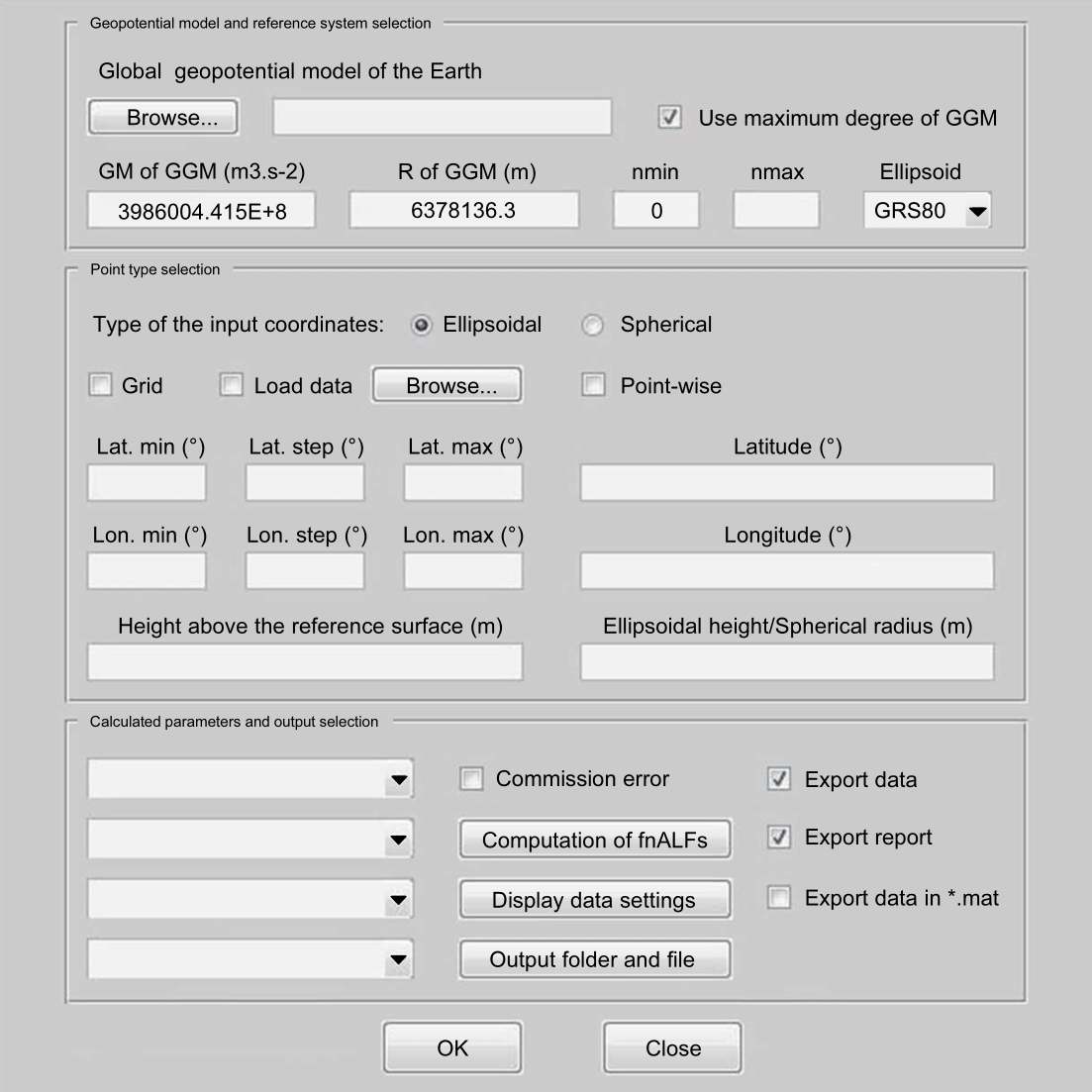
Blažej Bucha is a Lecturer at the Department of Theoretical Geodesy and Geoinformatics , Slovak University of Technology in Bratislava. His research focuses on high-degree spherical harmonic synthesis, gravity field modeling of celestial bodies, and computational geodesy. Developed open-source software packages: GrafLab (gravity field visualization), CHarm (spherical harmonic transforms), and SRBF (regional gravity modeling). Key research areas include planetary geodesy (Moon, asteroid Bennu), divergence-free spherical harmonic expansions , and high-resolution gravitational mapping at scales down to 2 arc-seconds. Highest academic contributions involve ultra-high-degree harmonics (n=21600) and 256-digit precision calculations for resolving divergence effects. His work has applications in geoid determination, gravitational tensor analysis, and geophysical interpretation. Co-authored 15+ peer-reviewed papers in Journal of Geodesy , Geophysical Research Letters , and Computers & Geosciences . Developed grav-sr-2arcsec (Slovak Republic's gravitational maps) and GMSQ2019 (gravimetric quasigeoid at 2" resolution). Teaching activities include co-authoring the textbook Fyzikálna geodézia (2023) and delivering lectures on Physical Geodesy .
Zoltán Holocsy serves as Assistant Professor at the Department of Architectural Design, Academy of Fine Arts and Design Bratislava, where he has taught since 1992 and currently leads the Atelier Virtual Studio. He concurrently holds the position of Deputy Head of the Department of Architectural Design since 1995 and participates in the Academy's Academic Senate. His educational trajectory includes: 1969-1977: Nine-year primary school in Senec 1971-1978: Fine Arts Department, Lithuanian Academy of Fine Arts (Senec) 1977-1981: High school in Senec 1982-1987: Faculty of Architecture and Civil Engineering, Bratislava (Diploma: Multifunctional House on Kollár Square ) 2001-2010: Doctoral studies at STU Faculty of Arts ( Metapolis - the paradigm of the city in the era of post-urbanism ) Professor Holocsy's research critically examines post-urban paradigms through the lens of architectural theory and spatial practice. His seminal Metapolis framework investigates evolving urban structures beyond traditional urbanism, while his integration of digital media in courses like Architecture and Electronic Media bridges theoretical concepts with contemporary design methodologies. This dual focus manifests in both academic publications and practical architectural solutions addressing residential, commercial, and urban-scale challenges. His publication timeline (1997-2011) reveals a cohesive intellectual arc: early works like Starchitektúra explore phenomenological dimensions of domestic space, while later Metapolis studies develop comprehensive theories for post-urban contexts. Recurring themes include spatial layering ( Urbánne a architektonické vrstvy workshop), domesticity ( Vážení, kde ste? ), and cartographic reinterpretation of urban environments. As an educator, Holocsy directs international student workshops in Florence (1997-2000) on urban strata and simulation, and mentors award-winning student projects including the Wienerberger Competition (2004). His academic leadership extends to developing curricula for architecture courses and representing the institution through the Academic Senate since 2006. The Atelier Virtual Studio serves as his primary pedagogical platform, fostering innovation in architectural design through digital tools and theoretical exploration of contemporary spatial conditions.
Marek Kvetan, an Assistant Professor at the Academy of Fine Arts, Bratislava, Slovakia , specializes in Visual Communication , Intermedia Art , and Digital Media . His work interrogates the intersection of technology , urban environments , and psychological states , often employing installations , drawings , and photographic series . Kvetan’s exhibitions, such as Reconfiguration (2020) and ECHO (2018), explore cybernetic aesthetics and digital erasure . His research and practice span digital art , new media , and spatial objects , with a focus on urban peripheries and technological interfaces . Articles like www.google.com (2000) and New City (Prague) (2002–2004) analyze information membranes and corporate abstraction . Scientific Awards : Laureate, Novum Foundation (2016); Finalist, Henkel Art Award (2010); Laureate, NG 333 Award (2008); Grand Prix, Triennial of Contemporary Slovak Graphics (2003).
Prof. Ing. Ivan Brezina, CSc. is a Professor at the Department of Operations Research and Econometrics, Faculty of Economic Informatics, University of Economics Bratislava. His academic career spans over three decades, with roles including assistant (1990–1999), Associate Professor (1999–2011), and Professor (2011–present). Ing. (Economic-Mathematical Calculations), Vysoká škola ekonomická v Bratislave, Fakulta riadenia (1985) CSc. (Management and Planning Theory), Vysoká škola ekonomická v Bratislave, Fakulta riadenia (1990) Doc. (Quantitative Methods in Economics), University of Economics (1999) Professor (Econometrics and Operations Research), University of Economics (2011) His research focuses on operations research, econometrics, logistics optimization, and financial modeling. Key projects include APVV-SRB 18 (electric mobility logistics, 2019–2021), VEGA 1/0245/15 (emission reduction transport planning, 2015–2018), and VEGA 1/0339/20 (hidden Markov models in finance, 2020–2022). Publications include 39 registered in WoS/Scopus with 125 citations. Recent articles address agricultural optimization (2020), green finance (2025), and reverse logistics (2019). He has delivered 16 international/national invited lectures and participated in 2019–2024 grants like VEGA 1/0373/18 (big data analytics) and Visegrád Fund Project No. 21830031 (SimplexV4 tool development). President, Slovak Society for Operations Research (2020–present) Editorial Board, Central European Journal of Operations Research (2014–2020) Member, editorial councils of multiple journals International mobilities include ERASMUS stays at VŠE Praha (2013, 2017, 2022), TEMPUS (1993), and lecture stays in Uzbekistan (2022), Kazakhstan (2023), and Serbia (2024).
Michaela Chocholatá serves as Associate Professor and Vice-Dean for Science and Doctoral Studies at the Department of Operations Research and Econometrics, Faculty of Economic Informatics, University of Economics in Bratislava. With over two decades of academic service, she holds leadership roles including President of the Slovak Society for Operations Research (2023-2025) and membership in the Scientific Council of her faculty. Her educational background includes a Second Degree in Quantitative Methods in Economics (2001) and Third Degree in Econometrics and Operations Research (2006), both from the University of Economics in Bratislava. She completed specialized training in pedagogical education (2015) and emotional intelligence modules (2024-2025). Chocholatá's research focuses on Spatial Econometrics applications in EU regional development , Financial Market Volatility modeling , and Operations Research methodologies . Her work examines spatial spillovers in employment, educational disparities, and currency co-movements across Central Europe, with emphasis on EU policy impacts. Recent publications demonstrate increasing methodological sophistication in spatial statistics and time series analysis. Her research trajectory shows strong alignment with EU priorities including regional cohesion, green transition, and post-pandemic economic recovery. The 15 most recent publications reveal consistent focus on spatial econometric techniques applied to EU regional data, with growing international collaboration evident in co-authorship patterns. Chocholatá has supervised 18 bachelor's, 46 master's, and 1 doctoral thesis. She serves as principal investigator for VEGA grant projects including The importance of spatial spillover effects in the context of the EU's greener and carbon-free Europe priority (2023-2025) and contributes to multiple collaborative research initiatives analyzing EU regional dynamics and pandemic economic impacts. Her international engagement includes Erasmus+ teaching and research stays at institutions across Europe including University of Las Palmas de Gran Canaria, University of Akureyri, and Pablo de Olavide University. She maintains active roles in academic governance as member of the Editorial Board of EQUILIBRIUM. Quarterly Journal of Economics and Economic Policy .
Brian König serves as Associate Professor in the Department of Operations Research and Econometrics at the Faculty of Economic Informatics, University of Economics in Bratislava since September 2010, while concurrently holding a part-time researcher position at the Institute of Economics SAS since January 2012. His academic credentials include: Second-level higher education in Quantitative Methods in Economics and Business (2007) Tertiary education in Econometrics and Operations Research (2010) Associate Professor title in Econometrics and Operations Research (2021) Professor König's research centers on applied econometrics with emphasis on labor market dynamics, income distribution, and international trade. His empirical work frequently employs spatial econometric techniques and gravity models to analyze regional disparities within the EU, particularly among Visegrád Group nations. Current investigations focus on fiscal policy impacts, consumption inequality patterns, and unemployment cost quantification in Central European contexts. Publication trends reveal consistent engagement with policy-relevant economic questions since 2015. His work bridges theoretical modeling with empirical validation, addressing labor market interventions, trade determinants, and social safety nets. Recent outputs demonstrate increasing international collaboration and methodological sophistication, particularly in analyzing post-recession growth patterns and capital flow anomalies within transition economies. He has supervised 30 bachelor's and 15 master's theses while securing significant research funding through APVV projects on shadow banking (2021-2025), macroeconomic imbalances (2018-2022), and pension systems (2015-2019), plus VEGA grants on capital flows (2021-2023) and trade invoicing (2024-2026). Active in professional communities as member of the Slovak Society for Operations Research (2010-present) and International Federation of Operational Research Societies (2020-present), he maintains international partnerships through research stays at Vienna University of Economics (2018-2019, 2019-2020) and EUROMOD training at University of Essex (2018).
Ľubica Hurbánková is an Assistant Professor at the Department of Statistics, Faculty of Economic Informatics, University of Economics in Bratislava. Her academic work focuses on socio-economic and demographic indicators in Slovakia and the European Union, utilizing statistical methods such as variability measures, spatial econometrics, and multidimensional comparisons. VEGA 1/0285/24: Impact of inflation on poverty and social exclusion in Slovakia and the EU (2024–2026) VEGA 1/0047/23: Spatial spillover effects in the context of the EU's green and coal-free priorities (2023–2025) VEGA 1/0561/21: Impact of the COVID-19 crisis on corporate demographics and employment (2021–2023) VEGA 1/0193/20: Spatial spillover effects on EU innovation activities (2020–2022) KEGA 007EU-4/2020: Interactive interdisciplinary teaching in tourism services using IT (2020–2022) She has contributed to projects analyzing regional disparities, sustainable development, and EU policy effectiveness, with a strong emphasis on statistical modeling and policy evaluation.
Ádám Csápai is an Assistant Professor at the Department of Statistics, Faculty of Economic Informatics, University of Economics in Bratislava. His research focuses on macroeconomic modeling, machine learning-based forecasting, and time series analysis with emphasis on prediction quality. PhD in Quantitative Methods in Economics (2024), University of Economics in Bratislava MSc in Operations Research and Econometrics (2021), University of Economics in Bratislava Current research projects include: VEGA 1/0052/24: Estimating key structural parameters in modern macroeconomic models VEGA 1/0047/23: Spatial spillover effects in EU green policy contexts I-22-110-00: AI applications for macroeconomic variable forecasting
Assoc. Prof. Tomáš Bučko, PhD., is a faculty member in the Department of Physical and Theoretical Chemistry at the Faculty of Natural Sciences, Comenius University in Bratislava. He actively contributes to theoretical chemistry and materials science research while teaching master's-level courses in Theoretical and Computational Chemistry. His research focuses on theoretical catalysis, solid-state physics, and computational methods development, with emphasis on noncovalent interactions, ab initio molecular dynamics simulations, and density functional theory applications for studying reaction mechanisms in zeolites and complex materials systems. Analysis of his 2015-2020 publications reveals dominant themes in computational catalysis, particularly zeolite-mediated hydrocarbon reactions, free energy calculations using hybrid machine learning approaches, and advanced dispersion corrections for periodic DFT systems. His work consistently bridges fundamental quantum mechanics with practical catalytic applications. He leads significant research projects including: APVV/15/105: "Noncovalent Interactions in Systems of Increasing Complexity" VEGA-1/0777/19: "Reference calculations of properties, interactions and reactivity of chemical systems" EuroFusion Horizon 2020 project: "Computational Modeling of Cs-Mo interactions in Neutral Beam Injection sources" IFP Energies nouvelles collaboration: "Reactivity of zeolites using ab initio molecular dynamics" International collaborations span University of Vienna, IFP Energies Nouvelles Lyon, Lorraine University, and Karlsruhe Institute of Technology. Bučko serves as a verified Publons reviewer (ID: 1378264) for top journals including Physical Review B, Nature, and Journal of Catalysis. His development contributions to the VASP simulation program—particularly molecular dynamics modules and dispersion corrections—have achieved widespread adoption in computational chemistry.