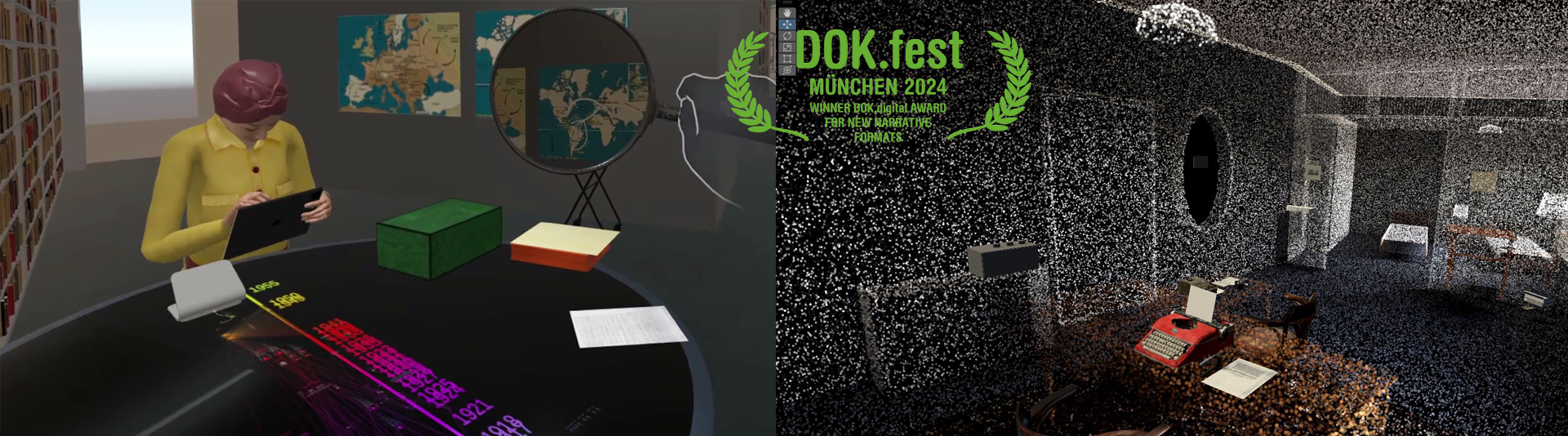
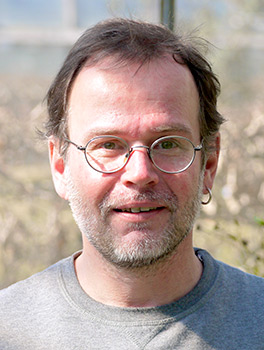
Christina Zimmermann is a Lecturer and Project Head Research at the Lucerne School of Design, Film and Art, part of Lucerne University of Applied Sciences and Arts (HSLU). She holds a practice-based PhD from Bauhaus-University Weimar (2016) on 'Ambiguity in Contemporary Film.' Her research focuses on experimental narrative forms, digital representation of archival collections, and virtual reality (VR) biographies. She leads the SNF Ambizione-funded 'Netted Letters' project, exploring immersive environments for historical discourse visualization. Teaching includes 'Critical Storytelling' in the MA Film program, with prior roles at institutions like Zurich University of the Arts and Bauhaus-University Weimar. Her artistic work spans VR films (e.g., The True Film ), documentaries ( Alpha Omega ), and installations. Awards include the Bauhaus Prize 2008 and the 2024 DOK.digital Award. Zimmermann’s interdisciplinary projects bridge art, film, and digital humanities, emphasizing interactive and spatial storytelling. Education: PhD (Practice-Based), Bauhaus-University Weimar (2016); Film/TV Studies, Academy of Media Arts Cologne. Research Themes: VR narrative design, archival digitization, film theory, cultural memory. Awards: DOK.digital Prize 2024, Bauhaus Prize 2008. Her VR project The True Film , co-developed with Mira Film and INVR.SPACE, reimagines Siegfried & Elisabeth Kracauer’s legacy through interactive storytelling. She also leads educational initiatives like the Standstill climate change project with students. Zimmermann’s work is supported by grants from the Swiss National Science Foundation and cultural foundations.
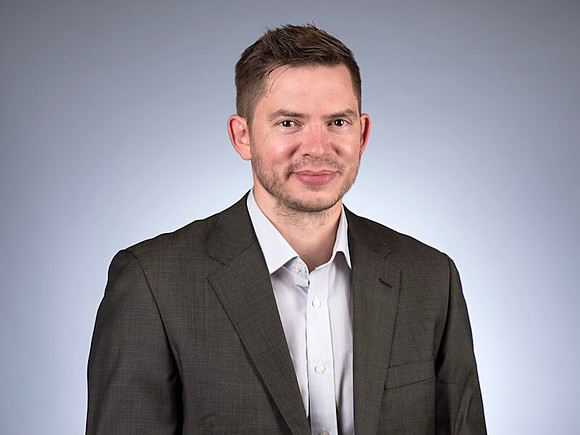
Carolyn Biltoft is an Associate Professor specializing in International History and Politics. Her research focuses on the intellectual and material infrastructures of globalization, particularly through the lens of media history and critical theory. She holds a PhD from Princeton University (2010) and has authored influential works such as A Violent Peace: Media, Truth and Power at the League of Nations (2021). Her current research explores Henri Bergson’s philosophical premonitions of digital-age dilemmas. Thematic Expertise: Information/media theory & policy New media & social impacts Politics of knowledge Globalisation Religion & politics Peacebuilding & economic history Her recent publications analyze geopolitical language philosophies, Keynesian meta-geography, and the dynamics of misinformation in historical and contemporary contexts. She critiques scholarly enclosures in academic publishing and examines the League of Nations’ role in shaping global economic and cultural frameworks. Labs/Teams: Not explicitly mentioned in the texts provided.
Friedrich von Bose is a Senior Researcher and Lecturer at the Institute for Social Sciences, European Ethnology (ISEK – Popular Cultures) since 2023. He has held key roles at institutions including the State Ethnographic Collections of Saxony (2020–2023) and Humboldt University of Berlin (2009–2015). His work bridges ethnographic research , curatorial practice , and reflexive cultural management . Education: PhD in European Ethnology (Humboldt University, 2009–2014), MA in European Ethnology and Transdisciplinary Gender Studies (Humboldt University, 2000–2009) Current Projects: Researching colonial provenances, museum ethics, and digitalization in museums. Research interests include the history and theory of exhibiting , postcolonial museum critique , provenance research , and material culture studies . His publications focus on collaborative curation, museum temporality, and ethical frameworks for addressing colonial legacies. Scientific awards include the KuPoGe Future Prize shortlisting (2023) , SMU Research Residency (2018) , and Humboldt Teaching Award (2010) . Leadership roles span editorial work for the Journal of Cultural Studies , jury membership for the European Museum of the Year Award, and co-founding the interdisciplinary platform Museumslabor .
Erik Willems is a Senior Lecturer at the University of Zurich, specializing in behavioral biology and spatial ecology. His research focuses on animal movement patterns, primate socio-ecology, and the evolutionary origins of cooperation and conflict. He employs GIS technologies, phylogenetic comparative methods, and field experiments to study topics such as orangutan socio-ecological variation, intergroup conflict in primates, and spatial memory in marmosets. Teaching: BIO 209 'Discovering Statistics using R' emphasizes statistical analysis and phylogenetic methods. Research projects include the Inkawu Vervet Project and The Orangutan Network, alongside developing an R-library for analyzing simultaneous movement data. Key research themes include geographical variation in primate behavior, bio- and phylo-geography of orangutans, and experimental studies on cooperation in non-human primates. Recent publications span topics from great ape communication to dolphin social networks and molecular insights into metallothionein function. Collaborative efforts involve institutions globally, with active fieldwork in Borneo, Guinea, and Australia. His work bridges ecology, evolution, and conservation, addressing questions about animal behavior from both theoretical and applied perspectives.
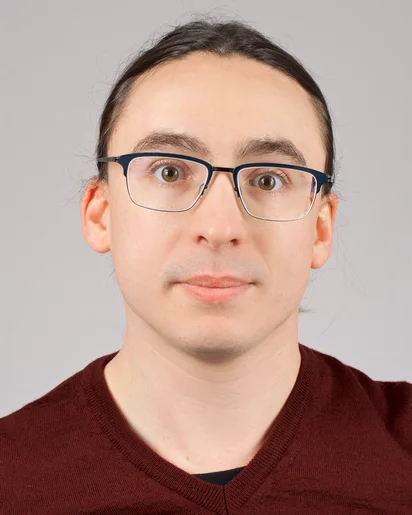
Yannick Rochat is an Assistant Professor of Software and Hardware Studies of Video Games and their Digital Traces in the Section of Language and Information Sciences at the University of Lausanne (UNIL). He joined UNIL on August 1, 2021, and holds a Master’s in Mathematics (EPFL, 2007) and a PhD in Mathematics applied to Human and Social Sciences (UNIL, 2014). His work emphasizes interdisciplinary approaches, particularly in digital humanities and media archaeology. Rochat co-founded the UNIL-EPFL GameLab in 2016, focusing on video game studies, preservation projects like Pixelvetica, and research-creation initiatives such as Four Apartments and a Confinement . He collaborates with institutions like the Swiss National Museum and the Canton of Vaud, serving on juries for cultural funding and interactive media grants. His research spans video game heritage, platform studies, and the interplay between gaming and cultural history. Rochat has secured SNSF funding for projects integrating video games into post-compulsory education and co-leads initiatives to document Swiss video game history, particularly through analysis of Smaky microcomputing platforms and 1980s gaming archives. His work bridges academic research with public engagement through exhibitions, conferences, and cross-institutional partnerships.
Simone Finizio is a Scientist at the Paul Scherrer Institute (PSI) in Switzerland, working at the PolLux beamline of the Swiss Light Source within the Center for Photon Science Laboratory for Condensed Matter. He has held this position since 2015 following his postdoctoral training, specializing in advanced magnetic imaging techniques for nanoscale materials. His academic background includes: Bachelor's degree in Physics Engineering (2009, honorable mention) from Politecnico di Milano Master's degree in Nuclear Engineering (2011, honorable mention) from Politecnico di Milano Ph.D. in Physics (2015) from Johannes Gutenberg Universität Mainz Finizio's research pioneers time-resolved X-ray magnetic microscopy to capture sub-nanosecond magnetic dynamics. His work spans magnetic skyrmion manipulation, domain wall motion analysis, spin wave characterization, and multiferroic material studies. He has developed critical instrumentation for field-free skyrmion nucleation and 3D magnetization imaging, enabling breakthroughs in understanding topological magnetic structures for next-generation spintronic applications. Analysis of his publications reveals consistent innovation in synchrotron-based magnetic imaging techniques, with emphasis on picosecond temporal resolution and nanoscale spatial precision. Key trends include deterministic skyrmion control for memory devices, tilt-free domain wall motion mechanisms, and quantitative electrical detection of topological magnetic states. Finizio actively supports user experiments at PolLux beamline and led instrumentation development for the EU Horizon 2020 MagicSky project (2015-2018). He has secured collaborative grants for sample fabrication and beamline enhancements, including RF setup designs and measurement automation software now standard for user operations. As a core member of PSI's microspectroscopy group, he directs technical development of the scanning-transmission X-ray microscope, implementing hardware and software innovations that advance the facility's capabilities in time-resolved magnetic studies.
Adine Gavazzi is a Swiss architect from the Polytechnic University of Milan, specializing in Andean and Amazonian anthropology. She holds professorships at the Pedro Ruiz Gallo National University in Lambayeque, the National Intercultural University of Amazonia in Pucallpa, and the National Intercultural University in Quillabamba. As a founding member of the UNESCO Chair in Health Anthropology at the University of Genoa and collaborator with the USI UNESCO Chair in Lugano, her work bridges cultural heritage conservation with contemporary sustainability challenges. Key Research Areas: Ceremonial architecture, healing landscapes, forest cultures, technomorphology, sacred mountains, and mixed world heritage Notable Projects: Cultural component director for the 2017 Rio Abiseo Expedition; co-director of the Fiesta del Agua (Far Ich Lap) in Lambayeque since 2019 Her technomorphological methodology integrates technological and morphological analyses of pre-Hispanic architecture, applied at World Heritage Sites including Machu Picchu, Tiahuanaco, and Río Abiseo. Recent publications focus on cultural landscape dynamics, biosphere heritage, and intercultural transmission of ethnomedical knowledge among forest communities. Key Collaborations: UNESCO Chair in ICT for sustainable tourism, Museum of Ethnomedicine A. Scarpa, interdisciplinary teams at World Heritage sites
Gianna Morgane Ledermann is a Lecturer and Doctoral Assistant at the Swiss Federal Institute of Technology Lausanne (EPFL) in the School of Architecture, Civil and Environmental Engineering. She is affiliated with the Institute of Architecture and the Design and Media Laboratory (LDM), while concurrently pursuing doctoral studies in architecture and urban sciences. Education: BSc and MSc in Architecture, ETH Zurich Doctoral program in Architecture and Urban Sciences, EPFL (since 2021) Her research employs subsistence ecofeminist frameworks to analyze spatial resistance on peasant and agroecological farms confronting agricultural industrialization, directly informed by her queer-feminist teaching practice and institutional activism through DRAG(UE) ENAC Projeter Ensemble EPFL (since 2022). She actively shapes land access policy as a founding member of the Koopernikus cooperative (since 2021) and Coalition Terre (since 2023), a Swiss peasant movement alliance advocating for collective agricultural land structures. Publications reveal a critical trajectory examining architecture's intersection with ecofeminism and peasant movements, evolving from classical interpretations (Delphi, 2018) to contemporary spatial justice frameworks (Architecture and Culture, 2025), with recurring themes of collective action, sustainable design, and identity politics across peer-reviewed and self-published works. Scientific Awards: Robert Gnehm Fund (2024) for doctoral research Rectoral Fund for Studio Panorama teaching innovation (2019) As an educator, Ledermann pioneers radical pedagogy through DRAGlab (2020-2023) and collaborative teaching formats, while extending scholarly impact through institutional activism and cooperative land initiatives. Her dual role as researcher-practitioner manifests in both academic publications and tangible agroecological interventions. She operates within EPFL's Design and Media Laboratory (LDM) while co-creating alternative land governance structures through Koopernikus and Coalition Terre, demonstrating a praxis-oriented approach that merges architectural research with grassroots movement building for sustainable food systems.
Judith Burkart is a Professor and Deputy Director at the Institute of Evolutionary Anthropology at the University of Zurich. Her research focuses on the cognitive and psychological consequences of cooperative breeding in primates, particularly marmosets, and the evolution of prosociality. She leads the Evolutionary Cognition Group, exploring how cooperative breeding shapes social cognition and communication in non-human primates. Her academic background includes a PhD in Evolutionary Anthropology from the University of Zurich (2004) and extensive postdoctoral work on primate behavior and cognition. She has pioneered studies on cooperative breeding’s role in human cognitive evolution, linking it to social tolerance and group cooperation. Research Interests: Cognitive consequences of cooperative breeding Evolution of prosocial behavior Primate communication and vocal learning Socio-cognitive development in cooperatively breeding species Comparative psychology and animal behavior Publications highlight work on marmoset vocal communication, group problem-solving, and the evolutionary origins of human cooperation. She has contributed to high-impact journals like Science Advances , Philosophical Transactions of the Royal Society B , and Animal Cognition . Judith teaches courses on evolutionary anthropology and primate behavior at the University of Zurich, emphasizing hands-on research through the OLAT platform. Her work bridges evolutionary biology, psychology, and anthropology, with a focus on understanding the roots of human social complexity.
Philippe Cudré-Mauroux is a Full Professor at the University of Fribourg, Switzerland , where he leads the eXascale Infolab . He has held visiting researcher positions at MIT and Microsoft CISL , and serves on the Research Council of the Swiss National Science Foundation and the Scientific Advisory Board of the CHIST-ERA EU Research Programme . Research Interests: His work spans exascale information management , big data , AI , knowledge graphs , linked data , time series data repair , and emergent semantics . He focuses on building scalable, intelligent data systems that integrate storage, computation, and semantics. Publication Trends: His recent work emphasizes schema-aware knowledge graph completion , time series imputation and benchmarking , hardware-accelerated data systems , and large language models for data cleaning . His research bridges database systems, AI, and systems architecture, often targeting high-performance, real-world applications. Scientific Awards: ERC Consolidator Grant (2016) Google Faculty Research Award (2013) Verisign Internet Infrastructures Award (2012) Best Paper Awards at VLDB (2020), AAMAS (2019), and Swiss Data Science Conference (2020) EPFL Doctorate Award and Press Mention (2007) Best Mentor Award at ISWC (2010) Advising and Grants: He mentors a large group of researchers and students, many of whom are co-authors on his publications. He has secured significant funding, including a €2M ERC Grant and multiple Google and Amazon grants, supporting a vibrant research lab focused on next-generation data infrastructure. Labs and Teams: He leads the eXascale Infolab at the University of Fribourg, a dynamic research group actively publishing in top-tier venues and developing innovative tools for data management and AI integration.
Backhausz Ágnes is a Assistant Professor at Eötvös Loránd University's Faculty of Science , specifically in the Department of Probability Theory and Statistics . She also holds a part-time Researcher position at the Alfréd Rényi Institute of Mathematics . Her academic journey includes habilitation and a PhD in Mathematics, focusing on random graph models and their asymptotic properties. Research Group: Struktúrák limeszei (since 2013, part-time since 2015) Grants: ERC Grant on 'Limits of Discrete Structures' (2014–2019) Ágnes specializes in Probability Theory and Random Graphs , with emphasis on graph limits , factor of i.i.d. processes , and spectral theory . Recent publications analyze epidemic spread on multilayer networks, entropy inequalities, and action convergence in graph operators. Her work bridges theoretical mathematics with applications in network science and stochastic processes. Notable awards include the Grünwald Géza Memorial Medal (2014) from the Bolyai János Matematikai Társulat. She actively contributes to academic service as a Supervisor and Training Lead for the Beyond The Edge Marie Curie Doctoral Network (2024–2027) and serves on program committees for conferences like Eurocomb and the European Girls' Mathematical Olympiad . Her teaching portfolio spans Probability Theory, Stochastic Processes, and Mathematical Statistics at both undergraduate and graduate levels.
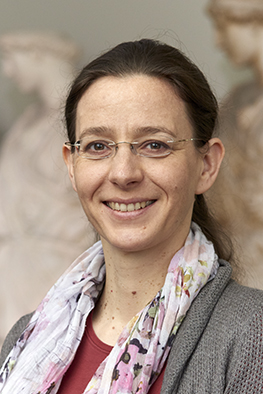
Dr. Christina Leypold is a Lecturer in Classical Archaeology and Managing Director of the Institute of Archaeology at the University of Zurich. She has held these positions since 2016 and has established herself as a leading scholar in Greek archaeology, with a particular focus on the sanctuary of Olympia. Her academic career includes research and teaching positions at the University of Zurich and the University of Würzburg, where she completed her doctoral studies. Her educational background includes: PhD in Classical Archaeology from the University of Würzburg (2006) Magister Artium with thesis on Greek temple architecture (1999) Studies in Classical Archaeology, Ancient History, and Art History at Tübingen, Athens, and Würzburg (1994-1999) Studies in monument preservation and building research in Bamberg (1999-2000) Dr. Leypold's research centers on Greek sanctuaries, with special emphasis on Olympia, votive practices, and sanctuary architecture. Her work examines how statues were displayed in the Zeus sanctuary over centuries, analyzing their topographical context and the evolution of votive practices. She has conducted extensive fieldwork at Olympia, investigating statue bases, bathing facilities, and other architectural elements, which has led to significant insights into ancient Greek religious practices and spatial organization of sacred spaces. Her monograph 'Banquet Buildings in Greek Sanctuaries' established her expertise in sacred dining structures within Greek religious contexts. Her publication record reveals consistent thematic focus on the spatial organization of Greek sanctuaries, particularly Olympia, with recurring investigations into votive practices, ritual purification through water installations, and the display of honorific and votive statues. Her research demonstrates how ancient Greek communities organized sacred space and how this organization evolved over time, reflecting changing social and political contexts from the Archaic through Hellenistic periods. Dr. Leypold has received several prestigious awards and fellowships: CAS Leadership und Governance an Hochschulen (2020-2021) Marie Heim-Vögtlin Fellowship of the Swiss National Science Foundation (2012-2014) Dr. Meyer-Struckmann Scholarship Program for Humanities Scholars (2007) Travel Grant from the German Archaeological Institute (2008) Fellowship from the German National Academic Foundation for her PhD studies As a supervisor, Dr. Leypold has mentored numerous students on her research projects, particularly the 'Statue Display in the Zeus Sanctuary at Olympia' project. She has secured funding from several prestigious sources including the German Archaeological Institute, the Dr. Meyer Struckmann Foundation, the Marie Heim-Vögtlin Foundation (SNSF), and the Institute of Archaeology at the University of Zurich. Her collaborative approach is evident in her numerous co-edited volumes and joint publications with scholars like Martin Mohr and Christian Russenberger. Dr. Leypold maintains active fieldwork connections at Olympia, with recent excavations in 2022-2023 focusing on statue bases. Dr. Leypold is actively involved in several research teams and clusters, including Research Cluster 4 of the German Archaeological Institute on 'Sanctuaries' and the Zurich Center for Ancient Studies (ZAZH). Her work at Olympia is part of a long-term collaboration with the German Archaeological Institute, which has been excavating at the site since the 19th century. She is scheduled to be a Visiting Scholar at the University of Edinburgh's School of History, Classics, and Archaeology in January-February 2025, which will likely foster new collaborative research directions.
Dr. Jeannine Wintzer is a Lecturer in Social and Cultural Geography at the Institute of Geography, University of Bern, Switzerland. She completed her habilitation in 2021 with the thesis 'Towards social relations of space. Geographical research and teaching in knowledge society' and has served as Head of Studies for the Department of Geography since FS2025. Her academic journey includes a diploma in Geography from Friedrich-Schiller University Jena (1998-2005) and PhD studies at the University of Bern (2008-2012) focusing on 'Telling geographies: scientific narratives of gender and space.' Wintzer's research spans visual geographies, discourse and metaphor analysis, gender-sensitive research, and decolonization of scientific data. She has made significant contributions to understanding how group-specific language reflects ideas about people and places, analyzing political discourse from the Third Reich, GDR, and contemporary movements like AfD. Her work demonstrates how language and images shape communication in political debates, media, and educational institutions. Her publication record shows consistent scholarly output with 15 recent articles (2018-2024) focusing on visual methodologies, diversity in geography education, ethical research practices, and spatial theory. These works reveal her commitment to innovative teaching methods like flipped classroom approaches and her critical examination of representation in political communication, migration studies, and colonial heritage. As an active academic leader, Wintzer serves as Joint Head of the Qualitative Methods in Geography Working Group and the AK Hochschullehre in der Geographie. She has supervised numerous bachelor's, master's, and PhD students, with particular focus on qualitative methods, visual geographies, and critical approaches to spatial analysis. Her editorial work includes significant textbooks that have shaped geographical education in German-speaking contexts.
Marc-Antoine Berthod is a Professor at the School of Social Work and Health (HES-SO University of Applied Sciences and Arts Western Switzerland) , where he serves as Co-doyen and leads the LaReSS research lab. His work focuses on death studies, palliative care, and funeral practices through qualitative research. Current project Necropolis (2021-2025) examines funeral transitions among the elderly in Switzerland Completed studies include ecological cemetery requalification (2023) and assisted suicide ethnography (2017-2020) His research integrates anthropological perspectives on mortality, with particular attention to: Funeral spatial transformations Pandemic-induced grief dynamics Corporate bereavement support systems End-of-life care for disabled individuals Legal norm appropriation during crises Techno-scientific immortalism critique Collaborations span multiple institutions including CNRS (France), Antipodes publishers, and various Swiss funeral organizations. His publications appear in journals like Anthropological Quarterly , Death Studies , and Swiss Journal of Sociology .
Dr. Daniel Prati is a plant population biologist and postdoctoral researcher at the University of Bern's Institute of Plant Sciences, Department of Plant Ecology. His research focuses on ecological genetics, life-history evolution, and species interactions, particularly in the context of belowground interactions of non-indigenous invasive species. He is a project leader involved in the Biodiversity Exploratories initiative, studying plant diversity mechanisms and coexistence in grassland ecosystems. Combining observational and experimental approaches, his work utilizes field and common garden studies to address ecological dynamics under environmental pressures like drought and land-use changes. He is affiliated with the University of Bern, where his role emphasizes collaborative, large-scale research projects. His contributions span over 100 publications, covering topics such as biodiversity effects on ecosystem resilience, land-use impacts on plant communities, and the interplay between plant traits and environmental conditions. Research interests include understanding how biodiversity influences ecosystem functioning, particularly under extreme conditions like drought, and the role of invasive species in altering ecological interactions. His work bridges theoretical and applied ecology, informing strategies for biodiversity conservation and sustainable land management.