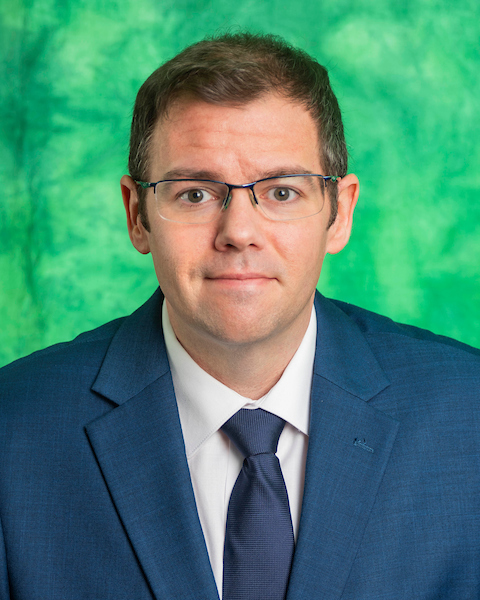
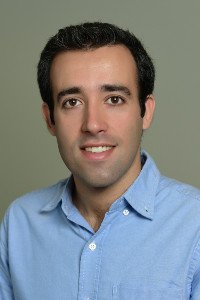
Dr. Bronson P. Bullock is a Professor at the University of Georgia's Warnell School of Forestry and Natural Resources and Director of the Plantation Management Research Cooperative (PMRC). He previously held positions at North Carolina State University. His research focuses on forest biometrics, silviculture, and quantitative timber management, with expertise in growth and yield modeling, spatial tree relationships, and Bayesian statistical methods. Education: PhD (2002), MS Biometrics (1998), MS Statistics (2000), and BS (1996) from Virginia Tech and Rutgers. His work bridges biometrics and practical forest management, emphasizing precision forestry and carbon dynamics. Research Interests: Volume equations, statistical sampling, silvicultural impacts, spatial matrix correlations, genetic homogeneity effects, diameter distributions, and carbon stock dynamics. He has published extensively in Forest Science , Forest Ecology and Management , and others. Labs/Centers: Harley Langdale Jr. Center for Forest Business and PMRC. Notable collaborations include studies on hurricane impacts and carbon sequestration in southern pine plantations.
Dr Mimoza Shabani is an Associate Professor in Economics at the University of East London (UEL), affiliated with the Royal Docks School of Business and Law and the Centre for the Study of States, Markets and People (STAMP). She holds a Master's in Business Economics from City University and a PhD in Economics from SOAS, University of London. Her research focuses on international banking, offshore financial centers, the Japanese economy, financialisation, and developing economics. She teaches Behavioural Economics, Research Methods, and Ethics in Banking. Her work examines global banking networks, financial systems dynamics, and the impact of crises on banking sectors. Recent contributions include co-editing International Banking in Global Perspective (2024) and analyzing US global banks' spatial dependence and Japanese banking expansion. Her research highlights topics like FinTech's role in sustainable banking, liquidity creation in emerging economies, and dividend distributions in Latin America. She supervises PhD students such as Michael Harrison, focusing on financial market microstructures. Dr Shabani’s work bridges theoretical economics with practical policy implications, particularly in crisis contexts and cross-border financial flows.
Dr. Timothy McMahan is an Assistant Professor in the Department of Computer Science at the University of North Texas. His research focuses on adaptive virtual environments, neurogaming, and applying VR/AR technologies to neuropsychological assessment and training. He holds a Ph.D. in Computer Science (2016) and multiple advanced degrees from UNT. Education: Ph.D. Computer Science, University of North Texas (2014–2016) M.S. Computer Science, University of North Texas (2007–2013) B.S. Computer Science, University of North Texas (2003–2007) Postdoctorate in Computational Neuropsychology, University of North Texas (2016–2017) Research Interests: Adaptive VR environments for personalized user experiences Neurogaming applications in healthcare and education Machine learning for cognitive assessment and environmental adaptation EEG-based analysis of user engagement and cognitive workload VR tools for neuropsychological disorder diagnosis and treatment Recent work emphasizes VR applications in memory research, adaptive systems leveraging real-time ML predictions, and EEG-driven analyses of subjective experiences. Articles focus on bridging virtual and real-world interactions through computational neuroscience methods. No scientific awards or grants are explicitly listed in the provided materials. No advisees or lab affiliations are documented here.
Dr. Aresha Martinez-Cardoso is an Assistant Professor in the Department of Public Health Sciences at the University of Chicago, where she leads the Embodying Racism Lab. As an interdisciplinary population health researcher, she investigates how race, policy, and social determinants of health interact to create racial and immigrant health disparities in the United States. PhD in Health Behavior and Health Education (2018), University of Michigan MS in Community Health Sciences (2013), University of California Los Angeles BA in Latin American Studies (2010), University of California Los Angeles Her research spans topics including structural racism, immigration enforcement, social determinants of health, and health equity interventions. She employs epidemiological methods combined with social science theory to analyze health disparities among Latinx and immigrant populations. Key focus areas include maternal and child health, aging, and the impact of political rhetoric on immigrant communities. Recent publications address structural healthcare disparities among aging immigrants (R21AG089148), maternal health inequities (K01MD019318), and mixed-methods evaluations of the DULCE intervention for Latinx families. Her work has appeared in Social Science & Medicine , Current Diabetes Reports , and JAMA Network Open . Scientific awards include consecutive National Institute of Health Loan Repayment Program grants from the National Institutes on Minority Health and Health Disparities (2019-2021, 2023-2024). Her research receives funding from the National Institute on Minority Health and Health Disparities, National Institute on Aging, Robert Wood Johnson Foundation, and U.S. Department of Health and Human Services. Dr. Martinez-Cardoso actively mentors undergraduate and graduate students, maintaining a hands-on approach to research training. Current lab members include Biological Sciences and MAPSS graduate students working on projects like Incarceration Nation, Brain Waste, and Structural Racism. Prior to joining the University of Chicago faculty, she completed a Provost’s Postdoctoral Fellowship at the same institution.
Dr. Nodir Djanibekov is a Researcher at the Leibniz Institute of Agricultural Development in Central and Eastern Europe (IAMO) , serving as Deputy Head of the Agricultural Policy Department since 2012. He leads the CARe research group on rural community resilience and acts as IAMO's contact for Central Asia international collaboration . Doctorate from University of Bonn's Center for Development Research (ZEF) Specializes in Central Asian agriculture , focusing on: Land and water governance Behavioral economics in farming Institutional analysis of agricultural reforms Climate change adaptation strategies His recent publications focus on water governance challenges (2025), economic integration impacts (2025), and adoption of sustainable practices (2024-2025). Research employs experimental economics and bio-economic modeling across Kazakhstan, Uzbekistan, and Kyrgyzstan. Key projects include: UzFarmBarometer - Understanding sustainable practice adoption AGRIWANET - Climate change and water scarcity CAWAMNET - Water conflicts and migration SUSADICA - Doctoral program on sustainable agriculture
Professor Alicia N. Rambaldi serves as Director of Research at the School of Economics, The University of Queensland, where she has established herself as a leading expert in applied econometrics and economic measurement. With a terminal degree completed in 1992 from the Department of Economics at Louisiana State University's Ourso College of Business, she has built an impressive career spanning over three decades focused on developing sophisticated methodologies for economic analysis. Her leadership role as Director of Research underscores her significant contributions to the academic community and her commitment to advancing economic research at both institutional and international levels. Professor Rambaldi's research interests span multiple dimensions of applied econometrics, with particular expertise in time series analysis, state-space modeling, and spatial econometrics. Her work has significantly advanced methodologies for computing price indices for land and property, developing techniques for estimation with linked administrative data, and creating innovative smoothing approaches that integrate spatial and temporal information. She has made substantial contributions to understanding housing market dynamics, particularly regarding flood risk impacts on property values, the effects of short-term rental regulations, and the relationship between urban amenities and property prices. Her research bridges theoretical econometric advances with practical applications that inform policy decisions in urban planning, environmental management, and economic development. Analysis of Professor Rambaldi's recent publications reveals a consistent focus on applying sophisticated econometric techniques to real-world economic problems, particularly in housing markets and economic measurement. Her work demonstrates a progression from foundational methodological developments to increasingly complex applications addressing contemporary challenges such as climate adaptation, urban planning, and international economic comparisons. A notable trend is her growing emphasis on high-frequency data analysis and the development of more responsive economic indicators that can better capture rapidly changing market conditions. Her research increasingly incorporates interdisciplinary perspectives, integrating insights from urban planning, environmental science, and behavioral economics to develop more comprehensive models of economic phenomena. Professor Rambaldi's research program has been supported by significant funding from the Australian Research Council, including multiple Discovery Projects and Linkage Projects. Her current projects include "Measuring the Commercial Real Estate Sector in Australia" (2022-2025), "An Integrated Demographic and Transport Demand Modelling Framework" (2019-2022), "Predicting the value and use of urban land" (2018-2021), and "Reliability of purchasing power parities from the World Bank" (2017-2021). These projects demonstrate her ability to secure competitive research funding and lead collaborative research efforts addressing important economic questions with practical policy implications. Professor Rambaldi is affiliated with the Centre for Efficiency and Productivity Analysis (CEPA) at the University of Queensland, where she contributes to a vibrant research community focused on advancing methodologies for economic measurement and productivity analysis. Her work often involves collaboration with interdisciplinary teams that include urban planners, environmental scientists, and policy analysts, reflecting the applied nature of her research and its relevance to real-world decision making. Through her leadership in research projects and her role as Director of Research, she plays a key role in shaping the research agenda at the School of Economics and fostering collaborations both within the university and with external partners.
Melinda Reinhardt, PhD, currently serves as Assistant Professor at the Department of Personality and Clinical Psychology within the Faculty of Humanities and Social Sciences at Károli Gáspár Reformed University. She holds a PhD in Psychology from Eötvös Loránd University (2014) and an MA in Psychology from the same institution (2005). Her research focuses on personality psychology, trauma and post-traumatic growth, mental health from positive psychological perspectives, family perception dynamics, adolescent psychological characteristics, emotional/behavioral disorders, visual expression psychology, and projective assessment methodologies. PhD in Psychology, Eötvös Loránd University (2014) MA in Psychology, Eötvös Loránd University (2005) Clinical Child and Youth Psychologist, University of Pécs (2010) Her publications emphasize adolescent mental health, family interaction patterns, projective drawing analysis (notably the Seven-Step Configuration Analysis method), and psychosomatic aspects of chronic conditions. Recent work examines emotion regulation in inflammatory diseases and the psychological dimensions of menstruation in youth. Scientific achievements include leading research groups on friendship psychology and menstrual cycle mental health at KRE, plus participation in collaborative projects with ELTE and Semmelweis University. She received first place at the National Applied Psychology PhD Conference (2010). Active in academic outreach, she has contributed to media psychology programs on M1 TV and organized creative workshops at research events. As founding member of the Psychology of Friendships Research Group and Psychology of Menstruation Research Group, she bridges clinical practice with theoretical innovation. Her methodological contributions to projective drawing analysis and family perception measurement demonstrate both empirical rigor and creative application of psychological principles.
Sekhar Somenahalli is a Senior Lecturer at University of South Australia 's UniSA STEM school, affiliated with the School of Natural and Built Environments . His work spans transport planning, urban analytics, and sustainable mobility systems, with a focus on walkability, traffic modeling, and public transport optimization. Research Themes : Walkability Assessment : Developed novel metrics for measuring land-use mix and pedestrian infrastructure quality Traffic Modeling : Pioneered multi-tier frameworks like the Tactical Adelaide Model Public Transport Innovation : Investigated bus-based transit corridors and interchange efficiency Shared Mobility : Identified regulatory and infrastructural barriers to sharing economy services His recent publications analyze census-based mobility prediction, spatiotemporal traffic patterns, and socio-demographic walkability variations. Despite extensive grant funding (e.g., CRC for Low Carbon Living), no specific awards are documented in the provided materials. He supervises research students and applies GIS extensively in urban infrastructure analysis.
Tracy L. Kijewski-Correa is the William J. Pulte Director of the Pulte Institute for Global Development and Academic Director of the Integration Lab (i-Lab) at the University of Notre Dame's Keough School of Global Affairs. She holds a joint appointment as Professor of Civil Engineering and Global Affairs in the Department of Civil and Environmental Engineering & Earth Sciences. Her research focuses on civil infrastructure challenges in both developed and developing contexts, with particular emphasis on natural hazard assessment and mitigation. A co-founder of Engineering2Empower (E2E), she has developed comprehensive strategies for sustainable housing in Haiti, integrating community-led innovation and market-based solutions. Her work spans multiple regions including Haiti, United States, Latin America, Middle East, South Asia, and South Pacific/Oceania. Kijewski-Correa's recent publications demonstrate a clear trend toward leveraging open data and computational approaches for high-fidelity regional loss estimations, particularly for hurricane risk assessment. Her work increasingly integrates computer vision, Bayesian data integration, and component-level fragility modeling to advance the precision of disaster impact predictions while maintaining computational tractability across large building portfolios. Kellogg Institute Faculty Fellow (since 2011) Her research has been supported by multiple grants including projects focused on climate adaptation in Bangladesh and Haiti, community-driven development in Haiti, post-disaster sheltering programs, and technology incubators for sustainable development. As director of the Pulte Institute and Academic Director of the i-Lab, she leads interdisciplinary teams working at the intersection of engineering, global development, and disaster resilience.
Alireza Khani is an Associate Professor in the Department of Civil, Environmental, and Geo-Engineering at the University of Minnesota's College of Engineering. His research focuses on modeling the impacts of emerging technologies on public transit systems and optimizing these systems for greater efficiency and reliability. Dr. Khani actively contributes to transportation research through numerous publications and substantial grant-funded projects. Dr. Khani's research interests center on transportation engineering with a particular emphasis on public transit systems. His work utilizes network modeling and optimization techniques to integrate public transit with autonomous mobility-on-demand services and electric fleets using renewable energy. His research spans urban mobility challenges, focusing on sustainable transportation solutions that address both passenger and freight transportation needs. His work increasingly incorporates machine learning techniques to analyze travel behavior and optimize transportation networks. His recent publications demonstrate a strong focus on electric bus systems, autonomous mobility-on-demand services, and optimization of transit networks. The research trends show progression from traditional transit modeling to integrating cutting-edge technologies like AI algorithms and autonomous vehicles. His work addresses critical transportation challenges including last-mile connectivity, rural transit solutions, and the transition to electric fleets, with growing emphasis on data-driven approaches to transportation planning. Dr. Khani actively mentors students and seeks undergraduate researchers for software development projects related to transportation systems. His research is supported by multiple substantial grants including projects funded by the National Science Foundation and the Minnesota Department of Transportation. Current projects include MobiliSlice: A Personalized Car-sharing System for Smart Urban Mobility , Estimating Likely Mode Shift and VMT Reduction Potential using TBI Data and AI Algorithms , and Transitioning to EV Fleets: Best Practices and A Decision Tool . Dr. Khani leads the UMN Transit research group, which focuses on developing mathematical, computational, and data analytic tools to evaluate and optimize transit systems. The group's research activities center on creating innovative solutions for modern transportation challenges, particularly those involving the integration of emerging technologies with traditional public transit infrastructure. The lab maintains strong connections with transportation agencies and actively contributes to practical solutions for real-world transit problems.
Dr. Diego Bassani is an Associate Professor of Epidemiology at the Dalla Lana School of Public Health and the Department of Pediatrics at the University of Toronto. He holds concurrent appointments as a Senior Scientist at The Hospital for Sick Children and Director of the International Program Evaluation Unit at the Centre for Global Child Health. His interdisciplinary work bridges epidemiology and network science to advance population health measurement. M.Sc., Ph.D. (Epidemiology) His research emphasizes large-scale epidemiological studies, network science applications, and methodological innovations in maternal and child health. Current projects include reconstructing population networks from national survey data, developing novel sampling designs, and enhancing timeliness in public health surveillance. Recent work explores allometric scaling, microbiota associations, and neonatal probiotic interventions. Key trends in his recent publications include network-based population health modeling (SEEDNet), microbiota analysis in Bangladeshi infants, and methodological advancements in cross-country health data synthesis. These studies span epidemiology, microbiology, and computational approaches. Dr. Bassani leads projects funded by the New Frontiers in Research Fund, NSERC, CIHR, Bill & Melinda Gates Foundation, and Global Affairs Canada. His methodological focus on network science aims to revolutionize health data collection and disease pattern detection. He collaborates with the ISI Foundation and contributes to open-source data infrastructure through initiatives like SEEDNet, supporting global health research and policy formulation.
Mathieu Bunel is a Lecturer in Economics at Université Bourgogne. His research focuses on discrimination in labor and housing markets, with a particular emphasis on experimental methods and public policy implications. He has collaborated extensively with Elisabeth Tovar, Pascale Petit, Yannick L'Horty, and other economists. Affiliation: Université Bourgogne His work spans Labor Economics , Public Economics , and Social Policy , often employing quasi-experimental and survey-based approaches. Recent publications (2021-2025) analyze discrimination in rental housing, leisure accommodation, and public employment agencies. Scientific awards: None explicitly mentioned. Key publications include studies on tenant selection bias, workplace discrimination in public sectors, and moral economics. His research frequently involves collaborations with institutions like MSH Dijon and Revue Economique.
Hervé Cardot is a Professor of Statistics and team leader of the Statistics, Probability, Optimization and Control (SPOC) group at the Institut de Mathématiques de Bourgogne (IMB) , University of Burgundy. His research spans functional data analysis, stochastic algorithms for robust estimation, survey sampling methodology, and applied statistics across diverse fields. Research Interests : Functional data analysis, online principal component analysis, zero-inflated regression, survey sampling, nonparametric estimation Key Applications : Agriculture, climatology, energy consumption, food science, remote sensing, medical imaging Recent Work includes: Developing statistical frameworks for analyzing categorical trajectories using multivariate functional PCA (2025) Advancing bias-robust estimation for functional data in survey sampling (2020) Creating online stochastic algorithms for high-dimensional robust estimation (2017) Applying semi-Markov models to sensory analysis (2018) Teaching at the University of Burgundy includes courses on statistical modeling, big data analysis, and applied statistics for economics and psychology. He supervises PhD students in statistics and co-edits Statistics and Probability Letters .
Aive Liibusk serves as Associate Professor of Geodesy at the Estonian University of Life Sciences, specifically within the Institute of Forestry and Engineering. Her institutional affiliation places her in the Chair of Forest and Land Management and Wood Processing Technologies, indicating her integration within the forestry engineering academic structure of the university. Professor Liibusk's research interests focus on geodetic applications within forest and land management contexts. Her work bridges traditional geodesy with modern forestry practices, particularly in spatial data collection, land surveying techniques specific to forested environments, and the application of precise measurement systems for sustainable forest management. Her expertise likely encompasses both theoretical geodetic principles and their practical implementation in forestry operations. As a faculty member specializing in geodesy within a forestry-focused institution, Professor Liibusk likely contributes to curriculum development and instruction in spatial measurement techniques essential for modern forest management practices. Her position suggests involvement in training future forestry professionals in land surveying, boundary determination, and spatial data acquisition methods specific to forest environments.
Bengt-Gunnar Jonsson is a Professor in the Department of Biology at Mid Sweden University's School of Natural Science, Design and Sustainable Development. With over 25 years of research experience, he specializes in boreal forest ecology, deadwood dynamics, and biodiversity conservation. His work focuses on wood-inhabiting fungi , lichen communities , and forest fragmentation effects , particularly in northern Sweden's high conservation value forests . Jonsson has been pivotal in developing green infrastructure models and climate-adaptive forestry strategies . Key research themes: forest conservation, fungal ecology, climate change mitigation, deadwood management Research tools: presence-absence sampling, Bayesian modeling, long-term ecological monitoring Policy contributions: EU Biodiversity Strategy evaluations, IPBES initiatives His recent publications (2025-2020) demonstrate sustained expertise in forest carbon dynamics , saproxylic community analysis , and landscape-scale conservation . Jonsson frequently collaborates with international researchers on temperate and boreal forest biodiversity , with notable work on functional ecology and ecosystem service trade-offs . Current projects include 'Climate - collaborative learning initiative' and 'Functional green infrastructure in boreal forests' . Scientific contributions span multiple systematic reviews in environmental management, including Forest Ecology and Management and Environmental Research Letters . He has co-authored Cambridge University Press 's Biodiversity in Dead Wood and contributed to IPBES policy frameworks. Jonsson's research integrates empirical forest monitoring with theoretical ecological modeling , particularly in wood decomposition processes and fungal community dynamics .