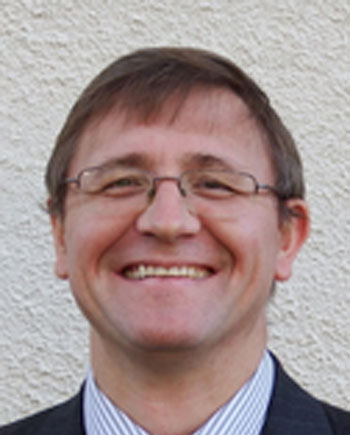
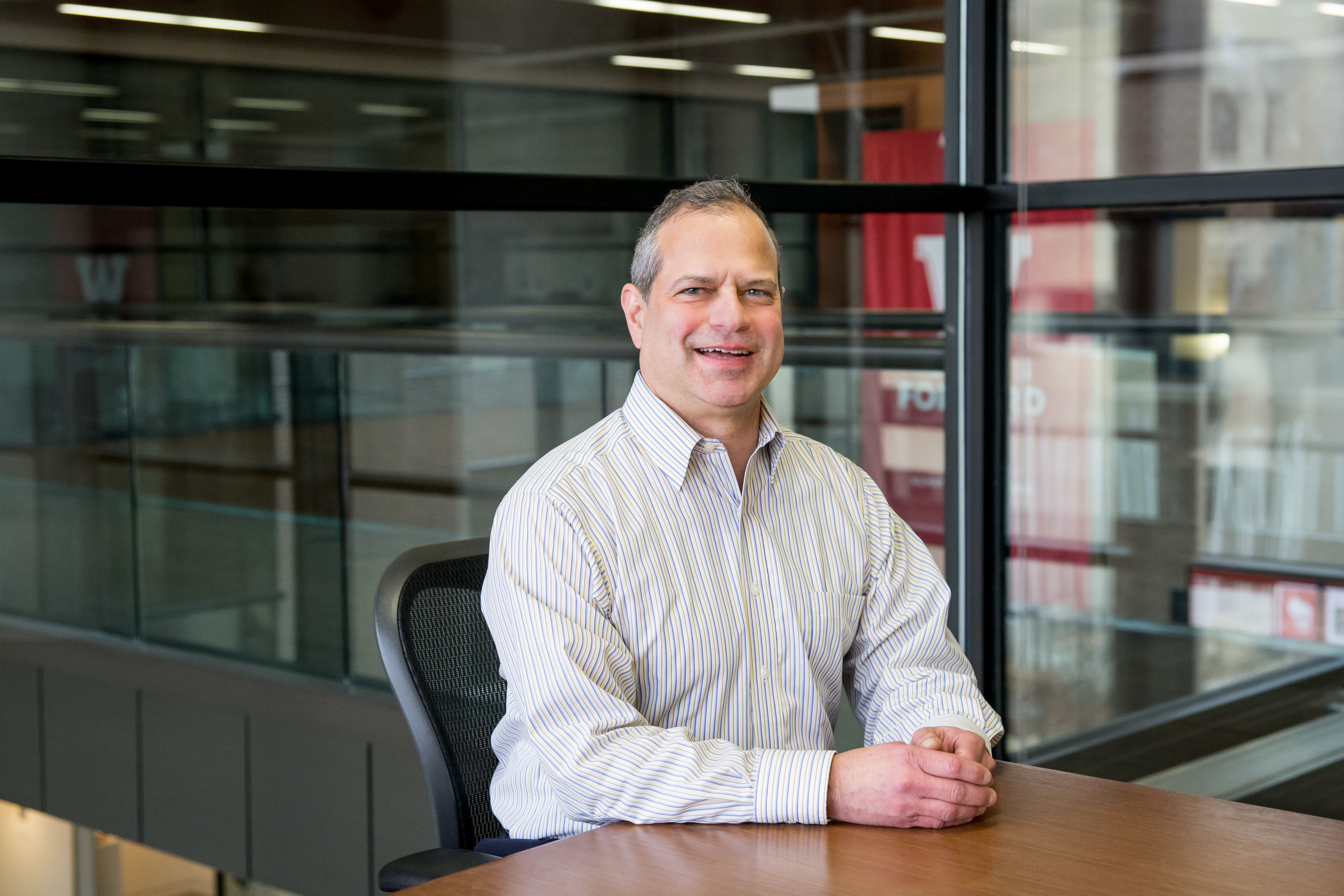
Nicole Ziegler is an Associate Professor and Graduate Chair at the University of Hawaii at Manoa, holding a PhD from Georgetown University. Her research focuses on second language acquisition (SLA) in instructed contexts, with particular emphasis on task-based language teaching (TBLT), computer-assisted language learning (CALL), and maritime English communication. She investigates how corrective feedback in traditional and digital environments influences learners' perceptions and language development, while also exploring lexical and socio-pragmatic challenges in the commercial shipping industry. Her expertise spans interdisciplinary research methodologies, including mixed-methods and synthetic approaches to enhance SLA and CALL research quality. Dr. Ziegler collaborates with cooperating faculty such as Graham Crookes, Dustin Crowther, and others, contributing to the development of authentic teaching materials based on real-world maritime communication needs. Her work bridges theoretical SLA frameworks with practical pedagogical applications in digital and traditional settings.
John Buck is Chancellor Professor of Electrical & Computer Engineering at the University of Massachusetts Dartmouth, with joint appointment in the School for Marine Science and Technology. Specializing in signal processing and acoustics, his research advances underwater sensing technologies and marine bioacoustics understanding. Education includes: PhD, Oceanographic Engineering, MIT/WHOI SM/EE, Electrical Engineering, MIT BS, Electrical Engineering & Humanities, MIT Buck's Signal Processing Group investigates how environmental information is encoded in acoustic signals. Research domains include: Underwater acoustic array processing and beamforming Marine mammal biosonar signal analysis Statistical methods for oceanographic sensing Covariance matrix estimation techniques Adaptive filtering for interference mitigation Recent publications focus on robust spectral estimation methods and adaptive beamformers capable of operating in complex acoustic environments. His 2024-2025 articles demonstrate innovations in array processing that enhance detection capabilities against noise and interferers. Significant scientific recognition: ONR Young Investigator (2000) NSF CAREER (1998) IEEE Mac Van Valkenburg Award (2005) MIT Goodwin Medal (1994) UMassD Leo Sullivan Teacher of the Year (2008) Buck leads research projects funded by the Office of Naval Research, including acoustic rainfall measurement systems and marine mammal bioacoustics studies. The Signal Processing Laboratory develops solutions for ocean exploration and environmental monitoring.
Dr. William J. Bologna is Assistant Professor in the Department of Speech-Language Pathology & Audiology at Towson University. He directs the Towson Auditory Simulation Lab (TASL), developing innovative assessment approaches using gamification and virtual reality. Research examines: Age-related changes in speech perception and spatial hearing Effects of gamification on auditory assessment Neural coding of speech in noisy environments Contributions of voice expectations to talker selection His work combines psychoacoustic methods with neurophysiological measures to study auditory aging. Recent publications investigate brainstem processing in older adults, gamified spatial hearing tests, and perceptual organization of interrupted speech. Educational background includes PhD (University of Maryland), AuD, and Certificate in Human Investigations (Oregon Health & Science University). Professional affiliations include American Auditory Society and Acoustical Society of America.
Dr. Salavat Aglyamov is a Research Professor in the Department of Mechanical and Aerospace Engineering at the University of Houston. His work focuses on biomechanical imaging and elastography techniques such as optical coherence elastography (OCE), Brillouin microscopy, and ultrasound. He leads the Biomedical Optics Laboratory and teaches courses in biomedical engineering. Research interests include corneal biomechanics, tissue stiffness analysis in diseases like glaucoma and keratoconus, and developmental biology applications in embryos and zebrafish models. Key innovations involve multimodal imaging systems combining OCT with other modalities for non-invasive tissue characterization. Recent studies address age-related lens changes, drug delivery monitoring, and the biomechanics of neural tube defects in mouse embryos. Education: Ph.D., Institute of Theoretical and Experimental Biophysics, Pushchino, Russia His research applies machine learning (CNNs) to improve strain estimation in OCE and explores clinical applications like glaucoma detection and corneal crosslinking treatment efficacy. He collaborates on projects involving systemic sclerosis assessment via OCT/OCE/OCTA and has developed novel methods for safe acoustic radiation force-based measurements on ocular tissues. His lab’s work spans from fundamental material science (e.g., Brillouin frequency shifts under environmental conditions) to translational medicine (e.g., drug delivery tracking). Publications emphasize high-resolution 3D elasticity mapping of embryos, alcohol’s impact on embryonic development, and nanobomb OCE for glioblastoma studies. His work bridges engineering and medicine through advanced optical techniques for understanding tissue mechanics in health and disease.
Stephen Quintana is a Professor in the School of Education at the University of Wisconsin–Madison, specializing in Counseling Psychology. Formerly an Associate Professor at the University of Texas at Austin and a Ford Foundation Postdoctoral Fellow, his career spans over three decades. He holds a Ph.D. in Counseling Psychology from the University of Notre Dame (1989) and completed a predoctoral internship at Penn State University. Quintana’s research focuses on ethnic-racial identity development in youth, particularly among marginalized groups like African American and Mexican American communities. He has pioneered studies on bi/multiracial Black youth experiences, Latino immigrant identity narratives, and the role of cultural competence in educational and clinical settings. His work integrates developmental, social, and clinical psychology to address systemic inequities. Key contributions include conceptualizing lifespan ethnic-racial identity models and analyzing peer/policy impacts on identity formation. Quintana serves as Associate Editor for Child Development and Journal of Counseling Psychology , and led the Wisconsin Partnership Grant with Centro Hispano. Awards include the Gimbel Child and Family Scholar designation and multiple AWARD recognitions. Education: PhD Counseling Psychology (Notre Dame, 1989), MA Psychology (Notre Dame, 1986), BA Psychology (Carleton College, 1983) Research Labs/Teams: Collaborates with Centro Hispano on community-based projects and leads UW-Madison’s multicultural education initiatives Grants: Wisconsin Partnership Grant, Ford Foundation Fellowship Quintana’s presentations at APA conventions highlight his commitment to teacher multicultural training and addressing educational disparities through psychological frameworks. His work bridges academic research with practical applications to empower marginalized youth through culturally responsive interventions.
Robert Wilton is a Professor of Social Geography at McMaster University's School of Earth, Environment & Society. His research focuses on the social geographies of disability, exploring barriers to social inclusion in employment, housing, and welfare systems. He has led SSHRC-funded studies on disabled individuals' experiences in labor markets and urban environments. Wilton has co-edited influential books like *Towards Enabling Geographies* and serves as an associate editor for *Health & Place*. Education : PhD in Geography (University of Southern California, 1999), MA in Geography (University of Southern California, 1994), BA (Hons) in Geography (University of Hull, 1991). Research Interests : Disability inclusion, mental health geographies, urban accessibility, and the intersection of gender with disability. His work analyzes how spatial contexts shape access to work, housing, and healthcare. Recent Articles : Recent publications examine disability housing adaptations, mental health workplace negotiations, and cancer risk communication. His research bridges geographical theories with practical policy implications for marginalized groups. Teaching : Teaches courses on urban social geography, human geography theories, and research methods. Recent courses include *ENVSOCTY 3UR3 Urban Social Geography* and *GEOG 729 Applying Social Theories*. Collaborations : Co-authors include Ann Fudge Schormans, Nick Marquis, and Nikolaos Yiannakoulias. Over 80 publications since 1993, with active collaborations in Canada and internationally.
Brian Wood is an Associate Professor in the Department of Anthropology at the University of California, Los Angeles (UCLA). He holds a Ph.D. in Anthropology from Harvard University (2010), an M.Sc. in Computer Science from Cal Poly San Luis Obispo (2004), and a B.A. in Anthropology from UC Davis (1999). His research focuses on hunter-gatherer behavioral ecology, evolutionary demography, and human-chimpanzee comparisons. He leads the Hadza Hunter-Gatherer Research project in Tanzania and collaborates with the Ngogo Chimpanzee Project in Uganda. Director of The Hadza Fund, a nonprofit providing healthcare and emergency services to the Hadza community. Recipient of grants from NSF, National Geographic, and the Max Planck Institute. Developed the Xtracks software for analyzing movement and spatial data. Advises PhD students in UCLA's biological anthropology program, offering fieldwork opportunities in Tanzania. Research interests include foraging strategies, food sharing, spatial behavior, and human-wildlife cooperation. Notable work includes discovering menopause in wild chimpanzees (Science 2023) and documenting culturally specific human-honeyguide communication (Science 2023). His work bridges anthropology, ecology, and conservation through quantitative and qualitative methods.
Jessica Lin is an Associate Professor in the Department of Mathematics and Statistics at McGill University, holding the Canada Research Chair in Partial Differential Equations and Probability (Tier 2). She specializes in stochastic homogenization, elliptic and parabolic equations, and reaction-diffusion systems. Prior to McGill, she was a Van Vleck Visiting Assistant Professor at the University of Wisconsin-Madison, and earned her Ph.D. from the University of Chicago in 2014 with undergraduate studies at NYU. Her research focuses on partial differential equations and probability, particularly in nonlinear phenomena, stochastic processes, and their applications to mathematical physics and materials science. Key areas include front propagation in stochastic environments, nondivergence form equations, and phase transition models in periodic media. Dr. Lin has contributed to foundational work on quantitative homogenization estimates for elliptic and parabolic equations, asymmetric cooperative motion, and barycentric Brownian systems. Her recent articles explore generalized front propagation, anisotropic surface tensions, and KPZ universality in random growth models. She has been recognized with the Canada Research Chair (Tier 2), and her work spans over 15 peer-reviewed articles since 2013. Her research combines analytical techniques with probabilistic methods, addressing multiscale problems in applied mathematics.
Prof. Sonia Laszlo is a Professor of Economics at McGill University’s Faculty of Arts, specializing in applied microeconomic analysis within economic development. Her research focuses on decision-making under uncertainty among subsistence farmers and the microeconomic effects of social policies on women’s well-being, particularly in Peru, Kenya, Paraguay, and the Caribbean. She employs experimental methods such as laboratory experiments, surveys, and randomized controlled trials. She is affiliated with the Centre Interuniversitaire de Recherche en Organizations (CIRANO) and the Grupo de Análisis para el Desarrollo (GRADE). As a co-founder and executive member of the Canadian Development Economics Study Group (CDESG), she bridges academic and policy communities in Canada. From 2016 to 2019, she served as Director of McGill’s Institute for the Study of International Development. Her research themes include gender norms, social protection programs, childcare access, and flood risk mitigation in Amazonian agriculture. Recent projects examine the impact of childcare subsidies on women’s employment in Kenyan urban slums and the transformative potential of graduation programs targeting gender equality. Notable contributions include analyzing long-term health consequences of civil conflict in Peru, the distributional effects of bribery in developing economies, and the role of ambiguity aversion in farming decisions. Her work emphasizes policy relevance, particularly in post-pandemic childcare provision and equitable economic recovery strategies.
Professor Eduardo Goldani Altmann is a faculty member in the Department of Mathematics at the University of Sydney. His research focuses on understanding complex systems through mathematical models and computational techniques, with a particular emphasis on nonlinear dynamics, statistical physics, and data science. He explores applications ranging from network theory to text analysis and biological systems like honeybee colony health. Research Interests: Altmann investigates the interplay between complexity and data-driven approaches, including chaotic systems, network dynamics, and the statistical properties of language. His work bridges disciplines such as physics, computer science, and biology. Grants & Collaborations: 2023: Learning the meso-scale organization of complex networks (Australian Research Council) 2021: Reducing the Morbidity of Head and Neck Cancer Treatment (Cancer Institute NSW) 2019: A complex systems approach to preventing colony failure in honey bees (Australian Research Council) Labs/Teams: Altmann leads a research group focused on complex systems analysis, with a webpage dedicated to their work: Group Website .
Dr. Jill Johnson is a Lecturer in Statistics at The University of Sheffield's School of Mathematics and Statistics. She holds a PhD in Statistics (Newcastle University, 2010), with a thesis on 'Modelling Dependence in Extreme Environmental Events'. Prior to academia, she worked as a research statistician at the UK Food and Environment Research Agency. Her research focuses on uncertainty quantification in climate models, surrogate modeling (emulation), and model-observation comparison. She has contributed to studies of aerosol processes, cloud dynamics, and climate system modeling using statistical methods. Notable work includes constraint of aerosol radiative forcing and analysis of climate model structural inconsistencies. Her research integrates data from simulations, satellites, and ground-based observations to address high-dimensional uncertainties in environmental systems. Education: PhD in Statistics (Newcastle University, 2010) Previous roles: Research Associate at University of Leeds (2012–2021) Research groups: Institute for Climate and Atmospheric Science, University of Leeds Her work emphasizes statistical methodologies to improve climate model accuracy, particularly in aerosol-cloud interactions and environmental risk analysis. Key contributions include emulator-based approaches for complex climate models and constraint of uncertain parameters using observational data. Publications span climate modeling, atmospheric science, and statistical emulation, with a focus on reducing uncertainties in climate projections and aerosol effects. Collaborations involve institutions like the University of Leeds, NASA, and international climate research networks.
Michael Heilemann is an Associate Professor of Electrical and Computer Engineering at the Hajim School of Engineering & Applied Sciences, University of Rochester. He holds a PhD from the same university (2018) and has been on faculty since 2018, focusing on instructional roles. His research emphasizes acoustics and vibration, human-computer interfaces, spatial audio, and digital audio effects, funded by the NSF, ONR, and New York State initiatives. He has been awarded eight patents and multiple teaching awards. Education: B.S. Physics (Canisius College, 2013); M.S. and Ph.D. in Electrical Engineering (University of Rochester, 2015 and 2018). Research interests include structural acoustic sensing, smart surfaces, and embedded machine learning for sound analysis. Notable work includes the University of Rochester room impulse response dataset and touch-location sensing on elastic surfaces. Awards include the AES Best Technical Paper (2022) and ECE Teaching Excellence (2023-2024). His work bridges signal processing and mechanical systems, with applications in audio interfaces, tactile feedback, and smart environments. Collaborative grants support projects like smart acoustic surfaces as multimodal interfaces.
Dr. Hao Wu is a Senior Lecturer in Property at the University of Melbourne's Melbourne School of Design. He holds dual affiliations with Ormond College (Senior Common Room member) and has served on professional committees for organizations like the Royal Institution of Chartered Surveyors (RICS) and the Australian Property Institute (API). His academic journey includes degrees from the University of Melbourne, University of Auckland, and Nanjing University. Research focuses on commercial property markets, urban economics, valuation theory, and sustainable land development. He applies new institutional economics and case study methods to explore property rights, policy design, and investment strategies. Spatial economics analyses in housing supply and brownfields redevelopment are key themes. Dr. Wu has taught at both undergraduate and graduate levels and serves on the editorial board of the Journal of International Housing Markets and Analysis. Professional activities include peer reviewing for academic journals and columnist roles in China Real Estate Business. His work bridges academic research with practical applications in property valuation, urban planning, and policy development. Recent collaborations involve developing quantitative frameworks for assessing brownfield redevelopment impacts and urban growth sustainability.
Greg Ridgeway serves as the Rebecca W. Bushnell Professor of Criminology at the University of Pennsylvania's School of Arts and Sciences, with a dual appointment in the Department of Statistics and Data Science. He holds multiple leadership roles including Co-director of the Data Driven Discovery Initiative and Co-editor-in-chief of the Journal of Quantitative Criminology. His affiliations span the Quattrone Center for the Fair Administration of Justice, Penn Injury Science Center, Center for Causal Inference, and Population Studies Center. His educational background includes a Ph.D. in Statistics from the University of Washington (1999), where his dissertation focused on Bayesian inference for massive datasets under advisors David Madigan and Thomas Richardson. Additional degrees include an M.S. in Statistics (1997) and B.S. in Statistics (1995) from the University of Washington and California Polytechnic State University respectively. Ridgeway's research centers on statistical methods for crime analysis and justice system improvement, with major contributions in police use-of-force analysis, racial profiling detection, and justice system benchmarking. His work bridges criminology and data science through innovative applications of propensity scoring, causal inference, and predictive modeling to real-world criminal justice challenges. He has developed methods implemented by police departments in Cincinnati, Los Angeles, and New York City, as well as Federal Public Defender Organizations. His 15 most recent publications demonstrate consistent focus on police behavior analysis, sentencing disparities, and environmental crime prevention. Key trends include the development of conditional likelihood models for officer shooting analysis, benchmarking systems for judicial accountability, and rigorous evaluation of place-based interventions like vacant lot remediation. His methodological contributions span criminology, statistics, and public health with strong emphasis on practical policy applications. Fellow of the American Society of Criminology (2025) Fellow of the Academy of Experimental Criminology (2024) Fellow of the American Statistical Association (2013) ASA Outstanding Statistical Application Award (2007) RAND Gold Medal Award (2007) 8 granted US patents in medical treatment hypothesis testing and resource pre-fetching Ridgeway has secured over $20 million in research funding from entities including Arnold Ventures, National Institute of Justice, and Neubauer Family Foundation. His advisory work includes directing the Master of Science in Criminology program and mentoring students through Penn's Graduate Groups. As former Acting Director of the National Institute of Justice (2013-2014), he led an 80-person agency with a $250M budget, implementing reforms like a $75M school safety research program. Current service includes chairing the American Statistical Association's Committee on Law and Justice Statistics. His leadership extends to directing RAND's Safety and Justice Program and Center on Quality Policing, where he managed 50-person teams and $10M in annual research. Current institutional roles include Co-director of the Data Driven Discovery Initiative, which he launched to develop data science for social good programming, seed grants, and a data science minor.
Jyh-Charn 'Steve' Liu is a Professor in the Department of Computer Science & Engineering at Texas A&M University, affiliated with the College of Engineering. His research focuses on real-time distributed systems, cyber-physical security, and interdisciplinary applications such as mathematical expression analysis and GNSS spoofing mitigation. Education: Ph.D., Electrical & Computer Engineering, University of Michigan (1989) M.S., Electrical Engineering, National Cheng Kung University (1981) B.S., Electrical Engineering, National Cheng Kung University (1979) Research Interests: Real-time distributed computing systems Cyber-physical systems security Behavior modeling and simulation Mathematical expression analysis and tools for STEM education GNSS spoofing detection and mitigation Blockchain-based supply chain management Key Publications Trends: Recent work emphasizes AI-driven solutions for mathematical document processing (e.g., LaTeX conversion from images), cybersecurity in navigation systems, and interdisciplinary applications like STEM education tools. Early-career contributions include real-time scheduling algorithms and embedded systems design. Awards: Senior Member, IEEE Computer Society (2014) Nominated for ACM Eugene L. Lawler Award (2013) Conference leadership roles (RTAS 2006/2007) Lab & Collaborations: Leads the Real Time Distributed Systems Lab, exploring areas such as verifiable credentials, urban navigation systems, and medical image analysis. Collaborates on projects like DIME (mathematical expression tool) and MOP (mathematical PDF labeling).