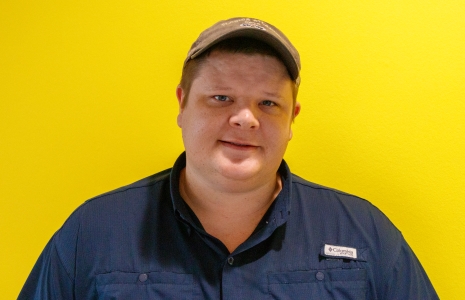
Dr. Corey T. Callaghan is an Assistant Professor in the Department of Wildlife Ecology and Conservation at the University of Florida . Based at the Fort Lauderdale Research and Education Center , his research focuses on global change ecology using big data from citizen science platforms like eBird and iNaturalist, combined with geospatial analyses and macroecological theory . Ph.D. (2019) from UNSW Sydney M.S. (2015) from Florida Atlantic University B.S. + B.S. (2013) from Canisius College His work examines urban ecology , including how species traits influence urban tolerance across birds, amphibians, and butterflies. He develops adaptive sampling frameworks to optimize citizen science data collection while addressing biases. Current projects analyze human-nature interactions through citizen science participation, secondary data in photographs, and machine learning for biodiversity monitoring. He actively contributes to conservation strategies for urban biodiversity and data-driven restoration efforts . Recent publications highlight his expertise in cross-taxa comparisons , continental-scale analyses , and ecosystem service quantification . He leads the Global Ecology Research Group at the University of Florida, emphasizing collaborative science and open-source methodologies .
Claire Bowern is Professor of Linguistics at Yale University specializing in historical linguistics, language documentation, and Australian Indigenous languages. Her research employs computational phylogenetics to study language evolution and supports language revitalization through digital archives and fieldwork methodologies. Recent publications address: Phylogenetic signal in lexical evolution across language families Digital infrastructure for endangered language documentation (FLEx software analysis) Decolonizing linguistics pedagogy and research practices Her work consistently integrates linguistic, anthropological, and computational approaches to analyze language diversity and change. She contributes to global databases including Grambank and D-PLACE, examining links between linguistic, cultural, and environmental patterns.
Jennifer Olsen, PhD, is an Assistant Professor of Computer Science at the University of San Diego since 2020. She holds a PhD, MS, and BS in Human-Computer Interaction and Cognitive Science from Carnegie Mellon University, followed by postdoctoral research at the Swiss Federal Institute of Technology (EPFL), Lausanne, Switzerland. Her research focuses on the intersection of human-computer interaction, cognition, and education, emphasizing collaborative learning and educational technology design from both learner and instructor perspectives. Education: PhD in Human-Computer Interaction, Carnegie Mellon University MS in Human-Computer Interaction, Carnegie Mellon University BS in Cognitive Science, Carnegie Mellon University Research Interests: Dr. Olsen explores how collaboration supports learning, designs technologies to enhance educational practices, and investigates gaze-based metrics for understanding collaborative problem-solving. Her work spans gamified robotics, AI-driven orchestration systems, and virtual reality applications in vocational training. She emphasizes learner-centered design and the integration of social robots and virtual agents in pedagogical settings. Grants/Advising: While no specific grants or advisees are listed, her prolific publication record indicates active involvement in educational technology research and development. Her work addresses challenges in classroom orchestration, multimodal data analysis, and accessibility in educational robotics. Labs/Teams: Collaborates with interdisciplinary teams focused on educational technology, human-robot interaction, and adaptive learning systems. Her research leverages tools like FROG orchestration graphs and eye-tracking technologies to develop practical classroom solutions.
Dr. Leanne Archer is a Researcher in the School of Geographical Sciences at the University of Bristol, specializing in hydrology and climate change impacts. Her work focuses on flood risk assessment in Small Island Developing States, extreme rainfall events, and the application of convection-permitting climate models. She collaborates with experts like Prof. Paul Bates and Dr. Jonty Rougier on interdisciplinary projects addressing tropical cyclone hazards and climate adaptation strategies. Her research interests include analyzing flood exposure in vulnerable regions, soil moisture dynamics in urban flooding, and improving global flood forecasts for humanitarian operations. Archer’s publications emphasize the implications of climate change on rainfall-driven disasters, particularly in Puerto Rico and East Africa, using high-resolution climate projections to evaluate future risks under 1.5° C and 2° C warming scenarios. Recent work explores innovations like the Surface Water Ocean Topography Mission for flood modeling and evaluates the suitability of TanDEM-X data for inundation studies in island nations. Her contributions bridge environmental science with policy, aiming to enhance disaster preparedness and resilience in climate-sensitive regions.
Brandon M. Lucia is the Kavčić-Moura Professor of Electrical and Computer Engineering at Carnegie Mellon University and CEO/co-founder of Efficient Computer Company. He leads the Abstract research group and focuses his work on the intersection of computer architecture, systems, and programming languages. Education: Ph.D. in Computer Science and Engineering, University of Washington (2013) — advised by Luis Ceze Research Focus: Brandon's research is broadly centered on intermittent computing , edge computing , and energy-efficient architectures . Two major thrusts define his current work: Intermittent Computing: Making battery-free, energy-harvesting devices programmable and reliable despite frequent power failures. Applications include medical implants, space systems, and large-scale sensing. Orbital Edge Computing: Designing nanosatellite constellations that perform on-orbit data processing, enabling low-latency, high-resolution sensing in space-constrained environments. Scientific Awards: NSF CAREER Award (2017) IEEE TCCA Young Computer Architect Award (2019) Sloan Foundation Fellowship (2021) ASPLOS 2020 Best Paper Award OOPSLA 2015 Distinguished Paper & Artifact Awards IEEE Micro Top Picks (2016, 2018 Honorable Mention) Advising & Grants: Brandon actively advises a strong cohort of Ph.D. students including Zhuo Cheng, Bradley Denby, Souradip Ghosh, Harsh Desai, Kiwan Maeng, Emily Ruppel, and others. His group is funded by the NSF (CAREER and SHF grants), the Sloan Foundation, and industry partnerships. Labs & Teams: He directs the Abstract research group at CMU ECE, which hosts interdisciplinary projects spanning hardware design, compiler construction, and system software for ultra-low-power and space-borne computing platforms.
Maja J Matarić is the Chan Soon-Shiong Chaired and Distinguished Professor of Computer Science at the University of Southern California's Viterbi School of Engineering, with courtesy appointments in Neuroscience and Pediatrics. She serves as founding director of the USC Robotics and Autonomous Systems Center, co-director of the USC Robotics Research Lab, and Principal Scientist at Google DeepMind. Previously, she held leadership roles as USC's interim Vice President of Research (2020-2021) and Vice Dean for Research (2006-2019). Her educational background includes: PhD in Computer Science and Artificial Intelligence from MIT (1994) MS in Computer Science from MIT (1990) BS in Computer Science from University of Kansas (1987) Matarić pioneers Socially Assistive Robotics (SAR) , a field her lab named, focusing on human-robot interaction that provides assistance through social rather than physical support. Her research targets critical health and wellness challenges including post-stroke rehabilitation, autism spectrum disorder therapy, cognitive exercises for Alzheimer's patients, ADHD academic support, and mental health interventions. She develops systems modeling user engagement, personality, and motivation, with extensive real-world deployments in schools, rehabilitation centers, and homes. Analysis of her recent publications reveals dominant themes in cognitive health robotics (2025 CHI paper on LLM-powered elder care), pediatric assistive technology (2025 IDC speech therapy review), and adaptive preference modeling (2025 HRI contrastive learning work). Her research consistently bridges machine learning with human-centered design for vulnerable populations. Major scientific recognition includes: ACM Athena Lecturer Award (2024) ACM Eugene L. Lawler Humanitarian Award (2024) ACM Fellow (2020) Presidential Mentoring Award (2011) Multiple society fellowships (AAAS, IEEE, AAAI) As a dedicated mentor, Matarić has championed underrepresented groups through CRA-W, placing numerous women in faculty positions. She leads USC Viterbi's K-12 STEM Outreach Program serving low-income Los Angeles schools and authored The Robotics Prime for student education. Her research has secured significant funding enabling real-world technology transfer, with documented impact in rehabilitation centers and homes through deployable SAR systems. Her Robotics Research Lab at USC drives innovation in embodied AI, with current projects spanning LLM-integrated elder care robots, ADHD academic companions, and autism therapy systems. The lab emphasizes co-design with end-users and rigorous real-world validation across diverse populations.
Professor Jamie Peck is a University Killam Professor and Professor of Geography at the University of British Columbia, Faculty of Arts, Department of Geography. He holds the prestigious title of Distinguished University Scholar at UBC and maintains significant international academic affiliations including Visiting Professor at Oxford University's School of Geography and the Environment, Honorary Professorial Fellow at the University of Manchester, and Honorary Professor at the University of Nottingham. Peck received his PhD in Geography from the University of Manchester in 1988 following his BA (Hons) in Geography from the same institution. His distinguished academic career spans positions at the University of Manchester (1989-2000), University of Wisconsin-Madison (2000-2008), and his current position at UBC where he has been a central figure in economic geography and interdisciplinary social science. As an institutional political economist, Professor Peck's research critically examines the spatial dimensions of economic processes, with particular attention to how global phenomena like neoliberalization are constituted through local practices. His work bridges economic geography, urban studies, political economy, and social theory, consistently challenging conventional understandings of market processes and statecraft. Recent research focuses on Chinese state capitalism, especially the Greater Bay Area and Hong Kong's evolving political status, alongside methodological innovations in conjunctural analysis as demonstrated in his 2023 book Variegated Economies . His scholarly output reveals a sustained engagement with the variegated nature of capitalist development across different spatial contexts. Recent publications demonstrate a sophisticated methodological approach combining institutional analysis with extended case methods, emphasizing historical context and spatial specificity while challenging universalizing theoretical claims. His work on Chinese political economy represents a significant departure from conventional Western-centric analyses. University Killam Professor (2025) Lauréat Prix International de Géographie Vautrin Lud ("Nobel de Géographie") (2023) Corresponding Fellow of the British Academy Fellow of the Royal Society of Canada Clarivate Highly Cited, Social Sciences (2014-2024) Distinguished University Scholar, UBC (2017-present) Canada Research Chair in Urban & Regional Political Economy (2008-2022) Professor Peck has supervised numerous doctoral students whose dissertations examine diverse topics including global urban solutions industries, US-Mexico border economies, Rio de Janeiro's 'PACification' processes, and China's experimental economic zones. His supervision approach emphasizes theoretically sophisticated empirical work that connects local case studies to broader political economic processes. His Canada Research Chair position supported extensive research on urban and regional political economy, while his current Killam Professorship funds ongoing work on Chinese political economy and conjunctural analysis methodologies. While not formally affiliated with a specific laboratory, Professor Peck is deeply engaged with multiple scholarly networks through his editorial leadership as Managing Editor of EPA: Economy & Space and co-editor of the Economic Transformations book series. His role as Convenor of the Summer Institute in Economic Geography demonstrates his commitment to fostering scholarly exchange and theoretical development in economic geography as a discipline.
Anca Dragan is an Associate Professor in the Department of Electrical Engineering and Computer Sciences at the University of California, Berkeley, where she runs the InterACT Lab focused on algorithms for human-AI and human-robot interaction. Currently on leave from Berkeley, she leads AI Safety and Alignment at Google DeepMind, overseeing safety for Gemini models and preparing for future advancements. Dragan has been a co-PI of the Center for Human-Compatible AI and served on the steering committee for the Berkeley AI Research (BAIR) Lab. B.Sc. in Computer Science from Jacobs University Bremen, Germany Ph.D. from Carnegie Mellon University Dr. Dragan's research focuses on enabling AI agents to work effectively with, around, and in support of people. Her work bridges robotics, machine learning, and game theory to create systems that better understand human preferences and coordinate with users. Key areas include AI alignment (ensuring AI does what people actually want), learning reward functions from diverse human feedback forms, and developing algorithms for human-AI collaboration across domains like autonomous vehicles, brain-machine interfaces, and recommender systems. Her research emphasizes maintaining uncertainty about human preferences and accounting for the plurality of human values. Dr. Dragan's recent publications reveal a strong focus on addressing fundamental challenges in AI safety and alignment. Her work spans theoretical foundations of reward learning, practical implementations for human-AI coordination, and critical examinations of limitations in current approaches. There's a clear trajectory toward more robust, safe, and value-aligned AI systems that can handle complex human preferences while avoiding both present-day harms and potential catastrophic risks. IEEE RAS Early Academic Career Award in Robotics and Automation (2021) McEntyre Award for Excellence in Teaching (2020) PECASE (Presidential Early Career Award for Science and Engineering) (2019) Sloan Fellowship (2018) NSF CAREER Award (2017) Okawa Foundation Award (2017) MIT Tech Review 35 Innovators Under 35 (2017) Multiple best paper awards at top robotics and AI conferences Dr. Dragan has mentored numerous successful students who have gone on to faculty positions at MIT, Stanford, CMU, and Princeton, as well as industry roles at DeepMind, Waymo, and Meta. Her advising philosophy emphasizes both technical rigor and consideration of broader societal impacts. She has secured significant research funding including NSF CAREER, ONR Young Investigator, and Okawa Foundation awards, supporting work on human-AI interaction and alignment. Dragan has also consulted for Waymo for six years, helping develop roadmaps for deploying increasingly learning-based safety-critical systems. Dr. Dragan leads the InterACT Lab at UC Berkeley, which has produced influential work on Cooperative Inverse Reinforcement Learning, Inverse Reward Design, and other foundational concepts in human-AI interaction. The lab's research has significantly shaped the field of AI alignment, with applications spanning autonomous vehicles that coordinate with human drivers, brain-machine interfaces that adapt to user needs, and language models that better understand human preferences. Current work focuses on scaling safety approaches as AI capabilities advance, ensuring alignment keeps pace with technological progress.
Hyesoon Kim is a Professor at the Georgia Institute of Technology , affiliated with the College of Computing and leading the HPArch research group . She co-directs the Center for Research into Novel Computing Hierarchies (CRNCH) . Her research focuses on Computer Architecture , GPU , Compilers and Runtime Systems , and Hardware Security , particularly for heterogeneous systems. Contact : hyesoon@cc.gatech.edu Location : 266 Ferst Drive, KACB 2344, Atlanta, GA Research Trends Her recent work spans RISC-V extensions for security, CUDA optimization on softcore GPUs, memory safety techniques, and energy-efficient deep learning architectures. Articles emphasize heterogeneous computing , GPU performance scaling, and IoT -oriented neural network methods. Open Source Projects She leads development of Macsim (heterogeneous architecture simulator) and Vortex (open-source GPU platform).
Han Liu is a Professor in the Department of Computer Science at Northwestern University's McCormick School of Engineering. He directs the MAGICS (Modern Artificial General Intelligible and Computer Systems) Lab and the Center for Foundation Models and Generative AI at Northwestern, with prior roles as director of the Deep Reinforcement Learning Center at Tencent AI Lab and professor at Princeton and Johns Hopkins Universities. PhD in Machine Learning and Statistics from Carnegie Mellon University (2012), advised by John Lafferty and Larry Wasserman Han Liu's research focuses on integrating artificial intelligence with computer systems, particularly through foundation models and probabilistic graphical models. His work aims to revolutionize science, engineering, and business by deploying statistical machine learning methods in edge and cloud computing environments. Recent research trends include transformer-based models, modern Hopfield networks, genomic foundation models, and theoretical analysis of attention mechanisms. His 2025 publications explore topics like species differentiation with DNA embeddings, universal approximation capabilities of transformers, and metaverse spatial reasoning. Alfred P Sloan Fellowship in Mathematics IMS Tweedie New Researcher Award ASA Noether Young Scholar Award NSF CAREER Award Presidential Early Career Awards for Scientists and Engineers Han Liu serves as associate editor for the Journal of American Statistical Association, Electronic Journal of Statistics, Technometrics, and the Journal of Portfolio Management. He has directed research centers at Northwestern and contributed to major conferences as area chair (NeurIPS, ICML, ICLR).
Prof. Dr. Alexander Stroh-Steckelberg is Professor of Political Science with a focus on African Politics & Development Policy at the University of Bayreuth since 2022. He serves as Deputy Head of the Bayreuth International Graduate School of African Studies (BIGSAS) until 2025 and has held prior roles as Junior Professor and Senior Fellow at BIGSAS (2015–2021). His academic career includes research associate positions at the GIGA German Institute of Global and Area Studies (2006–2015) and teaching roles at the Universities of Abomey-Calavi, Heidelberg, and Lüneburg. Stroh-Steckelberg’s research spans comparative democracy studies , judicial politics , electoral systems , political party dynamics , and development policy in Africa, with regional expertise in Francophone West Africa and Rwanda . His work emphasizes institutional diffusion, informal networks in courts, and the interplay between formal and informal governance structures. Recent publications reveal a focus on judicial appointment policies , electoral manipulation , and local governance challenges across Africa. He contributes to methodological advancements in comparative area studies and network analysis , particularly in non-Western democracies. Stroh-Steckelberg is actively involved in academic communities including the American Political Science Association , German Political Science Association , and Association for African Studies in Germany .
Sarah Billington is the UPS Foundation Professor of Civil and Environmental Engineering at Stanford University and a Senior Fellow at the Woods Institute for the Environment. Her research program focuses on sustainable building design, human wellbeing, and ethical supply chain practices. Education: PhD, University of Texas at Austin, Structural Engineering (1997) MSE, University of Texas at Austin, Structural Engineering (1994) BSE, Princeton University, Civil Engineering & Operations Research (1990) Her lab employs interdisciplinary methods to study how built environments impact human physical, psychological, and social wellbeing. Current projects include developing tools to quantify nature exposure in buildings, exploring affordable housing's role in wellbeing, and using AI to assess forced labor risks in material supply chains. While no longer active in this area, her group previously pioneered research on sustainable construction materials like bio-based composites and ductile cement-based composites. Her recent publications address topics such as nature integration in architecture, workplace design optimization, and health impacts of building materials. The Billington Lab at Stanford fosters collaborative team science, welcoming partnerships to advance occupant-centric engineering solutions.
Junfu Zhang is a Professor of Economics and Department Chair at Clark University. His research focuses on applied microeconomics, particularly urban and regional economics, with an emphasis on urbanization in China, entrepreneurship, regional development, and racial housing segregation. He holds a B.A. from Renmin University of China (1993), and M.A. and Ph.D. from Johns Hopkins University (1999, 2001). Prior to joining Clark in 2006, he was a research fellow at the Public Policy Institute of California and a Brookings Institution fellow (2000–2001). He has been an IZA Research Fellow since 2007 and served as President of the Chinese Economists Society (2019–2020). Education: B.A., International Economics, Renmin University of China, 1993 M.A., Economics, Clark University, 1997 M.A., Economics, Johns Hopkins University, 1999 Ph.D., Economics, Johns Hopkins University, 2001 Research Interests: Dr. Zhang's research explores urbanization dynamics in China, including land use policies, housing tenure systems, and economic segregation. His work also addresses entrepreneurship, high-tech industrial clusters, and the economic impacts of urbanization. Recent studies include analyses of land regulation, Super Bowl economic effects, and gender competition in labor markets. Recent Research Trends: His articles reflect a focus on China's socio-economic challenges, such as urban land policies, housing wealth effects, and regional development disparities. Collaborative projects with institutions like IZA and CES highlight interdisciplinary engagement. Awards and Affiliations: IZA Research Fellow (2007–present) Former President, Chinese Economists Society (2019–2020) Advising and Grants: No specific grant or student advising details are listed, though his research often involves collaborative teams. His work is supported by institutional affiliations and academic networks. Labs and Teams: No dedicated labs are mentioned, but his research engages interdisciplinary teams focusing on urban economics and regional policy.
Dr. Haneen Farah is an Associate Professor in the Department of Transport & Planning at Delft University of Technology and co-director of the Traffic and Transportation Safety Lab. She also serves as head of the Traffic Systems Engineering section. Her research focuses on road infrastructure design, road user behavior, and traffic safety, integrating transportation engineering, human factors, and econometrics. Prior to TU Delft, she was a postdoc at KTH Royal Institute of Technology and earned her M.Sc. and Ph.D. in Transportation Engineering from the Technion-Israel Institute of Technology. Her work includes national/international projects like SAMEN (mixed automated/human traffic implications), AfroSAFE (road safety in Africa), and XCARCITY (sustainable city mobility). She teaches undergraduate and graduate courses on road design and traffic safety, including online programs for low/middle-income countries. Farah supervises multiple PhD and Master students in her research areas, contributing to over 50 peer-reviewed publications. Key research themes include infrastructure design for automated vehicles, driver behavior modeling, cyclist safety, and policy implementation of the Safe System approach. Her interdisciplinary approach bridges engineering and psychology to enhance traffic safety and efficiency through advanced analytics and simulation models.
Prof. Dr. Thomas Brinkhoff is Chair of the Institute Board and Chair of Geoinformatics at Oldenburg University of Applied Sciences. He leads the Institute for Applied Photogrammetry and Geoinformatics (IAPG) and contributes to institutions like the Association for the Promotion of Geoinformatics in Northern Germany (GiN e.V.) and the Oldenburg Research and Development Institute for Computer Science (OFFIS e.V.). Education: Diploma in Computer Science (Informatik), Universität Bremen (1990) Doctorate in Computer Science (Dr. rer. nat.), Ludwig Maximilian University of Munich (1994) Brinkhoff's research spans geodatabase systems, spatiotemporal data processing, geosensor analytics, and location-based services. His work addresses Volunteered Geographic Information (VGI), web-based geospatial visualization, and mobile data integration, with applications in traffic management and forensic science. Recent projects include ProSaDi (Digital Provenance and Collection Research) and contributions to the Laboratory for optical 3D metrology . He has served on program committees for ACM SIGSPATIAL (2002-2019), AGILE conferences (2010-2025), and editorial boards of journals like GeoInformatica and TGIS. Notable Lectures: 2024: Forensic applications of tachograph data 2023: Geoinformatics in homicide investigations 2022: Spatiotemporal analysis for sustainability projects 2015: Open geodata standards at FOSSGIS 2014: Mobile sensor data processing