Dr. Victor Cifarelli is a Professor of Mathematics Education in the Mathematics & Statistics Department at the University of North Carolina at Charlotte. His research specializes in Mathematics Education with emphasis on problem solving, mathematical reasoning, and learning processes. His publications investigate cognitive aspects of mathematics learning including: Problem posing and reformulation strategies Abductive reasoning processes Reflective abstraction mechanisms Enactive metaphorizing Student-invented algorithms Recent work addresses educational challenges during the pandemic and philosophical approaches to environmental problem solving. His research contributes to teacher education through studies on pedagogical content knowledge and NAEP-based curriculum development.
Steven Hugh White is an Associate Professor in Elementary Education - Social Studies at the University of Kansas since 1994. His research focuses on geographic literacy, historical understanding, and instructional strategies, with a particular interest in integrating GIS technology into education. He reviews for journals like Journal of Social Studies Research and Middle Level Education . Education: BS.Ed. (Angelo State University), MS.Ed. (Texas A&M University), Ph.D. (Texas A&M University), all in education-related fields Research emphasizes practical strategies for teaching social studies and geography in elementary and middle school settings. His work bridges pedagogical methods with technological tools like GIS to enhance student engagement and spatial reasoning. Recent publications explore topics ranging from moral education to spatial literacy in zoological contexts. He actively participates in professional conferences such as the American Educational Research Association and National Council for Geographic Education. While no labs or teams are explicitly mentioned, his focus on instructional strategies suggests involvement in curriculum development initiatives.
Christine Gundermann is a Professor at the Historical Institute, Faculty of Human Sciences, University of Cologne, where she specializes in Public History and History Didactics. She is actively involved in research, teaching, and academic leadership, contributing to national and international scholarly networks. University: University of Cologne School: Faculty of Human Sciences Department: Historical Institute Academic Rank: Professor Email: christine.gundermann@uni-koeln.de Her research focuses on Public History as a distinct sub-discipline, with particular emphasis on digital public history, comics as historical narratives, cultures of remembrance in Western Europe, and extracurricular historical learning. She investigates how visual and digital media shape historical consciousness and public understanding of the past. The most recent publications reveal a strong trend toward digital history, especially the analysis of historical content on social media such as Instagram, and the use of graphic narratives in memorial education. Her work explores the intersection of history, media, and public engagement, with recurring themes in Holocaust memory, gender representation, and transnational memory. Scientific Advisory Board, House of History of the Federal Republic of Germany Foundation (since 2021) Chair, Applied History/Public History Working Group, Association of German Historians (VHD) Board Member, Conference for History Didactics (KGD) Member, IFPH Curriculum and Training Committee Prof. Gundermann supervises doctoral dissertations and leads major research initiatives, including the DFG Network Public History and the development of the 'Orte der Demokratie in Köln' app. She frequently organizes and participates in lecture series, workshops, and conferences on comics, digital history, and public history pedagogy. She also co-edits influential publications that define the conceptual and methodological foundations of Public History in the German-speaking world. She is a key figure in the digital public history movement, having co-organized ring lectures and edited volumes that explore digital storytelling, historical learning in virtual spaces, and the educational potential of digital media. Her collaborative work with institutions like the ZZF Potsdam and the NS-Dokumentationszentrum Köln underscores her commitment to bridging academic research with public engagement.
Deanna Grant-Smith is a Research Fellow at the School of Justice, Queensland University of Technology (QUT), with a focus on work-integrated learning (WIL), social justice, and higher education policy. Her research addresses gender equity in education and urban planning, financial stress impacts on students, and employment scams. She collaborates widely on critical qualitative studies, often contributing to policy submissions and government inquiries. Key Affiliations: QUT Centre for Justice, School of Justice Research Themes: WIL well-being, transport justice, gender equity, disability inclusion, and financial literacy Recent Work Trends: 2024-2025 publications emphasize social justice in automated vehicle acceptance, equitable WIL practices, and longitudinal qualitative methods While no scientific awards are documented, her extensive briefing papers and policy submissions highlight practical impacts. She has not been listed as advising students but maintains strong collaborative ties with researchers like Tanya Weiler, Julie King, and Oscar Oviedo-Trespalacios.
Vanessa Warne is a Professor in the Department of English, Theatre, Film & Media at the Faculty of Arts, University of Manitoba, where she has taught and researched nineteenth-century literature for over two decades. Her work bridges literary studies with disability studies, the history of the book, and material culture. Education: PhD in English, Queen's University, 2001 MA in English, Queen's University, 1996 BA Honours in English, Queen's University, 1995 Her research focuses on critical disability studies—especially blindness studies—the history of raised-print books, tactile reading, and the representation of museums and material culture in Victorian literature. She explores how blind and visually impaired readers engaged with literature and how sensory experience shapes cultural production. Her interdisciplinary approach integrates literary analysis, archival research, and public humanities. The selected publications reflect a sustained inquiry into blindness as both a sensory condition and a cultural construct. Themes include tactile cartography, non-visual culture, accessibility in museum spaces, and the design of early print systems for blind readers. Her work spans British, American, and Canadian contexts, with increasing attention to transnational networks of disability knowledge. Scientific Awards: University of Manitoba, Student’s Teachers Recognition Award (2018) University of Manitoba, Dr. and Mrs. Ralph Campbell Outreach Award (2015) Olive Beatrice Stanton Award for Excellence in Teaching (2008) Merit Award for Teaching (2008) Graduate Students’ Association Award for Excellence in Graduate Teaching (2007) Warne is actively involved in graduate education, currently accepting Master’s and PhD students. She co-directs the Crafting Communities research project and has led pedagogical initiatives using open educational resources during the pandemic. Her outreach includes co-organizing conferences on blindness studies and curating accessible exhibitions on tactile print and Victorian material culture. She co-hosts the podcast Victorian Samplings , which explores nineteenth-century material culture through interviews with scholars, artists, and curators. She has also co-curated digital and physical exhibitions such as Victorian Things and Books Without Ink: Blindness, Reading and Writing, 1830–1930 , emphasizing accessibility and public engagement.
Cecilia Furlan is an Assistant Professor at the Institute of Landscape Architecture , part of the Department of Landscape, Water and Infrastructure at the University of Natural Resources and Life Sciences, Vienna (BOKU). She holds a joint PhD in Engineering and Urbanism from KU Leuven and IUAV Venice. Landscape Urbanism Circular Economy Urban Metabolism Spatial Research Resource Scarcity Her research focuses on systemic design approaches for circular economy transitions in urban and regional contexts, particularly through projects like ATLANTES and REPAiR . She explores material flow mapping, post-industrial landscape regeneration, and urban wasteland transformation. Recent publications examine geodesign methods for circular construction hubs, ecosystem services in urban cemeteries, and spatial parameters for sustainable development. She contributes to international discourse through presentations at institutions in Austria, Belgium, Italy, Netherlands, and South Africa. 2020: Knowledge Frontiers Symposium grant 2019: EUROPAN 15 Runner-Up 2018: Premio Giovanni Ferraro PhD award 2014: Lisbon Open Room Competition honorable mention As a project leader for initiatives like Reindustrialisation Following the Brownfield Principle , she combines academic research with practical applications. She participates in peer-review activities for journals like Sustainability and Landscape Research , and organizes educational workshops on circular design.
Francesca Granone is an Associate Professor of Mathematics at the University of Stavanger, affiliated with the Faculty of Educational Sciences and Humanities and the Department of Kindergarten Teacher Education. She holds a Ph.D. in Material Science and a teaching license from the University of Genoa, supplemented by specialized pedagogy training at Kristiania University and Associaciòn Educar. In 2025, she received the 'Meritert Underviser' award for innovative and inclusive mathematics teaching. Her research focuses on: Mathematics didactics in early childhood education Inclusive research methodologies involving co-researchers with disabilities Digital competence development through coding toys (DiCoTe project) Physics education via activity cards Early intervention strategies (e.g., 'Tidlig Innsats' project) She leads the IRiMaD research group, pioneering inclusive research in mathematics education with collaborators including Glenn Knudsen and Mia Johansen. Her publications (2021-2025) emphasize technology-mediated learning, teacher strategies for inclusive play, and spatial/dialogical approaches in mathematics. Trends show consistent focus on bridging digital tools, disability inclusion, and early cognitive development. Awards: Meritert Underviser (2025) Grants & Projects: DiCoTe (Research Council of Norway): Professional digital competence in coding toys VERDI/INKODE (Stiftelsen Dam): Inclusive mathematics resources IRiMaD: Inclusive research in mathematics didactics Tidlig Innsats (KS): Risk identification in early childhood She collaborates extensively with ECEC practitioners in Norway/Italy and co-designs resources with end-users.
Prof. dr. sc. Vjekoslava Jurdana is a full Professor at the Faculty of Educational Sciences, University of Primorska. She holds appointments in the Department of Classroom Teaching and teaches undergraduate and graduate courses in Children's Literature, Oral Regional Heritage, and Crosscurricular Teaching Methodologies. Her work focuses on Istrian cultural heritage preservation, Chakavian poetry, and the intersection of literature with regional identity formation. Her research explores Croatian children's literature history through figures like Viktor Car Emin and Drago Gervais, analyzing their contributions to national cultural revival. She examines linguistic authenticity in regional education and the role of literature in transmitting cultural memory. Recent work includes analyses of Istrian periodicals, exilic poetry, and the adaptation of literary works into educational formats. Her publications span over a decade, addressing topics from 19th century bilingual publishing to modern reception of classical texts. While no specific awards are listed, her extensive academic production reflects significant contributions to Slavic literature studies and educational pedagogy in Croatia's multicultural context. Jurdana is actively involved in curriculum development integrating regional cultural assets into educational systems. Her teaching spans multiple study programs including Early Childhood Education and interdisciplinary Italian language studies, demonstrating commitment to preserving Liburnian cultural heritage through academia.
Corinne Le Gras is a Lecturer in the Department of Geography at the University of Rouen Normandy's UFR Letters and Human Sciences. She earned her doctoral thesis in 1992 and specializes in epistemological and pedagogical dimensions of geography. She co-directs the professional Master's program "Valorization of Natural and Cultural Heritage," coordinating 31 instructors and facilitating international student mobility projects. Her research examines disciplinary epistemology , the construction of geographical knowledge in education, heritage as a social construct, and spatial representation through literary/cinematic works. She teaches courses on geographical thought (Bachelor’s), heritage policy (Bachelor’s), landscape studies (Master’s), and CAPES oral exam preparation. Her publications emphasize geographical education , spatial modeling, and heritage discourse, with recurring themes of pedagogy, critical cartography, and interdisciplinary methodologies linking geography with literature and cultural studies. She collaborates with the ERIAC research unit (UR 4705) and participates in initiatives like the Rouen School of Phenomenology, eGesta (Digital Genetic Editions), and FIBIA (Ancient Iberian/Italian Collections).
Lilia Topouzova is an Assistant Professor of History and Creative Nonfiction at the University of Toronto, affiliated with the Centre for European and Eurasian Studies. Her work bridges academic research and media arts, focusing on political violence, trauma, and public memory in post-communist Eastern Europe. She holds a SSHRC Connection Grant for interdisciplinary projects on authoritarian legacies and collaborates on multimedia installations like *The Neighbours: Forms of Trauma*. **Research Interests**: Her scholarship examines the Bulgarian gulag system, state repression, and memory studies. She critically engages historical sources while emphasizing public-facing scholarship through documentary film, digital storytelling, and immersive installations. Recent projects explore the intersections of trauma, space, and collective memory in post-communist societies. **Awards & Recognition**: Recipient of the 2018 Souyz Outstanding Article Prize for work on Bulgarian gulag history and the 2007 Human Rights Award (Sarajevo Film Festival) for her documentary *The Mosquito Problem & Other Stories*. Her films have premiered at TIFF and Cannes, reviewed in major media outlets. **Grants & Collaborations**: SSHRC Connection Grant (*Authoritarianism: Lives, Legacies, Traumas*) with Joshua Arthurs. Collaborative art projects include *The Neighbours: Forms of Trauma* (2024 Heritage Toronto People’s Choice Award winner). Fellowships at institutions like Leibniz-Zentrum für Zeithistorische Forschung (Germany), Brown University, and York University. **Creative Works**: Scriptwriter and co-director of documentaries *The Mosquito Problem & Other Stories* (2007) and *Saturnia* (2012). Her creative nonfiction appears in *The European Review of Books*, while academic writing explores visual literacy and digital humanities pedagogy.
Dr. D Fairchild Ruggles is a distinguished Professor of Landscape Architecture, Architecture, Art and Design, and affiliated with multiple interdisciplinary units at the University of Illinois. Her primary academic role lies in the School of Architecture , where she holds the Presidential Humanities and Social Science Chair . She also directs the Unit for Criticism and Interpretive Theory, and holds professorships in Medieval Studies, Gender and Women's Studies, and the European Union Center. With a Ph.D. from the University of Pennsylvania and an A.B. from Harvard, her work bridges art history, environmental studies, and cultural heritage. Her research focuses on Islamic art, architecture, and gardens , particularly in medieval Iberia and South Asia, exploring intersections between religious practices, cultural exchange, and environmental history. Notable works include the award-winning Islamic Gardens and Landscapes (2008) and Tree of Pearls (2020), which examines the architectural legacy of the 13th-century Egyptian queen Shajar al-Durr. Recent publications like Islamicate Environments (2025) emphasize water, land, and plant dynamics in pre-modern societies. Ruggles’ scholarly contributions extend to editing influential volumes such as Sites Unseen: Landscape and Vision (2007) and Islamic Art and Visual Culture (2011). She actively engages in public scholarship through documentaries, podcasts, and museum collaborations. Her 2020 Nancy Lapp Award-winning book highlights her influence in redefining narratives around medieval Islamic cultural heritage. Her advising and institutional roles include leading interdisciplinary initiatives at NCSA and fostering global gender equity studies. Ruggles’ work underscores the importance of integrating historical environmental practices with contemporary sustainability challenges, making her research both academically rigorous and socially relevant.
Justin Grinage is an Assistant Professor in the Department of Curriculum and Instruction at the University of Minnesota, where he focuses on critical whiteness studies, racial literacy, and anti-racist pedagogy. His research examines how racialization processes in schools reproduce systemic racism through neoliberal multiculturalism, affect theory, and critical literacy frameworks. Grinage’s research centers on racial melancholia theory, which he developed to analyze racial trauma and resistance in educational spaces. His work explores how historical racial violence informs classroom dynamics and how critical education can counteract these traumas through collaborative, non-competitive advising and anti-oppressive teaching. PhD from the University of Minnesota Co-editor of Reckoning with the Whiteness of English Education (2023) His recent publications analyze post-George Floyd equity challenges, racialized emotions in schools, and strategies for addressing censorship in literature. Grinage has received the Spencer Postdoctoral Fellowship and the Janet Emig Award for his groundbreaking work on whiteness and affect in English education. National Academy of Education/Spencer Postdoctoral Fellowship Janet Emig Award (2020) Institute for Teachers of Color Fellow (2020) Grinage teaches graduate-level courses on literacy in post-truth eras, sociocultural theory, and secondary English pedagogy. He emphasizes community-building in academia and challenges neoliberal structures through collaborative research mentorship.
Michele Postigliola is a Researcher at Sapienza University of Rome's Department of Methods and Models for Economy, Territory and Finance. His work focuses on economic history, public debt analysis, and institutional impacts on development. He teaches Economic History and has published extensively on Italian financial systems, Napoleonic reforms, and sustainable development. Research keywords include: economic history, institutional economics, public finance, demographic economics, and sustainable development. His recent publications examine land-use patterns, urban growth dynamics, and historical debt sustainability. He contributes to the academic community through historical data reconstruction and analysis of Italian cooperative credit systems.
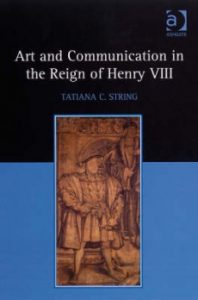
Tatiana C. String is an Associate Professor in the Department of Art History at the University of North Carolina at Chapel Hill . Her expertise lies in Early Modern European art and culture , with a focus on portraiture, gender dynamics, and visual communication during the sixteenth century. Before joining UNC in 2010, Dr. String taught at the University of Bristol. She has curated major exhibitions at the National Portrait Gallery and collaborated with institutions like the North Carolina Museum of Art. Her research currently explores masculinity and the male body in Renaissance art . Scientific Awards : Fellow of the Society of Antiquaries of London Kress Doctoral Fellow at the Warburg Institute Dr. String has supervised doctoral research on topics including family portraiture, architectural representation, and micro-pictorial techniques. Her publications reveal consistent trends in Renaissance gender studies, Tudor visual culture, and artistic communication across academic monographs and book chapters. She has served as historical consultant for the BBC and Historic Royal Palaces, blending academic work with public engagement through exhibitions like On the Nature of Women and History and Mystery at NCMA.
Karis Campion is a Legacy in Action Research Fellow at the Stephen Lawrence Research Centre, De Montfort University. She is a sociologist whose research critically examines Black mixed-race identities, urban geographies of race, anti-racism in higher education, and community institutions such as barbershops. Her work is deeply interdisciplinary, intersecting sociology, geography, and critical race studies. PhD in Sociology, University of Manchester (2017, ESRC +3) MSc in Social Research Methods and Statistics, University of Manchester BSocSci in Sociology PGCert in Academic Practice (HEA Fellow) Her research focuses on the intersections of race, place, identity, and institutional racism. She explores how Black mixed-race individuals navigate belonging, rejection, and spatial identity in urban Britain, particularly in Birmingham and London. Her ethnographic work investigates Black barbershops as sites of resistance, community, and cultural preservation amid gentrification. She also critically analyzes decolonial praxis, race equality policies like the Race Equality Charter, and the experiences of BAME students in higher education. Her recent publications span journals such as Ethnic and Racial Studies , Race Ethnicity and Education , and The Sociological Review , as well as the influential monograph Making Mixed Race: A Study of Time, Place and Identity (Routledge, 2021). Her work consistently addresses structural inequalities, historical context, and lived experience, offering nuanced insights into race and identity in contemporary Britain. Scientific contributions and recognition include: Author of Making Mixed Race (Routledge, 2021) Editorial Board Member, The Sociological Review Affiliate Member, Centre on Dynamics of Ethnicity (CoDE) British Sociological Association member Karis Campion has advised and mentored students informally through teaching and research supervision. She has secured research funding via the ESRC for her PhD and currently holds a research fellowship. Her work engages with public discourse through platforms like The Conversation and Wonkhe, advocating for racial justice in education and society. She is also a school governor, contributing to educational leadership beyond academia. She leads the ethnographic project Bringing the Black Barbershop into Focus , based at the Stephen Lawrence Research Centre, which investigates barbershops in Lambeth, South London, as racialized, protective social institutions under threat from gentrification. This project exemplifies her commitment to community-engaged, critical ethnography that centers marginalized voices and spaces.