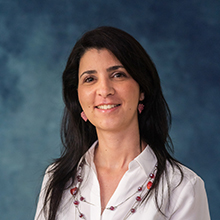
GHISALBERTI Alessandra is Full Professor of Economic and Political Geography at the Department of Foreign Languages, Literatures, and Cultures, University of Bergamo. She serves as Coordinator of the PhD program in Landscape Studies for Global and Local Challenges and President of the Master's Degree in Geourbanism. She also leads research on 'New Dwelling and Tourism' at the Lelio Pagani Center for Territorial Studies and is a member of the Imago Mundi Lab, reflecting her strong interdisciplinary engagement in geography, urban planning, and digital humanities. Her research focuses on mobility regimes—including migration, commuting, and tourism—and their impact on territorial dynamics in diverse global contexts such as rural Africa, urban Italy, East Asia, and Latin America. She investigates cartographic and landscape imaginaries, spatial justice, and the role of universities in territorial innovation. Her methodological approach emphasizes qualitative fieldwork, collaborative digital mapping, visual tools, and historical cartography. The recent publications highlight a consistent trajectory in sustainable development, community-based co-mapping, digital humanities, and the intersection of memory, landscape, and regeneration. Themes such as water resources, migration networks, and educational innovation in geoscience demonstrate the breadth and applied nature of her work. Mobility and sustainable living Urban and landscape regeneration Collaborative and digital cartography Spatial justice and community engagement Educational innovation and third mission Interdisciplinary territorial research She is actively involved in supervising academic programs and leading research initiatives, with no mention of formal scientific awards in the provided text. Her teaching portfolio includes courses such as Geography of Movement, Development Geography, and Urban Regeneration, all at the graduate level. She applies collaborative learning methodologies that integrate digital and ecological transitions, reflecting a strong commitment to educational and societal impact. Her work is closely tied to stakeholder engagement and third mission activities, particularly through co-design with local communities and institutions. She promotes the integration of digital and ecological transformation in both research and education, positioning the university as a key actor in territorial ecosystems.
فیلترهای فعال: