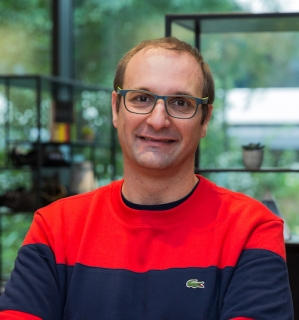
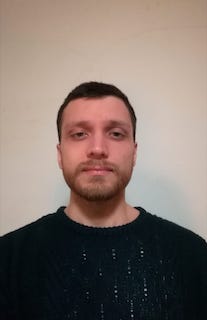
Ilaria Lucrezia Amerise is an Associate Professor in the Department of Economics, Statistics and Finance 'Giovanni Anania' (DESF) at the University of Calabria (UNICAL). Her research focuses on multivariate analysis, time series, nonparametric statistics, and statistical methods for complex/high-dimensional data including functional and spatial data. Editor-in-Chief of JP Journal of Biostatistics (ANVUR Area 13) Editorial Board Member of International Journal of Statistics and Systems (ANVUR Area 13) Recent research involves: Statistical preprocessing of crowdsourced data for Nigerian food prices Quantile regression with heteroskedasticity and non-crossing constraints Electricity demand forecasting via Reg-SARMA models Exchange rate prediction using simultaneous prediction intervals Time series outlier detection and smoothing techniques She contributes to academic governance through the Laboratorio Statistico Informatico (Statistical Informatics Lab) within DESF. Teaching includes undergraduate and graduate courses in Statistics, with materials available in both Italian and English.
Paola Mapelli is a Research Fellow at Vita-Salute San Raffaele University , affiliated with the Department of Diagnostic Imaging and Radiotherapy under the School of Medicine. Her role focuses on advanced imaging techniques and radiotherapy applications in oncology. Disciplinary Sector: IMAGING, RADIOTHERAPY AND NEURORADIOLOGY (MEDS-22/A) Contact: mapelli.paola@hsr.it Research Interests: Paola specializes in medical imaging and radiomics, particularly in oncology. Her work focuses on PET/MRI applications for brain tumors, prostate cancer, and pancreatic neuroendocrine tumors, with a strong emphasis on radiomics , motion correction , and spatial co-registration techniques to improve diagnostic accuracy and surgical planning. Publication Trends: Recent publications highlight her expertise in hybrid imaging modalities like [68Ga]Ga-PSMA-11 and [68Ga]Ga-RM2 PET/MRI, hypoxia pathway imaging using 18F-FAZA, and machine learning-driven analysis of tumor microenvironments. These works bridge clinical validation with computational imaging advancements. Labs & Collaborations: She actively collaborates on clinical trials and multidisciplinary projects involving cancer diagnostics, working with institutions publishing in Nuclear Medicine , Gastroenterology , and Bioengineering .
Fabrizio Silvestri is a Full Professor at Sapienza University of Rome's Department of Computer, Automatic and Management Engineering (DIAG), where he coordinates the Ph.D. program in Data Science. He leads the RSTLess research group focusing on Robust, Safe, and Transparent Deep Learning. Research interests: Artificial Intelligence, Machine Learning, Web Search, Natural Language Processing, Information Retrieval, Graph Neural Networks Research Trends from recent publications reveal: Advancements in sequential recommendation systems using topological and sheaf-based neural networks Focus on sustainable AI through eco-aware graph neural networks Counterfactual explanations for graph models and machine unlearning Security applications in dense retrieval and data poisoning defense Time series analysis for 5G network monitoring Integration of attention mechanisms and positional encoding in Transformers Scientific Achievements : ECIR 2018 Test of Time Award 3 Best Paper Awards (ECIR 2007, IEEE WI 2004, WSDM 2011 Runner-Up) Yahoo! Patent Milestone Award Recipient of Yahoo! Labs Excellence Program (LEAP) and Faculty Research Engagement Program (FREP) Finalist for ERCIM Cor Baayen Award (2005) Academic Leadership : Holds 9 industrial patents from Yahoo! and Facebook AI. Directed Facebook AI research groups combating malicious content. Ph.D. in Computer Science from University of Pisa with thesis on High-Performance Issues in Web Search Engines . Supervises thesis projects through the RSTLess group website .
Jacopo Perazzoli is a Research Fellow (RTD-A) in Contemporary History at the Department of Humanities, Philosophy, and Communication Studies, University of Bergamo, since December 1, 2022. Previously, he served as an Adjunct Professor of Contemporary History at the University of Milan and a Research Fellow at the Department of Foreign Languages, Literatures, and Cultures, University of Bergamo. His academic focus intersects with disciplines like Cultural Studies, Political History, and International Relations. University: University of Bergamo Department: Humanities, Philosophy, and Communication Studies Academic Rank: Research Fellow Perazzoli's research examines: Social democracy and socialist internationalism Anti-fascist movements and their transnational connections Italian political crises in global contexts Historical memory in democratic transitions His recent publications focus on: Resistance commemoration (e.g., 80 Liberation sites in Milan) Interwar political exiles US-Latin American cultural relations Italian-Chilean post-coup dynamics He contributes to academic discourse through editorial boards of journals like Rivista Storica del Socialismo and Annali Fondazione Francesco De Martino .
Nicola Nocentini holds a dual role as a Research Fellow at the Department of Earth Sciences, University of Florence, and a PhD candidate in Earth Sciences at the University of Pisa (2020-2023). His professional focus centers on civil protection systems, natural disaster prediction, emergency management, and non-structural risk mitigation strategies including public risk communication. He also serves as a volunteer forest fire fighting operator with the VAB association in Castiglion Fiorentino. His academic credentials include: B.Sc. in Geological Sciences from the University of Florence (2018), thesis: "Application of a model for the operative forecasting of landslides in the province of Florence" M.Sc. in Geological Sciences and Technologies from the University of Florence (2020), thesis: "Multi-criterial parameterization of soil geotechnical properties in the territory of the Metropolitan City of Florence for distributed and physically based modeling of the triggering of shallow landslides" Ph.D. in Earth Sciences at the University of Pisa (2020-2023), thesis: "Analysis of the influence of rainfall and vegetation in the spatial and temporal forecast of landslides through machine learning approach" Nocentini's research integrates machine learning with geospatial analysis to improve landslide forecasting systems, examining critical interactions between rainfall patterns, vegetation cover, and soil mechanics. His expertise spans geotechnical modeling, hydrogeological risk assessment, and GIS-based disaster prediction frameworks, with emphasis on operational civil protection applications. As a doctoral researcher, Nocentini operates under primary supervision of Professor Riccardo Fanti and Dr. Samuele Segoni at the University of Pisa. His work receives institutional support through the Earth Sciences Department's research infrastructure and computational resources dedicated to natural hazard modeling.
Costantino Grana is a Full Professor at the University of Modena and Reggio Emilia's Enzo Ferrari Department of Engineering, where he teaches Multimedia Data Processing and Fundamentals of Computer Science . His research bridges medical imaging, computer vision, and image processing, with applications ranging from healthcare (nephrology, dermoscopy) to digital preservation of cultural heritage. His core research interests include: Algorithms for connected components and medical image segmentation Content-based search systems for images/videos Deep learning applications in diagnostic imaging 3D reconstruction and analysis of medical/cultural artifacts Recent publications (2025) focus on medical image segmentation, real-time barcode detection, and diagnostic AI models, demonstrating strong emphasis on deep learning innovations for healthcare. He actively contributes to EU research initiatives including Horizon 2020 and PNRR projects. Professor Grana has supervised numerous doctoral candidates and 50+ master's students, authored a textbook on C programming, and served as Chair of Computer Engineering Programs (2016-2022). He maintains memberships in IEEE, ACM, and IAPR.
Simone Orlandini is a Full Professor and Department Director at the Department of Agricultural, Food, Environmental and Forestry Sciences and Technologies (DAGRI) at the University of Florence. He holds multiple leadership positions including President of the Collegio dei Direttori di Dipartimento dell'Università di Firenze, Vice President of Conferenza Nazionale per la Didattica Universitaria di AG.R.A.R.I.A, and Director of the Centro di Bioclimatologia. His extensive affiliations include editorial roles as Field Editor for the International Journal of Biometeorology and Director of the Italian Journal of Agrometeorology, along with membership in numerous scientific committees and societies. Professor Orlandini's research focuses on agronomy, agrometeorology, and agroclimatology with particular emphasis on soil-plant-atmosphere interactions, climate change impacts on agriculture, sustainable farming practices, and precision agriculture technologies. His work examines the dynamics between biotic and abiotic factors in cropping systems, with special attention to modeling techniques, remote sensing applications, and decision support systems for agricultural management. A significant portion of his research addresses water and carbon footprint assessments, renewable energy in agriculture, and climate change adaptation strategies. His recent publications (2024-2025) demonstrate a strong focus on sustainable agricultural practices, with particular attention to soil health improvement through cover crops, precision irrigation technologies using electrical resistivity tomography, nitrogen management for greenhouse gas reduction, and wheat variety selection for dryland environments. His research spans both fundamental scientific inquiry and practical applications for farmers, with studies conducted in diverse environments including Italy, Afghanistan, and West Africa. Ordinary Academic of Accademia dei Georgofili di Firenze Former chair of COST Action 734 CLIVAGRI (2006-2011) National delegate to World Meteorological Organization's Commission for Agricultural Meteorology Extensive editorial service for major international journals Professor Orlandini actively supervises graduate students as a member of the PhD Program in 'Scienze Agrarie e Ambientali' at the University of Florence and has evaluated numerous research projects for national and international funding agencies. His leadership in the Centro di Bioclimatologia provides students with opportunities to work on cutting-edge research in climate-smart agriculture, with access to both field and laboratory facilities for conducting innovative agricultural research.
Barbara Marana is a Researcher in Topography and Cartography at the University of Bergamo, School of Engineering, Department of Engineering and Applied Sciences (DISA). She has maintained an active academic career since 2003, progressing from Research Fellow to Confirmed Researcher in 2008, while also serving as an Adjunct Professor for Information Systems for the Territory and Topography courses from 2015-2023. Her educational background includes a Doctorate in Geodetic and Topographic Sciences from the Polytechnic University of Turin (1993-1997) and a Degree in Electronic Engineering with specialization in Automatic Control from the Polytechnic University of Milan (1991). She possesses strong English language skills and has authored over 60 scientific publications throughout her career. Dr. Marana's research focuses on the application of Geomatics technologies to cultural heritage preservation, environmental monitoring, and urban planning. Her work demonstrates particular expertise in GIS applications, LIDAR technology, 3D scanning, and photogrammetry for documenting and analyzing historical sites, military landscapes, and natural environments. She has developed innovative approaches for integrating these technologies to create detailed spatial analyses that support conservation efforts and sustainable development initiatives. Her recent work shows increasing emphasis on interdisciplinary applications, particularly in environmental monitoring and cultural heritage documentation. Analysis of her publication record reveals consistent thematic development across multiple domains: Early work focused on 3D modeling and documentation of archaeological sites in Central Sicily Mid-career publications expanded into military archaeology and LIDAR visualization techniques Recent research demonstrates sophisticated integration of multiple geospatial technologies for environmental applications, including air pollution analysis and climate change impact assessment Dr. Marana has received recognition for her contributions to geospatial science education through innovative teaching methods including challenge-based learning approaches to digital mapping instruction. Her educational work aligns with Sustainable Development Goals 4 (Quality Education) and 11 (Sustainable Cities and Communities). She leads research projects focused on cultural heritage documentation, particularly using 3D scanning and BIM technologies for historical structures, and maintains active collaborations on projects involving the Grotto of Saints in Enna and the Necropolis of Realmese in Calascibetta. Her methodology consistently combines traditional surveying techniques with advanced technologies including terrestrial laser scanning, UAV systems, and multispectral imagery.
Tiziana Ciano (born April 21, 1991) serves as a tenured Researcher and Assistant Professor at the Department of Economic and Political Sciences, University of Aosta Valley. She holds a PhD in Law and Economics & Doctoral Europaeus from Mediterranean University of Reggio Calabria & University of Portsmouth, and a Master's Degree in Economics obtained with highest honors. Her academic appointments include Contract Professor at DICEAM Department, Mediterranean University of Reggio Calabria, and membership in Decisions_Lab scientific laboratory. Dr. Ciano's research spans mathematical economics with strong AI applications: Artificial Intelligence and Applied Mathematics Machine Learning and Deep Learning for socio-economic systems Stochastic Programming and Multi-objective Optimization Dynamic Systems and Epidemic Modeling Decision Support Systems for tourism and finance Her recent publications reveal a consistent focus on applying advanced mathematical methods to portfolio optimization, pandemic dynamics, climate change sustainability, and tourist flow forecasting. She has developed tri-objective optimization models for financial decision-making and fuzzy fractional-order models for pandemic dynamics, demonstrating methodological innovation across multiple domains. Dr. Ciano has received multiple prestigious recognitions including the Best Poster Award at DySES2022 conference for her work on fake news sentiment analysis during pandemics, a Research Award for her paper on duopoly game analysis published in Symmetry, and the Anassilaos Giovani Ricerca Award under the patronage of the President of the Republic of Italy. She serves on editorial boards of high-impact journals including Mathematics (MDPI) Financial Mathematics section (Q1, IF 2.592), Applied Mathematical Sciences, and International Journal of Contemporary Mathematical Sciences. As Guest Editor, she has curated special issues on mathematical economics, differential games, and symmetry in machine learning algorithms. She regularly referees for Mathematical Problems in Engineering, Information Processing & Management, and Scientific Reports (NATURE). Dr. Ciano actively participates in Decisions_Lab research laboratory and leads multiple collaborative projects including MONTUR (Real-time Monitoring of Tourist Flows in Aosta Valley), MEC – Marketplace Ecosostenibile Calabria, and IUSTIT-IA. She has organized numerous international conferences including AMASES 2023, NUMTA2023, and special sessions on predictive analytics and machine learning applications in socio-economic systems.
Emanuela Dreassi is a Full Professor of Statistics at the University of Florence, where she currently serves as Director of the Department of Statistics, Computer Science, and Applications 'G. Parenti' (DiSIA) from November 1, 2024, to October 31, 2028. She is affiliated with the School of Economics and Management and has held various institutional roles including Director of the Bachelor's Program in Statistics (2014-2022) and Vice-President of the School of Economics and Management (2019-2022). Her research spans hierarchical Bayesian models and spatial statistics, with methodological advancements in specifying and estimating models for multilevel data, missing data, and latent variable models. She has made significant contributions to robust analysis in small area estimation, compatibility of conditional distributions, semicontinuous data modeling, Bayesian predictive inference, and knockoffs construction. Her work bridges theoretical statistics with practical applications in epidemiology, environmental studies, and medical research. Dreassi's recent publications (2020-2025) reveal a strong focus on methodological innovations in Bayesian statistics, spatial analysis, and knockoff filters for variable selection. She has published extensively in top statistical journals while also collaborating on interdisciplinary research in medical fields including plastic surgery and epidemiology. Her work demonstrates a consistent trajectory of advancing statistical methodology while maintaining strong connections to real-world applications across multiple domains. As an active referee for numerous prestigious journals including Biometrics, Journal of the Royal Statistical Society, and Statistics in Medicine, Dreassi contributes significantly to the scholarly community. She has coordinated research units for PRIN and HORIZON2020 projects and participated in numerous national and international conferences as organizer, scientific committee member, and session chair.