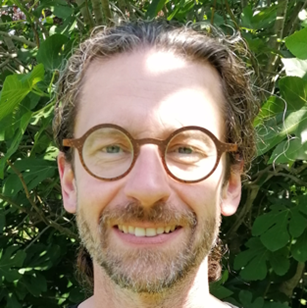
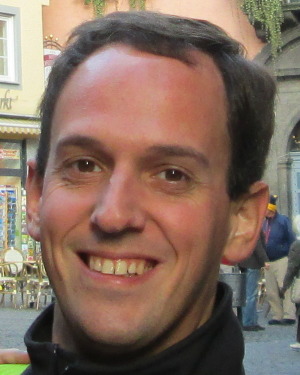
Prof. dr. Nico Van de Weghe is a full Professor of GIScience at the University of Ghent (UGent), affiliated with the CartoGIS research unit. His work bridges computer science, social science, and natural science through geospatial information studies, focusing on enabling machines to reason spatially (GeoAI). Since 2004, he has specialized in knowledge-based AI, particularly spatiotemporal reasoning and moving object analysis, with applications in animal behavior, criminology, healthcare, mobility, and sports. Van de Weghe's research emphasizes hybrid GeoAI systems combining knowledge-driven and data-driven approaches. Keywords include GeoAI, GIScience, Spatiotemporal Analysis, Moving Objects, and Data Mining. Recent publications highlight urban road network analysis, hybrid trajectory modeling, BIM semantic enrichment, and cycling safety studies using virtual reality.
Matthew B. Blaschko is a Professor in the Department of Electrical Engineering at KU Leuven, Belgium. He serves as director of the KU Leuven ELLIS unit and is a fellow in the ELLIS Health program. He is a Core PI in the Flanders AI Research Program, working as a workpackage lead for Decision Support Systems and Medical Imaging. Blaschko is also a member of the KU Leuven Institute for Artificial Intelligence and one of the leaders of the working group on Machine Learning and Data Science. Professor Blaschko received his B.S. from Columbia University, M.S. from the University of Massachusetts Amherst, and Dr. rer. nat. from Technische Universität Berlin (awarded for work at Max Planck Institutes Tübingen). He was a Newton International Fellow at the University of Oxford and received his Habilitation (HDR) from École Normale Supérieure de Cachan. Prior to joining KU Leuven, he was a Permanent Research Scientist in the INRIA Saclay Research Center and a Faculty Member at Ecole Centrale Paris. His research focuses on machine learning techniques applied to visual data, with particular emphasis on calibration in deep learning, medical image analysis, and federated learning. Blaschko's work bridges theoretical foundations with practical applications, as evidenced by technology developed in his research being incorporated into MONA, software for ophthalmic image analysis. His research group has made significant contributions to the fields of model calibration, uncertainty estimation, and medical imaging analysis, with recent publications showing strong trends toward improving reliability of AI systems in medical contexts and advancing theoretical understanding of calibration metrics. Professor Blaschko has been recognized with several awards including the Université Paris-Saclay STIC Doctoral School Best Scientific Contribution Award, Best Paper Award at CVPR 2008, Main Award at DAGM 2008, and Best Student Paper Award at ECCV 2008. Professor Blaschko has supervised numerous PhD and Master's students, with current and former students including Deniz Soysal, Claire Marchal, Dongli Xu, Sebastian Gruber, Jiameng Li, Marco Mezzina, and many others working on diverse topics from Alzheimer's disease analysis to surgical phase recognition. His research has been supported by various funding sources including the Flanders AI Research Program. He has co-organized several influential workshops including the "Another Brick in the AI Wall: Building Practical Solutions from Theoretical Foundations" at CVPR 2025, Commands 4 Autonomous Vehicles workshop at ECCV 2020, and the Learning from Limited Labeled Data workshop series at NIPS 2017 and ICLR 2019. His laboratory focuses on machine learning for medical image analysis, with applications in ophthalmology, neurology, and surgical robotics. The group maintains active collaborations with medical institutions and participates in international challenges such as the KNee OsteoArthritis Prediction (KNOAP2020) challenge.
Patrick Willems is a full Professor at KU Leuven's Faculty of Engineering Sciences, Department of Civil Engineering. He serves as the head of the Hydraulics Subdivision within the Hydraulics and Geotechnics unit. Professor Willems holds multiple significant roles including chairman of the ADS Bureau, member of the Faculty Council of Engineering Sciences, and participant in the Leuven One Health Institute and KU Leuven Institute for Urban Studies (LUSI). His work addresses critical global water management challenges through advanced hydrological modeling and climate change adaptation strategies. Professor Willems' research spans several critical areas in water resources engineering. His primary expertise includes urban hydrology and river engineering, statistical hydrology with focus on flood prediction and risk analysis, integrated river basin management, precipitation analysis, and climate change impacts on hydrological extremes. He employs both traditional hydrological modeling approaches and innovative machine learning techniques to develop practical solutions for flood warning systems, urban water management, and climate adaptation planning. His research integrates statistical methods, numerical modeling, and data science to address complex water management problems across multiple geographical contexts. Professor Willems leads multiple major international research projects examining hydrological extremes in transboundary river basins, natural climate adaptation measures, hydrological modeling of peatland areas, and deep learning-based prediction of hydrological extremes. His work spans various geographical contexts including Belgium, Vietnam, Bolivia, Tanzania, and the Congo Basin, demonstrating both local relevance and global applicability of his research. Within KU Leuven, Professor Willems teaches diverse courses including Environmental Problems and Techniques, Statistics and Data Science, Stochastic Hydrology, Urban and River Hydrology and Hydraulics, River Modeling, and Probability and Statistics. He also leads the Hydraulic Engineering Project course and an Artificial Intelligence Project course, reflecting his commitment to integrating traditional engineering knowledge with modern computational approaches. As head of the Hydraulics Subdivision, he oversees research activities focused on developing advanced water engineering tools and methodologies that bridge theoretical advancements with practical applications for water management authorities.
Filip De Boeck is a full professor in Social and Cultural Anthropology at KU Leuven’s Faculty of Social Sciences. He is a member of the LUSI - KU Leuven Urban Studies Institute and serves on the Council of the Faculty of Social Sciences. His research focuses on urban anthropology, visual anthropology, and the Democratic Republic of Congo, particularly Kinshasa. He leads projects such as ‘Colonial Graverobbing’ and ‘Dakar-Bamako: Waiting for a train ride back to the future.’ De Boeck’s work bridges ethnography and art, collaborating with visual artist Sammy Baloji on projects like Suturing the City . His recent publications include studies on Kinshasa’s urban futures, infrastructure politics, and decolonial knowledge frameworks. He has supervised PhD candidates such as Charlotte Veithen and Niels Van Doninck. His research highlights themes like urban marginality, postcolonial urbanism, and the interplay between art and anthropology. Key projects include the Frontier Files book and exhibition exploring Congo-Angola border dynamics. De Boeck’s work is supported by grants including KU Leuven’s Sabbatical Program and the Bijzonder Onderzoeksfonds. He actively engages with global academic networks, presenting at institutions like the British Academy and University of Lisbon. His teaching includes courses on urban anthropology, power dynamics, and decolonizing anthropology. Current projects address infrastructure politics in Abidjan, Côte d’Ivoire, and the socio-spatial transformations of Kinshasa’s Malebo Pool wetlands.
Kris Baetens is a Professor in the Department of Psychology Brain, Body and Cognition at Vrije Universiteit Brussel (VUB). His research focuses on the neural mechanisms underlying social cognition, mentalization, and inhibitory control, particularly exploring the role of the cerebellum and prefrontal cortex in these processes. He employs techniques such as transcranial direct current stimulation (tDCS), EEG, and fMRI to investigate cognitive and clinical phenomena. Leading projects like ANI423 (neural correlates of inhibitory control in adolescents) and FWOAL1160 (cerebellum's role in social cognition). Recipient of the EUTOPIA Young Leaders Academy fellowship (2024-2026). Active collaborations in the PRISM network for mental health research. Key research interests include: - Cerebellar contributions to cognitive and social functions - Neurostimulation techniques for mental health interventions - Mentalizing processes in social action prediction - Personality and learning mechanisms His articles consistently analyze the interplay between neural structures like the cerebellum and behavioral outcomes in clinical and cognitive contexts. Recent work emphasizes applications of tDCS in treating alcohol use disorders and disordered eating, highlighting translational research in non-invasive brain stimulation. Advising/Grants: Supervises student research projects and manages grants from FWO and OZR agencies. Labs/Teams: Core member of the PRISM network and involved in the EUTOPIA fellowship initiative.
Philip Dutré is a full professor at the Department of Computer Science , Faculty of Engineering Science , KU Leuven. He leads the Computer Graphics Research Group and chairs the Human-Computer Interaction division . His teaching portfolio includes courses on algorithms, data structures, and computer graphics fundamentals. Research Focus : Rendering algorithms, photo-realistic and image-based rendering, perceptual-based rendering, material models, and intuitive controls for computer animation. He explores deep learning applications in global illumination and uses quantum field theory for efficient light transport in participating media. Publications : Recent work includes advancements in temporal coherence for light transport (2017–2023), functional integrals for scattering models (2025), and optimization of spatial data structures (2019). Teaching Innovations : Advocate for ungrading (feedback-only assignments), flipped classroom techniques, and interactive learning. His approach emphasizes conceptual understanding over rote memorization, with structured, self-contained lessons and active student engagement. Leadership : Serves on multiple academic councils and committees including the Commission on Research Integrity and Student Services Council .
Wout Joseph is a Professor in the domain of Experimental Characterization of wireless communication systems at Ghent University (Belgium), where he has been working since October 2009. He is also an IMEC Principal Investigator since 2017. His research is conducted within the wireless, acoustics, environment & expert systems (WAVES) research unit at the Department of Information Technology (INTEC). Dr. Joseph was born in Ostend, Belgium on October 21, 1977. He received his M.Sc. degree in electrical engineering from Ghent University in July 2000. From September 2000 to March 2005 he was a research assistant at the Department of Information Technology (INTEC), where his scientific work focused on electromagnetic exposure assessment around base stations for mobile communications related to health effects. This work led to his Ph.D. degree in March 2005. Professor Joseph's research expertise spans multiple domains within wireless communications and bioelectromagnetics. His primary research interests include electromagnetic field exposure assessment, in-body electromagnetic field modeling, electromagnetic medical applications, propagation for wireless communication systems, IoT, antennas and calibration. He also specializes in wireless performance analysis, industry 4.0 applications, wireless localization, and Quality of Experience metrics. His work is particularly notable for its focus on dosimetric studies in the radiofrequency range, where his research is ranked first in number of peer-reviewed studies. His research has practical applications in wireless network planning, occupational safety, and public health policy related to electromagnetic fields. His extensive publication record (over 886 publications with an h-index of 45 in ISI Web of Science and 66 in Google Scholar) demonstrates a clear trajectory from fundamental electromagnetic field measurements to applied research in industrial wireless networks and bioelectromagnetic applications. Recent work shows a strong emphasis on 5G exposure assessment across multiple European countries, millimeter-wave channel modeling, and the application of machine learning techniques to exposure assessment and wireless localization. EBEA council board member (2015-2018) EBEA board member at large (2019) Bioelectromagnetics Society board member (2022) Bioelectromagnetics Society board member (2024) 24 research awards Professor Joseph leads significant research efforts in electromagnetic field exposure assessment, with particular emphasis on developing measurement methodologies and computational models for real-world exposure scenarios. His work bridges theoretical electromagnetic modeling with practical applications in wireless communications and bioelectromagnetics. His research group within the WAVES unit is highly active in both theoretical and experimental aspects of wireless communications and bioelectromagnetics, with current projects focusing on 5G exposure assessment across Europe, millimeter-wave channel modeling for data centers and industrial environments, and the development of novel exposure assessment methodologies using advanced signal processing and machine learning techniques.
Prof. Wim Desmet is a full professor at the Faculty of Engineering Science and head of the Department of Mechanical Engineering at KU Leuven . His research focuses on advanced modeling techniques for mechanical systems, including: noise and vibration control in automotive and industrial systems computational acoustics and interval field uncertainty modeling metamaterials for broadband vibroacoustic performance AI-driven diagnostic systems in renewable energy and manufacturing Current research projects address challenges in electric vehicle drivetrains, wind turbine monitoring, and multi-physical digital twin development. He actively contributes to academic governance as: Managing Director of KU Leuven Head of Subdivision HIST Chair of multiple executive committees Member of 15+ academic and administrative councils
Lenka Benova is a Researcher at the Institute of Tropical Medicine, Antwerp , where she serves as Unit Head in Reproductive and Maternal Health. She is a quantitative population health scientist with interdisciplinary training in management, economics, Middle East studies, demography, and epidemiology . Her career includes project coordination with Médecins Sans Frontières in Nigeria, West Bank, and South Sudan, as well as leading health pillar design in Egypt's conditional cash transfer program (2008-2010). Education: MA in Middle East studies (American University in Cairo) MSc in Demography and Health (London School of Hygiene & Tropical Medicine) PhD in Population Health (London School of Hygiene & Tropical Medicine) Her research focuses on health-seeking behavior in low- and middle-income countries, particularly reproductive/maternal health , with methodological interests in innovative data capture, self-reported indicator validity, and geospatial modeling . Her recent work examines maternal healthcare provision discontinuities in urban Sub-Saharan Africa through system dynamics and geospatial approaches. She teaches on Masters course modules and supervises PhD students , contributing to projects like: modeling maternal care accessibility in Guinea, analyzing fertility transitions in DR Congo, and evaluating hospital data utility for community epidemiology. Her research appears in journals such as Bioinformatics , BMC Pregnancy and Childbirth , and Scientific Reports , focusing on public health, maternal care, and health equity.
Frank Canters is a Professor of cartography, GIS, and remote sensing at the Department of Geography of Vrije Universiteit Brussel (VUB), leading the Cartography and GIS Research Group. His research focuses on urban remote sensing, spatial modeling of urban environments, and urban ecosystem services. He is renowned for pioneering the Canters projection, a minimum-error world map projection, and has contributed extensively to urban land-use mapping and decision-support systems for urban planning. His work spans over three decades, with 281+ publications and collaborations across multiple disciplines. Key areas include urban form dynamics, remote sensing applications for vegetation and land-use analysis, and spatial justice in green infrastructure distribution. He has supervised 83 students and developed tools like the Q-LavHA plugin for volcanic hazard modeling. Recent research highlights include integrating public perceptions into green space accessibility models, assessing allergenic potentials of urban greenery via LiDAR, and advancing machine learning approaches for urban vegetation mapping. His contributions bridge geospatial technologies with urban sustainability and policy.
Sandy Claes is an Assistant Professor in the Department of Communication Science at KU Leuven, affiliated with the Faculty of Social Sciences. She serves as a researcher in the Media Culture & Policy Lab and is a member of the DigiSoc – KU Leuven Digital Society Institute. Her roles include Co-Promotor and Promotor in various research projects, and she is an invited member of the Council of the Faculty of Social Sciences. Claes’ work focuses on public displays, Human-Computer Interaction, interactive storytelling, participatory design, and media design. Her research projects span topics like environmental data visualization, participatory design for science engagement, and the role of mixed reality in fostering community. Notable projects include 'Designing Interactive Data Stories to Uncover Uncertainty' and 'Aerial and Airing: Mapping Environmental Data'. Claes’ publications highlight themes such as uncertainty communication in science, immersive dome experiences, and co-creating public spectacles. She actively contributes to conferences like the EGU General Assembly and Design Research Society events. Her advising and grants involve leading multiple projects with roles as Promotor or Co-Promotor, emphasizing interdisciplinary collaboration. She is part of the Media Culture & Policy Lab and the Digital Society Institute, exploring intersections between technology, culture, and policy.
Elvira Crois is an Assistant Professor and postdoctoral researcher at the Brussels Research Centre on Innovation in Learning and Diversity (BILD) at Vrije Universiteit Brussel. Her interdisciplinary research focuses on participatory arts, climate education, and worldmaking processes for social change. She coordinates the Erasmus+ project 'Codename Seedling', exploring youth-led climate activism through arts. Her work bridges education, performance studies, and environmental advocacy. Elvira holds a joint PhD from the University of Antwerp (Theatre and Intermedia) and Vrije Universiteit Brussel (Adult Educational Sciences). Her doctoral thesis examined performer training in participatory theatre, using second-person ethnography to analyze audience-performer dynamics. She also leads the 'Worldmaking' community of practice, fostering collaborations between arts educators and social justice practitioners. Her research interests include climate justice pedagogy, participatory methodologies, and the role of creativity in youth activism. She has coordinated EU-funded projects across Belgium, Denmark, the UK, Portugal, and France, emphasizing arts-based advocacy tools and impact-driven strategies. Key Projects: Codename Seedling (Climate Justice), Wave Makers (Youth & Ocean Health) Grants: Erasmus+ KA2, Erasmus+ Youth in Action Professional Roles: Erasmus+ Project Assessor, Apaya Network Member Elvira’s work extends to public engagement through comics (e.g., 'Cave Comic') and innovative educational resources. She advocates for 'slow science' approaches to counter academic pressures, emphasizing collaborative and reflective research practices.
Prof. Dr. Katrijn KLINGELS is a Senior Lecturer at the Faculty of Rehabilitation Sciences , Hasselt University , Belgium. Her work centers on Motivational Control , Developmental Neuroscience , and Pediatric Rehabilitation , with a focus on neurodevelopmental disorders like Cerebral Palsy and Developmental Coordination Disorder . Supervision of 11 ongoing doctorates, including studies on balance control heterogeneity , intensive balance training , and somatosensory deficits in children with motor disorders. Leadership roles in the OMT Bachelor ReKi program and the Examination Board for Rehabilitation Sciences. Her research integrates brain imaging , neuromechanics , and functional assessments to understand motor impairments and design targeted therapies. Current projects include CO-OP interventions for autism , ICP-Move implementation for intellectual disabilities, and muscle fatigue studies in cerebral palsy. She teaches courses like Evidence-Based Clinical Reasoning and Advanced Pediatric Rehabilitation .
Jetmir Haxhibeqiri is a Postdoctoral Researcher at Ghent University 's Faculty of Engineering and Architecture , Department of Information Technology. His work focuses on Time-Sensitive Networking (TSN) over wireless systems, WiFi optimization, and Industrial IoT solutions. Key projects: IMEC Postdoctoral Fellowship Collaborations: Jeroen Hoebeke (UGent), Ingrid Moerman (UGent), Xianjun Jiao (UGent) Research Interests : Wireless network coordination, SDN integration for heterogeneous networks, low-latency communication, and machine learning applications in network optimization. Specialized in WiFi-LPWAN coexistence , In-Band Network Telemetry , and Cross-Technology Synchronization . Recent Publications : 2025 work on Wi-Fi-UWB synchronization, 2024 studies on coordinated spatial reuse in WiFi 7, and 2022 research on hardware-efficient PTP clock synchronization. Contributions span from theoretical models to practical implementations in industrial environments. Technical Expertise : Network densification strategies, interference management, and performance evaluation of large-scale wireless deployments. Developed simulation frameworks for LoRaWAN and WiFi TSN, with a focus on ns-3 validation. Education : PhD in Industrial Wireless Communication (2019, Ghent University).
Frank Van Overwalle is a Professor of Psychology at Brussels University, affiliated with the Consultation Center Brain, Body and Cognition. His research focuses on Social Connectionism and Social Neuroscience, particularly the neural mechanisms underlying social cognition, mentalizing, and cerebellar contributions to social and cognitive processes. He has led over 40 research projects and published 214 peer-reviewed articles, including works on cerebellar sequencing, mentalizing, and neuroimaging techniques. His research highlights the cerebellum's role in social action prediction, implicit learning, and emotional processing. Notable projects include investigations into cerebellar tDCS effects on social cognition and collaborations on the neural basis of group stereotypes and Theory of Mind. Van Overwalle received the Tobie Jonckheere Award in 1989 for his doctoral work on educational psychology. He has participated in numerous conferences and serves on the boards of the Cognitive Neuroscience Society and Organization for Human Brain Mapping. His work bridges cognitive models with empirical neuroimaging data, emphasizing cerebellar contributions to higher-order social functions.