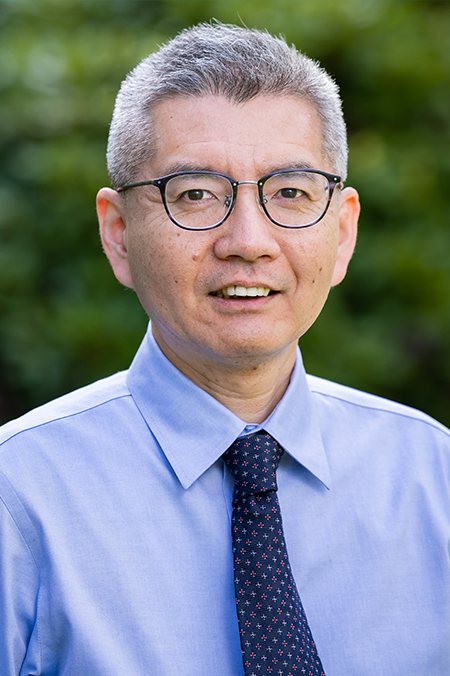
Erik Quaeghebeur is an Assistant Professor at Eindhoven University of Technology's School of Mathematics and Computer Science, focusing on uncertainty modeling in artificial intelligence. His work spans probabilistic circuits, imprecise probability theory, and wind energy applications. PhD in Applied Mathematics (Ghent University, 2002-2009) Master's in Applied Mathematics (Université catholique de Louvain, 2001-2002) Master's in Physics Engineering (Ghent University, 1998-2001) Research interests include probabilistic modeling under uncertainty, with applications in AI and wind energy systems. His recent work explores tensor factorizations, equivariant graph neural networks, and scalable probabilistic circuits. Scientific contributions include 60 research outputs and 2 datasets . Awards encompass the ERCIM Alain Bensoussan Fellowship (2013), BOF Postdoc (2010), and B.A.E.F. Francqui Fellowship (2009). He serves on committees for the Society for Imprecise Probability and acts as editorial board member for related conferences. Foundations of Artificial Intelligence course (since 2020) Uncertainty Representations and Reasoning course (since 2021)
Matti Minkkinen is a Docent at the Turku School of Economics (University of Turku) and a Postdoctoral Researcher in Information Systems Science at the Department of Management and Entrepreneurship. His work bridges futures studies with ethics, privacy, and socio-technical systems in digital transformation. Recent roles focus on responsible AI governance and foresight methodologies. University: University of Turku School: Turku School of Economics Department: Department of Management and Entrepreneurship His research explores how digital technologies reshape organizational practices, emphasizing Futures Consciousness as a human capacity. Key themes include responsible AI , privacy protection , and causal layered analysis in scenario planning. Publications highlight ethical governance frameworks and EU policy debates. Recent articles address generative AI ethics , ML system integration , and AI auditing across journals like Communications of the Association for Information Systems and Information and Management . Topics cluster around socio-technical systems, digital ethics, and institutional adaptation to AI. Teaching and editorial roles include co-curating student research collections at Finland Futures Research Centre. No explicit scientific awards are listed, but his work contributes to foresight theory and practice.
Jeffrey C. F. Ho is an Associate Professor at the School of Design, The Hong Kong Polytechnic University. He serves as Deputy Specialism Leader of Interaction Design and Chairman of the School Learning & Teaching Committee. His research centers on virtual reality (VR) and interaction design, applying social science principles to influence attitudes and behaviors through immersive technologies. He leads projects in VR applications for safety training, virtual museums, and healthcare, and collaborates with the Asian Lifestyle Design Lab and the Technology and Social Behavior Lab at the University of Illinois at Urbana-Champaign. PhD in Communication, City University of Hong Kong MSc in Human-Computer Interaction with Ergonomics, University College London MPhil in Computer Science, The University of Hong Kong BEng in Software Engineering, The University of Hong Kong Ho’s research explores VR’s role in perspective-taking experiences, focusing on empathy, prosocial behavior, and spatial cognition. His work bridges VR with public health, education, and cultural preservation, such as designing VR environments for elderly care and dietary reflection. His recent publications highlight trends in generative AI ethics, beginner-friendly design software, and spatio-social impacts in VR applications. His articles span virtual reality games, VR safety training, and interactive museum design, with keywords like Virtual Reality, Human-Computer Interaction, and Cultural Preservation. Key subfields include immersive technology, social behavior analysis, and ethical design frameworks. UGC Teaching Award - Nominee (2024) Best Paper Award, EAI ArtsIT 2020 (2020) Exemplary Teaching and Learning Award - Merit (2024) QS Reimagine Education Awards 2024 - Global Education Award (2024) QS Reimagine Education Awards 2024 - Gold Award in Smart Omnichannel Campus (2024) Ho has secured grants from Hong Kong’s Research Grant Council, including HK$678,607 for immersive VR construction safety training (2024–2026) and HK$741,961 for VR safety education focusing on accident victims (2021–2023). He contributes as a reviewer for journals like Universal Access in the Information Society and Frontiers in Psychology , and leads teaching initiatives in information architecture and interactive media design.
Tianming Liu serves as a Distinguished Research Professor in the School of Computing at the University of Georgia, with courtesy faculty appointments in the Department of Epidemiology and Biostatistics at the College of Public Health and the Institute of Bioinformatics. His academic career at UGA spans from Assistant Professor (2008-2013) to Associate Professor (2013-2015) to full Professor (2015-present), culminating in his recognition as a Distinguished Research Professor in 2017. He also serves as Graduate Program Faculty in the School of Computing. Education: Ph.D. in Computer Engineering, Shanghai Jiaotong University, China (2002) Master of Science in Computer Science, Northwestern Polytechnical University, China (1999) Bachelor of Arts in Computer Science, Northwestern Polytechnical University, China (1998) Dr. Liu's research focuses on the intersection of computer science and neuroscience, with particular expertise in biomedical image analysis, computational neuroscience, and biomedical informatics. His work centers on cortical architecture imaging and discovery, developing advanced computational methods for analyzing brain structure and function. His research spans multiple disciplines including neurosciences, cognitive sciences, biomedical engineering, and clinical sciences, with applications in understanding Alzheimer's disease progression, brain connectomics, and neural architecture. Analysis of Dr. Liu's recent publications reveals a strong trajectory in applying deep learning techniques to neuroimaging data. His work increasingly focuses on developing sophisticated neural network architectures specifically designed for brain connectome analysis, with particular attention to spatiotemporal dynamics and hierarchical organization of brain networks. Recent publications demonstrate his leadership in applying neural architecture search methods to optimize brain network analysis pipelines, with applications spanning from Alzheimer's disease research to fundamental neuroscience questions about cortical folding patterns. Scientific Recognition: Distinguished Research Professor at the University of Georgia (2017) Dr. Liu has secured substantial research funding through multiple competitive grants from NIH and NSF, demonstrating the significance and impact of his work. His most notable projects include the NIH R01 grant "Developing an Individualized Deep Connectome Framework for ADRD Analysis," the NIH R01 grant "Mapping Trajectories of Alzheimer's Progression via Personalized Brain Anchor-nodes," and the NSF CRCNS grant "Exploring the Mechanism of 3-Hinge Gyral Formation and its Role in Brain Networks." These projects highlight his leadership in applying computational methods to address critical challenges in neuroscience and medicine, particularly in the domain of Alzheimer's Disease and Related Dementias (ADRD). Dr. Liu collaborates extensively across disciplines, working with researchers at institutions including University of Virginia, Emory University, UNC Chapel Hill, and UT Arlington. His work has contributed to the development of BiomedGPT, an open-source visual-language foundation model for biomedical applications, demonstrating his commitment to creating accessible tools for the broader research community.
Patrick Jaillet is the Dugald C. Jackson Professor in the Department of Electrical Engineering and Computer Science at MIT's School of Engineering. He holds joint appointments with the Laboratory for Information and Decision Systems (LIDS), the Operations Research Center (ORC), the Operations Research and Statistics Group at MIT Sloan, and the Department of Civil and Environmental Engineering. Previously, he served as Head of Civil and Environmental Engineering at MIT (2002-2009) and Chair of the Department of Management Science and Information Systems at UT Austin (1997-2002). Dr. Jaillet's research focuses on online optimization and learning, sequential decision-making under uncertainty, and security and resilience in complex networks. His work spans theoretical foundations in optimization and machine learning with applications in transportation, online market analytics, and network security. He has developed mathematical frameworks for problems involving uncertainty, dynamic resource allocation, and strategic behavior in complex systems. His recent publications reveal strong trends in bridging theoretical optimization with practical machine learning applications. Key themes include Bayesian optimization for black-box functions, online learning with limited information, mechanism design for resource allocation, and network security applications. His work increasingly integrates large language models with traditional optimization techniques, reflecting the evolving landscape of AI-driven decision-making systems. Fulbright Scholar (1990) Fellow of the Institute for Operations Research and Management Science (INFORMS) Best Applications Paper Award at ICAPS 2019 Long-standing Associate Editor for top journals including Operations Research and Transportation Science Dr. Jaillet has advised over 40 doctoral students who now hold prominent positions in academia and industry, including faculty positions at MIT, Georgia Tech, and ETH Zurich, and research scientist roles at Amazon, Microsoft Research, and Google. His research has been consistently funded by major agencies including NSF, ONR, AFOSR, and international partners like Singapore NRF, with current projects focusing on learning algorithms for autonomous security and fundamental tradeoffs in optimization. He leads a vibrant research group spanning MIT's EECS department and ORC, with current funding supporting work on neural bandits, federated optimization, and network security applications. His research group operates at the intersection of theory and practice, with strong connections to industry through collaborations with IBM, Microsoft, Google, and various transportation and technology companies. The group maintains active partnerships with international institutions, particularly through SMART in Singapore, reflecting Dr. Jaillet's global research impact.
Mohammad Reza Farzanegan is a Professor in Economics of the Middle East at the Center for Near and Middle Eastern Studies (CNMS) & School of Business and Economics of Philipps-Universität Marburg in Germany. He serves as the coordinating professor for the international master study program of Economics of the Middle East in Marburg and holds research fellowships with ERF (Cairo) and CESifo (Munich). Education: PhD in Economics from Technische Universität Dresden (2006-09) with DAAD research grant Georg Forster Research Fellowship from Alexander von Humboldt Foundation (2010-12) MSc in Energy Economics & Marketing from University of Tehran (2000-03) BA in Theoretical Economics from Allameh Tabatabaei University, Tehran (1995-1999) Professor Farzanegan's research focuses on political economy of the Middle East, with specialization in Iran. His work spans energy economics, political economy of oil rents, climate change impacts, sanctions analysis, public finance, shadow economy, corruption economics, demographic transition, political institutions, economic development, and economics of happiness. His research methodology combines empirical institutional economics with development economics approaches. His recent publications (2025) demonstrate consistent scholarly output across multiple high-impact areas including sanctions effects on internal conflict, oil rent impacts on economic behavior, natural disaster economics, and Middle Eastern political economy. His work shows particular strength in applying advanced econometric techniques to analyze complex socio-economic phenomena in the Middle East context. Scientific Awards: ERF Research Fellow (Cairo) CESifo Research Network Fellow (Munich) Georg Forster Research Fellowship from Alexander von Humboldt Foundation Professor Farzanegan has led multiple significant international research projects including NAREM (Political Economy of Natural Resource Management, 2016-2018), NaDiMa (Socio-Economic, Cultural and Technical Aspects of Natural Disaster Management, 2020), and DEBEC (Drivers and Socio-Economic, Behavioural Effects of Climate Change in Iran, 2020-2022), all funded by DAAD/AA/BMBF. His research grants demonstrate strong institutional support for his work on Middle Eastern economic issues. He actively contributes to research networks including the NaDiMa Dialogue series which has hosted multiple workshops on disaster management, climate change, and economic policy in Iran and Germany.
Xiao Wang is a research assistant and PhD student in the Cyber-Physical Systems Group at the Technical University of Munich since 2019. She holds a Master of Science in Mechanical Engineering from the same university (2018) and a Bachelor of Engineering in Vehicle Engineering from Tongji University, China. Her research focuses on Motion Planning for Autonomous Vehicles , Formal Methods , and Safe Reinforcement Learning . She has supervised multiple theses exploring topics like constrained RL, online verification, imitation learning, and safety falsification for autonomous systems. Her teaching roles include exercises and practical courses on Artificial Intelligence and Motion Planning for Autonomous Vehicles since 2018. Her publications (2020–2023) span journals like Transactions on Machine Learning Research and conferences such as ITSC and FISITA , addressing challenges in safe RL, control barrier functions, and naturalistic traffic rule violations. She has also contributed to integrating the Apollo framework with the CommonRoad motion planning environment. Key research areas: Safe Reinforcement Learning, Motion Planning, Formal Verification, Autonomous Driving, Control Barrier Functions, Trajectory Prediction
Cantay Caliskan is an Associate Professor at the Goergen Institute for Data Science, University of Rochester. He teaches Data Mining, Statistical Machine Learning, and the Data Science Capstone courses in the undergraduate and graduate data science curriculum. Bachelor of Arts, Brandeis University Master of Arts, Koç University PhD in Political Science, Computer Science, and Statistics, Boston University (2018) His research focuses on computational social science, computer vision, and generative AI, with applications in deep learning, network analysis, and AI ethics in social contexts. His recent publications span interdisciplinary topics including: Geo-cultural bias in AI-generated urban models (SimCityNet) Comparative religious text analysis using LLMs (HalalLLM vs. KosherLLM) Political polarization metrics through social media interactions Article trends highlight AI's role in addressing social science challenges, from electoral geography to disaster response optimization. His work integrates natural language processing, dynamic network modeling, and cross-cultural analysis. He contributes to advancing accessible AI systems (ACROSS) and understanding misinformation dynamics. No scientific awards listed in available data.
Kyle Rawlins is a Professor in the Department of Cognitive Science at Johns Hopkins University (JHU), where he heads the Semantics Lab located in Krieger Hall 105. His research focuses on semantics, pragmatics, syntax, and their intersections, often collaborating with labs like the Van Durme Lab in Computer Science. The Semantics Lab facilitates weekly meetings for discussing research, structured as seminars or traditional lab sessions, and co-organizes projects such as the Decomp Project and MegaAttitude Project . Current lab members include PhD students Karl Mulligan and Natalia Talmina. Notable collaborators: Ilaria Frana (University of Enna), Barbara Landau (JHU), Ben Van Durme (JHU CS), and Aaron Steven White (Rochester). His research spans topics like: Questions Under Discussion (QUD) frameworks Evidentiality and bias in language Multimodal semantic parsing Decompositional semantics Pragmatic particles in Italian Recent publications analyze polar questions, neural network representations, and discourse particles. The lab maintains a mailing list for event announcements, emphasizing collaborative research in semantics and computational linguistics.
Dr. Yuhan Jiang is an Assistant Professor in the Department of Built Environment at North Carolina A&T State University's College of Science and Technology. He serves as the Founding Director of the HUD Center of Excellence for Innovation in Affordable Housing and Sustainable Communities (CIAHSC). Dr. Jiang leads a multidisciplinary research team focused on integrating robotics, artificial intelligence, and Building Information Modeling in construction operations and infrastructure management. Ph.D. in Civil Engineering from Marquette University M.M. in Construction Management from Guangzhou University Additional Construction Management degree from Guangzhou University Dr. Jiang's research primarily focuses on artificial intelligence applications in architecture, engineering, construction, and operations (AECO). His work integrates robotics and remote sensing for data collection, computer vision and machine learning for data processing, and BIM, GIS, and AR/VR for data visualization. His research enables more efficient construction operations, building inspection, and infrastructure management. Additionally, he has extensive experience in community redevelopment planning and complex systems simulation, including investigating urban village formation mechanisms. Analysis of Dr. Jiang's recent publications reveals a strong focus on applying drone technology, computer vision, and deep learning to construction and infrastructure challenges. His work spans multiple domains including façade modeling, pavement evaluation, sidewalk inspection, earthwork calculation, and 3D reconstruction. A consistent theme across his research is the development of automated systems that improve efficiency, accuracy, and safety in construction and infrastructure management through AI and robotics. N.C. A&T and CoST Junior Faculty Teaching Excellence Award 2024-25 N.C. A&T and CoST Rookie Researcher of the Year Award 2024 ASCE Journal of Architectural Engineering Best Paper Award 2022 ASCE CI & CRC Joint Conference Best Paper Award 2024 AAAS HBCU Making and Innovation Showcase 1st Place 2024 CoST SciTech Week Innovation Challenge awards (2023-2025) N.C. A&T Provost's Faculty Fellow (2023 & 2024) Dr. Jiang has successfully secured over $4.5 million in research funding as PI or Co-PI, including a $2.5 million HUD Center of Excellence grant. He has mentored students who won 1st and 3rd place in the 2023 & 2024 Sci-Tech Week Innovation Challenge competitions and 1st place at the 2024 AAAS HBCU Making and Innovation Showcase. His funded projects span AI-driven BIM education tools, smart farming with robotics, drone-based façade modeling, and digital twin applications for infrastructure management. As Founding Director of the HUD Center of Excellence for Innovation in Affordable Housing and Sustainable Communities (CIAHSC), Dr. Jiang leads a multidisciplinary team focused on innovative approaches to affordable housing and sustainable community development. His lab work integrates drone technology, computer vision, and AI to create practical solutions for real-world construction and infrastructure challenges.
Arnab Nandi is a Professor in the Department of Computer Science & Engineering at The Ohio State University. His work bridges human interaction with data infrastructure, focusing on database systems, LLM-augmented analytics, and immersive query interfaces. Education: PhD in Computer Science & Engineering from the University of Michigan Leadership: Co-founder of OHI/O Hackathon Program and STEAM Factory interdisciplinary network Research spans human-in-the-loop data analytics , vibe querying (natural language + gestural interfaces), LLM integration into education, and climate response systems . Key projects include Omni (multimodal exploration), GestureDB , and Icarus (clinical pipelines). Recent publications analyze LLM-driven query stacks (HILDA 2025), video analytics (SIGMOD 2022), and data sunglasses for cognitive limits (HILDA 2025). Awards include NSF CAREER Google Faculty Research Award IEEE TCDE Early Career Award ACM Distinguished Member Advises students in database innovation , with alumni at Amazon, AWS, Roblox, and Meta. Teaches CSE 3241 (Database Systems), CSE 5889 (Software Startups), and CSE 5242 (Advanced Databases).
Dr. Mei Nan is an Associate Professor in the Department of Communication at Tongji University's School of Art and Media. With a career spanning since 2004, she previously held positions at Chang'an University before joining Tongji in 2017. Her academic credentials include a Master's from Shaanxi Normal University, postgraduate studies at Communication University of China, and ongoing doctoral research at Xi'an Jiaotong University's School of Economics and Finance. Research Expertise Her research bridges media economics, AI-driven communication paradigms, and film studies, with specific focus areas including: Media economics and corporate governance interactions Artificial intelligence's impact on communication theory Film/audiovisual language analysis Media culture evolution Marketing models in digital ecosystems Teaching Portfolio Dr. Nan teaches both undergraduate courses ( Audiovisual Language, Chinese/Foreign Film History, Media Culture, Chinese Film Appreciation ) and graduate seminars ( Intelligent Communication Theory and Practice ). Her pedagogical approach integrates contemporary media developments with theoretical foundations. Awards and Grants Tongji University Hongda Award (2021) Tongji Cup General Education Course Paper Competition Teaching Teacher Excellent Organization Award (2021) Principal Investigator: Shanghai Philosophy and Social Science Planning Project (2018BGL025) studying media impact on corporate recovery
Ryozo Nagamune is a Professor in the Department of Mechanical Engineering within the Faculty of Applied Science at the University of British Columbia (UBC). His research focuses on control engineering with specific expertise in floating offshore wind turbines, integrated solar thermal systems, and metal additive manufacturing processes. He maintains active collaborations with NSERC, MITACS, and industry partners including Ascent Systems Technologies. Dr. Nagamune received his B.Sc. and M.Sc. degrees from Osaka University, followed by a Ph.D. from the Royal Institute of Technology in Stockholm, Sweden. His educational background laid the foundation for his expertise in control systems theory and applications. His primary research interests center on control engineering, with particular emphasis on the control of floating offshore wind turbines and wind farms, integrated solar thermal systems, directed energy deposition metal additive manufacturing processes, engine aftertreatment systems, and data-driven modeling and control of dynamical systems. His work addresses critical challenges in renewable energy, manufacturing, and automotive applications, focusing on optimization, robustness, and efficiency improvements. The research spans theoretical developments in control algorithms to practical implementation in real-world systems. Analysis of Dr. Nagamune's recent publications reveals a strong focus on floating offshore wind turbine control, which constitutes approximately 40% of his recent work. Another significant portion (30%) addresses automotive control systems, particularly selective catalytic reduction for emissions control. The remaining publications cover diverse applications including haptic interfaces, spacecraft control, and precision manufacturing systems. His research demonstrates a consistent pattern of applying advanced control methodologies to solve practical engineering problems across multiple domains. Dr. Nagamune leads the Control Engineering Laboratory at UBC (located in KAIS 3104) and actively seeks collaborations with industry partners, research clusters, and interdisciplinary teams. His research is supported by major funding agencies including NSERC and MITACS, as well as industry partnerships. He is available for supervision of graduate students and expresses interest in working with undergraduate students on research projects. Dr. Nagamune welcomes interdisciplinary research opportunities and is particularly interested in collaborations that bridge multiple engineering domains.
Professor Jordan Taylor is affiliated with Princeton University as a faculty member in the Department of Biomedical Engineering within the School of Engineering and Applied Science. His research focuses on unraveling computational processes in motor control and learning, with particular emphasis on interactions between explicit cognitive strategies and implicit motor adaptation during skill acquisition. Taylor leads the Intelligent Performance and Adaptation Laboratory , aiming to develop optimal training protocols for motor rehabilitation post-stroke or disease. Research Interests : Taylor investigates how humans learn motor skills through dual mechanisms of declarative strategy formation and implicit neural adaptation. His work explores the neural systems underlying these processes and their functional consequences, especially in pathological conditions like cerebellar degeneration. Current studies examine working memory constraints, reward modulation of implicit adaptation, and plan-based generalization of motor learning. Publication Trends : Recent articles analyze dual mechanisms in sensorimotor learning, reward-driven adaptation, and contextual influences on motor memory. His computational neuroscience approach combines behavioral experiments, neural imaging, and theoretical modeling to study cognitive-motor interactions across various tasks.
Dr. Colin Palmer is a Visiting Fellow in the School of Psychology at the University of New South Wales (UNSW), where he conducts research on visual perception with a focus on social features of our sensory environment. His work examines how the brain processes elements like eyes, faces, and behaviors of people around us using visual psychophysics, computational modeling, and 3D graphical rendering. Dr. Palmer completed his Ph.D. in 2016 and Bachelor of Behavioural Neuroscience (Honours) in 2009, both at Monash University. His doctoral research explored how neurocognitive models of sensory processing relate to differences in sensory integration and social cognition in autism. His primary research interests center on understanding the perceptual and neural mechanisms underlying our sensitivity to dynamic social cues, particularly eye and head movements. Dr. Palmer investigates how the visual system extracts basic environmental elements (color, shape, motion) and develops a mechanistic understanding of how our experience of the social world arises from nervous system activity. His work has clinical applications for understanding sensory and social difficulties in conditions like autism and schizophrenia. Dr. Palmer's recent publications reveal a consistent focus on social vision, particularly gaze perception, face processing, and animacy detection. His research increasingly incorporates computational modeling approaches to understand visual perception mechanisms. There's a strong emphasis on how lighting and shading affect face and gaze perception, with growing attention to clinical applications for neurodevelopmental conditions. Dr. Palmer has received recognition for his work through several awards: Emerging Investigator Award, Australasian Cognitive Neuroscience Society, 2017 Postdoctoral presentation award, Australasian Cognitive Neuroscience Society, 2016 Dr. Palmer is actively involved in research supervision and teaching. He teaches PSYC 3221 Vision and Brain and is available to supervise research students. His research is supported by significant funding: ARC Discovery Project (2020-2022): "Extracting meaning from motion" ($492,000) ARC Discovery Early Career Researcher Award (2019-2021): "Human sensitivity to the dynamics of other people's eye movements" ($356,000) Experimental Psychology Society Study Visit Grant (2017): "Testing computational theories of autism spectrum disorder in the social domain" (£2,580) Dr. Palmer collaborates extensively with Professor Colin Clifford at UNSW and maintains international collaborations with researchers in the UK and Australia, particularly on projects related to autism spectrum disorders and social cognition.