Koray Tahiroglu is a University Lecturer at Aalto University's School of Arts, Design and Architecture, specializing in Sound and Music Computing. His work bridges artificial intelligence, digital musical instruments, and embodied interaction, with a focus on deep learning applications in audio synthesis and human-AI creative collaboration. His research explores New Interfaces for Musical Expression (NIME), sonic interaction, and physical computing. He collaborates with SOPI Research Group and Google Brain Team (Magenta) on AI-driven artistic innovation. Recent Publications : 2024 studies on dance-sound cross-correlation and intra-action frameworks; 2023 work on AI-terity and deep learning syllabi; 2022 explorations of GAN synthesis, musical expectations, and lifeworld sonification. Scientific Awards : Co-Creative Artificial Intelligence of Music (2022) 2010 grant for scientific publications and artistic activities 2017 Honorable Mention for mobile cultural heritage research Tahiroglu contributes to digital art education and leads projects at Media Lab Helsinki, advancing sonic interaction and generative audio systems.
Marcelo M. Wanderley is a Professor and Director of the Centre for Interdisciplinary Research in Music Media and Technology (CIRMMT) at McGill University's Schulich School of Music. His academic roles include Area Coordinator for Music Technology and membership on the Executive Committee. He holds a PhD in acoustics, signal processing, and computer science from Université Pierre et Marie Curie (Paris VI). Wanderley's research focuses on novel interfaces for music performance, digital musical instruments (DMIs), and human-computer interaction. He has authored influential works such as New Digital Musical Instruments: Control and Interaction Beyond the Keyboard (2006) and pioneered research in gestural control of music. His work integrates engineering, computer science, and musicology to create innovative performance tools, including the T-Stick and Karlax instruments. He has held visiting professorships at Université de Bretagne Sud, Universidade Federal de Minas Gerais (Brazil), and the University of Mons (Belgium), where he was awarded prestigious chairs. Wanderley's awards include the Inria International Chair (2016–2020) and the Distinguished Visitor Award from the University of Auckland. His research has been widely cited in the International Conference on New Interfaces for Musical Expression (NIME), and he actively contributes to editorial boards (e.g., Computer Music Journal ) and academic leadership roles. Wanderley's lab, the Input Devices and Music Interaction Lab (IDMIL), develops open-source frameworks like Puara and Probatio for DMI design and mapping. Key research areas include haptic feedback systems, motion capture of musical performances, and accessibility in music technology. He emphasizes interdisciplinary collaboration, bridging engineering, art, and cognitive science to advance musical expression and performance practices.
Ben Seymour is a Lecturer in Fine Art at the Department of Art, Goldsmiths, University of London. His research focuses on the intersections of urban regeneration, gentrification, and culture, alongside critical analyses of contemporary capitalism's ideologies, including precarious labor, creative economy, and financialization of art. He is also a writer and Deputy Editor of Mute Magazine , contributing to debates on digital culture, political economy, and artistic resistance. Position: Lecturer in Fine Art Institution: Goldsmiths, University of London Research Themes: Urban Regeneration, Gentrification, Art and Capitalism, Cultural Politics Email: b.seymour@gold.ac.uk Ben's academic and artistic work critically examines urban development processes, particularly in London's Hackney and other global cities, through films, articles, and visual essays. He has explored the socio-political consequences of regeneration projects, linking them to broader capitalist dynamics such as financialization and the erosion of community spaces. His practice extends to curatorial and editorial projects, including co-programming films on gentrification and organizing reading groups on Marx's Capital in Hackney and Brooklyn. His films have been internationally screened at festivals and galleries in Edinburgh, Leeds, NYC, Amsterdam, and Spain, addressing themes of urban utopianism and capitalist critique.
Rachel Devorah Wood Rome is an Assistant Professor in the Electronic Production and Design (EPD) department at Berklee College of Music, where she teaches creative coding, live coding, and music technology. Her work bridges electronic music, improvisation, and critical theory, with a focus on sonic cyberfeminism, archival practices, and the social meanings of sound and space. Ph.D. in Music Composition and Computer Technologies, University of Virginia (2018) M.L.I.S., San José State University (2017) M.A. in Music Composition, Mills College (2013) B.Mus. in Horn Performance, CUNY Queens College (2007) Her research explores superhuman prolongation, opaque complexity, and the re-signification of archaic tools in sonic media. She values machines for their patience and memory, and her creative practice emphasizes critical agency in technology design and use. She performs under the name 'mehetabel' when using archival materials in improvised electronic music. The most recent publications and performances reflect a deep engagement with AI and music, live coding, feminist media theory, and spatialized sound. Her works often involve real-time data processing, generative systems, and collaborative improvisation, situating sound within broader social, political, and technological contexts. Ruth Anderson Installation Prize (IAWM) New Music USA Grant Fellowships from MIT OpenDocLab, Adrian Piper Foundation, Ina GRM, New Museum, and Jefferson Scholars Foundation Residencies at EMS Stockholm, STEIM Amsterdam, MassMoCA, and Cove Park Rome advises emerging artists in electronic music and creative coding, many of whom have gone on to establish their own practices. She is also active in academic service, including curriculum development, faculty governance, and labor organizing as a Councilor for the Berklee Faculty Union. She leads initiatives in DEI, sound design, and coding pedagogy within the EPD department. She has been involved in interdisciplinary collaborations with artists, technologists, and institutions worldwide, presenting work in galleries, festivals, and academic conferences across North America, Europe, and Asia. Her leadership extends to nonprofit arts organizations, where she has served as Executive Director and grantwriter.
Delaney DeMott serves as Associate Professor and Program Head of Fibers & Material Studies at Temple University's Tyler School of Art and Architecture, where her artistic practice explores the 'hiccups' shaping lived experience through textile-based interventions and community engagement. Education MFA, School of the Art Institute of Chicago (2013) BFA, Tyler School of Art and Architecture, Temple University (2003) Research Focus : DeMott's work critically examines material culture and personal narrative through textile arts, emphasizing vulnerability and resilience in everyday experiences. Her practice bridges craft traditions with contemporary discourse on memory, identity, and embodied knowledge, often manifested through community-driven workshops and immersive installations. Exhibition Trajectory : Recent works like 'Slideshow' (2019) and 'OPHIUCHUS' (2017) demonstrate consistent exploration of material narratives across diverse contexts, from institutional galleries to public spaces, revealing evolving investigations into environmental relationships and socio-cultural memory through fiber media. Accolades Visiting Artist at Goggleworks, Reading (2017) Vermont Studio Center Residency (2016) BUNCH Magazine 'Top 100 Creatives' (2016) Chicago Artists Coalition HATCH Residency (2013) Academic Impact : Beyond Temple University, DeMott extends her pedagogy through community workshops at Banana Factory (Bethlehem) and Goggleworks (Reading), while her lecture series has reached major institutions including University of Chicago, SUNY Buffalo State, and Beijing Normal University, establishing significant cross-institutional influence.
Gloria Sutton is an Associate Professor of Contemporary Art History and New Media at Northeastern University, with an affiliation in the Art, Culture, and Technology Program at MIT. She holds a PhD from UCLA and has held fellowships at the Getty Research Institute and Whitney Museum. Her research focuses on durational media’s impact on visual art since the 1960s, with particular attention to expanded cinema, digital networks, and post-internet art. Primary affiliations: Northeastern University (main appointment), MIT (affiliate) Key roles: Carpenter Center Scholar-in-Residence (2017-2018), co-curator of How Many Billboards Education: Doctorate in Art History from UCLA (specific year not stated). Research interests include: Critical analysis of network culture in visual art Material histories of time-based media Intersection of art, architecture, and technology (e.g., Le Corbusier studies) Publications include The Experience Machine (MIT Press) and edited volumes on Sara VanDerBeek and Renée Green. Current projects explore immersive art critique and Shigeko Kubota’s work. Awards: Andy Warhol Foundation Arts Writers Grant (recent) Emily Hall Tremaine Award (2008) Grants and residencies: Carpenter Center residency (2017-2018) Whitney Museum Independent Study Program fellowship Lecturing and collaborations include engagements at SFMoMA, Walker Art Center, and Harvard’s Carpenter Center for Visual Arts.
Michael Doolan is a Senior Lecturer at Sydney College of the Arts, University of Sydney. He holds a PhD from Monash University (2013), a Master of Arts (2001), and a Bachelor of Arts (1981). His work explores the intersection of memory, narrative, and objects, using ceramics and mixed media to create sculptures that interrogate childhood narratives and their influence on adult identity. Doolan’s installations often feature disorienting optical effects and fairy tale motifs, reinterpreting classic stories through a contemporary lens. Education: PhD, Faculty of Art Design & Architecture, Monash University (2013) Master of Arts, Monash University (2001) Bachelor of Arts, Monash University (1981) Research Interests: Doolan’s practice focuses on the legacy of fairy tales and their unresolved narratives. By combining handcrafted techniques with digital fabrication, his sculptures critique cultural narratives and materiality. His work often features uncanny, monochromatic ceramic forms that evoke childhood memories while questioning adult perceptions of selfhood. Exhibitions & Awards: Recent highlights include the Deakin University Small Sculpture Award 2024 , participation in the Korean International Ceramics Biennale 2019 , and solo exhibitions such as Stories with Endings Changed (2018) and World without World (2017). His work is featured in major public and private collections internationally. Associations: Member, Australian Network for Art & Technology (ANAT) Member, International Society for the Arts, Sciences and Technology (Leonardo) Current Projects: Researching new sculptural works that blend handcrafting with digital fabrication to reflect contemporary entanglements between human and machine processes.
Dr. Dave Murray-Rust is an Associate Professor in Human-Algorithm Interaction Design at TU Delft's Faculty of Industrial Design Engineering. He explores the intersection of humans, data, and AI through design research, focusing on ethical AI systems and sociotechnical interactions. His work bridges computer science, design theory, and digital sociology, addressing challenges like algorithmic fairness and human-AI collaboration. He leads initiatives such as the AI Futures Lab and Data-Centric Design Lab, advancing methods for leveraging behavioral data in design processes. His research emphasizes experiential AI frameworks, metaphors for designers, and the legibility of AI systems. He has been honored with awards including Best alt.HRI 2024 and a CHI 2023 Best Paper Award for contributions to fairness perceptions in algorithmic decision-making. Murray-Rust teaches courses like the Speculative Design Studio and collaborates on projects like DCODE (Designing the Future of AI) and the BrightSky Project. His work extends to public engagement through installations like GeoPact and explorations of blockchain's societal impact. He holds an Honorary Fellowship at the University of Edinburgh.
Associate Professor Katherine Moline is an art and design scholar at UNSW, specializing in the intersection of technology and society. She holds appointments as Deputy Director of the National Facility for Human Robot Interaction (Research and Engagement) and serves on multiple advisory committees including the Community of Practice Queer, Trans and Intersex (CoPQTI). Her work bridges design research, critical theory, and socially engaged practices, with a focus on menopause, data imaginaries, and experimental methodologies. Education: PhD (Art History and Theory, UNSW, 2012), Master of Design (University of Technology Sydney, 1996), Parsons School of Design (1990), and multiple degrees from Sydney College of Arts (University of Sydney). Research Interests: Design history, critical design, co-design methodologies, socially engaged art, and the ethics of emerging technologies. Recent projects include 'Reimagining Menopause' (2024), 'The Invisible Threshold' soft robot installation (2022-2024), and 'Data Imaginary: Fears and Fantasies' exhibition (2021). Grants & Awards: ACUADS Excellence in Research Award (2024), ARC & NHMRC grants, and funding from Australia Council for the Arts, Alastair Swayn Foundation, and Maridulu Budyari Gumal SPHERE initiative. Supervision highlights include over 20 completed PhD/Master's students with awards like the Dean’s Award for Research Excellence (2009).
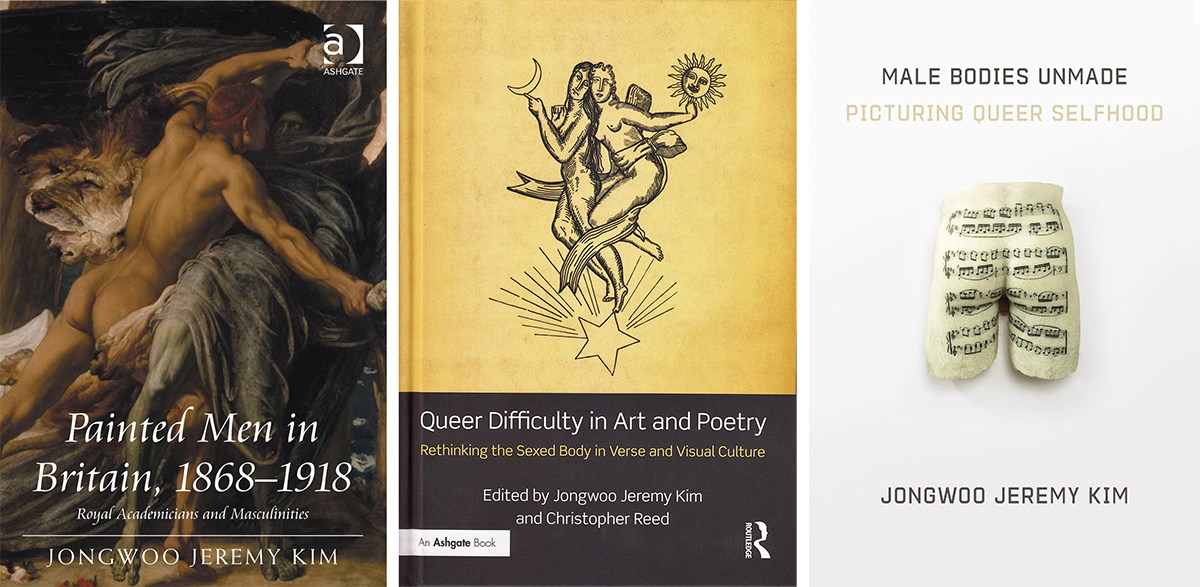
Jongwoo Jeremy Kim is an Associate Professor of Art History & Theory at Carnegie Mellon University's School of Art, specializing in queer critiques of modern and contemporary art. His research deconstructs canonical narratives through lenses of queer theory, colonialism, and gender studies. Currently on research leave until fall 2025, he explores intersections of art, sexuality, and identity in global contexts. Kim’s work bridges historical analysis with contemporary discourse, examining artists like Francis Bacon, David Hockney, and Andrew Ahn. His research has been supported by major institutions including the Clark Art Institute and the Paul Mellon Centre. Notable publications include Male Bodies Unmade: Picturing Queer Selfhood (2025) and Painted Men in Britain (2017). His academic contributions span exhibitions catalogs, peer-reviewed essays, and critical reviews. Awards include the prestigious Clark Art Institute Fellowship. Kim’s teaching and research emphasize interdisciplinary approaches to queer art history, challenging Eurocentric and heteronormative frameworks. Key themes in his work include queer selfhood, colonial sexual exploitation, and the incoherence of traditional male bodily representations. He critiques Western art historiography through postcolonial and queer perspectives, advocating for inclusive narratives in art scholarship.
Casey Reas is a Professor in the Department of Design Media Arts at the University of California, Los Angeles (UCLA), where he also co-directs UCLA Social Software. He holds a Master's in Media Arts and Sciences from MIT and a Bachelor's from the University of Cincinnati's College of Design. A pioneering figure in generative art and digital media, Reas co-founded the open-source programming language Processing, revolutionizing computational creativity for artists and designers. His work spans software installations, prints, and collaborative projects exhibited globally at institutions like the Centre Pompidou and the Whitney Museum. His research explores intersections of technology, art, and pedagogy, reflected in books such as Compressed Cinema and Making Pictures with Generative Adversarial Networks . Reas' practice emphasizes algorithmic processes and machine learning, exemplified in series like Untitled Film Stills and Compressed Cinema . He actively contributes to initiatives like UCLA’s Game Lab and the Conditional Studio, fostering interdisciplinary innovation. His work balances technical rigor with aesthetic exploration, bridging art, science, and technology.
Linda Ryan Bengtsson is an Associate Professor in the Department of Geography, Media and Communication at Karlstad University. She holds roles as a research advisor and collaborates with public/private entities, including Hagfors municipality, Visit Värmland, and Uddeholm. Her work focuses on geomedia studies, exploring the interplay between place, media practices, and digital culture within cultural industries and tourism. Education: She completed her doctoral dissertation on public art installations and interactive experience in 2012. Teaching includes undergraduate and advanced courses in visual culture, digital design, and design methodology. Research Interests: Her interdisciplinary research combines human geography, tourism studies, and business administration. Key projects include the 'Bruksort 2.0' ecosystem initiative (2024-2025) and the 'Music Ecosystems' EU project (2018-2021). She co-edits the book Geomedia Studies: Spaces and Mobilities in Mediatized Worlds (2017/2018). Collaborations: She serves on boards for the Baltic Sea Foundation and Visit Värmland, emphasizing strategic research environments and funding. Recent articles (2024) address geomedia futures in tourism, pandemic impacts on music industries, and virtual reality immersion. Awards: No specific prizes mentioned, though her work receives grants from Vinnova, EU, and regional agencies. Her research environment development focuses on co-creation with industry partners. Advising/Grants: As a research advisor, she strengthens funding opportunities and national/international collaborations. Projects like 'Experience Industry: Geomedia Technologies for Live Performance' highlight her focus on applied research. Labs/Teams: Central to the Geomedia Studies Research Group, she leads projects like 'Digital Place-Based Experiences' and 'Crisis Communication' initiatives in rural tourism sectors.
Jez Coram is a Lecturer in Digital Media Practice at the University of Leeds , School of Media and Communication. He holds a practice-led PhD in Fine Art, Film, and Digital Cultures from Newcastle University, supervised by leading figures in the field. With a background in the third sector, he has extensive experience in multimedia design, research, and community engagement. Research Focus: Expanded essay film, socio-cultural-techno perceptions, climate futures, hybrid documentary practices, and sustainability. Current Projects: Co-Investigator on the Polycrisis Research Network (Horizons Institute); leads the longitudinal study Essaying the Gare with Mick Schofield. Teaching and Professional Roles: Currently teaches on the BA Digital Media programme. Previously a Teaching Assistant at Newcastle University and a facilitator in community art projects like For the Love of People . Professional memberships include the Priestley Centre for Climate Futures and Advance HE (FHEA). Artistic Outputs: 15+ films/installations (2012–present) blending personal testimony, archive material, and speculative environments. Notable works: The Black Prince , Capteur , The Derealisation Effect , and We're All Someone's Daughter, We're All Someone's Son (Grenfell solidarity project). Grants and Collaborations: Funded by Horizons Institute, Arts Council England, Screen Yorkshire, and Freedom Studios. Collaborations span institutions like West Yorkshire Playhouse, Justice4Grenfell Campaign, and Purple Patch Arts board.
Dr Peter Batchelor is a Senior Lecturer in Music and Music Technology at De Montfort University, affiliated with the Leicester Media School and the Music, Technology and Innovation – Institute of Sonic Creativity (MTI²). He serves as Programme Leader for the BA Music Technology programme and is actively involved in research, teaching, and creative practice. Education: BMus, University of Wales, Bangor (1996) MPhil, University of Wales, Bangor (1997) PhD, University of Birmingham (2004) FHEA (2024) His research and creative work focuses on electroacoustic composition, multichannel sound installations, public art, and aural landscape construction. He explores sound spatialisation, immersion, theories of space and place, and audience engagement through large-scale sonic artworks. His practice integrates technical innovation with artistic inquiry, often using custom Max/MSP tools for spatial audio and generative systems. The 15 most recent publications reflect a consistent trajectory in immersive sound art, emphasizing environmental sonification, spatial perception, and public engagement. Key themes include multichannel deployment (up to 288 channels), interactive and solar-powered installations, and blending natural and synthetic soundscapes. Projects like Dendrophone and Contraption highlight his focus on accessibility, sustainability, and audience interaction in sonic environments. Scientific Awards and Recognitions: Finalist, Sounds Electric ’07 Competition Mention, Concours de Musique Electroacoustique de Bourges (2007, 1998, 1997) 2nd Prize, CIMESP'99, São Paulo Honourable Mention, CIMESP'97, São Paulo Prize, 'Residences' category, Bourges 1997 Peter Batchelor supervises several PhD students including Stefano Catena, Cristiana Palandri, and Michael Uwins. He has secured external funding as Co-Investigator on projects such as Interfaces (EU Culture Project, 2016–2019) and Sensing the Forest (AHRC Early Career Research Grant, 2023–2025). He has delivered keynote and invited talks internationally and serves as a reviewer for Organised Sound and for REF panels. His creative installations have been exhibited globally, from Helsinki to São Paulo, and he develops open-source Max/MSP tools like N-CHAN and CLATTER to support multichannel sound design. He leads the Dendrophone project, a solar-powered, DIY sound installation in Alice Holt Forest that sonifies environmental data (humidity, sunlight, CO2), offering both on-site and live-streamed access. This project exemplifies his commitment to public engagement, ecological awareness, and accessible sonic art.
Zsigmond Lucza (born 1978 in Budapest) is a Hungarian contemporary artist and university assistant professor at the Hungarian University of Fine Arts, Department of Visual Art since 2022. He holds a DLA (Doctor of Liberal Arts) degree from the University of Pécs Faculty of Arts (2011-2014) and has extensive international experience including studies at the University of Lapland in Finland (2012-2013). Lucza's educational background includes dual Master's degrees from the Hungarian University of Fine Arts (2002-2007) in both Painting and Visual Art Teacher programs, along with foundational training at the Buda Drawing School (2000-2002). His academic career includes teaching positions at Jelky András Applied Arts Vocational High School (2014-2018), Modell Fashion School (2008-2012), and Kolumbusz Humanities High School (2005-2007). Lucza's artistic practice spans contemporary painting, transmedia art, and mixed media works, with significant focus on digital integration in traditional art forms. His research interests center on transmedia tendencies in contemporary Hungarian painting, visual communication, and the evolving relationship between digital and physical art spaces. His work often explores identity, perception, and the integration of technology in artistic expression, creating pieces that bridge traditional painting techniques with contemporary digital aesthetics. His artistic output shows a consistent evolution from figurative works toward more experimental transmedia approaches, with recent projects focusing on environmental reflection, digital portraiture, and collaborative installations. Lucza's work demonstrates a sophisticated understanding of both traditional painting techniques and contemporary digital media, creating a distinctive visual language that addresses current artistic concerns while maintaining strong technical foundations. Lucza has received multiple awards including an Erasmus scholarship for study at the University of Lapland, a scholarship from the Budapest Gallery and Kunststiftung Baden-Württemberg, and first prizes in national competitions. His professional affiliations include membership in the Hungarian Artists' Association (MAOE) since 2007, the MAMŰ Society since 2015, and non-academic membership in the Hungarian Academy of Arts (MMA) since 2022. As an educator, Lucza has conducted numerous workshops internationally including the Experimental Drawing Course at the Latvian Academy of Arts and Transmedia Workshops at the University of Pécs. His curatorial work includes the 'Medium Summoners' exhibition at MAMŰ Gallery in Budapest (2017). Lucza maintains an active exhibition schedule with solo shows across Hungary, Finland, and Slovenia, alongside participation in numerous international artist colonies and collaborative projects.