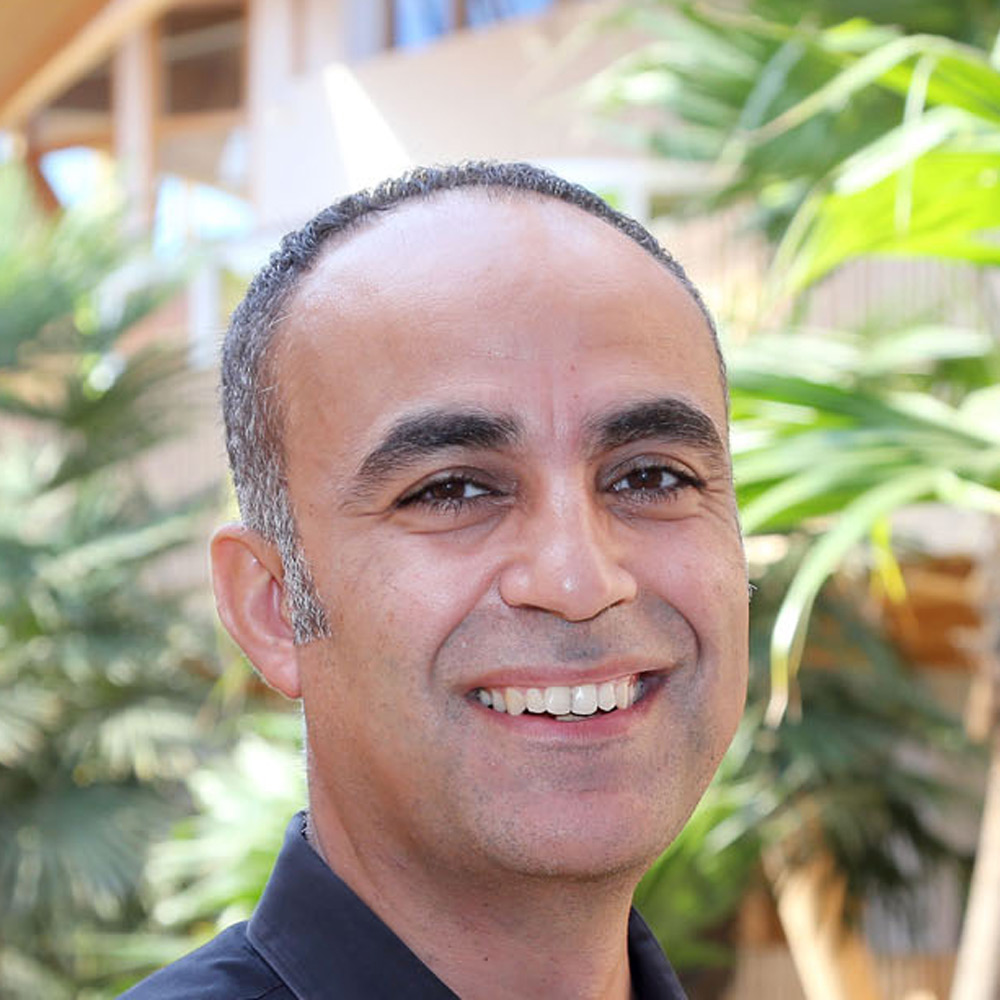
József Garayمشاهده پروفایل
پژوهشگر
József Garay is a Senior Research Fellow at the ELTE-MTA Theoretical Biology and Evolutionary Ecology Research Group, part of the Department of Plant Systematics, Ecology and Theoretical Biology at Eötvös Loránd University in Budapest, Hungary. His research spans evolutionary biology, mathematical ecology, and game theory, with a particular focus on evolutionary stable strategies and their applications to biological systems. Dr. Garay received his M.Sc. in Biology from Eötvös University (1981-1986), followed by postgraduate studies in Mathematics (1985-1989). He completed his PhD at the Hungarian Academy of Science in 2004, after doctoral studies in the Department of Plant Taxonomy and Ecology (1990-1994) and a summer school on Evolutionary Models of Cooperation in Seewiesen, Germany (1994). Garay's research interests center on evolutionary game theory and its applications to biological systems. He has made significant contributions to understanding evolutionarily stable strategies (ESS) in sexual populations, the evolutionary roots of morality, and the mathematical foundations of population dynamics. His work bridges theoretical mathematics with practical ecological applications, particularly in areas like optimal foraging, habitat selection, and the evolution of cooperation. A key aspect of his research involves extending classical game theory concepts to more complex biological scenarios, including multi-species systems and time-constrained evolutionary processes. His work on the evolutionary stability of self-sacrificing behavior and the relationship between individual fitness and group survival has provided important insights into the evolution of altruism and social behavior. Analysis of Garay's recent publications reveals a consistent focus on evolutionary game theory applied to biological systems, with increasing sophistication in modeling approaches. His work has evolved from foundational studies on evolutionarily stable allele distributions (ESAD) to more complex applications in areas like cannibalism dynamics, predator-prey interactions, and kin selection. There's a clear trajectory toward more integrative models that combine mathematical rigor with biological realism, often addressing questions at the intersection of evolutionary theory, ecology, and behavior. Notably, his research increasingly incorporates mathematical modeling techniques to analyze complex ecological phenomena, demonstrating the power of theoretical approaches to address empirical biological questions. Dr. Garay has received several prestigious awards and fellowships throughout his career: Juhász-Nagy Pál junior fellowship at Collegium Budapest Institute for Advanced Study (1999-2000) NATO research fellowship at Wilfrid Laurier University, Waterloo, Canada (2002) Research fellowship at Konrad Lorenz Institute, Austria (2005) Bolyai János fellowship of the Hungarian Academy of Sciences (2006-2008) While specific information about his advising activities is limited in the provided materials, Garay's extensive publication record spanning over three decades suggests he has likely mentored numerous graduate students and early-career researchers. His collaborations with colleagues like Zoltán Varga, Manuel Gámez, and Tomás Cabello indicate a strong network of research partnerships. Garay has secured multiple research grants supporting his work, including the Bolyai fellowship and international research opportunities that have enabled him to extend his theoretical models to practical ecological applications. His work on ecological monitoring systems demonstrates how theoretical frameworks can be applied to real-world environmental challenges. Garay is a core member of the HAS Theoretical Biology Group at Eötvös Loránd University, where he contributes to a vibrant research environment focused on mathematical approaches to biological problems. His work intersects with several research teams studying evolutionary ecology, population dynamics, and mathematical biology, creating opportunities for interdisciplinary collaboration on complex biological questions that require both theoretical insight and empirical validation. The group's research has significant implications for understanding fundamental biological processes and developing more effective conservation and management strategies.