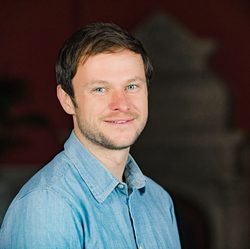
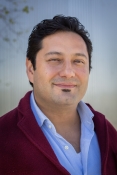
Dr. Matthias Cuntz is a Senior Researcher at the Department of Computational Hydrosystems within the Helmholtz Centre for Environmental Research (UFZ) in Leipzig, Germany. He leads the Regional Ecophysiology group and focuses on integrating stable isotopes, remote sensing, and computational modeling to study terrestrial ecosystems. Research Interests: Energy, water, and trace gas exchange in ecosystems; stable isotope applications; global water-carbon cycle modeling; eddy-covariance flux analysis; sap flow dynamics. Key Projects: Involved in TERENO (Terrestrial Environmental Observatories) and ICOS (Integrated Carbon Observation System) for long-term ecological monitoring. Recent Publications address soil freeze-thaw processes, Amazon forest carbon dynamics, hydrological model calibration, and isotopic partitioning of evapotranspiration. His work spans computational hydrology, remote sensing validation, and uncertainty quantification in environmental models. Contact: Email: matthias.cuntz@ufz.de Personal Webpage: www.macu.de
Max Roser is a Professor of Practice in Global Data Analytics at the Blavatnik School of Government , University of Oxford. He is the founder and director of Our World in Data , an award-winning open-access publication addressing global challenges like poverty, climate change, and inequality. Professor at Blavatnik School of Government, Oxford Director of Oxford Martin Programme on Global Development Founder of Our World in Data and SDG-Tracker Research Interests focus on empirical analysis of global development, economic inequality, health metrics, and policy-driven data infrastructure. His work bridges academic rigor with public accessibility, emphasizing long-term trends and solutions to existential risks. Scientific Awards include honorary doctorates from KU Leuven and UC Louvain, recognition as a "Future Perfect 50" thinker by Vox, and Prospect Magazine's "Top 50 Thinkers." Advisory Roles span the UNDP Statistical Advisory Panel, UK Government (health, education, tech), and World Bank. He secured grants from the Nuffield Foundation to expand Our World in Data’s team.
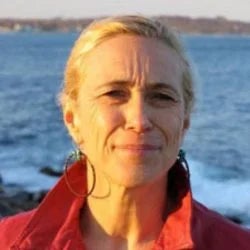
Annette R. Grilli is a Research Professor in the Department of Ocean Engineering at the University of Rhode Island , focusing on ocean renewable energy and coastal hazard assessment. Her work integrates numerical modeling and statistical analysis to study extreme events like tsunamis and storms. Ph.D. in Climatology, University of Delaware (2000) M.S. in Oceanography, University of Liege (1984) B.S. in Geography & Education, University of Liege (1983) Her research spans offshore wind farm siting optimization , tsunami propagation modeling , and coastal erosion dynamics . Recent publications highlight applications of phase-resolving wave models and machine learning to coastal resilience and marine renewable energy systems. Grants include collaborations with NOAA , Department of Energy , and NSF , focusing on coastal hazard visualization , tsunami detection algorithms , and design elevation mapping under climate change scenarios. She contributes to digitalCommons@URI with over 100 publications in Ocean Engineering and Civil Engineering domains.
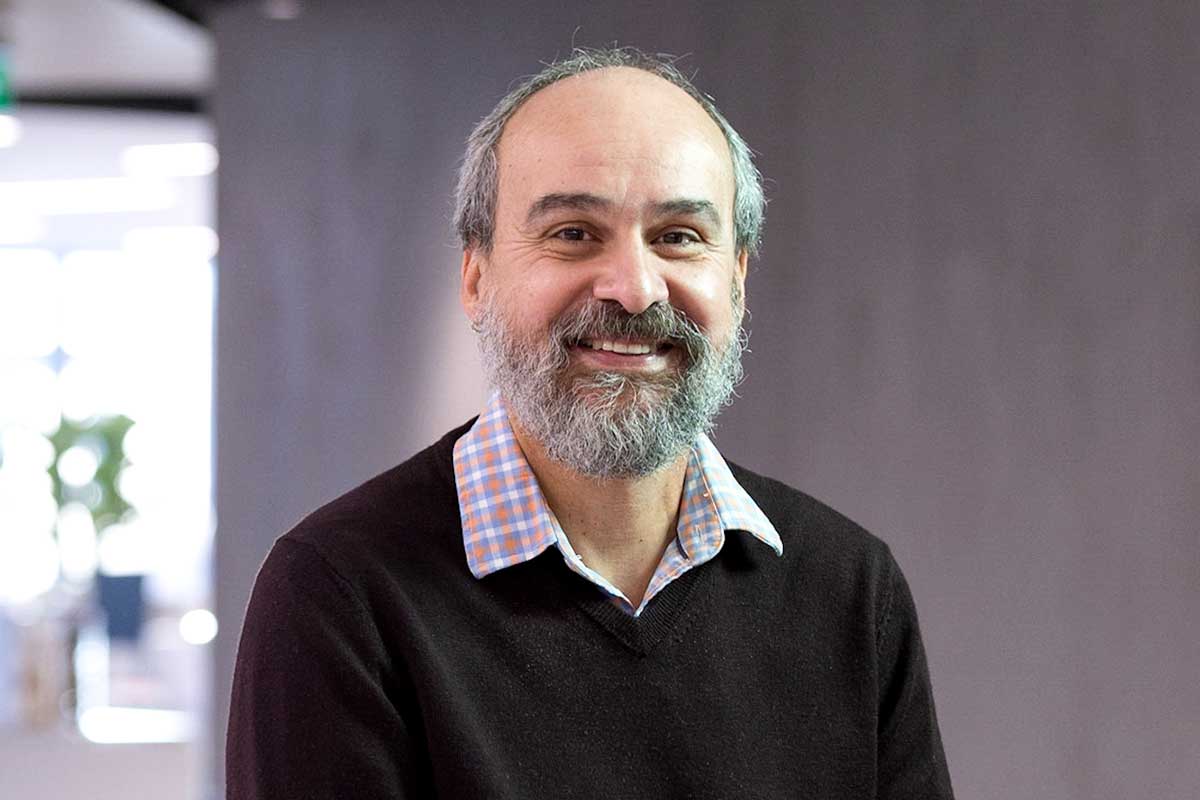
Mario Nascimento is Professor of the Practice and inaugural Director of Pacific Northwest Research at Northeastern University’s Khoury College of Computer Sciences , based at the Vancouver campus in Canada. Previously he served as Professor (and six-year Department Chair) in the Department of Computing Science at the University of Alberta, held research roles with the Brazilian Agency for Agricultural Research, and was adjunct faculty at the Institute of Computing of the University of Campinas. He has also been a visiting professor at the National University of Singapore, Aalborg University (Denmark), LMU (Germany), and the Federal University of Ceará (Brazil). Research Interests: Mario’s core expertise lies in spatiotemporal data management , a field that intersects database systems, geographic information science, and data science. His work addresses challenges in indexing, querying, and mining large-scale spatiotemporal datasets, with applications ranging from urban mobility to environmental monitoring. Over the years his research has contributed to advancing both theoretical foundations and practical systems for handling dynamic spatial data. Editorial & Service Leadership: General Co-Chair, ACM SIGSPATIAL 2024 Program Committee Co-Chair, ACM SIGSPATIAL 2022–2023 Editor-in-Chief, ACM SIGMOD Record (2005–2007) Information Director, ACM SIGMOD (2002–2005) Editorial Board Member, VLDB Journal (2011–2017) Current Editorial Board Member, GeoInformatica Chair, SSTD Endowment Board of Directors
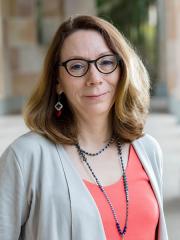
Professor Alicia Rambaldi is Director of Research at the School of Economics, Faculty of Business, Economics and Law at the University of Queensland. She is also an Affiliate of the Centre for Efficiency and Productivity Analysis. Her academic career spans decades of research in econometric methodologies with applications to real-world economic problems. Professor Rambaldi's research interests focus on applied econometrics, time series econometrics, state-space models, and spatial time series models. She has made significant contributions to economic measurement, particularly in developing methodologies for computation of price indices for land and property, estimation with linked administrative data, and smoothing methodologies combining spatial and temporal information. Her work bridges theoretical econometrics with practical applications in housing markets, climate adaptation, and international economic comparisons. Her recent publications demonstrate a consistent focus on housing economics, with numerous papers on hedonic pricing models, property valuation, and the impact of environmental factors on real estate markets. She has also maintained a strong research program in international comparisons, purchasing power parity, and productivity analysis, often collaborating with leading researchers in these fields. Professor Rambaldi is actively involved in research supervision, currently advising on topics including language barriers faced by immigrants, distributive politics, and copula models. Her completed supervision includes significant work on purchasing power parities, development indexes, trade studies, and spatial analysis of tourism employment. Her current research projects include spatial time series models with applications to housing and land prices, transport demand modeling, and international comparisons. She has secured substantial funding from diverse sources including the Australian Research Council, Natural Hazards Research Australia, and government departments, demonstrating the applied relevance of her work. Professor Rambaldi leads an active research group within the Centre for Efficiency and Productivity Analysis, focusing on developing and applying advanced econometric techniques to address pressing economic measurement challenges. Her work often involves interdisciplinary collaboration with researchers in environmental science, urban planning, and transportation studies.
Amy J. Schulz is the University Diversity and Social Transformation Professor at the University of Michigan School of Public Health , specializing in the Department of Health Behavior and Health Equity . She is a sociologist and leading scholar in community-based participatory research (CBPR) , focusing on how social and physical environmental exposures contribute to racial and socioeconomic health inequities . Her current work with the Community Action to Promote Healthy Environments (CAPHE) partnership addresses air pollution disparities in the Detroit Metropolitan Area through policy intervention and community science initiatives. Education PhD, University of Michigan (1994) MSW, University of Michigan (1990) MPH, University of Michigan (1981) Her research examines environmental racism , health impact assessments , and CBPR methodologies . She has conducted policy evaluations for the Gordie Howe International Bridge and state energy plans, while also linking policing, clean water access, and COVID-19 disparities to systemic racism. Recent publications analyze cumulative environmental risks , neighborhood poverty effects , and policy advocacy tools for health equity. She teaches graduate courses such as Environmental Health Promotion and Community-Based Participatory Research , emphasizing interventions for vulnerable populations. Her collaborative work spans public health practice , community science , and urban health disparities , with funding for projects in air quality monitoring , student environmental advocacy , and policy translation . She maintains active partnerships with community organizations in Detroit and has published extensively on the intersection of social determinants and physical environmental risks .
Dusan Paredes Araya serves as Professor in the Department of Economics at the Catholic University of the North (UCN), Chile, with research expertise in regional and urban economics focusing on spatial market interactions. His work emphasizes causal mechanisms in regional labor and housing markets, supported by leadership roles as former Dean of the School of Business and Economics and Director of the Economics Department at UCN. He concurrently holds an Adjunct Professor position at Michigan State University's Department of Agricultural, Food, and Resource Economics. His research centers on spatial economic dynamics , investigating wage differentials, commuting patterns, housing demand, and economic convergence through advanced econometric methods. Key contributions include analyzing spatial inequality in Chile, migration responses to violence in Mexico, and policy impacts of mining taxes on public education. His work consistently bridges theoretical spatial economics with empirical policy analysis for Latin American contexts. Recent publications (2016-2021) reveal strong thematic continuity in spatial economics, with expanding methodological sophistication in multilevel modeling and causal inference. Dominant themes include labor market spatiality (commuting premiums, gender wage gaps), housing economics (demand attributes, price indices), and public finance (mining taxation, local service provision), increasingly incorporating international collaborations. Paredes has received significant recognition: Peter Nijkamp RSAI Award (2017) His research leadership includes: Chilean Funding: Three FONDECYT projects and multiple National Agency for Research and Development (ANID) grants International Projects: Collaborations with U.S. Department of Agriculture and Lincoln Land Institute Academic Service: Associate editor of Resource Policy (ISI Q1) and reviewer for major international journals
Navid Bayati is an Associate Professor at the University of Southern Denmark, affiliated with the Institute of Mechanical and Electrical Engineering and the Centre for Industrial Electronics. He leads the Control and Protection of Smart Grids (CAP-SG) group and focuses on renewable/hybrid power systems, microgrid protection, and grid code compliance. Education: Ph.D. in Power Systems & Microgrid Protection (2020, Aalborg University); M.Sc. in Power Systems (2017, Amirkabir University of Technology) His research spans renewable energy integration , transient analysis , grid interconnection , and digital twin applications . Recent work includes machine learning for carbon emission prediction, fault localization in DC microgrids, and supercapacitor resilience in hybrid systems. Collaborations include projects like IEA Wind Task 50 and RePoSys , addressing grid renovation, life cycle assessment, and digital twin resilience. His teaching portfolio covers power electronics , energy management , and microgrid control .
Ray Bai is an Assistant Professor in the Department of Statistics at the University of South Carolina (USC), part of the McCausland College of Arts and Sciences. Effective August 2025, he will join the George Mason University (GMU) Department of Statistics as a faculty member. His research focuses on Bayesian statistics, deep learning, and causal inference, with applications to biomedical and public health challenges such as genomic studies, drug repositioning, and electronic health records analysis. Bai holds a PhD in Statistics from the University of Florida (2018), an MS in Applied Mathematics from the University of Massachusetts Amherst, and a BA from Cornell University. His work has been supported by the National Science Foundation (NSF). Education: PhD in Statistics, University of Florida (2018) MS in Applied Mathematics, University of Massachusetts Amherst BA, Cornell University Research interests include scalable algorithms for high-dimensional data, nonconvex optimization, and distributed inference methodologies. His work bridges statistical theory with practical applications in healthcare, emphasizing robustness and computational efficiency. Recent contributions address challenges in single-index models for skewed data, generative quantile regression, and Bayesian varying-coefficient models. Advising includes supervising PhD students Zile Zhao and Shijie Wang, who have contributed to survival analysis and deep learning frameworks. Future openings for students at GMU focus on Bayesian methodology and machine learning. Labs/Teams: Collaborates on projects involving interdisciplinary teams in biostatistics and computational biology.
Nina Lager Vestberg is a Professor of Visual Culture at the Norwegian University of Science and Technology (NTNU), affiliated with the Department of Art and Media Studies. She leads the Media, Data, Museums research group, focusing on labor, systems, and infrastructures in visual culture. Her research examines photographic technologies and digitization processes, particularly their roles in archives and cultural memory. Education Bachelor’s in Photography and Multimedia (UK) Master’s and PhD in Art History (Birkbeck, University of London) Research Interests Digitization’s impact on visual archives Photographic technologies from pre-photography to post-digital eras Labour and intermediation in visual culture Cultural memory and national imagery Teaching Media Theory and Media Culture Research Design in Film and Media Studies Visual Culture across BA and MA programs Awards & Recognition Notable for her 2023 monograph Picture Research (MIT Press) Recipient of grants and fellowships for interdisciplinary projects Outreach & Advocacy Founded campuslivet.substack.com , a Norwegian academic newsletter Public lectures on digital museums, platformization, and ecological media impacts Labs & Teams Leads the Media, Data, Museums research group at NTNU Collaborates internationally on projects like the Oxford Photo Archives initiative
Prof. Dr. Axel Mecklinger is a leading cognitive neuroscientist at Saarland University , specializing in the neurocognition of memory and language through spatiotemporal brain imaging (EEG/MEG/fMRI). His career spans over three decades, with significant contributions to understanding visual working memory , associative recognition , and memory development . Key research areas: Memory binding, ERP subsequent memory effects, novelty detection, and cognitive aging Major grants: DFG Research Groups, Collaborative Research Centers, and international collaborations with the Chinese Academy of Sciences Scientific leadership: Organized conferences, edited journals, and served as speaker for research training groups His recent work explores unitization in memory formation , cross-cultural differences in memory processing , and theta neurofeedback interventions . Awards include the Early Career Award of the German Psychophysiology Society (1992) and the European Federation of Psychophysiology Societies' Federation Prize (1994). Current projects investigate the neural mechanisms of semantic surprisal and memory plasticity in aging populations.
Dr Zoe M Harris is a Senior Lecturer and Director of the Centre for Environment and Sustainability at the University of Surrey. She specializes in sustainable land use, bioenergy systems, and vertical farming technologies. Her research focuses on minimizing environmental impacts while enhancing food and energy provision, particularly through projects like the Taeda Tech Project (aeroponic biomass cultivation) and VF-UKFSR (vertical farming resilience). She leads the Bioenergy, Land Use and Agri-Innovation Group and holds roles in international committees like the IEA Bioenergy Executive (Head of Communications). Her work spans interdisciplinary collaborations, policy advising, and science communication, including training scientists in theatre-based communication. She also champions diversity in energy research through the IVUGER network. Education: BSc Biology and PhD from the University of Southampton. Previous Roles: Research Fellow at Imperial College London, Science Officer at DEFRA, Policy Adviser at BEIS/DfT. Key Projects: Taeda Tech (£4m), Social Enterprise Food Systems, Serious Games for Energy Solutions. Teaching: Director of Practitioner Doctorate in Sustainability; Fellow of HEA; course leader for Global Sustainability, Earth System Science, and Low Carbon Transitions. Labs/Teams: Leads the Bioenergy, Land Use and Agri-Innovation Group; collaborates with industry and academia on aeroponics, biomass, and circular economy. Awards: Fellow of the Higher Education Academy (FHEA); grants from UKERC, DecarboN8, and BEIS. Her research bridges climate science, ecology, and socio-economic factors, addressing global challenges like BECCS deployment, biodiversity loss, and gender equity in STEM.
Rachel Devorah Wood Rome is an Assistant Professor in the Electronic Production and Design (EPD) department at Berklee College of Music, where she teaches creative coding, live coding, and music technology. Her work bridges electronic music, improvisation, and critical theory, with a focus on sonic cyberfeminism, archival practices, and the social meanings of sound and space. Ph.D. in Music Composition and Computer Technologies, University of Virginia (2018) M.L.I.S., San José State University (2017) M.A. in Music Composition, Mills College (2013) B.Mus. in Horn Performance, CUNY Queens College (2007) Her research explores superhuman prolongation, opaque complexity, and the re-signification of archaic tools in sonic media. She values machines for their patience and memory, and her creative practice emphasizes critical agency in technology design and use. She performs under the name 'mehetabel' when using archival materials in improvised electronic music. The most recent publications and performances reflect a deep engagement with AI and music, live coding, feminist media theory, and spatialized sound. Her works often involve real-time data processing, generative systems, and collaborative improvisation, situating sound within broader social, political, and technological contexts. Ruth Anderson Installation Prize (IAWM) New Music USA Grant Fellowships from MIT OpenDocLab, Adrian Piper Foundation, Ina GRM, New Museum, and Jefferson Scholars Foundation Residencies at EMS Stockholm, STEIM Amsterdam, MassMoCA, and Cove Park Rome advises emerging artists in electronic music and creative coding, many of whom have gone on to establish their own practices. She is also active in academic service, including curriculum development, faculty governance, and labor organizing as a Councilor for the Berklee Faculty Union. She leads initiatives in DEI, sound design, and coding pedagogy within the EPD department. She has been involved in interdisciplinary collaborations with artists, technologists, and institutions worldwide, presenting work in galleries, festivals, and academic conferences across North America, Europe, and Asia. Her leadership extends to nonprofit arts organizations, where she has served as Executive Director and grantwriter.
Alexander M. Petersen is an Associate Professor and Graduate Chair in the Management of Complex Systems (MCS) department and the Ernest and Julio Gallo Management of Innovation Sustainability and Technology (MIST) graduate group at the University of California Merced (UCM). He is affiliated with the School of Engineering and serves as a key faculty member driving research and academic programs in complex systems and innovation management. His educational background includes a Ph.D. (2011) and M.A. (2008) from Boston University, and a B.S. (2003) in physics and mathematics from the University of Utah. Prior to joining UC Merced, he was a tenure-track faculty member at the IMT Institute for Advanced Studies Lucca in Italy. Petersen's research focuses on the evolution of large multiscale socio-economic systems by applying concepts and methods from complex systems, statistical physics, management, and innovation science. His work spans Science of Science, Computational Social Science, Complex Systems, Quantitative Finance, and Sports Analytics. He has made significant contributions to understanding research collaboration networks, innovation dynamics, convergence science, and the impact of socio-economic shocks on various systems. His publication record demonstrates a clear trend toward increasingly complex interdisciplinary work, particularly in convergence science and network analysis. His most recent publications (2024-2025) focus on global science structure, disruption metrics, national park systems, and the impact of crises on economic behavior. These works often integrate multiple disciplinary perspectives and leverage large-scale data analysis. NSF award #1738163 for research on convergence science Petersen has advised numerous graduate students, including current PhD student Andrea del Pilar Montaño Ramirez and former students Felber J. Arroyave Bermudez (PhD in Environmental Systems) and Dr. Dong Yang (MCS Postdoctoral Scholar). His research has been supported by competitive grants and has resulted in publications in high-impact journals including Nature Communications, Science Advances, and Research Policy. He is actively involved in developing new academic programs, including upcoming B.A. majors in Management of Innovation, Sustainability & Technology (2025) and Data Science & Analytics (Fall 2024). His lab focuses on complex systems analysis, with current projects examining university digital media networks, disruption metrics in science, and the integration of regional innovation systems. The research group maintains an active presence in the science of science community, regularly presenting at conferences like the Science of Team Science conference (INSciTS).
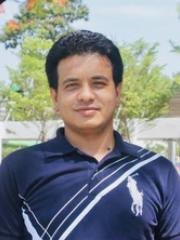
Dr. Nanda Kaji Budhathoki is a Postdoctoral Research Fellow at the School of the Environment , University of Queensland, with expertise in environmental economics, climate change adaptation, and behavioral economics. He completed his PhD in Agriculture and Environmental Economics from Charles Darwin University in 2020. Education : PhD in Agriculture and Environmental Economics (2020), Charles Darwin University Research Interests : Focus on climate risk mitigation for agricultural communities, behavioral aspects of climate adaptation, socio-economic impacts of extreme weather events, and economic modeling for private land conservation. His work integrates environmental, economic, and social data to develop sustainable solutions. Publication Trends : Recent work explores climate risk management in agriculture (2025-2020), with specific focus on index-based insurance, farmer risk perception, and adaptation strategies. Earlier publications examine rural development economics (2017-2010), including microcredit impacts and crop innovation adoption.