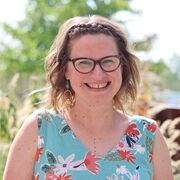
Professor Emma Moore is a leading sociolinguist at the School of English, University of Sheffield . Specializing in the social dimensions of language, her work integrates methodologies from anthropology and sociology to investigate how linguistic variation constructs identity and social affiliations. Research focus: Sociolinguistic style, dialect contact, youth language, identity negotiation, and community-based fieldwork Key projects: Adolescence and grammar (1999-), Isles of Scilly dialect (2008-), language and inequality (2014-), language perception software (2016-) Educational background : PhD in Sociolinguistics, University of Manchester Stanford University (USA) during PhD research Research trends across her 2021-2025 publications reveal interdisciplinary exploration of: Socio-syntactic variation Clinical linguistics (2025 MDS-UPDRS studies) Digital discourse post-pandemic Indexicality and cognitive representations Dialect contact in insular communities Educational policy implications Scientific recognition : British Academy Mid-Career Fellow (2019-2020) Elected Fellow, Royal Anthropological Institute (2014) AHRC/BA funded research projects (1999-2015) Research group leadership : Mentored 9 PhD students (2004-2024) and supervised 3 undergraduate SURE projects, including analyses of: Gender in rap performance Language style and workplace inequality Oral history digitization Professional contributions : Editorial Board: Language in Society (2015-), Gender and Language (2011-2017) External Examiner: Lancaster University MA in English Language (2013-2017) Collaborative software development for dialect perception testing
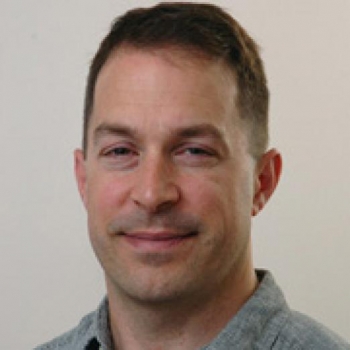
Dr. Craig S. Levin is a Professor of Radiology at Stanford University's Molecular Imaging Program at Stanford (Nuclear Medicine), with courtesy appointments in Physics, Electrical Engineering, and Bioengineering. He also holds memberships in Bio-X, the Cardiovascular Institute, the Wu Tsai Human Performance Alliance, and the Stanford Cancer Institute. Dr. Levin received his B.S. Summa Cum Laude in Physics and Mathematics from UCLA in 1985, followed by M.S., M.Phil., and Ph.D. degrees in Physics from Yale University in 1987 and 1993. His educational achievements were recognized with multiple honors including Phi Beta Kappa, Sigma Pi Sigma, and various departmental awards at UCLA. Dr. Levin's research focuses on the development of novel instrumentation and software algorithms for molecular imaging. His work spans medical physics, biomedical engineering, and instrumentation development with specific emphasis on positron emission tomography (PET), gamma camera technology, and multimodal imaging systems. His laboratory explores new concepts in radiation detection, image reconstruction algorithms, and the application of these technologies to cancer, heart disease, and neurological disorders. A notable aspect of his research involves pushing the physical limits of sensitivity and spatial, spectral, and/or temporal resolutions in imaging systems. His recent publications demonstrate a strong focus on enhancing PET technology, particularly time-of-flight capabilities, with significant work on improving coincidence timing resolution, developing MR-compatible PET systems, and applying deep learning techniques to image reconstruction and normalization. His research shows a clear trajectory toward higher resolution imaging with improved quantitative accuracy for both clinical and preclinical applications. Dr. Levin's scientific achievements have been recognized with numerous awards: American Institute for Medical and Biological Engineering's College of Fellows Academy of Radiology Research Distinguished Investigator Recognition Award National Research Service Award from NIH (1993-5) Pilot Research Award from the Society of Nuclear Medicine (1996) Multiple honors from UCLA including Phi Beta Kappa and Sigma Pi Sigma Full Tuition and Research Fellowship and Bates Graduate Fellowship from Yale University As an educator and mentor, Dr. Levin directs the NIH-NCI funded T32 Stanford Molecular Imaging Scholars postdoctoral training program and serves as a Doctoral Dissertation Advisor for students in Bioengineering and Biophysics. He currently advises five postdoctoral scholars and three doctoral candidates. His laboratory, the Molecular Imaging Instrumentation Laboratory, comprises approximately 20 members who work on developing new imaging technologies and translating them into clinical applications. Dr. Levin has secured substantial NIH funding as Principal Investigator along with grants from other government agencies, industry partners, and private institutions to support his research program. Dr. Levin's Molecular Imaging Instrumentation Laboratory is at the forefront of developing new imaging technologies that bridge physics, engineering, and medicine. The lab focuses on creating instrumentation for in vivo imaging of cellular and molecular signatures of disease, with particular emphasis on pushing the physical limits of imaging performance. Their work spans computer modeling, sensor development, electronics design, data acquisition systems, and advanced image processing algorithms. The lab maintains strong industry partnerships to translate their innovations into products used for patient care worldwide.
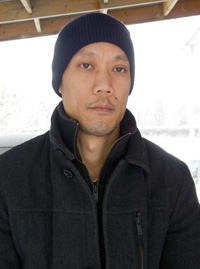
Mathieu Odijk is a Full Professor at the University of Twente's Faculty of Science and Technology, leading the Integrated Devices and Systems department. His research focuses on microfluidic systems, catalysis, and organ-on-chip platforms, with contributions to UN Sustainable Development Goals through advanced material characterization and biomedical engineering. He has authored over 120 publications and holds an h-index of 27 with 1,820 citations. Expertise: Microfluidics, catalyst particle diagnostics, SERS substrates, organ-on-chip systems, and spectroscopic techniques. Collaborations include Weckhuysen (catalysis), van den Berg (microfluidics), and Meirer (materials science). Key projects: Modular organ-on-chip platforms (STARTER), droplet-based catalyst screening, and real-time reaction monitoring via ATR-IR systems. His research combines nanotechnology and chemical engineering to develop tools for sustainable energy, environmental remediation, and biomedical applications. Recent work includes microreactors for catalyst particle analysis, light-driven urea oxidation for wearable kidney devices, and standardized platforms for organ-on-chip research.
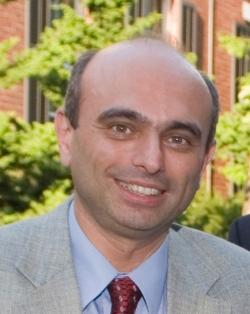
Dr. Samuel Cheng is an Associate Professor at the Gallogly College of Engineering , University of Oklahoma , specializing in Electrical and Computer Engineering . He holds a Ph.D. in Electrical Engineering from Texas A&M University (2004), preceded by M.S. and M.Phil. degrees from the University of Hawaii and Hong Kong University of Science and Technology. Education: B.S. (University of Hong Kong, 1995), M.Phil. (HKUST, 1997), M.S. (University of Hawaii, 2000), Ph.D. (Texas A&M, 2004) Professional Experience: Senior Research Engineer at Advanced Digital Imaging Research (2004-2005), prior internships at Microsoft Asia and Panasonic Technologies His research focuses on Information Theory , Signal and Image Processing , and Pattern Recognition , with applications in remote sensing, urbanization analysis, and disaster monitoring. His publications span topics including urban impervious surface mapping , nighttime light analysis , and machine learning for environmental data . His work often integrates multi-source datasets (e.g., Landsat, LiDAR, social media) for spatiotemporal modeling. Technical Expertise: Spectral unmixing, machine learning, thermal remote sensing, GIS integration Key Applications: Power outage detection, vegetation-crime correlation, PM2.5 estimation, smart meter data fusion Dr. Cheng holds three US patents in digital watermarking and is affiliated with IEEE, Sigma Xi, and AAAS. His recent articles demonstrate a trend toward leveraging AI for remote sensing challenges and analyzing urbanization impacts on ecosystems.
Brian Leung is an Associate Professor at McGill University, jointly affiliated with the Department of Biology and the Bieler School of the Environment . He holds the prestigious UNESCO Chair for Dialogues on Sustainability and serves as Director of the McGill Neotropical Environment Option (NEO) , a collaborative program with the Smithsonian Tropical Research Institute. His work bridges ecological theory, computational modeling, and environmental policy. Dr. Leung earned his PhD in Biology from Carleton University and completed postdoctoral research at the University of Cambridge and the University of Notre Dame. His academic journey at McGill began in 2004 as an Assistant Professor, advancing to Associate Professor in 2010. His research centers on predictive ecology , particularly modeling biological invasions and sustainability challenges . He develops and applies mathematical, statistical, and computational models to understand invasion dynamics across terrestrial, aquatic, and marine systems. His recent work includes the Panama Research and Integrated Sustainability Model (PRISM) , a spatially explicit framework for sustainability science in the Global South. His research spans scales from local to global and integrates ecological, economic, and social factors. His recent publications show a strong focus on invasion risk assessment , species distribution modeling , economic costs of invasions , and ecological forecasting . He frequently publishes in top journals such as Nature , Ecology Letters , and Global Ecology and Biogeography , emphasizing data-driven decision-making and policy relevance. Dr. Leung has received significant recognition through invitations to contribute to major reports and has co-edited influential works on invasive species economics. While specific named awards are not listed, his leadership roles and publication record reflect high scientific esteem. He actively mentors a dynamic research group, supervising multiple Ph.D. and M.Sc. students on projects related to invasion modeling, mangrove conservation, forest pest dynamics, and urban ecology. His lab emphasizes quantitative skills and interdisciplinary collaboration. He has secured research funding to support these projects, though specific grants are not detailed in the text. He leads the Leung Lab , which focuses on predictive modeling in ecology and sustainability. The lab collaborates with institutions such as the Smithsonian Tropical Research Institute and environmental firms like Habitat. Current projects include multi-species connectivity modeling, mangrove ecosystem services, and forecasting forest pest outbreaks.
Daniel Kifer is a Professor in the Computer Science and Engineering department at Pennsylvania State University, with affiliations to the Huck Institutes of the Life Sciences. His work bridges computer science, privacy-preserving machine learning, and geoscience applications. With over 10,000 citations and a high h-index, he focuses on methods to unify theoretical and applied research. Research Interests: Differential Privacy, Privacy-Preserving Machine Learning, Physics-Informed Neural Networks, Landslide Prediction, and Formal Verification of Privacy Systems. Recent projects include grants from the National Science Foundation: SaTC: CORE: Small (2024): privacy-preserving user data embedding in machine learning pipelines. SaTC: CORE: Medium (2017-2023): formal methods for differential privacy and accuracy optimization. His research outputs span domains like geoscience, database systems, and policy analysis, emphasizing precision and scalability of privacy-preserving algorithms.
Michela Bertolotto is a Professor in the School of Computer Science at University College Dublin (UCD). Her research focuses on spatio-temporal data modeling, GIScience, and applications of geospatial technologies in fields like urban planning and health informatics. She leads a research group and has supervised 19 PhD and 8 MSc students. Her work includes innovations in LiDAR-based flood risk visualization, semantic web quality assurance, and open-source spatial data analysis. Bertolotto has held roles including College Lecturer at UCD (2000–2006) and postdoctoral research positions at the University of Maine and University of Genoa. Education: BSc and PhD in Computer Science from the University of Genoa (1993, 1998). Professional achievements include over 100 publications, 24 grants (e.g., Science Foundation Ireland-funded Urban ARK project), and editorial roles at journals like the International Journal of Geographical Information Science. Awards include the UCD President's Research Award (2001) and NATO Postdoc Fellowship (1998–1999). Research interests span map personalization, volunteered geographic information (VGI), and geospatial data quality. Her lab develops tools like the LAMSkyCam (low-cost sky imaging system) and dynamic flood risk viewers. She chairs international conferences and serves on program committees for GIScience events.
Roberto Tamassia is the James A. and Julie N. Brown Professor of Computer Science and Chair of the Computer Science Department at Brown University. He is also Director of Brown's Center for Geometric Computing. His research focuses on information security, cryptography, algorithms, graph drawing, and computational geometry. He has authored six textbooks and over 250 publications, and his work has been funded by ARO, DARPA, NATO, NSF, and industry sponsors. Education: PhD in Electrical and Computer Engineering from the University of Illinois at Urbana-Champaign. Research Interests: Cryptography and Secure Systems Algorithm Design and Optimization Graph Drawing and Geometric Computing Encrypted Database Security Awards and Honors: IEEE Fellow Technical Achievement Award from IEEE Computer Society Listed among the 360 most cited computer science authors by ISI Grants and Funding: His research has been supported by major agencies and organizations including ARO, DARPA, and NSF, as well as industry partnerships. Labs and Affiliations: Directs Brown's Center for Geometric Computing, a hub for interdisciplinary research in computational geometry and graph algorithms.
Prof. Nikos Mamoulis is a Professor at the Department of Computer Science & Engineering, University of Ioannina, and a Lead Researcher at Archimedes Research Unit, ATHENA RC. He holds a PhD from Hong Kong University of Science and Technology (HKUST) and a Diploma from the University of Patras. His research focuses on spatial data management, big data analytics, data privacy, and uncertain data systems. Education : Ph.D., Computer Science, Hong Kong University of Science and Technology (2000) 5-year Diploma, Computer Engineering and Informatics, University of Patras (1995) Research Interests : Complex data management (spatial, spatio-temporal, time-series, text, graphs), big data analysis, privacy preservation, and uncertain data systems. He develops scalable algorithms and systems for modern data management challenges, with applications in transportation, social networks, and geospatial analytics. Projects & Grants : MESA: In-memory Spatial Analytics Made Scalable (HFRI-funded, PI) MORE: Real-time Energy Data Management (H2020, Senior Researcher) Smart City Bus Platform (ERDF-funded, PI/Coordinator) Awards : Outstanding Young Researcher Award (2008-2009, HKU) Best Paper Award at SSTD 2015 Test of Time Award at MDM 2022 Labs & Collaborations : Leads the Archimedes Research Unit at ATHENA RC, collaborating with institutions like HKUST and Uppsala University on spatial and big data systems. Active in organizing top-tier conferences like SIGMOD, EDBT, and ICDE.
Professor Thomas Astell-Burt is a Professor of Cities and Planetary Health at the University of Sydney's School of Architecture, Design and Planning. His work focuses on the intersection of urban environments, green spaces, and public health. He is a member of the Sydney Environment Institute and the Charles Perkins Centre. His research examines how urban planning and green infrastructure can mitigate health inequities, combat climate change, and improve mental/cardiometabolic health. Key areas include nature prescriptions, heat-related mortality, and the role of green spaces in reducing loneliness. Recent grants include projects on aged care workforce sustainability, nature-based strategies for loneliness reduction, and the PANDA Trial for cardiometabolic disease prevention. Over 180+ publications span peer-reviewed journals like Scientific Reports , Climate , and PloS One , with a focus on global health trends and urban environmental policies. His work bridges epidemiology, urban design, and interdisciplinary collaboration to inform evidence-based health policies. Key affiliations include leadership roles in global health initiatives and collaborations with institutions like the University of Glasgow. His research has been cited in policy frameworks addressing urban sustainability and planetary health.
Professor Reynold Cheng is a faculty member at the University of Hong Kong (HKU), specifically within the Department of Computer Science in the School of Computing and Data Science (CDS). He currently serves as the Division Head of the AI & Data Science Division at CDS and is part of the Steering Committee of the Musketers Foundation Institute of Data Science. His academic journey includes a BEng and MPhil from HKU (1998–2000) and an MSc and PhD from Purdue University (2003–2005). Prior to HKU, he was an Assistant Professor at the Hong Kong Polytechnic University (HKPU) from 2005 to 2008. Cheng’s research focuses on data science, big graph analytics, and uncertain data management. He has received numerous awards, including the SIGMOD Research Highlights Reward 2020, HKICT Awards 2021, and HKU Knowledge Exchange Award (Engineering) 2021. His work has been recognized through grants such as the HKU-TCL Joint Research Centre for AI-funded project (HKD 1M, 2020–2022) and a CRF-funded project for real-time monitoring of infectious diseases (HKD 6.5M, 2021–2022). Cheng actively contributes to academic service, including serving as PC co-chair for IEEE ICDE 2021 and editorial roles in journals like IS and DAPD. His publications span top venues like SIGMOD, VLDB, and KDD, emphasizing algorithm design for large graphs and probabilistic data systems.
Mohamed F. Mokbel is a Distinguished McKnight University Professor in the Department of Computer Science and Engineering at the University of Minnesota - Twin Cities , where he also serves as the Director of Graduate Studies. He is recognized as an IEEE Fellow and ACM Distinguished Member for his contributions to spatially- and privacy-aware systems. His research focuses on database systems , spatial data management , and GIS (Geographic Information Systems) , with significant work in spatiotemporal data, location-based services, and machine learning for spatial applications. His most recent publications address scalable BERT-based trajectory imputation , spatial logistic regression frameworks , and spatiotemporal big data decay techniques . Key Awards: Distinguished McKnight University Professor (2023) ACM SIGSPATIAL 10-Year Impact Award (2022) IEEE Fellow (2020) ACM Distinguished Member (2017) NSF CAREER Award (2010) Selected Conference Papers: Recathon (2015, IEEE MDM Best Paper) ST-Hadoop (2017, SSTD Best Paper) KAMEL (2023, ACM SIGMOD Demo) Academic Service: Editor-in-Chief, ACM Transactions on Spatial Algorithms and Systems (2024–) General Co-Chair, ACM SIGSPATIAL 2025 Past Chair, ACM SIGSPATIAL (2014–2017)
Hyuck Jin Park is a Full Professor in the Department of Energy Resources and Geosystems Engineering at Sejong University, South Korea, where he has been teaching and conducting research since 2003. With a Ph.D. in Engineering Geology from Purdue University, his expertise spans geotechnical engineering, landslide analysis, and geospatial technologies. Professor Park has built a distinguished career in landslide hazard assessment, combining traditional geotechnical approaches with modern machine learning techniques to improve prediction accuracy and risk management. His educational background includes: B.S. in Geology from Yonsei University (1990) M.S. in Geophysics from Yonsei University (1993) Ph.D. in Engineering Geology from Purdue University (2011) Professor Park's research focuses on the spatial and temporal probability of landslide occurrence, utilizing fuzzy logic, probabilistic analysis, GIS, Monte Carlo simulation, and machine learning for landslide hazard assessment. His work integrates physically based models with statistical approaches to better understand landslide mechanisms and improve prediction capabilities. He has made significant contributions to the development of methodologies that account for geological uncertainties in hazard assessment, with applications ranging from rock slope stability to rainfall-induced shallow landslides. His recent publications demonstrate a clear trend toward integrating explainable artificial intelligence with traditional geotechnical approaches for natural hazard assessment. Professor Park's work increasingly focuses on making machine learning models transparent and interpretable while maintaining high predictive accuracy. The research spans multiple hazard types including landslides, earthquakes, and floods, with a growing emphasis on climate change impacts and data-scarce environments. With an h-index of 28 and over 3,421 citations, Professor Park has established himself as a leading researcher in his field. His work has been published in high-impact journals including Engineering Geology, Landslides, and Catena, reflecting the significance and quality of his contributions to geotechnical engineering and natural hazard assessment. Professor Park has mentored numerous researchers through collaborative projects and has secured funding for his innovative work in landslide prediction and hazard assessment. His research has involved significant international collaboration, particularly with researchers from Malaysia, Australia, and Yemen, addressing landslide and flood risks in diverse geographical contexts. He leads research activities within the Department of Geoinformation Engineering at Sejong University and has contributed to the development of specialized tools like DEWS (Distance, Elevation, Watershed, and Slope unit) for landslide early warning systems.
Karen Redrobe is the Elliot and Roslyn Jaffe Professor and Undergraduate Chair in the Department of Cinema and Media Studies at the University of Pennsylvania's School of Arts & Sciences. She has held leadership roles as Department Chair of History of Art, Director of the Wolf Humanities Center, and Director of the Program in Cinema and Media Studies. Research Focus Her scholarship explores intersections of film theory, war and academia, violence in media, animation theory, feminist critique, death penalty photography, and the relationship between cinema and contemporary art. She emphasizes intermediality, experimental cinema, and critical pedagogy. Awards Society of Cinema and Media Studies’ 2025 Distinguished Pedagogy Award Collaborations and Service She co-chairs the Scribe Video Center Board of Directors and serves on the editorial board of MIT's Grey Room . She is actively involved in graduate groups across Comparative Literature, English, FIGS, and History of Art.
Ebrahim Bedeer Mohamed is an Assistant Professor in the Department of Electrical and Computer Engineering at the University of Saskatchewan. He joined in July 2019, following roles as an Assistant Professor (Lecturer) at Ulster University, UK, and postdoctoral fellowships at Carleton University and the University of British Columbia. He holds a Ph.D. (Distinction) from Memorial University of Newfoundland (2014), with expertise in signal processing and wireless communications. His research focuses on optimizing communication systems through advanced signal processing techniques, including faster-than-Nyquist signaling, IoT network design, AI integration, and energy-efficient protocols. Key areas include next-generation communication networks, non-orthogonal modulation, and MIMO systems. Notable contributions include work on channel estimation for FTN signaling, RIS-aided wireless systems, and LR-FHSS protocols in IoT. His publications span spectral efficiency, interference minimization, and energy management in 5G/6G contexts. He actively seeks Ph.D. students with strong backgrounds in signal processing fundamentals. Awards and grants are not explicitly listed in the provided texts. His work emphasizes practical applications, such as UAV trajectory optimization for IoT data collection and energy-efficient caching strategies in dynamic networks.