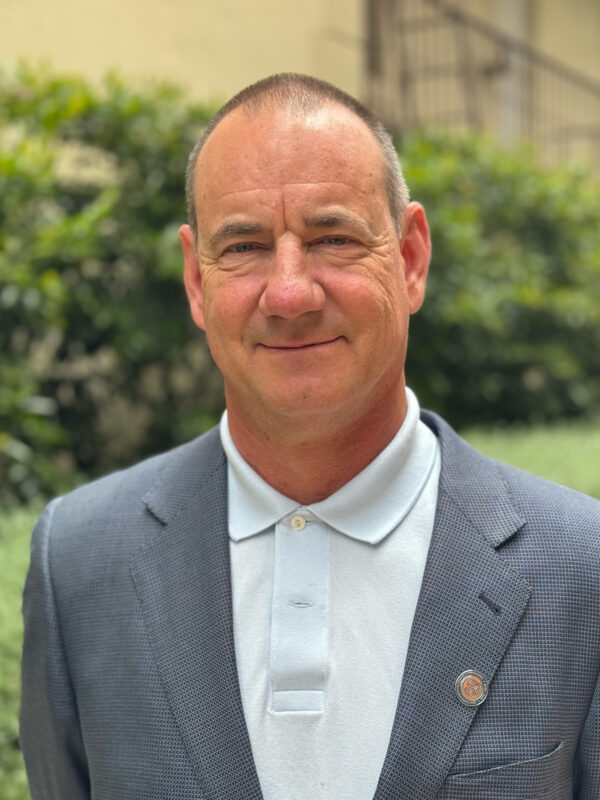
Thomas Gillespie is a Professor and Co-Chair of the Environmental Science and Engineering (D.Env.) Program at the Department of Geography, University of California, Los Angeles (UCLA). His research integrates Geographic Information Systems (GIS), remote sensing, and biogeography to study tropical dry forests in biodiversity hotspots and develop predictive models for species distribution and conservation. Education: Ph.D. in Geography, UCLA (1998) M.A. in Geography and Planning, California State University, Chico (1994) B.A. in International Affairs, University of Colorado, Boulder (1990) Research Interests: Gillespie’s work focuses on field-based floristic surveys and remote sensing analysis of tropical dry forests across the Pacific, Caribbean, and California. He combines GIS with ecological data to model biodiversity patterns, anthropogenic disturbance impacts, and climate change scenarios. His research spans biogeography, conservation science, and environmental policy. Scientific Awards: NASA Earth and Space Science Fellowship Grants: Gillespie has secured major grants from the National Science Foundation (NSF), Environmental Protection Agency (EPA), National Institutes of Health (NIA, NICHD), and MacArthur Foundation for projects on urban greening, disaster recovery, and tropical forest conservation.
Tom Ian Battin is a Full Professor at the École Polytechnique Fédérale de Lausanne (EPFL), affiliated with the School of Architecture, Civil and Environmental Engineering (ENAC). He holds roles in three departments: the River Ecosystems Research Laboratory (RIVER), the Laboratory of Management of Infrastructures, Networks and Construction (LIMNC-GE), and the SSIE Teaching Unit (ENS). His research focuses on aquatic ecosystems, microbial communities in glacier-fed streams, climate change impacts, and biogeochemical processes in alpine environments. He advises numerous doctoral students and has supervised over ten theses at EPFL. Battin teaches courses such as 'Fundamentals in Ecology,' 'Aquatic Ecosystems,' and 'Global Change Ecology and Fluvial Ecosystems.' He is actively involved in academic governance, serving on the EPFL Academic Strategic Committee (ASC) and the ENAC Academic Evaluation Committee (CEA). His work investigates how glacier retreat affects stream microbiomes, dissolved organic carbon dynamics, and ecosystem resilience. Key themes include microbial metabolism, biofilm functionality, and the interplay between hydrology and biogeochemistry. Battin leads research projects on global glacier-fed stream biogeography and the resistome of stream biofilms. His interdisciplinary approach bridges ecology, microbiology, and environmental engineering, addressing critical questions about mountain ecosystems under climate change.
James Zou is an Associate Professor of Biomedical Data Science at Stanford University, with courtesy appointments in Computer Science and Electrical Engineering. His research focuses on advancing machine learning methodologies for healthcare applications, emphasizing reliability, fairness, and statistical rigor. He holds a Ph.D. from Harvard University and has held positions at Microsoft Research, Cambridge University (as a Gates Scholar), and UC Berkeley (Simons Fellow). Zou leads the Stanford Data4Health hub and is a Chan-Zuckerberg Investigator. His work spans AI-driven diagnostics, spatial transcriptomics, and ethical AI frameworks. Key achievements include the EchoNet AI system for echocardiography and foundational contributions to data valuation (e.g., Data Shapley). Awards include the Sloan Fellowship, NSF CAREER Award, and Google/Tencent AI awards. Education: Ph.D., Harvard University (2014); Postdoctoral roles at Microsoft Research, Cambridge, and Berkeley. Research Interests: Machine learning for healthcare, algorithmic fairness, interpretable AI, spatial omics, and translational bioinformatics. His lab develops tools like TextGrad (PyTorch for text agents) and frameworks for evaluating medical AI systems. Recent work addresses LLMs in peer review and clinical decision-making. Grants/Grants: Supported by NSF, Sloan Foundation, Chan-Zuckerberg Initiative, and industry partnerships (Google, Amazon, Adobe). Advises on over 20 doctoral students, many contributing to high-impact papers in Nature , Science , and top conferences (NeurIPS, ICML). Leads collaborations in cardiology, oncology, and veterinary medicine. Labs/Teams: Stanford AI Lab, Stanford Data4Health, and interdisciplinary groups in precision medicine. Active in open-source projects like FrugalML and MetaViz.
Ben Cosgrove is an Associate Professor in the Meinig School of Biomedical Engineering at Cornell University, serving as Director of Graduate Studies. His research focuses on systems bioengineering approaches to understand muscle stem cell dysfunction in aging and disease. He leads the Cosgrove Lab, a multidisciplinary group integrating biomedical engineering, stem cell biology, and systems biology to study microenvironmental signaling in muscle regeneration. His work includes developing biomimetic microenvironments for stem cell manufacturing and improving regenerative medicine therapies. Dr. Cosgrove holds a B.Eng. from the University of Minnesota (2003) and a Ph.D. in Bioengineering from MIT (2009). Postdoctoral training at Stanford University (with Dr. Helen Blau) followed. His research is supported by NIH grants (including R01, R21), the Glenn Medical Research Foundation, and others. He has been recognized with awards such as the BMES Graduate Research Award (2008), Rising Star Award (2015), and Swanson Teaching Excellence Award (2019). Research interests span bioengineering, biomechanics, computational science, and systems biology. His lab's innovations include spatial transcriptomic mapping and high-yield stem cell expansion platforms. Current projects aim to decode stem cell-niche interactions to treat muscle degeneration and aging. Grants: NIH K99/R00, R01, R21; Glenn Medical Research Foundation Labs/Teams: Cosgrove Lab (Cornell University) Future Work: Expanding applications of spatial transcriptomics and engineering regenerative therapies for muscle diseases
Dr. Christina Leslie is a Research Professor and Member of the Computational & Systems Biology Program at Memorial Sloan Kettering Cancer Center (MSK). She leads an active research laboratory focused on developing computational approaches to understand complex biological systems. Dr. Leslie earned her PhD from the University of California, Berkeley and has established herself as a leading computational biologist in cancer research and immunology. Computational & Systems Biology Program, Memorial Sloan Kettering Cancer Center Gerstner Sloan Kettering Graduate School of Biomedical Sciences Dr. Leslie's research focuses on developing novel computational methods to study cellular biological systems from a global and data-driven perspective. Her lab exploits diverse high-throughput functional and genomic data to understand molecular networks underlying fundamental cellular processes, including transcription regulation, pre-mRNA processing, signaling, and post-transcriptional gene silencing. Her algorithmic methods draw heavily on machine learning to build accurate predictive models from noisy and high-dimensional biological data. Key areas of interest include modeling cell-type specific transcriptional programs and dissecting co- and post-transcriptional regulation, particularly microRNA-mediated gene regulation. Analysis of Dr. Leslie's publication record over the last five years reveals a strong focus on computational approaches to cancer genomics, immunology, and epigenetics. Her work bridges multiple disciplines, with a particular emphasis on developing machine learning methods to interpret complex biological data. The publications demonstrate increasing sophistication in integrating multiple data types (genomic, transcriptomic, epigenomic) to understand cancer biology and immune responses. Recent work shows a growing emphasis on single-cell technologies and spatial analysis of tumor microenvironments. Introduction of string kernel methodology for SVM classification of biological sequences Development of algorithms for predictive modeling of gene regulation First systems-level analyses of competition between microRNAs and between target transcripts Dr. Leslie actively mentors numerous graduate students and research associates, with current lab members including Vianne Gao, Alireza Karbalaghareh, Erik Ladewig, and several others. Her lab has received significant research funding to support their work on computational approaches to cancer biology and immunology. The Leslie Lab maintains close collaborations with multiple experimental groups at MSK, facilitating the translation of computational insights into biological understanding. The Leslie Lab operates within the Computational & Systems Biology Program at MSK, with strong ties to both the research and clinical missions of the institution. The lab maintains state-of-the-art computational infrastructure for analyzing large-scale genomic and proteomic datasets and collaborates extensively with wet-lab researchers to validate computational predictions experimentally.
Duncan Astle is the Gnodde Goldman Sachs Professor of Neuroinformatics at the Department of Psychiatry, University of Cambridge. He serves as a Programme Leader at the Medical Research Council's Cognition and Brain Sciences Unit (MRC CBU) and is a Fellow of Robinson College. Astle heads the 4D Lab (Development, Dynamics, Disorders, Data Science), which provides a research home for approximately 15 Early Career Researchers working at the intersection of developmental cognitive neuroscience and advanced data science methodologies. Astle's research focuses on understanding childhood development through innovative analytical approaches. His work employs transdiagnostic methods to study children with attention, learning, and memory difficulties, moving beyond traditional diagnostic categories. He investigates how neural systems develop in childhood, how they relate to developmental disorders, and how they respond to intervention. His research integrates network science, machine learning, and generative modeling to capture the complexity of neurodevelopmental diversity, examining how cognitive skills, literacy, numeracy, and mental health interrelate over developmental time. His publication record reveals a strong focus on brain connectivity and organization across development. Recent work explores structural and functional neurodevelopmental trajectories, brain wiring economics, and the impact of environmental factors on neural development. Astle's research frequently employs advanced data science techniques to identify sub-populations of children with different cognitive or brain profiles, regardless of diagnosis, and to map non-linear relationships between brain organization and cognitive difficulties. His work has increasingly focused on transdiagnostic approaches to understanding developmental disorders and the application of computational models to developmental neuroscience. Astle actively supervises PhD students and has built a substantial research group that contributes to major projects including the Centre for Attention Learning and Memory (CALM) and Resilience in Education and Development (RED). His work has been supported by prestigious funding bodies including the Royal Society, the British Academy, the Medical Research Council, and the Economic and Social Research Council, as well as multiple charitable foundations. The 4D Lab, under Astle's leadership, utilizes state-of-the-art facilities at the University of Cambridge, including on-site magnetic resonance imaging and magnetoencephalography scanners. The lab contributes to building specialist cohorts such as CALM (800 children with cognitive difficulties plus 200 comparison children) and RED, which study children's development, resilience, and educational outcomes. Astle's team explores how growing up in adverse environments affects children's brains, behavior, and mental health, with the aim of identifying early markers of risk and resilience.
Joshua D. Rabinowitz is a Professor of Chemistry and the Lewis-Sigler Institute for Integrative Genomics at Princeton University, where he also serves as Director of the Ludwig Princeton Branch. His research focuses on achieving a quantitative, comprehensive understanding of cellular metabolism, with applications in both basic science and medical research. Dr. Rabinowitz's research interests span multiple areas of metabolism and systems biology: Quantitative analysis of metabolic networks and regulation Metabolomics and measurement of metabolite concentrations and fluxes Cancer cell metabolism and therapeutic targeting Metabolic regulation in microbes (E. coli, Saccharomyces cerevisiae) Biofuel production (focusing on Clostridium acetobutylicum) Metabolic impact of pathogen infection (viral infection of human cells) His laboratory has developed innovative methods for measuring cellular metabolites using state-of-the-art mass spectrometry technology and approaches for quantitating metabolic fluxes through isotope-labeling data interpretation. Analysis of recent publications reveals a strong focus on NAD+ metabolism, cancer metabolism, metabolic adaptations in disease states, and the intersection of metabolism with immunology and neuroscience, particularly in areas like T cell metabolism, Alzheimer's disease, and cardiac function. Dr. Rabinowitz has received recognition as a Highly Cited Researcher by Web of Science, indicating significant impact in his field. He advises several graduate students and has mentored numerous alumni, including Michel I. Nofal, Edmundo Leiva III, and Sean Hackett. His research is supported by multiple programs including NIH NHGRI Training Program and QCB Graduate Program. The Rabinowitz Lab operates at the intersection of chemistry, biology, and computational science, with all projects involving a mix of biological experiments, metabolomics, and computation to achieve their goal of a holistic understanding of cellular metabolism.
Zackary Johnson , the Juli Plant Grainger Associate Professor of Biological Oceanography and Marine Biotechnology at Duke University, leads interdisciplinary research at the intersection of marine microbiology and biogeochemical innovation. Affiliated with the Nicholas School of the Environment and based at the Duke Marine Laboratory , his work spans microbial ecology, algal biotechnology, and climate mitigation strategies. Education: Ph.D. in Marine Science (Duke University, 2004), B.S. in Biology (MIT, 1994) Research Interests focus on marine microbial communities, particularly the model phytoplankton Prochlorococcus , algal cultivation for sustainable bioproducts, and the ecological impacts of ocean acidification. His lab investigates microbial interactions across diverse environments—from coastal estuaries to open-ocean gyres—and develops technologies for carbon-negative aquaculture systems. Publications highlight expertise in microbial biogeography, algal biofuels, and climate-resilient marine food webs. Recent work explores drone-based ocean color sensing, Gulf Stream eddy microbiomes, and the role of Labyrinthulomycetes protists in carbon export. Scientific Awards: Juli Plant Grainger Associate Professorship DOE and NSF-funded projects Grants include high-profile initiatives like the Marine Algae Industrialization Consortium (MAGIC) and REU Site program for coastal research training. His lab maintains a dedicated research site for studying microbial dynamics and sustainable algal cultivation.
Britt Koskella is an Associate Professor at the University of California, Berkeley, affiliated with the Department of Environmental Science, Policy, and Management within the College of Natural Resources. Her research focuses on evolutionary biology, particularly host-pathogen coevolution and microbial interactions, integrating experimental evolution, field studies, and molecular biology. She leads the Koskella Lab, which investigates how microbial communities, phages, and pathogens influence host health and agricultural sustainability. Research Interests: Dr. Koskella explores the coevolutionary dynamics between hosts and their symbionts, including bacteriophage-bacteria interactions in plant microbiomes. Her work bridges ecological and evolutionary principles to address applied challenges in disease management and sustainable agriculture. Key areas include understanding phage-mediated selection in natural populations, the role of microbiomes in host defense, and the spatial/temporal adaptation of pathogens. Advancing Knowledge: Dr. Koskella’s lab employs experimental evolution in greenhouses and lab settings to test hypotheses derived from field observations. Recent studies highlight the indirect role of phages in plant disease protection and the design of synthetic microbial communities for agricultural applications. She collaborates on initiatives like the Joint Berkeley Initiative for Microbiome Sciences (JBIMS), emphasizing interdisciplinary approaches. Lab Team & Contributions: The lab includes students and researchers such as Eli Mehlferber, Asa Conover, and others, advancing projects on microbiome assembly, phage therapy, and pathogen coevolution. Dr. Koskella’s work has been published in high-impact journals like Current Biology , American Naturalist , and Ecology Letters .
Sylvia Richardson is an MRC Investigator at the MRC Biostatistics Unit and holds a Research Professorship at the University of Cambridge, where she served as Director of the Biostatistics Unit from 2012 to 2021. She is affiliated with the Cambridge Mathematics of Information in Healthcare Hub (CMIH) at the Centre for Mathematical Sciences. Her work bridges advanced statistical methodology with critical healthcare applications, particularly in the analysis of complex biomedical data. Richardson's research spans multiple domains of biostatistics with a strong emphasis on Bayesian approaches. Her work has significantly advanced spatial modeling and disease mapping techniques, developed sophisticated methods for handling measurement error in epidemiological studies, and pioneered mixture and clustering models for integrative analysis of heterogeneous data sources. Her research addresses fundamental challenges in analyzing longitudinal health data, multimorbidity patterns, and complex disease trajectories. Her publication record demonstrates consistent methodological innovation applied to pressing healthcare challenges. Recent work focuses on traumatic brain injury outcomes, multimorbidity progression, genomic analysis, and statistical approaches to pandemic data. The articles reveal a strong pattern of methodological development driven by real-world healthcare challenges, with particular attention to longitudinal analysis, Bayesian computation, and integrative modeling approaches that can handle diverse and complex data structures. While specific awards are not detailed in the available information, Richardson's leadership as Director of the MRC Biostatistics Unit for nearly a decade and her continued Research Professorship reflect significant recognition of her contributions to the field. Her work with major international consortia like CENTER-TBI demonstrates her role in large-scale collaborative research efforts addressing critical health challenges. Richardson's research has substantial implications for healthcare policy and practice, particularly in understanding disease progression, developing predictive models for patient outcomes, and creating methodological frameworks that can integrate diverse data sources to generate meaningful clinical insights. Her work continues to influence both statistical methodology and healthcare applications through ongoing research and leadership in the field.
Lindell Bromham is a Professor at the Research School of Biology , Australian National University, focusing on evolutionary biology, cultural evolution, and interdisciplinary research. Their work spans genomic mutation rates to global linguistic diversity, with notable projects on language endangerment and Galton’s problem in cross-cultural studies. Broad research themes: evolutionary biology, cultural evolution, macroecology, linguistics Key contributions: interdisciplinary funding disparities, language evolution models, parasite-culture interactions Recent articles emphasize language endangerment risk factors, methodological innovations in cross-cultural analysis, and population size effects on language evolution. Awards include Eureka Prize Finalist (2021) and media recognition in Nature and New Scientist . Supervises students in evolutionary and linguistic research.
Professor Tariq Butt of Swansea University's Faculty of Science and Engineering leads the Biocontrol and Natural Products (BANP) group , focusing on entomopathogenic fungi and natural product-based biopesticides for managing pests impacting food security , human health , and agriculture . He co-directs the Natural Products BioHub and Health Technology Solutions Research Institute . His cross-disciplinary research includes collaborations with Dr Joel Loveridge (Chemistry) for chemical ecology, Professor Chedly Tizoui (Engineering) for plant-based molluscicides, and Professor Dan Eastwood (Biosciences) for fungal biocontrol. Externally, he works with experts in Greece, Brazil, Turkey, Saudi Arabia , and companies like Certis Belchim and Lallemand . Recent publications highlight his work on fungal volatile organic compounds for pest control, mosquito repellents , and microbial consortia to reduce chemical dependencies. He has supervised over 35 PhD/MSc students and contributed to 174+ peer-reviewed articles and 14 book chapters .
Maizie Zhou is an Assistant Professor in Biomedical Engineering and Computer Science at Vanderbilt University’s School of Engineering. She holds dual PhDs in Computer Science (Stanford University) and Neuroscience (Wake Forest School of Medicine), with additional degrees from Wake Forest University and Huazhong University of Science and Technology. Her research focuses on computational genomics, bioinformatics, and machine learning applied to problems in cancer genomics, single-cell and spatial transcriptomics, and computational neuroscience. She leads the Zhou Lab, which develops algorithms for structural variant detection, neural circuit analysis, and integrative omics approaches. Recent work includes tools like VolcanoSV and stDyer, and she has received grants from NIH, Vanderbilt Brain Institute, and industry partnerships. Key achievements include VUSE Best Paper Awards, Global Engagement Travel Grants, and mentoring students in prestigious programs like the Provost’s Pathbreaking Discovery Award. Her lab also explores the neural underpinnings of cognitive maturation in primates, combining computational and experimental neuroscience. Education: PhDs in Computer Science (Stanford) and Neuroscience (Wake Forest), MS (Computer Science, Wake Forest), BS (Biotechnology, Huazhong). Research interests span computational genomics (e.g., structural variant detection, haplotype phasing), spatial transcriptomics (clustering, integration), and computational neuroscience (neural circuit dynamics, prefrontal cortex plasticity). Her lab’s tools address challenges in precision medicine, cancer genomics, and understanding adolescent brain development. Recent projects include NIH-funded work on spatial transcriptomics and collaborations with Dr. Meltzer’s lab on cancer genomics. Publications highlight advancements in bioinformatics tools and neural mechanisms, with trends toward multi-omics integration and algorithmic innovation in genomics. Awards include the Global Engagement Travel Grant and CCSB Accelerator Fund. Students under her mentorship have excelled in qualifying exams and travel grants, reflecting her impactful training program.
Dr. David Burton is a Professor in the Department of Plant, Food, and Environmental Sciences at Dalhousie University's Faculty of Agriculture. He serves as Director of the Centre for Sustainable Soil Management and leads initiatives in soil health, greenhouse gas emissions, and sustainable agricultural practices. His teaching spans undergraduate and graduate courses in soil science, nutrient management, and climate change. Research focuses on microbial metabolism in soil, nitrogen cycling, and the environmental impacts of agricultural practices. He co-founded the Atlantic Soil Health Lab and manages the Greenhouse Gas Analysis Lab. Key affiliations include the Canadian Society of Soil Science (Fellow), Soil Conservation Council of Canada, and Fertilizer Canada's 4R Research Network. Recent work emphasizes soil's role in climate resilience, including presentations on regenerative farming and soil carbon sequestration. He collaborates with government and industry to develop climate-smart soil management policies and tools for nitrogen management optimization. Awards: Fellow of the Canadian Society of Soil Science Labs: Centre for Sustainable Soil Management, Greenhouse Gas Analysis Lab, Atlantic Soil Health Lab Grants: NSERC CREATE Climate Smart Soils
Professor Richard Wade-Martins is a leading academic in University of Oxford 's Department of Physiology, Anatomy and Genetics . He directs the Molecular Neurodegeneration Research Laboratory and the Oxford Parkinson’s Disease Centre (OPDC). With degrees from Cambridge (MA) and Oxford (DPhil), he has held prestigious fellowships including Wellcome Trust Research Career Development Fellowship and NIH reviewer roles. His research targets molecular mechanisms in Parkinson’s and Alzheimer’s diseases through iPSC models , transgenic mice , and lysosomal function studies . He pioneered work on SNCA , MAPT , and LRRK2 gene pathways. Current projects focus on gene therapy and mitochondrial dysfunction in neurodegeneration. Key publications (2019–2025) reveal trends in single-cell transcriptomics , calcium channel inhibition , and TFEB/TFE3 lysosome modulation . His awards include Wellcome Trust Fellowships and advisory roles for Parkinson's UK , Alzheimer's Research UK , and EU consortia like StemBANCC and EFACTS . He leads the UK Dementia Platform iPSC Initiative and serves on international boards in Luxembourg and Canada.