Pierre-Louis Frison serves as Associate Professor at Gustave Eiffel University within the National School of Geographical Sciences (ENSG) and LASTIG research laboratory. He coordinates the Master 2 program in Geographical Information, Spatial Analysis and Remote Sensing, directing academic strategy for advanced geospatial education. His research specializes in radar remote sensing for terrestrial surface monitoring, with core emphases on: Vegetation and forest cartography using Sentinel-1 data Land use change detection at regional-to-global scales Development of customized QGIS toolkits for radar image processing Crop monitoring through microwave remote sensing techniques Frison teaches foundational and advanced coursework in image processing and remote sensing, covering spatial/frequency domain analysis, radar polarimetry, speckle filtering, and thermal infrared methodologies. His pedagogical approach integrates theoretical principles with practical geospatial software applications.
Humberto Vergara is an Assistant Professor in the Department of Civil and Environmental Engineering at the University of Iowa, and concurrently serves as an Assistant Research Engineer at IIHR—Hydroscience and Engineering. He is also affiliated with the Iowa Flood Center. His work spans numerical hydrologic modeling, flash flood forecasting, and remote-sensing hydrology, with a strong emphasis on scientific computing in hydrologic applications. Education: PhD, Civil Engineering (Water Resources), University of Oklahoma MSc, Civil Engineering (Water Resources), University of Oklahoma BS, Environmental Engineering, El Bosque University, Colombia Research Interests: Vergara’s research is centered on extending flash flood forecasting capabilities in data-scarce regions, understanding flash floods in post-fire environments, and improving the physics representation in parsimonious hydrologic models. He also focuses on extending lead times for flash flood forecasts and warnings, leveraging satellite observations and machine learning techniques. His recent work includes developing satellite-based frameworks for early warning systems in West Africa, evaluating global precipitation products, and integrating machine learning models to enhance precipitation nowcasting and flood impact classification. Scientific Awards: No awards or honors are explicitly mentioned in the provided text. Research Labs and Teams: He leads the Advanced Hydrology and Warning Applications Laboratory at the University of Iowa, which focuses on cutting-edge research in hydrologic modeling, early warning systems, and remote sensing applications for flood forecasting.
Dmitry Nikolaevich Lapshin is a Doctor of Biological Sciences and Leading Researcher at the Laboratory of Sensory Information Processing, Institute for Information Transmission Problems of the Russian Academy of Sciences (IITP RAS). His career spans institutions like Moscow State University's Biological Faculty (1980-1994) and the Moscow Institute of Radio Engineering Equipment (pre-1980). As a protégé of Prof. Alexey Byzov, Lapshin's work bridges sensory physiology, bioacoustics, and neuroethology. Education : Bauman Moscow State Technical University (1976) His research focuses on mosquito bioacoustics and nocturnal lepidopteran echolocation strategies , revealing novel mechanisms like frequency-tuned auditory neurons in mosquitoes and acoustic counter-strategies against bats. Publications in Insects , Sensory Systems , and Journal of Experimental Biology demonstrate interdisciplinary impact. Articles show progressive exploration of insect auditory systems across 15 years. Lapshin has received multiple RFBR grants (2006-2014) and international support from Volkswagen Stiftung (1997). His work fundamentally reshaped understanding of insect auditory processing through electrophysiological and behavioral experiments. Collaborations with D.D. Vorontsov and R.D. Zhantiev highlight long-term scientific partnerships. Technical Expertise : Acoustic signal processing in insects Neural mechanisms of sound detection Frequency tuning analysis Flight simulation methodologies Echolocation system modeling Sensory-motor integration
Dr. Zhixiang Chen is a Lecturer in Machine Learning at the Department of Computer Science, University of Sheffield, and an active member of both the Machine Learning and Computer Vision research groups. Previously, he held postdoctoral positions at Imperial College London and Tsinghua University. Education: PhD in Computer Science, Tsinghua University, China B.Eng. in Computer Engineering, Xi'an Jiaotong University, China His research focuses on advancing Computer Vision and Machine Learning through human analysis, object detection, and image retrieval systems. Recent work integrates deep learning for industrial applications like PCB inspection and autonomous systems, while earlier contributions pioneered video hashing techniques for efficient multimedia search. His methodology emphasizes robust feature representation and scalable algorithm design. Publication trends reveal a strategic shift from foundational hashing research (2016-2019) toward applied 3D vision and industrial automation (2020-2024), with increasing emphasis on uncertainty-aware models and sensor fusion for real-world deployment. Scientific Awards: China Society of Image and Graphics Doctoral Dissertation Award (2019) IEEE International Conference on Multimedia and Expo Best Paper Award (2018) China National Postdoctoral Program for Innovative Talents (2017) Dr. Chen currently leads the EPSRC-funded project 'VIM: towards a Vision based System for Inventory Management with Deep Learning' (2024-2026, £46,354) as Principal Investigator. He serves as a Grant Reviewer for UKRI-FLF and NSFC, Senior Program Committee Member for AAAI 2023, and regularly reviews for top-tier conferences (CVPR, ICCV, NeurIPS) and journals (IEEE T-PAMI, IEEE T-MM). As a core member of Sheffield's Machine Learning and Computer Vision research groups, he contributes to collaborative projects involving industrial partners and interdisciplinary teams focused on AI-driven solutions for healthcare, manufacturing, and autonomous systems.
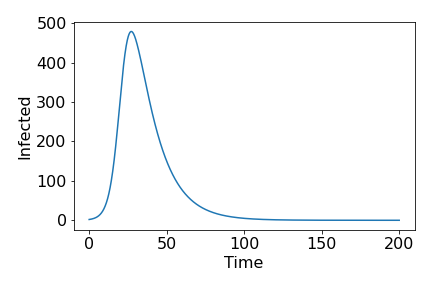
Dr. Alex Best is a Lecturer in Mathematical and Statistical Modelling at the School of Mathematical and Physical Sciences, University of Sheffield. He serves as the Student Voice Lead for Mathematics & Statistics and has been a faculty member since 2016. His academic journey includes a Leverhulme Early Career Research Fellowship at Sheffield (2013-2016), an Associate Research Fellowship at Exeter (2012), and postdoctoral work at Sheffield (2010-2011). He completed his PhD in Animal and Plant Sciences at the University of Sheffield (2006-2010). Dr. Best's research focuses on mathematical biology, particularly using theoretical models to investigate infectious disease dynamics. His work spans multiple scales and incorporates: Models of host-parasite coevolution Spatial structure in epidemic and evolutionary models Immune processes in disease modeling Within-host models of bacteria-cell dynamics Seasonal effects on disease transmission Local vs. global interaction effects on epidemic spread His publication record demonstrates consistent contributions to evolutionary epidemiology, with recent work examining how environmental fluctuations impact host-parasite coevolution, the dynamics of disease spread in university settings, and the evolution of host tolerance mechanisms. His research often combines mathematical modeling with biological insights to address fundamental questions in disease ecology and evolution. Dr. Best has received recognition through the Leverhulme Early Career Research Fellowship and has made significant contributions to understanding the interplay between ecological dynamics and evolutionary processes in infectious disease systems. As an educator, Dr. Best teaches multiple courses including MAS377 Mathematical Biology and MAS316 Mathematical Modelling of Natural Systems. He is actively involved in promoting equality, diversity, and inclusion in academia, having served as Director for Equality, Diversity and Inclusion in his department from 2018-2022 and currently serving on the London Mathematical Society's Good Practice Scheme steering committee. His research group applies mathematical and computational tools to understand the ecology and evolution of infectious diseases, addressing questions about seasonal environments, local vs. global interactions, predator impacts on evolution, and optimal class sizes for epidemic control in university settings.
Muhammad Shahzad is an Associate Professor in the Department of Computer Science at North Carolina State University and a member of the Networking Research Group. His research bridges systems and security with a focus on networking, security, and Internet of Things applications. His educational background includes: Ph.D. in Computer Science from Michigan State University (2015) B.E. in Electrical Engineering from National University of Sciences and Technology (NUST) (2008) Shahzad's research spans networking, cyber security, and IoT with specific emphases on network measurement, RFID systems, activity recognition, and device authentication. His work extends to cyber-physical systems, embedded real-time systems, and human-computer interaction, frequently involving real-world experimentation and novel sensing techniques for practical security applications. His recent publications (2023-2025) demonstrate interdisciplinary work across reinforcement learning for congestion control, blockchain scalability, data center power management, agricultural sensing via RF, urban mobility analysis, radar-based fruit detection, and non-intrusive network measurement - highlighting his focus on practical IoT and networking innovations. Key recognitions include: Best Poster Award, IIUG (2017) Winner, Virginia Tech Spectrum Sharing Radio Challenge (2016) Fitch-Beach Outstanding Research Award (2015) Outstanding Graduate Student Award (2015) His research is funded by NSF, Cisco, US Army, and Sony through projects including serverless edge computing, BLE onboarding, RF-based indoor mapping, and IoT performance measurement. Current work focuses on enabling stateful applications in serverless architectures, resource protection in cloud data centers, and human discovery through radio frequency signals. He actively contributes to the Networking Research Group at NC State, advancing collaborative efforts in connected computing environments through both foundational research and real-world system deployments.
Filip Elvander is an Assistant Professor in the Department of Information and Communications Engineering at Aalto University, Finland. Previously, he served as a postdoctoral research fellow at KU Leuven (2020-2022), supported by the Research Foundation - Flanders (FWO). PhD in Mathematical Statistics (2020) and MSc in Industrial Engineering and Management (2015) from Lund University Assistant Professor at Aalto University since 2022 Leader of the Structured and Stochastic Modeling Group (SSMG) His research focuses on statistical signal processing, particularly inverse problems and optimal transport theory. Key application areas include acoustic localization, spectral estimation, audio processing, and spectroscopy. Current research directions involve: Optimal transport for geometric signal space modeling Spatio-temporal signal modeling in remote sensing and audio Misspecified modeling impacts and mitigation Optimal sampling schemes for efficient data collection Recent publications demonstrate trends in optimal transport applications for multi-pitch estimation, room acoustics, sensor networks, and audio restoration. His group includes 5 PhD students working on these topics. Awards include FWO postdoctoral fellowship (2021-2022). Collaborations span Lund University, KU Leuven, and Aalto University research teams.
Christian Vater is an Assistant Professor at the Institute of Sports Science, University of Bern, leading the Peripheral Vision Group. His research focuses on visual perception, decision-making in sports, and attention mechanisms. Academic Rank: Assistant Professor Institution: University of Bern Research Areas: Visual perception, sports decision-making, attention allocation Vater's recent work examines how peripheral vision influences soccer players' reactions, referees' judgment accuracy, and basketball defensive strategies. His studies span cognitive psychology, sports neuroscience, and human factors in athletic performance. He serves as a reviewer for journals like Nature - Scientific Reports and organizations such as the German Research Foundation (DFG). Vater also contributes to the Advanced Studies of Sport Psychology (DAS) continuing education program and delivers guest lectures at the University of Basel.
Dr. Bruno Fazenda is an Associate Professor at the School of Science, Engineering & Environment, University of Salford, and a key member of the Acoustics Innovation Institute. His work bridges acoustics, psychoacoustics, and machine learning, with a focus on enhancing audio quality for hearing-impaired listeners. He leads the Cadenza Challenges, a series of initiatives leveraging machine learning to improve music accessibility. Room Acoustics Sound Reproduction Psychoacoustics Audio Quality Perception Machine Learning in Audio Engineering His recent publications highlight advancements in audio quality metrics (PEAQ, PEMO-Q, ViSQOL, HAAQI), spatial hearing in virtual environments, and datasets for music processing challenges. Projects like EnhanceMusic (2022–2026) and S3A (2014–2019) underscore his commitment to immersive audio technologies and hearing aid compatibility. He has supervised theses on auditory salience and low-frequency instrument perception, contributing to both theoretical and applied acoustics research. Dr. Fazenda’s work also extends to historical acoustics, including Stonehenge impulse response measurements (2020), which explore prehistoric sound environments. His research integrates interdisciplinary perspectives, such as human evolution and brain function, into modern audio engineering solutions.
Dr. Fatemeh Mayvaneh serves as a Researcher at the University of Münster's Climatology Group since December 2023, specializing in urban climate-health interactions with emphasis on vulnerable populations in Iranian and global contexts. Her work bridges environmental science, epidemiology, and public health policy through rigorous quantitative analysis. Her academic credentials include a Ph.D. in Urban Climatology (2015-2020), M.Sc. in Applied Climatology (2010-2013), and B.Sc. in Physical Geography (2003-2006), all from Hakim Sabzevari University, Iran. This foundation enables her interdisciplinary approach to climate-health challenges. Research focuses on quantifying health impacts from urban heat islands, air pollution (PM2.5, ozone), and climate extremes. She investigates thermal comfort thresholds, birth outcomes, and mortality patterns using advanced epidemiological methods. Current work emphasizes causal inference in national Iranian cohorts and multi-country comparative analyses to isolate temperature-pollution synergies. Recent publications (2023-2025) reveal dominant trends in mortality-birth outcome studies using large-scale datasets (>4 million records), with 60% focusing on Iranian populations. Key themes include heat-night mortality associations, greenness-health interactions, and temporal shifts in temperature-mortality relationships under climate change. Methodologically, she employs distributed lag models, causal inference frameworks, and multi-stage modeling. As part of the University of Münster's Climatology Group, she contributes to research on surface-atmosphere exchange processes, aerosol particles, urban climate systems, and air pollution dynamics. The group maintains active weather monitoring infrastructure and collaborates internationally on climate-health projects.
Karolos Grigoriadis is the Moores Professor of Mechanical Engineering at the University of Houston, where he also serves as Department Chair of Mechanical and Aerospace Engineering and Director of the Aerospace Engineering Program. His research spans robust control, parametric uncertainty analysis, subsea engineering, and biomedical control systems, with applications in aerospace, petroleum engineering, and medical device development. Systems Optimization and Uncertainty Analysis Robust and Fault Tolerant Control Subsea Systems Diagnostics and Optimization Biomedical Modeling and Control His recent publications focus on linear parameter varying (LPV) systems, multiphase flow modeling, and secure control strategies for industrial and aerospace applications. He has developed specialized tools for automated blood pressure regulation and subsea pipeline integrity analysis. Grigoriadis' work integrates theoretical control systems research with practical applications in energy systems, robotics, and biomedical engineering. He leads the University of Houston's Subsea Engineering Academic Advisor office and collaborates on advanced modeling projects across multiple domains.
Tomas Strömberg is a Professor at the Department of Medical Technology (IMT), Linköping University, Sweden. His research and teaching focus on the intersection of engineering and medicine, particularly biomedical optics and microcirculation. He collaborates with healthcare providers and industry partners like Perimed AB to translate optical technologies into clinical and industrial applications. His research group develops optical methods for tissue characterization, including Laser Doppler techniques for blood flow measurement and multispectral imaging for oxygen saturation analysis. Key areas include Monte Carlo modeling of light transport in tissue, quantitative assessment of skin physiology, and applications of machine learning in real-time perfusion imaging. Recent publication trends highlight the use of advanced computational models, artificial intelligence, and multimodal optical systems to study microcirculatory dynamics in diseases like diabetes, lupus, and cardiovascular conditions. His work bridges theoretical modeling with clinical validation, emphasizing non-invasive diagnostic tools. As an educator, Strömberg teaches lung physiology, signal theory, and statistical methods in research, contributing to both undergraduate and graduate programs. He is part of the Biomedical Imaging and Spectroscopy; Clinical Instrument Translation (BISCIT) group, driving innovation in clinical detection and monitoring of skin diseases.
Jonas Paulsen is a Professor in the Department of Biosciences at the University of Oslo, Faculty of Mathematics and Natural Sciences. He leads the Paulsen group, established in early 2020, which is affiliated with the Centre for Bioinformatics and the Section for Genetics and Evolutionary Biology. His research focuses on the three-dimensional organization of DNA within the cell nucleus and its relationship to critical cellular functions including epigenetic regulation of gene expression. Paulsen's research interests center on computational 3D genomics, with an emphasis on understanding how nuclear architecture relates to cellular functions. His work involves developing computational tools and bioinformatics software to explore comparative 3D genomics across cell types, tissues, and species. The Paulsen group utilizes the Hi-C technique as a central technology, building computational tools to analyze these and related data to increase understanding of eukaryotic genome organization. Key projects include Chrom3D (a genome 3D modeling platform), statistical models of genome contact frequency maps, and research on genome domains and their functional and evolutionary basis. His publication record shows consistent output in top computational biology and genomics journals, with a clear trend toward increasingly sophisticated modeling of 3D genome organization. His work spans multiple subfields including chromatin architecture, computational modeling, bioinformatics tool development, epigenetics, and the relationship between genome architecture and disease processes like cancer. The research demonstrates strong interdisciplinary collaboration, particularly with Philippe Collas and other computational biologists. Paulsen teaches Bioinformatics (BIOS3010) and Bioinformatics for Molecular Biology (MBV-INF4410), continuing his commitment to training the next generation of computational biologists. His group's work has significant implications for understanding fundamental biological processes and disease mechanisms through the lens of spatial genome organization.
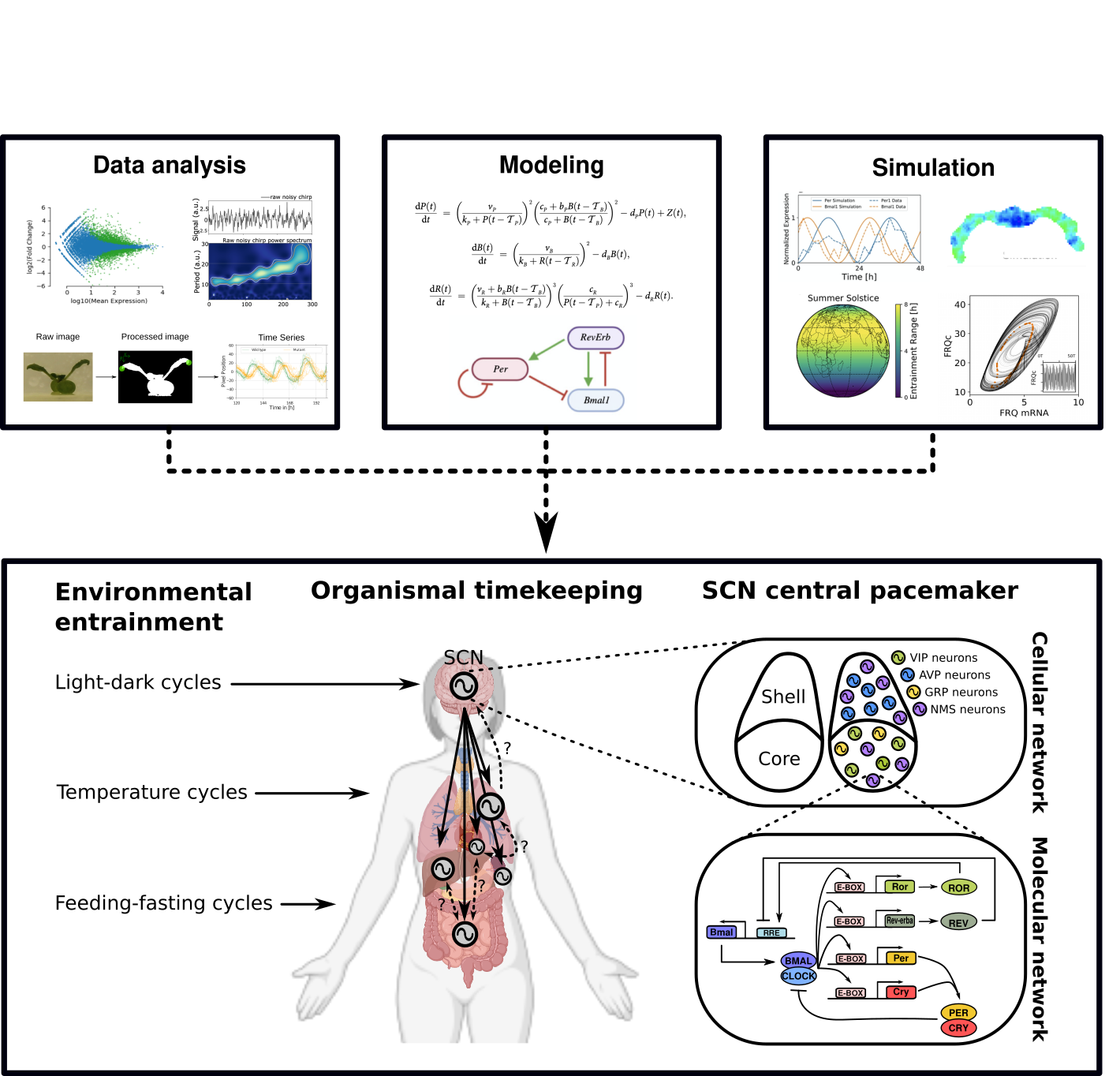
Dr. Christoph Schmal is a Principal Investigator at the Institute for Theoretical Biology, Humboldt University of Berlin. His research integrates bioinformatics, mathematical modeling, and computational simulations to investigate biological rhythms, focusing on circadian clock mechanisms, entrainment, and oscillator networks. Education: PhD in Physics (summa cum laude), Bielefeld University Current Position: Principal Investigator, Institute for Theoretical Biology, Berlin Research interests include design principles of intracellular rhythm generation, coupling mechanisms in biological clocks, and applications of nonlinear dynamics to circadian systems. His work spans computational biology, systems biology, and interdisciplinary approaches to biological timekeeping. Recent publications highlight his theoretical and data-driven studies on circadian amplitude-period relationships, redox rhythm robustness, and clock gene regulation in mammals and plants. He develops analytical tools like pyBOAT for biological time series. Scientific Awards DFG Sachbeihilfe grants (2022, 2018) JSPS BRIDGE (2020) and Postdoctoral Fellowships (2017) Joachim Herz Stiftung Add-On Fellowship (2015) Teaching activities include courses on Functional Genomics and Mathematical Modeling in Quantitative Biology. He works within the Institute for Theoretical Biology, leveraging spatial statistics and dynamical systems theory.
Dr. John A Greenwood is a MRC Career Development Fellow at the Department of Experimental Psychology, University College London . His research focuses on the mechanisms of visual perception and clinical disorders of vision , particularly amblyopia. He leads the Eccentric Vision Lab ( eccentricvision.com ), which investigates crowding effects, spatial vision topologies, and cortical processing idiosyncrasies. Key Research Themes: Visual crowding, interocular suppression, orientation selectivity, and neural correlates of perception Methodologies: fMRI adaptation, psychophysical experiments, and computational modeling His work reveals that crowding is a regularization process altering object appearance, and that binocular treatments for amblyopia improve compliance without reducing suppression. He has published extensively in Scientific Reports , Journal of Vision , and Investigative Ophthalmology & Visual Science . Scientific Awards: MRC Career Development Fellow