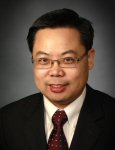
Bernhard Spangl is a Lecturer at the Institute for Applied Statistics and Computing , School of Spatial Planning, Landscape and Infrastructure, University of Natural Resources and Life Sciences, Vienna. With a doctorate in Technical Sciences (2008) and a degree in Technical Mathematics (2003), his work bridges statistical methodology with applications in environmental science, agriculture, and bioprocess engineering. Current research focuses on robust statistical methods for environmental data, ecotoxicology (glyphosate impacts on soil organisms), and agricultural pest dynamics under climate change. His projects include Robust Risk Estimation (2011–2016), Fusarium Contamination in Garlic (2018–2023), and Debris Flow Event Modeling (2015–2025). Publication Trends span environmental monitoring, agricultural pest behavior, and statistical modeling. Over 100 publications and 61 lectures globally (USA, Europe, Asia) highlight methodological innovations and interdisciplinary applications. Supervised Theses include Katharina Stallberger (2025), Fabian Pelzmann (2024), and projects on bioprocess control, biostatistics, and ecological resilience.
Dr. Natacha Pasche is an academic and research leader at École Polytechnique Fédérale de Lausanne (EPFL), holding dual roles as Operational Director of the Center for Limnology (LIMNC) within the School of Architecture, Civil and Environmental Engineering (ENAC) and as a Lecturer in the SSIE - Teaching unit. She plays a central role in managing the LéXPLORE research platform on Lake Geneva and teaches Limnology to Master’s students in Environmental Engineering. Environmental Engineer, Master degree, EPFL (1999–2004) Doctor es Science, Eawag and ETH Zurich (2006–2009) Dr. Pasche is a limnologist specializing in biogeochemical processes in lake ecosystems. Her research focuses on suspended particulate matter dynamics in Lake Geneva, particularly settling processes in the Rhône River interflow, which governs sediment, pollutant, and nutrient transport. She has led major interdisciplinary projects such as Leman-Baikal (using hyperspectral imaging for water quality), Life under Ice in Lake Onego, and primary production studies in Swiss lakes. Her earlier work centered on nutrient cycling and methane production in Lake Kivu, including establishing a monitoring program in Rwanda. Her 15 most recent publications reveal a strong trend in limnology and biogeochemistry, with deep expertise in carbon and nutrient cycling, methane dynamics, and physical-biological interactions in lakes. Key themes include under-ice processes, river-lake interactions, sediment biogeochemistry, and long-term environmental change in both tropical (Lake Kivu) and boreal (Lake Onego, Lake Geneva) systems. The research combines field monitoring, experimental platforms, and interdisciplinary collaboration. Dr. Pasche has not been awarded any explicitly mentioned scientific prizes or fellowships in the provided text. She has made significant contributions to research leadership and project coordination, notably overseeing the development and operation of the LéXPLORE platform—a unique, high-tech infrastructure resulting from a partnership between five academic institutions and supporting over 60 scientific projects. She has managed large multidisciplinary projects involving international teams and institutions, such as the Life under Ice project with 8 institutions and 40+ researchers. While no formal students are listed, her teaching and mentorship of Master’s students in the Limnology course contribute to academic training. Dr. Pasche leads the team managing the LéXPLORE platform on Lake Geneva, an advanced infrastructure enabling high-frequency, multi-parameter data collection. This platform is central to her current research and supports a wide network of scientific projects, fostering innovation in lake ecosystem monitoring and modeling.
Casimir Katz is an Adjunct Professor at the Chair of Computing in Civil and Building Engineering at the Technical University of Munich , specializing in computational mechanics, finite element analysis, and wind engineering. He has contributed extensively to structural simulation, building information modeling (BIM), and digital twinning. Education: Diplom in Civil Engineering (1976, TU Munich) Key research areas: Wind Load Analysis , Nonlinear Structural Mechanics , Computational Fluid Dynamics , Finite Element Method , and Engineering Software Development . His work bridges theoretical advances in Scaled Boundary FEM and CFD modeling with practical applications in bridge engineering , urban wind analysis , and tunneling . He co-founded SOFiSTiK AG , a leader in structural engineering software, and has advised on projects like the Arnulfsteg and Rader Hochbrücke bridges. Current teaching focuses on Computational Mechanics and BIM applications in structural engineering. His recent publications emphasize dynamic soil-structure interaction , polyhedral mesh generation , and nonlinear design methodologies . Collaborations span academia, industry, and research groups like the BIM Lab at TU Munich.
Dr. Joscha Becker is a Researcher at the University of Hamburg, affiliated with the Faculty of Mathematics, Computer Science and Natural Sciences and the Department of Earth System Sciences. He works in the Working Group for Soil Protection and Soil Technology (AG Bodenschutz und Bodentechnologie) under Prof. Dr. Annette Eschenbach at the Institute of Soil Science. Since October 2019, he has been conducting research on ecosystem carbon, nutrient, and water cycles, with a focus on plant-soil interactions and climate change impacts on soil systems. 2017: Dr. rer. nat. in Biodiversity and Ecology program, University of Göttingen 2013: Diplom-Geoökologe (Geoecology), University of Potsdam Becker's research focuses on the interconnection of ecosystem carbon, nutrient, and water cycles; plant-soil interactions; spatial dynamics of biogeochemical process structures; and climate and land use effects on soil carbon sequestration. His work spans diverse ecosystems including tropical forests on Mount Kilimanjaro, estuarine environments along the Elbe River, and agricultural systems in Namibia. His research employs field studies, laboratory analyses, and modeling approaches to understand biogeochemical processes under changing environmental conditions. His publication record demonstrates a strong focus on carbon cycling in diverse ecosystems, with recent work examining soil organic matter composition along elevation gradients, carbon stabilization in floodplains and estuaries, and nitrogen cycling in agricultural systems. His research increasingly addresses climate change impacts, particularly examining how sea-level rise, saltwater intrusion, and extreme heat events affect soil processes and ecosystem functioning. Becker teaches several courses at the University of Hamburg including the Seminar Basiswissen Boden (B.Sc. Geosciences), Geochemical Basic Practical (B.Sc. Geosciences), Lab Practical 'Analysis & Evaluation of Soil as a Protected Resource' (M.Sc. Geosciences), and Field Practical 'Interactions in the Soil, Water Balance and Vegetation System' (M.Sc. Geosciences). He also supervises student theses.
Daphne van der Wal serves as Research Leader at the Royal Netherlands Institute for Sea Research (NIOZ) in Yerseke and holds a part-time full Professorship at the University of Twente's Faculty of Geo-Information Science and Earth Observation (ITC), Department of Water Resources. Her expertise lies in applying remote sensing and geo-informatics to study coastal defense mechanisms, water quality, and ecosystem dynamics in estuarine and delta environments. Her academic background includes a PhD in Physical Geography from the University of Amsterdam (1999) followed by postdoctoral research at Royal Holloway, University of London (1999-2002). Dr. van der Wal's research focuses on Remote Sensing of tidal ecosystems, investigating Coastal Geomorphology through saltmarsh and mangrove development studies, Estuarine System dynamics including sediment transport and biogeomorphology, and Nature-based Flood Defense solutions. She examines how benthic ecology, water quality, and biophysical interactions shape coastal landscapes under climate change pressures, utilizing satellite, drone, and radar technologies to analyze ecosystem services like wave attenuation and sediment trapping. Her recent publications (2019-2025) demonstrate consistent focus on saltmarsh dynamics through long-term satellite analysis, revealing critical patterns in inundation frequency and spatial extent across European coastlines. These studies integrate bio-geomorphic interactions with tidal processes to develop predictive models for coastal resilience, directly informing nature-based flood risk management strategies under sea-level rise scenarios. She has supervised four PhD candidates: Beatriz Marin Diaz (NIOZ/RUG, foreshore ecosystems), Bas Oteman (EU FAST project, remote sensing applications), Tisja Daggers (benthic diatoms as ecosystem indicators), and Sil Nieuwhof (shellfish ecosystem engineering). Her research is funded through major grants including NWO projects (MARSH, SALTGARDEN, SaltiSolutions), EU initiatives (FAST, REWRITE), and national programs like NWA North Sea, focusing on coastal protection, drought response, and renewable energy integration. As Research Leader in NIOZ's Estuarine & Delta Systems department, she directs a technical team employing advanced remote sensing platforms (SAR, hyperspectral drones, LIDAR) and big data analytics within cloud computing environments. Her work with the EU H2020 REWRITE project and NO-REGRETS consortium develops operational frameworks for rewilding shorelines and assessing offshore wind park impacts, translating satellite-derived insights into practical coastal management tools for agencies like Rijkswaterstaat.
Dr. Ian van der Linde is a Reader (equivalent to Associate Professor) at Anglia Ruskin University, affiliated with the Faculty of Science and Engineering and the School of Computing and Information Science. He conducts cross-faculty research at the intersection of computer science, vision science, image processing, algorithms, and cognitive psychology, with a particular focus on the human visual system. His research expertise includes: Vision Science and Eye Research Image Processing and Computer Vision Cognitive and Behavioural Psychology Computational Methods in Neuropsychological Testing Dr. van der Linde's research primarily investigates gaze control, visual short-term memory, face perception, visual task planning, image quality assessment, multimodal binding, the impact of ageing on visual performance, and the computations performed in the early visual system. His work combines computer modeling with experimental psychology to understand human vision, with applications in healthcare, computer vision systems, and cognitive assessment tools. His recent publications demonstrate a consistent focus on visual short-term memory, particularly examining how humans bind visual features together, how this process changes with age, and how it relates to cognitive decline. His work also extends to facial recognition, image quality assessment, and the application of computational methods to neuropsychological testing. Scientific recognition includes: Fellow of the British Computer Society (FBCS) Fellow of the Higher Education Academy (FHEA) Chartered Engineer of the Engineering Council UK (CEng) The Wellcome Trust, 'I'm a Scientist, Get Me Out of Here', Winner, Nickel Zone, £500 Dr. van der Linde has supervised numerous PhD students across Computing, Psychology, and Vision Sciences, with research spanning audio signal processing, online security behaviors, cardiovascular bioinformatics, cloud computing adoption, and visual working memory. He has secured research funding from various sources including the Wellcome Trust, Home Office Scientific Development Branch, and Knowledge Transfer Partnerships. He is a member of the Computing, Informatics and Applications Research Group and teaches courses in Image Processing, Data Structures & Algorithms, and Core Mathematics for Computing.
Lorraine Archer is a Researcher at the Department of Plant Sciences , University of Cambridge. She serves as a Research Lab Coordinator , focusing on sustainable systems through phycology and environmental science. Research Interests Phycology Applied Phycology Environmental Science Circular models for sustainable systems Publications Lorraine's work spans algal biotechnology, lipid extraction methods, and sustainable food production, with recent studies on biogas upgrading, nutrient recycling, and biochemical profiling of marine microalgae. Labs and Teams As Research Lab Coordinator, she oversees laboratory operations at the Department of Plant Sciences, supporting innovation in algal biotechnology and environmental sustainability.
Professor Paul S Cannon OBE, FREng is a distinguished academic at the University of Birmingham's School of Engineering, holding the position of Professor of Radio Science and Systems. Since joining the university in 2013, he has maintained an active research portfolio while providing critical advisory services to government departments in the UK and Australia. His career uniquely bridges physics and electronic engineering disciplines, with extensive experience in government research laboratories and industry prior to his academic appointment. Professor Cannon's educational background includes: PhD in Physics, University of Southampton (1981) MSc in Electronics, University of Southampton (1976) BSc (Hons) in Physics, University of Southampton (1975) His research focuses on the critical intersection of radio science and space weather, particularly ionospheric radio propagation, real-time modeling of the ionosphere, and the development of novel engineering solutions that integrate knowledge of radio systems with ionospheric medium characteristics. Cannon specializes in understanding how space weather phenomena impact communications, radar, and navigation systems, with particular expertise in HF communications, Over the Horizon Radar systems, and ionospheric measurement techniques. Analysis of his recent publication record reveals a strong emphasis on practical applications of ionospheric physics to real-world systems. His work consistently bridges theoretical understanding with operational implementation, particularly in the areas of synthetic aperture radar signal processing under ionospheric disturbances, space weather impacts on critical infrastructure, and development of measurement techniques for ionospheric phenomena. A notable trend is his increasing focus on policy-relevant research that translates complex space weather science into actionable guidance for government and industry. Professor Cannon's significant honors and recognitions include: Election as Fellow of the Royal Academy of Engineering (2003) Appointment to the Order of the British Empire (OBE) (2014) Service as President of the International Union of Radio Science (2014-2017) Extensive consultancy for government departments on space weather policy Leadership of the Royal Academy of Engineering study on Extreme Space Weather impacts Throughout his career, Professor Cannon has maintained strong connections with government and military organizations, serving on numerous advisory boards including the UK Cabinet Office Space Weather Project Board and the House of Commons Science and Technology Select Committee. His research has been supported by significant grants from UK government agencies, particularly in the area of space weather instrumentation and risk mitigation. Notably, his leadership of the UK MOD ionospheric space weather program from 1986 for over 25 years transformed it from a 'Cinderella topic' to a core military technology with articulated requirements. Professor Cannon has directed several important research initiatives including the Poynting Institute at the University of Birmingham and served as Editor-in-Chief of the journal Radio Science from 2009-2014. His current work focuses on two UK Space Weather Instrumentation, Measurement, Modelling and Risk (SWIMMR) projects and development of a new Over the Horizon Radar architecture, continuing his lifelong commitment to advancing the understanding and practical management of ionospheric effects on radio systems.
Yago Arosa Lobato is a Postdoctoral Researcher at the University of Santiago de Compostela in the Department of Applied Physics . He is affiliated with the Materials Institute (iMATUS) , the Strategic Grouping in Materials (AEMAT) , and leads research in the NanoMaterials, Photonics, and Soft Matter Group (NaFoMat) . Education: PhD in Physics (2019) from University of Santiago de Compostela with thesis Spectroscopic refractometry by broadband interference within the ultraviolet, visible and near infrared ranges . Research Focus : His work bridges nonlinear optics , ionic liquid characterization , and multimode fiber photonics . Recent projects explore Townes solitons for ultrafast 3D microscopy, supercontinuum generation in ceramic YAG, and light-by-light control in complex optical systems. Prior research centered on broadband interferometry and material dispersion modeling for advanced optical metrology. Scientific Output : 15 recent publications span nonlinear microscopy, fiber-based CARS imaging, and refractive index engineering in ionic liquids (2025-2023). His work demonstrates expertise in soliton dynamics , supercontinuum generation , and nonlinear wave mixing for biomedical and materials applications. Laboratory Affiliations : Active member of the NaFoMat research group, contributing to photonic materials development and characterization within iMATUS.
Shuai ZHANG is a Research Fellow at Nanyang Technological University (NTU), Singapore, working under the supervision of Prof. Chen Lv. He previously served as a Postdoctoral Fellow at the University of Hong Kong (HKU) with Prof. Jia Pan and completed his Ph.D. and Master's in Marine Science and Technology at Northwestern Polytechnical University under Prof. Mingyong Liu and Prof. Xingguang Peng. He was also a Joint Ph.D. student at the Intelligent Computational Engineering Laboratory (ICE LAB) at the University of Strathclyde, UK, supervised by Dr. Edmondo Minisci. Ph.D., Marine Science and Technology, Northwestern Polytechnical University Master, Marine Science and Technology, Northwestern Polytechnical University His research focuses on Swarm robots/drones , Robotics and autonomous systems , Swarm intelligence , and Bio-inspired optimization , with applications in Multi-robot/agent systems , Differential privacy , and Distributed control . He investigates collective behaviors in robotic systems using Game theory and Evolutionary dynamics , while integrating Smooth particle hydrodynamics and Agent-based modeling . Recent publications demonstrate expertise in EEG emotion recognition , BCI-assisted neurorehabilitation , and non-invasive brain-computer interfaces , with a trend toward geometric modeling in neural networks and adaptive signal processing. His work bridges theoretical models (e.g., transformers, co-adaptive networks) with practical implementations in embedded systems and wearable technologies. Associate Editor, 2023 IEEE International Conference on Robotics and Biomimetics (ROBIO 2023) He actively contributes to academic services as a reviewer for journals including IEEE Transactions on Robotics (T-RO), IEEE Robotics and Automation Letters (RA-L), and Complex & Intelligent Systems , reflecting his impact in robotics and computational neuroscience communities.
Jose Maria Sierra Fernandez serves as Professor in the Department of Automation, Electronics, Architecture and Computer Networks Engineering at the University of Cadiz, Spain. He maintains dual affiliations with the Institute of Viticulture and Agri-Food Research (IVAGRO) and leads the TIC168 Computational Instrumentation and Industrial Electronics research group, focusing on power quality instrumentation and renewable energy integration. His institutional email address is josemaria.sierra@uca.es. He earned his PhD from the University of Cadiz in 2017 with the thesis "Techniques and measurement procedures based on spectral kurtosis. An application in the analysis of electrical power quality," supervised by Dr. Juan José González de la Rosa and Dr. Jose Carlos Palomares Salas. This foundational work established his expertise in higher-order statistics for power system analysis. His research centers on power quality monitoring using higher-order statistics (HOS), with significant contributions to voltage supply characterization, photovoltaic transient analysis, and real-time synchronized sensor networks. Key innovations include HOS-based instrumentation for detecting voltage sags, frequency deviations in hydropower systems, and cloud-induced photovoltaic transients. His work bridges theoretical signal processing with practical smart grid applications, emphasizing renewable energy integration and grid stability. Recent publications (2022-2025) demonstrate consistent output in power quality instrumentation, with 15+ annual papers showing evolution from foundational HOS techniques toward meteorological integration for solar forecasting and ESP32-based real-time monitoring systems. His research increasingly addresses practical grid challenges through virtual instruments, measurement campaigns, and publicly available weather data utilization. Scientific Awards: No awards or fellowships were documented in the provided materials. Advising and Grants: Thesis supervision activities are indicated through "Theses" section references, though specific student names and grant details remain undisclosed. Labs and Teams: Leads TIC168 Computational Instrumentation and Industrial Electronics research group at IVAGRO Develops instrumentation for voltage/frequency monitoring, irradiance networks, and power quality event detection Collaborates on measurement campaigns using Python/Grafana systems and wireless sensor networks
Sang Hong is an Associate Professor in the Charles E. Schmidt College of Science at Florida Atlantic University, Boca Raton, specializing in visual perception research. His work bridges cognitive science and neuroscience to investigate how sensory inputs shape perceptual experiences and cognitive behaviors. Ph.D. from University of Chicago Dr. Hong's research focuses on neural mechanisms of color vision, motion perception, and visual awareness, with particular emphasis on facial expression processing and binocular rivalry phenomena. Using psychophysics and fMRI methodologies, he examines how color representation occurs in the lateral geniculate nucleus (LGN), how color and motion interact, and how emotional expressions are processed under conditions of visual suppression. His work reveals fundamental principles of sensory integration and perceptual organization. Analysis of his 2013-2021 publications shows consistent exploration of visual awareness mechanisms, with increasing attention to multisensory integration (audio-visual interactions) and individual differences in perception. Key trends include investigations of sex differences in emotional processing, neural correlates of color-motion interactions, and clinical applications examining visual context processing in bipolar disorder and schizophrenia. His research demonstrates how low-level perceptual phenomena inform higher cognitive functions. Dr. Hong actively contributes to scholarly discourse as an ad hoc reviewer for major journals including Journal of Vision, Vision Research, and Frontiers in Psychology. His service supports rigorous evaluation of research in visual neuroscience and cognitive psychology. His laboratory employs advanced techniques including continuous flash suppression, binocular rivalry paradigms, and fMRI to probe the neural basis of visual awareness. Current projects investigate how feature binding occurs during perceptual organization and how emotional content modulates sensory processing under conditions of limited awareness.
Aurelie Jost is a researcher at the Leibniz Institute of Photonic Technology in the Biophysical Imaging department. Her work focuses on advancing structured illumination microscopy (SIM) and related super-resolution imaging techniques to address challenges in biomedical and optical imaging. Specializes in computational and hardware innovations for SIM Develops algorithms for motion artefact detection and distortion correction Contributes to understanding complement regulation in bacterial infections Research Trends : Her recent publications (2022) explore complement protein localization in Streptococcus pneumoniae , while earlier works (2013-2017) emphasize SIM optimization, achromatic beam engineering, and real-time live cell imaging. Collaborations : Regularly works with interdisciplinary teams including Rainer Heintzmann, Kai Wicker, and colleagues in molecular immunology and biophysics.
Anne Jaffrezic is an Assistant Professor at Institut Agro , affiliated with the UMR SAS (Soil Agro-ecosystem Spatialization) unit. Her research focuses on soil and water chemistry, with a strong emphasis on biogeochemical cycles (carbon, nitrogen, phosphorus), diffuse pollution, and soil health in agricultural systems. Her work explores: Dissolved organic carbon sources and pathways in agricultural catchments Landscape structure (e.g., wetlands) for pollution mitigation Climatic and agronomic controls on nutrient fluxes Veterinary pharmaceutical residues in water systems Soil ecosystem services assessment She collaborates with institutions including the University of Delaware, University of Wuhan, Agriculture and Agri-Food Canada, and the School of Advanced Studies in Public Health (EHESP). Her teaching involves coordinating the Master's degree TEAM (Transition, Environment, Agrifood Management) , which integrates engineering and social sciences to address complex environmental issues at the territorial scale.
Professor Xianbin Wang is a Tier-1 Canada Research Chair at Western University , Canada, within the Faculty of Engineering and Department of Electrical and Computer Engineering . With a Ph.D. from the National University of Singapore (2001) , he has led transformative research in 5G/6G , machine learning , and IoT security . His work has attracted over 24,000 Google Scholar citations and 35 patents , including foundational contributions to physical layer authentication and multi-carrier modulation . Ph.D., Electrical and Computer Engineering, National University of Singapore (2001) Director, Innovation Centre for Information Engineering (2018–present) Researcher, Communications Research Centre Canada (2002–2007) His research interests span intelligent wireless system design, secure communications via physical layer attributes, and AI-driven network orchestration. Key areas include: 5G/6G Core Technologies Machine Learning for Authentication Multi-Dimensional Resource Utilization Integrated Security and Trust Management His 15 most recent publications (2019–2022) demonstrate leadership in 6G prototyping , UAV networks , and IoT security using GANs , NOMA , and blockchain . Awards include the IEEE R.A. Fessenden Medal (2022) and fellowships from IEEE, CAE, and EIC. He has served as Editor-in-Chief for IEEE ComSoc Best Readings and Tutorial Chair for major IEEE conferences. As supervisor of over 20 researchers, he leads the Western University Innovation Centre for Information Engineering , supported by NSERC CREATE , Ontario Centres of Excellence , and Canada Foundation for Innovation . His patents on adaptive duplexing, transmitter identification, and integrated locationing systems underpin modern 5G/6G standards .