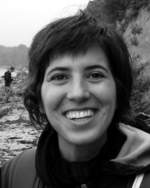
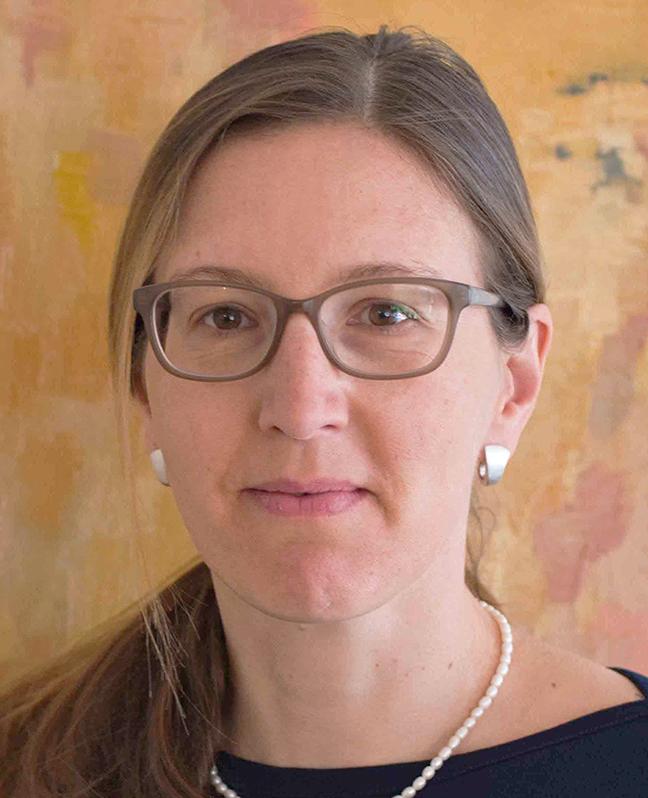
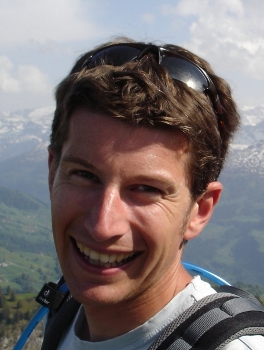
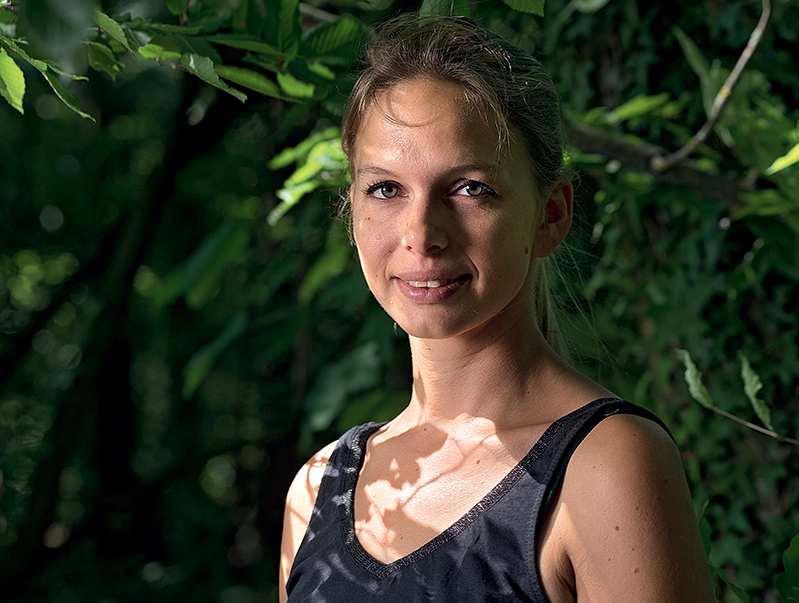
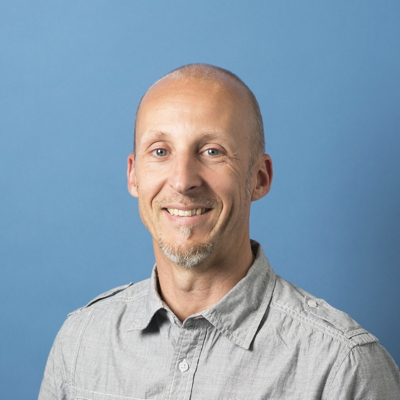
Alexis Berne is an Associate Professor at the Environmental Remote Sensing Laboratory (LTE) within the School of Architecture, Civil and Environmental Engineering (ENAC) at École Polytechnique Fédérale de Lausanne (EPFL). He co-directs the SSIE-GE program and serves as a member of the CDS (Commission for Doctoral Studies) . His research spans radar meteorology, precipitation microphysics, polar precipitation, and geostatistics, with a focus on mountainous and polar regions. Current Positions Associate Professor, LTE, EPFL (2013–present) Co-Director, SSIE-GE, EPFL PhD Program Committee Member, EDCE-GE, EPFL Research Interests include the remote sensing of precipitation, particularly snowfall and ice production mechanisms, using radar and geostatistical methods. His work addresses atmospheric processes in extreme environments like Antarctica and the Swiss Alps, leveraging machine learning and numerical modeling for climate analysis. Teaching encompasses courses on remote sensing, atmospheric processes, and climate change, emphasizing interdisciplinary approaches and spatiotemporal variability. He advises current PhD students such as Heather Anne Corden and Gionata Ghiggi, alongside mentoring past students like Jacopo Grazioli and Timothy Hugh Raupach.
Matej Varga is a Scientific Assistant and Postdoctoral Researcher at ETH Zurich's Department of Civil, Environmental and Geomatic Engineering, working in the Geosensors and Engineering Geodesy group under Prof. Andreas Wieser since 2021. His research spans geometrical geodesy, physical geodesy, and satellite geodesy, with applications in both theoretical and practical domains. Dr. Varga's research interests focus on spatial, temporal and spectral analysis of geodetic data, with particular expertise in geodetic reference systems and frames, gravity and geomagnetic field modeling at all temporal and spatial scales, and multi-GNSS multi-frequency positioning and monitoring. His work integrates geometrical and physical aspects of geodesy to address complex Earth observation challenges, particularly in infrastructure monitoring and geophysical applications. His recent publications demonstrate a strong trend toward high-precision geodetic applications for major scientific infrastructure, most notably the Future Circular Collider project, alongside important contributions to earthquake impact analysis, geomagnetic network development, and gravity field modeling. His research bridges traditional geodetic methods with modern computational approaches, including machine learning applications for point cloud registration. Dr. Varga is actively involved in the GSEG research group at ETH Zurich, contributing to the development of geodetic infrastructure and reference systems. His work has practical applications in infrastructure monitoring, earthquake analysis, and scientific projects requiring extreme geodetic precision.
Johanna Ziegel is a Professor of Statistics at ETH Zurich, Switzerland, since 2024, and a Visiting Scientist at the Heidelberg Institute for Theoretical Studies (HITS). Previously, she held positions at the University of Bern, where she was promoted to Full Professor in 2023. Her research focuses on decision-theoretically sound methods for forecast evaluation, probabilistic forecasting, risk measures in finance, and applications in meteorology, medicine, and climate science. She is actively involved in editorial roles for journals like Bernoulli , JASA: Theory & Methods , and SIAM Journal on Financial Mathematics . Education: PhD in Stereological Analysis of Spatial Structures from ETH Zurich (2010), supervised by Paul Embrechts and Eva B. Vedel Jensen. Postdoctoral research at the University of Melbourne and Heidelberg University. Research Interests: Forecast evaluation, elicitable functionals, risk measures, isotonic regression, statistical calibration, and applications in finance, climate science, and biostatistics. Her work bridges theoretical statistics with practical challenges in uncertainty quantification and decision-making under uncertainty. Advising & Collaborations: Supervised 7 PhD students and mentored several postdocs. Collaborates with the Computational Statistics group at HITS and the Oeschger Centre for Climate Change Research. Her group explores distributional regression under order constraints and novel methods for forecast comparison. Recognition: Credit Suisse Award for Best Teaching (2022), H.I.T. Program for Academic Leadership (2021–2022). Active in professional service, including the Bernoulli Society Council and editorial boards.
Eva Cantoni is a Full Professor at the Research Center for Statistics within the Geneva School of Economics and Management , University of Geneva. Her expertise spans robust statistical methodology, model selection, and applications in ecology and medicine. Ph.D. from University of Geneva Accredited European Statistician (FENStatS) Research Interests : She specializes in Robust statistics for real-world data Variable/model selection in high-dimensional settings Nonparametric and semi-parametric regression Zero-inflated and overdispersed count models Longitudinal and spatiotemporal data analysis Her work addresses ecological challenges (fish stock assessment), medical applications (hospital congestion modeling), and housing market analysis. Recent Trends in Publications : Recent articles focus on Confidence intervals for robust mixed models Editorial leadership in robust statistics Applications to fisheries science and public health Flexible modeling frameworks for complex data Comparative studies of statistical measures Extremes modeling in healthcare Leadership & Grants : She has served as: Vice-Dean for Teaching (2020-2023) Director of Master's in Statistics (2012-2019) Director of Applied Statistics Certificate (2015-2019) President, Swiss Federal Statistics Committee (2024-2027) Specialty Chief Editor, Frontiers in Applied Mathematics (2024) Grants include projects on Robust solutions for modern data (2023-2025) Sustainable fisheries modeling (2018-2021) Advancements in state-space models (2014-2017) Software Contributions : Developed R packages for robust statistical methods: confintROB (bootstrap confidence intervals) RobSSM (robust state-space models) R2_LMM (explained variation measures)
Peter Molnar is a Professor at ETH Zürich's Department of Civil, Environmental and Geomatic Engineering, where he leads research in hydrology, geomorphology, and environmental engineering. His work spans river basin dynamics, sediment transport, precipitation modeling, and climate-water interactions, with field sites focused on Alpine systems. His research interests center on river basin water and sediment dynamics , precipitation analysis and stochastic modeling , fluvial systems including river networks and riparian zones , and geomorphic processes in mountain streams . Key projects include the Maggia River Experimental Site, basin sediment cascade modeling, and hydroclimatic analysis of rainfall intensity-temperature relationships. His publication record shows consistent high-impact work in journals including Nature , Nature Climate Change , and Water Resources Research , with recent focus on climate change impacts, sensor development, and sustainable agriculture. Golden Owl Award for best teaching (2011) Organizer of international workshops on geomorphology complexity and urban precipitation Patron of CometX initiative Molnar actively mentors PhD students including current candidates working on droughts in Ethiopia, Alpine Rhine sediment budgets, and mountain ecohydrology. His research is supported by Swiss National Science Foundation grants, ETH funding, and international collaborations. He leads experimental work at the Maggia River site and develops warning systems for rainfall-triggered landslides.
Christoph Raible is a Professor at the Climate and Environmental Physics department within the Physics Institute at the University of Bern, Switzerland, a position he has held since 2011. He also maintains a strong affiliation with the Oeschger Centre for Climate Change Research (OCCR) at the University of Bern, where he has been a Senior Lecturer since 2011. His research focuses on atmospheric dynamics, climate modeling, and understanding past and future climate change patterns. Professor Raible's research interests encompass Processes of the Climate System, Atmosphere-Ocean-Sea Ice Interaction, Climate Modelling, Atmospheric Dynamics, Past and Future Climate Change, Predictability, Tropical and Extra Tropical Cyclones, and Climate Impacts. His work bridges theoretical climate science with practical applications, particularly in understanding extreme weather events and their implications for society. He has developed expertise in analyzing historical climate patterns to inform future projections, with particular attention to European climate systems and their global connections. Analysis of his recent publications reveals a strong focus on paleoclimatology, climate modeling, and the societal impacts of climate change. His research spans from reconstructing historical climate patterns using proxy data to projecting future climate scenarios under various forcing conditions. Key themes include Mediterranean droughts, Atlantic Meridional Overturning Circulation variability, glacial climate dynamics, and the health impacts of climate change. His methodological approach combines advanced climate modeling techniques with statistical analysis of observational data. Professor Raible has been actively involved in numerous significant research projects including the NCCR Climate program (serving as Work Package leader), the SNF Sinergia project on solar influence on terrestrial climate, and collaborative projects with SwissRe on climate change impacts. He has also contributed to major international climate initiatives including the CH2018 Climate Scenarios for Switzerland. His teaching responsibilities include graduate-level courses on atmospheric circulation and climate modeling at the University of Bern.
Iacopo Mochi is a Group Leader for Advanced Lithography and Metrology and beamline scientist at the Paul Scherrer Institute (PSI), specifically working at the Laboratory for X-ray Nanoscience and Technologies within the PSI Center for Photon Science. He has extensive experience in EUV lithography, X-ray optics, and semiconductor metrology, with a career spanning multiple prestigious research institutions including Lawrence Berkeley National Laboratory and imec. Dr. Mochi received his physics degree from the University of Florence and earned a PhD in Methods and Technologies for Environmental Monitoring. His career path has included significant contributions to LIDAR systems, astrophysical instrumentation, and ultimately EUV technologies for semiconductor manufacturing. At PSI since 2016, he has established himself as a leading researcher in advanced lithography techniques. His primary research focuses on the development of EUV instrumentation for semiconductor metrology, particularly the XIL-II metrology end station - a lensless microscope dedicated to EUV photomask inspection. His work spans nano-imaging, interferometry techniques in the X-Ray spectrum, and the characterization of advanced materials for semiconductor manufacturing. Dr. Mochi has made significant contributions to the field through the development of RESCAN, an actinic pattern inspection platform based on coherent diffraction imaging. Analysis of his publication record reveals a strong trajectory of innovation in EUV lithography, with recent work pushing resolution limits to 5 nm, developing novel metrology techniques, and applying machine learning approaches to improve image reconstruction and defect detection. His research directly addresses critical challenges in semiconductor manufacturing as the industry moves toward smaller technology nodes. Dr. Mochi's scientific contributions include groundbreaking work on EUV pellicles for mask protection, characterization of absorber and phase defects on EUV reticles, and advancements in interference lithography techniques. His collaborative research demonstrates strong partnerships with industry and academic institutions worldwide. As the beamline scientist for the XIL-II beamline, Dr. Mochi coordinates and supervises experiments that support cutting-edge research in semiconductor manufacturing and nanotechnology. His leadership extends to mentoring junior researchers and contributing to the development of next-generation scientists in the field of advanced lithography.
Prof. Dr. Stefan Brönnimann serves as a Professor and Unit Leader of Climatology at the Institute of Geography, University of Bern. His extensive research portfolio spans historical climatology, climate dynamics, and atmospheric circulation reconstruction, with particular focus on the past 400 years. He plays a leadership role in major international climate initiatives including the IPCC assessment reports and various climate reanalysis projects. Brönnimann's research centers on reconstructing historical weather and climate patterns through the innovative combination of early instrumental data, proxy records, and climate models. His work examines large-scale climate variability, interannual-to-decadal atmospheric circulation patterns, volcanic eruption effects on climate, and climate-society interactions. His methodologies often involve transforming historical documents into usable climate datasets and applying advanced machine learning techniques to weather reconstruction challenges. Recent publications reveal a strong emphasis on European climate patterns, hydroclimate extremes, and the development of novel datasets and tools for climate research across high-impact journals in climate science, paleoclimatology, and climate informatics. Notable scientific achievements include: Lead author for Chapter 2 of the IPCC Working Group I 5th Assessment Report President of the Commission 'Atmospheric Chemistry and Physics' (ACP) of sc.nat Editorial leadership for multiple prestigious journals including Meteorologische Zeitschrift, Climate of the Past, and Geographica Bernensia Leadership roles at the Oeschger Centre for Climate Change Research Active participation in international initiatives like the Twentieth Century Reanalysis Project and Atmospheric Circulation Reconstructions over the Earth (ACRE) Brönnimann has secured substantial funding through numerous national and international projects including SNF, NCCR Climate, EU FP-7, HORIZON2020, COST, and ERAnet.RUS. He has organized multiple international workshops on weather and climate extremes, atmospheric circulation variability, and historical climate events like the Tambora eruption. His work connects closely with the Oeschger Centre for Climate Change Research at the University of Bern, where he leads Work Package 2 and serves on the Steering Group, demonstrating his significant institutional leadership within Bern's climate research community.
Dr. Martina Kauzlaric is a researcher at the University of Bern's Institute of Geography, specializing in hydrological modeling and flood risk management. She develops national-scale frameworks to enhance flood forecasting systems in Switzerland, focusing on transparent, open-source models for operational use. Her work integrates meteorological forecasts with impact assessment to improve emergency response, emphasizing high-resolution flood risk cascades and probabilistic impact visualization tools. Her research addresses antecedent conditions' role in extreme flood generation, stochastic weather generator applications, and glacier-hydrology coupling to improve predictive accuracy. Collaborative efforts include participatory storymap development for disaster preparedness and database creation (e.g., CAMELS-CH) to standardize hydrological studies. Key contributions span flood impact modeling frameworks, surrogate models for efficient simulations, and interdisciplinary analyses of hydrological model diversity. Her projects often emphasize climate change impacts in alpine regions and the societal benefits of integrated forecasting systems. Notable projects include: National hydrological modeling framework for Switzerland Impact-based flood warning tools Storyline tools for civil protection training Participatory visualization for flood risk communication Her work aligns with enhancing decision support systems through model efficiency, uncertainty quantification, and stakeholder engagement.
Bettina Schaefli is an Assistant Professor and Unit Leader of Hydrology at the Institute of Geography, University of Bern. Her work focuses on quantifying and predicting hydrological processes to support sustainable water resource management and mitigate extreme events. She holds a PhD in Hydrology from EPFL (2005), followed by postdoctoral research at the University of Potsdam and University of Illinois at Urbana-Champaign, and served as an Assistant Professor at TU Delft (Netherlands). Since 2016, she has been an SNSF Assistant Professor at the University of Lausanne before joining the University of Bern. Education: Environmental Engineering (EPFL, 2005 PhD) Research Priorities: Glacier-influenced hydrology, climate change impacts on hydropower, and open science initiatives Leadership Roles: Editor of Hydrology and Earth System Sciences , President of the Swiss Hydrological Commission Her research investigates how hydrological systems respond to climate change, particularly in mountainous regions. Recent studies include modeling snow and ice melt dynamics, groundwater connectivity in cryosphere systems, and future hydropower potentials in Switzerland. She collaborates with the Swiss Competence Center for Energy Research to address water resource sustainability. Key contributions include the Northern Hemisphere Snow Water Equivalent (NH-SWE) dataset, which enhances understanding of snowmelt patterns, and studies on proglacial catchment hydrodynamics. She advocates for open science through data sharing and accessible methodologies. Grants/Funding: Swiss National Science Foundation (SNSF) career development projects, institutional research grants. Labs/Teams: Leading the Hydrology Unit at the University of Bern’s Institute of Geography, collaborating with international research networks on mountain hydrology and climate change.
Jörg Franke is a Lecturer in Climatology and PostDoc researcher at the Institute of Geography, University of Bern, Switzerland. He specializes in paleoclimatology, climate modeling, and data assimilation techniques. His research focuses on reconstructing historical climate patterns using proxy data and climate models, particularly through the development of paleo-reanalysis systems like ModE-RA and EKF400. Educational Background: Franke earned a Diploma in Physical Geography (2003) from the University of Hanover, followed by a PhD in Geosciences (2008) from the University of Bremen, where he studied radiocarbon reservoir ages in marine environments. His postdoctoral work (2008–2011) at the Swiss Federal Research Institute WSL focused on dendrochronology and paleoclimatic reconstructions. Research Interests: His work emphasizes data assimilation of instrumental and proxy records, climatic extremes analysis, and spatial climate reconstructions. He has contributed to understanding the impacts of volcanic eruptions (e.g., Laki 1783) on global and regional climate systems, as well as the role of atmospheric circulation patterns in historical climate variability. Key Projects: Co-developed the ModE-RA global paleo-reanalysis system (1421–2008 CE) and led efforts to integrate satellite and reanalysis data for climate studies in regions like Eritrea and the Hindu Kush Himalaya. His tools, such as ClimeApp, advance climate data processing for historical reconstructions. Professional Roles: In addition to teaching quantitative methods in geography, Franke managed climate data services at the Oeschger Centre for Climate Change Research (2012–2014) and has contributed to interdisciplinary projects linking paleoclimate data with modern climate models. Lab/Team Affiliations: Active in the Climate Research Group and Oeschger Centre at the University of Bern, collaborating with international teams on paleo-reanalysis and climate variability studies.
Cleo Bertelsmeier is an Associate Professor in the Department of Ecology and Evolution at the University of Lausanne (UNIL), Faculty of Biology and Medicine, a position she has held since November 1, 2023. She leads the Bertelsmeier Group, focusing on invasion ecology, particularly the spread and establishment of invasive insects in the context of globalization and climate change. Education: 2006: German Abitur & French Baccalaureate, Frankfurt, Germany 2006–2009: Bachelor of Biology, University of Oxford, United Kingdom 2009–2010: Master’s in Ecology, Biodiversity and Evolution, University of Paris XI, France 2010–2013: Doctorate in Ecology, Systematics and Evolution, University of Paris XI, France 2014: Postdoctoral Fellow, Institute of the Environment, University of Adelaide, Australia 2015–2018: Postdoctorate, Department of Ecology and Evolution, UNIL Her research centers on two major themes: (1) the global spread of invasive species driven by trade and human mobility, and (2) the establishment of these species under novel climatic conditions. She frequently uses ants as model organisms due to their ecological diversity and invasive success. Her work combines macro-ecological modeling, data analysis, and experimental approaches to understand invasion dynamics across spatial and temporal scales. She investigates how historical socio-economic processes, trade networks, and climate filtering influence invasion patterns, and whether invasive species undergo niche shifts or use behavioral buffering to survive in new environments. Her recent publications reveal trends in global insect invasions, the role of plant introductions in facilitating insect invasions, climatic filtering in establishment, and the homogenization of ant communities worldwide. She has also explored citizen science for monitoring ant biodiversity and the risks associated with the pet trade. Scientific Awards: Young Researcher in Basic Sciences Award, FBM (2018) FBM Communication Award (2020) Sandoz Family Foundation's Academic Success Program (2020) ERC Starting Grant (2022) for the SPREAD project on globalized trade and insect invasions She advises several PhD and Master’s students, including Aymeric Bonnamour, Olivia Bates, and Gyda Fenn-Moltu. Her group has secured significant research funding, notably the ERC grant, and collaborates widely. She has also authored the popular science book The Secret Wars of the Ants - Sex, Murders and Territorial Invasions (2019). The Bertelsmeier Group is an active research team comprising postdocs, graduate students, and scientific collaborators. They investigate invasion ecology using interdisciplinary methods and contribute to public understanding through media engagement and outreach.
Prof. Dr. Renato Pajarola is the Head of the Visualization and MultiMedia Lab at the Department of Informatics, University of Zurich. His research focuses on computer graphics, scientific visualization, and geometric processing, with applications in 3D scanning, point cloud analysis, and real-time rendering. He leads a team developing advanced visualization techniques for high-dimensional data, parallel rendering frameworks, and interactive systems for complex datasets. Key research areas include: 3D reconstruction of indoor environments Tensor approximation for volume visualization Interactive ray tracing and point cloud processing Parallel rendering frameworks (e.g., Equalizer) Scientific computing and sensitivity analysis His recent publications emphasize: High-dimensional data exploration using tensor methods Efficient rendering techniques for large-scale point clouds Integration of citizen-reported weather data for environmental analysis Prof. Pajarola’s lab collaborates on projects like VIAN (visual annotation tool for film analysis) and Terrender (web-based terrain visualization). His Erdős number is 3, reflecting interdisciplinary research connections in mathematics and computer science.
Dr. Annelies Voordendag is a Lecturer in the Department of Civil, Environmental and Geomatic Engineering at ETH Zürich, affiliated with the Geosensorik und Ingenieurgeodäsie group. Her research focuses on cryospheric processes in high-mountain environments, leveraging cutting-edge geospatial technologies. Her primary research interests center on snow-glacier-atmosphere interactions, snow redistribution dynamics, avalanche prediction, and the development of advanced monitoring techniques using terrestrial/airborne lidar systems. She integrates field measurements with numerical modeling to study wind-driven snow transport and glacier mass balance. Recent publications demonstrate consistent focus on lidar-based snow depth mapping, glacier-atmosphere feedbacks, and snow redistribution modeling in Alpine environments. Her work advances quantitative methods for cryospheric monitoring and hazard assessment. She develops novel methodologies combining high-resolution terrestrial laser scans with large-eddy simulations to investigate complex wind-snow interactions on glaciers, significantly improving predictive capabilities for avalanche risks and water resource management.
Dr. Mathias Hauser is a Lecturer at the Department of Environmental Systems Science at ETH Zürich, affiliated with the Institut für Atmosphäre und Klima (Institute for Atmosphere and Climate). His research focuses on climate extremes, attribution studies, and Earth system modeling with an emphasis on regional climate dynamics and human influence assessment. He contributes to major international initiatives like the IPCC and develops innovative methodologies for climate model emulation and data analysis. Hauser's work addresses critical questions about the drivers of recent extreme weather events, the accuracy of climate projections, and the implementation of FAIR data principles in climate science. His recent research highlights the underestimation of Western European warming in climate models neglecting aerosol changes and the role of natural climate variability in extreme events like the 2022 Indo-Pakistani heatwave. Publications span topics including spatially explicit climate projections (via MESMER models), drought attribution, and the synthesis of global climate indicators. His work bridges climate science with policy, emphasizing actionable insights for adaptation and mitigation strategies. Hauser collaborates extensively with global research networks and contributes to open-source climate data tools.