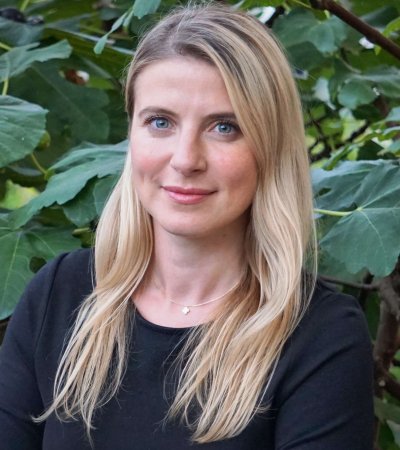
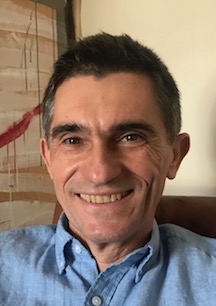
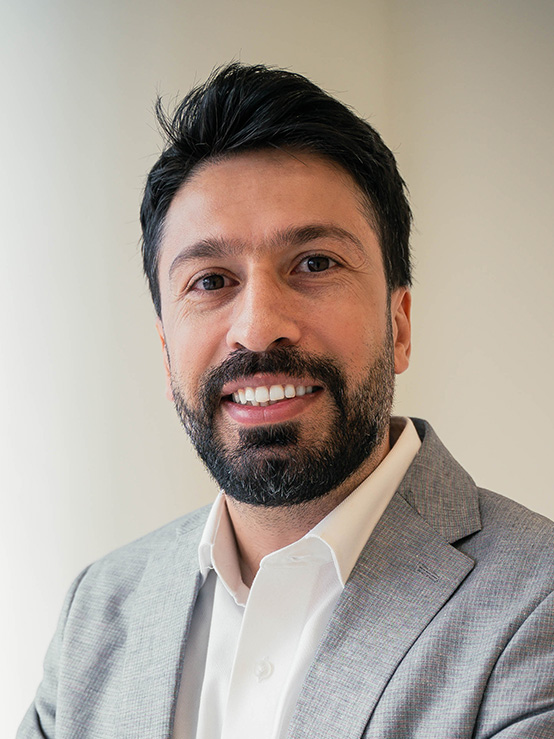
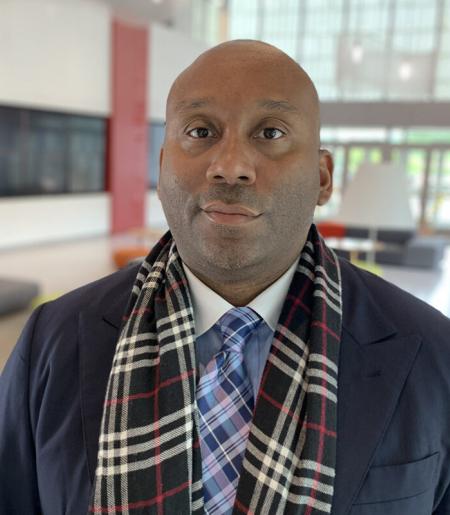
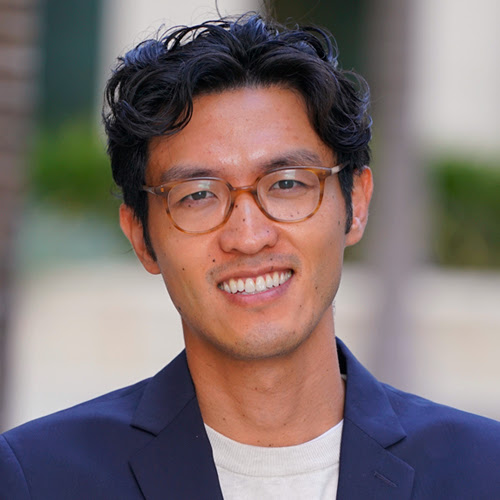
Matti Minkkinen is a Docent at the Turku School of Economics (University of Turku) and a Postdoctoral Researcher in Information Systems Science at the Department of Management and Entrepreneurship. His work bridges futures studies with ethics, privacy, and socio-technical systems in digital transformation. Recent roles focus on responsible AI governance and foresight methodologies. University: University of Turku School: Turku School of Economics Department: Department of Management and Entrepreneurship His research explores how digital technologies reshape organizational practices, emphasizing Futures Consciousness as a human capacity. Key themes include responsible AI , privacy protection , and causal layered analysis in scenario planning. Publications highlight ethical governance frameworks and EU policy debates. Recent articles address generative AI ethics , ML system integration , and AI auditing across journals like Communications of the Association for Information Systems and Information and Management . Topics cluster around socio-technical systems, digital ethics, and institutional adaptation to AI. Teaching and editorial roles include co-curating student research collections at Finland Futures Research Centre. No explicit scientific awards are listed, but his work contributes to foresight theory and practice.
Özge Öner serves as Associate Professor in Spatial Economics and Real Estate at the University of Cambridge's Department of Land Economy and holds a Fellowship at Sidney Sussex College, where she additionally serves as Vice Master and Director of Studies. Her institutional affiliations extend to research fellowships at Stockholm's Institute of Retail Economics and Jönköping's Centre for Entrepreneurship and Spatial Economics (CEnSE). Her academic foundation includes a 2014 PhD in Economics with specialization in Urban and Regional Economics from Jönköping International Business School, complemented by doctoral research at the University of Illinois' Regional Economics Applications Laboratory (REAL). Prior academic appointments include Assistant Professor at Jönköping International Business School and Researcher at Stockholm's Research Institute of Industrial Economics (IFN). Research Interests: Öner's scholarly work critically examines migration dynamics, labor mobility patterns, micro-geographic segregation mechanisms, ethnic enclave formation, retail/service geography, urban amenity distribution, entrepreneurial geography, and political spatial organization. Her methodological approach heavily leverages geocoded register data and spatial econometric techniques to investigate how geographic context shapes economic behavior, with particular emphasis on Swedish and European urban systems. This interdisciplinary framework bridges spatial economics, economic geography, and migration studies through rigorous quantitative analysis of neighborhood-level phenomena. Publication Trends: Her recent output (2023-2025) demonstrates evolving focus toward infrastructure-impact analysis (tramway effects on commercial vitality), refugee labor market integration pathways, and micro-scale retail/ethnic enclave dynamics. Methodologically, she increasingly employs synthetic control approaches and granular geospatial data to isolate causal mechanisms in urban economic processes, while maintaining strong connections to policy-relevant questions about segregation, integration, and commercial geography. Scientific Awards: Handelsbanken Wallander postdoctoral scholarship (2015) Young Investigator Award in Italy (2018) Young Researcher Award in Sweden (2019) from the Swedish Entrepreneurship Forum Advising and Public Engagement: As Director of Studies at Sidney Sussex College, Öner oversees academic progression for undergraduate students. She actively translates research into public discourse through monthly columns in Svenska Dagbladet (The Swedish Daily News), where she analyzes contemporary socioeconomic issues through her spatial economics lens. While specific doctoral advisees aren't documented in source materials, her leadership roles indicate significant mentoring responsibilities. Research Networks: Öner maintains active collaboration through dual research fellowships: at Stockholm's Handelns Forskninginstitut (Institute of Retail Economics) where she examines commercial geography, and at Jönköping's CEnSE focusing on spatial entrepreneurship patterns. These positions facilitate cross-institutional research on retail dynamics, migration geography, and urban economic structures using Scandinavian longitudinal datasets.
Patrick Jaillet is the Dugald C. Jackson Professor in the Department of Electrical Engineering and Computer Science at MIT's School of Engineering. He holds joint appointments with the Laboratory for Information and Decision Systems (LIDS), the Operations Research Center (ORC), the Operations Research and Statistics Group at MIT Sloan, and the Department of Civil and Environmental Engineering. Previously, he served as Head of Civil and Environmental Engineering at MIT (2002-2009) and Chair of the Department of Management Science and Information Systems at UT Austin (1997-2002). Dr. Jaillet's research focuses on online optimization and learning, sequential decision-making under uncertainty, and security and resilience in complex networks. His work spans theoretical foundations in optimization and machine learning with applications in transportation, online market analytics, and network security. He has developed mathematical frameworks for problems involving uncertainty, dynamic resource allocation, and strategic behavior in complex systems. His recent publications reveal strong trends in bridging theoretical optimization with practical machine learning applications. Key themes include Bayesian optimization for black-box functions, online learning with limited information, mechanism design for resource allocation, and network security applications. His work increasingly integrates large language models with traditional optimization techniques, reflecting the evolving landscape of AI-driven decision-making systems. Fulbright Scholar (1990) Fellow of the Institute for Operations Research and Management Science (INFORMS) Best Applications Paper Award at ICAPS 2019 Long-standing Associate Editor for top journals including Operations Research and Transportation Science Dr. Jaillet has advised over 40 doctoral students who now hold prominent positions in academia and industry, including faculty positions at MIT, Georgia Tech, and ETH Zurich, and research scientist roles at Amazon, Microsoft Research, and Google. His research has been consistently funded by major agencies including NSF, ONR, AFOSR, and international partners like Singapore NRF, with current projects focusing on learning algorithms for autonomous security and fundamental tradeoffs in optimization. He leads a vibrant research group spanning MIT's EECS department and ORC, with current funding supporting work on neural bandits, federated optimization, and network security applications. His research group operates at the intersection of theory and practice, with strong connections to industry through collaborations with IBM, Microsoft, Google, and various transportation and technology companies. The group maintains active partnerships with international institutions, particularly through SMART in Singapore, reflecting Dr. Jaillet's global research impact.
Dr. Jesus Barreal Pernas serves as Assistant Professor in the Department of Quantitative Economics at the Faculty of Economic and Business Sciences, University of Santiago de Compostela. His research bridges environmental policy, tourism economics, and educational innovation with significant regional impact in Galicia and broader European relevance. His academic foundation includes a 2015 PhD from the University of Santiago de Compostela with thesis "Wildfires in Galicia: causality, forest policy and risk in forest management" supervised by Dra. Maria L. Loureiro. This environmental economics work established his expertise in spatial analysis of forest systems. Barreal Pernas' research program demonstrates three converging trajectories: First, environmental economics focusing on wildfire patterns and forest policy in Galicia using spatial econometrics. Second, tourism economics examining sustainable financing mechanisms (particularly green tax willingness), international tourist segmentation, and PDO region development. Third, educational innovation through gamification techniques for teaching statistics in economics and tourism degrees. His recent publications reveal increasing emphasis on gender perspectives in financial inclusion and pandemic-related economic impacts. Analysis of his 2023-2025 publications shows methodological sophistication in spatial modeling and survey-based behavioral research, with strong policy relevance for Galician regional authorities and European tourism sectors. Key thematic clusters include sustainable tourism financing (12% of recent output), educational technology applications (18%), wildfire management (8%), and gender economics (7%). No scientific awards are documented in the provided materials, though his collaborative network spans multiple European institutions as evidenced by co-authorship patterns. His advisory role appears focused on thesis supervision within USC's economics programs, with research projects frequently addressing practical challenges in Galician tourism and environmental management. Current initiatives suggest expansion into post-pandemic tourism recovery and advanced gamification frameworks for quantitative education.
Moosa Tatar is an Assistant Professor at the University of Houston College of Pharmacy , specializing in Pharmaceutical Health Outcomes and Policy . His research combines data science and applied econometrics to analyze public health policies, focusing on drug misuse , metabolic syndrome , liver diseases , and COVID-19 disparities. He holds dual PhDs in Health Services Research (University of Nebraska Medical Center) and Economics (University of Mazandaran), with expertise in machine learning , health equity , and vaccine policy modeling . PhD, Health Services Research, University of Nebraska Medical Center PhD, Economics, University of Mazandaran MA, Economics, Azad University BA, Economics, University of Sistan and Baluchistan His work addresses critical public health challenges through large-scale dataset analysis , including excess mortality during pandemics , vaccine inequality , and economic impacts of health policies . Key themes include social vulnerability , health disparities , and policy evaluation using machine learning and econometric modeling . Tatar's research has informed global and national health interventions related to prescription drug monitoring and hepatitis C screening . He is affiliated with the Society for Medical Decision Making , AcademyHealth , and American Public Health Association , serving as an ad hoc reviewer for journals like JAMA Pediatrics and Value in Health Regional Issues . His contact email is mtatar@Central.UH.EDU .
Dr. Zilong Wang is a Senior Research Associate at the Department of Land Economy, University of Cambridge . His academic work focuses on the intersection of corporate finance, asset pricing, and real estate finance. Key Research Areas: Corporate Finance, Asset Pricing, REITs, Real Estate Valuation, Real Estate Fund Performance Funding Bodies: EPRA, IPF, INREV, ANREV His research explores sustainability in institutional investment practices, housing wealth effects on financial behavior, sovereign debt dynamics, and environmental justice. Current projects analyze green credit policies, pension fund strategies, and CSR in post-pollution recovery. Notable publication trends include: 2025: Sustainable finance, housing market constraints 2024: IMF programs, sovereign debt rescheduling 2023: Distress risk anomalies, REIT expansion strategies 2020-2022: Cryptocurrency portfolios, Asian real estate funds He teaches RM02 - Further topics in quantitative methods and maintains affiliations with the Cambridge Real Estate Research Centre .
Jonathan L. Auerbach is an Assistant Professor in the Department of Statistics at George Mason University . His work bridges statistics and public policy , focusing on causal inference , longitudinal data analysis , and official statistics . He has contributed to understanding urban myths (e.g., New York City rat populations, building height trends), election fraud , and policy evaluation for initiatives like Vision Zero. Education : PhD in Statistics (Columbia University, 2020), BA in Economics (Cornell University, 2010) Research Interests include data science , causal inference , survey methodology , and urban analytics . His recent work addresses climate change impacts on cherry blossom seasons, federal data security , and street vendor demographics in New York City. Scientific Awards include the 2024-2025 President of Washington Statistical Society , 2020-2021 American Statistical Association Science Policy Fellow , and 2019 Howard Levene Outstanding Teaching Award . He has served as an instructor for courses like Capstone in Statistics and Causal Inference , emphasizing technical communication and data ethics .
Bryan L. Sykes is an Associate Professor at Cornell University , with joint appointments in the Department of Sociology and the Jeb E. Brooks School of Public Policy . He also holds affiliate roles at multiple research centers, including the Center for Demography and Ecology (CDE) at the University of Wisconsin-Madison and the Berkeley Population Center at the University of California-Berkeley. Education: PhD in Sociology and Demography from University of California-Berkeley; BS in Sociology from University of Wisconsin-Madison His research spans demography , criminology , and social inequality , focusing on how institutions and policies shape disadvantage. He leads a $1.61M RCT on monetary sanctions' effects in California courts and develops innovative demographic methods to address inequality in incarceration, fertility, and mortality data. Recent publications emphasize global health metrics , criminal justice reform , and methodological advancements . He serves as Senior Associate Editor for Science Advances and previously held editorial roles at PLoS One and Sociological Perspectives .
Matthew Ferrari serves as Director of the Center for Infectious Disease Dynamics and Professor of Biology at Pennsylvania State University's Eberly College of Science. His research integrates mathematical and statistical approaches to address critical questions in infectious disease dynamics, with particular expertise in vaccine-preventable diseases like measles and rubella. He holds the distinguished position of Huck Career Development Professor, reflecting his significant contributions to interdisciplinary research at Penn State. Dr. Ferrari's research program focuses on developing mathematical and statistical tools to understand disease incidence patterns and the effects of heterogeneity in time and space. He emphasizes that 'models are only as good as the data upon which they are based,' leading him to work directly with ministries of health to design surveillance systems that efficiently allocate vaccination efforts for disease control and elimination. His work on measles dynamics in low and middle-income countries addresses why measles virus still kills over 100,000 children annually despite available vaccines, collaborating with the World Health Organization, Médecins Sans Frontières, US-CDC, and the Bill & Melinda Gates Foundation. His extensive publication record demonstrates a consistent focus on vaccine-preventable diseases, with recent work increasingly addressing the impact of the COVID-19 pandemic on routine immunization programs. Dr. Ferrari has developed statistical methods used by the WHO to estimate global measles mortality burden, analyzing time series as partially observed Markov processes to both estimate infection burden and fit dynamical transmission models. His research consistently bridges theoretical modeling with practical public health applications across numerous countries including China, Democratic Republic of Congo, Ethiopia, India, Niger, Nigeria, Madagascar, Malawi, Pakistan, and Zambia. Director of the Center for Infectious Disease Dynamics Huck Career Development Professor Professor of Biology at Pennsylvania State University Active collaborator with WHO, CDC, Gates Foundation Dr. Ferrari leads multiple research initiatives including Data4Action, which has measured the pandemic's impact on local communities for two years. His work has been instrumental in developing evidence-based vaccination strategies and informing global health policy. He maintains an active presence in both academic and public health spheres, regularly contributing to policy discussions and media commentary on infectious disease dynamics.
Mogens Fosgerau is a Professor at the Department of Economics, University of Copenhagen, with a research focus on discrete choice theory, rational inattention, transportation and urban economics, congestion modeling, and entropy-based frameworks. He has held an ERC Advanced Grant (2017-2023) and completed a Grand Solutions project for the Innovation Fund Denmark (2016-20). Education: Mathematical Economics (Aarhus University, 1990), PhD in Mathematics (University College London, 1992). Current affiliations: Department of Economics (University of Copenhagen), Faculty of Social Sciences. Former roles: Guest Professor at DTU (2022-2023), member of the Commission for Green Transition of Passenger Cars (2019-2021). His research explores the intersection of information theory and discrete choice models, addressing complex substitution patterns and endogeneity issues through generalized entropy frameworks. He applies these models to transportation planning, urban economics, and climate policy analysis. Recent publications focus on perturbed utility models, inverse product differentiation logit, and rational inattention in spatial choice contexts. His work bridges theoretical econometrics with practical transport and environmental policy challenges. Awards: Recipient of the 2021 Transportation Science Meritorious Service Award. Former Editor-in-Chief of Economics of Transportation (2012-2020). Advising and Grants: Leads research projects funded by the European Research Council and Innovation Fund Denmark. Has participated in policy committees including the Danish Environmental Economic Council (2019-2025) and the Committee on Public Transport Mobility (2023-24).
Donatella Strangio serves as Professor of Economic History and Director of the Department of Methods and Models for the Economy, Territory and Finance (Memotef) at Sapienza University of Rome. She also holds the position of Deputy Rector for Chile and Brazil in the Latin America and Caribbean region. Her academic leadership extends to directing international research projects including the European Project PNRR Changes 5 and the Jean Monnet Project EUMCHA. Her research spans economic development and underdevelopment, financial history, tourism economics, international migration patterns, and colonial-decolonization processes. She examines these topics through historical lenses, particularly focusing on pre-industrial economic systems, 20th century European history, famines, food policies, and institutional evolution. Her work often bridges historical analysis with contemporary policy challenges. Professor Strangio's recent publications demonstrate strong thematic coherence across economic history, with particular emphasis on resilience mechanisms during crises, migration as knowledge transmission, and tourism's economic dimensions. Her scholarship shows consistent engagement with both Italian and global contexts, especially regarding Mediterranean and Latin American connections. She actively mentors through multiple master's programs including the Master in Migration and Development and the Master in Tourism Economics and Management. Her leadership in the Civis short-term courses on Crisis Sustainability and Cultural Heritage Enhancement demonstrates commitment to innovative teaching approaches. Professor Strangio directs significant research initiatives including the Spoke9 of PNRR Cultural Heritage and coordinates the Scientific Guarantee Committee for the 'Repertory of Italian banks from 1861 to today.' Her international collaborations span Columbia University, Universidad de Quilmes, University of Adelaide, London School of Economics, and numerous Latin American institutions.
Dr. Mei Nan is an Associate Professor in the Department of Communication at Tongji University's School of Art and Media. With a career spanning since 2004, she previously held positions at Chang'an University before joining Tongji in 2017. Her academic credentials include a Master's from Shaanxi Normal University, postgraduate studies at Communication University of China, and ongoing doctoral research at Xi'an Jiaotong University's School of Economics and Finance. Research Expertise Her research bridges media economics, AI-driven communication paradigms, and film studies, with specific focus areas including: Media economics and corporate governance interactions Artificial intelligence's impact on communication theory Film/audiovisual language analysis Media culture evolution Marketing models in digital ecosystems Teaching Portfolio Dr. Nan teaches both undergraduate courses ( Audiovisual Language, Chinese/Foreign Film History, Media Culture, Chinese Film Appreciation ) and graduate seminars ( Intelligent Communication Theory and Practice ). Her pedagogical approach integrates contemporary media developments with theoretical foundations. Awards and Grants Tongji University Hongda Award (2021) Tongji Cup General Education Course Paper Competition Teaching Teacher Excellent Organization Award (2021) Principal Investigator: Shanghai Philosophy and Social Science Planning Project (2018BGL025) studying media impact on corporate recovery
Zhe Zhang is an Assistant Professor of Innovation, Technology, and Operations at the Rady School of Management, University of California San Diego (UCSD). He holds a Ph.D. in Information Systems and Management from Carnegie Mellon University's Heinz College and dual bachelor's degrees in Economics and Statistics from Stanford University. His research focuses on the societal and spillover impacts of information technology, including fairness in algorithmic decision-making, sharing economy dynamics, and digital transformation effects. Ph.D., Carnegie Mellon University (Heinz College) B.S. in Mathematical and Computational Sciences, Stanford University B.A. in Economics (with honors), Stanford University His work spans disciplines like machine learning, applied microeconomics, and operations management. Current research includes analyzing cashierless retail technology's operational and behavioral impacts, algorithmic bias mitigation strategies, and the economic implications of Amazon Prime adoption. Key findings highlight how digital innovations reshape consumer demand, manufacturer strategies, and algorithmic fairness outcomes. Recent publications address: Bias amplification through data imputation in healthcare Strategic overfitting in data science contests Sharing economy's effect on durable goods markets He has presented at top conferences in information systems (CIST, WISE), economics (NBER), and computer science (KDD, FAccT). Awards include runner-up for the ACM SIGMIS Doctoral Dissertation Award (2019) and a POMS 2017 Supply Chain Management best paper finalist. Prior to his current role, Zhang worked as a part-time Data Creative staff member at DataKind (NYC) and was a 2016 fellow at the Data Science for Social Good Summer Fellowship (Chicago). He has also contributed to fairness methods in AI at Facebook and nonprofit research at NRDC and Union of Concerned Scientists.
Halvard Buhaug is a Professor II in Political Science at the Norwegian University of Science and Technology (NTNU) and a Researcher I at the Peace Research Institute Oslo (PRIO). His work focuses on the security implications of climate change, including food security, economic shocks, forced migration, and natural disasters. Affiliations: NTNU (Political Science), PRIO (Researcher I) Research Areas: Climate-conflict nexus, environmental security, migration dynamics, peace research Expertise: Quantitative conflict analysis, climate risk modeling, policy-relevant research Buhaug's recent publications analyze climate-induced displacement, conflict risk projections, and the limitations of climate migration models. His interdisciplinary work bridges climate science, political geography, and security studies. Methodologically, Buhaug employs statistical modeling, geospatial analysis, and comparative case studies. He contributes to policy debates through accessible publications in outlets like The Conversation and Political Violence @ A Glance .
Professor Fangzhu Zhang is a leading academic in China planning at The Bartlett School of Planning, University College London (UCL). With a PhD from the University of Southampton and prior roles at Southampton and Cardiff University, she has been at UCL since 2011, progressing from Lecturer to Professor since 2023. Education: BSc (Nanjing University, 1991), MPhil (University of Hong Kong, 1998), PhD (University of Southampton, 2007) Her research focuses on urban governance , financialization , and environmental planning in China. Recent work explores post-pandemic statecraft, eco-city development, and land assetization in municipal finance. She leads the ERC Advanced Grant project "Rethinking China’s Urban Governance" (2020–2026) and contributes to journals like Urban Studies and Land Use Policy . The 15 most recent publications span topics such as: State entrepreneurialism in megaprojects Financial intermediation in local government bonds Land assetization and urban debt risks Post-pandemic governance transitions Participatory micro-regeneration models She has supervised 20 PhD students (10 completed, 10 ongoing) and serves as founding Editor-in-Chief of the journal Transactions in Planning and Urban Research (TPUR). Her teaching integrates equality, diversity, and inclusion, with leadership roles in UCL's dissertation curriculum.