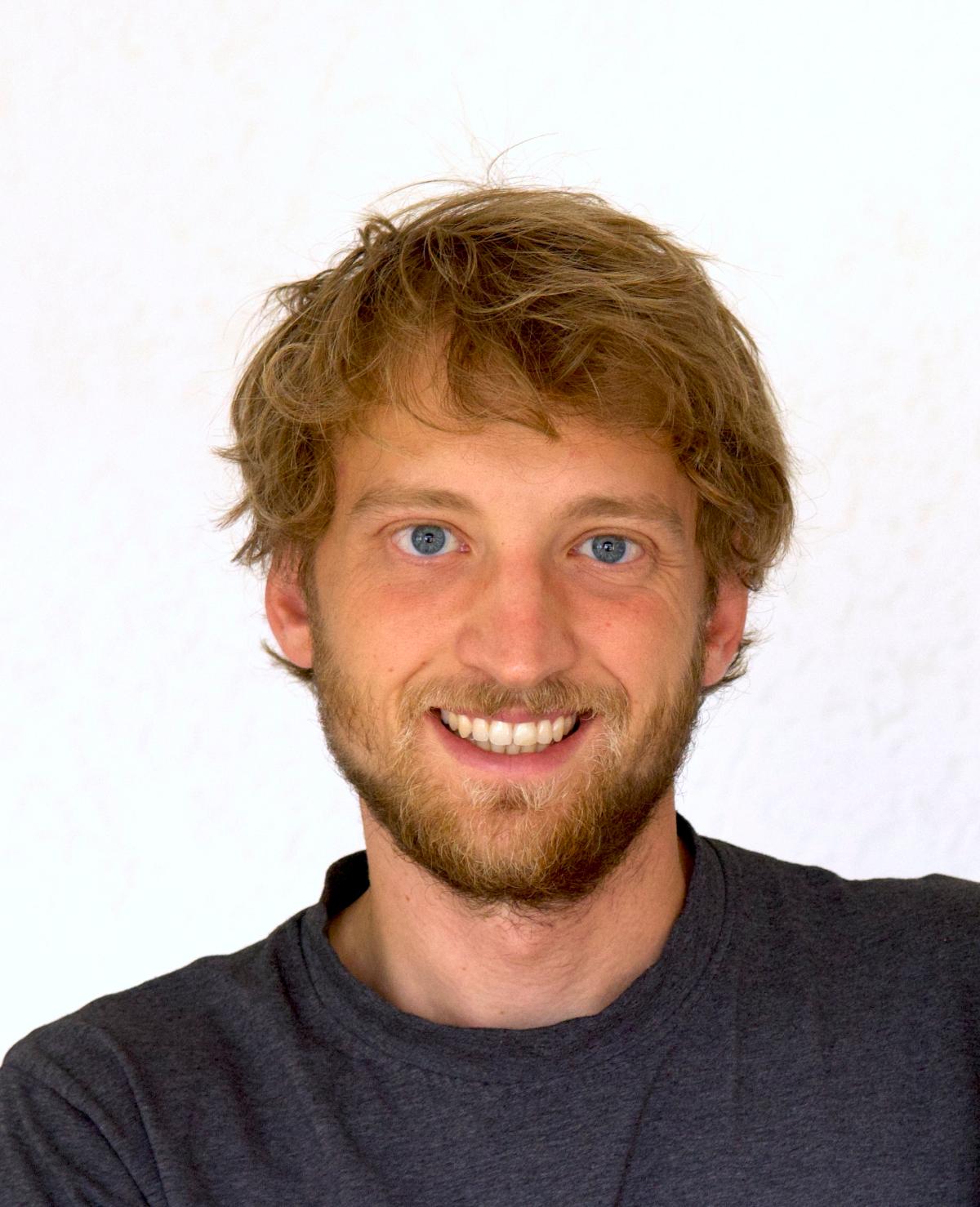
Fabian Fopp is a Lecturer at ETH Zürich's Department of Environmental Systems Science, specializing in landscape evolution and spatial modelling. He develops R scripts and educational videos for landscape ecology courses and coordinates MOOCs on spatial modelling for bachelor’s and master’s students. His research interests center on spatial modeling applications in landscape ecology and environmental education. Publications focus on ecological forecasting, biodiversity monitoring through eDNA, and climate impact projections using computational approaches.
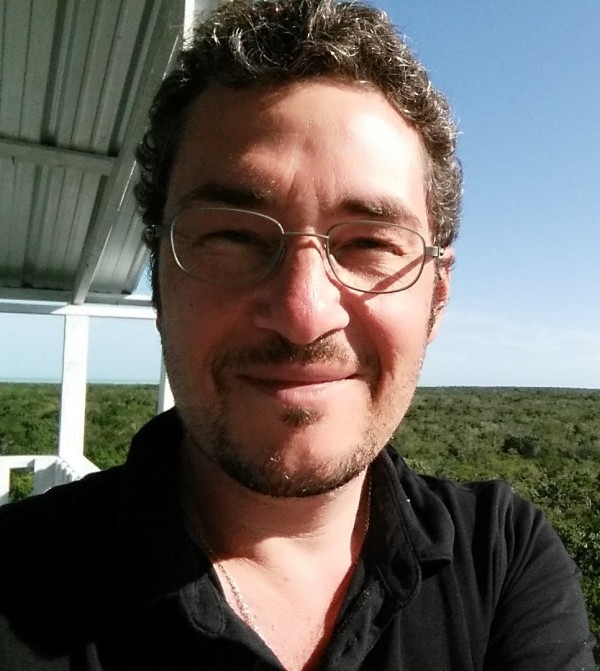
Dr. Bojan Gujas is a Researcher at ETH Zurich's Department of Environmental Systems Science and a member of the Zurich-Basel Plant Science Center. His work focuses on plant development, particularly vascular systems and root architecture in model plants like Arabidopsis. He investigates molecular mechanisms governing phloem differentiation, vein branching, and hormonal signaling pathways such as auxin and brassinosteroid crosstalk. Research interests include genetic regulation of root adaptation to environmental stresses, evolutionary aspects of plant genes, and the role of phospholipids and phosphoinositides in cellular differentiation. His studies bridge genetics, cell biology, and computational modeling to understand developmental processes at molecular and cellular levels. Key contributions include elucidating pH-dependent CLE peptide roles in phloem formation, PTEN gene divergence in vacuolar remodeling, and BRX gene function in acidic soil adaptation. His publications span plant biology, genetics, and molecular signaling, with a focus on integrating experimental and theoretical approaches. Dr. Gujas collaborates across disciplines within the Zurich-Basel Plant Science Center, contributing to advancements in plant physiology and developmental biology. His research highlights mechanisms underlying plant adaptation and vascular system evolution, with implications for agriculture and environmental resilience.
Claude Garcia is a Researcher and Group Leader at ETH Zurich's Department of Environmental Systems Science (D-USYS), Switzerland. He leads the Forest Management and Development (ForDev) Group within the Institute of Terrestrial Ecosystems. His research focuses on socio-ecological systems in tropical landscapes, examining how farmers and forest dwellers adapt to environmental, technological, and political changes, while balancing biodiversity conservation and livelihood needs. Garcia has held roles including Senior Scientist at CIRAD (France), Principal Investigator at the French Institute of Pondicherry (India), and Seconded Senior Scientist at CIFOR (Indonesia). His projects include leading CoForTips on Congo Basin forest resilience and Sentinel Landscapes monitoring in the Western Ghats. He serves as a Scientific Advisor for MOCA, addressing trade-offs in coffee agroforestry systems. Key research themes include agroecology, human-wildlife interaction, and policy impacts on local communities. Garcia's work emphasizes participatory approaches to reconcile agricultural production with biodiversity conservation.
Anne Giger Dray is a Lecturer at the Department of Environmental Systems Science, ETH Zurich, Switzerland. She is affiliated with the Institute of Terrestrial Ecosystems (CHN G 74.2, Universitätstrasse 16, 8092 Zürich). Her work focuses on applied research in renewable resources management and conflict resolution, emphasizing community participation. She can be reached at anne.dray@usys.ethz.ch or via phone: +41 44 632 07 50. Dr. Dray’s research interests include the development of tools such as agent-based models and role-playing games to support stakeholders’ engagement in environmental management. Her work addresses ecological sustainability through participatory approaches, particularly in contexts like fisheries, water resource allocation, and climate change adaptation. Her current and past projects include the Integrated Landscape Management initiative (in preparation) and the CoForTips project, where she serves as the Participatory Design and Modelling Manager. These projects highlight her expertise in collaborative problem-solving and participatory modeling techniques. While her professional experience includes roles as a Researcher, Consultant, and Fellow, specific grants or advising roles are not detailed in the provided information. Her career trajectory reflects a focus on applied research and community-driven solutions in environmental systems. She is part of the Institute of Terrestrial Ecosystems at ETH Zurich, contributing to interdisciplinary efforts in environmental science and management.
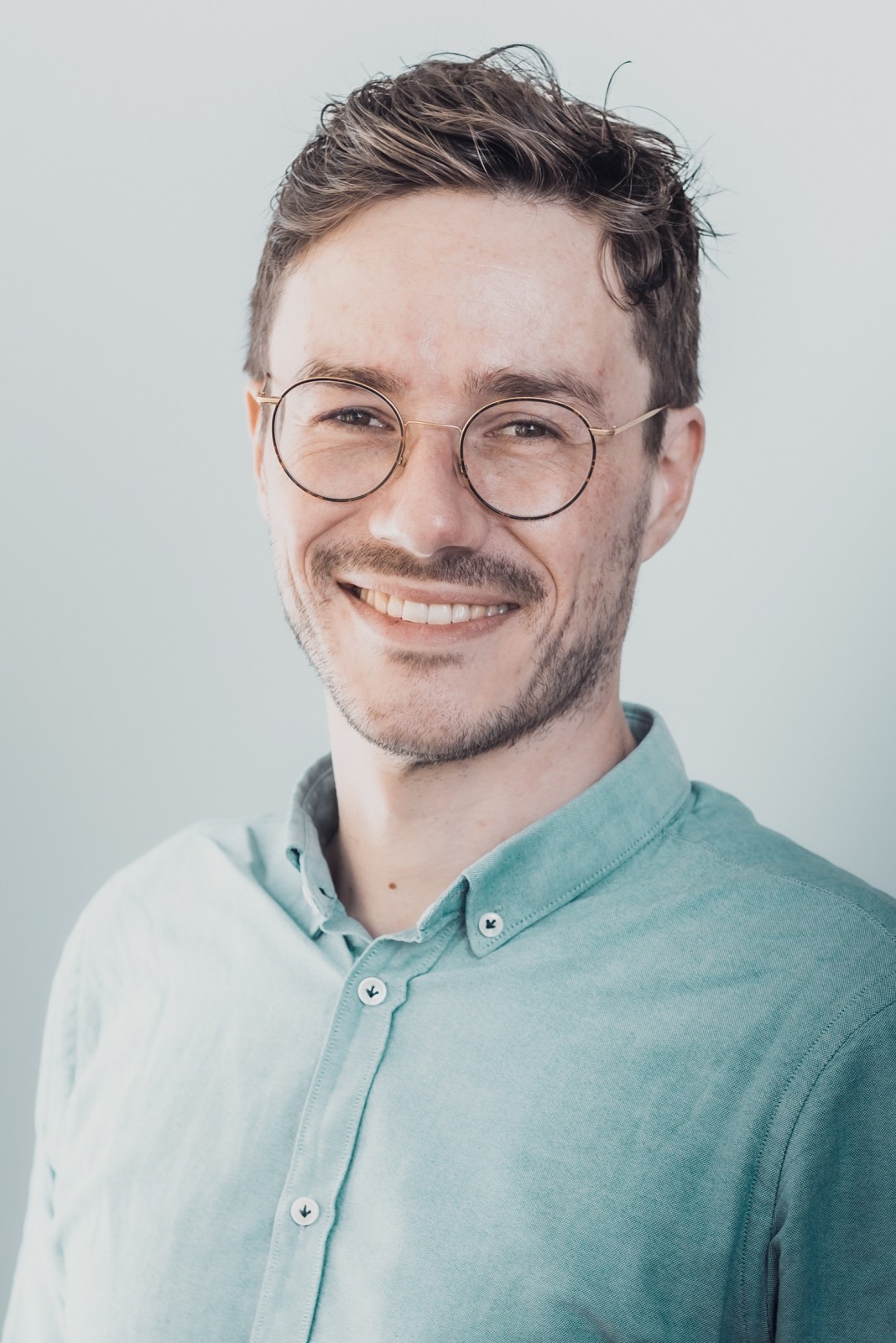
Dr. Manuel Sudau is a Lecturer at ETH Zürich's Department of Environmental Systems Science with expertise in spatial planning, landscape development, and soil resource management. His doctoral research focused on 'Acceptance of Spatial Planning Policies for the Management of Soil Resources'. Since 2023, he has served as an Educational Developer at ETH Zurich, designing curriculum enhancements and pedagogical strategies. His research interests center on sustainable land-use planning, environmental policy acceptance, and geographic information systems applications. Sudau integrates spatial analysis and participatory approaches to address soil conservation challenges in developing landscapes. At ETH, Sudau contributes to landscape planning education and develops instructional materials for environmental science programs. He maintains active collaborations with planning departments across Switzerland and Germany.
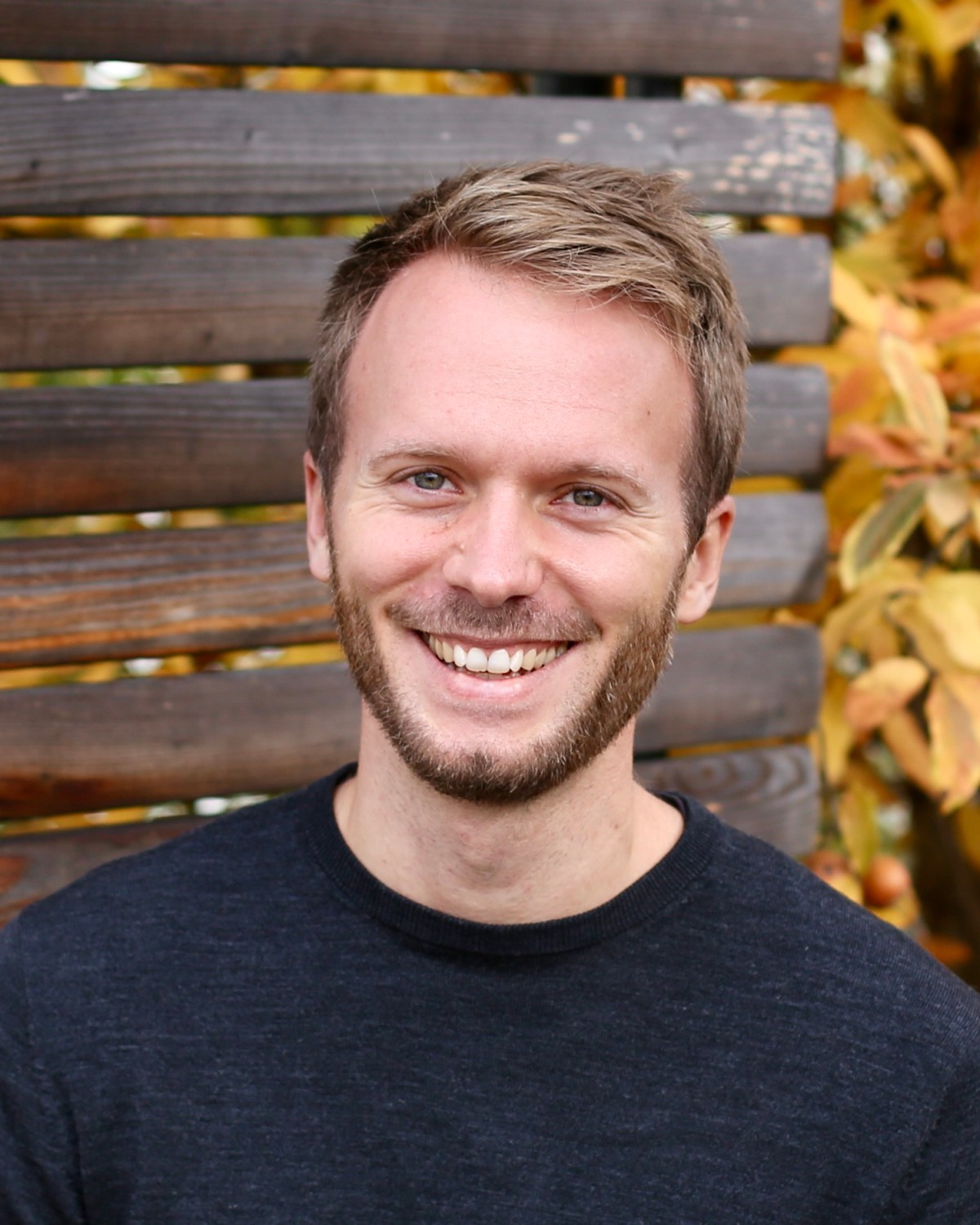
Dr. Tim Tröndle is a Lecturer at ETH Zurich's Department of Environmental Systems Science, specializing in climate protection and adaptation. His research focuses on barriers to energy transition and policy instrument development, addressing societal trade-offs and lock-in effects through quantitative methods including energy system modeling and Bayesian probabilistic models. His work emphasizes the energy transition's societal impacts, particularly trade-offs between self-sufficiency and landscape integrity. Current projects investigate climate change effects on forest communities and species' functional traits. Methodologically, he employs high-performance computing and reproducible research frameworks. Research publications predominantly focus on renewable energy systems, climate-neutral aviation solutions, and policy modeling across European contexts. Recent work analyzes techno-economic pathways for decarbonization, public acceptance of energy transitions, and grid resilience strategies.
Niklaus Zemp is a Lecturer at ETH Zurich's Department of Environmental Systems Science and Genetic Diversity Centre. His research program integrates population genomics, conservation genetics, and molecular ecology to study biodiversity patterns across diverse organisms including plants, insects, and fungi. Research encompasses: Population structure analysis of European cockchafers and their fungal pathogens Conservation genetics of rare ferns and mosses Sex chromosome evolution in dioecious plants Host-parasite coevolution in bumblebee systems Marine biodiversity genetics in tropical reef ecosystems Publication analysis reveals strong emphasis on genomic methods applied to conservation challenges, with recent work focusing on: Development of novel genetic techniques for museum specimens Spatiotemporal patterns in insect population genomics Ecological drivers of genetic diversity in marine and terrestrial systems Evolutionary mechanisms in plant sexual systems
Dr. Yu Zhou is Lecturer at ETH Zurich's Department of Environmental Systems Science, specializing in carbon cycle modeling and remote sensing applications. Her research bridges ecological processes with computational approaches to address climate change challenges. Key research areas include: Integration of remote sensing data with ecosystem models Machine learning applications in carbon flux estimation Vegetation-climate interactions in dryland systems Continental-scale carbon budget assessments Her work develops novel methodologies for monitoring forest carbon dynamics and quantifying surface biogenic fluxes across North America and Central Asia. Recent publications demonstrate advances in scaling field observations to regional assessments using multi-source data integration. She contributes to projects at the intersection of climate physics and ecosystem science, leveraging satellite data and AI techniques to improve predictions of vegetation responses to environmental change.
Prof. Dr. ir. Kees Christiaanse was a Full Professor of Architecture and Urban Design at ETH Zurich’s Institute for Urban Design (2003–2018). He led the Future City Laboratory (FCL) program at the Singapore ETH Centre (2010–2015), focusing on global urbanization processes. His research integrates sustainability, urban design, and practical implementation. Key areas included cultural landscapes, polycentric metropolitan strategies, and airport-city relationships. Christiaanse’s work bridges academia with practice through collaborative projects with experts worldwide. Research emphasized sustainability beyond technical aspects, addressing long-term urban development potential. Notable projects include Zernez Energia 2020 (awarded Zurich Klimapreis 2014) and the Potato Plan Collection analyzing 40 global cities. Publications like Urban Code (DAM Prize 2011) and Dutch New Worlds (IPHS Prize 2014) showcase his theoretical contributions. He mentored students in urban design studios and advised on international competitions like Vertical Cities Asia. Teaching focused on design strategies for dynamic urban planning, integrating social trends into sustainable practices. His legacy includes over 100 academic publications, interdisciplinary research platforms, and global urban initiatives. Post-retirement, his contributions continue through publications and symposia celebrating his career.
Gabrielle Wanzenried is a Professor of Finance and Real Estate at the School of Management and Engineering (HEIG-VD) in Yverdon, part of the University of Applied Sciences and Arts Western Switzerland (HES-SO) since September 2019. She leads the research group Finance, Governance & Sustainability at the Interdisciplinary Institute of Business Development (IIDE). Her academic career includes a previous position as professor of corporate finance at the Lucerne University of Applied Sciences and Arts. Wanzenried holds a Dr. rer. pol. and MSc in Economics from the London School of Economics. Her educational background also includes studies at the University of Bern and UC Berkeley, providing her with a strong international foundation in economics and finance. Her research spans several interconnected fields with a strong focus on practical applications. She investigates Corporate Finance, Real Estate Economics, Energy Economics, and the economic implications of an aging population. A significant portion of her recent work examines housing challenges for elderly populations, particularly women baby boomers living alone. Her research on sustainable finance models and corporate social responsibility demonstrates her commitment to addressing contemporary economic challenges through interdisciplinary approaches. Analysis of her recent publications reveals a clear trend toward studying demographic shifts and their economic impacts, particularly regarding housing and retirement. Her work frequently combines econometric analysis with policy evaluation, focusing on Swiss contexts but with implications for broader European and global challenges. The interdisciplinary nature of her research bridges finance, real estate, demographics, and social policy. Wanzenried actively leads multiple research projects funded by various sources including the Federal Office of Housing, Léenaards Foundation, and Innosuisse. Her project "Les femmes baby-boomers vivant seules face à leurs dilemmes de logement" examines housing situations and needs of baby boomer women living alone. The "Smart Komfort" project investigates attractive rental apartments with less space consumption, while "Unlocking the potential" studies energy retrofits among property owners in Vaud canton. She is actively involved with practical applications of her research, serving as co-founder and co-chair of a housing cooperative specializing in retirement homes (www.zuhauseambielersee.ch) and as president of the board of the Thiébaud-Frey Foundation, which promotes young musicians.
Grégoire Courtine is a Professor at École Polytechnique Fédérale de Lausanne (EPFL), directing the UPCOURTINE lab within the Neuro-X Institute. His research focuses on developing neuroprosthetics and neurorehabilitation strategies to restore motor function after spinal cord injuries and neurological disorders. The lab combines spinal cord stimulation robotic interfaces optogenetics single-cell omics clinical translation to advance treatments for paralysis and movement disorders. Recent work spans both fundamental studies and clinical trials, including interventions for Parkinson’s disease and orthostatic hypotension. Publications highlight innovations in deep brain stimulation neuroprosthetic systems spinal cord mapping autonomic function modulation with a strong emphasis on interdisciplinary approaches bridging neuroscience and engineering.
Neslihan Yılmaz is a Professor at Bogazici University, holding a Ph.D. from Michigan State University. She specializes in Behavioral Finance, Corporate Governance, Managerial Turnover, and Product Market Competition. Her teaching focuses on Financial Management, Corporate Finance, and International Finance. Research Interests: Her work explores the intersection of behavioral economics principles with corporate finance, real estate markets, and managerial decision-making. Key themes include spatial analysis of real estate pricing, the impact of CEO overconfidence on corporate performance, and behavioral biases in investor behavior, particularly in emerging markets like Turkey. She employs econometric methods and geographically weighted approaches to study spatial heterogeneity and market dynamics. Publications: Yılmaz has contributed to journals such as the International Real Estate Review, Journal of Real Estate Finance and Economics, and Research in International Business and Finance. Her recent work analyzes spatial dependence in housing markets and the role of analyst coverage in financial markets. Earlier studies investigate behavioral biases in Turkish investors and CEO decision-making under prospect theory frameworks. Professional Contributions: She has presented at conferences including the Financial Management Association Annual Meeting and the Borsa İstanbul Finance & Economics Conference. Her research bridges theory and practice, offering insights into market efficiency, governance structures, and investor psychology.
Jennifer Webb is an Associate Professor at the Department of Interior Design within the Fay Jones School of Architecture and Design at the University of Arkansas. She has been a faculty member since 1999, focusing on research in person-environment fit, social justice, and inclusive design. Her work bridges academic and professional realms, emphasizing equity in housing and marginalized communities. Education: Ph.D. Human Environmental Sciences (Oklahoma State University, 1999) M.S. Interior Design (University of Tennessee, 1995) B.S. Interior Design (University of Tennessee, 1989) Research Interests: Her research explores how design impacts inclusivity and social justice, particularly for older adults and disabled populations. Key areas include disability policy, sensory design, and the intersection of design with identity. She co-developed the "Diversity and Design" course, emphasizing humanities in architectural education. Publications: Her work includes the award-winning Just Below the Line: Disability, Housing, and Equity in the South (2010) and contributions to the Universal Design Handbook . Recent projects focus on aesthetics of social justice and activism in design. Awards: Joel Polsky Prize (2010) Best Paper Award (2014) Professional Engagement: She holds NCIDQ and LEED credentials, and has served on the Arkansas State Board of Registered Interior Designers. As a Fellow of the Interior Design Educators Council, she co-edited the 2020 Journal of Interior Design special issue on marginalization. Teaching: Leads third-year design studios, emphasizing professional preparation through technical and creative synthesis. She has taught in the US and Europe, integrating online and face-to-face formats.
Sibylla Amstutz is a Professor and Head of the Competence Center for Interior Architecture (CCIA) at Lucerne School of Engineering and Architecture (Lucerne University of Applied Sciences and Arts). She specializes in need-based architectural planning, workspace design, and the interplay between human behavior and built environments. Her research focuses on adaptive spaces, urban regeneration, and inclusive design for diverse user needs. She leads projects like 'Sweet Lantern' and 'FLAWO,' exploring sustainable elderly care facilities and urban space utilization. Amstutz has authored over 30 publications, including books on architecture and design, and regularly presents at international conferences. She advises on urban development through roles like Expert for the Gottlieb Duttweiler Institute and serves on boards such as the Swiss Architecture Archive. Education: 1993-1998: Diploma in Architecture (Dipl. Architektin HTL) 1999-2002: Advanced Course in Heritage Conservation 2019-2020: Certificate in Research Management (University of Bern) Research Interests: Her work addresses societal challenges through architectural solutions, focusing on: Workspace innovation for knowledge workers Therapeutic environments in healthcare Revitalization of urban spaces Need-based design methodologies Notable Projects: Amstutz spearheads initiatives like 'Campus Living Lab' (student-driven sustainability) and 'GreenBrick' (efficient healthcare facility design). Her 'Neubad' research explored citizen-driven urban transformation. She co-curated symposiums on 'Invisible Space' and 'Naked Space,' promoting interdisciplinary dialogue in interior architecture.
Ralf Baumann is a Professor at the Institute of Mechanical Engineering and Energy Technology (IME) within the Lucerne School of Engineering and Architecture at Lucerne University of Applied Sciences and Arts (HSLU). He has served as Head of the Competence Center for Mechanical Systems since 2006 and as Deputy Head of IME from 2017 to 2023. His roles include being a lecturer in the Master of Science in Engineering (MSE) program since 2008 and a former Head of Department Numerical Simulation at Hilti AG. Education: Diploma in Aerospace Engineering, University of Stuttgart (1986-1992) Internship at Airbus (1988-1989) Diploma Thesis at Dornier GmbH (1992) Ralf Baumann's research focuses on Mechanical Engineering , particularly in Finite Element Method (FEM) , Structural Mechanics , Lightweight Structures , and Computational Mechanics . His work spans industrial applications such as overhead line conductors , ski manufacturing , robotics , and additive manufacturing . He has led projects like SwissSTES PIT/CCMS , Virtuelles Gehen , and vLRC – virtual Lucerne Robotics Center . His publications and presentations emphasize finite element modeling , contact stress analysis , thermal-mechanical simulations , and fluid-structure interaction in practical engineering scenarios. Scientific Awards: ANSYS Hall of Fame Competition - Best in Show 2018 Academic Zeppelin Award 'New Technologies' for Best Diploma Thesis (1993) As an educator, Baumann supervises Bachelor and Master Theses and has developed innovative 3D teaching methods via the Cyber-Classroom initiative. He has held leadership roles in the Swiss Industry Robotics Network and contributed to industry-specific projects involving ANSYS Workbench and Multilayer Stranded Cables .