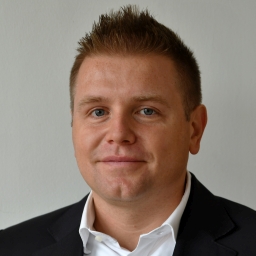
Michał Paweł Michalak is an Assistant Professor at AGH University of Science and Technology in Kraków, affiliated with the Faculty of Geology, Geophysics and Environmental Protection and Department of Geoinformatics and Applied Informatics. His research spans computational geometry in geological modeling, machine learning applications in Earth sciences, statistical epidemiology, and ecclesiological dynamics. Doctoral degree from University of Silesia in Katowice Developed GeoAnomalia software suite combining C++, R, and ParaView Created unbiased risk metrics (WCSIR) for infectious disease surveillance Research focuses on: Subsurface geological modeling using combinatorial algorithms and machine learning; Spatial epidemiology emphasizing testing heterogeneity bias; Ecclesiological dynamics analyzing factional theological interactions. His 2020/37/N/ST10/02504 grant project received 'very good' evaluation for developing angular distance metrics in geological contacts. Scientific contributions include: 2025 Solid Earth paper on fault-related structure detection 2025 Frontiers in Public Health work on global pandemic risk evaluation 2023 AGH Rector award recipient Developer of open-source geological analysis tools Collaboration network includes Harvard University, Technische Universität Freiberg, and University of Texas at Austin. Currently teaching GIS modeling, optimization methods, and geoinformatics systems. Maintains a personal website with open data access.
Prof. Wojciech Sobieski is a faculty member at the Department of Mechanics and Fundamentals of Machine Design within the Faculty of Technical Sciences at the University of Warmia and Mazury in Olsztyn . His research focuses on fluid mechanics, numerical modeling, and porous media analysis, with applications in environmental engineering, hydraulic systems, and 3D printing. Academic Rank: Professor Scientific Discipline: Mechanical Engineering Key Research Areas: Tortuosity Analysis, Multiphase Flow, DEM Simulations His recent publications highlight advancements in computational methods for granular porous media, fluid flow modeling, and thermodynamic applications. Notable trends include the use of the Waterfall Algorithm for geometric analysis and sensitivity studies of numerical models like the Eulerian multiphase approach. He has contributed to understanding Forchheimer's laws and cavitation phenomena in hydraulic systems. Prof. Sobieski oversees the PathFinder Project , a research initiative focused on numerical modeling of porous media. His laboratory maintains infrastructure for multiphase flow simulations and particle-scale modeling. He has supervised 2 doctoral students to completion but currently has no active advisees.
Konrad Kowalczyk is an Associate Professor at AGH University of Science and Technology in Krakow, Poland, where he heads the Signal Processing Group within the Faculty of Computer Science, Electronics and Telecommunications. With extensive international experience from institutions including Queen's University Belfast, Stanford University, and Fraunhofer Institute, he has established himself as a leading researcher in audio and speech signal processing. His academic journey includes B.Eng. and M.Sc. degrees from AGH University (2005), a Ph.D. from Queen's University Belfast (2009), and a Habilitation in ICT from AGH University (2020). B.Eng. and M.Sc. in Electronics and Telecommunications, AGH University of Krakow (2005) Ph.D. in Electronics, Queen's University Belfast, UK (2009) Habilitation (D.Sc.) in Information and Communication Technology, AGH University of Krakow (2020) Kowalczyk's research spans multiple cutting-edge areas in audio processing, with particular focus on speech and audio signal processing enhanced by machine learning techniques. His work integrates deep neural networks with traditional signal processing methods to address challenges in array signal processing , speech enhancement , and speaker recognition . The research group he leads explores innovative applications in distributed signal processing for IoT , acoustic event detection , and spatial audio rendering , bridging theoretical advances with practical implementations. His recent publications demonstrate a clear trend toward integrating deep learning with traditional signal processing techniques, particularly in speaker diarization, source separation, and robust speech recognition. The research increasingly focuses on real-world applications requiring reverberation-robust processing , distributed microphone array systems , and end-to-end neural architectures that can operate in challenging acoustic environments. There's a noticeable shift toward more complex, integrated systems that combine multiple signal processing tasks. Stanislaw Staszic Medal for best graduate of AGH (2005) IEEE Best Student Paper Contest finalist (2007) AES Student Technical Paper Award winner (2008) Best Student Paper Award at IWAENC conference (2014) Best Paper Awards at IEEE SPA conferences (2016, 2019) Polish Ministry of Science Scholarship for Distinguished Young Scientists (2016-2019) Prime Minister Award for outstanding scientific achievements (2020) As Principal Investigator, Kowalczyk leads multiple significant research projects including "Acoustic Intelligence" (2024-2028) funded by National Science Center, and "Deep extraction for robust speech recognition" (2023-2028). He has successfully secured funding from prestigious programs including First TEAM from the Foundation for Polish Science, and EU FP7 projects. His research group actively supervises Ph.D., M.Sc., and B.Eng. students, with strong connections to international institutions including Aalto University and IEEE Signal Processing Society. The research output includes numerous journal publications, conference papers, patents, and software implementations that have advanced the field of audio signal processing. Kowalczyk leads the Signal Processing Group at AGH University, which focuses on developing innovative solutions for speech and audio processing challenges. The group maintains strong collaborations with international institutions including Aalto University (Finland), and participates in European research initiatives. Their work spans theoretical development through practical implementation, with applications ranging from medical voice assistants to distributed acoustic sensor networks.
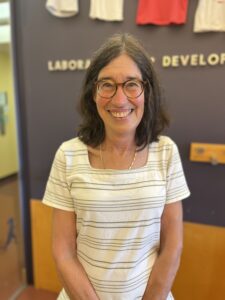
Elizabeth Spelke is the Marshall L. Berkman Professor of Psychology at Harvard University and an investigator at the NSF-MIT Center for Brains, Minds and Machines. She leads the Spelke Lab, which conducts behavioral research on infants and preschool children to understand the origins of uniquely human cognitive capacities such as formal mathematics, symbolic representation, and object taxonomy. Education: B.A. in Social Relations from Radcliffe College (1971), Ph.D. in Psychology from Cornell University (1978). Professional Experience: Faculty positions at the University of Pennsylvania, Cornell University, MIT, and Harvard University since 2001. Her research focuses on core knowledge systems in infancy, including understanding of objects, actions, people, places, number, and geometry. She collaborates with computational cognitive scientists to model infant cognition and with economists to apply findings to educational interventions. Her work integrates developmental, comparative, and cross-cultural perspectives. Her recent publications span topics such as early math learning, social evaluation in toddlers, goal inference, and the interplay between language and conceptual development. Trends in her recent work include experimental field studies, interdisciplinary collaborations, and theoretical synthesis of core knowledge frameworks. National Academy of Sciences (USA), 1999 American Academy of Arts and Sciences, 1997 National Academy of Sciences Prize in Psychological and Cognitive Sciences, 2014 C.L. de Carvalho-Heineken Prize for Cognitive Sciences, 2016 George A. Miller Prize, Cognitive Neuroscience Society, 2018 Mentor Awards from APS and APA, 2021 Spelke has mentored numerous researchers and collaborated widely across disciplines. Her lab’s work is supported by major grants from the NSF and other institutions. She has pioneered the use of behavioral methods to study infant cognition and has been instrumental in translating cognitive science into educational practice. She directs the Spelke Lab at Harvard, which investigates core cognitive systems through behavioral experiments with infants and young children. The lab explores how innate knowledge structures interact with experience to produce complex human cognition.
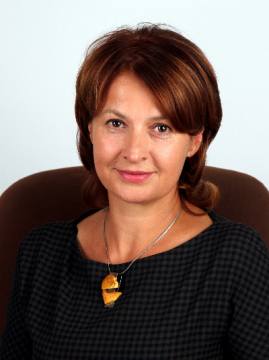
Jolanta Małgorzata Rodzoś is a Professor at the Faculty of Earth Sciences and Spatial Management of Maria Curie-Skłodowska University (UMCS), where she leads the Department of Social and Economic Geography and Spatial Management. Her research focuses on urban and rural development, cultural identity, tourism geography, and educational reform. Key roles: Dean of Faculty, Researcher Research areas: Social and Economic Geography, Spatial Management, Tourism Geography Regional focus: Lublin, Eastern Poland Her academic work explores: Urban safety and social dynamics in post-socialist cities Integration of multicultural heritage into tourism products Rural development challenges in Lublin region Education system reforms and their spatial implications Sustainable urban development with human needs prioritization Recent publications analyze: Transformation of housing estates in Lublin Metropolitan aspirations in Eastern Poland Consumerism's impact on tourism Spatial aspects of educational reforms Terrorism threats to tourism She actively collaborates on regional development studies and contributes to academic discourse through publications in journals like Annales UMCS , Czasopismo Geograficzne , and Miscellanea Geographica .
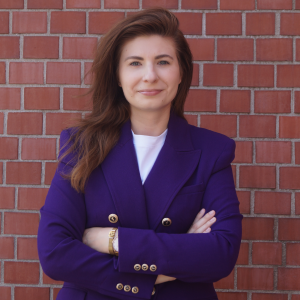
Karolina Kacprzak is a Researcher at the Institute of Urban Geography, Tourism Studies and Geoinformation within the Faculty of Geographical Sciences at the University of Lodz . She is also a doctoral student in the Doctoral School of Social Sciences at the same university. Her research focuses on: Social and economic geography Urban planning and spatial management Overtourism and tourism traffic Impact of sharing economy platforms (e.g., Airbnb, VRBO) on urban areas Geoinformation systems Socioeconomic effects of the Covid-19 pandemic on tourism Comparative studies of Polish cities, Prague, and Barcelona Contact: karolina.kacprzak@geo.uni.lodz.pl . Office hours: Tuesday 10:00-12:00 at Kopcińskiego 31, room 204K, 90-142 Łódź.
Bartosz Grzybowski serves as Distinguished Affiliate Professor at the Institute of Organic Chemistry, Polish Academy of Sciences (PAS), leading the Laboratory of Computer-Assisted Synthesis. His work bridges artificial intelligence and experimental organic chemistry to transform synthesis from trial-and-error into algorithmic science. His research focuses on AI-driven synthesis planning , reaction network analysis , and computational prediction of chemical properties . Key contributions include pioneering algorithms for multistep organic synthesis of complex targets, discovery of novel organic reactions through AI, and design of temporally/spatially synchronized reaction networks. His group develops methods for sustainable chemistry, drug analog design, and enzymatic process optimization. Analysis of his 2023-2025 publications reveals dominant trends in retrosynthetic AI (87% of articles), sustainable chemistry applications (63%), and integration of mechanistic understanding with machine learning. Work frequently appears in Nature , Science , and JACS , emphasizing experimental validation of computational predictions. Prof. Grzybowski currently advises three PhD students and collaborates with a multidisciplinary team: Core team : Assoc. Prof. Michał Michalak (Adjunct), Dr. Anna Żądło-Dobrowolska, Dr. Aleksei Koshevarnikov Active grant : NCN SONATA 2020/39/D/ST4/01890 on hazardous chemical degradation (PI: Żądło-Dobrowolska) The Laboratory of Computer-Assisted Synthesis operates as an integrated computational-experimental unit at IBS-IOC PAS. Current projects include blockchain-orchestrated reaction networks, AI-guided catalyst selection, and metabolic-cycle emulation. The group maintains strong industry/academic partnerships for validating algorithms in drug discovery and green chemistry applications.
Professor Jacek Banasiak holds a prestigious DST/NRF SARChI Chair in Mathematical Models and Methods in Biosciences and Bioengineering at the University of Pretoria, Department of Mathematics and Applied Mathematics. He also maintains strong academic ties with Lodz University of Technology in Poland where he serves as a research professor in the Department of Mathematical Modeling. His career spans several decades with extensive contributions to mathematical modeling, particularly in population dynamics, fragmentation-coagulation processes, and epidemiological modeling. Professor Banasiak's research interests center on mathematical modeling of biological and physical processes, with particular expertise in singular perturbation theory, semigroup theory, and transport equations on networks. His work bridges theoretical mathematics with practical applications in epidemiology, ecology, and population biology. He has developed sophisticated mathematical frameworks for understanding fragmentation-coagulation phenomena, malaria transmission dynamics, and savanna ecosystem modeling. His publication record shows a consistent trajectory of high-impact research, with recent work focusing on climate-based malaria models, multiscale epidemiological systems, and mathematical analysis of growth-fragmentation equations. His publications appear in top-tier journals across mathematical analysis, epidemiology, and mathematical biology fields, demonstrating the interdisciplinary nature of his work. DST/NRF SARChI Chair in Mathematical Models and Methods in Biosciences and Bioengineering Author of numerous influential publications spanning from 1984 to 2025 Editor of special issues and author of several books including 'Introduction to Mathematical Methods in Population Theory' (2025) Professor Banasiak has supervised over 15 PhD students, many of whom have gone on to successful academic careers. His mentoring spans topics including fragmentation-coagulation with transport effects, telegraph systems on networks, and mathematical modeling of malaria transmission. His research has attracted significant funding, particularly through his SARChI Chair position which supports advanced mathematical research in biosciences and bioengineering.
Andrzej Buszko is a Professor at the University of Warmia and Mazury in Olsztyn , affiliated with the Department of Finance under Economic Sciences. He specializes in Economics and Finance, with a focus on the shadow economy, institutional economics, and financial systems. His research spans tax optimization, informal economic activity, and quality management in construction industries. Academic Rank: Professor University: University of Warmia and Mazury in Olsztyn Department: Department of Finance Contact: buszko@uwm.edu.pl Research Interests: Dr. Buszko investigates the shadow economy (tax evasion, informal labor markets), financial systems (optimal currency zones, exchange rates), and institutional economics (quality management, intellectual capital). His work often intersects with political economy (populism’s role in informality) and development economics (FDI in post-transition states). Publication Trends: Over 15 years, his research emphasizes Economics and Finance , with recurring sub-fields like Shadow Economy , Tax Efficiency , Intellectual Capital , and Quality Management . Recent work (2025) explores tax optimization mechanisms in informal economies, building on earlier studies of corruption, FDI, and labor flexibility. Doctoral Supervision: Dr. Buszko has supervised 1 doctoral student and promoted 3 doctors. He welcomes both Polish and international candidates, focusing on topics like grey zone dynamics and financial systems. His department possesses infrastructure to support research in these areas.
John Hughes, PhD, is an Associate Professor and Chair of the Department of Biostatistics and Health Data Science at Lehigh University's College of Health. With nearly 30 years of experience in higher education, he has held positions at institutions including Frostburg State University, the University of Minnesota, and Pennsylvania State University. His methodological research focuses on statistical models for dependent data, Bayesian methods, and spatial and spatiotemporal analysis. He has developed numerous software packages for R and Perl, including copCAR , ngspatial , and krippendorffsalpha . Dr. Hughes' interdisciplinary work spans environmental health, bioimaging, vaccine hesitancy, and spatial epidemiology of HPV-related cancers. He has consulted for organizations such as the Courage Kenny Research Center and Temple University. His education includes a PhD in Statistics from Penn State University and an MS in Applied Computer Science from Frostburg State University. His research emphasizes statistical computing and the application of advanced models to health data. Recent work includes methodologies for agreement coefficients, environmental noise measurement, and spatial analysis of vaccination refusal patterns. Dr. Hughes teaches courses in biostatistics, data science, and programming, reflecting his dual role as a teacher-scholar. Professional contributions include software development, collaborative research projects, and academic leadership. His work bridges computational innovation and real-world health challenges, positioning him as a key figure in modern biostatistical research.
Dr. Joanna Szafran is a Senior Lecturer at the Faculty of Economics , Maria Curie-Skłodowska University , specializing in European Union Cohesion Policy , Regional Development , and Public-Private Partnerships . Her research focuses on EU funding mechanisms in Poland and Central Europe, with specific emphasis on climate policy, energy transformation, and infrastructure planning. Current affiliations: Department of Economic and Regional Policy Active participation in Poland's integrated development policy through the Spatial Development Committee Her 12 publications (h-index: 1) include monographs on EU cohesion policy implementation and analyses of structural funds in Central Europe. Recent work examines hybrid development projects combining EU funding and PPP models, while the 2021 monograph covers 2021-2027 EU cohesion policy frameworks. Research highlights include: 2024 study on supra-local development strategies 2023 analysis of climate/energy transformation financing Comparative studies of Czech, Slovak, and Hungarian EU fund utilization She serves on the task force for integrated development policy at the Polish Academy of Sciences (2019-2022) and maintains active academic collaborations across Europe.
Joost Van Hoof is a University Professor at the Department of Systems Research within the Faculty of Spatial Management and Landscape Architecture at the University of Wrocław. His work focuses on age-friendly urban design, environmental sustainability, and public health in the built environment. He has led numerous cross-cultural studies on aging populations' needs across Europe and beyond. Research interests include: - Urban planning for aging populations - Sustainable built environments - Age-friendly city policy implementation - Questionnaire validation for demographic studies - GIS-based spatial analysis of urban aging dynamics - Biophilic design and neuroarchitecture Recent articles analyze age-friendliness in cities like The Hague, Bucharest, and Skopje, exploring typologies of older adults' environmental attitudes. Studies emphasize measurable design recommendations and intergenerational urban policies. Publications span journals like Building and Environment, Habitat International, and Social Science & Medicine. Collaborations include researchers from Australia, Romania, Russia, and North Macedonia. His work bridges urban planning, public health, and demographic research to create inclusive cities.
Bożena Degórska is a retired Associate Professor in the Department of Spatial Organization at the Institute of Geography and Spatial Organization of the Polish Academy of Sciences. Her research focuses on spatial governance, urban ecosystem services, climate change adaptation, and historical landscape transformations. She has conducted extensive studies on territorial planning policies in EU contexts, particularly analyzing the Warsaw Metropolitan Area's development dynamics. Key research interests include: Ecosystem services mapping and assessment EU cohesion policy implementation challenges Urban heat island phenomena Historical land-use changes in Polish regions Green infrastructure planning strategies Her work bridges environmental science with policy analysis, emphasizing sustainable spatial development. Notable projects include the COMPASS comparative study on European territorial governance systems and comprehensive analyses of Warsaw's urbanization patterns. Degórska has contributed to national and international policy discussions on climate resilience and regional planning best practices.
Prof. Dorota Praszałowicz is a Full Professor at Jagiellonian University's Faculty of International and Political Studies, leading the Chair of Migration and Ethnic Studies. She is affiliated with the Institute of American Studies and Polish Diaspora and serves on committees such as the Migration Studies Committee of the Polish Academy of Sciences and the Board of the Polish American Historical Association. Her research focuses on historical and contemporary migration patterns, ethnic communities, and theoretical migration frameworks, with a particular emphasis on Polish diaspora dynamics in North America and Europe. Education and Visiting Positions: She has held visiting scholar roles at New York University (2003/04), Ruhr Universität Bochum (1991-1993, 1997/98), University of Washington Seattle (2022), and Freie Universität Berlin (1998). Collaborations include projects with the Immigration History Research Center at the University of Minnesota and the University of Wisconsin-Milwaukee. Research Interests: Her work examines cultural transformations in immigrant communities, institutionalization of migration processes, gender perspectives in migration studies, and the humanitarian crisis on the Polish-Belarusian border. She has published extensively on Polish communities in Berlin, Seattle, and Milwaukee, analyzing historical and modern integration challenges. Awards and Grants: A Fulbright Scholar (2003/04), she has led major research projects including the National Science Centre-funded study on Poles in Seattle (2021–2026) and the Kosciuszko Foundation-supported project on Polish communities in the Pacific Northwest. Her editorial roles include serving as Editor-in-Chief of Studia Migracyjne – Przegląd Polonijny (2009–2022) and co-editor of the Peter Lang Verlag series Migration – Ethnicity – Nation . Grants and Teams: Collaborates with the Jagiellonian Centre of Migration Studies and the Researchers on the Border group. Recent works include studies on transnational Polish families and the role of religious institutions in immigrant integration.
Professor Ewelina Szczech-Pietkiewicz serves as Deputy Dean of the Doctoral School at SGH Warsaw School of Economics and heads the European Union Unit at the Institute of International Economic Policy within the Collegium of World Economy. Her roles emphasize academic leadership in doctoral education and EU policy research. Her research focuses on urban competitiveness, EU policy analysis, regional development, and sustainable practices. Key areas include smart city strategies, green bonds, post-pandemic fiscal policies, and global value chain dynamics. She explores these themes through comparative studies between Poland, Europe, and Asia, leveraging bibliometric and empirical methodologies. Publications highlight interdisciplinary approaches, blending economic analysis with policy evaluation. Notable works address pandemic impacts on local budgets, commuting networks in Poland, and the potential of circular economies. Her work often bridges theoretical frameworks with practical policy recommendations for sustainable urban development and regional integration. Active in academic governance, she contributes to doctoral curriculum design and oversees institutional initiatives promoting research excellence. Despite no listed awards or advisees, her leadership roles reflect significant contributions to institutional and policy-oriented scholarship.