Assoc. Prof. Dr. Sema Alaçam Doğan has been affiliated with Istanbul Technical University since 2014, serving as an Associate Professor in the Department of Architecture . She has held administrative roles including Deputy Head of Department and Erasmus Coordinator. Education : PhD in Informatics in Architectural Design (2008-2014), MS in Informatics in Architectural Design (2005-2008), and BS in Architecture (1999-2005) from Istanbul Technical University. Her research explores Computational Design , Artificial Intelligence in Architecture , and Sustainable Material Innovation . She investigates digital tools for heritage preservation, daylight optimization in BIM, and cognitive development in architecture students. Recent publications analyze AI-assisted design literacy , machine learning for Sinan mosques , and environmental comfort in Harran houses . Her work integrates algorithmic frameworks with sustainable practices. Scientific awards include multiple ITU Publication and Performance Awards (2021-2024), FABFEST Prizes , and the 2024 Artemis Educator Award from NASA. Active projects like "Physical Computation in Architectural Drawing" and "Robotic Fabrication with Recycled Wind Turbine Blades" demonstrate her leadership in computational and sustainable research.
Dr. Ayşe Nihan AVCI is an Assistant Professor at the Department of Interior Architecture, Faculty of Architecture at Çankaya University. She holds a PhD in Design (2022), Master's in Interior Architecture (2017), and Bachelor's in Interior Architecture (2010) from the same institution. Her research focuses on lighting design's impact on health and well-being, biophilic design principles, and OLED/LED lighting technologies. She has been a full-time faculty member since 2015, progressing from Research Assistant (2015-2022) to Doctoral Researcher (2022-2024) before her current role. Education: PhD in Design, Çankaya University (2017-2022) MSc in Interior Architecture, Çankaya University (2014-2017) BSc in Interior Architecture, Çankaya University (2005-2010) Research Interests: Her work integrates lighting science with human-centric design principles, emphasizing: Salutogenic lighting strategies for health promotion OLED technology's circadian rhythm effects Biophilic daylighting in historical buildings Visual comfort in workplaces Publications: Over 15 peer-reviewed articles (2016–2025) focus on OLED/LED lighting applications, circadian rhythms, and daylighting in heritage buildings. Recent work explores salutogenic design in coffee shop environments and workplace environmental quality. Awards: No specific awards listed, but active in academic service: Member of Aydınlatma Türk Milli Komitesi since 2017 Member of TMMOB İç Mimarlar Odası since 2010 Reviewer for journals including PLANARCH Grants & Projects: Led a university-supported research project (2020–2021) on lighting design's health impacts. Currently teaches courses on lighting design, materials science, and interior design fundamentals.
Meltem ŞENOL BALABAN is an Associate Professor in the Department of City and Regional Planning at Middle East Technical University (METU), Ankara, Turkey. She holds a dual PhD in City and Regional Planning (METU, 2009) and Urban Engineering (University of Tokyo, 2012). Her academic career includes roles as Director of METU Disaster Management Implementation and Research Center (since 2018), Minor Program Coordinator, and Board Member of the Applied Ethic Research Center. She specializes in disaster risk management, urban resilience planning, GIS-based modeling for evacuation/shelter optimization, and climate change adaptation in urban contexts. Her research focuses on flood risk mitigation in riverine cities, institutional frameworks for cultural heritage protection (e.g., UNESCO sites), and earthquake resilience strategies. Notable projects include developing Turkey's provincial risk reduction guidelines, a climate change risk assessment framework (CRAFT) for cultural heritage, and international cooperation initiatives like the UK-funded CRAFT and NET projects. She has authored over 40 peer-reviewed publications and supervised 10+ theses. Key contributions include GIS-based evacuation models for Istanbul, comparative studies of UK/Japan/Turkey disaster policies, and post-disaster resilience assessments. Awards include JICA Scholarship (2009-2012), ProVention Research Grant (2007-2008), and multiple international recognitions for her work on urban risk reduction. Her teaching portfolio includes courses on GIS in planning, disaster management principles, and urban resilience strategies.
Burak Sunguralp Tekin is an Assistant Professor in the Department of Translation and Interpretation at the Faculty of Humanities and Social Sciences, Ankara Yıldırım Beyazıt University. His academic career includes positions as both Lecturer (2021-2022) and Assistant Professor (2022-present) at the same institution. Dr. Tekin's research primarily focuses on human sociality and the interplay of language, bodies, and technology, with particular emphasis on embodied interaction, social practices, and multimodal communication. Dr. Tekin's educational background includes: Doctorate (2014-2019) from University of Basel, Switzerland, with dissertation "Bodies at play: Exploring participation, spectatorship, and morality in videogaming activities" Postgraduate studies (2012-2013) from University of Newcastle Upon Tyne, United Kingdom, with thesis "Smiles and affective alignment in naturally occurring dyadic academic supervisions" Undergraduate degree (2006-2010) from Hacettepe University, Turkey Dr. Tekin's research interests center on social interaction, multimodal communication, and embodied practices. His work examines how people coordinate their actions, bodies, and language in various contexts including gaming, photography, public spaces, and pandemic-related social adaptations. He employs conversation analysis and multimodal interaction analysis to investigate the micro-details of human sociality, with particular attention to how technology mediates social practices. His research bridges sociology, linguistics, and human-computer interaction to understand the embodied nature of social organization. Analysis of Dr. Tekin's recent publications reveals a consistent focus on embodied social interaction across diverse contexts. His work demonstrates sophisticated methodological approaches to studying how people coordinate their movements, manage social spaces, and create meaning through multimodal resources. A notable trend is his examination of how social practices adapt during extraordinary circumstances like the COVID-19 pandemic, as well as his sustained interest in gaming activities and their social organization. His collaborative work with Lorenza Mondada is particularly prominent in the field of conversation analysis. Dr. Tekin has taught various courses including Multimodal Communication, Introduction to Applied Linguistics, Language and Communication, Language Acquisition, Consecutive Interpreting, Intercultural Communication, World Englishes, Applied Linguistics, Turkish Grammar, Language Culture and Society, and Discourse Analysis at both undergraduate and postgraduate levels. His teaching reflects his research expertise in communication, language, and social interaction.
Prof. Fatih Terzi is a faculty member in the Department of Urban and Regional Planning at Istanbul Technical University's Faculty of Architecture. His research focuses on sustainable urban development, resilience, ecology, GIS applications, and smart cities. He has held visiting researcher positions at Clemson University (USA), University College London, and Technical University Berlin. He has led projects supported by EU, TÜBİTAK, and others, addressing ecological planning, risk reduction, and urban regeneration. His work bridges academic research with practical urban planning, including projects with municipalities and the Ministry of Environment. He has received multiple awards for research and design, including the Best Paper Award (2025) and TÜBİTAK recognitions. Education: PhD in Urban and Regional Planning from Istanbul Technical University (2010), MSc in Urban Planning (2004), BSc in Urban and Regional Planning from Yıldız Technical University (2000). Research interests include spatial strategic planning, ecological cities, and climate-sensitive urban design. He uses urban modeling and GIS to address sustainability challenges. His recent projects include Istanbul's flood risk analysis, green space strategies, and sustainable city planning in Kayseri and Malatya. Notable awards include the 2024 TÜBİTAK award for urban resilience projects and the 2023 Istanbul Technical University Academic Performance Award. He has also been recognized for design competitions, including the İzmir Ecological Living Area Project (2021) and the 2017 Balkan Architectural Biennale Urbanism Grand Prix. Prof. Terzi holds administrative roles at Istanbul Technical University, including Merkez Danışma Kurulu Üyeliği (2023–present). He oversees academic projects on urban resilience, smart cities, and ecological planning, contributing to both national and international initiatives.
Prof. Dr. Menelaos Gkartzios is a distinguished academic affiliated with the Department of City and Regional Planning at Middle East Technical University , with extensive experience at institutions including Newcastle University , Izmir Institute of Technology , and University College Dublin . He has served as a Visiting Professor at Tongji University and contributes to editorial boards such as Habitat International and Journal of Rural Studies . Education: PhD in Regional & Urban Planning, University College Dublin (2008) MSc in Environmental Resource Management, University College Dublin (2003) MAgrSc in Agricultural Economics & Rural Development, Agricultural University of Athens (2002) PGCert in Advanced Studies in Academic Practice, Newcastle University (2014) Research Focus: His work bridges sustainable rural development , urban-rural dynamics , and the cultural dimensions of place-making . Key themes include counterurbanisation , rural mobilities , and artistic practice in planning . Publication Trends: Recent articles and books examine climate-driven migration , community co-creation , and rural housing paradoxes . His scholarship spans interdisciplinary frameworks, merging rural sociology , geography , and planning theory . Leadership Roles: He co-leads the AESOP Thematic Group on Rural Planning and contributes to global planning discourse through edited volumes like The Routledge Companion to Rural Planning .
Prof. Müge AKKAR ERCAN is a Professor in the Department of City and Regional Planning at Middle East Technical University (METU), Ankara. She holds a PhD in Urban Design from the University of Newcastle, UK, alongside B.Sc. and M.Sc. degrees in City and Regional Planning from METU. Her academic roles include teaching courses on urban design studios, planning strategies, and thesis supervision. She specializes in urban design, public space analysis, urban regeneration, and sustainable community development with a focus on historic neighborhoods in Turkey and post-industrial cities. **Education:** B.Sc., City and Regional Planning (METU, 1994) M.Sc., Urban Policy Planning and Local Governments (METU, 1997) Ph.D., Urban Design (University of Newcastle, 2003) **Research Interests:** Her work investigates evolving roles of public spaces in post-industrial cities, challenges in balancing community needs with conservation policies, and sustainable urban regeneration strategies. Notable projects include studies on Ankara’s Gençlik Park, Istanbul’s historic neighborhoods, and walkability models for urban revitalization. She contributes to international journals like Journal of Urban Design and Urban Design International , and co-edits books on heritage valuation and urban planning discourses. **Recent Research Trends:** Her publications (2010–2020) emphasize spatial inclusivity in public spaces, heritage-led regeneration, and micro-scale urban interventions. Recent work explores place-making roles in China’s heritage contexts and EU-funded projects on underground cultural heritage and middle-class housing. **Grants & Projects:** Currently involved in EU-funded projects CA18110 (underground heritage valorization) and CA18137 (European middle-class housing analysis). Her work bridges academic research with policy implementation in Turkey and globally. **Labs/Teams:** Leads METU’s urban design research through her department’s studios and collaborates internationally on heritage conservation and urban dynamics initiatives.
Ayşe Hilal Uğurlu is an Associate Professor in the Department of Architecture at MEF University's Faculty of Arts, Design and Architecture. She completed her PhD in the History of Architecture program at Istanbul Technical University in 2012 with a dissertation titled 'Selim III's Istanbul: Building Activities In The Light Of Political and Military Transformations.' Uğurlu has held prestigious fellowships including a senior fellowship from ANAMED at Koç University (2014), a Barakat Trust Post-Doctoral Fellowship at Oxford University (2017-18), and Barakat Trust Major Awards (2018-19). Her research focuses on the social, political, and architectural history of the Ottoman Empire, with particular attention to the 18th-19th centuries. Uğurlu has co-edited three significant books: 'Ottoman Architectural Culture' (2016), 'Sacred Spaces + Urban Networks' (2019), and 'The Friday Mosque in the City: Liminality, Ritual, and Politics' (2020). She is currently leading a research project with Dr. Deniz Türker exploring the roles of Ottoman royal women during the 18th-19th centuries, funded by MEF University Scientific Research Projects (2023-2025) and scheduled for publication by Cambridge University Press in 2025. Uğurlu's scholarly work reveals a consistent focus on the intersection of architecture, politics, and religious practice in Ottoman Istanbul. Her publications demonstrate particular expertise in imperial mosques, sacred spaces, and the transformation of religious practices during the 19th century. Her research often examines how architectural spaces functioned as political tools and social nuclei within Ottoman urban environments. Senior fellowship from ANAMED (Research Center for Anatolian Civilizations) at Koç University (2014) Barakat Trust Post-Doctoral Fellowship at the Khalili Research Centre, Oxford University (2017-18) Barakat Trust Major Awards (2018-19) Uğurlu actively contributes to academic discourse through numerous publications and conference presentations. Her current research project on Ottoman royal women represents a significant contribution to understanding women's roles in imperial power structures. While specific information about her advising activities isn't detailed in the source material, her extensive publication record and ongoing research projects indicate active engagement with academic scholarship and likely mentorship of students.
Professor Hakan Ali Çırpan is a distinguished faculty member at Istanbul Technical University's Faculty of Electrical and Electronics Engineering, where he serves as Professor in the Department of Electronics and Communication Engineering. He also holds the position of Vice Dean at Istanbul Technical University since 2021. With over three decades of academic experience, Professor Çırpan has established himself as a leading researcher in signal processing and communications. His educational background includes: PhD from Stevens Institute of Technology (1993-1997) Master's degree in Electrical-Electronic Engineering (with thesis) from Istanbul University (1989-1992) Bachelor's degree in Electrical and Electronic Engineering from Uludağ University (1985-1989) Professor Çırpan's research spans multiple domains within signal processing and communications. His primary interests include wireless communications, radar systems, machine learning applications in communications, and electronic warfare. His work on channel estimation, orthogonal frequency division multiplexing, and maximum likelihood methods has been particularly influential. He has pioneered research in areas such as source localization, spectrum sensing, and physical layer security. His recent work focuses on 5G/6G networks, AI-enhanced communications, and integrated sensing and communication systems. Analysis of his recent publications (2023-2025) reveals a strong focus on next-generation wireless technologies, particularly 5G/6G networks, AI integration in communications, and electronic warfare applications. His research demonstrates a consistent pattern of addressing fundamental challenges in signal processing while adapting to emerging technological needs. A significant portion of his recent work involves machine learning applications for spectrum management, optimization techniques for radar systems, and novel approaches to network slicing and resource allocation. His notable scientific achievements include: ASELSAN ACADEMY THESIS COMPETITION WINNER (2020) Professor Çırpan has supervised 59 theses throughout his career, mentoring numerous graduate students in the fields of signal processing and communications. He has secured significant research funding, including the "AI-Enhanced 5G/6G Networks with Integrated Camera and ISAC Systems" project (2023-2024) and the "Railway Vehicle Infrastructure New Generation Secure Communication Systems" TÜBİTAK project with a budget of ₺955,000. His research has practical applications in defense systems, railway communications, and next-generation wireless networks. His laboratory work focuses on wireless communications systems, radar signal processing, and AI-enhanced communication technologies. Professor Çırpan leads research teams working on projects related to 5G/6G networks, electronic warfare countermeasures, and secure communication systems. His group collaborates with industry partners like ASELSAN and conducts research with practical applications in national defense and critical infrastructure.
İsmail Eren Kürkçüoğlu is an Assistant Professor at the Department of Urban and Regional Planning, Faculty of Architecture, Istanbul Technical University. With a PhD in Urban and Regional Planning (2009) and a Master's in Urban Space Organization and Design (2006), his academic career spans over 15 years at ITU, including roles as Doctor Lecturer (2018–present), Web Commission Member (2018–2021), and Deputy Head of Department (2020–2022). He also served as Visiting Researcher at the University of Georgia's College of Environment and Design (2014–2015). Educational Background: PhD in Urban and Regional Planning (2009), Istanbul Technical University Master's in Urban Space Organization and Design (2006), Yıldız Technical University Bachelor's in Architecture (2003–2008) and Urban and Regional Planning (2001–2005), Yıldız Technical University Research Focus: Specializing in urban morphology and design, his work examines spatial psychology, pedestrian-environment interactions, and the role of water elements in urban perception. Key projects include analyzing İstiklal Street's micromovement patterns, assessing Balat's safety perception, and exploring Istanbul's historical city walls. Scientific Contributions: His research spans five peer-reviewed publications, including three 2025 articles on Istanbul's urban spaces and a 2020 study on square perception. These works integrate socio-spatial analysis, behavioral studies, and sensory urbanism. Awards: 5th Honorable Mention (2009) in Denizli Government Office Architectural Project Competition Purchase Award (2008) for Sarıkamış Operation Memorial Areas Idea Competition Professional Affiliations: He contributes to academic governance as a member of the Double Major and Minor Program Committee (2018–2021) and coordinates design workshops at ITU.
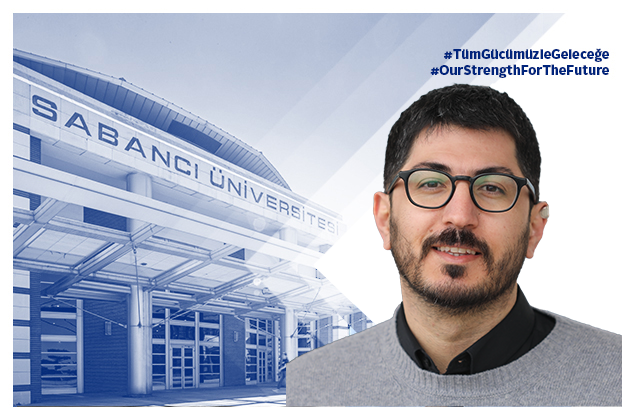
Dr. Morteza Ghorbani is a researcher and faculty member at Sabancı University's Faculty of Engineering and Natural Sciences (FENS), specializing in fluid mechanics and environmental engineering. He leads the AquaCav project, a collaborative effort with Oxford Brookes University, focused on developing sustainable water treatment solutions using hydrodynamic and acoustic cavitation. His research addresses global challenges such as PFAS pollution and wastewater management, with applications in biomedical devices and energy-efficient technologies. Key collaborations include projects funded by the International Science Partnership Fund (ISPF), leveraging his expertise in microfluidic systems and cavitation dynamics. Dr. Ghorbani's work combines experimental and numerical methods to optimize cavitation-based processes for environmental and biomedical applications. His contributions span from fundamental fluid dynamics studies to applied technologies like flexible cystoscopes and clot-on-a-chip platforms. Scientific achievements include the ISPF Research Collaboration Grant (2024) and advancements in PFAS removal, graphene exfoliation, and microalgae cultivation. His research group at Sabancı University explores interdisciplinary solutions at the intersection of engineering, nanotechnology, and sustainability.
Prof. Dr. Fatih BOZKURT serves as an Associate Professor in the Department of History at Sakarya University's Faculty of Humanities and Social Sciences. With academic appointments dating back to 2012, he has established himself as a prominent scholar specializing in Ottoman socio-economic history, material culture, and estate records research. His academic journey reflects deep engagement with Ottoman institutional structures and daily life patterns. Doctorate (2005-2011): Sakarya University, Institute of Social Sciences/History (Thesis: Estate books and change in Ottoman material culture (1785-1875 Istanbul example)) MA (2000-2003): Celal Bayar University, Institute of Social Sciences/Modern Age History (Thesis: Social and economic situation of Gördes district according to the Ministry of Finance Dividend Books) Licence (1996-2000): Istanbul University, Faculty of Literature/Department of History Professor BOZKURT's research primarily focuses on Ottoman socio-economic structures, particularly through the lens of estate records (tereke defterleri). His work examines material culture transformations, tradesmen organization, and daily life patterns in Ottoman society. He has made significant contributions to understanding Ottoman urban economies, inheritance practices, and cultural changes, especially during the 18th and 19th centuries. His methodological approach combines archival research with social history frameworks to reconstruct Ottoman economic and social realities. His extensive publication record reveals consistent thematic focus on Ottoman economic history, with particular attention to estate records as historical sources. The research demonstrates evolving sophistication in using these records to explore wealth distribution, consumption patterns, and social structures. His work bridges economic history with cultural studies, examining how material culture reflected and influenced social relations in Ottoman society. Certificate of Appreciation from the DIRECTORATE OF RELIGIOUS AFFAIRS (2015) Certificate of Appreciation from OSARK (International Ottoman Research Congress) (2015) Professor BOZKURT has supervised numerous graduate theses focusing on Ottoman institutions and civilization, guiding research on topics ranging from estate records to daily life practices. His current research includes a TÜBİTAK-1001 project titled 'Osmanlı İstanbul'unun Servet ve Demografik Yapısı (1650-1810)' which continues his longstanding interest in Ottoman economic and demographic structures. He has also participated in various TÜBA (Turkish Academy of Sciences) projects related to Turkish-Islamic scientific and cultural heritage. As an active academic administrator, he has served as Deputy Director of the Social Sciences Institute (2019) and History Department Deputy Chair (2023-2024). He has organized and participated in multiple International Ottoman Research Congresses (OSARK), contributing significantly to the institutional framework of Ottoman studies in Turkey.
Prof. Dr. Ahmet ÖZMEN is a Professor at Sakarya University's Faculty of Computer and Information Sciences, Department of Software Engineering. He has held various administrative positions including Head of the Software Engineering Department (2019-2028) and Director of the Computer Research and Application Center (2019-2022). With extensive experience in academia since 1991, he has made significant contributions to computer vision, traffic monitoring systems, and sensor technologies. Sakarya University: Professor (2019-present), Associate Professor (2011-2019) Dumlupınar University: Assistant Professor (2001-2011), Research Assistant (2000-2001, 1993-1998) Istanbul Technical University: Research Assistant (1991-1993) Prof. ÖZMEN's research spans computer vision applications for traffic monitoring, indoor air quality systems, parallel computing, and sensor technologies. His work bridges theoretical computer science with practical engineering applications, particularly in developing vision-based systems for nighttime vehicle detection, traffic flow monitoring, and environmental sensing. His interdisciplinary approach combines machine learning, image processing, and embedded systems to solve real-world problems in transportation and environmental monitoring. His publication record shows a clear evolution from parallel and distributed systems in his early career to computer vision and sensor applications in recent years. The majority of his recent work focuses on traffic monitoring systems using computer vision techniques, particularly for nighttime conditions, and indoor air quality monitoring systems using sensor networks. His research demonstrates strong industry and societal relevance, with applications in smart transportation, environmental protection, and educational technology. TÜBİTAK Publication Awards (2006, 2008, 2009, 2010) Physical implementation award from TÜBİDER (2008) Microsoft Certified Professional Certificate (2005) YÖK overseas study scholarships (1993, 1998) Elginkan graduate scholarships (1990, 1991) Prof. ÖZMEN has supervised numerous graduate students across multiple institutions, with a focus on practical engineering problems. His research has been supported by various projects including TÜBİTAK projects, institutional research grants, and industry collaborations. He has led significant research initiatives in traffic monitoring systems, indoor air quality monitoring, and educational technology platforms. His administrative leadership has included directing research centers and shaping curriculum development in software engineering. His work has involved establishing research teams focused on computer vision applications, sensor network development, and educational technology. These teams have produced numerous publications, developed practical systems, and trained the next generation of computer engineers. Current research directions include advanced traffic monitoring systems using deep learning and multi-camera setups for urban planning applications.
Ozgur S. Oguz is an Assistant Professor at Bilkent University , Faculty of Computer Engineering, and the lead of the Learning for Intelligent Robotic Agents (LiRA) Lab . His research focuses on enhancing autonomous agents' capabilities in learning, reasoning, and planning, particularly for robotics applications. Education : PhD in Computer Science from TU Munich , studies at University of British Columbia (UBC) and Koç University , postdoctoral work at University of Stuttgart and Max Planck Institute for Intelligent Systems . His research explores algorithms for autonomous decision-making, with emphasis on deep learning , reinforcement learning , and robotics . Recent work includes diffusion-based reinforcement learning , hindsight experience prioritization , and hybrid manipulation planning , often addressing challenges in sequential task execution and tactile-based control. Key trends in his publications revolve around robotic manipulation , motion planning , and human-robot interaction . He has contributed to conferences like NeurIPS , ICRA , IROS , and journals such as IEEE TRO and Scientific Reports .
Prof. Dr. Gökhan Kiper is a faculty member in the Department of Mechanical Engineering at Izmir Institute of Technology , Turkey. His research focuses on Mechanism Science , Machine Design , and Deployable Structures , with particular emphasis on Polyhedral Geometry applications. Teaches courses: ME332 (Mechanisms), ME402 (Machine Design), ME577 (Advanced Mechanism Design) Active in IFToMM (International Federation for the Promotion of Mechanism and Machine Science), including roles in the Technical Committee for Computational Kinematics and the Turkey Branch (MakTeD) Co-organized the IFToMM Summer School on Mechanism Design for Medical Applications (2018) Research interests span kinematic synthesis of mechanisms, deployable architectural structures, and medical robotics. Key projects include a rollable ramp for temporary use, finger exoskeletons for rehabilitation, and remote-center-of-motion manipulators for minimally invasive surgery. His work integrates theoretical analysis with practical prototyping, reflected in publications across robotics, structural mechanics, and geometric design. Affiliates with the Rasim Alizade Mechatronics Laboratory (RAML) and the IzTech Kinetic Designs in Architecture Group . Presented at international conferences like International Symposium of Mechanism and Machine Science (ISMMS-2017) in Baku, Azerbaijan, where he chaired sessions on mechanism kinematics.