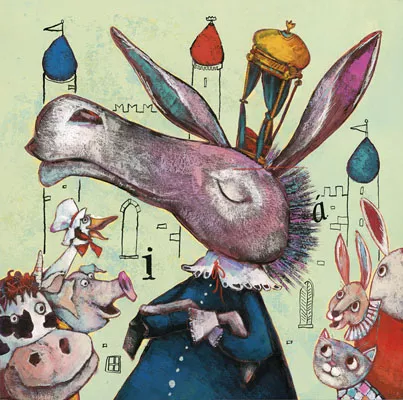
Ľuboslav Paľo is a Slovak illustrator and educator born in 1968, currently serving as an Associate Professor at the Academy of Fine Arts in Bratislava 's Department of Graphics and Other Media. With 25+ years of teaching experience since 2003, he specializes in children's book illustration and visual storytelling . Academy of Fine Arts in Bratislava (ArtD. 2011) Academy of Fine Arts in Bratislava (Mgr. art 1998) Known for his color-saturated illustrations with anthropomorphic animal characters, Paľo's work balances narrative rhythm and plastic textures . He contributes to educational publishing through mathematics and science textbooks while maintaining artistic expression. His works have been exhibited internationally in Japan , Italy , and Poland . Notable awards include: Golden Apple at BIB 2005 Ministry of Culture Award 2006 Ľudovít Fulla Award 2008 Paľo actively participates in illustration biennials and serves on international juries , blending pedagogical experience with artistic innovation in his academic role.
Maarten Coëgnarts is an Assistant Professor in Film Studies at the University of Antwerp and a Fellow of the Society of the Cognitive Studies of the Moving Image (SCSMI) . His research focuses on embodied cognition , conceptual metaphor theory , and non-verbal meaning-making in cinema , with a particular emphasis on Stanley Kubrick’s work. University of Antwerp, Film Studies, Faculty Member Research Interests Coëgnarts explores how embodied mental schemas shape cinematic perception and creation. His work bridges cognitive linguistics, neuroscience, and film theory to analyze abstract concepts in films through visual, auditory, and editing techniques . Key areas include sensory-motor grounding of emotions , spatio-temporal dynamics in art cinema , and subjectivity in narrative . Recent Publications His 2023–2022 articles examine sound analysis via container schemas , motion vectors , and temporal logic in films , while 2016–2020 works address emotional causality and metaphorical perception . He co-edited the 2023 Baltic Screen Media Review special issue on "Cinematic Minds in the Making" . Scientific Recognition Fellow, SCSMI Books He authored Film as Embodied Art: Bodily Meaning in the Cinema of Stanley Kubrick (2019) and co-edited Embodied Cognition and Cinema (2015). His work highlights filmmakers as "conceptual artists" who leverage non-verbal cinematic tools to convey abstract ideas.
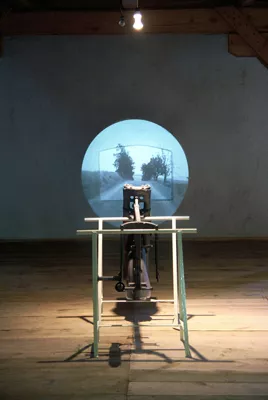
Patrik Kovačovský is a Professor and Studio Manager at the Department of Sculpture, Object, Installation at the Academy of Fine Arts in Bratislava. He works at the intersection of sculpture, architecture, and digital space, focusing on innovative artistic research and practice. Academy of Fine Arts in Bratislava (Department of Sculpture, 1990–1996) Art.D. studies, Academy of Fine Arts, 2001–2003 His research integrates traditional sculpture with virtual reality and architectural contexts, producing installations that explore memory, cosmic themes, and cultural identity. Recent works include Fluid Pictures (2011) and Kosmos (2006). 1996 Young Artist of the Year, Slovak National Gallery 2000 Annual Award, Galéria Klatovy/Klenová 2008 Visegrad Artist Residency 2010 Prohelvetia Residency in Zurich
Petr Hájek is a distinguished Czech architect and professor at the Faculty of Architecture of the Czech Technical University in Prague. He is also the head of a studio at the Academy of Fine Arts in Bratislava. Founder of Petr Hájek Architekti studio established in 2009 after the dissolution of HŠH architekti partnership. His educational background includes: 1988-1995: Faculty of Architecture, Czech Technical University in Prague 1995-1998: School of Architecture, Academy of Fine Arts in Prague Hájek's research and practice focus on the intersection of traditional architectural values with innovative design approaches. His work demonstrates a strong commitment to contextual sensitivity while pushing the boundaries of architectural experimentation. The architect is particularly known for his ability to integrate buildings harmoniously into historic settings while maintaining a distinct contemporary identity. His research explores the principles of optics, acoustics, and spatial transformation, resulting in projects that challenge conventional architectural typologies. Hájek's work often addresses the relationship between public space and architecture, with an emphasis on creating spaces that foster community interaction and cultural engagement. An analysis of his recent projects reveals a consistent exploration of transformable spaces, contextual integration, and sustainable approaches to architectural intervention. His work spans various scales from urban planning projects to intimate interior spaces, with a particular strength in the adaptive reuse of historic structures. The Krkonoše Center for Environmental Education (KCEV) and the DOX+ Center for Contemporary Art expansion exemplify his ability to create contemporary interventions that respect and enhance their historical context. Hájek has received numerous prestigious awards for his contributions to architecture: Architect of the Year 2018 (Czech Republic) OD Award for school design studio (2010, 2011, 2012) Rector's Award from Czech Technical University for research work (2012) Mies van der Rohe Award nominations (2006, 2010) Piranesi Award Honorable Mention for the KCEV building (2014) As an educator, Hájek has mentored numerous students through his studios at CTU and the Academy of Fine Arts in Bratislava. His teaching emphasizes experimental approaches to architecture while maintaining respect for historical context. He founded the Laboratory of Experimental Architecture (LEA) in 2010, which serves as a platform for research and student collaboration. His academic research project "anastomosis" received recognition from the Rector of CTU for its practical application. Hájek has also inspired literary work, notably inspiring Miloš Urban's novel "Urbo Kune" (2015), which is set in a utopian city designed by his students. Hájek leads the Laboratory of Experimental Architecture (LEA), which serves as a hub for innovative architectural research and collaboration. His studio, Petr Hájek Architekti, maintains a strong focus on the relationship between architecture and its context, with projects that span urban planning, public space design, and building interventions. The studio is known for its rigorous design process that combines theoretical research with practical implementation, resulting in projects that are both conceptually strong and technically sophisticated.
Kvetoslava Matlovičová is an Associate Professor in the Department of Tourism at Bratislava University of Economics and Business. Her work bridges Tourism Geography , Territorial Marketing , and Sustainable Development with a focus on Roma communities , cultural heritage , and urban resilience . Her research explores the intersection of semiotic place branding , Anthropocene challenges , and postdisciplinary geographical frameworks . She pioneered studies on medical tourism in Hungary and pro-poor tourism in marginalized Roma settlements, emphasizing community-based solutions. Key projects include the 15-minute city sustainable urban model and metamodern shifts in geographical epistemology. Her 2025 article on AI adoption in EU tourism highlights data-driven spatial analysis. Scientific Awards: Rector's Award 2015 (Social Sciences and Humanities) Rector's Award 2016 She has led grants like Game-based learning innovation (KEGA 020EU-4/2024) and Sociological dialogue support (project 312031V749). Her advisory roles focus on territorial development and geographic education reform .
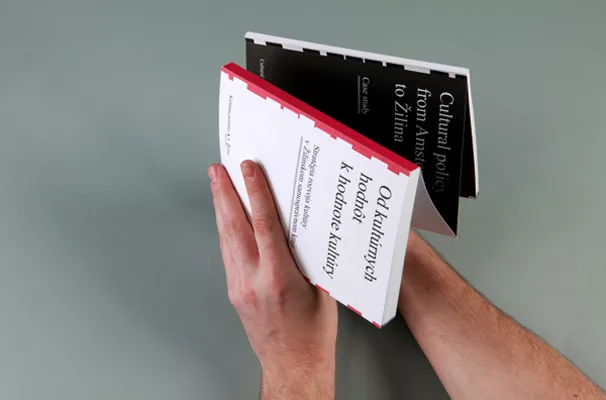
Marcel Benčík serves as Associate Professor and Vice-Rector for International Cooperation at the Academy of Fine Arts and Design in Bratislava, where he heads the Studio Space within the Department of Visual Communication. With over two decades of professional design experience, he bridges academic leadership and creative practice across Central Europe through significant collaborations with cultural institutions including the Slovak National Gallery and architectural studio zerozero. Academic Background ArtD. (Doctorate) from Academy of Fine Arts, Prague (2004-2007) under Assoc. Prof. Pavel Choma Master's Degree from Academy of Fine Arts, Bratislava (2002-2004) Bachelor's Degree from Academy of Fine Arts, Bratislava (1998-2002) Benčík's research focuses on the intersection of communication design with architectural spaces, where he explores how visual systems enhance user experience in cultural institutions. His work demonstrates particular innovation in exhibition design and spatial navigation systems, often integrating traditional graphic elements with digital interfaces to create cohesive visitor journeys that serve both functional and aesthetic purposes. His award-winning projects include the Balustrade on the Parish Stairs in Žilina (2016 National Award winner) and Kasárne/kulturpark Košice's visual communication system. Recent outputs through 2024 show continued exploration of intermedia museum concepts and urban design interventions that respond to contemporary social contexts while maintaining strong visual identities. Selected Honors National Award for Communication Design (Experimental Design Category, 2016) Multiple National Design Awards (2020, 2021) Dušan Jurkovič Award for Architectural Integration Polish Design Award for International Collaboration The Most Beautiful Book of Slovakia recognition As Studio Space manager, Benčík mentors students in thesis development while leading international collaborations through G4 network and Design Weekend Bratislava. His academic service includes jury participation for design competitions across Europe and opposition roles at Polish and Czech institutions, demonstrating significant contribution to regional design education standards.
Patrik Voštinár is an Assistant Professor at the Department of Computer Science , Faculty of Natural Sciences , Matej Bel University . Holding a PhD in Applied Computer Science from the same university (2014-2017), he teaches courses in Programming , Discrete Mathematics , Web Technologies , and Android Programming . As department head and study advisor, he actively shapes academic programs and student experiences. Matej Bel University (2017-present) Department of Computer Science Faculty of Natural Sciences His research focuses on computer science education and educational technology , with particular emphasis on: VR/AR applications in teaching Game-based learning environments Microcontroller programming pedagogy Mobile application development education Physical computing tools for K-12 Adaptive learning interfaces His work with MakeCode , micro:bit , and EEG-controlled games demonstrates innovative approaches to programming education. He has received multiple eLearning competition awards for educational courseware development. Heart on the palm (Project of the year 2019) 2nd price in eLearning competition (2023) for Discrete Mathematics course Price of České společnosti pro systémovou integraci (2023) for Web Technologies 1st price in eLearning competition (2023) for Geometry Didactics Voštinár actively contributes to academic communities through: Membership in DIDINFO conference program (since 2017) Editorial Board member of Elementary Mathematics Education Journal Organizing workshops for primary/secondary students Popularizing informatics through extracurricular programs
Vladimír Siládi, PhD, serves as Assistant Professor and Head of the Department of Computer Science at Matej Bel University in Banská Bystrica, Slovakia, where he has held academic positions since 1995. His current roles include Project Coordinator for the Virtual University initiative and Registration Authority for SlovakGrid, with prior experience as a part-time Assistant Professor at Slovak University of Technology. Educational Background: PhD in Computer Science, Slovak University of Technology in Bratislava (1997-2007) Master's in Theology, Comenius University in Bratislava (2003-2008) Master's in Secondary Education and Teaching (cum laude) and PaedDr. (EdD), Matej Bel University (1988-1993, 2005) High School Diploma, GMN Banská Štiavnica (1984-1988) His research centers on Grid Computing architectures , parallel processing techniques , and security frameworks for distributed systems . Specialized expertise includes GPU-accelerated algorithms for NP-hard problems, trust models in ad hoc grid environments, and cloud-based educational platforms. His interdisciplinary work bridges computer science with environmental modeling and psychological applications through virtual reality systems. Publication analysis reveals a consistent focus on computational optimization across 12 major works (2006-2014), with recent contributions emphasizing trust intersection models for decentralized grids (2012-2013) and cloud-based educational infrastructure (2013). Earlier works established foundations in GPU-accelerated network topology optimization and genetic algorithms for irregular systems (2006-2010). Scientific Awards: No awards documented in source materials Project leadership includes the Virtual University of Matej Bel University (ITMS 26110230077) coordinating 85 team members across 280 courses, plus TEMPUS-FLACE distance learning development (1998-2000). His registration authority role for SlovakGrid since 2009 supports national research infrastructure. Departmental leadership involves managing the Computer Science team while teaching core courses in algorithms, grid technologies, and GPU programming, maintaining consultation hours for student engagement.
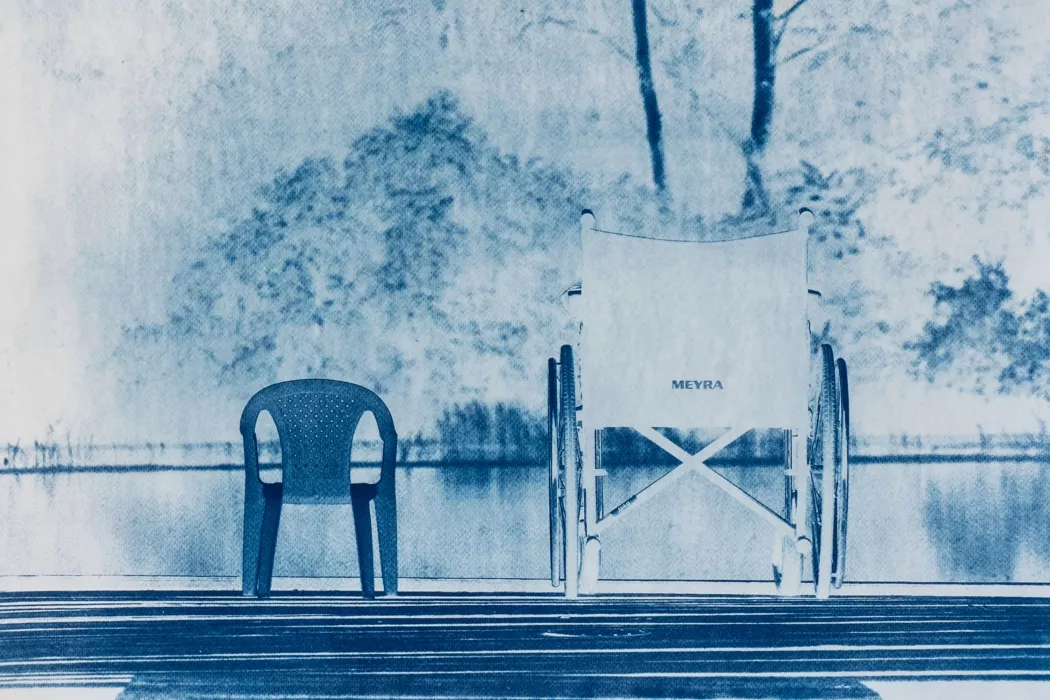
Andrea Pézman serves as Assistant Professor in the Department of Graphics and Other Media at the Academy of Fine Arts and Design, Bratislava, teaching Graphic Space and Object courses and Free Graphics Studio while contributing to Slovakia's visual arts education. Her academic background includes a Doctor of Art (ArtD.) from the Academy of Fine Arts Bratislava (2008-2018) under Prof. Robert Jančovič, a degree in Graphics and Other Media (2001-2005) with Prof. Dušan Kállay, specialized bookbinding training (2003-2004) under Assoc. Prof. Jiří H. Kocman, and architecture studies at Slovak University of Technology (1993-1999). Pézman's creative research focuses on experimental printmaking techniques including cyanotype, etching, and screenprint, with signature works in artist's books that bridge traditional graphic media and conceptual installation art. Her practice explores abstract narrative structures, bodily themes, and spatial interventions through multi-dimensional visual communication. Her publications demonstrate consistent innovation in book art and graphic media, evolving from early award-winning works like "Bird flying" (2001) to recent large-scale cyanotype installations such as "Wound..." (2021), reflecting ongoing exploration of materiality, scale, and conceptual depth in contemporary graphic arts. Notable recognitions include: 2014 MEGA–PIXEL 2014, Budapest 2013 OPENED BOOK International Biennial, Győr 2012 ABOT Project Finalist 2010-2009 SVU Awards for Liberal/Applied Arts 2005-2002 Most Beautiful Books of Slovakia awards 2001 Biennial of Book Art Martin Mayor's Award No documented graduate student advising or research grants are publicly associated with Pézman; her professional focus remains centered on creative practice and studio-based teaching within the Department of Graphics and Other Media. While Pézman maintains an individual studio practice, her extensive participation in international collective exhibitions and projects like ABOT demonstrates collaborative engagement with broader artistic communities without formal laboratory or team leadership structures.
Martin Nitsche is an Associate Professor specializing in Phenomenology , Philosophy of Art , and Philosophy of Religious Experience . He currently teaches at the Faculty of Art and Design, University of Jan Evangelista Purkyně (UJEP) in Ústí nad Labem and leads the Department of Contemporary Continental Philosophy at the Institute of Philosophy of the Academy of Sciences of the Czech Republic . His work bridges phenomenological theory with interdisciplinary applications in sound studies, spatial analysis, and resilience. His research focuses on Phenomenological Topology and Applied Phenomenology , notably through his Transitive-Topological Model and publications on sonic environments. Key trends in his work include: Exploring the philosophy of place and space through Heidegger and Husserl. Investigating sound environments as frameworks for phenomenological inquiry. Integrating resilience theory and religious experience into philosophical systems. Nitsche has received the Fulbright Foundation Research Fellowship (2016/17) and serves as co-editor of the Phenomenologies of Religious Experience book series.
Dale Bradley is an Assistant Professor in the Department of Communication, Popular Culture and Film at Brock University. He holds a Ph.D. in Social & Political Thought from York University, an M.A. in Sociology from Queen’s University at Kingston, and a B.A.H. in Film Studies from Queen’s University. His research focuses on cyberculture representation, the impact of ICT on office environments, and political discourse surrounding open source software. Bradley teaches courses on technology and culture, and the social history of information technology. Education: Ph.D. Social & Political Thought, York University M.A. Sociology, Queen’s University B.A.H. Film Studies, Queen’s University His research interrogates how technology shapes cultural narratives and workplace structures. Key themes include the visual mechanisms of power in office spaces, cybersubjectivity in media, and anarcho-utopian ideals in open source software. Bradley’s work bridges cultural studies, sociology, and media analysis to explore technology’s societal imprint. Publications span journals like Journal of Cultural Research and Canadian Journal of Communication , examining topics from 20th-century office evolution to MP3 file-sharing subcultures. His writing critiques technological determinism while highlighting grassroots innovation movements. No scientific awards are listed. Bradley’s teaching emphasizes critical engagement with technology’s cultural and historical dimensions.
Olja Triaška Stefanović is an Associate Professor at the Academy of Fine Arts in Bratislava, where she leads the Photography and Critical Practice Studio. She completed her master's (2007) and doctoral studies (2017) at the same institution, focusing on photography, intermedia, and architectural documentation. Education: Master's (2007), Doctoral (2017) from Academy of Fine Arts in Bratislava. Research: Explores space, abandoned architecture, family history, and the 'presence of the past' through photography and photobooks. Awards: Photographer of the Year (2015, Slovakia), International DAM Architectural Book Award (2015). Her work spans solo and group exhibitions across Europe, with a focus on Central European architectural heritage. She actively contributes to education through workshops and lectures internationally, including at the Royal Academy of Arts in The Hague and Saima University in Finland.
Jana Kapelová is an Associate Professor and Studio Manager at the Department of Intermedia, Academy of Fine Arts and Design in Bratislava. Her practice bridges intermedia art, institutional critique, and civic activism. Academy of Fine Arts and Design, Bratislava (2009-2013, ArtD.) Faculty of Fine Arts, Banská Bystrica (2004-2006, MFA) University of Trnava (2000-2004, MA in Slovak Language & Art Education) Her research interrogates: Social resistance strategies through performance and participatory projects Temporal dynamics of labor and leisure in bureaucratic systems Institutional critique of Slovak cultural policy Oral history and polyphonic narratives in art practice Urban space alienation and reclamation Intergenerational identity transmission through art Major works include the Kunsthalle documentary project (2011-2012), which compiled 18 expert testimonies about Slovakia's failed contemporary art institution campaign, and Free Working Time (2011), analyzing creative acts during labor hours through Michel de Certeau's 'tactics' theory. She employs video installations, mail art, and public interventions as primary mediums. Scientific recognition includes: 2014 Oskár Čepan Award for emerging Slovak artists 2014 Tatra Tiger Award for innovative art projects 2013 Essl Art Award CEE Finalist 2005 Egoart Award Finalist She has completed international residencies at ICPA New York (2015) and Oberliht Moldova (2013), while co-founding Artyčok TV (2009-2015) – Slovakia's first art-focused online television platform.
Damian Cehlarik is a designer, educator, and researcher based in Bratislava, working across the post-imperial/post-Soviet corridor connecting Vienna, Budapest, and Prague. He serves as a Lecturer at the Academy of Fine Arts and Design (VŠVU), where he teaches contemporary design theory and artistic research. His practice bridges spatial intelligence, critical inquiry, and material experimentation through his studio Space Object and the platform Damian Works.
Ján Triaška is an Associate Professor at the Faculty of Fine Arts , Academy of Arts, Architecture & Design in Prague, where he serves as Head of the Department of Painting and STARTUP studio manager. His academic career focuses on visual arts, painting, and interdisciplinary art education. His research interests span theoretical and historical foundations of fine arts innovative pedagogical approaches in painting intermedia and digital media integration contemporary artistic practices with a particular emphasis on symbolic and narrative representation. The exhibited works demonstrate a strong focus on temporal and spatial art anatomical and bio-art themes polish cultural heritage documentation digital media narratives across various formats including installations, paintings, and mixed reality projects. Contact: jan.triaska@gmail.com