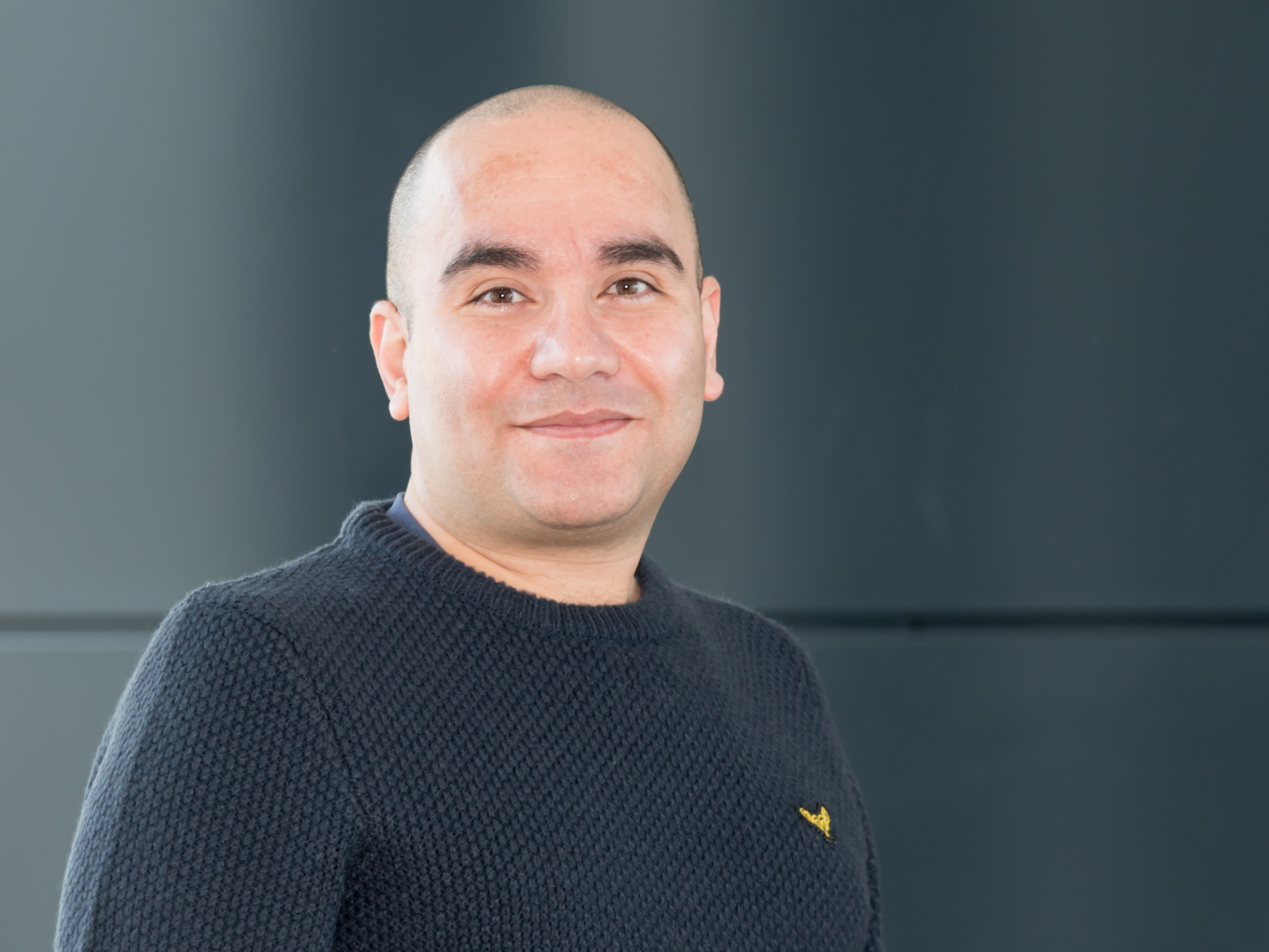
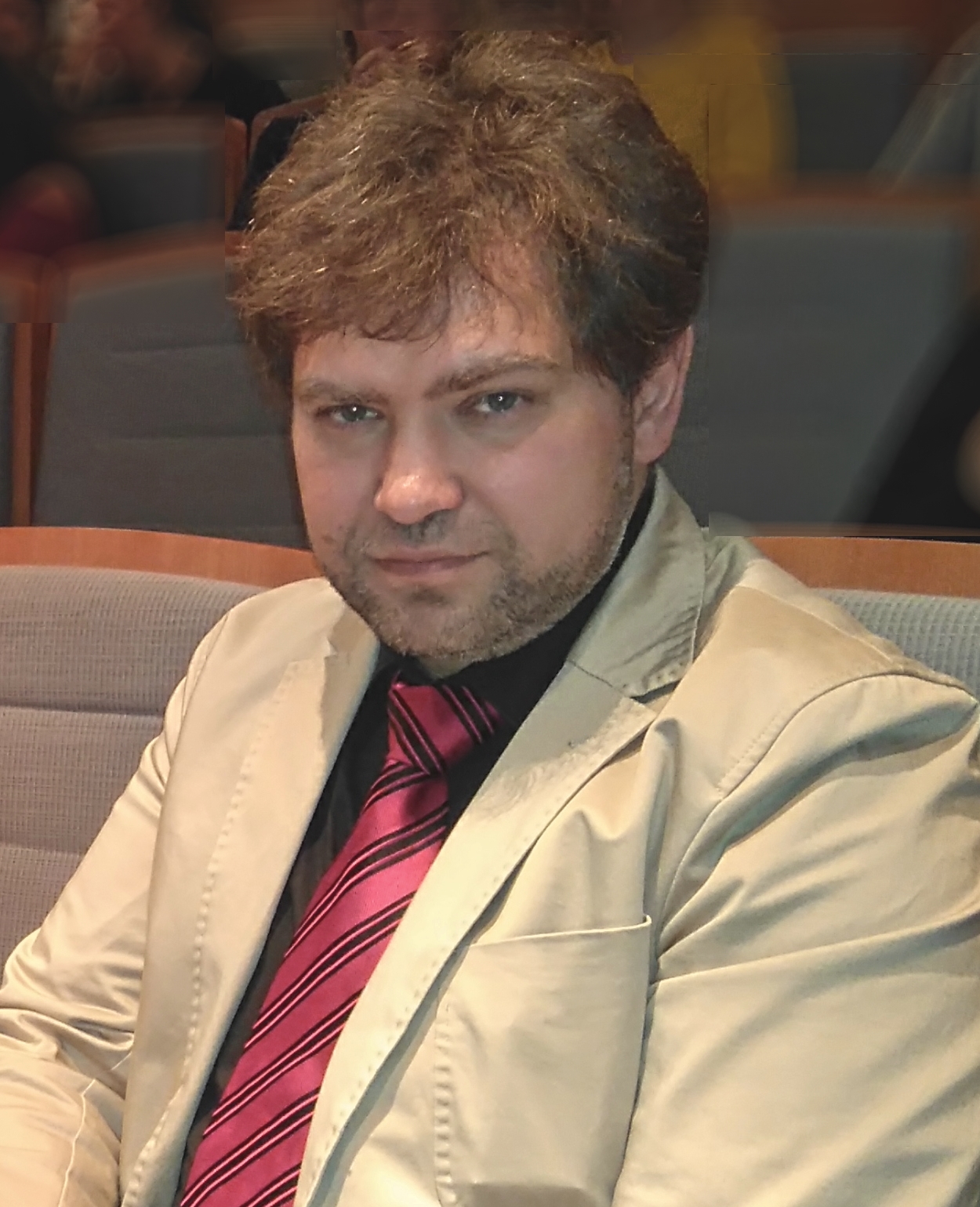
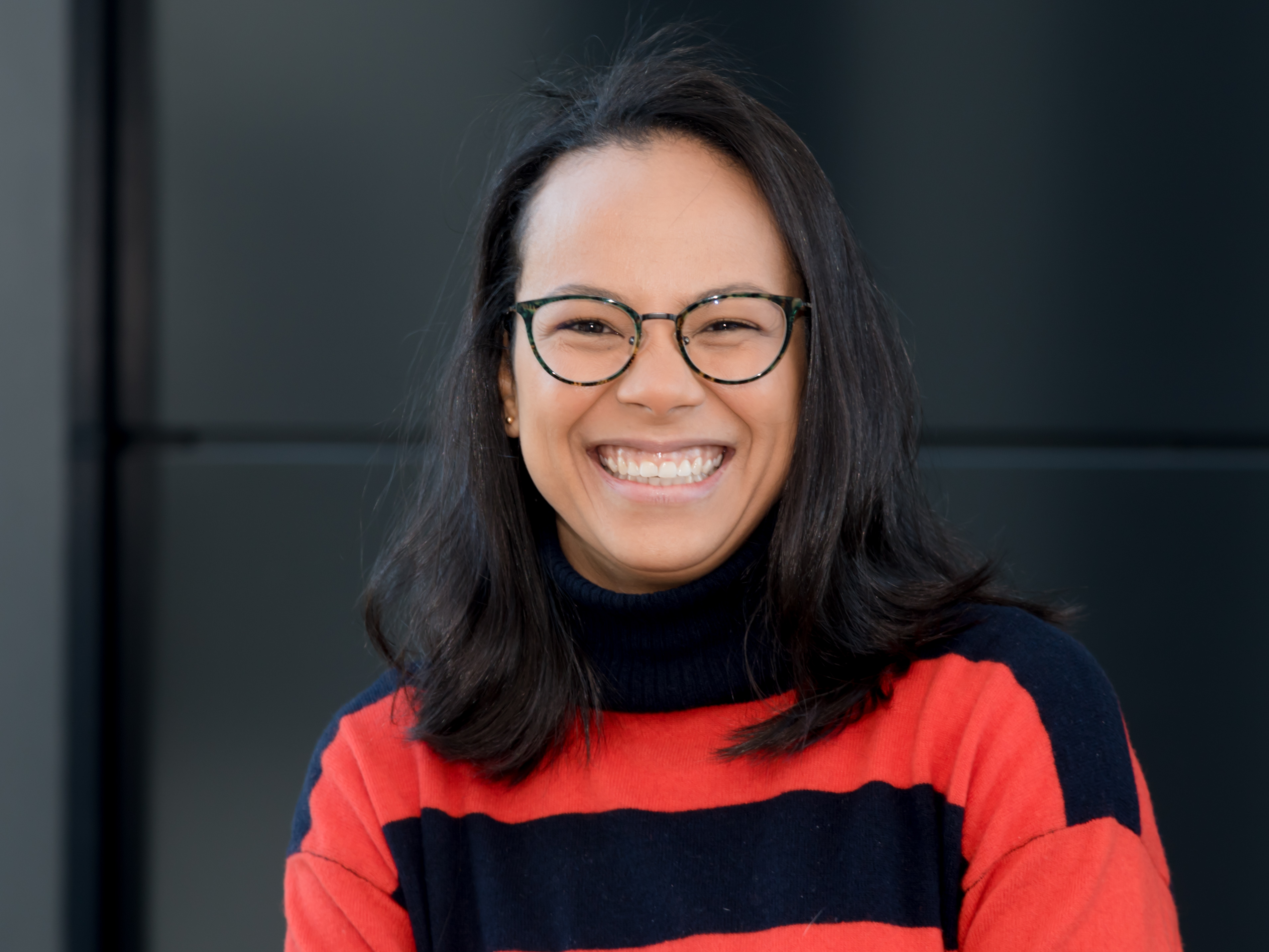
Holger Kreft is a Full Professor and Head of the Department of Biodiversity, Macroecology & Biogeography at the University of Göttingen. He combines observational field studies, experiments, and ecoinformatics to investigate biodiversity patterns across spatial and temporal scales, with a focus on taxonomic, functional, and phylogenetic diversity. 2017 - today : Full Professor (W3), University of Göttingen 2015 - 2017 : Associate Professor (W2, tenured), University of Göttingen 2009 - 2015 : Assistant Professor (W1, tenure-track), University of Göttingen His research spans tropical ecology, macroecology, and biogeography, with field projects in Mexico, Panama, Madagascar, and Indonesia. He has pioneered analyses of global plant diversity gradients and contributed to high-profile databases like GIFT, GloNAF, TRY, and sPlots. Scientific Awards & Fellowships Highly Cited Researcher in Cross-Field (since 2020) Science Award of Lower Saxony (2015) Feodor Lynen Return Fellowship (2009) Feodor Lynen Research Fellowship (2008–2009) Merian Award (2006) Alwyn Gentry Award (2003) Kreft leads the Department of Biodiversity, Macroecology & Biogeography, integrating empirical fieldwork with data-driven approaches to address conservation challenges under anthropogenic change.
Jaroslav MYSIAK is an Adjunct Professor at the Department of Environmental Sciences, Informatics and Statistics (DEIS) at Ca' Foscari University of Venice. His research focuses on climate risk management, disaster resilience, and environmental policy, with particular emphasis on flood modeling, nature-based solutions, and decision support systems for sustainable resource management. He holds an academic appointment in the Department of Environmental Sciences, Informatics and Statistics at Ca' Foscari University of Venice. His teaching activities include advanced courses on climate risk modeling and assessment at the master's and doctoral levels. His key research contributions span climate adaptation pathways, flood damage assessment frameworks, and the integration of Bayesian networks for multi-sectoral risk analysis. MYSIAK has extensively engaged in developing policy-oriented tools such as the MULINO-DSS decision support system and the INFORM vulnerability framework. Recent work explores nature-based solutions for climate resilience and the governance mechanisms enabling their implementation. His publications demonstrate expertise in cross-disciplinary research, bridging hydrology, economics, and policy. Current research themes include: Climate services evaluation and socio-economic impact analysis Resilience assessment frameworks for coastal and urban areas Cost-benefit analysis of flood defense infrastructure Integration of machine learning in disaster risk reduction His work frequently addresses European and Mediterranean contexts, with studies on Adriatic coastal systems and Italian agricultural water management. MYSIAK's research has been applied in policy contexts including the EU's climate adaptation strategy and international disaster risk reduction frameworks.
Weiwei Zhan is an Assistant Professor in the Department of Civil, Environmental, and Construction Engineering at the University of Central Florida (UCF), College of Engineering. He holds a Ph.D. in Civil Engineering from Clemson University (2020) and a B.S. in Geological Engineering from Chengdu University of Technology, China (2014). He is the director of the Geosystems Engineering and Intelligence Laboratory (GEI), which focuses on intelligent and systematic solutions for geohazard mitigation and infrastructure resilience. Ph.D. in Civil Engineering, Clemson University, USA, 2020 M.Sc. in Civil Engineering (non-thesis), Clemson University, USA, 2019 B.Sc. in Geological Engineering, Chengdu University of Technology, China, 2014 Dr. Zhan's research lies at the intersection of geotechnical earthquake engineering, geohazards, and data science. His primary interests include landslide hazard assessment and mitigation , soil liquefaction triggering and consequence assessment , earthquake site response and ground motion modeling , explainable machine learning and deep learning , geospatial modeling and uncertainty quantification , and multi-hazard infrastructure resilient design . His lab leverages interdisciplinary techniques from geotechnics, geology, geophysics, geodesy, and data science to advance smart cities and resilient infrastructure initiatives. His recent publications reflect a strong trend in applying machine learning and signal processing to geohazard detection. Key themes include accelerogram-based liquefaction detection , remote-sensing-based landslide early warning using satellite and UAV imagery , probabilistic seismic analysis of earthen levees , and geospatial modeling of seismic hazards . His work emphasizes uncertainty quantification, real-time hazard assessment, and the development of open-source tools like the OpenLIQ geospatial liquefaction database. Scientific awards and honors include: National Scholarship, Ministry of Education of China (2016) Travel Grants from NHERI SimCenter and EERI (2022) Top 10 Bachelor’s Thesis at Chengdu University of Technology (2014) Honorable Mentions in International and National Mathematical Modeling Competitions Dr. Zhan has served as a reviewer for numerous journals and as a convener for major conferences such as SSA and IAEG. His lab, GEI, conducts research on full-cycle landslide hazard management, near-real-time liquefaction detection, earthquake ground-motion modeling, and geospatial analytics. He has secured research support through travel grants and symposium funding, and his ongoing work includes developing globally applicable models for lateral spreading and improving ground-motion models using geospatial proxies.
Clément Bosquet is a Professor of Economics at the Sorbonne Economics Centre (CES), Université Paris 1 Panthéon-Sorbonne. He leads the scientific program 'International Economics and Labour Markets' at CES and is the Principal Investigator (PI) of the ANR research grant SINEMOB. His primary research interests span urban economics, economic geography, economics of science, and labour economics, with a focus on topics like spatial inequality, academic collaboration networks, and gender disparities in academia. He advises multiple PhD students and has authored/co-authored numerous peer-reviewed articles in top journals. Education details are not explicitly provided in the text, but his career trajectory indicates advanced academic training in economics. His research has explored themes such as birthplace effects on economic outcomes, peer effects in academic research, and the structure of labour markets. He has contributed to policy-relevant studies on gender gaps in academic promotions and the evaluation of research outputs via bibliometric tools. Notable projects include the SINEMOB grant and collaborative work on econometric methods (e.g., the GLM variance assumption paper). He maintains an active role in teaching, overseeing courses in economics while emphasizing administrative efficiency and student consultation processes. His work bridges theoretical economic models with empirical analysis, addressing both micro and macroeconomic challenges. Laboratory affiliations include the Centre d’Économie de la Sorbonne (CES), where he contributes to interdisciplinary research initiatives. His publications highlight a commitment to understanding the spatial dimensions of economic activity, the dynamics of academic institutions, and methodological advancements in econometric techniques.
Maria Papadopoulou serves as an Associated Researcher at the LISTIC laboratory of University Savoie Mont Blanc, France, specializing in the intersection of philological traditions and computational methods. Her work bridges Classics, Linguistics, and Digital Humanities through innovative applications of Semantic Web technologies for cultural heritage documentation. Her research focuses on ontology and terminology development for material culture studies, particularly ancient Greek dress and Chinese ceramics. She pioneers humanist-centered approaches to knowledge representation, creating tools like Tedi for multilingual terminology ontologization. Her methodology emphasizes accessibility for non-technical scholars while maintaining computational rigor in semantic modeling. Analysis of her publication trends reveals consistent innovation in domain-specific ontologies, with increasing emphasis on cross-cultural applications (Greek/Chinese) and pedagogical frameworks for digital humanities. Her work demonstrates how formal ontologies can resolve ambiguities in historical terminology while preserving cultural context. Scientific recognition includes: Best paper award at SEMAPRO 2018 for advancing multilingual terminology platforms Papadopoulou actively mentors through post-graduate instruction across international institutions including University Savoie Mont Blanc, Liaocheng University, and Nanjing University NUAA. Her teaching materials integrate AI applications with classical philology, reflecting her commitment to training next-generation digital humanists. She operates within the LISTIC laboratory's interdisciplinary framework, collaborating with computer scientists and domain experts to develop the TAO CI project for cultural heritage terminology. Her current work focuses on scaling ontology-based dictionaries for global humanities research while addressing challenges of semantic interoperability across linguistic traditions.
Adrien Remund is an Assistant Professor of Population Studies at the Department of Demography, Faculty of Spatial Sciences, University of Groningen, Netherlands. His research focuses on mortality patterns, migration, historical demography, and young adult vulnerability. He holds a PhD in Demography from the University of Geneva (2015) and has held roles including part-time lecturer at the University of Geneva and postdoc researcher at the Institut national d'études démographiques (Paris). He coordinates the Master in Population Studies and teaches courses on data analysis, population projections, and migration. Remund's work emphasizes cause-of-death analysis and demographic methodology, with projects involving Swiss National Science Foundation grants and collaboration on databases like the Geneva Urban Sociodemographic Dataset. His recent studies examine migrant health disparities, infant mortality in colonial Senegal, and longevity trends in the Netherlands. He contributes to both academic journals and public discourse on topics like aging populations and migration policies. His research also includes historical demographic studies using colonial records and modern register data, bridging past and present population dynamics. Remund's interdisciplinary approach combines quantitative methods with sociological insights, addressing pressing issues such as health inequalities and demographic transitions.
Dr. Iain Parnum is an Adjunct Research Fellow at Curtin University’s School of Earth and Planetary Sciences, within the Faculty of Science and Engineering. His primary research focuses on acoustic remote sensing of marine environments, including seafloor mapping, water column analysis, and marine mammal detection. He is actively involved in developing acoustic technologies for habitat characterization and has contributed to projects like the AUSSEABED national seabed mapping initiative. Research Interests: Seafloor mapping using multibeam, sidescan, and single-beam sonar systems Acoustic data processing and software development Marine mammal monitoring via passive and active acoustic techniques Seagrass and sediment property analysis through acoustic backscatter Underwater photogrammetry and novel imaging device workflows Publications Trends: His recent work emphasizes fish chorus acoustics, beaked whale presence detection, and the integration of acoustic methods with environmental variables. Key contributions include advancing underwater noise monitoring tools and improving seabed classification techniques. Affiliations: Chair of the WA Division of the Australian Acoustical Society; Federal Councillor of the Australian Acoustical Society. Technical Contributions: Developed open-source data-logging devices and calibration frameworks for marine surveys. Collaborated on projects like the Perth Canyon soundscape analysis and coral reef evolution studies in the Kimberley region.
Francesca Matrone is a Fixed-term Assistant Professor in the Department of Environment, Land and Infrastructure Engineering (DIATI) at Politecnico di Torino, Italy. Her work bridges geomatics, artificial intelligence, and cultural heritage conservation, with a focus on 3D modeling, GIS, and HBIM integration for urban and historical environments. Her research interests include Geomatics, Cultural Heritage Digitization, AI in Geospatial Analysis, Drone-Based 3D Modeling, Semantic Segmentation of Point Clouds, and Smart Cities . She applies advanced technologies like UAVs, deep learning, and BIM-GIS integration to enhance the documentation, maintenance, and resilience of built heritage. The recent publications highlight a strong trend in using AI and machine learning for semantic segmentation of 3D heritage models, integration of HBIM with GIS using standards like IFC and CityGML, and drone-based photogrammetry for urban and territorial planning. These works reflect a multidisciplinary approach combining computer science, civil engineering, and digital heritage. Francesca Matrone is actively involved in research projects such as: HERITALISE (2025–2028, EU-funded): Digitization and cloud visualization of heritage buildings ACLIMO (2024–2026): Research collaboration with APAM on protected areas COGNITIO-FORT (2025–2026): Scientific Director for a project with Unione Montana Valle Stura She teaches across multiple programs: PhD : GeoAI for advanced urban analyses; Drones for 3D modeling (Main Teacher) Master’s : GIS Modeling for City and Land; Knowledge of Built Heritage under Climate Change Bachelor’s : GeoAI: Artificial Intelligence and Geospatial Data; Topography (Course Collaborator) She is a member of the Teaching Colleges for Civil and Building Engineering and Electronic, Telecommunications and Physics Engineering. She also holds a Learning to Teach (L2T) Open Badge from Politecnico di Torino, demonstrating her commitment to pedagogical excellence. Francesca is a co-inventor of the MAIN10ANCE PLATFORM , a national software patent aimed at enhancing the maintenance and conservation of historical built heritage through integrated HBIM-GIS systems.
Dr. Krzysztof Wojciech Siwek is a senior researcher at the Institute of Earth and Environmental Sciences within the Faculty of Earth Sciences and Spatial Management at Maria Curie-Skłodowska University in Lublin, Poland. His work spans climatology, meteorology, and environmental engineering. Research Focus: Urban climate dynamics, multifractal analysis of meteorological data, and water quality in urban reservoirs Geographical Scope: Primarily Poland, with polar research in Svalbard Recent article trends reveal his expertise in: Climate change impact assessment using multifractal time series Urban thermal comfort and bioclimatic contrast studies Hydrological response to extreme meteorological events Polar climate monitoring and glacial dynamics Email: krzysztof.siwek@mail.umcs.pl
Dr hab. Tomasz Kijek is a Professor at the Maria Curie-Skłodowska University, affiliated with the Faculty of Economics and leading the Department of Microeconomics and Applied Economics. His research focuses on knowledge production modeling, diffusion of innovations, valuation of knowledge assets in capital markets, eco-innovations in sustainable development, technological convergence with spatial effects, and productivity measurement. He has led two major research projects funded by the National Science Centre: 'Modeling the utilization of corporate innovative capital using knowledge production functions' (Sonata 5, 2013/09/D/HS4/01139) 'The role of innovation in technological convergence processes in the European regional space' (Opus 14, 2017/27/B/HS4/00893) His work has accumulated over 300 citations in Web of Science and Scopus, with an H-index of 11 in both databases. Scientific awards include: Huygens Scholarship funded by Nuffic (Netherlands Organization for International Cooperation in Higher Education and Research) He serves on the editorial board of one JCR-indexed journal and has conducted 125 peer reviews for international journals. His expertise also extends to evaluating 50 research proposals for the National Science Centre and reviewing academic qualifications in 4 PhD and 1 habilitation proceedings.
Fernando Castedo Dorado is a University Associate Professor in the Department of Engineering and Agricultural Sciences at the School of Agricultural and Forestry Engineering, University of León. He holds a PhD in Forestry Engineering from Universidade de Santiago de Compostela (2004). Academic Background : Technical Forestry Engineer (1996) Forestry Engineer (1999) Doctorate in Forestry Engineering (2004) Research Focus : His work centers on biotic/abiotic risk modeling in forest ecosystems, including: Forest fuel dynamics (canopy/ground) and fire severity Growth loss from invasive pests (e.g., Asian chestnut gall wasp) Climate-productivity relationships in eucalyptus and pine stands IoT-based forest health monitoring Article Trends : Recent publications emphasize invasive pest interactions, climate change impacts on forest productivity, fuel load modeling using LiDAR/Sentinel-2, and citizen science applications for damage reporting. Professional Roles : Currently coordinates the interuniversity MasterFUEGO program in forest fires. Previously held teaching roles at the University of León (2002-2008). International Experience : Conducted postdoctoral research at: USDA Forest Service (2004) Georg-August-Universität Göttingen (2005) Universidade de Trás-Os-Montes (2011) Universidad de La Plata (2023) Research Groups : Active member of DRACONES (modeling complex forest environments) and collaborator with UXAFORES at Universidade de Santiago de Compostela.
Aliakbar Akbaritabar (also known as Ali) is a Research Scientist and Deputy Head of Training at the Max Planck Institute for Demographic Research (MPIDR) in Rostock, Germany. He works within the Laboratory of Migration and Mobility, which is part of the Digital and Computational Demography research group led by Prof. Emilio Zagheni. Dr. Akbaritabar holds two PhD degrees: one in economic sociology and labor studies from the University of Milan, and another in sociology (social welfare) from the Allameh Tabataba'i University of Tehran. Prior to joining MPIDR, he worked as a postdoctoral research scientist at the German Centre for Higher Education Research and Science Studies (DZHW) and the German Competence Network for Bibliometrics. As a computational social scientist with a background in sociology, Dr. Akbaritabar's research focuses on the science of science, scholarly migration, social networks, collaboration networks, and computational social science. His work re-purposes bibliometric data to answer social science and demographic questions, with particular interest in understanding migration and mobility patterns of scholars globally. He employs computational tools and techniques to address social scientific questions, bridging the gap between data science and sociological inquiry. Dr. Akbaritabar's recent publications demonstrate a strong focus on global scholarly migration patterns, gender disparities in academic mobility, and methodological approaches in quantitative social science. His work often involves large-scale data analysis of scientific publications and researcher movements across international borders, revealing significant insights about the structure and dynamics of the global academic system. He has developed innovative approaches to analyzing scholarly migration using bibliometric data and has made substantial contributions to understanding the relationship between collaboration and mobility in academia. Dr. Akbaritabar is actively involved in promoting computational approaches in social science research and has developed resources for using R Markdown, Git, and GitHub for academic writing. He maintains a public calendar of Computational Social Science events worldwide and shares his research through platforms like BlueSky, Twitter, and Mastodon. As Deputy Head of Training at MPIDR, Dr. Akbaritabar plays a key role in developing training programs for researchers, particularly focusing on computational methods in demographic research. His laboratory work centers on analyzing migration and mobility patterns of scholars using bibliometric data, contributing significantly to our understanding of global knowledge production and academic collaboration networks. He is also involved in several major projects including the Migration and Mobility of Scholars initiative and the Scholarly Migration Database project.
Dmitri A. Jdanov is the Head of the Laboratory of Demographic Data at the Max Planck Institute for Demographic Research (MPIDR) in Rostock, Germany. He is a leading expert in demographic data systems, focusing on mortality, fertility, and migration databases. His research contributes significantly to population health and statistical demography. Research Interests: His work spans key areas including mortality studies , fertility trends , data quality adjustment , life expectancy , and public health impacts of global crises such as the COVID-19 pandemic. He develops and applies advanced statistical methods to correct demographic data distortions and assess population-level health outcomes. The recent articles highlight a strong focus on the impact of the pandemic on fertility and mortality , seasonal and spatial mortality patterns , and methodological innovations in demographic measurement . His publications frequently appear in high-impact journals such as The Lancet , BMJ Public Health , and Population and Development Review . Scientific Awards: While specific awards are not listed in the provided text, his leadership in major international data projects and his extensive publication record in top journals indicate significant recognition in the field of demography. Advising and Grants: Dmitri A. Jdanov leads multiple research projects funded by international and institutional sources, including the Human Fertility Database, Human Mortality Database, and the Monitoring Mortality Inequalities Consortium. He supervises and collaborates with a broad network of researchers and contributes to the training of early-career demographers through the MPIDR’s research school. Labs and Teams: He heads the Laboratory of Demographic Data , which plays a central role in maintaining and advancing global demographic databases. His team collaborates closely with the Laboratory of Population Health and other research groups at MPIDR, contributing to interdisciplinary studies on population dynamics and health.
Marília R. Nepomuceno serves as a Research Scientist and Training Chair at the Max Planck Institute for Demographic Research (MPIDR) in Rostock, Germany, where she is affiliated with the Laboratory of Population Dynamics and Sustainable Well-Being and the Laboratory of Demographic Data. Her work bridges demographic methodology with empirical analysis of population health trends. Her research centers on mortality dynamics, lifespan variation, and demographic responses to crises like the COVID-19 pandemic. Key interests include: Regional mortality inequalities in Brazil and Europe Methodological innovations in lifespan variation measurement (e.g., CAL† metric) Data quality assessment for extreme age reporting Pandemic impact analysis beyond age-structure effects Her recent publications reveal a strong focus on spatial disparities in life expectancy, cohort mortality reconstruction, and the demographic implications of pandemic responses. Nepomuceno contributes to major demographic resources including COVerAGE-DB, the global database tracking age-structured COVID-19 outcomes. As Training Chair, she oversees academic development programs at MPIDR, though specific student mentorship details are not publicly documented. Her work frequently involves cross-institutional collaborations with researchers across Latin America and Europe. She actively participates in laboratory initiatives focused on population dynamics and demographic data infrastructure, contributing to MPIDR's role as a global leader in demographic science. Current projects examine seasonal mortality patterns and their implications for life expectancy disparities across European regions.
Aditya Sharma is a researcher at the University of California Santa Barbara , focusing on Natural Language Processing , Computer Vision , and Artificial Intelligence . His work bridges vision-language models, medical AI evaluation, and knowledge graph reasoning. PhD : Advancing AI Understanding in Language & Vision (UCSB, 2024) Research Interests: • Vision-Language Models for geometric reasoning and mixed reality • Medical LLM evaluation and hallucination reduction • Temporal knowledge graph reasoning and multimodal systems Article Trends: Recent publications emphasize vision-language integration (e.g., GeoCoder, OCTO+), LLM reliability in medical contexts (MedHELM), and temporal reasoning (TwiRGCN). He explores applications in dark web security , healthcare diagnostics , and energy-efficient computing .