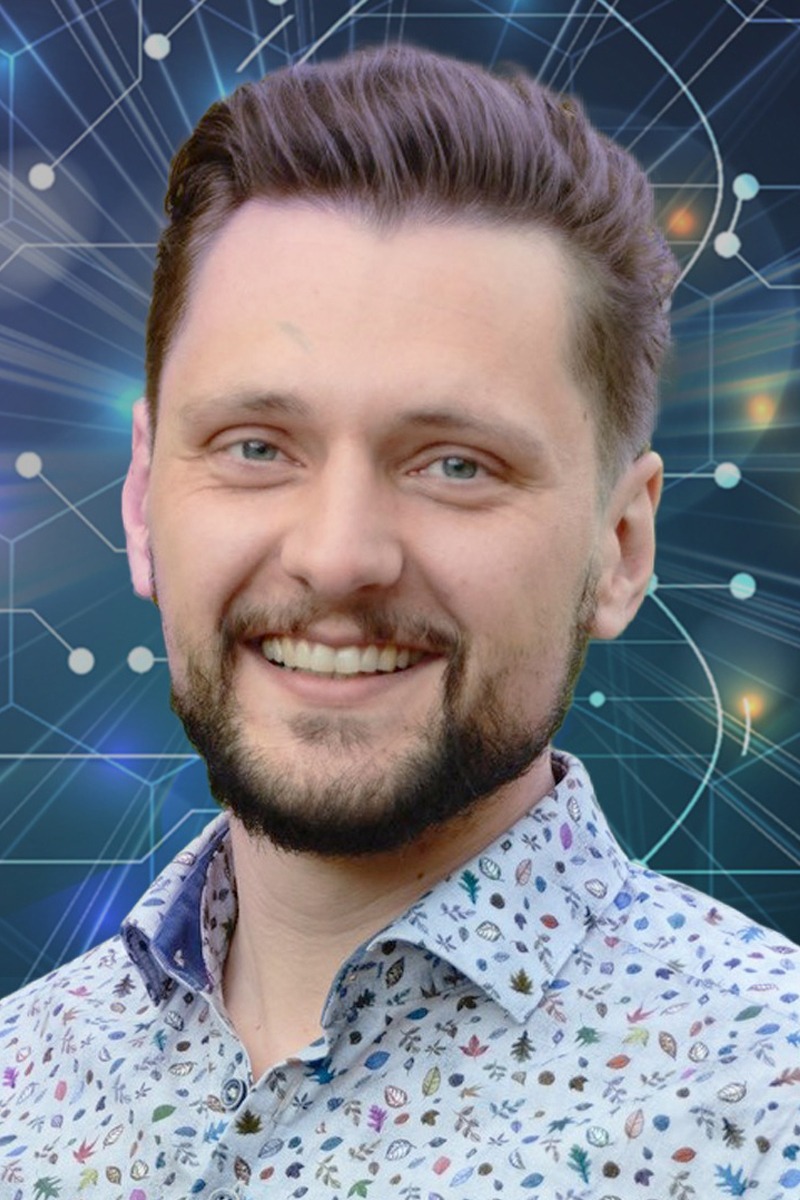
Olav Nygård is a Senior Lecturer at Linköping University, specializing in educational sociology, social mobility, and immigration studies. His research focuses on the intersection of meritocracy and ascriptive factors in shaping educational and labor market outcomes, particularly for children of immigrants. Active Projects: After Optimism examines long-term educational and labor trajectories of immigrant youth. Improving Educational Outcomes compares top-down and bottom-up initiatives in marginalized schools. Negotiated Mobility and Belonging explores mobility tensions in rural Sweden with immigrant populations. His methodological expertise combines longitudinal register data, surveys, and ethnographic interviews, informed by post-Bourdieusian theory. He investigates how immigrant optimism challenges meritocratic assumptions and intersects with racialization, discrimination, and spatial mobility constraints. His work has significant societal relevance for addressing educational inequality and integration policies. Scientific Awards: None listed in accessible texts. Advising: No students explicitly named. Collaborates with the REMESO database for register-based research.
Tobias Andermann is a DDLS Fellow and Principal Investigator at Uppsala University's Evolutionary Biology Centre (EBC), affiliated with SciLifeLab. His research develops quantifiable biodiversity metrics to address the global biodiversity crisis through environmental DNA (eDNA) sampling and machine learning integration. His work focuses on Biodiversity , Bioinformatics , and Environmental DNA analysis, with expertise in Machine Learning , Remote Sensing , and Spatial Analysis . He pioneers eDNA protocols to reconstruct species diversity across the tree of life—particularly for fungi, insects, and protists—using satellite imagery and airborne laser-scan data to model biodiversity patterns. Publications reveal a strong emphasis on deep learning applications for biodiversity assessment, including extinction risk modeling (IUCNN), habitat evolution analysis, and human impact quantification on mammalian diversity. His work bridges computational methods with ecological data to create actionable conservation metrics. Scientific awards: DDLS Fellowship As Principal Investigator, Andermann mentors PhD students Adrian Baggström and Monica Guilera Recoder, and Master's student Mirjam Lichtner. His research receives primary support from SciLifeLab's Digital and Data-Driven Science program, enabling collaborations with taxonomic experts for comprehensive eDNA analysis. His research group at the Evolutionary Biology Centre builds biodiversity databases by integrating eDNA samples with biotic/abiotic predictors, developing machine learning models to predict species distributions and extinction risks while addressing overlooked taxonomic groups through specialized lab protocols.
Alexios Matikas, MD, PhD , is Associate Professor of Oncology at Karolinska Institutet and Senior Consultant in Medical Oncology at the Karolinska Comprehensive Cancer Center Breast Center. Appointed Docent in May 2021, he leads translational breast-cancer research within the Theodoros Foukakis Group at the Department of Oncology-Pathology. Since 2024 he also serves as Deputy Director of Doctoral Education at the department and sits on Karolinska Institutet’s central Dissertation Committee. Education & Training MD, Aristotle University Medical School, Greece (with scholarship for academic excellence) MSc Cancer Cell Biology, Athens Medical School (valedictorian) PhD, Circulating Tumour Cells, Crete Medical School ESMO Georges Mathé Fellowship in Immuno-Oncology, Karolinska Institutet (2016–2017) Post-doc in breast-cancer immunology, Karolinska Institutet (2017–) Research Focus Matikas’ work integrates clinical trials, real-world evidence and high-resolution multi-omics to dissect the tumour-host interface in breast cancer. He is principal investigator of the international academic ARIADNE trial (NCT05900206) exploring biology-driven neoadjuvant HER2-targeted therapy, and leads registry-based studies using Swedish national databases to answer clinically relevant questions. His laboratory interrogates spatial and temporal tumour-immune dynamics using digital pathology, single-cell sequencing and proteomics to identify predictive biomarkers and therapeutic vulnerabilities. Scientific Awards & Honours ESMO Georges Mathé Fellowship in Immuno-Oncology (2016–2017) Percy Falk stipend for breast and prostate cancer research Aristotle University scholarship for academic excellence Teaching & Mentorship He is main supervisor for three and co-supervisor for five PhD candidates across Karolinska Institutet and Sahlgrenska Academy. He has accrued 260 hours of formal teaching at KI and co-created the doctoral course “Basic principles of clinical and translational research”. Together with international experts he founded the Academy of Breast Oncology , a webinar series for young oncologists (2020–2025, 13 sessions). Leadership & Service Within ESMO he previously sat on the Young Oncologists Committee (2020–2023) and now contributes to the Leadership Development Committee, OncologyPRO working group and Magnitude of Clinical Benefit Scale working group. Nationally, he coordinates adjuvant therapy guidelines for the Swedish National Breast Cancer Guidelines and serves on the Stockholm regional treatment guidelines committee.
Jakob Heyman is a Lecturer in the Department of Geosciences at the University of Gothenburg, Sweden. His research focuses on understanding ice sheet dynamics, glacial erosion processes, and landscape evolution using cosmogenic nuclide dating techniques. He maintains an active research profile with numerous publications in high-impact geoscience journals and collaborates with international researchers across multiple continents. Dr. Heyman's research interests span multiple aspects of Quaternary geology and glaciology. His work primarily investigates: Ice sheet dynamics and deglaciation processes Cosmogenic nuclide dating methods and applications Glacial erosion mechanisms and rates Landscape evolution during the Quaternary period Paleoclimate reconstruction using glacial evidence Glacial geomorphology across different mountain ranges worldwide An analysis of Dr. Heyman's recent publications reveals a strong focus on applying cosmogenic nuclide dating techniques to understand glacial history across diverse regions including Sweden, North America, the Altai Mountains, and the Tibetan Plateau. His research often involves large international collaborations and contributes to major databases like OCTOPUS. The work spans both methodological advances in dating techniques and fundamental discoveries about ice sheet behavior during past climate changes. Dr. Heyman has established himself as a significant contributor to the field of Quaternary geology through his extensive publication record in top-tier journals including Nature Communications, Science, and Quaternary Science Reviews. His work demonstrates expertise in both field-based glacial geomorphology and sophisticated geochronological techniques.
Karl Mårild serves as a University Lecturer (adjunct) in the Department of Pediatrics at the University of Gothenburg's Faculty of Medicine, with clinical research affiliation at Queen Silvia's Children's and Adolescent Hospital in Gothenburg. His work bridges pediatric gastroenterology clinical practice and population health research through extensive collaboration with Karolinska Institutet and Nordic research networks. Dr. Mårild's research focuses on pediatric inflammatory bowel disease (IBD) and celiac disease epidemiology , specifically investigating early-life environmental determinants including dietary patterns, infection history, antibiotic exposure, socioeconomic factors, and perinatal conditions. His methodology leverages Scandinavian population-based birth cohorts and national health registries to track disease development from infancy through adulthood, with particular emphasis on nutritional epidemiology and risk factor identification. Analysis of his 15 most recent publications reveals dominant research themes in childhood nutrition-disease relationships (35% of papers), perinatal risk factors (25%), and methodological registry validation (20%). His work demonstrates consistent Nordic collaboration, with 85% of recent publications involving multi-country Scandinavian research teams. As an active researcher, Dr. Mårild contributes to clinical guidelines through publications like the ESPGHAN Position Paper on Celiac Disease management. His research program generates actionable insights for preventive strategies in pediatric gastrointestinal disorders while advancing epidemiological methods for studying chronic disease origins.