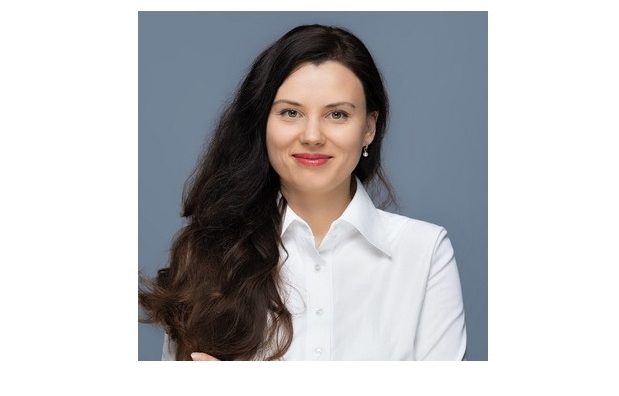
Katažyna Bogdzevič is a Professor at Mykolas Romeris University (MRU) Law School, specializing in Private International Law , European Law , Human Rights , and Environmental Law . She leads the MRU Human Rights LAB and contributes to the Environmental Management Research LAB, focusing on legal frameworks for ecosystem services, climate change mitigation, and stakeholder engagement. Key Research Themes: Integration of Private International Law with Environmental Law , analysis of legal conflicts in nature-based solutions, and name rights under international human rights conventions. Policy Engagement: Serves as advisor to Lithuania's Minister of Justice Ewelina Dobrowolska , emphasizing knowledge transfer to legislative and judicial practices. Email: roffice@mruni.eu
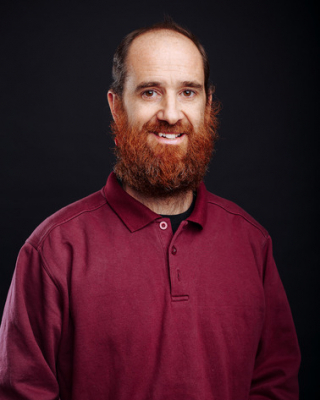
Professor Hone-Jay Chu is a faculty member at the Department of Geomatics, National Cheng Kung University, where he has been employed since 2011. He earned his PhD from National Chiao Tung University in 2008, focusing on artificial intelligence and optimization for water resource management, followed by postdoctoral work (2008–2011) with Professor YP Lin on spatial environmental monitoring and land use change models. Education : PhD in Environmental Engineering (2008) from National Chiao Tung University His research integrates geospatial technologies with machine learning to address complex environmental challenges. Key domains include groundwater dynamics , land use/cover change , landslide detection , and air pollution analysis , leveraging big data , remote sensing , and environmental resilience frameworks. Recent publications highlight applications of deep learning (e.g., LSTM networks) and random forest models in predicting meteorological droughts, groundwater changes, and climate impacts. The work spans interdisciplinary collaboration, with co-authors from institutions in Bangladesh, Austria, and Turkey.
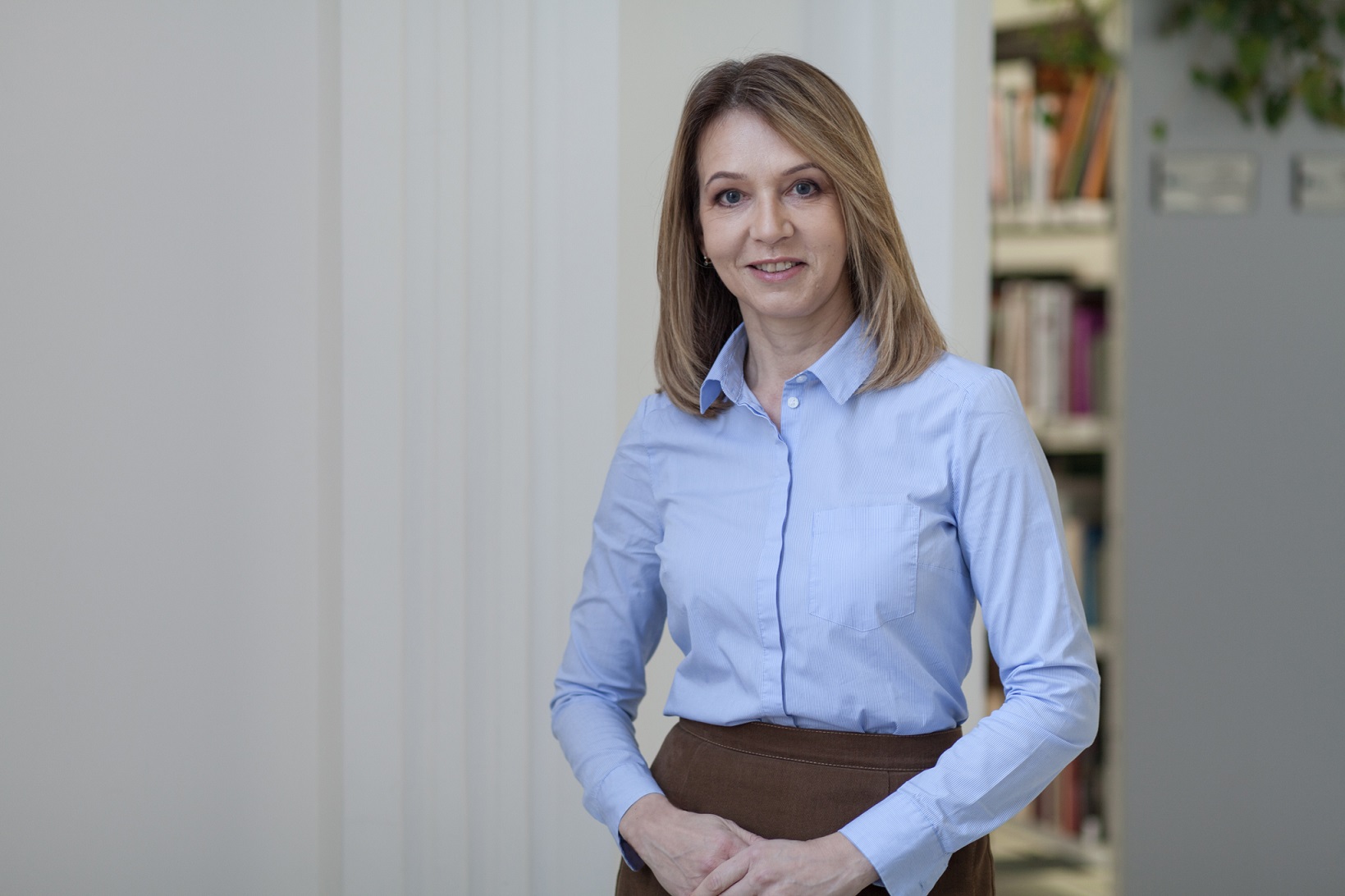
Virginija Gurskienė is an Associate Professor at Vytautas Magnus University (VMU), specifically affiliated with the Department of Land Use Planning and Geomatics within the Agriculture Academy. She is actively involved in research and academic supervision, particularly in the areas of land use planning, urban planning, and management of protected areas. Her research interests include: Real property cadastre Management of protected areas Urban planning Land use planning Spatial analysis Environmental sustainability Dr. Gurskienė's scholarly work spans multiple aspects of spatial planning and land management, with a strong focus on sustainable development and the integration of planning solutions in both urban and rural contexts. She employs advanced spatial analysis techniques and examines the interplay between environmental protection, urbanization processes, and agricultural land use. She has supervised 73 master's theses according to the available data, demonstrating expertise across a wide range of topics related to land use planning, protected areas management, and urban development. Her students' research reflects current challenges in spatial planning, including assessment of urbanization in regional parks, development of protected areas, state land use control, and smart city integration. Since 2021, she has been affiliated with the Department of Land Use Planning and Geomatics, and since 2024, she has also been associated with the Bioeconomy Research Institute, indicating expanding research interests into bioeconomic aspects of land use.
Vida Malienė is a Visiting Professor at the Department of Land Use Planning and Geomatics, Faculty of Water and Land Management, Vytautas Magnus University Agriculture Academy. She contributes to the Bioeconomy Research Institute since 2023 and participated in international collaborations with Liverpool John Moores University. European Academy of Land Use and Development (Executive Board Member) International Council for Research and Innovation in Building and Construction (CIB) European Group of Operational Research Chartered Property Valuer Her research spans real estate markets , urban regeneration , land management economics , and application of multi-criteria evaluation methods . She specializes in sustainable housing , land consolidation , and affordable housing policies , with focus on Baltic and European contexts. Key publication trends include land use planning (63% of work), environmental engineering (58%), civil engineering (47%), and management sciences (13%). Recent articles explore bio-economy applications , agricultural land transformation , and value capture mechanisms across Europe. She holds a PhD in Technological Sciences (2000) and has authored over 100 publications, including 50+ peer-reviewed journal articles, 3 monographs, 20+ book chapters, and editorials. Her work is cited 2949 times (2023 metrics), with h-index-23 and i10-index-36. Languages: Lithuanian (native) English (fluent) German (fluent) Russian (fluent)
Aleksejus Kononovičius is a Senior Researcher at Vilnius University's Institute of Theoretical Physics and Astronomy within the Faculty of Physics. His research spans interdisciplinary applications of physics principles to complex social and financial systems, with particular expertise in modeling collective behavior through statistical and computational approaches. Dr. Kononovičius's primary research interests focus on sociophysics, econophysics, and the physics of complex systems. His work explores opinion dynamics through various voter models (noisy voter model, compartmental voter model, scaled voter model), long-range memory phenomena in both physical and social contexts, and agent-based modeling of social and financial systems. He investigates how nonlinear stochastic dynamics can explain patterns in parliamentary elections, financial markets, and semiconductor physics. His research demonstrates how fundamental physical principles can elucidate complex phenomena across diverse domains. Analysis of his publication record reveals a consistent focus on developing and applying mathematical models to understand complex systems. His recent work (2023-2024) examines delayed interactions in voter models and 1/f noise in semiconductors, while maintaining his longstanding interest in long-range memory phenomena. The interdisciplinary nature of his research bridges statistical physics, social sciences, and finance, with applications ranging from understanding political behavior to financial market dynamics and physical material properties. 2020 Young scientist scholarship 'Effect of non-linearity on long-range memory properties of fractional Gaussian noise' awarded by Lithuanian Academy of Sciences Promotional scholarships for doctoral candidates (2013-2015) granted by Research Council of Lithuania IARIA Best Paper Award (2011) Dr. Kononovičius has supervised 3 bachelor degree theses, 1 master degree thesis, and 4 internship projects, demonstrating his commitment to mentoring the next generation of researchers. His research has been supported by multiple grants and scholarships from the Research Council of Lithuania. He actively contributes to the scientific community through his participation in the Complex Physical and Social Systems Group at Vilnius University. He maintains an active presence in the scientific community through the 'Physics of Risk' science blog (https://rf.mokslasplius.lt/), which serves as a platform for science popularization and educational activities related to his research interests. His work exemplifies the growing field of applying physics methodologies to understand complex social and economic phenomena.
Professor Šaulienė Ingrida serves as a Professor and Chief Researcher at Vilnius University Šiauliai Academy, specializing in aerobiology and environmental science. Her work focuses on pollen properties, allergen mitigation, and public health impacts. She has held leadership roles, including Vice-Rector for Science and Art, and directs the University Research Institute. Education: Doctor of Biomedical Sciences (Botany). Research Interests: Aerobiology, pollen dispersion dynamics, allergenic potential of urban flora, and development of monitoring technologies. Her projects include automated pollen detection systems and EU-funded initiatives like EO4EU and REALTIME. Key Projects: Leading initiatives such as AI-augmented Earth Observation (EO4EU), allergen forecasting (PASYFO), and standardized bioaerosol monitoring guidelines. She also chairs COST Action ADOPT and serves in international aerobiology organizations. Awards: Doctor Honoris Causa from Daugavpils University (2016), multiple ministerial commendations, and researcher accolades. Active in editorial roles for journals like Frontiers in Allergy and Zemdirbyste-Agriculture . Grants & Labs: Over 20 funded projects since 2005, focusing on ragweed management, pollen forecasting, and urban green space policies. Collaborates with institutions across Europe on environmental and health initiatives.
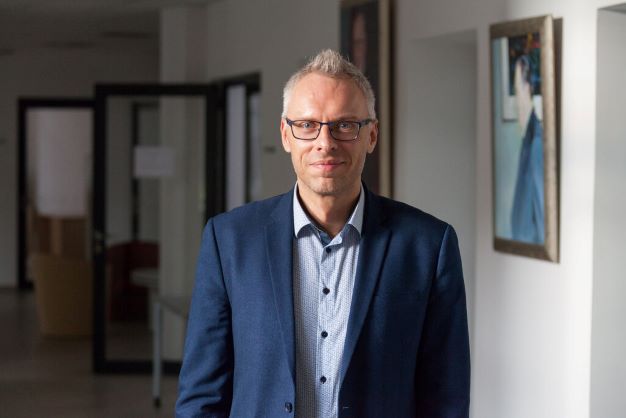
Benjamin Cope is a Lecturer affiliated with the Laboratory of Critical Urbanism at the European Humanities University (EHU). He holds a PhD in Modern and Medieval Languages and Literature from Oxford University (2001). His research focuses on critical spatial theory, post-socialist urban spaces, and contemporary mapping practices, with notable work on the socio-spatial dynamics of cities like Vilnius, Warsaw, and Visaginas. Cope co-edited the 2021 book Re-tooling Knowledge Infrastructures in a Nuclear Town , addressing urban challenges in the post-nuclear Visaginas, Lithuania. His academic contributions span interdisciplinary urban studies, emphasizing socio-technical systems and cultural transformations. His publications critique urban policies and explore the interplay between globalization, memory, and spatial politics. Cope collaborates with international scholars and institutions, exemplified by the Laboratory of Critical Urbanism's applied summer schools in Visaginas. Key projects include analyses of Belarusian art scenes, Polish urban renewal strategies, and the socio-cultural impacts of Soviet industrial legacies. Though no formal awards are listed, his work has influenced debates on post-socialist urbanism and critical spatial theory. His involvement in EHU reflects commitment to academic innovation and community-engaged research.
Jolanta Valčiukienė is an Associate Professor and Head of the Department of Land Use Planning and Geomatics at the Agricultural Academy of Vytautas Magnus University. She holds a Doctor of Technology degree (2012) and has been serving as Associate Professor since 2016. Her academic leadership extends to heading her department since 2018 and contributing to the Bioeconomy Research Institute since September 2024. Her primary research interests span Land Administration , Spatial Planning , and Sustainable Land Use , with additional expertise in geomatics and land management. Dr. Valčiukienė's work bridges theoretical frameworks with practical applications in agricultural landscapes and rural development contexts. Analysis of her recent publications reveals a strong focus on integrating geospatial technologies with sustainable land management practices, particularly examining climate change adaptation strategies, bioeconomy implementation, and digital transformation in land administration systems. Her research increasingly addresses European Green Deal challenges and emphasizes the interconnections between human safety and environmental protection. Dr. Valčiukienė has been actively involved in organizing and contributing to numerous international conferences, particularly the annual Human and Nature Safety series (2021-2025) and Rural Development conferences focused on sustainable bioeconomy. Her work has been published in the scientific articles collection Human and Nature Safety , referenced in the Central & Eastern European Academic Source (EBSCO) database. As Head of Department, she mentors students and researchers while actively participating in interdisciplinary research projects addressing contemporary challenges in land management, spatial planning, and sustainable resource use. Her international collaborations span multiple European countries, demonstrating her commitment to advancing knowledge in her field through global academic exchange.
Linas Petkevičius serves as an Associate Professor at Vilnius University's Faculty of Mathematics and Informatics, actively teaching courses including Introduction to Quantum Computing across 10 consecutive academic years from 2016/2017 through 2025/2026 as evidenced by institutional schedules. His research demonstrates remarkable interdisciplinary breadth spanning quantum computing algorithm optimization, medical diagnostics through digital pathology analysis, and satellite-based environmental monitoring. He develops machine learning solutions for breast cancer prognosis using Ki67 heterogeneity metrics, creates quantum circuit schemes adapted to hardware constraints, and implements deep learning models for algal bloom detection in Baltic waters using Sentinel-2 data. His work consistently bridges theoretical computer science with practical healthcare and environmental applications. Analysis of his 15 most recent publications (2023-2025) reveals three dominant research thrusts: 1) Quantum computing optimization for NISQ devices, 2) Medical image analysis focusing on spatial tumor microenvironment characterization in breast cancer, and 3) Remote sensing applications using transformer models and few-shot learning for satellite change detection. His publications show increasing specialization in combining deep learning architectures with domain-specific constraints across these fields. Scientific Awards: No scientific awards were mentioned in the provided materials. Advising and Grants: The provided texts contain no information regarding student advisement, research grants, or funded projects.
Prof. habil. dr. Leonidas Sakalauskas is an Affiliated Scientist at the Smart Technologies Research Group within the Institute of Data Science and Digital Technologies at Vilnius University. His extensive research career spans mathematical modeling, stochastic programming, and statistical analysis with significant contributions across multiple disciplines. He maintains an active research profile with recent publications extending into 2025. Professor Sakalauskas' research focuses on stochastic programming, mathematical modeling, financial mathematics, statistical analysis, optimization, and queueing theory. His work demonstrates a consistent pattern of interdisciplinary research, bridging theoretical mathematics with practical applications in finance, social sciences, and computer science. He has developed innovative approaches to agent-based modeling, fractal analysis, and Monte Carlo methods, contributing significantly to both theoretical frameworks and practical implementations. His recent publications reveal a continuing evolution of research interests, with increasing emphasis on data science applications, computational social science, and advanced statistical modeling techniques. The articles demonstrate sophisticated methodological approaches to complex problems across diverse domains including financial modeling, social cohesion analysis, and network performance optimization. Throughout his career, Professor Sakalauskas has maintained a strong publication record in high-impact journals and conference proceedings, reflecting his ongoing engagement with the international research community. His work shows consistent methodological rigor combined with practical relevance across multiple application domains. Professor Sakalauskas has collaborated extensively with researchers across Lithuania and internationally, demonstrating strong teamwork and interdisciplinary engagement. His research has practical applications in financial modeling, social science analysis, and computational systems optimization, contributing to both theoretical advances and real-world implementations.
Artūras Raila is a Professor at the Department of Photography and Media Arts of the Vilnius Academy of Arts (VDA). His work spans interdisciplinary art, photography, media installations, and environmental art. He has led projects like Power of the Earth and Kortlægning af København , exploring geo-energy structures and cultural landscapes. His exhibitions include solo shows at the Allenheads ACA (UK), Contemporary Art Center (Vilnius), and group participations across Europe. Education: Formal training details not explicitly stated, but extensive exhibition history from 1989 onwards indicates advanced academic background. Awards: Hansabank Art Award, Schering Stiftung Scholarship, Westerly Trust Scholarship. Research focuses on bio-location, environmental energy mapping, and cultural heritage through art. Recent works include MEDIARAMOS Symposium (2025) and Ūmėde festival (2021). His installations often blend technology with natural phenomena, creating immersive experiences. Grants/Residencies: Allenheads ACA residency (2007), Berlin residencies (2006), and collaborations with institutions like Design Innovation Center at VDA. Active in academic administration, Raila contributes to curricula development in media arts and has advised on interdisciplinary studies.
Giedrimas Vaidas serves as an Assistant Professor at Vilnius University's Institute of Region Development. He holds a Doctorate in Informatics and contributes to the academic and research activities within the university's regional development framework. His academic background in Informatics provides a strong foundation for quantitative research approaches within regional development studies. The Institute of Region Development at Vilnius University focuses on interdisciplinary research addressing regional economic, social, and spatial development issues across Lithuania. As a faculty member with doctoral credentials, Dr. Vaidas participates in the academic mission of the university through teaching, research, and potentially supervision of graduate students, though specific teaching assignments are not detailed in the available information. Doctor of Informatics degree holder Active researcher at Vilnius University's Institute of Region Development Part of Vilnius University's academic staff structure
Professor Dzemydienė Dalė holds a prominent academic role at the Regional Development Institute of Vilnius University's Šiauliai Academy. Previously, she served as a professor at Mykolas Romeris University (2009–2017) and Vilnius Gediminas Technical University (2017–2023). Her academic journey includes a PhD in Mathematics and Informatics (1995) and a habilitation (2004). She has extensive experience in research, including roles at the Institute of Mathematics and Informatics and the Lithuanian Academy of Sciences. Her research focuses on artificial intelligence, knowledge-based systems, and e-service design, with notable contributions to transportation logistics, data-driven decision-making, and ICT in education. She has led projects like the Smart Specialization initiative (2022–2023) and contributed to international collaborations, including internships at Foggia and Valencia Universities. Her work emphasizes interdisciplinary applications, integrating IoT, GIS, and AI to address challenges in cargo management, environmental monitoring, and sustainable development. She actively participates in academic organizations such as the Lithuanian Computer Society and the European Operations Research Association.
Mindaugas Butkus is a Full-time Professor and Senior Researcher at the Institute of Regional Development, Vilnius University Siauliai Academy. He holds a Doctoral degree in Economics from Vytautas Magnus University (2012) and Master's and Bachelor's degrees from Siauliai University (2005 and 2002 respectively). His academic career includes roles as Associate Professor (2016–2020) and Lecturer (2002–2016) at Siauliai University's Department of Economics. Research focuses on econometric modeling, regional convergence, ecological outcomes of economic activity, growth-unemployment nexus, and heterogeneous debt-growth dynamics. Leadership in projects like 'Jobless Growth' (EU-funded) and 'Public Sector Resilience' (Research Council of Lithuania). Expert roles include advising the Research Council of Lithuania and reviewing doctoral/master's theses for the Union of Young Scientists Lithuania. Research interests emphasize quantitative analysis of economic phenomena, with a focus on policy evaluation and institutional impacts. Key contributions include studies on organizational resilience in public sectors, debt-growth relationships, and Okun's law variations across EU regions. His work has been published in journals like Journal of Economic Interaction and Coordination , Economics and Sociology , and Eastern Journal of European Studies . Awards include the Lithuanian Academy of Sciences' Prize for Outstanding Student Research.
Dr. Lena Golubewa is a Trainee Researcher at the Institute of Chemical Physics (ICP) of Vilnius University, specializing in biophysics and nanomaterials research. Her work bridges physics, materials science, and biomedical applications, with a particular focus on developing novel sensing and imaging technologies for cancer diagnostics and therapy. Her research interests span multiple interdisciplinary fields including Biophysics , Carbon-based nanomaterials , Spectroscopy , Hyperspectral imaging , and Machine learning . Dr. Golubewa has made significant contributions to surface-enhanced Raman spectroscopy (SERS) using black silicon substrates with gold coatings, diamond color centers for thermometry, and carbon nanotubes for cancer theranostics. Her work consistently combines experimental nanomaterial development with sophisticated data analysis techniques, showing an evolution from fundamental nanomaterial characterization toward direct biomedical applications. Dr. Golubewa's recent publications demonstrate a strong trend toward integrating machine learning with advanced optical microscopy for medical diagnostics. Her 2024 work particularly highlights applications in thyroid cancer diagnostics and analysis of pulmonary arterial hypertension. This represents a significant shift from her earlier work on nanomaterial characterization toward clinical applications. Dr. Golubewa leads significant research projects including: "Spatial distribution of diatom photosystems: machine learning-based reconstruction from nonlinear optical microscopy images" (Research Council of Lithuania, Nr. S-PD-24-158) "Persistent phosphors based on luminescent spinel nanocrystals exhibiting quantum-cutting effect for bio-imaging" (Polish-Lithuanian research project DAINA-3, agreement No [S-LL-24-11]) These projects reflect her expertise at the intersection of nanomaterials, optical imaging, and computational analysis.