Peter Moerters is a Professor of Applied Mathematics at the University of Cologne , specializing in probability theory and its applications. His research spans random graphs, large deviations, Brownian motion, stochastic processes in random media, and geometric measure theory. He has extensive collaborations and editorial service, including contributions to journals like Stochastic Processes and their Applications and Journal of Theoretical Probability . Research Interests : Probability theory, random graphs, large deviations, Brownian motion, stochastic processes in random media, and geometric measure theory. Notable Coauthors : Yuval Peres, Jochen Blath, Wolfgang König, and others. Publications : Recent works include studies on percolation phase transitions, competing growth processes, tangent graphs, and branching with selection and mutation. Editorial Service : Serves on the editorial boards of Journal of Theoretical Probability and Stochastic Processes and Applications .
Marios C. Angelides is a prominent academic specializing in multimedia systems, artificial intelligence, and collaborative technologies. His work focuses on integrating machine learning, IoT, and game theory into applications such as autonomous systems, disaster response, and personalized gaming. He has authored over 90 publications, including influential papers on MPEG standards and AI-driven UAV coordination. His research bridges theoretical frameworks with practical implementations in telecommunications, emergency communications, and educational technologies. Angelides collaborates extensively with researchers like Faris A. Almalki and Harry W. Agius, advancing interdisciplinary solutions in intelligent tutoring systems and adaptive multimedia.
Sebastian Wohner is a researcher at the Chair of Computer Graphics and Visualization (Prof. Westermann) at the Technical University of Munich. His work focuses on advanced visualization techniques, machine learning applications in graphics, and GPU-accelerated algorithms for 3D design and simulation. He actively contributes to projects such as the NVIDIA CUDA Research Center and ERC-funded initiatives like SaferVis and realFlow, emphasizing real-time liquids and safer visualization systems. His research interests span 3D Gaussian splatting, topology optimization, neural fields for statistical dependencies, and spatio-temporal flow visualization. He has pioneered methods for compressing meteorological ensembles and accelerating novel view synthesis in consumer devices. Wohner also explores GPU-based linear algebra optimizations and efficient rendering techniques for ribbons and twisted lines. In teaching, he leads courses on game physics, visual data analytics, deep learning in computer graphics, and topology optimization. Notable contributions include the development of the Particle Engine and Bunny Demo applications, as well as advancements in differentiable rendering and robotic perception systems. His work bridges theoretical foundations with practical implementations in both academia and industry.
Dr. Susanne Feistel is a Researcher at the Leibniz Institute for Baltic Sea Research (IOW) in Warnemünde, Germany, affiliated with the IT & Data Management department under the Directorate. She holds a Dr. rer. nat. from Ludwig Maximilian University of Munich (2012) and a Dipl. Biol. from the University of Rostock (2004). Her research focuses on marine data management systems, with specialization in research data curation, metadata frameworks (notably IOWMETA), and oceanographic database development (IOWDB/ODIN2). Key domains include: Research data lifecycle management for marine science Baltic Sea hydrographic and hydrochemical data analysis Data provenance and reproducibility frameworks Development of FAIR data standards for ocean research Her publications demonstrate consistent focus on marine data systems, with recent work emphasizing standardized data management practices for large-scale research collaborations, geospatial analysis of Baltic Sea conditions, and reproducible data workflows. Publications show strong thematic clustering around metadata systems, hydrographic assessment methodologies, and research data governance. As Data Steward, she contributes to institutional and national research data management strategies, including DAM (German Marine Research Alliance) initiatives. No awards or student supervision information was found in the source materials.
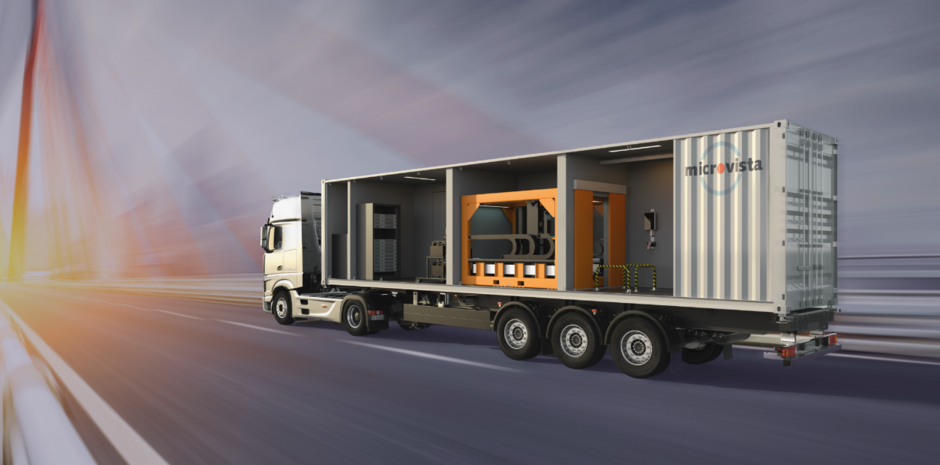
Prof. Dr. Lutz Hagner is a part-time Professor at Harz University of Applied Sciences, Faculty of Automation and Information. He is also the Managing Director of Microvista GmbH, specializing in non-destructive testing (NDT) using industrial computed tomography and air-coupled ultrasound. His career spans academia and industry, with a focus on advancing NDT methods for quality assurance in manufacturing. Education: Otto von Guericke University of Technology (1980–1984), Doctorate in Digital Small Automation Systems (1989). His research interests include industrial computed tomography, automation technology, sensor systems, and embedded electronics. His work addresses spatial resolution optimization, portable testing systems, and AI integration for defect analysis. Recent publications highlight applications in casting inspection, composite materials, and medical device manufacturing. Scientific awards: Not explicitly mentioned. Teaching roles include courses on smart automation, NDT, and industrial CT at Harz University of Applied Sciences, Otto von Guericke University, and Freiberg Mining Academy. His part-time academic role complements his leadership at Microvista GmbH and NetCo Professional Services GmbH.
Professor Hartmut Surmann is a leading academic in robotics at Westphalian University of Applied Sciences, where he heads the Teaching and Research Area for Autonomous Systems and the Robotics Laboratory. With expertise spanning autonomous mobile robots, rescue robotics, machine learning, and 3D computer vision, he has established himself as a key figure in applying robotics to real-world emergency response scenarios. Westphalian University of Applied Sciences, Department of Computer Science and Communication Head of Robotics Laboratory Member of German Rescue Robotics Center (DRZ) Active participant in EU-funded robotics projects Prof. Surmann holds a Diplom in Computer Science from the University of Dortmund (1989) and completed his PhD work on fuzzy systems using genetic algorithms and neural networks. His research interests focus on autonomous systems with particular emphasis on rescue robotics, machine learning, sensor data processing, and 3D computer vision. His work bridges theoretical advancements with practical applications, especially in disaster response scenarios where robotic systems can save lives. His publication record demonstrates a consistent focus on multi-robot collaboration for disaster response, with particular expertise in 3D mapping, sensor fusion, and autonomous navigation systems. His research has evolved from foundational work in neural networks and fuzzy logic to practical implementations of drone and ground robot teams working together in real disaster scenarios. The trend in his work shows increasing sophistication in multi-robot coordination, semantic understanding of environments, and practical deployment of systems in actual emergency situations. Best Paper Award at SSRR 2017 for '3D Registration of Aerial and Ground Robots for Disaster Response' Key contributor to EU-funded TRADR project (2014-2018) Co-founder of German Rescue Robotics Center (DRZ) Active participant in multiple EU robotics projects including NIFTI Prof. Surmann has supervised numerous student projects and theses focused on practical robotics applications. His work has attracted significant research funding through EU projects like TRADR and NIFTI, with practical applications demonstrated in real disaster responses including earthquakes in Mirandola (2012) and Amatrice (2016), as well as industrial fires and flood disasters. His collaborations span academic institutions, emergency services, and industry partners across Europe. The Robotics Laboratory under his direction maintains a diverse fleet of robotic platforms including ground robots (TurtleBot, VolksBot, Baxter), aerial drones, and specialized rescue robots. The lab actively collaborates with emergency services through the German Rescue Robotics Center, providing a bridge between academic research and practical implementation in real-world rescue operations. Current work focuses on AI integration for robotic systems through the AI-Arena project.
Felix Pohl is a postdoctoral researcher at the Helmholtz Centre for Environmental Research (UFZ) in Leipzig, Germany, affiliated with the Department of Computational Hydrosystems . His work focuses on data-driven analysis of ecosystem fluxes and the impact of extreme weather events, particularly droughts, on environmental systems. Education : M.Sc. in Applied Physical Geography, University of Würzburg (2013-2016) B.Sc. in Geography with minor in Philosophy, University of Würzburg Dr. Pohl’s research investigates climatic and environmental changes , the impact of weather extremes on ecosystems , and mitigation strategies for climate change. He also emphasizes science communication and addressing climate change skepticism through interdisciplinary dialogue. His recent publications highlight trends in drought legacy effects , hydrometeorological modeling , and ecosystem phenology across temperate forests. Articles span topics like soil moisture dynamics , carbon cycling , and remote sensing applications for environmental monitoring. Scientific Recognition : Co-author on ASCE-EWRI 2023 Award-winning study (Mai et al., 2021) for Best Case Study in Hydrologic Engineering Dr. Pohl collaborates with teams at ICOS , TERENO , and 4DHydro projects, contributing to robust drought forecasting systems and high-resolution environmental data infrastructure .
Patrik Vagovic is a Staff Scientist at the European XFEL GmbH, affiliated with the Center for Free-Electron Laser Science (CFEL), a collaborative research center between DESY, the University of Hamburg, and the Max Planck Society. He leads research in the Coherent Imaging Team, focusing on advanced X-ray imaging techniques using X-ray free-electron lasers. His work bridges the gap between fundamental physics and practical applications in materials science, biology, and fluid dynamics. Dr. Vagovic's research interests center around developing and applying cutting-edge X-ray imaging methodologies, particularly high-speed and phase-sensitive techniques. His work encompasses X-ray phase contrast imaging, coherent diffractive imaging, tomography, and advanced data processing methods. He has pioneered MHz frame rate X-ray imaging capabilities at the European XFEL, enabling unprecedented observation of ultrafast phenomena previously impossible to capture with conventional X-ray sources. Analyzing his recent publication record reveals a strong focus on pushing the temporal and spatial boundaries of X-ray imaging. His work demonstrates a consistent progression from developing fundamental imaging techniques to applying them to complex scientific problems across multiple disciplines. The research shows increasing sophistication in both hardware development (optical systems, detectors) and computational methods (phase retrieval, machine learning). Dr. Vagovic actively collaborates with international research teams across Europe and beyond, contributing to numerous high-impact publications in top journals including Optics Express, Journal of Synchrotron Radiation, and Nature Communications. His work on MHz X-ray microscopy has particularly advanced the field of time-resolved imaging of irreversible phenomena. As part of the Coherent Imaging Team at European XFEL, Dr. Vagovic works with state-of-the-art instrumentation including the SPB/SFX instrument, where he has developed pump-probe capabilities and advanced diagnostics for megahertz pulse trains. His research group utilizes advanced computational approaches alongside experimental innovations to solve complex imaging challenges.
Francis Engelmann is an incoming Assistant Professor at the University of Lugano (USI) Faculty of Informatics, currently completing his postdoctoral research at Stanford University working with Prof. Leonidas Guibas and Prof. Jeannette Bohg. Prior to Stanford, he was a postdoctoral research fellow at ETH Zurich with Prof. Dr. Marc Pollefeys and conducted his PhD in Computer Vision, Machine Learning and 3D Scene Understanding at RWTH Aachen University under Prof. Dr. Bastian Leibe. His research focuses on advancing 3D scene understanding through computer vision, machine learning, and robotics. Engelmann's work explores open-vocabulary 3D scene understanding, functional scene analysis, 3D reconstruction, and semantic segmentation. He has made significant contributions to open-vocabulary 3D instance segmentation, 3D scene graph construction, and language-augmented 3D vision. His research bridges theoretical computer vision with practical robotics applications, particularly in scene understanding for robotic manipulation. Analysis of his recent publications reveals a strong trajectory in developing methods for open-vocabulary 3D scene understanding, with increasing focus on functional understanding, language integration, and practical robotics applications. His work spans from foundational 3D representation learning to applied robotics systems, with a consistent emphasis on making 3D scene understanding more accessible, scalable, and semantically rich. ETH Zurich Career Seed Award (2022) Outstanding Reviewer for CVPR 2024 (top 2%) Top Reviewer for NeurIPS 2023 Best Paper Award at ICRA'24 MOMA.v2 workshop Multiple oral presentations at top-tier conferences (ICCV, CVPR, ECCV) Engelmann actively mentors PhD students and postdocs, with notable collaborations including Valentin Bieri, Rui Huang, Elisabetta Fedele, and Ayca Takmaz. He has received an NVIDIA Academic grant and serves as an area chair for major computer vision conferences including CVPR'25, WACV'26, and 3DV'25. He co-organizes the annual Open-Vocabulary 3D Scene Understanding Workshop, now in its fourth iteration at CVPR'25.
Matthias Birkner is a Professor of Probability Theory at the Institute of Mathematics, Faculty of Physics, Mathematics and Informatics, Johannes Gutenberg University Mainz. His research focuses on probability theory, stochastic processes, and their applications in mathematical biology and population genetics. His primary research interests include: Probability Theory, particularly branching processes and coalescent theory Stochastic processes in population genetics and evolutionary biology Mathematical modeling of population dynamics Spatial stochastic processes and random walks Applications of probability theory in economics and finance Analysis of Birkner's recent publications reveals a strong focus on probabilistic models for population genetics, particularly examining branching processes, coalescent theory, and spatial population models. His work often bridges rigorous mathematical theory with applications in evolutionary biology, investigating phenomena like fixation probabilities, genealogical structures, and the effects of skewed offspring distributions. More recently, he has expanded into mathematical economics, studying wealth distribution models. Professor Birkner actively collaborates with researchers across Europe and North America, evidenced by his extensive list of co-authors from institutions in Germany, France, Switzerland, the UK, and the United States. His teaching portfolio includes advanced courses in stochastic processes, population models, and biostatistics. His academic leadership is evident through his involvement in organizing workshops and conferences on probability theory and its applications, including events focused on branching processes and multiple merger coalescents in population genetics.
Jan Zilinsky is a Computational Social Scientist at the Technical University of Munich (TUM) within the Chair of Digital Governance at the TUM School of Social Sciences and Technology . His research spans technology's impact on politics, focusing on information ecosystems, economic policy, and political behavior through empirical studies of populism, social media effects, and conspiracy theories. Harvard University – Undergraduate studies New York University (NYU) – PhD in Political Science His work appears in top-tier journals like American Political Science Review (APSR) , Nature Communications , and Political Analysis , with media coverage in New York Times , Financial Times , and The Economist . Zilinsky investigates digital governance challenges such as content moderation, AI's political implications, and the democratic consequences of disinformation campaigns. Recent research trends include: Analyzing social media's role in conspiracy theory proliferation Quantifying economic identity formation through computational methods Assessing AI-generated content's impact on media consumption He supervises projects on Generative AI in Politics , Globalization , and Digital Media Effects , while developing methodologies to measure anti-establishment orientations and conspiratorial thinking through survey instruments and digital trace data analysis.
Dr. Bo Li is a researcher at the Department of Sociology, John F. Kennedy Institute, Freie Universität Berlin. He holds a PhD in Urban Studies from Delft University of Technology (2023) and is currently conducting research under the Rubicon Fellowship from the Dutch Research Council, collaborating with Prof. Sebastian Kohl on the financialization of rental housing from a historical comparative perspective. Research Interests: Housing Financialization Private Rented Sector Residential Satisfaction and Mobility Subjective Well-Being Comparative Urban Studies Behavioural Economics and Big Data Applications Dr. Li's research integrates qualitative and quantitative methods, leveraging web-scraped big data and satellite imagery to analyze housing dynamics across countries, with a regional focus on metropolitan China, especially Shenzhen. His work critically addresses housing rights, affordability, and social equity. His recent publications (2017–2024) show a strong trajectory in urban housing research, with articles in Journal of Urban Management , Cities , Habitat International , and Journal of Housing and the Built Environment . The research trends emphasize policy implications, behavioral drivers, and socio-spatial inequalities in rapidly urbanizing contexts. Scientific Awards and Recognition: Rubicon Fellowship, Dutch Research Council Academic Service: Associate Editor, Journal of Urban Management Associate Editor, Humanities & Social Sciences Communications Coordinator, European Network for Housing Research (ENHR) Conference Reviewer for Urban Studies , Cities , Journal of Housing and the Built Environment , among others Dr. Li actively contributes to the global housing research community through editorial leadership and collaborative projects. While no formal students are listed, he is engaged in advising through collaborative research and academic mentorship. His current work is supported by the Rubicon Fellowship, enabling independent research on transnational housing financialization. Laboratory and Research Teams: Dr. Li is embedded in the research team led by Prof. Sebastian Kohl at Freie Universität Berlin and collaborates extensively with scholars from Delft University of Technology, including S.J. Jansen, H. van der Heijden, and P. Boelhouwer. He is also connected to the European Network for Housing Research (ENHR), contributing to broader scholarly coordination in the field.
Martin Giese is affiliated with the University of Oslo (Department of Informatics) and the University Clinic Tübingen (Department of Cognitive Neurology). He is a researcher with a focus on semantic technologies, ontology-based data access, and visual query systems. Research Themes : Semantic Web, Ontology Engineering, Knowledge Graphs, Geological Informatics, Probabilistic Logic, Automated Reasoning Key Collaborations : Siemens, Statoil, Norwegian Petroleum Directorate, and various European research institutions Technical Contributions : Developed visual query systems (OptiqueVQS), ontology-driven geological modeling (GeoFault), and semantic data integration frameworks for industrial applications. His work spans both theoretical logic and practical implementations in big data environments. Publications : Recent articles focus on fault ontologies, process representation, and semantic embeddings. Earlier work includes foundational research in automated theorem proving and UML formalization.
Walid G. Aref is a Professor at Purdue University, West Lafayette, USA, specializing in database systems, spatial data processing, and big data technologies. His work focuses on adaptive indexing, LSM trees, and graph data systems. 2025: Research on skiplists, GTX graph systems, and BMTree indexing 2024: Contributions to trajectory indexing and HTAP-optimized data systems 2023: Editorial roles in ACM Transactions on Spatial Algorithms and Systems His research spans scalable spatial-keyword query processing, distributed streaming systems, and hardware-aware database optimization. Notable collaborations include Ahmed R. Mahmood and Mourad Ouzzani. Recent publications highlight trends in machine learning for indexing , NUMA-aware optimization , and multi-dimensional data structures . He has no listed scientific awards in this dataset. Walid actively contributes to transactional graph systems , load balancing , and spatiotemporal data management , with a 2021 IEEE Transactions paper on attack-resilient load balancing.
Zimu Zhou is an Assistant Professor at Tsinghua University's School of Software, Department of Computer Science and Technology, specializing in federated learning, edge computing, and mobile systems. With an extensive publication record spanning from 2018 to 2025, Dr. Zhou has established themselves as a leading researcher in distributed machine learning systems. Dr. Zhou's research focuses on federated learning systems , mobile AI optimization , and spatial data processing . Their work addresses critical challenges in distributed machine learning including data heterogeneity, communication efficiency, privacy preservation, and practical deployment constraints. Recent research has expanded into federated large language models and advanced personalization techniques for mobile environments. Analysis of Dr. Zhou's publication trends reveals a strong emphasis on practical deployment of federated learning systems, with increasing focus on real-world applications in mobility, urban computing, and AIoT. Their work bridges theoretical advances with practical implementations, as evidenced by multiple publications in top-tier systems and AI conferences. Best Paper Award, MobiCom 2024 ACM SIGSPATIAL Best Paper Honorable Mention, 2022 Dr. Zhou has supervised several PhD students who have become active contributors in the field, including Xiaochen Li, Sicong Liu, and Yexuan Shi. Their research has been supported by multiple grants focused on edge intelligence and privacy-preserving distributed learning. Current projects include federated reasoning with large language models and resource-efficient AIoT systems. Dr. Zhou leads the Distributed Intelligence Lab at Tsinghua University, which focuses on building practical frameworks for decentralized machine learning across mobile and edge environments. The lab collaborates with industry partners to deploy federated learning solutions in real-world settings.